5 Most Valuable Football Trading Cards Ever
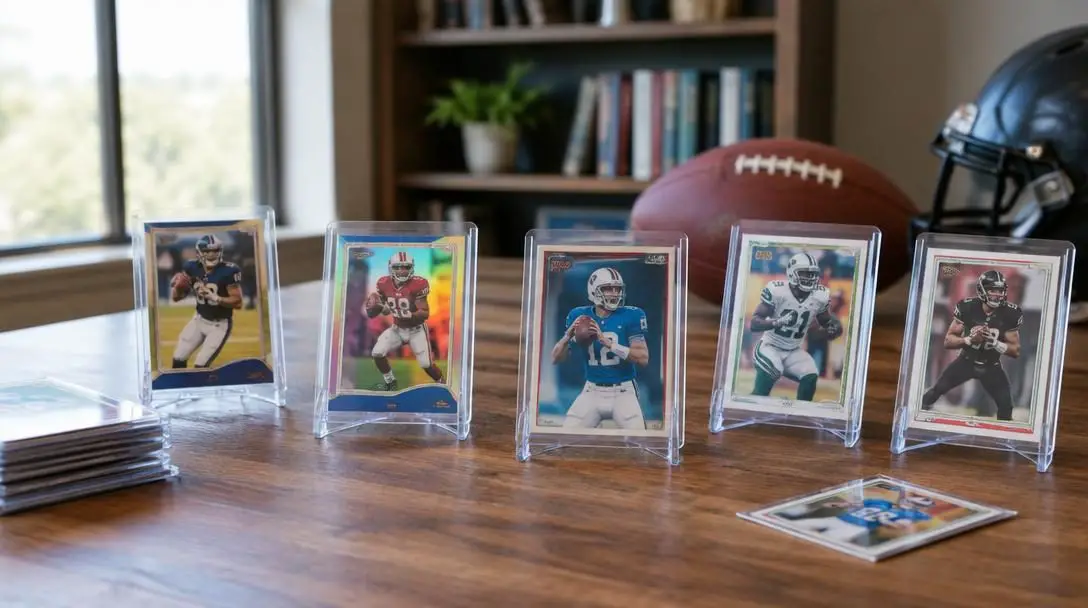
For generations, association football collectibles were largely viewed as casual childhood pastimes. Young supporters eagerly swapped foil packs on school playgrounds, pasted adhesive stickers into commemorative tournament albums, and stored paper items inside shoe boxes. While American sports such as baseball and basketball historically dominated the high-end sports memorabilia industry, the unmatched international footprint of association football has recently reshaped the market, propelling soccer cards into the realm of premier fine art auctions and luxury alternative assets.
Today, dedicated auction houses and international collectors compete vigorously for the rarest surviving relics from soccer history. Vintage cardboard featuring icons of the mid-twentieth century and modern chrome releases celebrating explosive new talents routinely exchange hands for tens of thousands of dollars. At the very peak of this booming hobby, individual cards command prices comparable to high-end real estate, demonstrating the enormous financial weight behind the beautiful game.
Key takeaways
- Soccer trading card collecting has evolved from playground sticker swapping into a high-stakes alternative asset market generating record-setting auction results.
- A card's market value depends heavily on its rookie designation, verified physical condition, print rarity, and third-party grading certification.
- The record for the most expensive soccer trading card ever sold is held by an autographed 2019 Topps Erling Haaland rookie card, which brought $432,000 at auction.
- While vintage cards of immortal legends like Pele offer proven historical permanence, modern cards of active phenoms carry dynamic values linked directly to current pitch performance.
At a glance: The 5 highest-priced football trading cards
| Rank | Player | Card Set & Variation | Grading Condition | Sale Price |
|---|---|---|---|---|
| 1 | Erling Haaland | 2019 Topps (Autographed) | Perfect Condition | $432,000 |
| 2 | Pele | 1958 Alifabolaget | Vintage Original | $372,000 |
| 3 | Lionel Messi | 2004 Panini Sports Mega Cracks | Pristine | $336,000 |
| 4 | Cristiano Ronaldo | 2003 Panini Sports Mega Cracks | Mint | $312,000 |
| 5 | Kylian Mbappe | 2018 Panini Prizm Gold | Near-Mint (8.5) | $161,130 |
The 5 most valuable football trading cards ever sold
The summit of the soccer trading card marketplace brings together celebrated pioneers from earlier eras and contemporary phenoms reshaping the sport today. Below are the five individual player trading cards that have commanded the highest confirmed prices at public auction.
Kylian Mbappe

- Card: 2018 Panini Prizm Gold
- Sale Price: $161,130
- Grade: Near-Mint 8.5
- Significance: Issued during France's 2018 World Cup title run
Kylian Mbappe advanced through the upper tiers of European football with historic speed. By age 19, he had established himself as a dynamic offensive presence on the international stage while representing France during the 2018 World Cup tournament in Russia. The Panini Prizm collection printed for that tournament quickly became a cornerstone release for modern soccer hobbyists, with collectors focusing particular attention on short-printed parallel editions.
Among those rare parallels, the Panini Prizm Gold version stands out as an elite prize. Because pristine physical preservation is difficult to find among chrome cards prone to edge chipping and surface scratches, verified high-grade examples rarely appear on the open market. When a specimen graded 8.5 in near-mint condition reached the auction block, passionate bidders pushed the final transaction price to $161,130, setting a remarkable precedent for modern international trading cards.
Cristiano Ronaldo

- Card: 2003 Panini Sports Mega Cracks
- Sale Price: $312,000
- Grade: Mint
- Significance: First licensed professional rookie card
Long before Cristiano Ronaldo won multiple continental trophies, shattered international goal records, and built a global brand across stints with Manchester United and Real Madrid, he was a raw, emerging teenager competing in his native Portugal. His official debut card was released inside the 2003 Panini Sports Mega Cracks (frequently referenced by collectors as Mega Craques) set, picturing the young forward during his formative appearances for Sporting Clube de Portugal.
Paper stock from the early 2000s European releases was notoriously thin and susceptible to corner rounding, edge fraying, and off-center printing. While examples exhibiting visible wear or moderate handling flaws frequently change hands for substantially lower sums, an elite copy preserved in true mint condition shattered expectations at public auction, closing at an astonishing $312,000.
Lionel Messi

- Card: 2004 Panini Sports Mega Cracks
- Sale Price: $336,000
- Grade: Pristine
- Significance: Official FC Barcelona rookie card
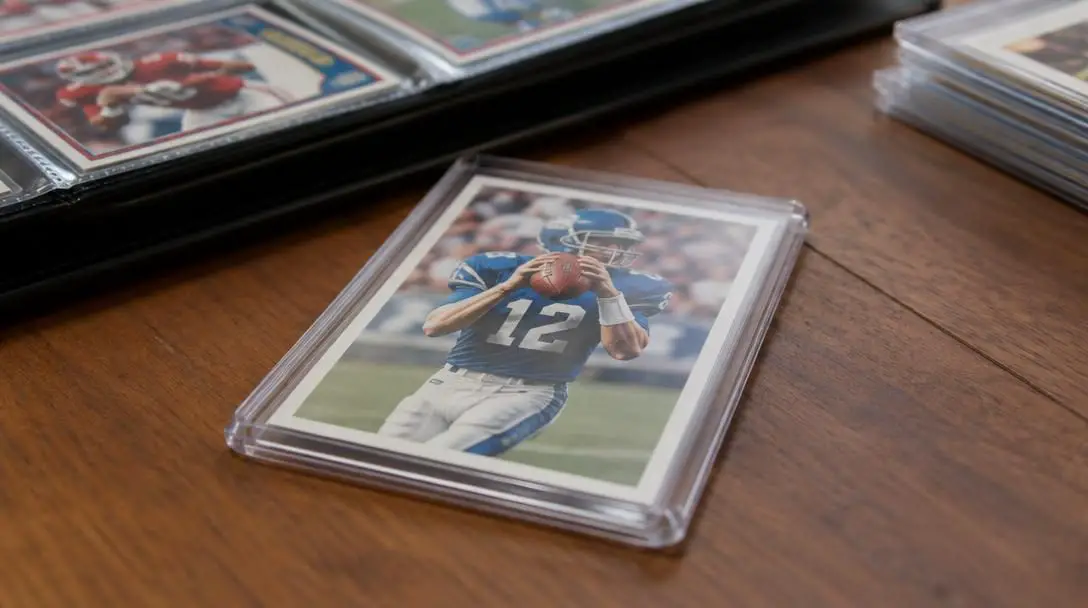
Widely revered across the globe and recognized as a six-time Ballon d'Or winner as the world's premier footballer, Lionel Messi holds a peerless position in soccer history. Collectors seeking the definitive licensed artifact from his formative era turn directly to the 2004 Panini Sports Mega Cracks checklist, which features Messi as an adolescent talent breaking into FC Barcelona's senior squad.
Standard copies of this seminal card preserved in basic near-mint condition are traditionally valued in the neighborhood of $7,000, while previous transactions for above-average high-grade examples hovered around $250,000. However, absolute perfection commands an unmatched premium among modern sports investors. When a pristine, virtually flawless example crossed the auction block, intense bidding culminated in a record-shattering final sale price of $336,000.
Pele
- Card: 1958 Alifabolaget
- Sale Price: $372,000
- Origin: Sweden
- Significance: Vintage rookie card from his breakout World Cup victory
Decades before satellite television and digital streaming brought global soccer into millions of living rooms, Pele served as the definitive international ambassador for association football. The legendary Brazilian attacker helped expand the game's footprint across North America and continents worldwide, earning a status that many enthusiasts consider completely untouchable.
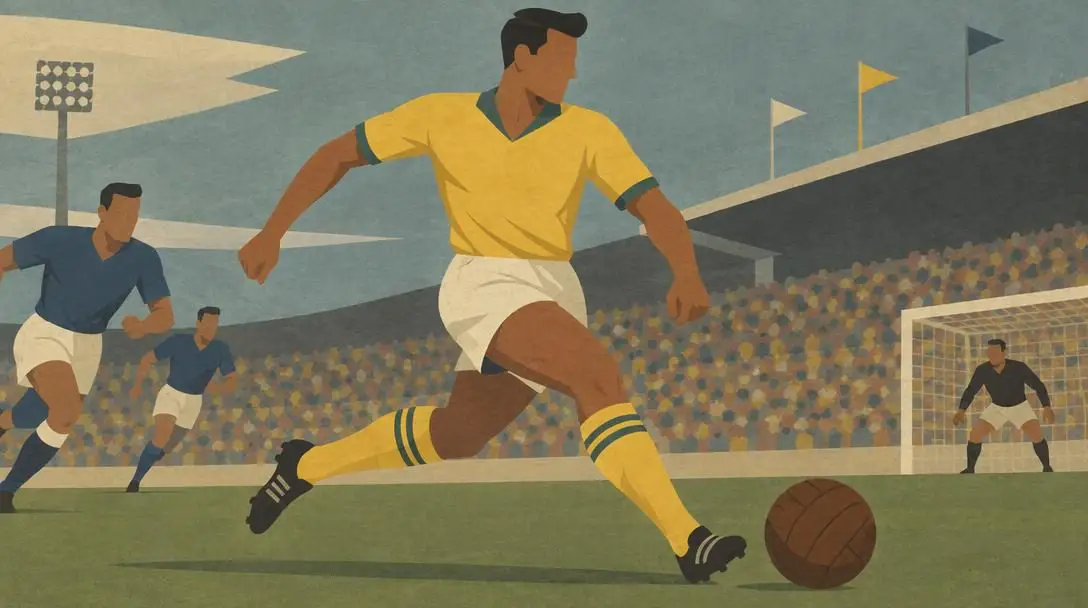
Pele's foundational rookie collectible traces back to the 1958 World Cup in Sweden, produced domestically by Swedish manufacturer Alifabolaget. The card's aesthetic is minimalist and unadorned: it displays a quiet photographic portrait of the teenage Brazilian forward framed alongside a modest white banner with his name printed in light blue text across the bottom border. Despite its understated production, the historic weight of this vintage item resulted in a landmark sale of $372,000 during a 2021 auction.
The unmatched historical permanence of vintage icons like Pele means their card values are no longer subject to the weekly fluctuations of pitch performance.
Erling Haaland

- Card: 2019 Topps (Autographed)
- Sale Price: $432,000
- Grade: Perfect Condition
- Auction House: Goldin Co.
While the other four entries on this record board showcase athletes whose historic status had already crystallized before their auction milestones, the record-setting sale for Erling Haaland represents a bold financial statement on the future. After making his top-tier senior debut in 2019, the Norwegian goal-scoring sensation immediately captivated spectators through an extraordinary scoring run across European and German Bundesliga competitions.
Haaland's 2019 Topps rookie card was preserved in flawless, pristine condition, distinguished further by an authenticated, on-card autograph applied by the forward himself. Consigned to Goldin Co. two years after its release, the card set off a fierce bidding war that ended with a final gavel drop of $432,000. This milestone made Haaland's autographed debut card the most expensive soccer trading card ever sold at public auction.
Key factors that drive soccer card valuations
To understand how a single printed piece of cardboard or chrome stock can command hundreds of thousands of dollars, collectors must evaluate the foundational criteria that determine liquidity and value in the sports card marketplace:
- Rookie designation: The premier card issued during an athlete's maiden professional or senior international campaign carries an enduring cultural prestige that later releases cannot match.
- Rarity and parallel printings: Modern card sets frequently produce short-printed parallel editions. These variations incorporate unique foil stamps, serial numbering, or colored borders—such as the Panini Prizm Gold—drastically reducing the total population of surviving copies.
- Independent third-party grading: High-end transactions rely on trusted grading services. Professional authenticators evaluate cards under magnification, grade physical condition on a standardized 1-to-10 scale, and secure the item within sonically welded, tamper-resistant acrylic holders.
- Condition sensitivity: Even microscopic flaws can devastate realized prices. Off-center printing, microscopic corner touches, surface pitting, or factory edge burrs can separate a card valued at a few thousand dollars from a pristine masterpiece worth six figures.
- Player legacy and international accolades: Sustained team success, major championship medals, individual awards such as the Ballon d'Or, and international tournament highlights serve as recurring demand drivers for prominent player collections.
Practical steps for building a soccer card collection
Navigating the modern sports card hobby requires disciplined analysis, careful physical preservation, and strategic purchasing. Hobbyists entering the marketplace should adopt a structured procedure before committing capital:
- Define your personal collecting scope: Choose an intentional lane before buying, such as vintage World Cup artifacts, modern rookie parallels, or specific club stars. Maintaining a narrow focus safeguards against impulse spending and fosters deep domain knowledge.
- Study official set checklists: Thoroughly research the release history behind prospective targets. Verify whether an item is an authentic licensed rookie trading card, an insert variation, or an mass-produced souvenir sticker.
- Inspect physical condition with precision: When evaluating ungraded or raw cards, scrutinize the corners, borders, surface gloss, and horizontal centering under bright lighting and magnification.
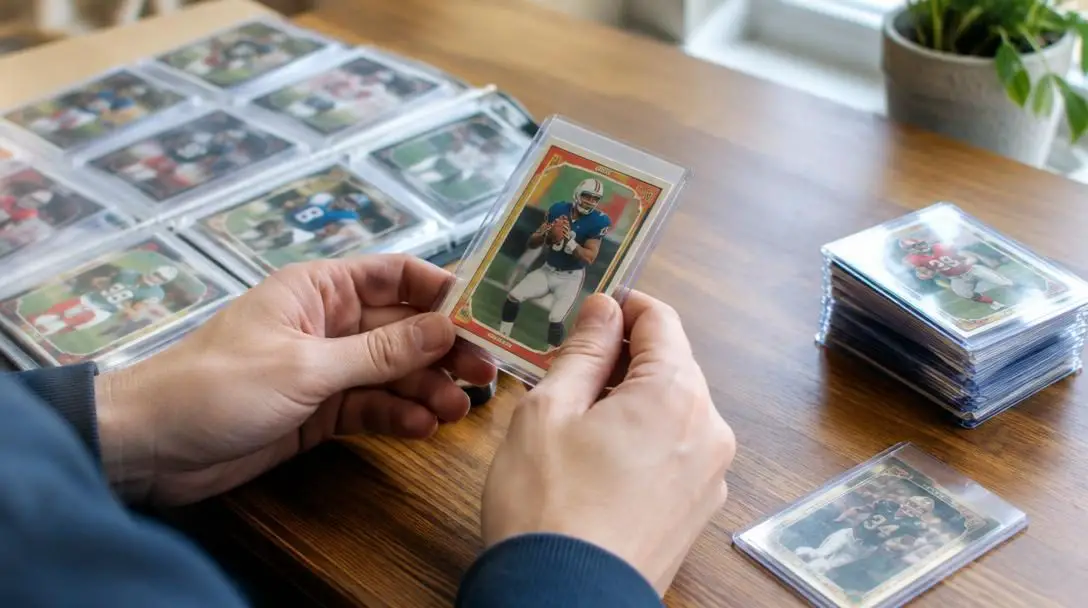
- Use professional archival supplies: Protect cards immediately upon acquisition. Slide each specimen into an acid-free soft polypropylene sleeve before locking it inside a rigid plastic top-loader or a UV-resistant magnetic holder.
- Submit elite targets for professional grading: If you acquire an authentic, high-grade card with considerable market potential, submit it to an established grading service to formalize its authenticity and physical condition.
- Monitor completed public auction sales: Base all purchasing decisions on realized, settled transactions through auction houses and verified sale trackers rather than unverified online asking prices.
Common pitfalls to avoid in football card collecting
Both beginner and veteran collectors can fall victim to expensive misconceptions. Avoiding these frequent market errors will help protect the value and physical integrity of your collection:
- Confusing asking prices with settled market value: An ambitious online seller listing a card for tens of thousands of dollars does not establish market value. Value is proven solely when an actual transaction closes between a willing buyer and seller.
- Careless handling of raw cards: Touching delicate surfaces with unwashed hands or pressing fragile edges into tight plastic cases can cause irreversible creasing or surface oil contamination.
- Assuming every card of an iconic legend is scarce: Millions of base cards and common late-career items picturing stars like Ronaldo, Messi, or Pele were printed in large volumes and hold minimal monetary value compared to their true rookie editions.
- Neglecting environmental storage controls: Storing valuable collections in rooms with changing humidity or exposure to direct ultraviolet sunlight can warp card stock and permanently fade original printing inks.
- Succumbing to short-term tournament hype: Aggressively buying speculative cards of unproven young prospects at inflated prices during international tournaments frequently leads to substantial financial drawdowns if those players fail to sustain long-term excellence.
Frequently asked questions
What makes Erling Haaland's rookie card more valuable than Pele's vintage card?
Haaland's 2019 Topps card achieved its record-setting $432,000 price point because it was preserved in absolute perfect condition, featured an authenticated on-card autograph, and represented a major speculative investment in a generational goal-scorer at the beginning of his international career.
Why is third-party grading so crucial for high-value soccer cards?
Grading companies verify that a card is genuine and un-tampered with, measure its condition on an objective numerical scale, and encapsulate the card in a protective acrylic case, eliminating condition disputes between buyers and sellers.
What is the difference between a soccer sticker and a true trading card?
Stickers, such as traditional Panini tournament collections, were printed on thin adhesive paper intended for mounting into albums, while trading cards are produced on heavier cardstock or chrome surfaces designed for long-term collection and preservation.
Why did Lionel Messi's rookie card sell for significantly more than its standard estimate?
While standard near-mint copies of Messi's 2004 Mega Cracks card are valued around $7,000, high-grade surviving specimens are exceedingly scarce; a flawless, pristine copy represents an apex collectible that commands aggressive bidding from elite global investors.
How can collectors verify true market values for soccer cards?
Collectors should look up completed, paid auction archives from reputable sports auction houses and verified market databases rather than relying on active, unsold seller listings on secondary retail websites.
The bottom line
The transformation of association football cards from casual schoolyard souvenirs into high-priced auction centerpieces mirrors the global commercial growth of the sport itself. Across mid-century historical artifacts and modern short-printed chrome cards, the most valuable pieces combine verified scarcity, cultural importance, and pristine physical preservation.
While immortal legends like Pele offer collectors unmatched historical stability that remains insulated from weekly sporting results, modern phenoms like Kylian Mbappe and Erling Haaland represent high-octane investments tied to ongoing careers. Whether pursuing vintage treasures or modern autographed gems, successful collectors treat the market with discipline, emphasizing third-party authentication, meticulous storage, and objective price evaluation.