How The Odds On Favorite Performed At Each World Cup
Every four years, the World Cup commands the undivided attention of sports enthusiasts across the globe, bringing together millions of viewers whether their domestic national team has qualified or they are following the drama from afar. In the months leading up to the opening kickoff, intense speculation and tactical debate center on which heavyweight squads possess the technical depth, coaching, and resilience necessary to survive the grueling tournament bracket. Historically, public narrative and betting markets coalesce around one or two preeminent nations that oddsmakers, analysts, and supporters overwhelmingly expect to reach the championship final.
The structured tracking of betting figures officially began in 1978, establishing standardized numerical odds that designated specific squads as undisputed frontrunners. Earning the mantle of the pre-tournament favorite reflects immense faith in a country's talent pool, recent competitive achievements, and tactical cohesion, as well as situational factors like home-field advantage. Yet examining the historical record from 1978 through 2022 demonstrates that being crowned the oddsmakers' choice offers no guarantee of lifting the trophy. The journey of the favorite is an illuminating study in how pre-tournament expectations clash with the volatile reality of knockout international soccer.
Key takeaways
- Being designated as the pre-tournament favorite offers no certainty of lifting the trophy, with frontrunners often suffering sudden eliminations in early or intermediate knockout rounds.
- Brazil was installed as the favorite or co-favorite in eight of the twelve tournaments held between 1978 and 2022, yet managed to secure the title only once during that span.
- Host nations frequently receive significant support in betting markets, but the intense burden of local expectations can produce either historic triumphs or catastrophic exits.
- Single-elimination knockout formats create substantial volatility where a single defensive mistake, refereeing decision, or penalty shootout can unravel the most talented roster.
At a glance: World Cup favorites and outcomes (1978–2022)
Over the twelve tournaments between 1978 and 2022, pre-tournament favorites experienced vastly different fates. While a select few validated their status with commanding tournament runs, others collapsed in the opening phase or succumbed to high-pressure penalty shootouts.
| Tournament | Host Nation | Pre-Tournament Favorite | Listed Odds | Tournament Finish |
|---|---|---|---|---|
| 1978 | Argentina | Argentina | 2:1 | Champion (defeated Netherlands 3-1) |
| 1982 | Spain | Brazil | Runaway favorite | Second round elimination (defeated by Italy) |
| 1986 | Mexico | Brazil | 11:4 | Eliminated prior to final (Argentina won title) |
| 1990 | Italy | Italy | Overall favorite | Third place (semifinal loss to Argentina) |
| 1994 | United States | Brazil and Germany (co-favorites) | 7:2 | Brazil: Champion / Germany: Quarterfinals |
| 1998 | France | Brazil | Consensus favorite | Runner-up (defeated 3-0 by France in final) |
| 2002 | South Korea and Japan | France | Pre-kickoff favorite | Group stage exit (0-1-2 record, failed to advance) |
| 2006 | Germany | Brazil | Clear frontrunner | Quarterfinals (defeated 1-0 by France) |
| 2010 | South Africa | Spain | Consensus favorite | Champion (defeated Netherlands 1-0 in final) |
| 2014 | Brazil | Brazil | Overwhelming favorite | Fourth place (lost 7-1 to Germany in semifinals) |
| 2018 | Russia | Brazil | Top choice | Quarterfinals (defeated 2-1 by Belgium) |
| 2022 | Qatar | Brazil | 9:2 | Quarterfinals (eliminated on penalties by Croatia) |
Historical review: How the odds-on favorite finished (1978–2022)
The historical record shows an intriguing split between complete dominance and shocking disappointment. Reviewing each tournament individually reveals the unpredictable elements that altered each frontrunner's destiny.
Argentina (1978)

- Tournament Host: Argentina
- Pre-Tournament Odds: 2:1
- Tournament Finish: Champion
- Championship Match: Defeated Netherlands 3-1
Argentina entered the 1978 tournament carrying the distinct advantage of playing on home soil, entering as a firm 2:1 favorite. Throughout World Cup history, only six nations have captured the championship while serving as the host country, and Argentina accomplished this feat during their solitary opportunity hosting the event. Backed by intense domestic support, Argentina marched through the competition to face the Netherlands, who held respected 5:1 odds of their own. In an electric final, the home side justified their top billing by capturing a 3-1 victory to secure their maiden World Cup title.
Brazil (1982)
- Tournament Host: Spain
- Favorite Status: Runaway frontrunner
- Tournament Finish: Second round elimination
- Decisive Match: Defeated by Italy
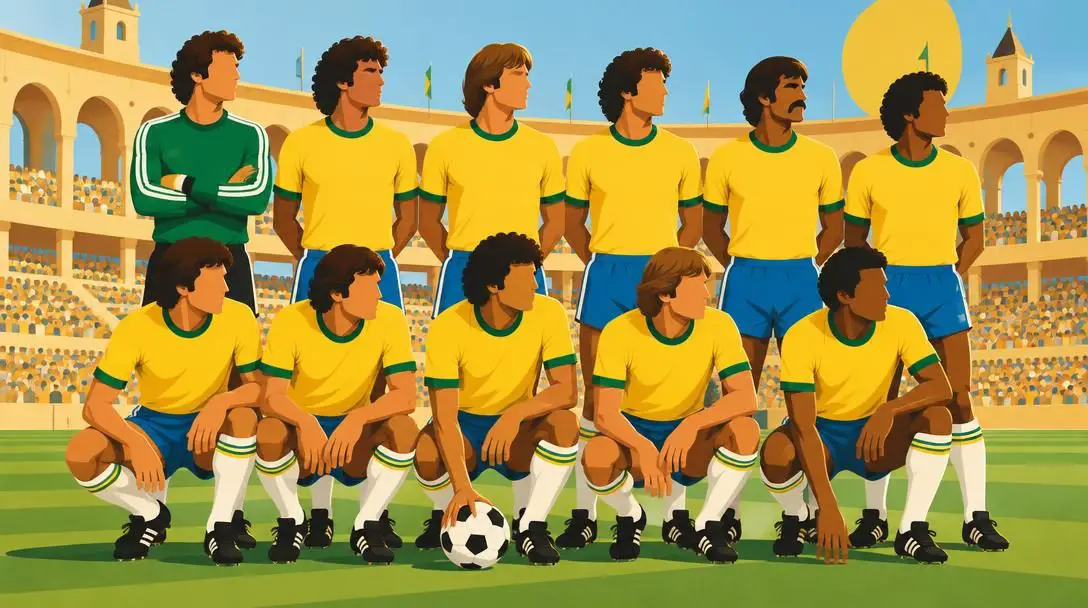
Hosted by Spain, the 1982 tournament remains celebrated as one of the most thrilling and technically dazzling competitions in international soccer history. Brazil arrived as the runaway frontrunner, capturing global imagination with free-flowing attacking flair and midfield mastery. However, their campaign stopped abruptly in the second round of group play when they were outmaneuvered and defeated by Italy. Italy used the momentum generated from upsetting the favorites to surge through the remainder of the bracket, ultimately defeating West Germany to claim the championship.
Brazil (1986)
- Tournament Host: Mexico
- Pre-Tournament Odds: 11:4
- Tournament Finish: Quarterfinals elimination
- Tournament Champion: Argentina (4:1 pre-tournament odds)
When the tournament moved to Mexico in 1986, sportsbooks once again installed Brazil as the pre-tournament choice, pricing them at 11:4 odds. Despite the widespread expectation surrounding the Brazilian roster, they could not reach the final four. Instead, rival Argentina claimed the ultimate prize, securing their second World Cup title across a span of three tournaments. Argentina had entered the competition heavily respected by the markets as the second choice at 4:1 odds, demonstrating that secondary contenders with tactical focus frequently capitalize when the top favorite falters.
Italy (1990)

- Tournament Host: Italy
- Favorite Status: Overall market favorite
- Tournament Finish: Third place
- Decisive Matches: Lost semifinal to Argentina; defeated England for third place
Several elite squads arrived in Italy for the 1990 tournament with championship aspirations, but the host nation earned the favorite label thanks to the powerful lift of playing on familiar ground. Italy assembled an imposing defensive effort and battled deep into the bracket, but their title hopes were dashed in the semifinals by Argentina. After losing that dramatic encounter, the hosts regained their composure to defeat England in the third-place match, while Argentina went on to drop the final to West Germany.
Brazil and Germany (1994)

- Tournament Host: United States
- Pre-Tournament Odds: 7:2 (co-favorites)
- Secondary Contenders: Italy and Holland
- Tournament Finish: Brazil won championship; Germany missed semifinals
The 1994 tournament in the United States marked a rare occasion where oddsmakers could not separate two global powerhouses, designating Brazil and Germany as co-favorites at 7:2 odds. Strong contenders such as Italy and Holland lingered close behind. Defending champion Germany failed to match market expectations and suffered an early elimination before the semifinal round. Brazil, conversely, validated their pre-tournament status by advancing to the Rose Bowl final, where they prevailed over Italy in a tense penalty shootout to lift the trophy.
Brazil (1998)
- Tournament Host: France
- Favorite Status: Consensus favorite
- Tournament Finish: Runner-up
- Championship Match: Defeated 3-0 by France
Brazil arrived in France in 1998 as the undisputed favorite to repeat their 1994 triumph. The defending champions successfully negotiated a treacherous bracket to book their place in the championship showdown. Their opponent was host nation France, who had entered the tournament carrying the second-best odds on the board. Buoyed by passionate home support and disciplined defending, France overwhelmed the favorites in the final, denying Brazil back-to-back crowns with a decisive 3-0 victory.
France (2002)
- Tournament Host: South Korea and Japan
- Pre-Tournament Favorite: Shifted to France prior to kickoff
- Initial Favorite: Argentina (prior to group draws)
- Tournament Finish: Group stage elimination (0-1-2 record)
Ahead of the first World Cup held in Asia, oddsmakers originally favored Argentina before the official group drawings took place. However, as opening day approached, reigning world and European champion France shifted into the top favorite spot with widespread public backing to retain their title. What followed remains one of the most stunning collapses in tournament history. France failed to win a single match, ending group play with a record of zero wins, one draw, and two losses. They crashed out without scoring a goal, watching outsiders Denmark and Senegal advance to the knockout stage instead.
Brazil (2006)
- Tournament Host: Germany
- Favorite Status: Clear frontrunner
- Tournament Finish: Quarterfinals elimination
- Decisive Match: Defeated by France
Even with traditional powerhouse Germany hosting the 2006 tournament, Brazil was tabbed as the runaway choice to capture the trophy, boasting an attacking lineup loaded with global superstars. Despite the overwhelming media hype, Brazil struggled to display cohesive dominance against top-tier opposition. Although they advanced into the knockout rounds, their journey halted in the quarterfinals with a 1-0 defeat to France. France subsequently progressed to the final, where they were defeated by Italy in a penalty shootout.
Spain (2010)

- Tournament Host: South Africa
- Favorite Status: Consensus favorite (first time in nation's history)
- Tournament Finish: Champion
- Knockout Opponents Defeated: Portugal, Germany, Netherlands
South Africa made history by hosting the competition for the first time, and Spain entered the event carrying the favorite tag for the first time in their national team history. Backed by their continental success two years earlier, the Spanish squad met every expectation through methodical possession and unmatched tactical discipline. In the knockout phase, Spain navigated an arduous path by defeating Portugal, Germany, and the Netherlands to win the World Cup championship.
Brazil (2014)
- Tournament Host: Brazil
- Favorite Status: Overwhelming favorite
- Tournament Finish: Fourth place
- Decisive Matches: Lost 7-1 to Germany; lost 3-0 to Netherlands
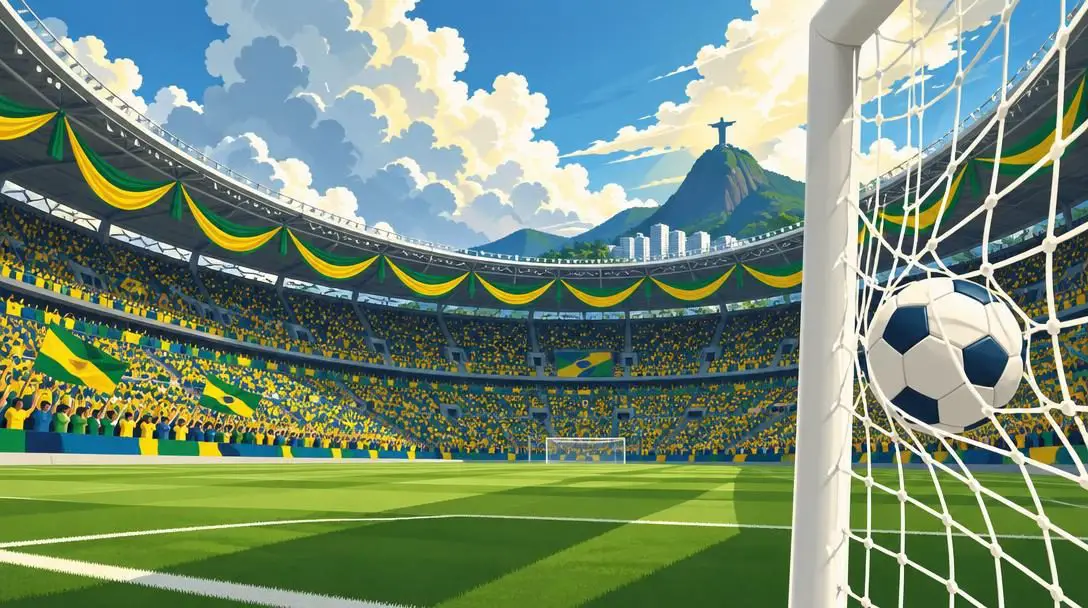
Playing on home soil for the first time since 1950, Brazil was installed as the overwhelming favorite to capture a sixth world title. However, their campaign culminated in one of the most astonishing collapses in sports history. Meeting Germany in the semifinals in Belo Horizonte, Brazil surrendered five goals in the opening thirty minutes, eventually suffering a humiliating 7-1 defeat. Germany went on to defeat Argentina in the final, while a demoralized Brazilian squad followed their semifinal disaster by dropping the third-place match 3-0 to the Netherlands.
With only a single 90-minute or 120-minute match deciding each knockout round, even the most dominant roster can see years of preparation undone by a single deflection, a tactical misstep, or a penalty shootout.
Brazil (2018)
- Tournament Host: Russia
- Favorite Status: Consensus top choice
- Tournament Finish: Quarterfinals elimination
- Decisive Match: Defeated 2-1 by Belgium
Brazil arrived in Russia seeking redemption for their 2014 trauma, once again installed at the top of the betting board by sportsbooks. After navigating the group stage and initial knockout round with relative ease, Brazil collided with Belgium in the quarterfinals. Belgium's counter-attacking setup proved lethal, ending Brazil's tournament with a 2-1 loss. France, who had entered the tournament as the fourth-highest favorite, captured the trophy by defeating a resilient Croatia team that had entered the tournament as a 33:1 longshot.
Brazil (2022)

- Tournament Host: Qatar
- Pre-Tournament Odds: 9:2
- Tournament Finish: Quarterfinals elimination
- Decisive Match: Defeated by Croatia on penalty shootout
The 2022 competition in Qatar was characterized by analysts as a wide-open field, yet Brazil remained the designated favorite at 9:2 odds. The South American squad cruised through early matches, showcasing their usual attacking brilliance. In the quarterfinals, they faced 2018 finalists Croatia in an intensely tactical battle. After finishing level following extra time, Croatia maintained composure in the penalty shootout, eliminating the tournament favorites and sending Brazil home in the quarterfinals for the fourth time in five tournaments.
Core dynamics shaping World Cup betting markets
Understanding how sportsbooks and the public establish a team as the clear favorite requires examining several interconnected factors that govern international tournament soccer:
- Form and Historical Precedent: National teams that display dominant form during continental qualifiers or possess a storied history of tournament success naturally attract the heaviest betting volume. Brazil's persistent installation as favorite across eight tournaments (1982, 1986, 1994, 1998, 2006, 2014, 2018, and 2022) reflects how deeply past prestige influences market perception.
- The Impact of Hosting: Playing on domestic soil provides significant advantages, including familiar climate conditions, reduced travel fatigue, and massive crowd energy. Host nations like Argentina in 1978, Italy in 1990, France in 1998, and Brazil in 2014 received substantial market boosts due to perceived home-field superiority.
- Knockout Volatility Versus Long Domestic Seasons: In domestic club leagues, a superior squad has 30 to 40 matches to absorb bad luck, injuries, or refereeing mistakes. International tournaments, by contrast, shift to single-elimination play after just three group matches. In a 90-minute or 120-minute elimination window, tactical conservatism, fluky deflections, or red cards can abruptly derail a far superior roster.
Step-by-step method for evaluating tournament contenders
To accurately evaluate national teams ahead of a major tournament, looking past popular consensus and odds-board prestige is essential. Following a disciplined, systematic evaluation process highlights vulnerabilities that casual observers overlook.
- Analyze the projected knockout pathway: Examine the potential round of 16 and quarterfinal matchups dictated by the tournament bracket. A top-seeded favorite placed into a bracket packed with defensive counter-attacking teams faces a significantly harder journey than one with a gentle pathway.
- Assess performance against elite opposition under pressure: Evaluate how the squad performed in meaningful, high-stakes continental matches rather than one-sided qualification games against lower-tier competition. Teams with proven records in tight matches handle tournament tension far better.
- Verify squad fitness and tactical continuity: Tournaments held at the conclusion of exhausting domestic campaigns test physical endurance. Monitor whether pivotal playmakers or central defenders are carrying lingering injuries or if the tactical system falls apart when primary starters miss playing time.
- Examine penalty shootout history and preparation: Knockout matches frequently remain deadlocked after 120 minutes. Frontrunners that lack dependable penalty takers or an experienced goalkeeper in shootout scenarios, such as Brazil against Croatia in 2022, face elevated elimination risk.
- Gauge the weight of psychological expectations: Heavy favorites carry immense pressure from domestic media and fans, especially when playing on home soil. Determine whether the locker room features seasoned, level-headed leadership capable of staying composed through sudden adversity.
Critical mistakes to avoid when assessing top contenders
Observers routinely fall into predictable traps when evaluating tournament frontrunners. Being mindful of these common analytical errors prevents overvaluing favored sides:
- Equating past legacy with present ability: Relying on a country's historical trophy cabinet to justify their current favorite status is a major trap. Brazil was designated the favorite in eight of twelve World Cups between 1978 and 2022, yet managed to hoist the trophy just once during that period.
- Overvaluing the defending champion: Assuming that the previous tournament winner will automatically replicate their success ignores tactical obsolescence, motivational dips, and roster turnover, as illustrated by France's total collapse in 2002.
- Overlooking defensive stability in favor of attacking talent: Flashy, high-scoring teams often capture public headlines, but international tournaments are consistently won by teams that protect their defensive third. Roster imbalances leave attacking favorites vulnerable to compact counter-attacking squads, as Belgium demonstrated against Brazil in 2018.
- Dismissing organized, experienced underdogs: Concentrating exclusively on the top tier of favorites leads analysts to ignore dangerous, battle-tested longshots. Croatia entered the 2018 tournament at 33:1 odds yet navigated all the way to the final.
Frequently asked questions
How often has the pre-tournament favorite won the World Cup since 1978?
Between 1978 and 2022, the designated betting favorite won the World Cup three times across twelve tournaments: Argentina in 1978, Brazil in 1994, and Spain in 2010. This results in a success rate of just 25 percent for the market frontrunner.
Which nation was installed as the World Cup favorite most frequently?
Brazil was designated as the clear favorite or co-favorite most often, earning top billing in eight of the twelve tournaments held between 1978 and 2022 (1982, 1986, 1994, 1998, 2006, 2014, 2018, and 2022).
What was the worst finish by an odds-on World Cup favorite?
The worst finish occurred in 2002 when defending champion France, who entered the competition as the betting favorite, failed to advance from the group stage. They recorded zero wins, one draw, and two losses without scoring a single goal.
Does hosting the tournament guarantee favorite status?
While hosting provides a major boost in public perception and betting odds, it does not guarantee a championship. Argentina won as hosts and favorites in 1978, but Italy finished third in 1990 and Brazil suffered a catastrophic fourth-place finish in 2014 after a 7-1 semifinal loss to Germany.
Why do heavy favorites struggle in the knockout rounds?
The single-elimination format leaves zero margin for error. In a single 90-minute or 120-minute contest, disciplined defensive teams can neutralize superior attacking talent, forcing penalty shootouts or capitalizing on isolated counter-attacks and set pieces.
The bottom line
The history of World Cup betting favorites from 1978 through 2022 underscores that pre-tournament consensus is rarely predictive in international soccer. While sportsbooks and public narratives favor storied pedigree, technical prestige, and home-field conditions, the structural reality of single-elimination knockout soccer levels the playing field. With only three favorites lifting the trophy over a forty-four-year span, the tournament consistently rewards tactical adaptability, defensive organization, and poise under pressure rather than pre-tournament hype.