5 Positions With Most #1 Overall Picks in the NFL Draft
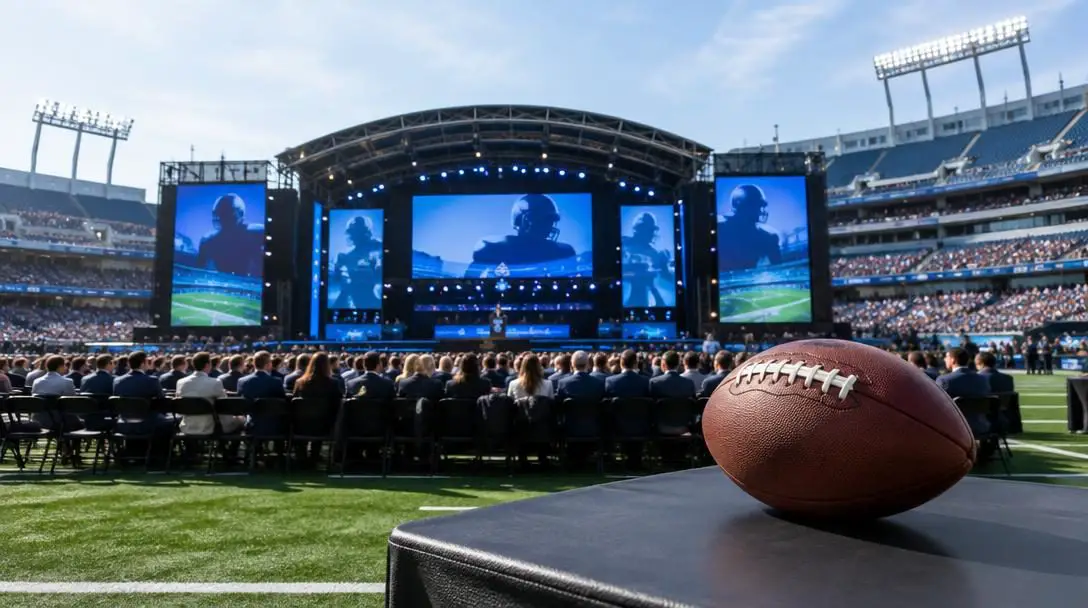
At the start of the National Football League Draft, the franchise holding the first overall pick shoulders the heaviest expectations of the entire offseason. Traditionally awarded to the team that finished with the worst regular-season record, this premier draft asset provides a struggling franchise with a rare opportunity: the chance to secure a singular, elite talent capable of reshaping an entire organization and restoring Super Bowl aspirations.
Because the strategic and financial stakes are immense, front offices cannot evaluate every position through an identical lens. Over decades of professional football, shifting rulebooks, offensive philosophies, and roster economics have reshaped draft value. Looking across the history of the event reveals clear trends regarding which roles dominate the top spot—and how the modern passing era permanently reorganized the draft board.
Key takeaways
- Quarterback stands as the most drafted position at number one overall, dominating the twenty-first century as the game shifted toward passing efficiency.
- Running backs held the historic top spot for decades until the mid-2000s, but no running back has been chosen first overall since 1995.
- Defensive linemen and left tackles represent the primary alternatives when quarterback-needy clubs trade back or when top-tier passers are unavailable.
- Wide receivers and tight ends rarely go first overall due to exceptional depth throughout the middle rounds of the draft.
The Evolution of NFL Draft Positional Values
The strategic framework of the NFL Draft has undergone monumental shifts across eras, reflecting the changing nature of on-field competition. In the formative decades of professional football, winning was dictated by physical ground attacks, time of possession, and suffocating defensive fronts. Rushing offenses wore down opposing defenses, making workhorse running backs and powerful interior blockers the foundational cornerbacks of franchise building.
Over time, rule modifications specifically designed to protect passers and encourage downfield passing systematically transformed the sport into an aerial showcase. Front offices quickly adjusted their asset allocation to match the game's new economic realities. Draft equity concentrated heavily on positions that directly govern the passing game: the quarterbacks who orchestrate it, the edge rushers who disrupt it, and the left tackles who protect against edge pressure. As a result, positions that once enjoyed regular top-five billing during the twentieth century have experienced steep declines in first-overall frequency.
Historical Hierarchy: Positions at a Glance
| Position | Historical Frequency Rank | Most Recent Era of Dominance | Notable First Overall Selections |
|---|---|---|---|
| Quarterback | Rank 1 | 2000s–Present | Michael Vick, Eli Manning, Andrew Luck, Trevor Lawrence |
| Running Back | Rank 2 | 1960s–1980s | O.J. Simpson, Earl Campbell, Bo Jackson, Ki-Jana Carter |
| Defensive Lineman | Rank 3 | 2000s–Present | Mario Williams, Myles Garrett, Travon Walker |
| Offensive Lineman | Rank 4 | 1990s–2010s | Chuck Bednarik, Orlando Pace, Jake Long, Eric Fisher |
| Wide Receiver / Tight End | Rank 5 | 1980s–1990s | Irving Fryar, Keyshawn Johnson |
The 5 Positions With the Most #1 Overall Picks
Quarterback
- All-Time Rank: 1
- 2000s Representation: 14 of the first 20 picks
- Record Consecutive Streak: 5 straight drafts (2001–2005)
The quarterback position sits undisputed at the top of NFL Draft history. Once the position officially bypassed running backs for the most total first overall selections, it never relinquished the lead. The sustained rise of the modern passing offense turned a franchise signal-caller into the single most influential asset in professional team sports.
The early twenty-first century cemented this reality. Across the first twenty drafts of the 2000s, an astounding 14 selections went to quarterbacks. Between 2001 and 2005, the league witnessed its longest consecutive streak of quarterbacks taken at number one, drafting Michael Vick, David Carr, Carson Palmer, Eli Manning, and Alex Smith in rapid succession. Later years produced marquee top selections like Cam Newton, Andrew Luck, Kyler Murray, and Trevor Lawrence, ensuring that the quarterback position will continue widening its historical margin over all other positions.
Running Back
- All-Time Rank: 2
- Historical Status: Most drafted position until the mid-2000s
- Most Recent #1 Pick: Ki-Jana Carter (1995)
Running back represents the clearest example of shifting positional economics in football history. For decades, a dominant rusher was viewed as the non-negotiable engine of any competitive offense. That roster-building philosophy kept running backs firmly entrenched as the most-drafted position at number one overall through the mid-2000s, despite an emerging drought at the top of the board.
Draft history features an elite fraternity of top overall rushers, including legends like O.J. Simpson, Earl Campbell, and Bo Jackson. However, the position has suffered a historic freeze at the top spot. No running back has been selected first overall since 1995, when the Cincinnati Bengals drafted Penn State standout Ki-Jana Carter, whose career was ultimately derailed by injuries. In the current football landscape, running backs struggle to earn consideration even in the middle of the first round, making a modern return to the top selection almost unthinkable.
Positions that once ruled the draft board in the twentieth century have experienced marked declines in value, making room for a modern hierarchy dominated by high-impact signal-callers and edge rushers.
Defensive Lineman
- All-Time Rank: 3
- Primary Target: Edge pass rushers
- Notable 21st-Century Selections: Mario Williams, Myles Garrett, Travon Walker
As passing schemes became increasingly prolific, defensive philosophies transformed in direct response. To counteract elite passing efficiency, front offices turned to disruptive defensive linemen capable of collapsing the pocket and generating unassisted pressure on opposing passers. High schools and collegiate programs responded by producing edge rushers with unprecedented combinations of size, bend, and explosive burst.
Defensive linemen have become the consensus contingency selection whenever a team picking first already possesses a quarterback or determines that the draft class lacks an elite passer. In recent eras, players such as Mario Williams, Myles Garrett, and Travon Walker entered the league as number one picks. The Jacksonville Jaguars provided a prime example of this strategy by selecting Walker first overall just one year after spending their top pick on quarterback Trevor Lawrence.
Offensive Lineman
- All-Time Rank: 4
- Modern Positional Concentration: Left tackle
- Historic Pre-1950 Baseline: 2 selections (both centers)
Selecting an offensive lineman at number one is a targeted, stabilizing investment. Front offices generally consider this move under two conditions: the team already has its franchise quarterback in place and needs an elite protector, or the scouting department views a tackle as a safe, high-floor anchor during a draft cycle that lacks transcendent star power at the skill positions.
The history of offensive linemen selected first overall is split by a clear temporal divide. Prior to 1950, only two offensive linemen heard their names called first, and both operated at center: Ki Aldrich and Chuck Bednarik. Since 1950, however, every single offensive lineman chosen first overall has played left tackle, the position charged with shielding a right-handed passer's blind side. Hall of Famer Orlando Pace, Jake Long, and Eric Fisher all headline this distinct group of foundational linemen.
Wide Receiver / Tight End
- All-Time Rank: 5
- Most Recent #1 Pick: Keyshawn Johnson (1996)
- Historic Predecessor: Irving Fryar (1984)
Wide receivers and tight ends present an interesting draft paradox. Despite the modern game revolving around passing yards and explosive aerial concepts, pass-catchers almost never contend for the first overall pick. Front offices have repeatedly found that elite receiving production can be identified outside the opening selections.
NFL draft history reinforces this philosophy through exceptional mid-round value: Davante Adams arrived in the second round, Terry McLaurin in the third, and perennial All-Pros Tyreek Hill and Stefon Diggs both slipped into the fifth round. Because draft classes consistently offer wide receiver depth, spending the premier pick on a pass-catcher is viewed as inefficient. Only two receivers have gone first overall in modern history: Irving Fryar to the New England Patriots in 1984, and Keyshawn Johnson to the New York Jets in 1996.
The Multi-Phase Scouting Process for the First Overall Pick
Evaluating candidates for the top overall pick is an intensive, multi-month endeavor designed to eliminate uncertainty. Because a failure at number one can handicap a front office for half a decade, decision-makers deploy an exhaustive five-stage scouting apparatus:
- Roster and Positional Audits: Immediately after the regular season concludes, front-office personnel conduct deep analyses of their existing roster to determine whether the team requires a franchise signal-caller, an anchor on the offensive or defensive lines, or a trade package to gain additional draft capital.
- Athletic and Medical Scouting: Personnel departments attend postseason all-star games, the NFL Scouting Combine, and college pro days to verify a prospect's physical capabilities, health history, and positional athletic profiles.
- Film and Analytical Breakdown: Coaches and video coordinators study years of game tape, charting every snap to measure how well the collegiate player's traits will translate against professional competition.
- In-Person Interviews and Psychological Testing: Teams use formal interviews to assess high-profile prospects' mental processing, leadership capabilities, work ethic, and ability to handle the psychological pressure of leading an entire NFL franchise.
- Trade Market Assessment: The franchise holding the pick listens to incoming trade offers from quarterback-needy clubs looking to move up, balancing the potential value of multiple future high draft picks against the value of drafting a singular generational talent.
Strategic Roadmap: Practical Steps for Holding Pick Number One
Successfully navigating the premier pick requires discipline and institutional alignment. Front offices that avoid disastrous selections typically follow a structured five-step methodology.
- Establish Internal Consensus: Align the priorities of the team owner, general manager, and head coach regarding the direction of the franchise before beginning deep prospect interviews.
- Grade Players on Strict Positional Value: Evaluate elite talent against the economic reality of the salary cap, giving preference to premium positions like quarterback, left tackle, and edge rusher over non-premium roles.
- Set Firm Trade Thresholds: Determine early on what specific compensation package would justify surrendering the pick to another franchise, ensuring the front office is not swayed by panic on draft night.
- Examine the Scheme Fit: Confirm that the prospective player's unique skill set matches the coordinator's playbook, preventing a scenario where a gifted athlete is miscast in an unsuitable role.
- Build a Foundational Support Structure: Prepare the coaching staff and depth chart in advance to ensure the incoming rookie has the mentorship and infrastructure needed to thrive upon arrival.
Critical Pitfalls and Common Mistakes at the Top of the Board
Holding the top pick provides unmatched organizational leverage, yet history is littered with costly draft-day blunders. Teams repeatedly succumb to several identifiable errors when making the final call:
- Selecting for Need Over Positional Value: Reaching for an immediate hole at a low-impact spot rather than targeting a premium cornerstone caps the team's long-term competitive ceiling.
- Overreacting to Pure Athletic Workouts: Prioritizing extraordinary combine metrics while ignoring years of inconsistent or mediocre college tape frequently leads to overdrafting developmental athletes.
- Ignoring Roster Infrastructure: Placing a rookie quarterback into an environment devoid of offensive line protection or capable receivers regularly ruins early career development.
- Falling for the Sunk Cost Fallacy: Passing on a generational prospect at quarterback simply because the team invested an early draft pick in an average passer in recent seasons prolongs losing cycles.
- Drafting Under Ownership Pressure: Allowing an owner to mandate a splashy, marketing-driven selection over the scouting department's verified board ruins strategic continuity.
Key Factors Shaping Future Number One Selections
As professional football continues to adapt, front-office decision-makers face new challenges that will shape future draft boards. Rising veteran salaries at positions like quarterback, left tackle, and edge rusher make cost-controlled rookie deals at those spots far more valuable than contracts at positions like running back or interior defense.
Furthermore, the growing divide between college spread schemes and pro-style expectations complicates projection models. Evaluators must gauge how quickly collegiate passers and blockers can adjust their footwork, read progressions, and pass-protection pickups. At the same time, the willingness of aggressive clubs to package massive hauls of future first-round picks makes trading down an increasingly tempting alternative for franchises holding the first overall choice.
Frequently asked questions
Why did running backs drop out of first-overall contention?
Rule changes tilted the league toward passing, reducing the strategic value of running backs while shortening their average career lengths. Additionally, productive running backs can frequently be secured in later rounds, making a top overall selection an inefficient use of draft capital.
Who was the last running back selected first overall?
Ki-Jana Carter was selected first overall by the Cincinnati Bengals in 1995 out of Penn State. No running back has been chosen with the premier pick since then.
Can an interior offensive lineman go first overall?
Historically, two centers have gone first overall: Ki Aldrich and Chuck Bednarik. However, both of those selections occurred prior to 1950. Since 1950, every offensive lineman drafted first overall has been an offensive left tackle.
Why are wide receivers rarely taken with the top selection?
Wide receiver classes provide exceptional depth year after year, allowing organizations to find premier starters like Davante Adams, Terry McLaurin, Tyreek Hill, and Stefon Diggs in the second, third, or fifth rounds rather than spending pick number one on the position.
What is the longest streak of quarterbacks selected first overall?
The NFL Draft saw five consecutive quarterbacks selected first overall from 2001 through 2005: Michael Vick, David Carr, Carson Palmer, Eli Manning, and Alex Smith.
The Bottom Line
The composition of the first overall pick serves as a living historical record of how football strategy has evolved over nearly a century. From the bruising early days when running backs and centers anchored draft classes to the contemporary era dominated by franchise quarterbacks and blindside protectors, draft priorities mirror the sport's shifting economics.
For any organization holding the premier pick, the historical blueprint is clear: prioritize premium roles that influence the passing game, maintain strict positional discipline, and resist short-term pressure. While finding a generational talent is never guaranteed, adhering to the lessons of draft history gives front offices their best chance of securing a truly transformative cornerstone.