5 Principles To Improve At Chess

Chess is an ancient and enduring game of strategy that continuously challenges competitors of every skill tier. Whether an absolute novice is sitting down for an introductory match or a seasoned veteran has contested hundreds of tournament boards, the game regularly reveals fresh layers of tactical and positional depth. At its foundation, chess is not a careless race to capture enemy pieces at random; rather, it represents a rigorous intellectual contest where every single move carries enduring consequences for the overall position. When players study the board, calculate tactical threats, formulate cohesive combinations, and project turns ahead, they actively exercise essential higher-order thinking skills, critical analysis, and problem-solving disciplines.
However, achieving noticeable improvement across the 64 squares does not occur overnight. Without an established foundation of strategic guideposts, players frequently become paralyzed by the sheer volume of legal candidate moves available on every turn. Navigating this vast complexity requires reliable operational rules of thumb. By anchoring one's play to five core principles—understanding harmony, avoiding self-inflicted blockages, dominating the center, safeguarding the king, and actively mobilizing key pieces—any player can cut through tactical noise, make purposeful decisions, and steadily elevate their competitive performance.
Key takeaways
- Chess pieces must function as a synchronized, harmonious unit rather than reckless, isolated combatants.
- Controlling the four primary central squares grants superior mobility, geographic reach, and attacking flexibility.
- Securing the king through early castling and maintaining an intact pawn shield prevents disastrous tactical ambushes.
- Mobilizing minor pieces promptly into the action establishes back-rank coordination and avoids self-inflicted positional blockages.
- Victory often stems from identifying when opponents violate strategic fundamentals and punishing their resulting positional weaknesses.
Core chess principles at a glance
To navigate the opening and middlegame successfully, players must balance tactical aggression with structural discipline. The following comparative overview outlines how the five core principles guide over-the-board execution and help eliminate common blunders.
| Strategic Principle | Primary Objective | Key Tactical Benefit | Critical Danger to Avoid |
|---|---|---|---|
| Understand the Harmony | Coordinate the full army as a team | Outnumbers opposing forces in active zones | Launching premature, unsupported solo assaults |
| Don't Block Your Pieces | Maintain clear sightlines and lanes of transit | Preserves diagonal and lateral piece mobility | Trapping bishops behind pawns or clumsy knights |
| Focus on the Center | Control squares E4, D4, E5, and D5 | Provides shorter travel paths to both board flanks | Drifting pieces out toward peripheral rim squares |
| Safeguard Your King | Execute early castling and preserve pawn shields | Shields the monarch from devastating vertical pins and checks | Pushing king-adjacent pawns forward unnecessarily |
| Develop Your Best Pieces | Deploy minor pieces early and activate heavy units | Empties the back rank to establish full army readiness | Leaving powerful pieces passive on their starting squares |
The five essential principles of sound chess play
Internalizing the mechanics behind each fundamental rule is the single most critical step in transitioning from a reactive beginner to an intentional tactician. These guidelines function as an internal compass, ensuring that every piece maneuver serves a broader competitive purpose.
Understand the Harmony
Harmony on the chessboard is fundamentally about ensuring that all available resources operate in balanced unity. A common beginner misconception involves viewing chess pieces as solitary gladiators embarking on individual skirmishes. In reality, chess demands that every piece coordinates seamlessly with its peers. A cohesive army functions as a unified team, and extracting maximum value from your forces requires bringing all of them into active engagement.
A solitary piece lunging forward into well-defended enemy territory will rarely accomplish anything decisive against an alert defender. Effective tactics require critical mass. During the opening sequence of a match, your overarching priority should be to vacate more pieces from their original squares than your opponent manages to mobilize. By out-developing your adversary, you effectively enjoy a numerical superiority when the initial tactical skirmishes erupt across the board.
Chess pieces cannot act as isolated combatants; true tactical strength emerges only when your entire army operates in balanced, concerted harmony.
Don't Block Your Pieces
Because chess contains an almost limitless web of geometric possibilities, it is remarkably easy to trap yourself by obstructing the movement lanes of your own units. Preventing self-inflicted positional paralysis begins with mastering the unique physical capabilities and directional tendencies of every piece in your set. While a knight can uniquely hop across crowded, congested squares using its distinctive L-shaped stride, a bishop depends strictly on clear, unobstructed diagonal corridors of a specific color complex.
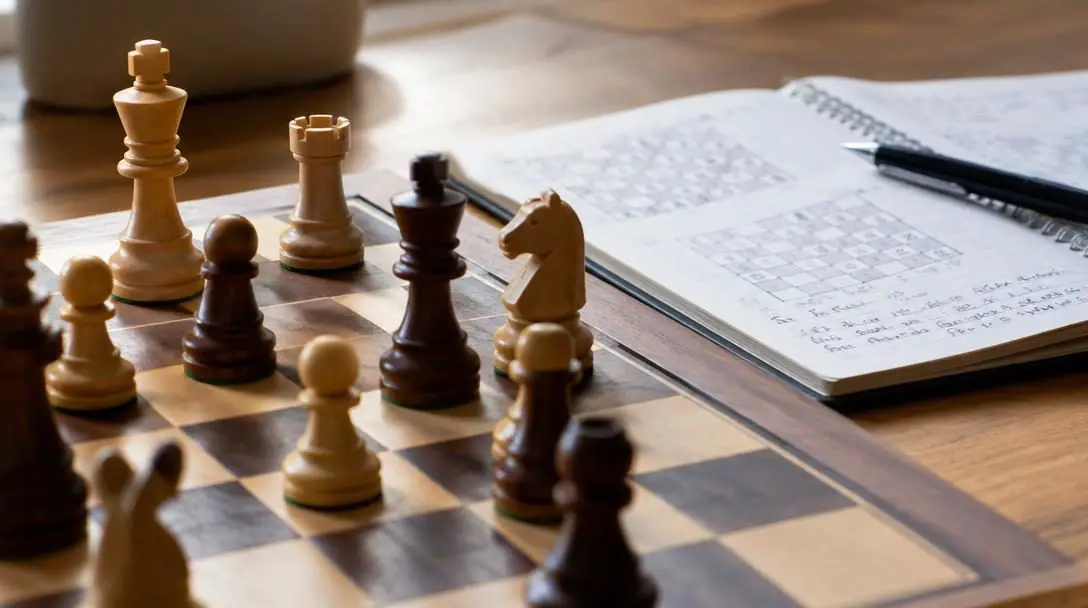
Before placing any piece onto a new square, you must deliberately evaluate the destination square's ripple effects on the rest of your formation. Ask yourself whether a proposed move inadvertently shuts down a rook's open file, fences in a friendly bishop, or cramps your queen's operational scope. It is just as easy to defeat yourself through careless coordination as it is to be outplayed by your opponent. Maintaining fluid pathways guarantees your army remains agile enough to respond to unexpected threats.
Focus on the Center
Chess is an intricate battle for board real estate, and no territory possesses greater strategic value than the central quadrant. Specifically, the four central squares—E4, D4, E5, and D5—serve as the epicenter of all tactical influence. Dominating or actively contesting these four squares is directly comparable to capturing and fortifying the high ground on a traditional military battlefield.
Units stationed in or directing their firepower toward the center exert superior territorial influence across the entire board. Because the center is geographically equidistant from the kingside and queenside, centralized pieces enjoy significantly reduced transit times when shifting between wings to launch an attack or shore up an urgent defensive weakness. In contrast, pieces exiled to the outskirts or edges of the board operate with severely curtailed vision and minimal tactical impact.
Safeguard Your King
King safety is a non-negotiable reality dictated by the fundamental rules of the game. If your king falls into an inescapable checkmate, the match instantly terminates, regardless of how many enemy queens, rooks, or minor pieces you might have accumulated along the way. Despite this binary outcome, players often become so consumed by their own aggressive maneuvering that they completely overlook their leader's vulnerability.
Preserving your king's life involves two primary structural defenses:
- Execute castling at the earliest safe juncture: Castling allows your king to slide two squares laterally toward the flank while the corner rook hops over to take up an immediate defensive guard post and enter active play.
- Preserve the protective pawn shield: The pawns positioned directly in front of your castled king form a crucial physical wall. Pushing these pawns forward without absolute necessity tears open crucial lines, leaving your monarch defenseless against fast-striking enemy queens, bishops, and rooks.
Develop Your Best Pieces
In chess nomenclature, development simply refers to moving your forces away from their passive initial starting ranks and into productive operational squares. Leaving elite units stranded on home squares out of a hyper-cautious fear of losing them represents a critical positional failure. For instance, hoarding a queen in the rear rank out of concern that she might be targeted accomplishes little, rendering your most powerful asset completely ineffective.
Effective development demands a logical, systematic sequence. As a baseline rule, minor pieces—knights and bishops—should always be developed before major pieces. Knights and bishops are tailored to contest the center immediately, and ushering them into the field clears the baseline, enabling rooks to connect and granting the queen unrestricted avenues to support tactical maneuvers.

A disciplined turn-by-turn routine for board evaluation
Translating abstract tactical concepts into consistently sound over-the-board decisions requires an intentional decision-making process. Adopting a structured assessment protocol on every turn prevents impulsive blunders and reinforces strategic habits.
- Evaluate the home rank grid: At the start of the game, scan your baseline to identify dormant pieces. Prioritize moving undeveloped knights and bishops into the fray rather than wasting tempos by repeatedly shuttling the same active piece.
- Stake a claim in the center: Direct initial pawn pushes and minor piece trajectories toward occupying or pressuring the E4, D4, E5, and D5 squares to secure optimal lateral mobility.
- Inspect corridors and lines of sight: Prior to completing any move, double-check that the new destination does not create an impassable wall in front of your bishops, trap a rook, or interfere with queen connectivity.
- Prioritize king shelter via castling: Seek the first viable, risk-free opportunity to castle your king behind a solid phalanx of pawns, simultaneously activating your corner rook.
- Marshall heavy pieces for concerted action: Once minor pieces and king safety are secured, deploy your queen and rooks to open files and supporting squares, unifying your army for coordinated pressure.
Five critical opening mistakes that derail players
Even when players understand basic board movement, subtle procedural errors can dismantle an otherwise sound position. Eliminating recurring tactical bad habits is often the fastest way to stabilize game outcomes.
- Moving the same piece multiple times: Expending three or four consecutive turns to reposition an already active knight or bishop leaves the remainder of your army asleep, gifting your opponent a critical lead in mobilized forces.
- Neglecting central squares: Scattering minor pieces to the edges of the board or pushing flank pawns while completely ignoring E4, D4, E5, and D5 surrenders the vital high ground, allowing enemy pieces to overrun your camp.
- Creating accidental self-blockages: Dropping a piece onto a square that walls off a friendly bishop diagonal or traps a rook behind an awkward pawn structure severely cramps your tactical flexibility.
- Prematurely lunging with king-shield pawns: Thrusting the pawns stationed in front of your castled king forward creates permanent defensive holes, opening fatal diagonals for opposing bishops and heavy pieces to exploit.
- Cowering in fear of piece loss: Keeping valuable pieces like the queen or rooks glued to their starting squares out of anxiety guarantees that you fight at a perpetual material deficit in terms of active board pressure.
Advanced considerations for competitive progression
While mastering these five fundamental guidelines constructs an indispensable platform for tactical growth, chess improvement remains a gradual, iterative journey. As these principles become second nature, players should observe how their dynamics shift as a match transitions across distinct phases.
In the opening, rapid piece deployment and king shelter reign supreme. However, as pieces are systematically exchanged and the game transitions into the middlegame and endgame, the principle of harmony takes on a different character. In simplified positions containing limited material, coordination between two or three surviving pieces often proves far deadlier than a disjointed collection of scattered opponent units. Maintaining unified support structures among remaining pawns, kings, and heavy pieces becomes the decisive factor in converting an advantage.
Additionally, consistent progress requires viewing the board through a dual lens. You must not only enforce these strategic guidelines within your own ranks, but you must also constantly audit your opponent's adherence to them. When an opposing player pushes their defensive king pawns, blocks their own bishop lanes, or delays minor piece development, they provide immediate, identifiable targets. A well-centralized, harmonious army can swiftly pivot to direct concentrated firepower against those self-inflicted structural weaknesses.
Frequently asked questions
Why are the central squares E4, D4, E5, and D5 so important in chess?
The four central squares represent the geographic high ground of the board. Units stationed in or controlling these squares possess wider reach, control more diagonals and ranks, and can quickly transfer to either the kingside or queenside as attacking or defensive needs arise.
Why should minor pieces be developed before the queen?
Developing minor pieces—knights and bishops—first clears the back rank, facilitates early castling, and controls the center. Bringing the queen out prematurely often exposes her to attacks from lower-value enemy pieces, forcing you to lose valuable turns retreating while your opponent develops their army.
How does castling improve overall piece coordination?
Castling achieves two vital objectives in a single turn: it moves the vulnerable king into a fortified corner behind protective pawns, and it simultaneously mobilizes a corner rook toward central files where it can actively participate in the game.
What does harmony mean in a game of chess?
Harmony means that all your pieces work together in balanced coordination rather than pursuing isolated individual missions. A harmonious setup ensures that your pieces defend one another, control critical lanes, and concentrate their collective power against the opponent's position.
Why is pushing pawns in front of a castled king considered dangerous?
Those pawns serve as an indispensable physical shield. Advancing them permanently weakens the squares around your monarch and opens clear lines of sight, files, and diagonals that mobile enemy queens, rooks, and bishops can easily exploit to launch decisive mating attacks.
The bottom line
Chess will always remain an intellectual crucible that sharpens higher-order thinking, foresight, and problem-solving through iterative trial and error. The secret to consistent improvement lies not in memorizing endless variations, but in grounding every tactical calculation in sound positional logic. By conducting your army with harmony, safeguarding your king, maintaining clear movement lanes, seizing the center, and mobilizing your pieces without hesitation, you establish a resilient strategic framework. Regularly reviewing your completed games through the lens of these five principles will systematically eliminate costly blunders, sharpen your board vision, and produce vastly more rewarding victories.