5 Reasons Pickleball Is America’s Fastest Growing Sport
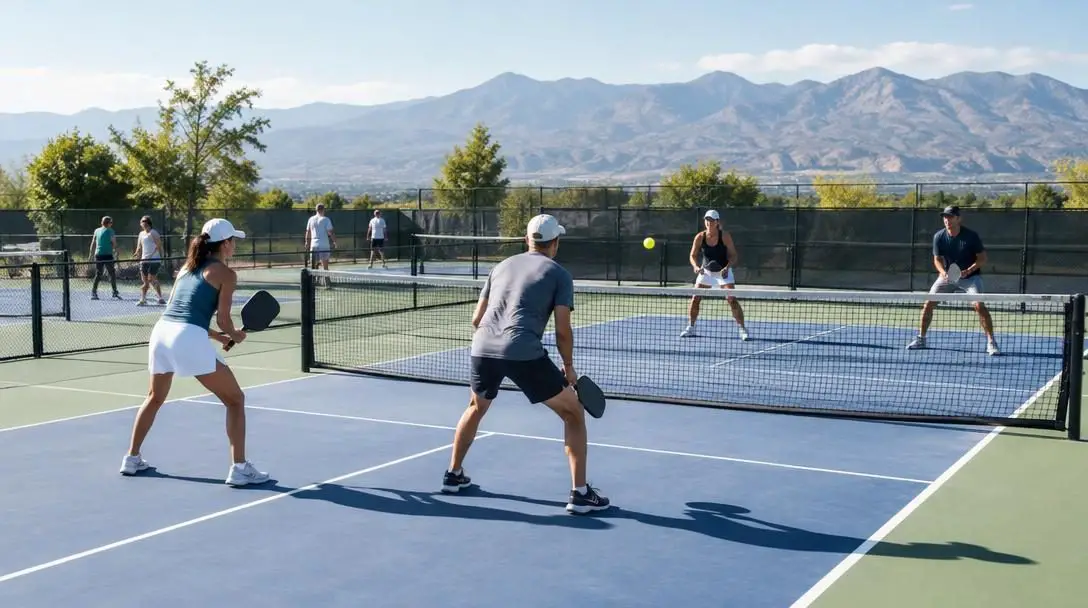
Across neighborhood parks, sports clubs, and municipal recreation centers, a rhythmic and unmistakable sound has become an everyday soundtrack. The distinctive clop-clop cadence of a perforated plastic ball ricocheting off solid paddles marks the rapid ascent of pickleball, which has transitioned from a quiet backyard pastime into a cultural phenomenon. As municipal departments convert underutilized blacktop and tennis facilities re-stripe their courts to accommodate crowds, the sport's rapid growth has reshaped community athletics nationwide.
Recent estimates show that roughly five million players now participate across the United States, with participation expanding at a consistent pace of approximately 15 percent each year. Although a casual glance might suggest an offshoot of standard tennis, pickleball features a distinct identity, tailored geometry, and tactical cadence all its own. Played with solid, paddle-style gear on a scaled-down court, the game centers heavily around doubles play, making it accessible, social, and remarkably engaging from the very first rally.
Key takeaways
- Pickleball currently engages around five million players nationwide, expanding at roughly 15 percent annually.
- Matches use a 20-by-44-foot court, a net hung at 34 inches in the center, and a perforated plastic ball.
- Newcomers can master the core mechanics and play full matches within about an hour of starting.
- Tactics, soft shot placement, and court positioning balance out advantages in raw athletic power or strength.
- Community open play and standardized paddle rotation systems allow individuals to drop in without scheduling partners.
How Pickleball Compares to Other Racket Sports
To understand the mechanics that set pickleball apart, it helps to examine its technical specifications against its historical forebears, tennis and badminton. While it borrows elements from both, its structural parameters prioritize touch, control, and fast-paced reaction times over raw power and baseline sprinting.
| Attribute | Pickleball | Tennis | Badminton (Doubles) |
|---|---|---|---|
| Court Dimensions | 20 feet by 44 feet | 36 feet by 78 feet | 20 feet by 44 feet |
| Net Height | 36 inches at sidelines, 34 inches at center | 42 inches at sidelines, 36 inches at center | 61 inches at edges, 60 inches at center |
| Striking Gear | Solid paddle (composite or wood) | Stringed frame racquet | Lightweight stringed racquet |
| Projectile | Perforated plastic ball | Pressurized felt-covered rubber ball | Feathered or synthetic shuttlecock |
| Primary Movement | Short bursts, lateral shuffling, net control | Long baseline sprints, aggressive sliding | High jumps, rapid lunges, vertical reach |
The Five Drivers Behind Pickleball's National Surge
The meteoric rise of the game is neither a temporary fad nor a lucky accident. It reflects deliberate structural factors that remove conventional barriers to racket sports, fostering an environment where skill progression is rapid and social engagement is automatic.
1. Rapid Learning and Minimal Upfront Expenses
Traditional racket sports often require a steep learning curve, requiring newcomers to endure weeks of private coaching, footwork drills, and repetitive swing mechanics before they can sustain a basic rally. Pickleball eliminates that early barrier. Because the court is compact and the perforated ball travels at moderate velocities, a complete novice can grasp the foundational rules in approximately one hour and participate in full games on their first day.
Financial accessibility equally fuels this momentum. Unlike sports requiring expensive club memberships or specialized arrays of racquets and footwear, all that is genuinely required to play is a paddle and a supportive pair of athletic shoes. Many public introductory clinics provide loaner paddles for free. Even if you choose to buy your own equipment, quality entry-level or intermediate paddles can be purchased for $100 or less, leaving ongoing expenses close to zero at municipal courts.
2. Balanced Competition Across Gender and Age
In many field and court sports, raw physical size, sprinting speed, and upper-body strength dictate competitive success. In pickleball, those biological factors offer marginal advantages compared to sharp reflexes, patience, and deliberate placement. The presence of the seven-foot non-volley zone neutralizes overhand smashes and forces players into a battle of touch rather than sheer brute force.
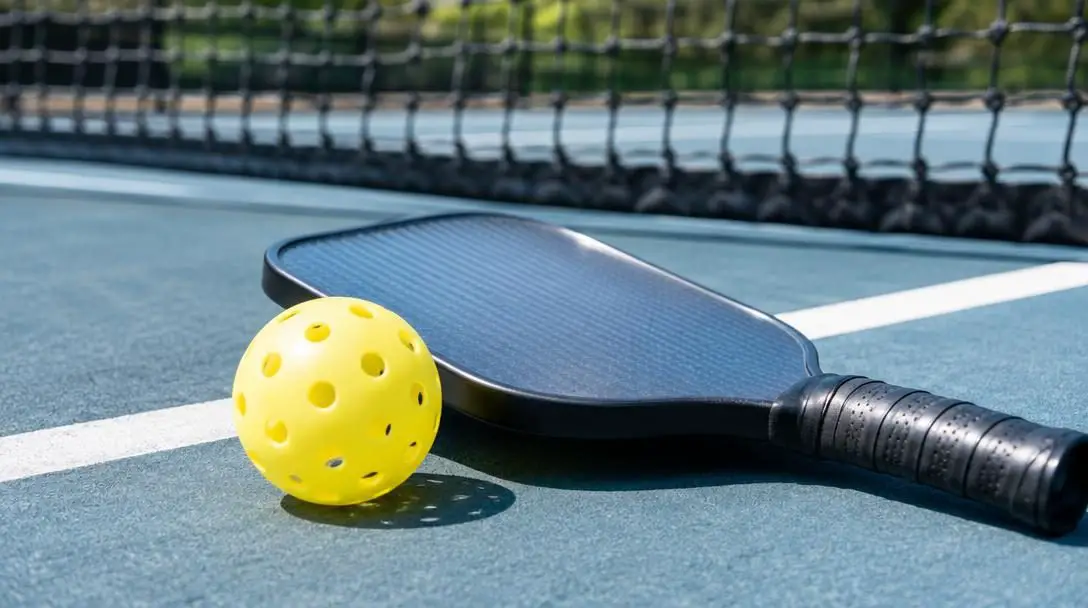
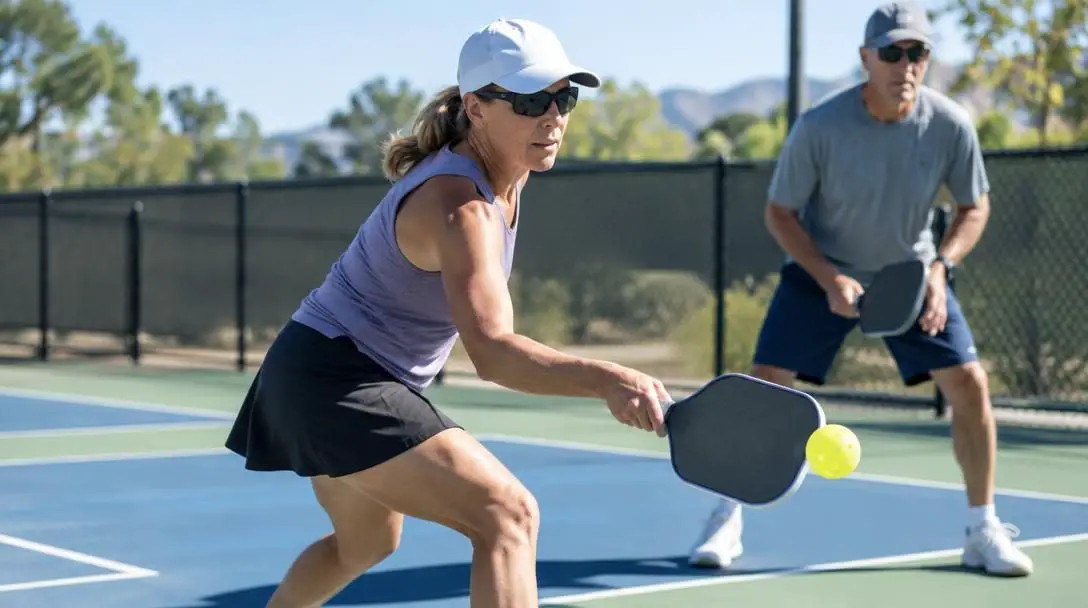
While official tournament divisions divide players into gender categories, recreational drop-in play does not. It is entirely ordinary to see co-ed doubles matchups where women routinely outplay men through strategic dinking and defensive resets. Grandparents can match up evenly against their teenage grandchildren, making the sport one of the rare intergenerational athletics where neither party must compromise their competitive effort.
In pickleball, strategic dinking and patient placement consistently triumph over raw athleticism and brute force.
3. Turnkey Participation Through Open Play
Modern adult schedules often make organizing sports teams or setting up four-player tennis matches a logistical chore. Pickleball sidesteps this obstacle through its culture of open play. Instead of reserving a court, coordinating calendars, or securing a partner in advance, an individual can simply arrive at a public facility with a paddle.
Most community venues rely on an intuitive paddle rotation rack. Players place their paddles in an orderly queue, and when an active match concludes, the next group of four rotates onto the court. This dynamic ensures an ever-shifting mix of teammates and opponents during a single morning or evening session, allowing players to build a broad network of community acquaintances while guaranteeing continuous games.
4. Lower Impact on Joints and Connective Tissue
A substantial segment of the active pickleball population consists of former tennis and squash enthusiasts who stepped away from those pastimes due to wear and tear on their bodies. The compact dimensions of the court mean that doubles players cover far less acreage per point, substantially reducing mechanical strain on knees, ankles, and hips.
Furthermore, underhand serving and the lightweight nature of the ball place noticeably less torque on the shoulder rotator cuff and elbow joints compared to an overhand tennis serve. Because players frequently sit out for a round or two between paddle rotations, the sport offers built-in periods for recovery and hydration. This structure produces meaningful cardiovascular exercise without pushing the body toward severe exhaustion.
5. High Social Cohesion and Unmatched Entertainment
The sheer entertainment value of the sport is infectious. Because rallies are sustained, points develop into rapid-fire volley exchanges and strategic cat-and-mouse games at the net. The satisfaction of executing a soft drop shot, surviving an opponent's drive, and hitting a crisp winner creates a compelling loop that keeps players returning day after day.
Beyond the technical play, the sideline culture is uniquely warm. Because open-play rotations place four players on a court while others wait nearby, courtside benches naturally transform into social hubs. Participants converse, compare equipment, and organize casual round-robins. The game functions just as effectively as a community gathering space as it does an athletic competition.
Understanding Court Mechanics and Foundational Rules
To play the game cleanly, one must understand the unique guidelines that govern the flow of each point. While basic hand-eye coordination transfers readily from other pastimes, pickleball incorporates specific structural boundaries designed to encourage long, tactical exchanges.
A standard pickleball court measures exactly twenty feet wide by forty-four feet long, matching the outer boundaries of a doubles badminton court. The net stands 36 inches high at the perimeter posts and sags slightly to 34 inches at the absolute center. The most critical landmark on the surface is the seven-foot non-volley zone, colloquially known as "the kitchen," extending across the full width of the court on both sides of the net.
The flow of competition centers around four core regulations:
- The Underhand Serve: Serves must be struck underhand, with contact made below waist level in an upward arc. The ball must cross the net diagonally into the opponent's service court, clearing the non-volley zone line completely.
- The Two-Bounce Rule: Following the serve, the receiving team must allow the ball to bounce once before striking it. Likewise, the serving team must allow the return shot to bounce once before hitting it. Once these two initial bounces have occurred, either side may volley the ball in the air or play it off the bounce.
- The Non-Volley Zone (Kitchen) Restriction: A player may never strike the ball directly out of the air while standing inside the seven-foot kitchen, nor may their momentum carry them onto the kitchen line after hitting a volley. Players may only enter this zone if the ball has already bounced inside it.
- Side-Out Scoring to Eleven: Points are only scored by the team currently serving the ball. When the serving side commits a fault, the serve transfers to the other partner or to the opposing side (a side-out). Matches are typically played to eleven points, with victory requiring a two-point margin.
Step-by-Step Guide for Absolute Beginners
Stepping onto the courts for the first time does not require extensive preparation or athletic mastery. By taking a few straightforward steps, any newcomer can comfortably navigate their local venue and join active games immediately.
- Locate local public venues: Search community listings or consult the nationwide registry maintained by USA Pickleball. Many municipalities designate specific morning and evening hours for free, open recreational drop-in play.
- Acquire baseline equipment: Pick up a comfortable, intermediate composite paddle and flat-soled court sneakers designed for lateral movement. Running shoes should be avoided, as their high treads can catch on asphalt during side-to-side shuffling.
- Attend an introductory clinic: Check if your regional parks department hosts beginner orientations. These brief sessions walk participants through the unusual three-digit scoring method and court boundaries in thirty to forty-five minutes.
- Enter the open-play rotation: Walk up to the public courts, locate the paddle queue or staging rack, and introduce yourself as a beginner. Experienced locals will happily direct you into the appropriate skill grouping.
- Focus on depth and control: During your initial rallies, avoid the temptation to smash every ball. Prioritize deep returns that bounce near the baseline and soft underhand serves that consistently land in play.
Common Beginner Mistakes to Avoid
While the learning curve is exceptionally welcoming, newcomers frequently struggle with a handful of common habits carried over from other sports or everyday movement. Addressing these early on will significantly improve your efficiency on the court.
- Creeping into the kitchen on volleys: In the heat of a fast rally, players often instinctively drift forward and volley the ball while stepping on or inside the kitchen line. Train yourself to stop your forward momentum several inches behind the line before contacting an airborne shot.
- Hitting every ball with maximum force: Blasting every shot from the baseline usually results in hitting the net or launching the ball out of bounds. The most effective way to progress is mastering the soft "dink" and learning to drop the ball gently into the opponent's kitchen.
- Losing synchronization with your partner: Effective doubles teams move like two ends of an attached rope. If your partner is pushed out wide, slide over slightly to cover the middle gap. Avoid leaving one player at the baseline while the other stands at the net.
- Backpedaling on deep lobs: Moving straight backward while looking upward disrupts balance and increases the likelihood of a dangerous fall. Pivot sideways, turn your shoulders, and track the ball over your shoulder as you reposition.
- Overextending without proper rest: Because matches are engaging and low-impact, it is easy to play continuously for three hours without realizing how much fluid you have lost. Take proactive breaks between rotations to hydrate and rest in the shade.
Frequently asked questions
How much does it cost to start playing pickleball?
Starting out is very inexpensive. Many introductory clinics provide loaner paddles for free, and a dependable intermediate composite paddle costs $100 or less. Aside from a sturdy pair of supportive athletic shoes, most public open play sessions at parks and community centers are completely free.
Can singles be played on a standard pickleball court?
Yes, singles matches are played on the exact same 20-by-44-foot court used for doubles. However, recreational open play is overwhelmingly focused on doubles because it encourages social interaction, requires less continuous sprinting, and maximizes court capacity.
What is the purpose of the non-volley zone, or kitchen?
The seven-foot non-volley zone prevents taller or more aggressive players from standing directly at the net to smash downward on every ball. By prohibiting volleys inside this space, the rule forces players to engage in strategic, soft exchanges known as dinking.
How does the two-bounce rule work during a rally?
After the ball is served, the receiving team must let the ball bounce once before returning it. The serving team must then also let that return bounce once before playing it. Once both of those initial bounces have taken place, either team is permitted to hit the ball out of the air as a volley, provided they stay outside the kitchen.
Where can I find public places to play pickleball near me?
USA Pickleball maintains an official nationwide directory of places to play that includes municipal parks, indoor centers, and repurposed tennis courts. In addition, localized mobile apps help players locate active drop-in sessions and monitor real-time court availability.
The bottom line
Pickleball's unprecedented growth across the United States is rooted in its rare balance of simplicity, tactical depth, and democratic appeal. By eliminating the steep learning curves and financial hurdles that often restrict entry into other court sports, it provides an open door for people of all ages, athletic backgrounds, and fitness levels to pick up a paddle and enjoy competitive exercise. Whether you are seeking a lighthearted weekend activity to stay mobile or looking to master the deliberate, nuanced strategy of net play, this thriving sport offers a welcoming court for everyone.