5 Strange Brain Injuries That Illustrate How Weird All Of Our Brains Are

The human brain governs everything from subtle emotional shifts to intricate mathematical calculations, yet its immense complexity makes it vulnerable to sudden disruption. When physical trauma strikes, the delicate neural pathways that coordinate standard cognitive processing are almost always compromised, frequently resulting in persistent functional challenges. Medical science has long recognized the catastrophic potential of traumatic brain injuries and vascular accidents, which demand intensive monitoring and careful rehabilitation.
Yet in a handful of extraordinary circumstances, severe damage leads to an outcome that baffles clinicians: the abrupt emergence of specialized cognitive talents or dramatic personality shifts. Known broadly within neurology as acquired savant syndrome or post-traumatic behavioral rewiring, these rare events shed light on the brain's astonishing capacity to reorganize its circuitry. Exploring these unusual case studies reveals just how adaptive, delicate, and deeply mysterious human neurobiology remains.
Key takeaways
- Severe brain trauma and strokes can, in exceptionally rare instances, rewire neural circuits to unlock sudden savant capabilities or eliminate specific emotional responses.
- Acquired abilities range from photographic recall and advanced geometric mathematics to professional-level visual art and musical performance.
- New cognitive gifts almost always arrive alongside serious physical or psychological burdens, including chronic pain, sensory impairment, post-traumatic stress disorder, and obsessive-compulsive tendencies.
- Head impacts must always be treated as medical emergencies rather than opportunities for cognitive enhancement, as standard outcomes involve long-term functional deficits.
At a glance: Five unusual case studies
While the overwhelming majority of traumatic injuries degrade cognitive function, the following cases highlight individuals whose physical trauma prompted unexpected cognitive and behavioral transformations.
| Individual | Initial Trauma Event | Acquired Ability or Trait | Associated Complications |
|---|---|---|---|
| Orlando Serrell | Baseball impact to left side of head (1979) | Photographic memory and advanced math skills | Prolonged initial headache |
| Jason Padgett | Violent assault and severe concussion (2002) | Geometric visualization and mathematical intuition | Post-traumatic stress disorder and obsessive-compulsive disorder |
| Malcolm Myatt | Frontal lobe stroke in his late 60s | Complete inability to experience sadness or depression | Five-month hospital rehabilitation period |
| Jon Sarkin | Stroke following surgical treatment for tinnitus | Compulsive artistic drive and professional visual expression | Profound sensory disorientation |
| Derek Amato | Pool floor collision causing traumatic brain injury | Instantaneous mastery of piano composition and performance | Persistent headaches and partial hearing loss |
Five remarkable case studies of brain transformation
Each of the following profiles documents an individual who sustained severe cranial trauma or vascular damage, only to emerge with cognitive capabilities or emotional baselines that diverged entirely from their previous lives.
Orlando Serrell
- Year of injury: 1979
- Mechanism of trauma: Baseball impact to the left side of the head
- Emergent abilities: Photographic memory and advanced mental arithmetic
In 1979, long before modern medical protocols mandated rigorous sideline evaluations for concussions in youth sports, young Orlando Serrell was struck forcefully on the left side of his head by a baseball. The blow knocked him to the ground, but he quickly returned to the game without immediate medical intervention. Following the impact, Serrell endured a persistent, throbbing headache that took time to subside.
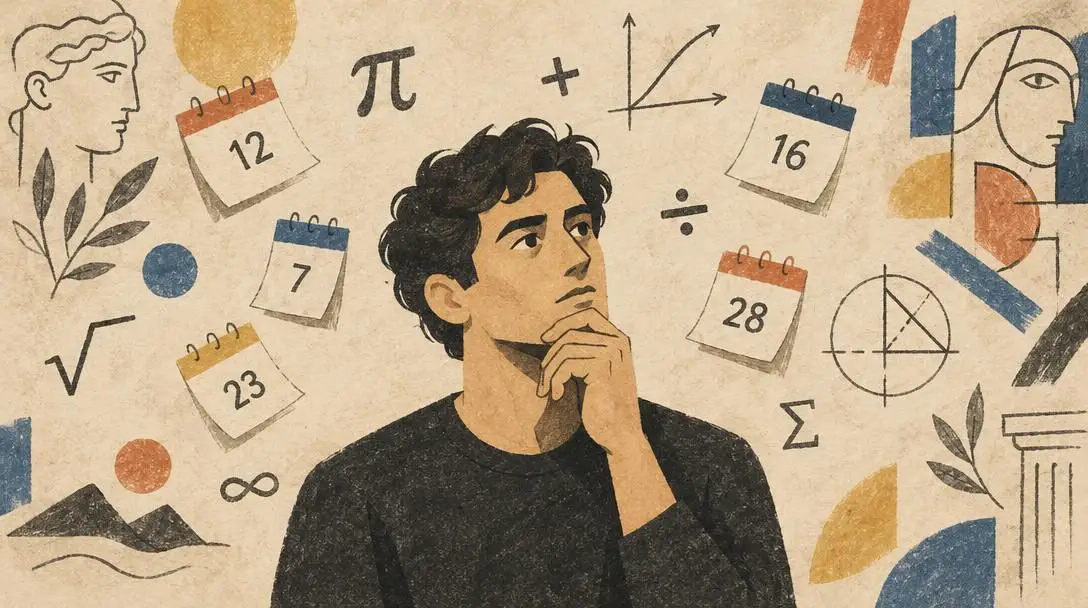
Once the initial pain dissipated, Serrell realized that his cognitive processing had altered dramatically. He developed an exceptional photographic memory, enabling him to recall precise calendar dates, weather conditions, and personal events from nearly every day following his injury. Alongside this near-total recall, his mathematical capacity surged far ahead of his peers, allowing him to compute complex arithmetic instantaneously. In his adult life, Serrell continues to pursue mathematics while also channeling his mental energy into drawing expansive murals.
Jason Padgett

- Year of injury: 2002
- Location of event: Tacoma, Washington
- Diagnosed conditions: Post-traumatic stress disorder, obsessive-compulsive disorder, and savant syndrome
An Alaska native who enjoyed extreme sports and showed little inclination toward academic study, Jason Padgett attended community college briefly before leaving to work as a furniture salesman. His life shifted permanently in September 2002 during an evening out with friends in Tacoma, Washington. While leaving an establishment, Padgett was ambushed from behind, brutally beaten, and robbed, sustaining a severe concussion.
The traumatic assault led to severe psychiatric struggles, causing Padgett to develop profound post-traumatic stress disorder and obsessive-compulsive behaviors that dramatically narrowed his daily routine. However, the cranial trauma also induced a radical perceptual change: Padgett began perceiving his physical environment in intricate geometric shapes and grid-like visual fractals. This visual shift unlocked an intuitive, sophisticated comprehension of advanced mathematics and physics—subjects he had never previously studied or understood—eventually propelling him into the study of complex geometry.
Malcolm Myatt

- Prior occupation: Truck driver
- Medical incident: Frontal lobe stroke in his late 60s
- Hospital recovery: Approximately five months
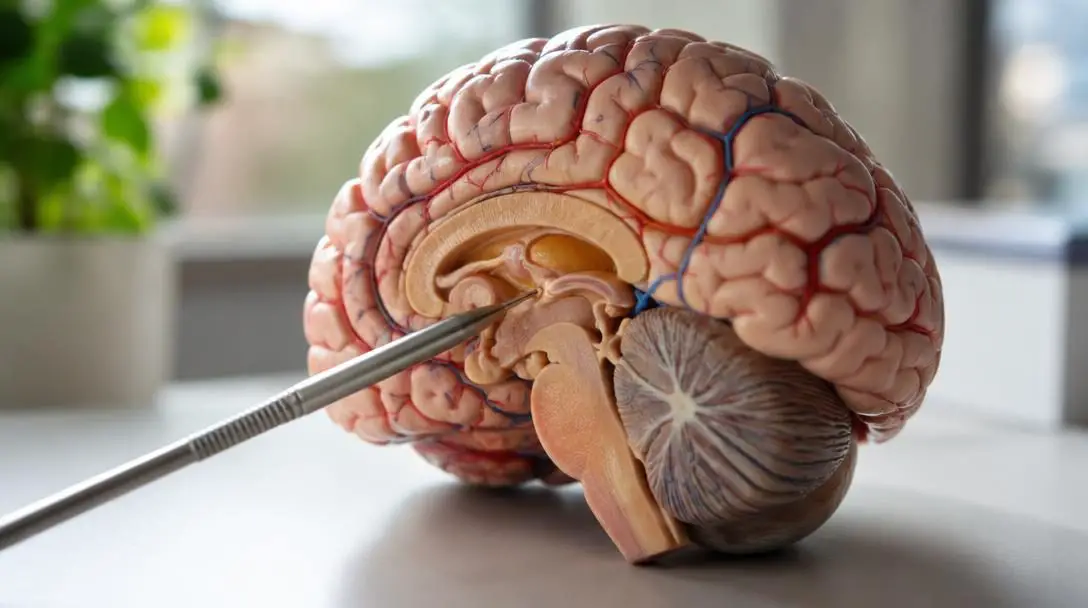
After retiring from a long career as a truck driver, Malcolm Myatt suffered a major stroke during his late 60s that required nearly five months of inpatient hospitalization. Diagnostic imaging revealed that the vascular event had concentrated in his frontal lobe, a critical region responsible for executive function, impulse control, and the modulation of emotional responses.
When Myatt regained stability, physicians and family members noticed a permanent emotional alteration: he had completely lost the neurobiological capacity to feel sadness or depressive moods. For the remainder of his life, Myatt maintained an unshakeable, cheerful disposition, frequently smiling and laughing regardless of the circumstances around him. Myatt personally viewed this outcome as an enviable advantage, stating that he was never depressed and firmly preferred an unyielding state of happiness over conventional emotional turbulence.
Jon Sarkin

- Original profession: Chiropractor
- Medical catalyst: Stroke resulting from tinnitus surgery complications
- Creative focus: Abstract, high-detail visual art and gallery exhibitions
Jon Sarkin grew up in New Jersey, earned a degree in environmental science, and established a steady professional career as a chiropractor throughout the 1980s, harboring virtually no interest in visual arts. Toward the close of that decade, however, Sarkin developed severe, debilitating tinnitus. He opted to undergo specialized surgery to alleviate the persistent ringing in his ears, but surgical complications triggered a major stroke.
The stroke caused a profound rewiring of Sarkin's cognitive and sensory processing. During his recovery, he experienced a compulsive, unyielding urge to draw, initially filling sketchbooks with dense, dark, and fragmented imagery that mirrored the newly altered state of his sensory world. Sarkin compared this strange transformation to tumbling into an environment akin to Alice in Wonderland, noting that while the experience was disorienting, it possessed a distinct fascination. His obsessive creative output evolved into a successful career as a celebrated outsider artist whose work has been exhibited across prominent art galleries.
A traumatic disruption fundamentally reshapes neural pathways, occasionally unlocking latent abilities while imposing substantial physical and psychological burdens.
Derek Amato

- Place of origin: Colorado
- Mechanism of injury: Impact with the bottom of a shallow swimming pool
- Secondary symptoms: Persistent headaches and partial deafness
Derek Amato, a Colorado native, was visiting his parents in South Dakota when a casual afternoon activity turned catastrophic. While attempting to catch a football tossed near a swimming pool, Amato leaped into the water without realizing how shallow it was, striking his head against the concrete floor. The impact produced immediate trauma, causing blood to drain from his ears and inflicting a severe traumatic brain injury.
Amato endured several days of acute medical stabilization, emerging from the initial crisis with partial hearing loss and chronic headaches. Shortly after returning home, he visited a friend's house, sat down at an electric keyboard, and began playing intricate, professional-level classical and contemporary piano music, despite having never taken a lesson or learned to read musical notation. Amato explained that he saw fluid, geometric streams of light moving across his field of vision that corresponded directly to musical notes, an ability he has since performed on national television broadcasts.
How trauma and neurological rewiring alter cognition
To comprehend how distinct individuals can emerge from life-threatening cranial trauma with rare cognitive abilities, it is necessary to examine how the central nervous system reacts to structural injury.

When physical impacts occur—such as the concussive blows sustained by Serrell, Padgett, or Amato—the brain accelerates rapidly against the interior wall of the cranium. This sheer force shears microscopic axonal fibers, destabilizes cellular membranes, and interrupts standard neurotransmitter signaling across widespread networks.
In contrast, vascular catastrophes such as the strokes experienced by Myatt and Sarkin starve localized brain tissue of oxygen and glucose. When tissue within the frontal lobe or adjacent sensory integration zones dies or becomes dormant, the inhibitory signals that typically suppress secondary or unconventional pathways are abruptly lifted.
The brain responds to these structural interruptions through neuroplastic compensation. If standard functional circuits are damaged or quieted, nearby undamaged regions may establish new connections to handle incoming stimuli. In extraordinary scenarios, this functional reallocation directs massive computational resources toward sensory processing, spatial patterning, or fine motor recall, producing the sudden symptoms of acquired savant syndrome.
Critical steps to take following a head injury
While the transformations experienced by these five individuals illustrate the brain's plasticity, head injuries are medical emergencies that require prompt, evidence-based care to prevent permanent impairment or death.
- Obtain immediate emergency medical evaluation: Any head impact involving loss of consciousness, fluid or blood draining from the ears, persistent vomiting, or profound disorientation requires urgent transport to an emergency facility.
- Enforce total cessation of physical activity: As historical cases reveal, continuing to play sports after an impact dramatically raises the likelihood of secondary, catastrophic brain trauma; any symptomatic individual must be removed from physical exertion immediately.
- Monitor continuously for progressive concussion markers: Caregivers must track symptoms over the initial 72 hours, watching closely for worsening head pain, light sensitivity, unequal pupil dilation, slurred speech, or severe lethargy.
- Integrate mental health screenings into recovery: Because physical brain trauma frequently destabilizes emotional regulation centers, clinical evaluations must screen for post-injury mood shifts, anxiety, depression, and obsessive behaviors.
- Establish safe, supervised outlets for cognitive shifts: If an individual exhibits sudden compulsive interests, sensory sensitivities, or altered modes of expression following trauma, care teams should provide supportive, low-stress environments to channel these changes safely.
Common misconceptions about acquired savant syndrome
Sensational accounts of sudden mathematical or musical mastery often lead to dangerous misunderstandings regarding how head trauma affects standard cognitive health.
- Believing head injuries unlock hidden human genius: High-functioning savant acquisition occurs in only a vanishingly small fraction of clinical cases; the standard outcome of traumatic brain injury involves memory loss, cognitive slowing, and physical deficits.
- Overlooking the immense suffering of survivors: Media profiles often emphasize newly acquired artistic or intellectual gifts while ignoring that survivors frequently deal with chronic pain, sensory overstimulation, PTSD, and social isolation.
- Equating the loss of sadness with optimal mental health: While eliminating negative emotion may initially sound appealing, emotional numbness indicates profound damage to executive frontal circuits, which impairs risk assessment and interpersonal empathy.
- Trusting outdated sports recovery traditions: Returning to competition immediately after a blow to the head—a common practice in past decades—is now known to expose vulnerable brain tissue to life-threatening secondary impact syndrome.
Frequently asked questions
What is acquired savant syndrome?
Acquired savant syndrome is an exceptionally rare condition where a person develops remarkable, specialized cognitive abilities—such as mathematical, artistic, or musical skills—following a severe head injury, stroke, or other central nervous system trauma.
How was Derek Amato able to play piano without any training?
Following a severe traumatic brain injury from diving into a shallow pool, Amato experienced a form of synesthesia where he perceived visual patterns and streams of light that intuitively translated into musical structure, allowing him to compose complex melodies instantly without formal lessons.
Can a stroke permanently remove a person's ability to feel sad?
Yes. As demonstrated by the case of Malcolm Myatt, a stroke that damages specific regulatory centers within the frontal lobe can sever the neural circuits responsible for generating negative emotions, leaving the individual in a persistent state of happiness or neutrality.
Why do acquired savants frequently develop obsessive-compulsive traits?
Brain trauma often disrupts the inhibitory circuits that balance focus and behavior, causing uninhibited neural firing that drives survivors toward repetitive, hyper-focused routines, obsessive interests, and heightened anxiety.
Is it ever safe to return to physical activity immediately after a concussion?
No. Returning to activity while the brain is concussed drastically increases the risk of compounded cellular damage, long-term cognitive impairment, and potentially fatal secondary impact syndrome; full rest and clinical clearance are mandatory.
The bottom line
The remarkable accounts of Orlando Serrell, Jason Padgett, Malcolm Myatt, Jon Sarkin, and Derek Amato offer rare glimpses into the human mind's underlying architecture. Their experiences demonstrate that our cognitive, emotional, and creative boundaries are governed by complex neural wiring that can, under extraordinary circumstances, shift in an instant. Yet these cases also serve as a profound cautionary tale regarding neurological health: the very fragility that allows the brain to reorganize under trauma makes it vulnerable, emphasizing the necessity of preserving and protecting our neural well-being above all else.