5 Surprising Colleges to Produce a #1 NFL Draft Pick
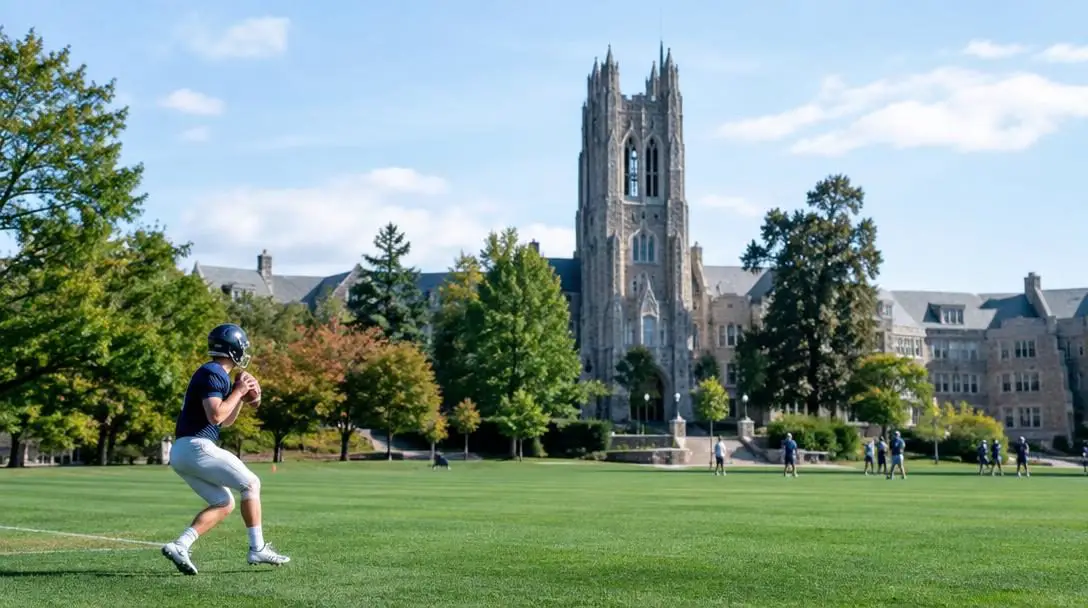
Every spring, the opening round of the NFL Draft serves as an extravagant showcase for college football's elite juggernauts. Powerhouse institutions such as Alabama, Notre Dame, and Georgia regularly dominate the stage, ushering waves of blue-chip talent into professional rosters year after year. These legacy programs enjoy national television exposure, massive athletic budgets, and recruiting networks that naturally feed the top of the draft board.
Yet, the history of professional football is punctuated by extraordinary outliers. Occasionally, an athlete from a non-traditional program or a lower-profile conference develops the ideal combination of physical dominance, pristine game tape, and professional polish to secure the highest honor on draft night. Focusing on the modern Super Bowl era, these rare occurrences highlight how exceptional individual ability can sometimes outshine the biggest institutional brands in sports.
Key takeaways
- The vast majority of top draft picks originate from powerhouse conferences, making number one selections from small or non-traditional programs historically rare.
- Evaluating prospects from smaller collegiate programs requires NFL front offices to apply intense scrutiny to competition levels, all-star exhibitions, and physical benchmarks.
- Quarterbacks, defensive ends, and offensive tackles have all managed to overcome smaller collegiate platforms to become franchise cornerstones at the professional level.
- Evolving dynamics such as the college transfer portal and conference realignment may make top selections from mid-major programs even less common in future draft classes.
Collegiate Programs That Produced Historic First Overall Picks
In the formative decades of professional football, small institutions routinely placed players at the top of the draft. In fact, the very first overall pick in NFL history was Jay Berwanger, selected out of the University of Chicago—a school that abandoned Division I football before World War II. As recruitment and television money consolidated around major athletic conferences during the Super Bowl era, top picks from unassuming colleges became genuine anomalies. Five schools in particular defied the odds to produce a first overall selection.
University of Utah
- Player Selected: Alex Smith (Quarterback)
- Draft Year and Team: 2005, San Francisco 49ers
- Collegiate Draft Precedent: One prior top-10 pick in school history
- Career Pro Bowls: 3
Prior to the mid-2000s, the University of Utah rarely factored into discussions at the pinnacle of the draft. Before 2005, only one Utah Ute had ever been chosen in the top ten: offensive tackle Jordan Gross, who went eighth overall to the Carolina Panthers in 2003. When the 2005 draft arrived, broad consensus among observers and analysts suggested that California quarterback Aaron Rodgers would hear his name called first. Instead, the San Francisco 49ers targeted Alex Smith, making him the top overall selection.
Smith stepped into the starting lineup as a rookie and weathered early franchise turnover, ultimately spending eight seasons in San Francisco. He continued his career as a dependable starter, logging five seasons with the Kansas City Chiefs and three seasons with Washington before retiring after the 2020 campaign. Smith concluded an accomplished 16-year career with 199 touchdown passes and three Pro Bowl nods, proving that Utah could produce a durable franchise quarterback.
University of Tampa
- Player Selected: John Matuszak (Defensive End)
- Draft Year and Team: 1973, Houston Oilers
- Program Lifespan: 1933 to 1974
- Career Sacks: 48.5
Modern sports fans familiar with football in Tampa immediately think of the University of South Florida. However, the University of Tampa once maintained an active football program that ran from 1933 until 1974, closing out its existence as an NCAA Division I Independent. In its third-to-final season of operation, the modest program fielded an overpowering physical presence along the defensive line: John Matuszak.
Selected first overall in 1973 by the Houston Oilers, Matuszak moved across multiple franchises in his earliest professional seasons before settling in with the Oakland Raiders in 1976. In Oakland, he established his legacy as an intimidating defensive force, playing there through the 1982 season. While Matuszak never garnered an official Pro Bowl invitation, he logged 123 career games and registered 48.5 sacks, cementing a legendary reputation while representing a collegiate program that shuttered shortly after his departure.
Fresno State
- Player Selected: David Carr (Quarterback)
- Draft Year and Team: 2002, Houston Texans
- First-Round Predecessors: James Williams (1990) and Trent Dilfer (1994)
- Starting Record in Houston: 23-53
California State University, Fresno developed a reputation for fielding explosive offenses, but rarely saw its players drafted at the very top of the board. Before 2002, only two Bulldogs had earned first-round selection: defensive back James Williams, who went 16th overall to the Chicago Bears in 1990, and quarterback Trent Dilfer, chosen sixth overall by the Tampa Bay Buccaneers in 1994. That trajectory changed when David Carr electrified scouts with his arm strength and athletic profile.
The Houston Texans made Carr the first draft pick in franchise history as an expansion team in 2002. Installed immediately as the starter, Carr absorbed tremendous punishment behind a fledgling offensive line, finishing as the league's most-sacked quarterback twice within his initial four campaigns. Carr concluded his tenure in Houston with a starting record of 23-53 before transitioning into a seasoned backup with Carolina, San Francisco, and the New York Giants, eventually retiring after the 2012 season.
Tennessee State University
- Player Selected: Ed "Too Tall" Jones (Defensive End)
- Draft Year and Team: 1974, Dallas Cowboys
- Program Founded: 1912
- Career Sacks: 106
Historically Black Colleges and Universities have provided critical pathways for iconic professional talent, and Tennessee State stands tall among them. The Tigers first fielded a football team in 1912 and have generated under two dozen NFL players throughout their lengthy history. Yet, that limited fraternity includes one of the most decorated defensive selections of the modern era.
In 1974, the Dallas Cowboys used the number one overall pick on Ed "Too Tall" Jones, passing on highly touted candidates such as Bo Matthews and John Hicks. The decision rewarded the Cowboys immediately. Jones spent his entire professional career in Dallas, amassing 224 regular-season appearances, 106 sacks, three Pro Bowl berths, three All-Pro selections, and a Super Bowl championship. His prolonged excellence demonstrated that small-school defensive talent could achieve the highest heights in the professional game.
A small school pedigree disappears the moment elite athletic traits translate to professional game speed.
Central Michigan University
- Player Selected: Eric Fisher (Offensive Tackle)
- Draft Year and Team: 2013, Kansas City Chiefs
- Conference: Mid-American Conference (MAC)
- Career Pro Bowls: 2
Programs residing in the Mid-American Conference (MAC) rarely see their names displayed during prime-time draft broadcasts. Historically, only three players from the conference had ever earned selections inside the top five. In 2013, an ambiguous draft class lacked a runaway consensus candidate at quarterback or receiver, leaving the Kansas City Chiefs to focus on trench play with the top pick.
The Chiefs surprised many by drafting offensive tackle Eric Fisher from Central Michigan University. Fisher spent eight of his nine NFL seasons serving as an anchor on the Chiefs' offensive line, providing stability during the franchise's transition into the Patrick Mahomes era. Along the way, Fisher claimed a Super Bowl championship and collected two Pro Bowl selections, standing as the only MAC player ever drafted first overall.
At a Glance: Surprising Modern #1 Overall Picks
| Collegiate Program | Player Selected | Draft Year | Drafting Franchise | Pro Honors / Accolades |
|---|---|---|---|---|
| University of Utah | Alex Smith | 2005 | San Francisco 49ers | 3x Pro Bowl, 199 Career Pass TDs |
| University of Tampa | John Matuszak | 1973 | Houston Oilers | 123 Career Games, 48.5 Sacks |
| Fresno State | David Carr | 2002 | Houston Texans | 11-Year NFL Career, 23-53 Starter Record in Houston |
| Tennessee State | Ed "Too Tall" Jones | 1974 | Dallas Cowboys | Super Bowl Champion, 3x All-Pro, 3x Pro Bowl, 106 Sacks |
| Central Michigan | Eric Fisher | 2013 | Kansas City Chiefs | Super Bowl Champion, 2x Pro Bowl |
The Mechanics of Scouting Small-College Talent
Projecting how an athlete from a non-powerhouse program will handle professional competition requires an adjusted evaluation strategy. When prospects face weaker weekly schedules, standard collegiate statistics often misrepresent their actual pro potential. Evaluators must separate raw physical mismatches from professional-level execution.
- Level-of-competition adjustments: Scouts analyze whether an edge rusher or offensive tackle is winning purely because they are bigger and faster than opponents who will never play professional football, or whether they use refined mechanics.
- Postseason all-star performance: Events like collegiate all-star games give front offices essential live reps where small-school athletes practice head-to-head against power-conference starters.
- Physical and biometric thresholds: When investing a top pick outside traditional conferences, teams rely heavily on verified measurements, athletic testing, and explosiveness scores to minimize draft risk.
- Scheme translatability: Evaluators verify whether a quarterback or defensive star can adapt from unconventional college schemes to complicated, pro-style concepts.
How NFL Front Offices Evaluate Non-Power Prospects
- Isolate tape against elite opponents: Evaluators identify the rare occasions when the prospect’s team faced major Division I powerhouses, analyzing those snaps to gauge physical readiness against top-tier competition.
- Conduct exhaustive campus visits: Front-office personnel visit the program in person, interviewing trainers, strength coaches, and teammates to assess character, preparation habits, and leadership durability.
- Examine long-term medical longevity: Extensive diagnostic testing confirms that the prospect has not accumulated unaddressed structural damage that could shorten a high-value career.
- Align scheme and roster requirements: The coaching staff determines whether the player's natural athletic strengths directly match the team's schematic philosophies and positional demands.
Common Traps Teams Encounter at the Top of the Draft
Securing the top overall pick affords front offices total control over the draft board, but that control introduces immense organizational pressure. Teams frequently stumble into recurring evaluation traps when deciding whether to select an unconventional prospect:
- Neglecting offensive infrastructure: Forcing a rookie passer onto the field without competent pass blocking or experienced playmakers often degrades mechanical habits and lowers confidence.
- Prioritizing size over technique: Pure athletic traits can easily mask footwork and leverage flaws that professional defenders exploit immediately on Sundays.
- Bowing to draft consensus: Front offices occasionally let external media chatter or mock draft boards steer them away from their internal scouting convictions.
- Accelerating playing timelines: Rushing developmental players into high-leverage roles too early can permanently disrupt a young player's confidence and development.
The Modern Landscape and the Future of Small-School Selections
The modern football landscape operates under structural changes that make number one picks from mid-major programs increasingly improbable. The college transfer portal provides high-performing stars at smaller schools with immediate opportunities to transfer to prominent programs, giving them national exposure before entering the NFL Draft. Furthermore, continuous conference realignment has absorbed historically independent or mid-tier contenders into power leagues—as seen with Utah's evolution into a major conference program years after Alex Smith was drafted.
At the same time, advanced GPS tracking and universal digital film sharing mean hidden gems no longer slip unnoticed through regional gaps. While front offices possess the data to identify extraordinary talent anywhere in the country, the structural pipeline now funnels that talent toward major programs long before draft weekend arrives.
Frequently asked questions
Has any non-Division I player ever been selected first overall?
In the earliest decades of the draft, several selections came from non-traditional institutions, including Jay Berwanger from the University of Chicago, which dropped out of Division I football before World War II. In modern times, selections have come from smaller Division I programs or historically Black colleges like Tennessee State.
Why did the 49ers pick Alex Smith over Aaron Rodgers in 2005?
Heading into the 2005 draft, San Francisco evaluated both prospects heavily. While Rodgers played in a higher-profile conference at Cal, the 49ers prioritized Smith's collegiate leadership, mobility, and fit for their offensive rebuilding plans.
Has a MAC player other than Eric Fisher ever been drafted in the top five?
Only three players from the Mid-American Conference have ever been chosen inside the top five picks of the NFL Draft, with Eric Fisher remaining the sole number one overall selection from the conference.
Can small-school prospects still climb to the top of the NFL Draft?
While scouting technology and athletic tracking ensure that any elite athlete can be discovered, modern rules such as the transfer portal often incentivize top small-school performers to transfer to major conference programs before turning pro.
The Bottom Line
While the top of the NFL Draft will continually be fueled by powerhouse institutions, players like Alex Smith, John Matuszak, David Carr, Ed "Too Tall" Jones, and Eric Fisher prove that elite talent is not confined to legacy brands. These athletes demonstrated that exceptional physical traits, disciplined preparation, and dominant film can propel a player from an unconventional college straight to the top of the draft board.