5 Worst #1 Draft Picks in NBA History
Securing the first overall pick in the National Basketball Association draft is widely considered the ultimate opportunity to alter a franchise's destiny. More than any other major professional sports league in the United States, basketball is driven by singular talents who can control both ends of the floor, anchor an offense, and dictate team tempo. When a front office is awarded the top selection, fans, team executives, and media analysts immediately anticipate an All-Star contributor capable of transforming a struggling roster into an enduring championship contender.
In modern professional basketball, top selections receive guaranteed multi-million-dollar rookie contracts before ever playing a single regular-season possession. Yet the history of the league shows that selecting at the pinnacle of the draft provides zero assurance of superstardom. From developmental hurdles and chronic health struggles to the psychological weight of franchise-altering expectations, numerous top picks have failed to reach their projected ceilings. Examining these historic draft misses reveals how scouting miscalculations, talent pool depth, and missed opportunities reshape franchise trajectories for decades.
Key takeaways
- Holding the number one pick carries massive financial commitments and immense franchise expectations, but it offers no guarantee of individual stardom.
- Evaluating prospects involves weighing high developmental ceilings against immediate roster fit, durable biomechanics, and emotional readiness.
- Several of the league's most notable draft misses occurred when front offices bypassed future Hall of Fame inductees in favor of raw developmental projects.
- Draft outcomes are heavily dictated by the overall depth and quality of the draft class, with weaker classes often leading to high-risk gambles.
- While some top selections fall out of the league after just a few campaigns, others manage to carve out productive, decade-long careers as dependable role players.
The 5 worst #1 draft picks in NBA history
Across the decades, five selections stand out for how severely their on-court production lagged behind their draft status. Whether due to persistent injuries, rapid coaching turnover, or scouting reaches, these players became cautionary tales of the draft process.
| Player | Draft Year | Drafting Team | NBA Seasons | Career Averages |
|---|---|---|---|---|
| Anthony Bennett | 2013 | Cleveland Cavaliers | 4 | 4.4 PPG, 3.1 RPG |
| Kwame Brown | 2001 | Washington Wizards | 13 | 6.6 PPG, 5.5 RPG |
| Michael Olowokandi | 1998 | Los Angeles Clippers | 9 | 8.3 PPG, 6.8 RPG (9.9 PPG, 8.0 RPG with LAC) |
| Markelle Fultz | 2017 | Philadelphia 76ers | Active | 7.7 PPG, 3.4 RPG, 3.4 APG (with PHI) |
| LaRue Martin | 1972 | Portland Trail Blazers | 4 | 5.3 PPG, 4.6 RPG |
Anthony Bennett

- Draft Year: 2013
- Selected By: Cleveland Cavaliers
- Amateur Background: UNLV
- Career Production: 4.4 points, 3.1 rebounds per game
In 2013, the Cleveland Cavaliers found themselves holding the top overall selection for the first time since drafting LeBron James a decade earlier in 2003. However, unlike the historic 2003 class, the 2013 talent pool was widely viewed across front offices as significantly shallower and lacking an indisputable franchise centerpiece. Seeking upside, the Cavaliers shocked observers across the sport by selecting forward Anthony Bennett out of UNLV.
Bennett's transition to professional basketball was fraught with challenges from the outset. He struggled to find consistent minutes, establish an offensive rhythm, or cement a role within an evolving rotation. His NBA tenure lasted just four seasons, during which he suited up for a different franchise in each campaign. Finishing his brief career with modest averages of 4.4 points and 3.1 rebounds per contest, Bennett remains one of the shortest-tenured top overall selections in modern basketball history.
Kwame Brown
- Draft Year: 2001
- Selected By: Washington Wizards
- Amateur Background: Glynn Academy (High School)
- Career Production: 6.6 points, 5.5 rebounds per game
Following his final retirement as a player, basketball icon Michael Jordan transitioned into a prominent leadership role within the Washington Wizards' front office. When the franchise won the draft lottery in 2001, Washington held the rights to the number one overall pick in what was considered an unpredictable draft pool. Rather than targeting proven collegiate performers like Shane Battier or elite frontcourt talents such as Tyson Chandler and Pau Gasol, the Wizards chose high school phenom Kwame Brown.
Brown faced intense media scrutiny and the overwhelming expectations of stepping directly from the high school ranks into a locker room shaped by Jordan's demanding standards. While he never evolved into the franchise cornerstone Washington envisioned, Brown demonstrated surprising athletic resilience, carving out a 13-season career across seven different franchises before retiring in 2013. Nevertheless, finishing his extensive tenure with career averages of 6.6 points and 5.5 rebounds per contest cemented his standing as an underwhelming top pick relative to the players drafted immediately behind him.
Michael Olowokandi
- Draft Year: 1998
- Selected By: Los Angeles Clippers
- Amateur Background: Pacific University
- Final Season Output: 2.1 points, 2.2 rebounds per game (Boston)
The 1998 draft class is celebrated as one of the most talent-rich assemblies in the history of the sport, boasting future Hall of Fame inductees Vince Carter, Dirk Nowitzki, and Paul Pierce among its top ten selections. Despite the wealth of perimeter and frontcourt scoring available, the Los Angeles Clippers prioritized pure size and physical traits, investing their premier selection in Nigerian-born center Michael Olowokandi out of Pacific University.
Olowokandi put up reasonable interior numbers over his initial five seasons in Los Angeles, posting averages of 9.9 points and 8.0 rebounds per game while defending the rim. However, his overall skill development plateaued, and his impact never approached that of the generational stars chosen after him. Olowokandi spent his remaining four professional seasons split between the Minnesota Timberwolves and the Boston Celtics. His effectiveness waned sharply near the end of his tenure, concluding with averages of 2.1 points and 2.2 rebounds per game in Boston before he retired from the league at age 31.
Markelle Fultz
- Draft Year: 2017
- Selected By: Philadelphia 76ers
- Amateur Background: Washington
- Early Philadelphia Stats: 7.7 points, 3.4 rebounds, 3.4 assists per game
Leading up to the 2017 draft, front-office evaluators were presented with an extraordinarily deep pool of prospects, though opinions diverged widely regarding who warranted the top selection. Elite talents such as Jayson Tatum, Donovan Mitchell, and Bam Adebayo were readily available on the board. The Philadelphia 76ers made an aggressive move to secure the first overall pick, selecting dynamic guard Markelle Fultz out of the University of Washington to complete their young core.
Fultz's stay in Philadelphia was clouded by persistent shooting struggles and physical complications that limited his effectiveness. Over two difficult seasons with the 76ers, he logged modest averages of 7.7 points, 3.4 rebounds, and 3.4 assists per game. A subsequent trade to the Orlando Magic provided a welcome change of scenery, where Fultz exhibited noticeable flashes of playmaking promise. While recurring injuries continued to disrupt his path toward individual stardom, he managed to reshape his career as a dependable rotational contributor, even if he never attained the All-Star status demanded of a top selection.
LaRue Martin
- Draft Year: 1972
- Selected By: Portland Trail Blazers
- Amateur Background: Loyola (Illinois)
- Career Production: 5.3 points, 4.6 rebounds per game
The oldest draft selection on this list dates back to 1972, a period when professional basketball had firmly established its modern national footprint. The Portland Trail Blazers held the first overall pick and targeted frontcourt presence, selecting center LaRue Martin out of Loyola University Chicago. In making this choice, Portland bypassed several future Hall of Fame legends, including Bob McAdoo, Paul Westphal, and Julius Erving.
Martin's career in the league proved brief and frustrating, spanning just four seasons with the Trail Blazers. He struggled to establish himself as an everyday starter or consistently outplay opposing centers, finishing his playing days with modest averages of 5.3 points and 4.6 rebounds per contest. Despite the lingering public scrutiny tied to his draft position, Martin maintained a healthy perspective on his athletic journey, emphasizing that he took care of his family and remained the type of person who refuses to dwell on negatives.
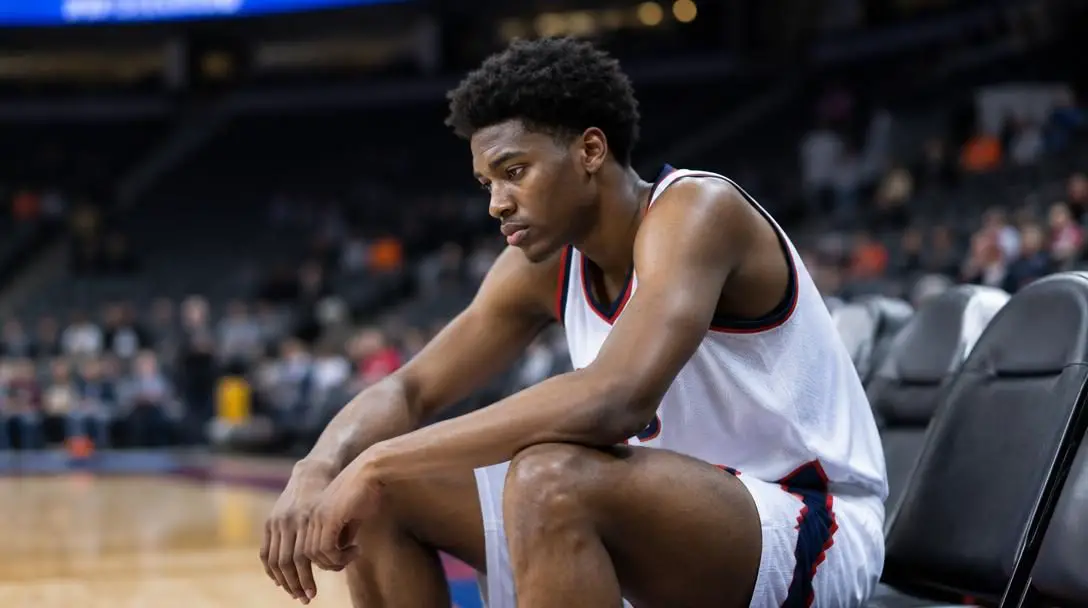
Drafting at the pinnacle of the board provides zero assurance of superstardom when injuries, developmental hurdles, and missed opportunities reshape franchise trajectories.
How the draft evaluation process works
Identifying, scouting, and selecting the top amateur prospect requires one of the most comprehensive analytical operations in professional athletics. NBA front offices commit massive budgets, analytics departments, and travel schedules to minimize the inherent risks of draft night.
- Draft lottery determination: Franchises that fail to qualify for the postseason enter a weighted lottery system. The teams finishing with the poorest regular-season records receive the highest mathematical odds of securing the top selection, a system engineered to foster long-term competitive parity.
- Film breakdown and advanced metrics: Scouting departments assemble comprehensive film archives and analytical profiles on eligible prospects. Evaluators review scoring efficiency, defensive versatility, decision-making, and performance against elite collegiate or international competition.
- Medical reviews and athletic combines: Invited prospects undergo rigorous physical testing, wingspan and vertical measurements, movement screens, and comprehensive medical examinations to detect biomechanical issues or structural damage.
- Front-office consensus building: General managers, coaching staffs, scouts, and team ownership meet to balance immediate positional needs against long-term ceiling. When unanimity is lacking, front offices must decide whether to select the safest available floor or gamble on high-risk athleticism.
Strategies front offices use to minimize draft risk
Given the immense franchise stakes tied to a top selection, modern front offices rely on specific protocols designed to prevent catastrophic draft misjudgments.
- Drafting talent over positional need: History demonstrates that passing on an elite athlete simply because a roster already features a capable veteran at that position often produces lasting regret. Prudent front offices prioritize the best overall player on their board regardless of current roster construction.
- Executing comprehensive medical screens: Thorough diagnostic evaluations, joint imaging, and movement assessments protect franchises from investing millions in guaranteed contracts on athletes with underlying physical vulnerabilities.
- Assessing personal adaptability and discipline: Moving from the collegiate or international ranks into professional athletics demands intense personal maturity. Evaluating how a young player handles media scrutiny, coaching feedback, and financial independence helps predict their developmental trajectory.
- Investing in supportive organizational infrastructure: Top prospects rarely develop in a vacuum. Successful franchises provide extensive player-development staffs, shooting specialists, sports nutritionists, and veteran mentor figures to ease the transition into the league.
Common mistakes that derail top draft picks
When an elite prospect fails to meet expectations, the setback is rarely caused by a single issue. Instead, a series of compounding factors typically undermines the athlete's progression.
- Overreacting to brief showcase performances: Front offices occasionally place excessive weight on an impressive pre-draft workout or a dominant late-season tournament run, ignoring years of underlying data that pointed to offensive or athletic inconsistencies.
- Reaching during shallow draft cycles: In draft classes perceived to have limited overall star power, teams frequently talk themselves into high-risk gambles instead of securing durable, fundamentally sound contributors with high operational floors.
- Imposing unrealistic developmental timelines: Expecting a teenager or raw underclassman to immediately rescue a struggling organization can overwhelm their confidence and stall fundamental skill acquisition.
- Bypassing proven generational talents: Front offices sometimes overthink obvious consensus talent, convincing themselves that an unrefined developmental project possesses higher ultimate value than an accomplished, polished peer.
Evaluating top picks in modern basketball
Analyzing draft outcomes requires looking beyond initial scoring statistics to examine the environment into which a rookie was introduced. A player drafted into a stable organization with an established coaching staff, clear tactical identity, and patient ownership faces far fewer obstacles than one drafted into an unstable environment undergoing frequent leadership turnover.
Furthermore, early career struggles do not permanently preclude an athlete from providing NBA value. Modern sports science and specialized player development allow many former top picks who struggled under the weight of franchise expectations to revitalize their careers as impactful bench leaders, defensive stoppers, or complementary playmakers.
Frequently asked questions
Who is widely considered the biggest draft bust in NBA history?
Anthony Bennett is frequently cited as the biggest modern draft miss after playing only four seasons for four different teams and averaging 4.4 points per game. However, earlier selections like LaRue Martin in 1972 also share that distinction because Portland passed on multiple Hall of Fame legends like Julius Erving and Bob McAdoo.
Did Kwame Brown have a completely unsuccessful NBA career?
No. While Kwame Brown never developed into the franchise superstar expected of a number one pick, he played 13 seasons in the league across seven different teams, demonstrating longevity and defensive utility as a rotational frontcourt player before retiring in 2013.
Which Hall of Fame players were bypassed for Michael Olowokandi in 1998?
The Los Angeles Clippers chose Michael Olowokandi over future Hall of Fame inductees Vince Carter, Dirk Nowitzki, and Paul Pierce, all of whom were selected inside the top ten of the 1998 draft.
Why did Markelle Fultz struggle after being drafted by Philadelphia?
Fultz faced persistent physical challenges and recurring injuries that severely compromised his shooting form and on-court rhythm in Philadelphia. Although he later revived his career as a productive playmaker for the Orlando Magic, injuries prevented him from attaining All-Star status.
How does the NBA Draft Lottery determine the top selection?
The NBA Draft Lottery is a weighted system that assigns the highest mathematical odds of winning the top overall pick to the franchises that finished with the worst regular-season records, promoting league-wide competitive balance.
The bottom line
The path from amateur standout to professional cornerstone is filled with athletic, tactical, and psychological hurdles. Holding the number one overall pick grants an organization access to elite athletic traits, but it cannot guarantee franchise salvation. As historical selections like Anthony Bennett, Kwame Brown, Michael Olowokandi, Markelle Fultz, and LaRue Martin demonstrate, draft success depends not only on raw talent, but on injury luck, emotional adaptability, organizational stability, and the overall quality of the surrounding draft class.