5 Tips to Launch Your Dream Career as a Game Developer
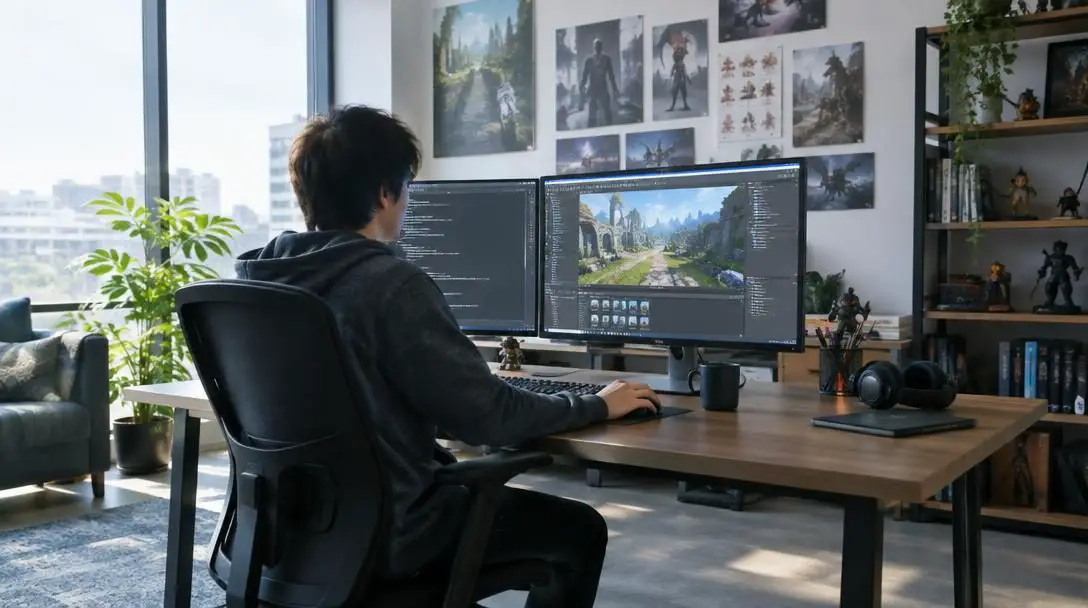
Breaking into the video game industry offers an enticing mix of creative expression, advanced engineering, and substantial compensation. With the average salary of $115,000 per year, game development attracts thousands of eager candidates every year. However, turning a passion for gaming into a viable profession requires navigating a highly competitive landscape, particularly in metropolitan areas and tech hubs saturated with skilled professionals.
Modern game development has shifted dramatically from solo bedroom coding to massive, interconnected production pipelines. Today's studios need focused specialists who understand collaborative workflows and modern toolchains. Rather than relying on raw enthusiasm alone, prospective creators must execute a deliberate strategy to stand out in the hiring queue, master their chosen craft, and prove their value to studio leads.
Key takeaways
- Specializing in a focused production niche is far more effective for landing junior roles than presenting as an unproven generalist.
- A dedicated portfolio website detailing your tools, workflows, and problem-solving processes matters more than a resume alone.
- Both formal degrees and self-directed tutorials offer viable paths into the industry when paired with completed, playable projects.
- Engaging with online developer communities and volunteering at local tech events helps build authentic professional relationships.
The Realities of Modern Game Production Pipelines
Before launching a game development career, candidates must understand how modern studios construct interactive entertainment. Production pipelines are rarely flat; they are layered ecosystems where engineers, visual artists, and narrative designers must synchronize their work daily. Game projects typically advance through rigorous stages—pre-production, production, alpha, beta, and post-launch live operations—demanding clear communication and technical compatibility at every turn.
In large commercial studios, functional boundaries are strictly maintained. A physics programmer might spend entire development cycles refining vehicle friction models, while an environment artist focuses exclusively on organic foliage shaders. Conversely, indie teams often require personnel to wear multiple hats, shifting between gameplay scripting, interface layout, and sound implementation. Understanding where you want to operate along this spectrum dictates how you should prepare your portfolio and pitch your capabilities.
Studios look for targeted competencies that fit neatly into an existing collaborative pipeline rather than generalists with surface-level exposure.
Geographic factors also shape career accessibility. Major technology hubs house dense clusters of gaming studios, creative agencies, and engineering firms, leading to fierce regional competition for entry-level positions. Candidates living outside these clusters must be deliberate about establishing their digital presence, participating in remote communities, and traveling strategically to industry gatherings to earn visibility.
Five Strategic Tips to Launch Your Game Development Career
Navigating the transition from an aspiring creator to an employed developer requires a focused approach. These five core tips outline how to build your skills, package your work, and connect with working industry professionals.
1. Target a Niche
While an appreciation for overall game design is helpful, spreading yourself too thin across multiple disciplines often signals to hiring leads that you lack mastery in any of them. Studios want to hire someone who can step into an open seat and execute production-ready tasks immediately. Selecting a dedicated track allows you to focus your study time on the exact software packages, pipelines, and technical standards expected of working professionals.
Consider which development discipline aligns best with your underlying talents and interests:
- Programmer: Writes gameplay logic, optimizes memory usage, creates physics systems, and integrates tools.
- Level designer: Crafts pacing, spatial layouts, encounter spaces, and environmental challenges using game engines.
- UI designer: Develops intuitive HUD elements, menus, visual feedback loops, and player accessibility settings.
- Animator: Creates fluid character movements, rigging, facial expressions, and combat animations.
- Concept artist: Generates initial visual ideas, character silhouettes, environment palettes, and tone pieces.
- Storyboard artist: Pre-visualizes cinematics, camera framing, dramatic action sequences, and narrative timing.
- Scriptwriter: Drafts dialogue branches, world lore, quest documentation, and overarching narrative structures.
Choosing an initial niche does not lock you into that track forever. As your career progresses—especially if you work within agile indie teams—you will often have opportunities to take on cross-disciplinary responsibilities. Starting with a clear lane simply gives you the focused traction required to land your initial position.
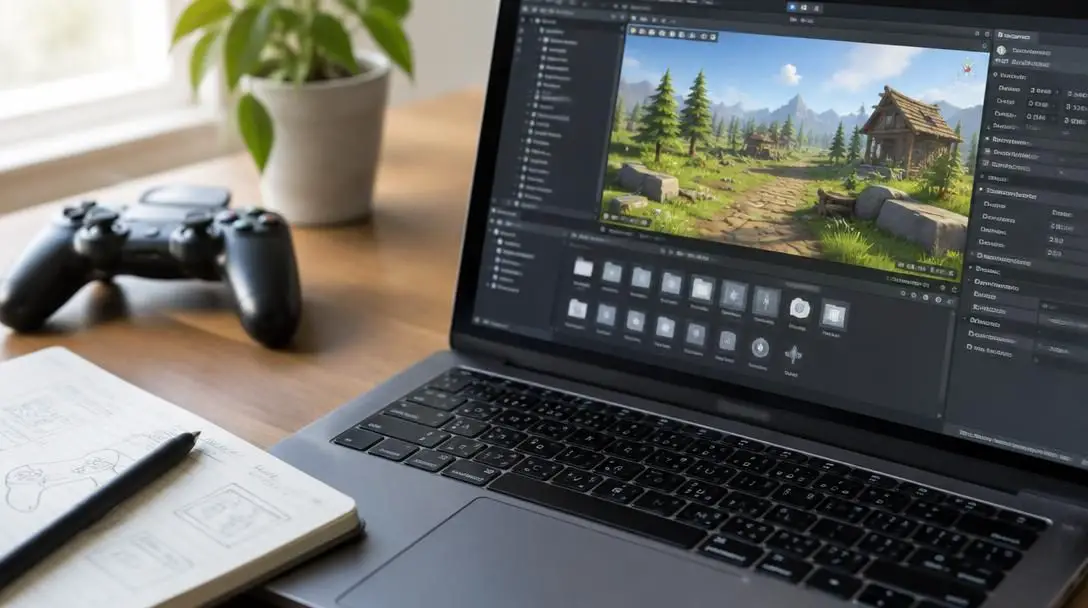
2. Get Well Educated
Once you have identified your discipline, you need to acquire the technical vocabulary and procedural knowledge necessary to produce professional work. Aspiring developers often debate whether to pursue a formal university degree or rely on independent study. Both methods have distinct merits, and your choice depends heavily on your budget, learning style, and personal circumstances.
A bachelor's degree in computer science, software engineering, or game design provides structured milestones, hands-on critique from instructors, and immediate access to peer cohorts. These institutional environments simulate collaborative team pressures and yield networking opportunities that can give applicants a competitive edge. However, a degree is not an absolute requirement to work in video games.
If you choose the self-taught route, you can leverage the wealth of free tutorials, public documentation, and open developer courses available online. Self-directed study affords you complete flexibility over your schedule and tool choices. The challenge lies in accountability: you must maintain the discipline to study consistently and transition quickly from watching instructional videos to independently building assets, writing scripts, constructing whitebox levels, and finishing original projects.
3. Build a Strong Portfolio
A traditional resume has minimal impact in game development if it is not supported by visual and interactive proof of your skills. Your portfolio serves as the definitive evidence of your technical capabilities, aesthetic eye, and familiarity with production standards. Building a clean portfolio website is the industry gold standard, allowing prospective employers, art directors, and technical leads to evaluate your work without downloading untrusted local files or navigating convoluted cloud folders.
For every project featured on your website, provide an in-depth breakdown of your workflow. Explain which engines and toolsets you used, the specific design constraints you faced, and how you solved complex technical or aesthetic problems. Demonstrating your cognitive process and your capacity to troubleshoot engine limitations proves to hiring managers that your successes are repeatable in a demanding studio environment.
4. Join the Gaming Community
Working in total isolation is one of the quickest ways to stall your creative momentum. By actively engaging with developer communities online, you gain exposure to the shared vocabulary, technical breakthroughs, and critical standards of working professionals. These platforms allow you to test your ideas, solicit honest feedback on work-in-progress builds, and find collaborators for shared projects.
Several established online communities cater directly to aspiring and working developers:
- GameDev.net: A long-running resource offering programming articles, technical forums, and community project showcases.
- Indie Gamer: An active hub focused on independent game creation, commercialization advice, and collaborative recruitment.
- Devmaster: A dedicated platform for technical discussions, engine breakdowns, and development resources.
- Quora: A question-and-answer space featuring insights from experienced developers addressing industry pathways.
In addition to dedicated forums, explore niche communities on LinkedIn, Reddit, and Facebook centered around your specialized role. Rather than broadcasting promotional messages, participate genuinely: answer questions you understand, request constructive critique on your portfolio pieces, and help fellow learners troubleshoot bugs. Consistent, constructive participation transforms you from an unknown applicant into a recognizable peer.

5. Start Networking at Tech Events
Digital interactions build familiarity, but in-person connections solidify your professional network. Attending video game conferences, game jams, and technical meetups places you in the same room as studio leads, hiring managers, and veteran developers. These gatherings humanize the hiring process and allow you to form relationships that organic online applications rarely achieve.
Unless you possess a substantial travel budget, prioritize regional events hosted near your home market to minimize expenses. For example, developers located in or near Western Washington can attend regional gatherings such as the Game UX Summit to connect with industry practitioners focused on user experience and player research. Look for local chapter meetings of game development associations, university showcase days, and local hackathons to build momentum without overspending.
One of the most effective strategies for breaking the ice at conferences is volunteering. Event organizers, demo booths, and registration tables frequently need dependable volunteers. Offering your time gives you legitimate behind-the-scenes access, pairs you directly with event leads, and demonstrates your reliability and work ethic in a professional setting.
Comparing Common Game Development Roles
Choosing the right path requires understanding the functional purpose and day-to-day deliverables associated with each discipline. The table below outlines how common development roles operate within modern production environments.
| Discipline | Primary Responsibility | Key Deliverables | Core Focus Area |
|---|---|---|---|
| Programmer | Engineering game architecture and systems | Clean source code, engine tools, logic systems | Technical problem-solving |
| Level designer | Constructing playable player spaces | Blockouts, encounter pacing, mission flows | Spatial balance and gameplay mechanics |
| UI designer | Creating player-facing interfaces | HUD layouts, icon sets, interactive menus | Player accessibility and visual clarity |
| Animator | Bringing characters and objects to life | Motion cycles, character rigs, cutscene actions | Timing, weight, and visual dynamics |
| Concept artist | Visualizing aesthetic tone and designs | Character sketches, environment paintings, mood boards | Worldbuilding and initial visualization |
| Storyboard artist | Planning cinematic sequences | Pencil boards, animatics, camera guidelines | Cinematic flow and visual pacing |
| Scriptwriter | Authoring narrative arcs and dialogue | Branching dialogue trees, lore bibles, quest text | Character development and story structure |
Step-by-Step Action Plan to Enter the Industry
Translating long-term career aspirations into day-to-day progress requires structured execution. Follow these actionable steps to move methodically toward your first studio position:
- Evaluate your core interests to choose a single starting niche, such as programming, UI design, level design, or animation.
- Audit your educational path by deciding between an accredited university degree or a structured self-directed study schedule utilizing free tutorials.
- Establish an active project routine where you build original assets, write dialogue, or program mechanics outside of step-by-step guides.
- Build an online portfolio website documenting your best work, including detailed breakdowns of your workflows, toolkits, and technical hurdles.
- Join established online platforms such as GameDev.net, Indie Gamer, Devmaster, and Quora, as well as role-specific communities on Reddit and LinkedIn.
- Locate local tech gatherings and game design conferences—such as the Game UX Summit in Western Washington—and apply to volunteer.
Critical Mistakes to Avoid During Your Job Search
Many aspiring developers spend months or years submitting applications without receiving interview requests because of common, preventable mistakes. Being mindful of these pitfalls protects your time and preserves your professional reputation:
- Failing to specialize early: Submitting a portfolio containing a mediocre 3D model, two unfinished scripts, and an untextured level suggests a lack of professional commitment to any specific pipeline role.
- Trapping yourself in tutorial loops: Watching instructional videos without opening your software to author original, unguided projects creates false confidence without building real problem-solving skills.
- Hiding your technical workflow: Presenting only polished final renders or video captures prevents recruiters from seeing your topology, code organization, optimization habits, or engine setups.
- Maintaining an inconvenient portfolio: Storing projects in password-protected drives or requiring hiring teams to download massive compressed archives creates unnecessary friction that gets applications rejected.
- Approaching networking transactionally: Viewing industry events purely as opportunities to demand job referrals alienates professionals who prioritize genuine rapport and team cohesion.
- Isolating yourself from critique: Refusing to share early development builds on public forums shields you from critical feedback that could significantly improve your craft.
Frequently asked questions
Do I need a computer science or game design degree to get hired?
No, a formal degree is not strictly required. Studios prioritize your demonstrated technical capability and portfolio quality above formal credentials. However, a degree in computer science or game design provides structured learning, milestone tracking, and a peer network that can give applicants a competitive edge.
How much can I expect to earn as a game developer?
The average salary for a game developer is approximately $115,000 per year, though specific compensation packages depend on your discipline, experience level, studio size, and geographic location.
What is the best way to format a game development portfolio?
A clean, dedicated portfolio website is the best format. It allows hiring leads and art directors to review your work quickly on any device without downloading unverified files, while giving you space to explain the tools, techniques, and problem-solving processes behind each project.
What should I do if I live far away from major game development hubs?
If you live outside major studio hubs, build a commanding digital footprint by sharing work in developer forums like GameDev.net and Indie Gamer, engaging in remote collaborative projects, and targeting regional tech events and conferences within reasonable travel distance.
Can I switch roles after entering the game industry?
Yes. Choosing an initial niche simply provides a clear entry point into the job market. Once employed—especially on small independent teams where job responsibilities frequently overlap—you can expand your skillset and transition into adjacent creative or technical disciplines.
The bottom line
Launching a career in the video game sector is challenging, but a disciplined strategy eliminates much of the uncertainty. By committing to a clear specialty, developing rigorous foundational knowledge through degrees or tutorials, showcasing your problem-solving process on a clear portfolio site, and contributing actively to professional communities, you separate yourself from casual applicants. Stay persistent, keep expanding your playable projects, and position yourself to thrive in this rewarding industry.