5 Ways to Make Train Journeys More Fun
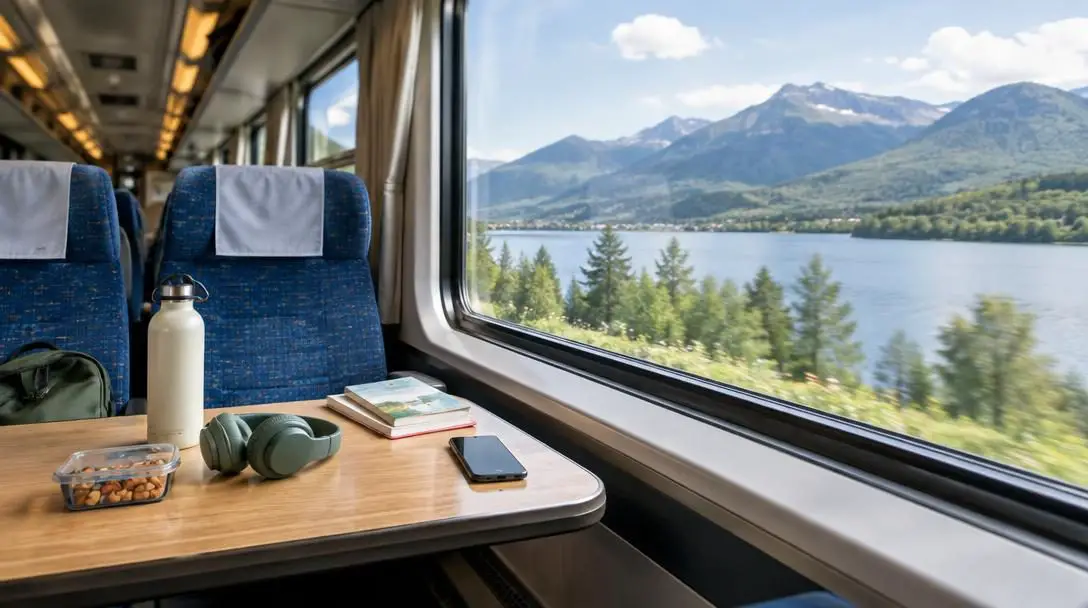
For many travelers, the idea of an enjoyable afternoon does not typically involve sitting in a passenger rail car for hours on end, staring passively at luggage racks, blank bulkhead walls, or the ceiling. While short commuter hops may seem effortless, any journey that stretches beyond a few stops demands a deliberate strategy for passing the time. Without an intentional plan to occupy your mind, rail transit can quickly become a monotonous, physically restless, and uncomfortable endurance test.
Fortunately, passenger trains offer distinct spatial and structural advantages over passenger cars and commercial aircraft. You have the freedom to stand up and walk down the aisles, expansive windows that showcase rolling terrain, and complete liberation from the physical demands of steering a vehicle. Whether your schedule calls for a brisk thirty-minute regional transit run or an ambitious multi-day cross-country expedition, embracing proactive pastimes can turn routine transit into one of the most rewarding portions of your journey.
Key takeaways
- Storing music, podcasts, and movies directly onto your devices beforehand protects your entertainment from trackside cellular dead zones and tunnels.
- Striking up mindful conversations with seatmates offers unique local perspectives, provided you verify they are open to socializing first.
- Documenting your transit with slow-motion video captures and photographic filters transforms passing scenery into a creative travel journal.
- Balancing passive video viewing with active brain teasers or puzzle games keeps mental sluggishness and travel fatigue at bay.
- Packing clean, odor-free homemade meals or station takeout ensures dependable nourishment when onboard dining services are absent or underwhelming.
Five Engaging Ways to Spend Time on the Rails
Transforming quiet or tedious travel hours into an entertaining personal retreat requires a mix of sensory, intellectual, and culinary diversions. By utilizing these five distinct methods, you can eliminate boredom across both rural scenic corridors and crowded regional commuter tracks.
Music, Podcasts, and Shows
Extended train travel often begins with a burst of anticipation, but during nearly every long route, there comes an unavoidable lull in that initial feeling of adventure. When energy levels dip, digital media provides an immediate mood lift and a comforting personal sanctuary. Immersing yourself in curated musical playlists, gripping multi-part podcasts, or stand-up comedy specials allows you to rest your eyes while remaining thoroughly entertained. Rail transit also provides the ideal block of uninterrupted time to binge-watch a television series or finally enjoy a feature film you have postponed watching during busy work weeks.
Relying on digital streaming over live cellular data while in transit almost always leads to frustrating buffering screens. Downloading high-resolution content to local storage ensures smooth playback, providing a seamless personal escape when passenger cars become crowded, noisy, or visually fatiguing.
Socialize with Companions and Neighbors
Passenger trains assemble people from wildly diverse backgrounds, professions, and geographical origins into a single shared space. Striking up a dialogue with the travelers seated around you can turn an ordinary trip into an illuminating cultural exchange. Fellow passengers are often full of fascinating life experiences, and conversations can yield unexpected insider advice regarding restaurants, landmarks, and hidden gems awaiting you at your destination platform.
However, social enthusiasm must always be tempered with situational awareness. While many passengers welcome friendly banter to pass the transit hours, others board specifically to rest, read, or complete focused professional work. Always ask your seatmates if they are open to chatting before diving into an extended discussion, and pay close attention to body language. If you are traveling alongside family or close friends, rail transit delivers a rare stretch of uninterrupted, screen-free time to reminisce, exchange stories, and strengthen personal bonds.
Take Pictures and Videos
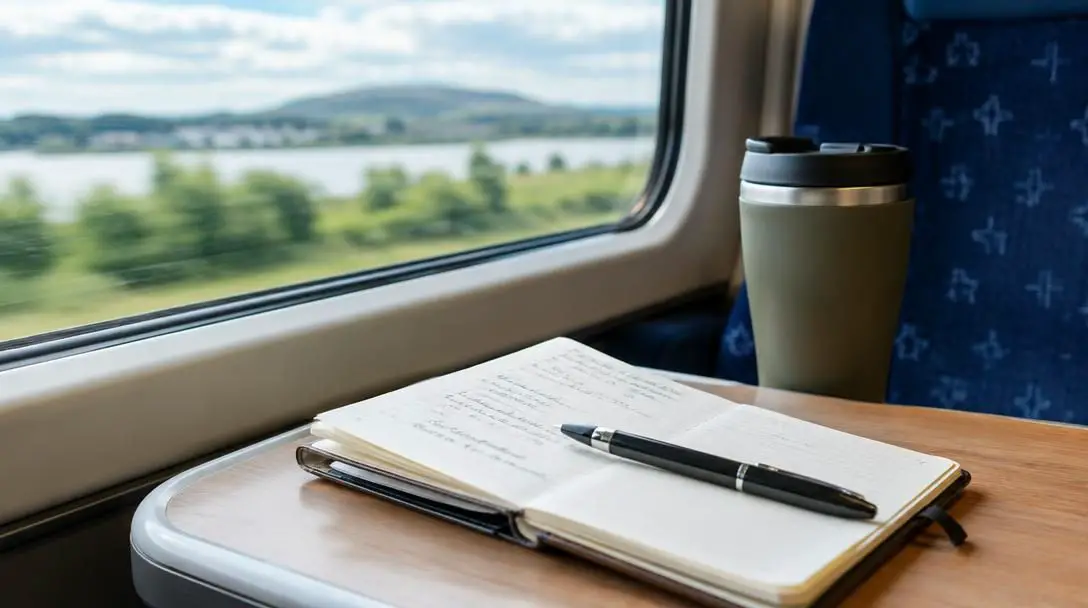
Documenting the shifting landscape outside your carriage window keeps your senses closely tethered to the geographic journey. Rather than viewing the train ride merely as empty transit time between two pins on a map, photography encourages you to actively observe changes in architectural styles, vegetation, and terrain. The visual records you capture serve as tangible mementos that preserve the distinct atmosphere, lighting, and mood of that particular rail corridor.
Modern mobile devices and handheld cameras offer specialized capture modes that elevate everyday travel footage. You can engage slow-motion video recording to document rapid fly-bys of historic depots, track switches, and natural landmarks, or experiment with custom camera filters to capture changing light conditions as dusk settles over the tracks. For a more interactive creative project, you can shoot short, chronological video segments to assemble a cohesive transit vlog for friends and family.
Rail transit allows you to gather the unique sights and sounds that surround each stop along the route, turning routine transport into an active part of your travel adventure.
Play Games and Brain Teasers
When passive media consumption begins to feel monotonous, playing interactive games provides an intellectual spark that wards off restlessness. Depending on your personal energy levels, you can alternate between low-stakes casual games on a mobile device and complex puzzles that demand serious analytical focus. Engaging with intricate crosswords, logic grids, word searches, and sudoku keeps your cognitive faculties sharp, ensuring that you step onto the arrival platform feeling mentally invigorated rather than sluggish from hours of sedentary idleness.
Travelers can assemble an entertainment library using smartphones, dedicated tablet computers, portable gaming consoles, or classic printed paper puzzle books. Narrative-driven role-playing games and digital strategy titles are exceptionally well-suited for rail journeys, as they allow you to immerse yourself in expansive virtual worlds while the real world glides past your window.
Pack Satisfying Snacks and Drinks
Appetizing food and refreshing beverages can instantly elevate the mood of any extended journey. Although long-distance passenger services occasionally feature dedicated dining cars or mobile beverage carts, many regional and commuter services carry no onboard catering whatsoever. Even when food is sold on board, the selections can be uninspiring, overpriced, or limited to processed convenience items that leave you feeling heavy and lethargic.
Taking time to prepare delicious homemade sandwiches, cut fresh produce, or purchase local delicacies from a café near your departure station guarantees that mealtime remains a highlight of your itinerary. When packing food, prioritize items that are easy to eat without causing spills or generating excessive crumbs. Furthermore, show consideration for your fellow passengers by leaving pungent, strongly seasoned, or heavily aromatic dishes at home. Packing an extra supply of clean, shareable treats is also an effortless way to foster goodwill with traveling companions or friendly neighbors.
At a Glance: Comparing Onboard Entertainment Strategies
Choosing the right diversion depends on your personal energy levels, the equipment you have on hand, and your surrounding carriage environment. The following overview details how to match your entertainment with your journey conditions.
| Activity | Primary Benefit | Equipment Needed | Best Route Scenario |
|---|---|---|---|
| Music, Podcasts, and Shows | Provides relaxation and personal privacy | Smartphone or tablet, wired or wireless headphones | Noisy cars, nighttime travel, or tunnels |
| Socializing with Neighbors | Delivers local insights and memorable stories | None (open mindset and social awareness) | Daytime journeys with receptive seatmates |
| Photography and Videography | Builds creative records of changing topography | Smartphone camera or digital camera | Scenic rural lines and mountainous passes |
| Games and Brain Teasers | Maintains cognitive focus and beats mental fatigue | Gaming console, paper booklet, or mobile apps | Long stretches of repetitive countryside |
| Curated Food and Snacks | Ensures continuous physical comfort and nourishment | Resealable containers, napkins, hand wipes | Routes lacking dining cars or snack carts |
How to Plan and Coordinate Onboard Entertainment
Organizing your entertainment portfolio prior to boarding prevents a chaotic scramble once the train leaves the station. Successfully navigating long hours on the tracks requires striking a thoughtful balance between active stimulation, passive rest, and spatial organization.
- Balance passive and active pastimes: Alternating between low-effort entertainment (like watching a comedy or listening to ambient music) and mentally demanding tasks (such as solving sudoku grids or editing photos) prevents digital screen fatigue and restlessness.
- Verify full offline availability: Mobile streaming platforms often drop resolution or disconnect entirely when train corridors cut across rural cell tower boundaries. Confirm that all playlists, audiobooks, and video files are fully downloaded to device memory.
- Synchronize hardware and power accessories: Processors drain battery reserves rapidly when running video editing tools, high-framerate cameras, or 3D games. Pack dedicated charging cables, check battery levels before leaving home, and carry auxiliary batteries.
- Establish an organized seating footprint: Train tray tables and seat pockets offer finite space. Stowing your items within a compact, easily accessible daypack allows you to retrieve snacks, puzzle books, or headphones without repeatedly accessing overhead bins.
Step-by-Step Preparation for a Seamless Rail Journey
Implementing a comprehensive transit routine takes minimal effort when planned systematically. Following an orderly checklist prior to boarding guarantees that you spend your travel hours relaxing rather than troubleshooting logistics.
- Audit your digital electronics the night before departure. Connect your phone, tablet, or portable console to high-speed home internet and verify that all planned video episodes, music albums, and puzzle applications are stored locally for offline play.
- Assemble a dedicated entertainment pouch. Gather your headphones, charging cords, extra battery packs, reading glasses, and paper puzzle booklets into a single zippered compartment within your personal bag for immediate access.
- Procure stable, travel-friendly food items. Select non-perishable foods that do not require refrigeration, emit intense aromas, or produce excessive crumbs. Seal meals in durable, leak-proof containers that can withstand train vibrations and sudden braking.
- Survey your immediate carriage environment upon boarding. Locate the nearest luggage storage, note the position of power sockets, and observe your neighbors to gauge whether nearby passengers seem receptive to conversation or prefer quiet solitude.
- Implement an hourly activity rotation during transit. Structure your voyage by spending the first hour observing landscape photography opportunities, shifting to an engaging brain teaser, enjoying a packed meal, and finishing with an immersive audio program.
Common Mistakes to Avoid While Entertaining Yourself
Even seasoned travelers occasionally make simple oversights that ruin their entertainment plans or cause friction with seatmates. Staying mindful of passenger carriage etiquette and technological constraints keeps the trip enjoyable for everyone on board.
- Playing device audio through external speakers: Broadcasting podcasts, video games, or television dialogue without headphones disrupts the quiet comfort of fellow passengers trying to sleep or work. Always keep a dependable pair of wired or wireless headphones in your pocket.
- Ignoring non-verbal social boundaries: While conversing with fellow travelers can be immensely rewarding, persistently talking to someone who gives curt answers, avoids eye contact, or wears earbuds is intrusive. Always ask permission first and gracefully retreat if they prefer quiet.
- Assuming streaming platforms work everywhere: Cell signal strength along rail corridors fluctuates wildly. Boarding a multi-hour train without confirming that media files are saved locally often results in an unexpected digital blackout.
- Packing strong-smelling or untidy foods: Passenger rail cars circulate enclosed cabin air. Consuming foods with heavy garlic, pungent fish, or strong spices fills the entire carriage with lingering scents, while messy, flaky pastries clutter shared tray tables.
- Failing to bring supplementary backup power: Recording slow-motion video footage and running processing-heavy games will drain a mobile battery in a couple of hours. Carrying an external power bank guarantees your devices remain operational through arrival.
Tailoring Your Entertainment to the Route
As you gain experience traveling by rail, you can customize your onboard entertainment toolkit to match the specific characteristics of individual lines. The geographic profile and schedule of your journey directly dictate which activities will feel most rewarding.
Daytime departures that wind through mountain passes, coastal cliffs, or sprawling river valleys provide continuous visual stimulation, making them ideal for photography, slow-motion recording, and travel vlogging. Conversely, overnight journeys or commuter corridors traversing flat, repetitive agricultural plains offer far fewer visual surprises outside the window. For these routes, pack a denser collection of narrative-rich audiobooks, complex logic puzzles, or compelling episodic television shows to maintain engagement long after sunset.
Frequently asked questions
How can I ensure my digital entertainment works without an internet connection?
Before leaving home or your hotel, open your streaming services, podcast managers, and gaming apps while connected to dependable Wi-Fi. Download the exact titles you wish to watch, listen to, or play onto your device storage, and toggle your device into airplane mode briefly to test whether the files launch without an active cellular network.
What is the best way to start a conversation with a nearby passenger?
Begin with a polite, low-pressure question regarding the journey itself, such as asking whether they are familiar with the upcoming stops or heading home. If the passenger responds warmly, you can continue the dialogue; if they provide brief answers, look away, or return to a book or screen, respect their privacy and allow them to enjoy a quiet trip.
What types of food are ideal for personal train travel?
The best travel meals are compact, room-temperature stable, and non-aromatic. Consider wraps, chilled grain salads, dried fruits, firm cheeses, nuts, and sliced raw vegetables packed in leak-proof containers. Avoid foods that emit pungent odors, require extensive cutting, or produce copious amounts of loose crumbs on shared tray tables.
How do I capture clear photos through moving train windows?
Hold your camera lens or smartphone as close to the glass as possible without touching it to minimize reflections from carriage interior lighting. Use higher shutter speeds or slow-motion video settings to prevent motion blur caused by the train speeding along the tracks, and frame distant landmarks rather than immediate trackside objects.
What should I do if my train car lacks working power outlets?
If you encounter a passenger coach without operational power points, rely on a pre-charged portable power bank stored in your personal bag. You can also conserve battery by lowering device screen brightness, enabling battery-saver modes, closing unused background applications, and alternating digital screen time with non-digital activities like paper puzzle books.
The Bottom Line
Train travel possesses an inherent charm and physical spaciousness that automobiles and airplanes simply cannot duplicate. Far from being a tedious stretch of empty hours, time spent on the rails provides a rare, adaptable canvas for personal rest, creative projects, intellectual challenges, and spontaneous social connections. By preparing your offline media, packing wholesome snacks, observing basic carriage etiquette, and remaining attentive to the shifting landscape outside your window, you can ensure that every train trip is as enjoyable and memorable as the destination itself.