5 Worst Contracts In Orioles History

Major League Baseball free agency represents one of the highest-stakes gambles in professional sports. Front offices frequently pay premium market prices for past achievements, banking on veteran players maintaining elite production deep into their careers. Across the sport, catastrophic commitments have burdened payrolls for decades, whether illustrated by the New York Mets continuing payments to Bobby Bonilla long after his playing days or the Washington Nationals committing $175 million to an already-injured Stephen Strasburg.
Competing in the grueling American League East alongside financial powerhouses like the New York Yankees and Boston Red Sox, the Baltimore Orioles have faced relentless pressure to spend aggressively to stay competitive. While Baltimore is not traditionally known for outbidding large-market giants, the organization has periodically made massive financial commitments to retain homegrown cornerstones or lure marquee free agents. When these high-profile gambles collapsed due to aging, injury, or severe underperformance, they tied up vital capital and altered the franchise's trajectory for years.
Key takeaways
- Major League Baseball contracts are fully guaranteed, ensuring players receive their full compensation regardless of injury or declining skills.
- Chris Davis's seven-year, $161 million pact stands as the most paralyzing transaction in Baltimore history due to an unprecedented offensive drop-off.
- Sudden physical setbacks, such as Albert Belle's degenerative hip condition, can abruptly derail lucrative multi-year commitments.
- Emotional retention decisions often blind front offices to the steep risks associated with an aging player's physical decline.
- Modern front offices prioritize biomechanical vetting and underlying contact metrics over traditional counting statistics to avoid catastrophic payroll liabilities.
The Financial Mechanics Behind High-Stakes Free Agency
Understanding why long-term baseball contracts can be so harmful requires an examination of the unique labor and contractual structures governing Major League Baseball. Unlike other sports where teams can quickly pivot away from underperforming players, baseball offers franchises very little legal leeway once an agreement is signed.
The foundational risk in baseball transactions is that contracts are fully guaranteed. In leagues like the National Football League, teams can often release an ineffective veteran while absorbing limited dead money and clearing non-guaranteed base salaries off the books. In Major League Baseball, every single dollar negotiated in a standard contract must be paid out, even if the athlete suffers a career-ending injury, endures a total collapse in skill, or is released outright from the active roster.
Furthermore, front offices often utilize complex mechanisms to handle massive financial figures. Teams frequently turn to deferred compensation structures to manage cash flow and luxury tax thresholds, spreading payout obligations over decades. While deferrals provide short-term budget relief, they saddle the franchise with persistent debt long after the player departs. Additionally, players frequently secure player options or specific clauses based on league salary standings—such as the clause that allowed slugger Albert Belle to leave the Chicago White Sox after two years—shifting virtually all downside risk onto the front office.
Major League Baseball's fully guaranteed framework transforms every long-term contract into an inescapable financial gamble for the front office.
Ranking Baltimore's 5 Most Costly Contract Missteps
A closer look at Baltimore's historical transactions highlights the multi-faceted nature of free-agent risk. From unpredictable medical tragedies to off-field turmoil, these five agreements stand out as the most problematic in Orioles history.
Brian Roberts
- Contract Details: 4 years, $40 million
- Signing Year: 2010
- Career Accolades: Two-time All-Star
- Games Played: Fewer than 200 over four years
When an athlete establishes himself as a fan favorite and a reliable franchise centerpiece, organizations often prioritize sentimentality. That was the driving force behind Baltimore's decision to sign second baseman Brian Roberts to a four-year, $40 million extension ahead of the 2010 season. Leading up to the deal, Roberts was an elite offensive spark plug and a two-time All-Star who consistently hit for average while providing high-end defense across the middle infield.
However, the underlying danger was Roberts's age profile: he was already 32 years old when the 2010 campaign got underway. Almost immediately after the ink dried, Roberts was plagued by severe physical setbacks. Over the entire four-year lifespan of the agreement, he managed to appear in fewer than 200 total games, including one disastrous season in which injuries restricted him to just 17 appearances. Instead of stabilizing the infield during an organizational rebuild, Roberts spent the majority of his contract rehabbing off the field. Adding insult to injury for local fans, Roberts concluded his career by signing with the division-rival New York Yankees, erasing any opportunity to finish his Major League tenure as an Orioles lifer.
Ubaldo Jimenez

- Contract Details: 4 years, $50 million
- Signing Year: 2014
- Prior Performance: 3.66 ERA and 56-45 record with Colorado
- Orioles Performance: ERA over 6.00 in final two seasons
Starting pitching is routinely considered the most volatile investment in sports, and Baltimore experienced the brunt of that instability through Ubaldo Jimenez. Earlier in his career, Jimenez gained league-wide acclaim by defying the hitter-friendly conditions of Coors Field with the Colorado Rockies, posting an impressive 3.66 earned run average and a 56-45 record over five-plus seasons. After a stint with the Cleveland Indians that ended with a strong platform year in 2013, the former All-Star entered free agency seeking a major payday.
The Orioles, desperate for a proven front-line starter to solidify their rotation, signed the right-hander to a four-year, $50 million contract. Jimenez struggled almost immediately in the American League East. During his first season with the club, he labored to a disappointing 6-9 record with a 4.81 ERA. While he mounted a brief, modest turnaround in his second campaign, the final two years of the deal deteriorated into an unmitigated disaster. Over those last two seasons, Jimenez went a combined 14-23 as his ERA ballooned over 6.00. Plagued by persistent command issues, his Major League career concluded the moment his four-year pact with Baltimore expired after the 2017 season.
Sidney Ponson

- Contract Details: 3 years, $22.5 million
- Signing Year: 2004
- Platform Campaign: 14-6 record, 3.77 ERA in 2003
- Tenure Length: Terminated after two seasons
Sidney Ponson remains one of the most frustrating cases of unfulfilled potential in modern franchise history. The Aruban right-hander launched his Major League career in Baltimore in 1998, developing a reputation as an innings-eating starter. In 2003, Ponson put together a career year, producing a 14-6 record and a 3.77 ERA. Recognizing his trade value ahead of impending free agency, Baltimore shipped him to the San Francisco Giants mid-season. However, when free agency arrived that winter, the front office engineered a reunion by handing Ponson a three-year, $22.5 million contract.
The reunion proved toxic on and off the field. Ponson's tenure unraveled amid serious off-field troubles, including multiple legal issues and two arrests for driving under the influence. Unsurprisingly, his performance on the mound collapsed under the weight of his personal turmoil. Across two erratic seasons, Ponson compiled an 18-26 record while his ERA hovered near 6.00. Faced with mounting controversies, poor conditioning, and substandard results, the Orioles took the rare step of terminating their relationship with Ponson ahead of schedule to cut their losses.
Albert Belle
- Contract Details: 5 years, $65 million
- Signing Year: 1998
- Career Accolades: Five-time All-Star, five-time Silver Slugger
- Time Missed: Final three full seasons
Throughout the 1990s, Albert Belle was one of the most feared and punishing sluggers in baseball history, even while carrying a persistent reputation as an volatile clubhouse figure. A five-time All-Star and five-time Silver Slugger winner, Belle had terrorized pitchers for years with the Cleveland Indians and Chicago White Sox. He had originally inked a lucrative five-year deal with Chicago, but a rare clause granting him the right to remain among the league's highest-paid players allowed him to opt out of the agreement after just two seasons.
When Belle unexpectedly hit the open market, the Orioles made a massive splash by signing the powerhouse outfielder to a five-year, $65 million contract. Much like his tenure in Chicago, Belle's playing career in Baltimore lasted only two seasons—though this time, the end was not by choice. In his initial two campaigns, Belle was exceptionally productive, delivering the fearsome power the organization sought. However, a degenerative hip condition abruptly ended his playing career following the 2000 season. Belle was forced to miss the final three full seasons of the agreement before officially retiring, leaving the Orioles to carry tens of millions in guaranteed payroll for a star who could no longer take the field.
Chris Davis
- Contract Details: 7 years, $161 million
- Signing Year: 2016
- Peak Season: Led MLB with 53 home runs and 138 RBIs in 2013
- Low Point: .168 batting average; record hitless streak
At the top of the list sits the most financially paralyzing transaction in Baltimore history: the massive extension granted to first baseman Chris Davis. Davis originally entered the league as a raw, strikeout-prone power threat with the Texas Rangers, where he hit 42 home runs before Baltimore acquired him mid-season in 2011 in exchange for relief pitcher Koji Uehara. Davis immediately flashed immense promise in a 31-game showcase to close out that year, setting the stage for an explosive 2013 campaign in which he led all of Major League Baseball with 53 home runs and 138 runs batted in as an All-Star.
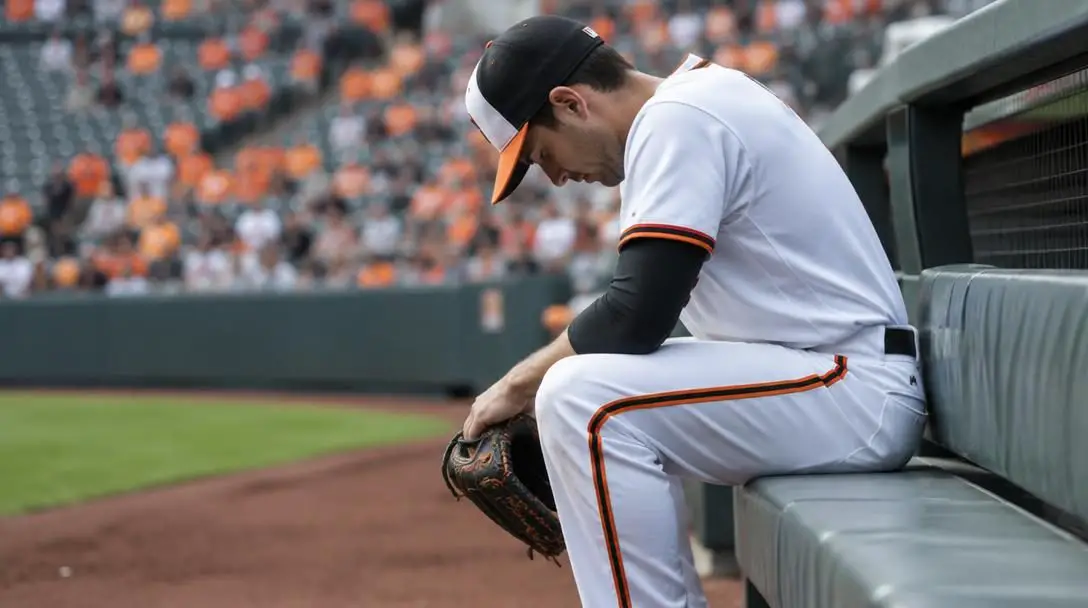
Although Davis experienced a steep batting average drop in 2014, he authored an impressive bounce-back campaign in 2015, reinforcing his status as an elite home-run hitter. Heading into free agency, the Orioles awarded him a monumental seven-year, $161 million contract that included extensive deferred payments. What followed was a historical collapse in offensive production. Davis's contact skills completely disintegrated. At his absolute nadir, he hit an abysmal .168 over a full campaign and set the Major League record for consecutive hitless at-bats. Davis was entirely phased out of baseball by the close of the 2020 season, forcing Baltimore to absorb huge financial commitments long after his viability as an everyday contributor had evaporated.
At a Glance: Comparing the Franchise's Worst Investments
Examining these five contracts side-by-side illustrates how varied the risks of long-term free-agent commitments can be, ranging from degenerative medical conditions to rapid skill decay.
| Player | Terms & Value | Primary Complication | On-Field Outcome |
|---|---|---|---|
| Brian Roberts | 4 years, $40 million | Age curve and chronic physical injuries | Appeared in fewer than 200 games over four seasons |
| Ubaldo Jimenez | 4 years, $50 million | Severe loss of pitching command | 14-23 record with an ERA above 6.00 in final two seasons |
| Sidney Ponson | 3 years, $22.5 million | Off-field legal issues, including two DUI arrests | 18-26 record; released prior to contract conclusion |
| Albert Belle | 5 years, $65 million | Sudden degenerative hip condition | Missed the final three full years of the five-year deal |
| Chris Davis | 7 years, $161 million | Unprecedented offensive collapse and contact loss | Hit .168 in worst year; out of baseball by end of 2020 |
A Disciplined Roadmap: Steps for Evaluating High-Priced Free Agents
To avoid repeating the multi-million-dollar mistakes of previous regimes, modern front offices rely on a rigorous, multi-layered evaluation framework before committing extensive years and dollars to veteran players.
- Detailed Medical and Biomechanical Vetting: Organizations conduct exhaustive physical examinations, analyzing joint mobility, wear-and-tear history, and structural integrity. Spotting early signs of joint degeneration can protect clubs from career-ending injuries like the one that sidelined Albert Belle.
- Rigorous Age-Curve Modeling: Front offices project performance based on historical aging curves rather than past accolades. Because athleticism, sprint speed, and bat speed typically peak in an athlete's mid-to-late twenties, offering long commitments to players in their thirties carries severe statistical risk.
- Background and Character Inquiries: Executives perform comprehensive due diligence on an athlete's off-field habits, personal support systems, and clubhouse reputation. Vetting personal stability helps avoid disruptive controversies and behavioral breakdowns like those seen with Sidney Ponson.
- Underlying Skill Decomposition: Rather than relying solely on traditional counting stats like home runs, wins, or RBIs, analysts scrutinize underlying metrics. For hitters, this means isolating contact rates, whiff percentages, and strikeout trends to spot early warning signs of offensive collapse.
Recurring Front-Office Pitfalls in Long-Term Signings
Reviewing historical missteps across baseball reveals several consistent traps that front offices repeatedly stumble into when negotiating major contracts:
- Rewarding Past Achievements Instead of Future Production: Front offices regularly pay players for what they achieved during their arbitration years or prior contracts, rather than realistically assessing what they will produce throughout their thirties.
- Letting Emotion and Sentimentality Dictate Terms: Pressure from fanbases to retain homegrown talent can lead executives to make emotionally driven offers, even when a player's age and health record suggest extreme caution.
- Overlooking Severe Flaws in Hit Profiles: Power hitters who maintain high strikeout rates and rely entirely on pure bat speed are exceptionally vulnerable. Even a fractional drop in reaction time can cause their entire offensive game to collapse.
- Ignoring Park Factors and Defensive Dependencies: Pitchers who post strong statistics in specific home environments or behind elite defensive units often struggle when transplanted into smaller ballparks or paired with less efficient infields.
Frequently asked questions
Why are Major League Baseball contracts riskier for teams than NFL contracts?
Standard Major League Baseball contracts are fully guaranteed under the collective bargaining framework. If an MLB player suffers a sudden career-ending injury, experiences a rapid decline in performance, or is released outright from the team, the franchise remains legally obligated to pay out the entire value of the contract. By contrast, NFL agreements often contain non-guaranteed base salaries that teams can terminate with limited long-term penalties.
What caused Chris Davis's deal to become the worst in Orioles history?
Davis signed a massive seven-year, $161 million contract with significant deferred compensation after leading the majors in home runs. Shortly after signing, his contact abilities disintegrated, resulting in a .168 batting average in his worst full season and a Major League record for consecutive hitless at-bats. Davis was essentially out of baseball by the end of the 2020 season while the Orioles remained on the hook for his guaranteed earnings.
How did Albert Belle's contract with Baltimore conclude early?
Albert Belle signed a five-year, $65 million pact with Baltimore and performed at a high level over his first two seasons. However, following the 2000 campaign, he was diagnosed with a severe degenerative hip condition that abruptly ended his playing career. Belle was unable to play during the final three seasons of the agreement and was forced into early retirement, leaving Baltimore to pay out the remainder of the deal.
Why was Sidney Ponson released before his three-year contract ended?
After re-signing with Baltimore on a three-year, $22.5 million deal ahead of the 2004 season, Ponson struggled through two tumultuous seasons marred by a poor 18-26 record and an ERA near 6.00. Furthermore, he faced repeated legal troubles off the field, including two arrests for driving under the influence. The Orioles decided to sever ties and terminate the contract ahead of schedule rather than endure further disruption.
How do deferred compensation structures affect an organization long term?
Deferred compensation allows a team to spread out salary obligations over years or even decades after a player's on-field career concludes. While this structure lowers short-term payroll obligations and helps front offices manage immediate luxury tax penalties, it creates ongoing debt liabilities that tie up payroll flexibility long after the player has left the organization.
The Bottom Line
The lessons learned from historical missteps have fundamentally altered modern roster construction for the Baltimore Orioles and teams throughout professional baseball. In an era governed by advanced analytics and biomechanical assessments, front offices are increasingly wary of issuing lengthy, fully guaranteed pacts to players approaching or crossing into their thirties.
Instead of chasing veteran power hitters with declining contact profiles or volatile arms on multi-year deals, successful organizations focus on locking up young, controllable talent early while relying on short-term commitments for veteran depth. By balancing payroll commitments with sustainable player development pipelines, franchises can build competitive rosters without saddling themselves with unmovable contracts that derail their long-term competitive windows.