5 Worst Moments For Bayern Munich Fans
Bayern Munich is widely recognized as one of the most dominant forces in European football, boasting a historic collection of domestic and international silverware. For decades, the Bavarian powerhouse has set the gold standard across German sports, turning winning into an everyday expectation rather than an occasional triumph.
Yet that towering reputation was forged through eras of genuine crisis, gut-wrenching cup exits, and off-pitch turmoil. When an elite club operating under monumental pressure slips, the consequences resonate across world football. Examining the historical record highlights the five worst moments that Bayern Munich supporters have had to endure over the decades.
Key takeaways
- A disastrous 1977-78 season saw Bayern finish 12th in the Bundesliga, hovering just one point above 15th place.
- Relegation to the second tier in the 1950s proved that Bayern was not always an untouchable top-flight giant.
- The 1999 Champions League final remains football's most notorious stoppage-time collapse.
- A trophyless 2006-07 campaign cost manager Felix Magath his job and left Bayern outside the Champions League places.
- Longtime executive Uli Hoeneß served prison time after admitting to evading nearly 30 million Euros in taxes.
At a glance: The darkest chapters in Bayern history
While Bayern Munich supporters are accustomed to celebrating trophies at the Marienplatz, the club's history contains sharp declines and shocking defeats across multiple eras. The table below outlines the core details of these five defining low points.
| Event | Era / Year | Competition / Context | Ultimate Consequence |
|---|---|---|---|
| Second Division Stint | 1950s | Oberliga Süd / 2. Oberliga Süd | Relegation following a 16th-place finish; earned promotion back in 1955-56 |
| Finishing the 1977-78 Season | 1977-78 | Bundesliga, DFB-Pokal, UEFA Cup | Finished 12th in league on 32 points; suffered a 5-0 thrashing by 1. FC Kaiserslautern |
| 1999 Champions League Final | 1999 | UEFA Champions League | Conceded two goals in added time to Manchester United to lose 2-1 |
| 2007 Champions League Quarter-final | 2006-07 | UEFA Champions League / Bundesliga | Eliminated 2-0 at home by AC Milan; finished 4th in league and missed UCL qualification |
| The Uli Hoeneß Scandal | 2013-2014 | Club Administration / Legal | President sentenced to 3.5 years in prison for evading nearly 30 million Euros in taxes |
The 5 worst moments in Bayern Munich history
The standard of excellence in Munich was established in the mid-1970s, when the club captured three consecutive European Cup crowns before the tournament evolved into the modern UEFA Champions League. Because expectations rose to extraordinary heights, setbacks felt catastrophic. These five episodes represent the deepest lows experienced by the club and its dedicated fan base.
Second Division Stint
- Era: Mid-1950s
- League: Oberliga Süd (precursor to modern Bundesliga)
- Turning point: Second-place finish in 2. Oberliga Süd (1955-56)
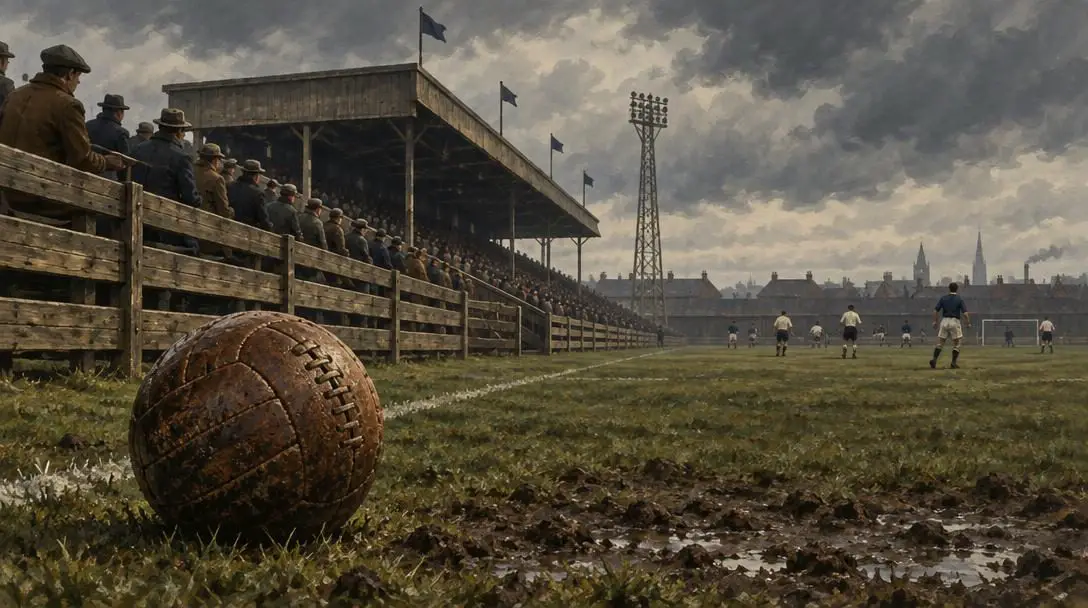
Modern supporters often assume that Bayern Munich spent every decade at the absolute pinnacle of German football, but the club's early history was remarkably unglamorous. Prior to the late 1960s, the Bavarian side had captured the national championship only once, a lone title dating back to 1932. Throughout long stretches of the mid-20th century, Bayern operated as an ordinary top-flight club rather than an elite juggernaut.
That modest status deteriorated into an outright sporting disaster during their time in the Oberliga Süd, the regional top-tier competition that preceded the formation of the Bundesliga. After a miserable campaign, Bayern plummeted to a 16th-place finish, suffering relegation into the second division. The club was forced to play in the 2. Oberliga Süd, an unthinkable reality for modern followers of the club.
Fortunately, the demotion was short-lived. During the 1955-56 season, Bayern secured second place in the 2. Oberliga Süd standings, earning immediate promotion back to the top tier for good. That swift recovery awakened an organization that would eventually rise to dominate German football.
Finishing the 1977-78 Season
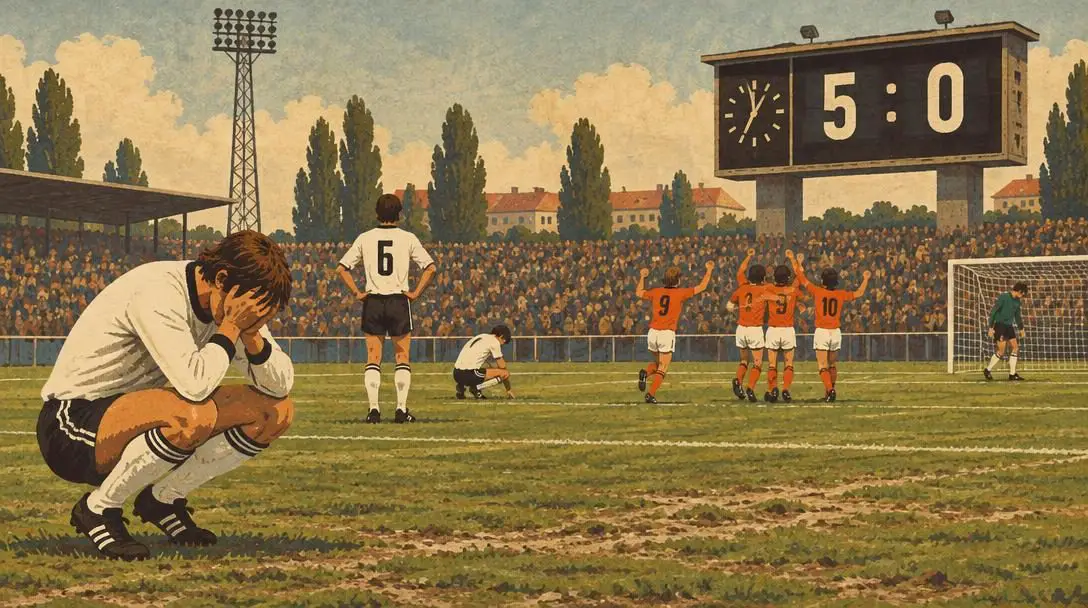
Following their golden era of three straight continental triumphs in the mid-1970s, Bayern Munich suffered an abrupt and shocking collapse during the 1977-78 campaign. Instead of contending for titles, the team performed like a completely ordinary side, delivering one of the ugliest, least productive seasons in modern club history.

The disappointment spanned every tournament on the calendar:
- DFB-Pokal: Bayern survived the first two rounds before suffering an embarrassing 3-1 defeat against lower-tier FC 08 Homburg.
- UEFA Cup: The team advanced to the third round, where they were thoroughly dismantled by domestic rivals Eintracht Frankfurt in an emphatic 6-1 aggregate thrashing.
- Bundesliga: The squad managed just 11 wins across 34 matches, drawing 10 and losing 13.
That weak return left Bayern with only 32 points, hovering precariously in 12th place in the league table. They sat a single point ahead of 15th-place Werder Bremen, narrowly avoiding an outright battle against relegation. The campaign concluded with a humiliating 5-0 thrashing by 1. FC Kaiserslautern, in which Bayern conceded four goals during a chaotic second half.
A meager return of 32 points left Bayern floating in 12th place, just a single point above 15th-place Werder Bremen.
1999 Champions League Final

No single match in club history carries as much lingering trauma for Bayern Munich supporters as the 1999 UEFA Champions League final. The club had been chasing continental supremacy ever since its mid-1970s heyday, and the 1998-99 campaign seemed destined to end that multi-decade wait.
Bayern navigated a demanding road to the final. After battling through the qualifying phase, they advanced through a challenging group featuring Barcelona and Manchester United. In the knockout stages, Bayern systematically swept aside German rivals 1. FC Kaiserslautern before overcoming Dynamo Kyiv to reach the title match at the Camp Nou.
Facing Manchester United in the final, Bayern grabbed momentum in the sixth minute when Mario Basler swept in a clever free-kick. Bayern dictated the tempo, struck the woodwork, and looked poised to hoist the trophy as regular time expired. Then, an astonishing collapse unfolded in second-half stoppage time. Edward Sheringham scored the equalizer one minute into added time, and barely two minutes later, Ole Gunnar Solskjaer directed home a second goal to seal an improbable 2-1 defeat for Bayern.
2007 Champions League Quarter-final

The 2006-07 campaign proved agonizing from start to finish, culminating in a total absence of major silverware. The lack of trophies was deemed intolerable by club leadership, resulting in the mid-season dismissal of manager Felix Magath. On the domestic front, Bayern stumbled through the Bundesliga, ultimately finishing fourth behind champions VfB Stuttgart, runners-up Schalke 04, and third-place Werder Bremen.
That fourth-place finish triggered a devastating sporting consequence: Bayern failed to qualify for the following season's UEFA Champions League, an almost unprecedented failure in the modern era. Having already exited the DFB-Pokal in the second round and lost the DFL-Ligapokal final, the Champions League was their sole remaining opportunity for salvation.
Bayern advanced past Inter Milan in the group phase and edged out Real Madrid in the round of 16. In the quarter-finals against AC Milan, Bayern earned an encouraging 2-2 draw in the first leg away in Italy. However, the return fixture in Munich ended in disaster. Bayern surrendered two goals at home, losing 2-0 on the night and bowing out of Europe to confirm a completely wasted season.
The Uli Hoeneß Scandal

- Playing record: 239 league appearances, 86 goals
- Management tenure: General manager for 30 years from 1979
- Legal penalty: 3.5-year prison sentence in March 2014
Few figures have influenced Bayern Munich as profoundly as Uli Hoeneß. A star forward during the 1970s golden era, Hoeneß tallied 86 goals in 239 league appearances before injuries cut his playing career short. In 1979, at age 27, he stepped directly into the front office as general manager, spending three decades laying the commercial and sporting foundation of the modern club before ascending to the presidency.
That revered reputation fractured in 2013 when Hoeneß became the subject of a massive tax evasion investigation by German authorities. The inquiry revealed millions of Euros in concealed income held in Swiss bank accounts. In court, Hoeneß admitted to evading nearly 30 million Euros in taxes.
In March 2014, the court sentenced Hoeneß to 3.5 years in prison. He served just under two years before his release. Underscoring his enduring influence across the organization, Hoeneß was subsequently re-elected as Bayern Munich president, eventually retiring in 2019 after nearly half a century of service to the club.
How club crises reshape European football giants
A collapse on the pitch or a boardroom controversy is rarely an isolated incident. For top-tier football organizations like Bayern Munich, severe sporting crises set off systemic institutional changes that alter the club's trajectory for years.
- Managerial turnover: Sacking the head coach is frequently the immediate reaction to missing benchmarks. Felix Magath's departure during the trophyless 2006-07 campaign illustrates how quickly managers lose security when domestic and European goals slip away.
- Roster restructuring: Humiliating league finishes—such as 12th place in 1978 or relegation in the 1950s—expose roster flaws, forcing management to overhaul scouting networks and sign top-tier talent.
- Financial and commercial penalties: Missing Champions League qualification reduces high-margin broadcast revenue and diminishes international sponsor visibility.
- Psychological scars: Dramatic defeats in high-stakes matches, such as the 1999 stoppage-time collapse against Manchester United, leave lasting scars on players and supporters until continental redemption is achieved.
How supporters can navigate historic sporting defeats
Experiencing crushing losses, late-game heartbreaks, or administrative scandals can be emotionally draining for passionate fans. When your club hits an all-time low, applying constructive perspectives can help process the disappointment:
- Gain historical perspective: Remember that down periods are natural phases in sports cycles. As Bayern proved after their 1950s relegation and 1978 league collapse, institutional lows are rarely permanent.
- Acknowledge opponent quality: Recognizing when rivals produce incredible plays—such as Manchester United's two stoppage-time strikes in 1999—helps reframe the outcome around sporting excellence rather than purely bad fortune.
- Separate administrative controversies from sport: Distinguish between legal problems in executive suites and the competitive performance of the squad on the pitch to maintain clear expectations.
- Focus on the rebuilding cycle: Shift attention away from lost trophies and look ahead toward tactical resets, transfer windows, and the emergence of promising young talent.
Mistakes fans make when analyzing club failures
When looking back at painful historical chapters, supporters and analysts often fall into common evaluation traps. Avoiding these misconceptions provides a much clearer understanding of football history:
- Assuming past dominance was perpetual: Believing Bayern Munich has always been an unstoppable domestic monopoly ignores decades of mid-table finishes and second-tier football before their mid-1970s breakthrough.
- Overreacting to short-term dry spells: Treating a single poor season as terminal decline is a common mistake; even the disastrous 1977-78 season was followed by renewed dominance.
- Overlooking the catalyst effect of failure: Major disasters frequently force necessary modernizations. Without painful tournament exits or roster shortcomings, clubs rarely make the difficult structural changes required to achieve sustained greatness.
Frequently asked questions
Has Bayern Munich ever been relegated from the top division?
Yes. In the mid-1950s, Bayern Munich finished 16th in the Oberliga Süd—the regional precursor to the modern Bundesliga—and was relegated to the second tier before earning promotion back during the 1955-56 campaign.
What was Bayern Munich's worst Bundesliga finish?
Bayern's lowest finish in the modern Bundesliga era occurred in the 1977-78 season, when the club finished in 12th place with 32 points, just one point clear of 15th-place Werder Bremen.
Why was Uli Hoeneß sent to prison?
Uli Hoeneß was sentenced to 3.5 years in prison in March 2014 after admitting in court to evading nearly 30 million Euros in taxes. He served just under two years before gaining release.
What happened in the final minutes of the 1999 Champions League final?
Leading 1-0 thanks to an early Mario Basler free-kick, Bayern Munich conceded two goals in second-half stoppage time to Manchester United's Edward Sheringham and Ole Gunnar Solskjaer, losing 2-1.
Did Bayern Munich miss the Champions League in 2007?
Yes. Following a fourth-place finish in the 2006-07 Bundesliga behind VfB Stuttgart, Schalke 04, and Werder Bremen, Bayern failed to qualify for the 2007-08 UEFA Champions League.
The bottom line
Bayern Munich's status as a global football powerhouse was not achieved through uninterrupted triumph. Instead, the club's identity has been shaped just as powerfully by its deepest valleys: regional relegation in the 1950s, near-disaster in the late 1970s, agonizing continental heartbreaks, and executive turmoil. Understanding these low points reveals the resilience required to build, maintain, and continually restore one of the most successful sporting institutions in the world.