5 Worst Moments For Everton Fans
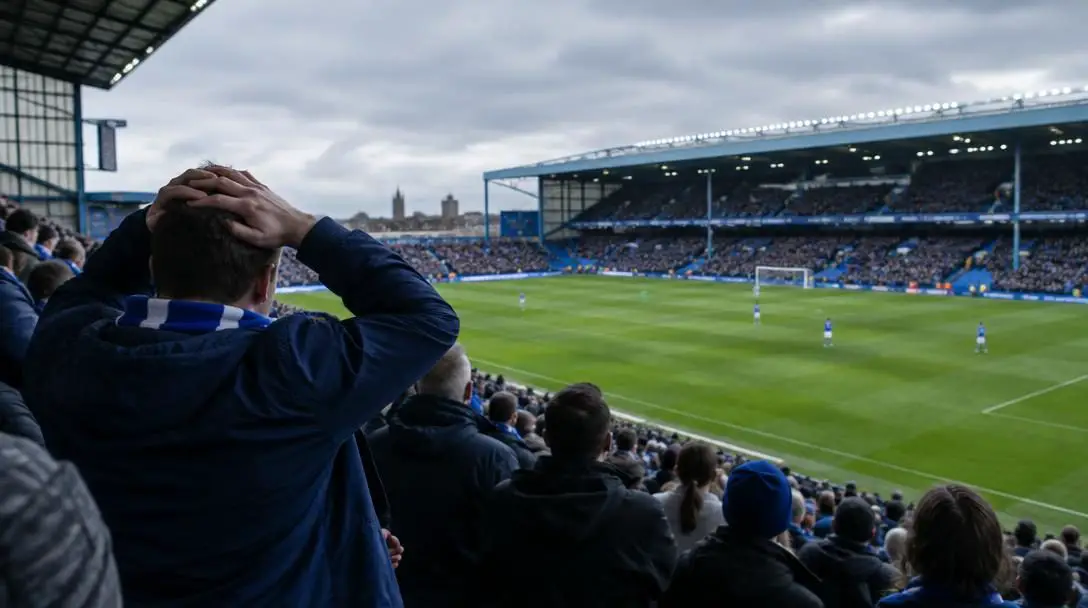
Everton Football Club stands as one of the oldest and most venerated institutions in English football. Established in 1878, the Merseyside outfit has enjoyed eras of remarkable dominance, capturing multiple top-flight league championships and continental honors while building an intensely loyal global supporter base across generations.
Yet, more than a century of sustained competition at the summit of the domestic game brings inevitable distress. Alongside the glorious title runs and jubilant cup parades, Evertonians have endured agonizing cup final heartbreaks, destabilizing boardroom turnover, and nerve-shredding brushes with relegation that tested the resolve of Goodison Park to its absolute limits.
Key takeaways
- Everton's proud top-flight continuity was shattered in 1950–51 when a final-day 0-6 defeat sealed a dead-last relegation.
- The Football League Cup remains an agonizing void in the club's trophy cabinet following replay defeats in the 1977 and 1984 finals.
- A historic 25-second opener by Louis Saha in the 2009 FA Cup final ended in devastation after Chelsea rallied to win 2-1.
- The sudden 2021 departure of Carlo Ancelotti sparked a chaotic managerial carousel where successive bosses won less than one-third of their games.
- A gradual decline following the 1986–87 First Division championship culminated in the 1993–94 season, where top-flight survival was rescued on the final day.
At a glance: Five watershed heartbreaks in Everton history
While the club's silverware-laden eras remain unforgettable, specific low points have fundamentally shaped the modern culture, anxieties, and expectations of the Everton fan base.
| Event | Key Year(s) | Decisive Fixture or Opponent | Ultimate Outcome |
|---|---|---|---|
| Post-Ancelotti Managerial Crisis | 2021–2023 | Benitez, Ferguson, and Lampard tenures | Plunging win rates below 33% and acute instability |
| League Cup Final Agonies | 1977, 1984 | Aston Villa (second replay), Liverpool (replay) | Silverware eluded the club; zero League Cup trophies in history |
| First Division Relegation | 1950–51 | Sheffield Wednesday (0-6 defeat) | Finished 22nd on goal differential; demoted to second tier |
| FA Cup Final Lead Collapse | 2009 | Chelsea (1-2 defeat at Wembley) | Fastest final goal wiped out by Drogba and Lampard strikes |
| The Post-Title Slump | 1993–94 | Wimbledon (3-2 final-day comeback) | Barely avoided relegation with 44 points after 22 league losses |
The five darkest chapters in Everton football history
Every historic football institution experiences eras when tactical planning unravels and fortune completely turns. For Everton, these five episodes represent moments where competitive despair, near-misses, and administrative volatility caused lasting pain.
A string of poor managers
- Catalyst: Sudden departure of Carlo Ancelotti to Real Madrid in 2021
- Managers involved: Rafael Benitez, Duncan Ferguson, Frank Lampard
- Performance mark: Consecutive managers winning fewer than one-third of competitive games
In modern elite football, managerial stability often dictates whether a club contends for European places or plunges into domestic chaos. Everton appeared to have solved this equation in 2019 by appointing Carlo Ancelotti, a world-class tactician with a glittering trophy record across Europe's top clubs. Across 67 matches in charge, Ancelotti restored tactical poise to Goodison Park, compiling a respectable record of 31 victories, 14 draws, and 22 defeats. The growing optimism was suddenly extinguished in the summer of 2021 when Ancelotti abruptly resigned to begin a second managerial stint at Real Madrid.
His unexpected exit exposed deep structural vulnerabilities, plunging Everton into an erratic coaching cycle defined by plummeting win percentages. The boardroom turned controversially to Rafael Benitez in June 2021. Benitez struggled to connect with the team or the supporters, securing only seven victories in 22 matches before being sacked roughly six months into his tenure. Club legend Duncan Ferguson stepped in as caretaker manager but could not arrest the slide, losing his solitary match in charge. Frank Lampard assumed the role next, but the struggles persisted as he managed just 12 victories across 43 fixtures before being dismissed in under a calendar year. This rapid managerial churn left the squad devoid of identity, tactical continuity, and confidence.
Dropping the Football League Cup
- Tournament inauguration: 1960
- Final heartbreaks: 1977 vs Aston Villa, 1984 vs Liverpool
- Key replay venues: Old Trafford and Maine Road
The Football League Cup, established in 1960 and currently known as the EFL Cup, invites clubs across the top four tiers of the English pyramid to fight for major silverware. Everton has competed in the tournament through dozens of campaigns, yet the trophy remains conspicuously absent from the club's honors list. The heartbreak of this elusive trophy is centered on two final appearances that stretched far beyond the standard 90 minutes of football.
The first major missed opportunity unfolded in 1977 against Aston Villa. After an initial 0-0 stalemate at Wembley and a subsequent 1-1 draw in a replay, a second replay was required to separate the exhausted finalists. Aston Villa finally landed the decisive blow, crushing Everton's dreams of lifting their maiden League Cup. Seven years later, in 1984, Everton earned another shot at the trophy in a massive all-Merseyside final against Liverpool. In front of an electric crowd of 100,000 spectators at Wembley, the sides ground out a scoreless 0-0 draw. A replay took place just three days later at Manchester's Maine Road before roughly 50,000 fans. A 21st-minute goal from Liverpool's Graeme Souness proved insurmountable, leaving Everton on the wrong side of a 1-0 defeat. Everton has never returned to a League Cup final since that bitter evening at Maine Road.
Last place finish in 1950–51
- Season: 1950–51 First Division
- Final matchday result: 0-6 defeat to Sheffield Wednesday
- Relegation tiebreaker: Finished level on 32 points with Chelsea and Sheffield Wednesday
Everton boasts an exceptionally proud tradition of sustained top-flight residency, making relegation an extraordinarily rare shock in the club's storied history. Because of that pedigree, the 1950–51 campaign stands as an unmitigated low point. That season remains the final time Everton suffered demotion from the First Division, and the team did not merely slip below the safety line by an unfortunate break—they ended the campaign rooted to the absolute bottom of the table.
The tragedy of the campaign lay in how achievable safety was right until the final whistle. Between the beginning of March and the close of the season, Everton endured an abysmal slump, winning just one single match. Despite that prolonged collapse, top-flight survival remained firmly in their hands on the final matchday against direct relegation rival Sheffield Wednesday. Everton required only a solitary point—a win or a draw—to guarantee First Division football for another year. Instead of rising to the occasion, the team collapsed under the pressure, delivering a lifeless performance that ended in a humiliating 0-6 rout. When the table was finalized, Everton, Sheffield Wednesday, and Chelsea sat locked together on 32 points. Chelsea retained their First Division status by virtue of a superior goal differential, casting Everton down into the second tier in 22nd place.
While championship triumphs build an illustrious trophy cabinet, it is the agonizing heartbreaks that truly forge the resilience of a football club's supporters.
The 2009 FA Cup final
- Opponent: Chelsea at Wembley Stadium
- Fastest goal: Louis Saha scoring inside the 1st minute
- Final score: 1-2 defeat
Earlier in their history, Everton enjoyed several legendary triumphs in the FA Cup, yet opportunities to lift silverware at Wembley had grown painfully scarce since the mid-1990s. The 2008–09 season presented the club with its most golden opportunity in a generation to end that silverware drought. Everton battled through an arduous cup run, opening with a narrow 1-0 win over Macclesfield Town before knocking out local rivals Liverpool in a tense replay. Subsequent commanding victories over Aston Villa, Middlesbrough, and Manchester United earned the Blues a place in the showpiece final against Chelsea.
The final could not have scripted a more explosive start for Everton. In the opening minute of play, French striker Louis Saha pounced on a loose ball and rifled it into the net, registering the fastest goal in modern FA Cup final history and putting Everton ahead 1-0. The eruption in the blue half of Wembley felt like the arrival of a long-awaited coronation. However, the early advantage gradually dissolved as Chelsea settled into their rhythm. Didier Drogba leveled the score with a towering header in the 20th minute. Everton fought stubbornly to regain control, but Chelsea midfielder Frank Lampard unleashed a decisive strike late in the second half to make it 2-1, condemning Everton to a heartbreaking defeat from a winning position.
The slow downturn hits rock bottom (1993–94)
- Season: 1993–94 Premier League
- League record: 12 wins, 8 draws, 22 losses, 44 points
- Survival match: 3-2 comeback victory over Wimbledon on the final matchday
In the 1986–87 season, Everton climbed to the pinnacle of English football, capturing the First Division championship in commanding style. That triumph represented the peak of years of elite recruitment, tactical coherence, and ruthless execution. Yet what followed was an agonizingly steady slide down the league table that exposed chronic structural neglect. In the seasons immediately following the 1987 title, Everton's league finishes slipped progressively from fourth to ninth, down to 12th, and then 13th.
This prolonged regression reached its absolute nadir during the 1993–94 Premier League campaign. Saddled with dwindling attendances and an aging, inconsistent squad, Everton suffered 22 league defeats, collected only 44 points, and managed just 12 victories all year. The crisis reached fever pitch in the penultimate fixture of the season, when a demoralizing 3-0 loss away to Leeds United dropped Everton into 17th place and left them facing the immediate prospect of relegation. On a harrowing final day at Goodison Park against Wimbledon, Everton fell behind early before pulling off a dramatic 3-2 comeback victory. While survival was achieved, the season served as an alarming reminder of how quickly championship contenders can decay into relegation candidates.
The anatomy of a sporting slump: How elite clubs unravel
Everton's historical crises show that major football clubs rarely collapse through bad luck alone. Prolonged slumps are almost universally driven by compounding errors across executive leadership, talent recruitment, and on-field psychology.
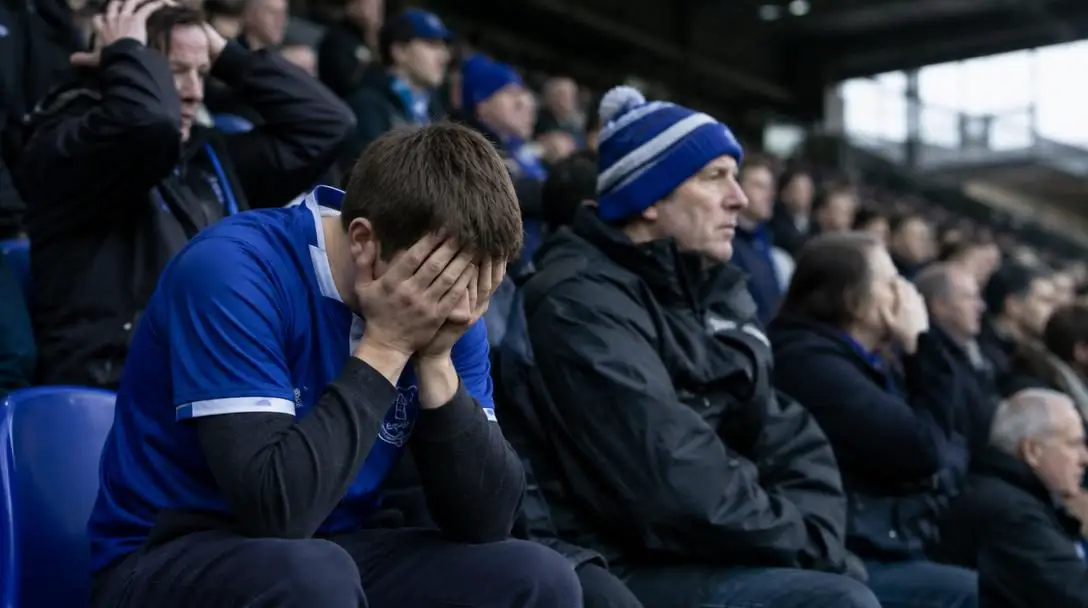
- Disruption at the managerial helm: When an elite manager departs without warning—as Carlo Ancelotti did in 2021—it fractures long-term planning. Appointing successors with conflicting tactical identities creates squad imbalance and causes win percentages to collapse.
- Negative momentum and high-stakes paralysis: In knockout ties like the 1977 and 1984 League Cup replays, or do-or-die survival games like the 1951 clash with Sheffield Wednesday, immense pressure can stifle players. Squads that tense up under pressure frequently suffer uncharacteristic, catastrophic collapses.
- Complacency and squad attrition: As evidenced by the regression following the 1986–87 First Division title, sustained competitive success demands proactive squad renewal. Failing to replace departing stars leads directly to gradual table slide.
- Loss of match control: As shown in the 2009 FA Cup final, securing an early lead is useless if a team cannot dictate the tempo of the game. Conceding the initiative allows elite opponents to absorb the blow, recalibrate, and gradually overpower their rivals.
Practical steps: How professional clubs navigate and recover from decline
When an elite club finds itself sliding down the table or trapped in a coaching crisis, executing a structured, step-by-step recovery process is vital to restoring operational health and competitive relevance.
- Establish a cohesive club identity: Boardrooms must outline an overarching footballing identity that dictates playing style, physical metrics, and scouting criteria, ensuring continuity regardless of who manages the dugout.
- Prioritize proactive squad building: Prevent gradual team aging by maintaining a healthy pipeline of developing players alongside proven top-flight performers, avoiding costly, short-term stopgaps.
- Develop robust managerial succession plans: Clubs must keep an active shortlist of aligned managerial candidates so that sudden departures do not lead to reactionary panic appointments.
- Implement sports psychology for high-pressure fixtures: Teams must train players to handle negative momentum shifts in cup finals and relegation battles, preventing single mistakes from spiraling into collapses.
- Harness supporter alignment: Rebuilding operational trust requires open communication with supporters, whose vocal backing at home fixtures often provides the vital emotional lift needed during relegation scraps.
Pitfalls to avoid: Mistakes clubs make during difficult downturns
Examining Everton's darkest moments reveals predictable operational and emotional missteps that frequently exacerbate crises instead of resolving them.
- Panicking over short-term form: Sacking managers every few months without a defined successor destabilizes team chemistry and inflates severance costs, creating a continuous loop of instability.
- Assuming historic heritage guarantees safety: Tradition, stadium size, and past trophies do not award points in the league table. Over-reliance on club stature was a primary factor in the shock 1950–51 relegation.
- Overlooking early warning signs: The gradual drop from fourth to 17th between 1987 and 1994 proves that persistent mid-table stagnation is often the precursor to a catastrophic relegation scrap if structural problems are left untreated.
- Failing to protect match leads: Scoring in the opening minute, as Everton did in the 2009 FA Cup final, can breed early complacency. Clubs must stay tactically disciplined rather than retreating into a purely defensive shell.
The road ahead: Key indicators of Everton's long-term revival
Throughout its history, Everton has demonstrated an enduring ability to rebound from sporting adversity. Moving forward from past heartbreaks requires evaluating several key operational pillars:
First, stability over quick fixes remains essential. Sustained improvement depends on backing a unified tactical structure over several seasons rather than constantly shifting direction. Second, converting cup runs into silverware requires conquering mental barriers. Reaching finals in tournaments like the FA Cup and EFL Cup revitalizes a fan base, but players must develop the ruthless edge required to finish the job on the biggest stage.
Finally, defensive solidity and supporter unity remain the club's greatest foundational strengths. When Everton has avoided catastrophe—most notably during the miraculous 3-2 comeback against Wimbledon in 1994—the ferocious backing of the crowd at Goodison Park made the difference. Maintaining that connection between the squad and the stands is essential to navigating any future trials.
Frequently asked questions
When was the last time Everton was relegated from the top flight?
Everton was last relegated from the First Division at the conclusion of the 1950–51 season, finishing in 22nd place after a 0-6 defeat to Sheffield Wednesday on the final matchday.
Has Everton ever won the Football League Cup?
No, the Football League Cup (now known as the EFL Cup) has eluded Everton throughout its history. The club reached the final in 1977 and 1984, but lost both trophies after extended replays against Aston Villa and Liverpool, respectively.
Who scored Everton's fastest goal in the 2009 FA Cup final?
Striker Louis Saha scored for Everton within the first minute of play against Chelsea at Wembley Stadium, though Chelsea ultimately fought back to win the match 2-1.
What happened to Everton after Carlo Ancelotti left in 2021?
Following Ancelotti's departure for Real Madrid, Everton suffered an unstable run of form under Rafael Benitez, Duncan Ferguson, and Frank Lampard, with successive managers consistently winning less than one-third of their matches.
How did Everton avoid relegation on the final day of the 1993–94 season?
Everton entered the final day in 17th place after losing 3-0 to Leeds United in the penultimate match, but preserved their Premier League status by coming from behind to defeat Wimbledon 3-2 at Goodison Park.
The bottom line
Everton's identity is defined not only by its storied league championships and historic triumphs, but by its extraordinary capacity to weather severe sporting crises. From the devastating 0-6 collapse in 1951 and the replay heartbreaks of the League Cup to the narrow escape of 1994 and modern managerial turmoil, these low moments highlight the grit and enduring loyalty of Everton supporters. By learning from historical structural missteps, prioritizing boardroom stability, and honoring the passion of the fan base, the club preserves the legacy that has kept it at the heart of English football for well over a century.