5 Worst Signings In Everton History
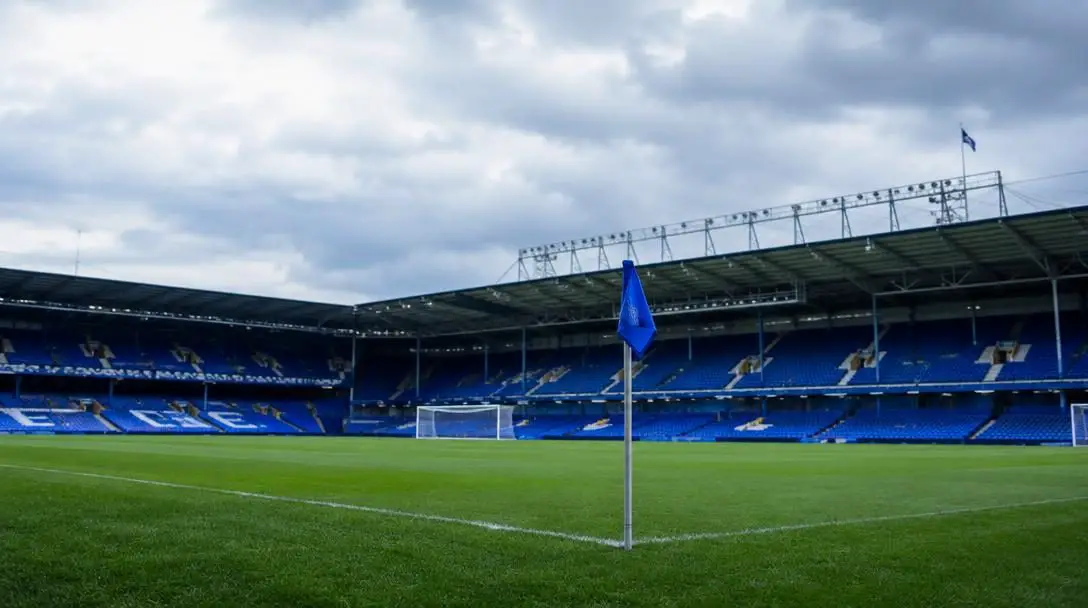
Everton Football Club has maintained an enduring presence in the top division of English football for more than a century. Sustaining that long-term competitive pedigree has historically depended on careful squad construction, savvy market scouting, and bringing in players who fit the physical intensity and cultural identity of Goodison Park. However, elite football recruitment remains an inherently volatile enterprise, where even well-funded clubs occasionally incur massive financial losses on high-profile transactions that fail to materialize into positive results on the pitch.
When multi-million-pound transfer fees and long-term contracts fail to deliver, the damage can linger across multiple seasons. Whether through sudden managerial turnover, disastrous injury spells, or an inability to adapt to the pace of the Premier League, certain deals stand out as cautionary tales. While several other players struggled with form and steep costs, five specific acquisitions in Everton's modern history illustrate the costly risks of transfer business gone wrong.
Key takeaways
- Recruitment blunders can saddle a club with staggering wage bills and millions of pounds spent per individual match played.
- Sudden managerial changes shortly after signing a player often isolate high-cost assets who do not fit the tactical vision of the incoming regime.
- Severe injuries suffered early in a player's contract frequently derail value, leading to repetitive loan cycles and negligible resale recovery.
- Dominating European competitions or overseas domestic leagues does not automatically translate to handling the physical pace and demands of English football.
At a glance: Everton's most problematic transfers
Evaluating recruitment blunders requires examining the disconnect between the financial commitment made by the club and the actual on-pitch return. The table below outlines how each of the five signings unfolded across their Everton tenures based on documented fees, contract commitments, and Premier League appearances.
| Player | Reported Fee or Deal | Contract Terms | League Appearances | Key Complication |
|---|---|---|---|---|
| Davy Klaassen | £23.6 million | 5-year contract | 7 | Tactical fallout following an immediate managerial change |
| Fabian Delph | £8.5 million | Multi-year deal | 35 | Limited match availability and zero goals scored |
| Yannick Bolasie | £25 million | Multi-year contract | 29 | Early severe injury followed by multiple domestic and European loans |
| Per Kroldrup | £5 million | 4-year contract | 1 | Immediate surgery and career tenure lasting only one league outing |
| Oumar Niasse | £13.5 million | 54-month deal | 35 | Prolonged reserve status and repeated loan departures |
The five worst signings in Everton history
Each of the following transfers arrived on Merseyside with notable reputations, heavy financial investments, or great anticipation from supporters, only to leave minimal positive marks on the pitch.
Davy Klaassen

- Position: Midfielder
- Acquisition cost: £23.6 million
- Contract length: Five years
- League appearances: 7
Dutch midfielder Davy Klaassen came through two different youth programs before settling at Ajax in 2004. By 2011, he earned his senior debut and eventually became club captain. Across 126 league appearances for Ajax, Klaassen scored 44 goals and captured three Dutch top-flight titles, making him one of the most sought-after midfielders across the European continent. Seeking a creative anchor, Everton committed to a five-year contract worth £23.6 million to bring the playmaker to the Premier League.
The move rapidly unraveled. Almost as soon as Klaassen arrived, Everton underwent a major management change, and the incoming leadership regime butted heads with the midfielder on tactical terms. Compounded by difficulties adapting to the speed and physicality of English football, Klaassen featured in just seven Premier League matches, meaning the club paid more than £3.3 million per league appearance. Just 13 months after signing, Everton cut their losses and transferred him to German club Werder Bremen.
Fabian Delph

- Position: Midfielder
- Acquisition cost: £8.5 million deal
- League appearances: 35
- Everton goals: 0
Bradford native Fabian Delph developed as a bright youth prospect at Leeds United during the early 2000s, making his professional debut in 2006 and racking up more than 40 appearances. In 2009, he moved to Aston Villa, where he blossomed into a team cornerstone across more than 110 league outings. His energetic midfield play earned him a move to Manchester City, where he played from 2015 to 2019 before Everton secured his signature on an £8.5 million deal.

Delph arrived with the expectation of injecting veteran leadership and top-level poise into Everton's midfield ranks, but his time at Goodison Park proved widely disappointing. Over three seasons, he made just 35 Premier League appearances and failed to score a single goal. Hampered by limited playing time, Delph collected no individual honors during his tenure, and Everton failed to win any major trophies before he retired from football in 2022 when his contract expired.
Yannick Bolasie

- Position: Winger
- Acquisition cost: £25 million
- League appearances: 29
- Everton goals: 2
Born in Lyon, France, Yannick Bolasie built his professional foundation through an unconventional journey, debuting with Hillingdon Borough in 2006 before spending time with clubs like Floriana, Bristol City, and Plymouth Argyle. Between 2012 and 2016, Bolasie established himself as a dynamic, unpredictable winger at Crystal Palace, catching Everton's eye and prompting the Merseyside club to sanction a massive £25 million transfer fee.
Disaster struck almost immediately after his arrival when Bolasie sustained a major injury that wiped out nearly his entire first season. Following his recovery, he no longer fit the tactical plans of the club's evolving coaching staff. Everton sought to mitigate his wages by arranging loan spells, sending him to clubs such as Aston Villa and Sporting CP. By the time his contract concluded in 2021 and he departed for Turkish side Caykur Rizespor, Bolasie had recorded only 29 Premier League appearances and two goals for Everton.
Per Kroldrup

- Position: Defender
- Acquisition cost: £5 million
- Contract length: Four years
- League appearances: 1
Danish center-back Per Kroldrup launched his career with B.93 in 1998, spending three years there before earning a move to Italian club Udinese for four seasons. Everton identified Kroldrup as an experienced defender capable of anchoring their back line, investing £5 million to secure his signature on a four-year contract. However, before he could step onto the pitch for his competitive debut, Kroldrup suffered a severe injury requiring surgical intervention.
The rehabilitation process delayed his debut by six months, but his competitive career on Merseyside proved historically brief. Kroldrup managed just one single Premier League appearance for Everton. Only a month after that solitary league match, Everton parted ways with the defender, transferring him to Fiorentina. The move back to Italy reignited his playing career, as he spent six years with Fiorentina before concluding his playing days at Pescara and Portuguese club Olhanense.
When sudden managerial changes collide with tactical mismatches and severe injuries, even multimillion-pound investments can unravel in a matter of months.
Oumar Niasse

- Position: Forward
- Acquisition cost: £13.5 million
- Contract length: 54-month deal
- League appearances: 35
Senegalese striker Oumar Niasse began his footballing career with US Ouakam in his hometown, compiling an exceptional record of 102 goals across 154 matches. He moved abroad to Turkish club Akhisar Belediyespor for a season before spending two years in Russia with Lokomotiv Moscow. Impressed by his scoring record, Everton finalized a £13.5 million transfer on a 54-month contract in the winter window.
Niasse found it nearly impossible to secure regular playing time during his debut campaign, quickly becoming relegated to fringe status on the roster. Rather than keeping him purely as an unused reserve, Everton organized consecutive loan assignments within the Premier League to Hull City and Cardiff City. Although he remained under contract across a four-year period, Niasse tallied just 35 league appearances for Everton before his deal ran its course.
How modern player acquisitions work
Understanding how highly anticipated signings fail requires examining the multi-step machinery that governs modern football recruitment. Transfer negotiations involve extensive operational layers that must align seamlessly for an acquisition to succeed.
- Scouting and talent identification: Recruitment teams dispatch scouts and utilize video analytics to evaluate prospective talent. Scouts examine technical proficiency, work rate, tactical awareness, and physical output, though projecting how those attributes translate from foreign competitions to the Premier League is rarely exact.
- Contractual and financial structuring: Beyond agreeing on a transfer fee with the selling club, negotiators must structure multi-year wage packages, performance incentives, and agent fees that create major long-term liabilities on the club's balance sheet.
- Medical and orthopaedic evaluations: Prior to signature, prospective players undergo extensive cardiovascular and physical testing. While comprehensive, these medical screens cannot predict sudden on-field trauma or the wear-and-tear of congested fixture schedules.
- Tactical integration: A player's viability depends on the specific tactical system deployed by the manager. When clubs replace managers frequently, newly arrived signings often find their skill sets marginalized by the subsequent tactical setup.
Step-by-step: Evaluating the true return on a football signing
Assessing whether a transfer constitutes an operational failure requires a structured approach that looks beyond emotional reactions. Analysts use clear steps to calculate the true impact of a player deal.
- Calculate the total financial outlay: Combine the upfront transfer fee, supplemental agent and broker fees, and the cumulative wages disbursed over the entire length of the player's stay.
- Measure output against expenditure: Break down the full financial commitment into unit metrics, such as calculating the total cost incurred per Premier League match or per direct goal contribution.
- Evaluate durability and match availability: Measure the percentage of fixtures the player was fit and eligible for selection, distinguishing between games lost to genuine injury and matches missed due to tactical omission.
- Audit loan performance and fee recoupment: Assess how effectively the club offset wage liabilities through temporary loan fees and whether any portion of the initial capital investment was recovered through a subsequent sale.
Common pitfalls in Premier League squad building
The difficulties experienced by Everton throughout these historical transactions highlight recurring traps that top-flight clubs must navigate during recruitment windows.
- Recruiting for short-lived managerial philosophies: Purchasing expensive players tailored exclusively to one manager's specific preferences leaves the roster vulnerable when that coach is dismissed.
- Underestimating domestic league intensity: Believing that prolific goal records or domestic dominance in lower-intensity leagues will seamlessly translate to the physical demands of English football.
- Overcommitting long-term capital on fragile profiles: Offering guaranteed multi-year contracts to players carrying high physical risk, leaving clubs responsible for full wage burdens following sudden injuries.
- Lacking clear exit pathways: Failing to sell underperforming players early, resulting in diminishing loan cycles that allow contracts to expire with zero financial return.
Future considerations for Everton and transfer operations
To avoid repeating past recruitment blunders, modern clubs have increasingly adapted their operational structures to protect themselves against transfer volatility. Ensuring long-term roster stability requires a cohesive institutional vision.
Establishing strong sporting director models helps insulate clubs from the turbulent cycles of managerial changes. By retaining control over recruitment strategy, the club ensures that incoming signings fit an overarching playing philosophy rather than the temporary desires of an individual head coach. Furthermore, shifting toward performance-incentivized contracts helps limit exposure to players who spend significant portions of their tenure on the treatment table.
Frequently asked questions
Which player on the list played the fewest league games for Everton?
Danish center-back Per Kroldrup played the fewest league matches, featuring in only one single Premier League game for Everton before being transferred to Fiorentina just one month later.
How much did Everton spend per league match on Davy Klaassen?
Everton spent over £3.3 million per Premier League appearance for Davy Klaassen, as he featured in only seven league games after arriving on a £23.6 million transfer fee.
Which other players narrowly missed this list of worst signings?
Ashley Williams, Sandro Ramirez, Morgan Schneiderlin, and Cenk Tosun were highlighted as dishonorable mentions who struggled to meet expectations due to fluctuating form, tactical mismatches, or substantial acquisition costs.
Where did Yannick Bolasie go on loan while contracted to Everton?
During his multi-year spell under contract at Everton, Yannick Bolasie went on several loan assignments, including stints with English side Aston Villa and Portuguese club Sporting CP.
How many goals did Fabian Delph score for Everton?
Fabian Delph scored zero goals across his 35 Premier League appearances for Everton before his contract expired and he retired in 2022.
The bottom line
Recruiting elite talent in the Premier League will always carry a degree of inherent risk, but the cases of Davy Klaassen, Fabian Delph, Yannick Bolasie, Per Kroldrup, and Oumar Niasse demonstrate what happens when high fees, managerial instability, and poorly planned squad building collide. By modernizing talent evaluation, implementing robust medical risk management, and maintaining an unwavering tactical philosophy, clubs can better navigate the transfer market and avoid repeating the most expensive mistakes in their history.