A Brief History of Spacex
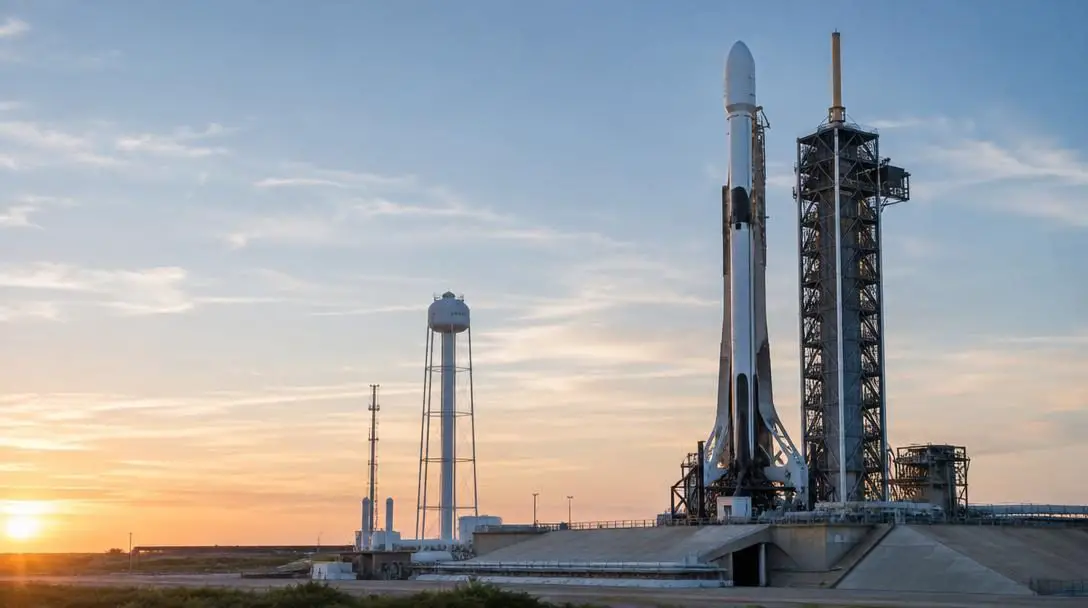
Before the turn of the twenty-first century, SpaceX did not exist. For decades prior, space exploration had been the exclusive domain of heavily funded national governments, dominated by the long-standing space programs of the United States and Russia. Today, SpaceX has fundamentally reshaped the global aerospace landscape, privatizing space travel, lowering the financial barriers to orbit, and pursuing long-range initiatives to establish human presence on Mars.
The company’s rapid emergence from an ambitious upstart into an aerospace giant offers a masterclass in modern engineering, iterative manufacturing, and capital strategy. By moving away from slow-moving contractor networks and embracing reusable launch vehicles, SpaceX challenged traditional industry assumptions, weathered near-fatal early failures, and demonstrated that commercial enterprise could operate reliably at orbital scale.
Key takeaways
- SpaceX was founded to lower spaceflight costs and bypass international geopolitical stalemates that stalled planetary exploration.
- After three consecutive launch failures that brought the venture to the brink of collapse, the Falcon 1 reached orbit on its fourth attempt in September 2008.
- The company pioneered rocket fleet reusability and diversified its operations into global broadband with the Starlink mega-constellation.
- Missions like Inspiration4 demonstrated the feasibility of orbital commercial spaceflight without professional career astronauts.
- Vertical integration, in-house manufacturing, and rapid physical prototyping serve as the foundational pillars of the company's business model.
The Geopolitical Spark and Founding of SpaceX
During the latter half of the twentieth century, interplanetary exploration was considered an exclusively sovereign ambition. While sending human crews to Mars was a long-discussed goal within American and Russian space establishments, practical progress halted due to diverging priorities and an inability to agree on joint operational frameworks. The diplomatic fallout surrounding the dissolution of the Anti-Ballistic Missile (ABM) Treaty deepened this rift, making collaborative interplanetary programs between the superpowers increasingly unlikely.
During this period of stagnation, Elon Musk served on the board of directors of the Mars Society. Frustrated by the lack of government momentum and the exorbitant costs associated with legacy launch architectures, Musk envisioned a private pathway to deep space. His foundational premise was straightforward: if launch vehicles could be manufactured and operated for a fraction of traditional aerospace budgets, human voyages to the Red Planet would no longer hinge on shifting political cycles.
To convert this concept into a functional enterprise, Musk engaged with key defense and intelligence contacts. Working alongside Michael Griffin, who was associated with the CIA, Musk secured approximately $400 million in financial backing through In-Q-Tel, the strategic venture capital arm of the intelligence community. With this capital secured, the company was christened SpaceX and embarked on its mission to engineer an entirely new generation of low-cost orbital rockets from the ground up.
Key Flagship Programs and Turning Points
The progression of SpaceX can be traced through three landmark platforms and missions that proved its technical viability, diversified its revenue base, and proved the commercial potential of human spaceflight.
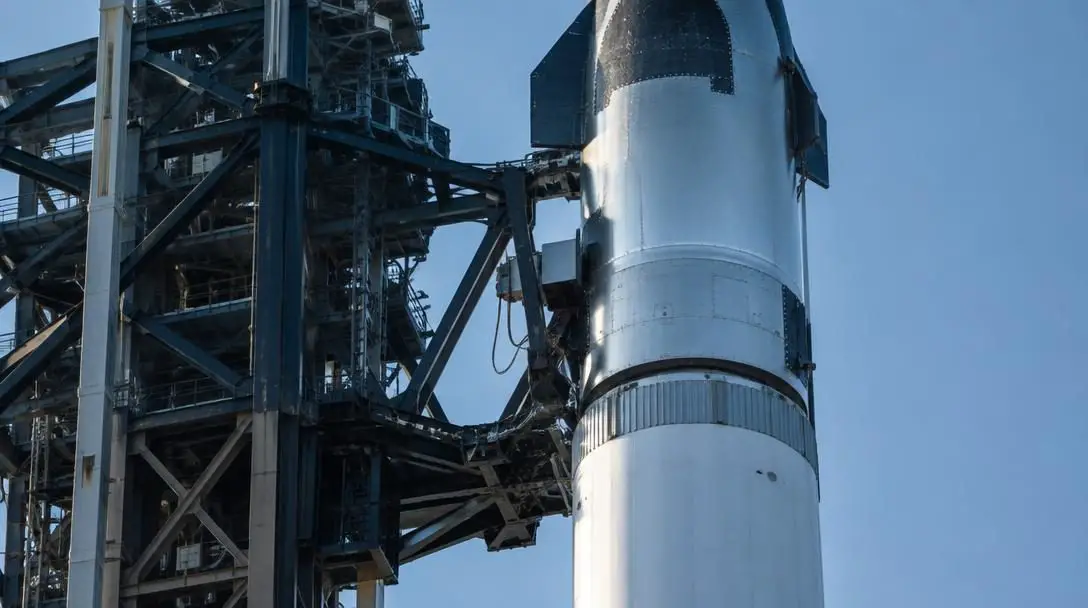
Falcon 1
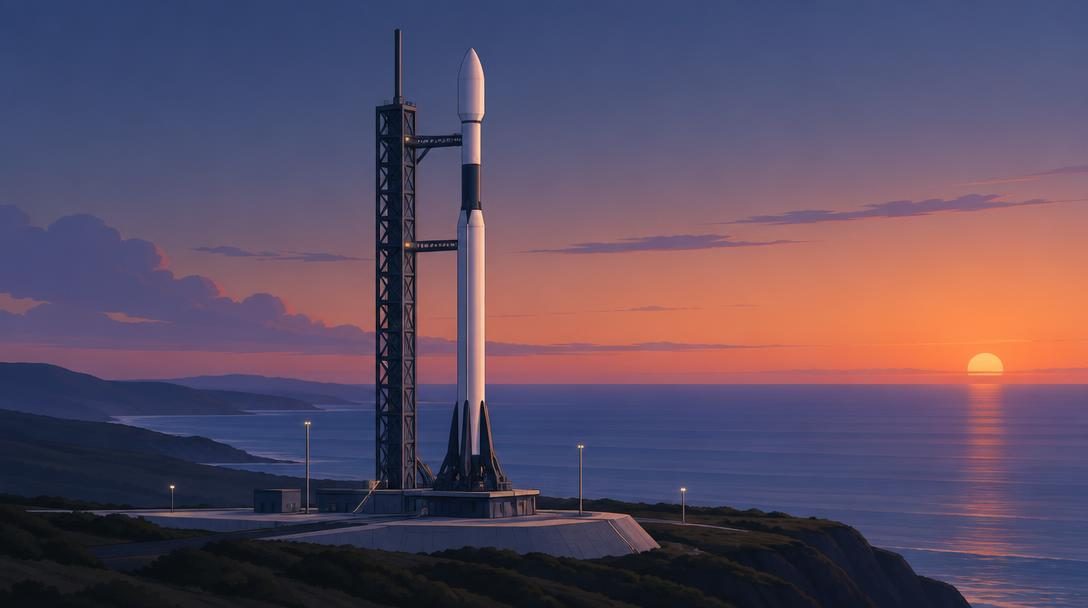
- First Orbital Success: September 28, 2008
- Initial Maiden Launch: 2006
- Early Record: Three consecutive flight failures before orbital validation
- Status: Retired after its successful fifth flight
The Falcon 1 was designed during the mid-2000s as a lightweight, low-cost launch vehicle intended to demonstrate that a private firm could deliver orbital payloads far cheaper than legacy launch systems. However, the rocket's operational introduction was brutal. Its inaugural launch in 2006 ended in complete loss, followed in quick succession by two more failed launches. After burning through nearly all its initial startup capital across four difficult years, the company faced bankruptcy. The fourth launch, conducted on September 28, 2008, succeeded completely, proving the architecture and saving the business. A subsequent fifth launch validated the design, clearing the way for subsequent orbital classes.
Starlink
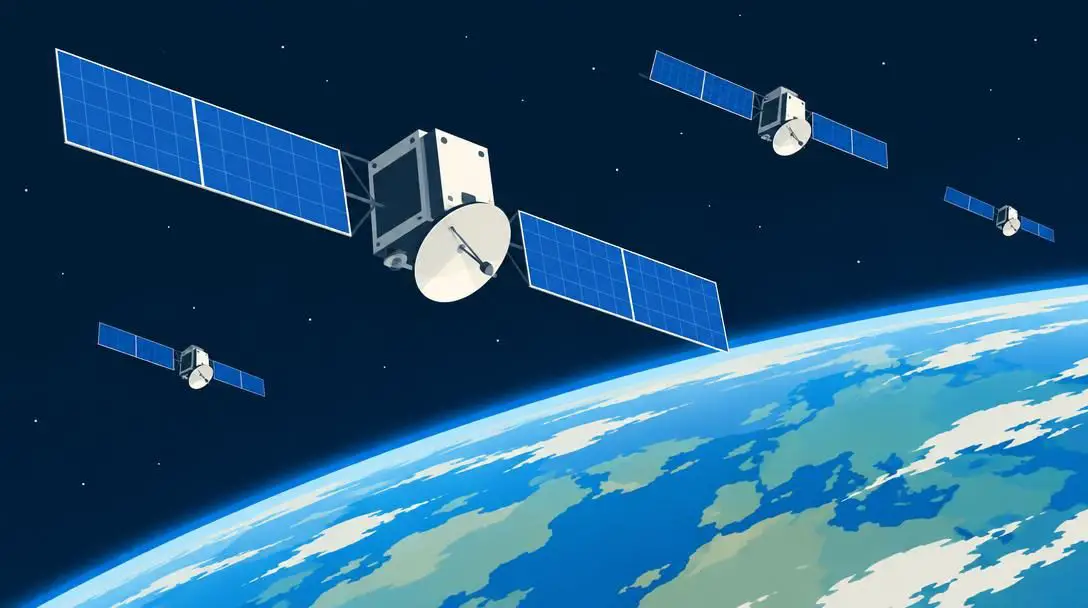
- Core Purpose: Global low-latency broadband internet
- Orbital Regime: Low Earth orbit (LEO)
- Strategic Role: Captive internal launch demand and recurring consumer revenue
- Enterprise Impact: Propelled corporate valuation past $50 billion by late 2020
Recognizing that the worldwide market for commercial satellite launches had a natural ceiling, SpaceX diversified its technical and financial footprint by introducing Starlink. This satellite constellation operates in low Earth orbit, beaming high-speed web access across the globe. By launching clusters of its own satellites using its operational rocket fleet, SpaceX generated internal launch demand while establishing an ongoing, direct-to-consumer and enterprise broadband business. This multi-layered revenue stream proved transformative, propelling the company's valuation past $50 billion by the second half of 2020 as launch cadences accelerated.
Inspiration4
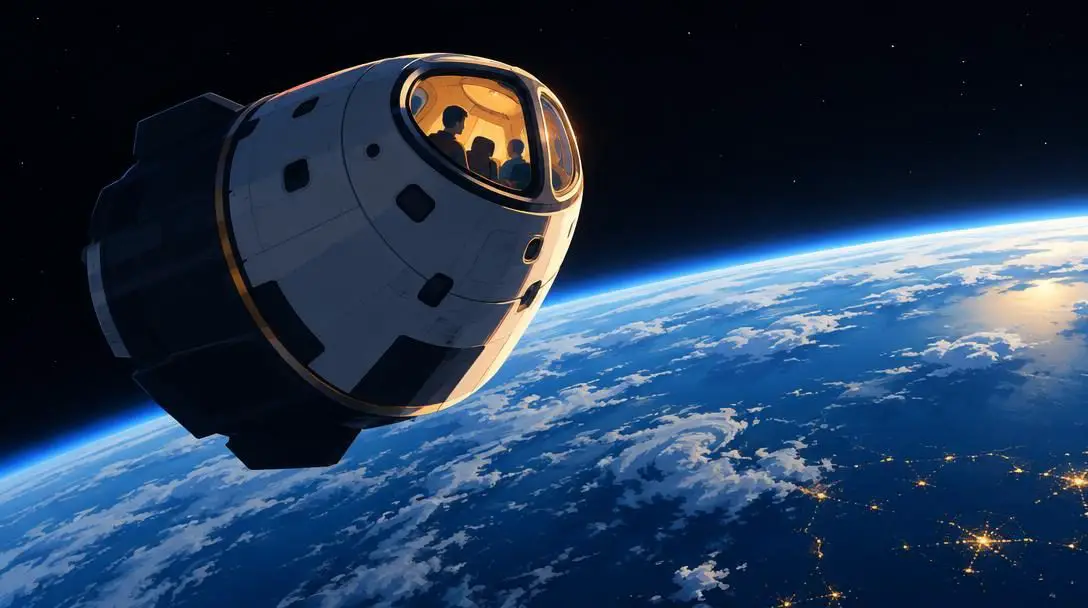
- Mission Year: 2021
- Crew Profile: Four private citizens (all-civilian)
- Professional Astronauts Onboard: Zero
- Operational Flight Profile: Multi-day Earth orbit and safe ocean recovery
Achieved in 2021, the Inspiration4 mission marked an unprecedented milestone in aerospace history: the first completely civilian orbital spaceflight. Previous human orbital missions had invariably relied on military test pilots or career astronauts employed by sovereign governments. By launching, orbiting, and safely recovering four private individuals without career space agency personnel on board, SpaceX proved that commercial crew transport systems could operate safely for ordinary citizens, expanding the operational horizon for orbital tourism, private research, and future colonization efforts.
| Initiative | Primary Strategic Function | Key Achievement | Operational Role |
|---|---|---|---|
| Falcon 1 | Low-cost orbital validation | First privately developed liquid-fuel rocket to reach orbit (2008) | Legacy testbed and baseline proof of launch architecture |
| Starlink | Recurring broadband revenue generation | Deployment of an expansive low Earth orbit communications constellation | Active commercial service and primary internal payload driver |
| Inspiration4 | Commercial human spaceflight validation | First all-civilian crewed orbital spaceflight safely returned to Earth | Benchmark human spaceflight milestone for private citizens |
The SpaceX Operational Blueprint
The transformation of SpaceX from a struggling startup into an industry-leading launch provider stems from an operating methodology that departed radically from the cost-plus contracting models favored by historical aerospace contractors. Understanding this methodology requires examining five core operational principles.
- In-House Manufacturing: Traditional aerospace development relied on deep tiers of subcontractors, which inflated administrative overhead and led to significant delivery lag. SpaceX reversed this by engineering engines, chassis components, guidance software, and electronics internally, reducing external dependencies and trimming manufacturing expenses.
- Rapid Physical Prototyping: Rather than spending years refining theoretical models on paper to achieve speculative perfection, the company relies on iterative hardware testing. Prototypes are assembled swiftly, pushed to functional failure, analyzed, and improved across rapid iterative cycles.
- Fleet Reusability: Historically, multimillion-dollar rockets were discarded into the ocean after a single flight. SpaceX engineered autonomous vertical landing architectures, treating booster hardware like commercial aircraft that can be inspected, refurbished, and flown repeatedly to drastically depress marginal launch costs.
- Proprietary Mega-Constellations: By operating Starlink, SpaceX effectively became its own largest customer. This ensures a consistent, high-frequency launch schedule, preventing idle launchpad capacity while capturing subscription-based telecom revenue.
- Dual-Track Operations: The company sustains a balanced revenue portfolio by simultaneously executing contracts for commercial telecom firms, academic researchers, defense programs, and civil space agencies. These commercial revenues directly underwrite long-term exploration programs.
How to Break Into the Commercial Aerospace Sector
The rise of private spaceflight has created an expansive commercial aerospace ecosystem that extends well beyond legacy defense conglomerates. For engineers, software developers, and technical project managers looking to enter this rapidly evolving industry, several structured steps provide a dependable career path.
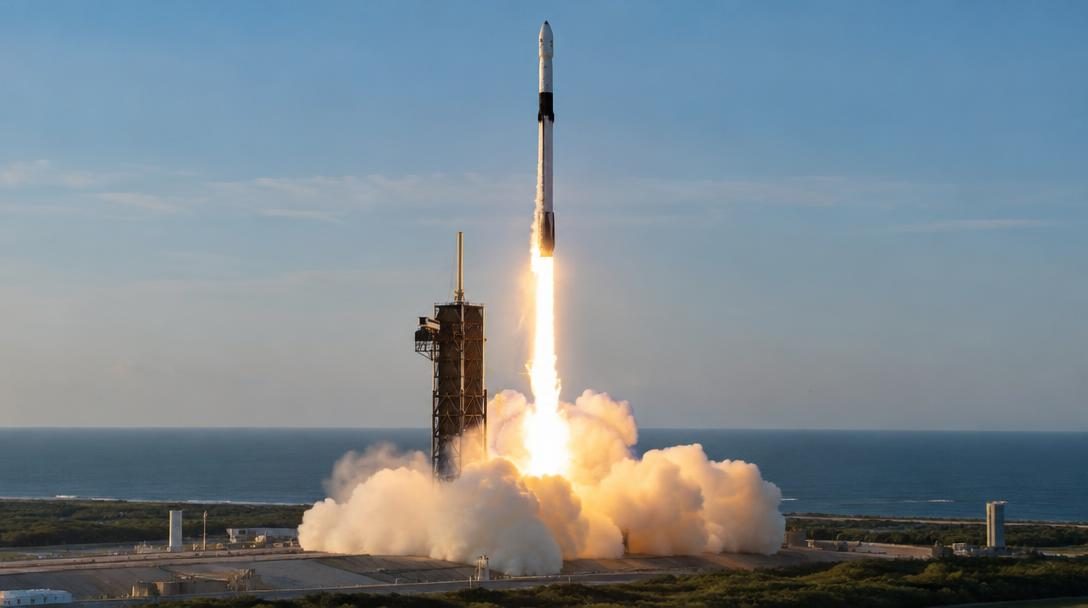
- Build Core STEM Fundamentals: Acquire rigorous training in aerospace, mechanical, materials, or electrical engineering, supplemented by foundational computer science and physics principles.
- Gain Hands-On Fabrication Experience: Prioritize practical machine shop exposure, composite manufacturing, welding, and rocketry build teams. Commercial space companies heavily weigh tangible fabrication and assembly experience over purely theoretical coursework.
- Master Low-Level Systems Programming: Modern guidance, navigation, and control (GNC) systems, as well as onboard flight computers, require high proficiency in C++, embedded systems, and automated simulation modeling.
- Study Space Regulatory Frameworks: Familiarize yourself with orbital licensing, export controls, frequency allocation, and debris mitigation standards enforced by governing agencies.
- Target Specialized Supply Chain Niches: Beyond primary rocket manufacturers, investigate specialized suppliers that develop advanced thermal protection systems, ground station equipment, radiation-hardened electronics, and specialized valves.
Critical Traps and Operational Mistakes in Aerospace
Developing space systems entails extraordinary technical risk and harsh physical constraints. Aspiring space companies and engineering initiatives frequently fail due to several predictable miscalculations.
- Underestimating Regulatory and Certification Timelines: Achieving orbital access requires navigating complex flight safety reviews, environmental impact assessments, and spectrum allocations, which frequently delay initial launch dates by years.
- Miscalculating the Unit Economics of Reusability: Reusing a rocket stage only yields financial returns if the total cost to recover, transport, inspect, recertify, and refurbish the vehicle is significantly lower than manufacturing a brand-new stage.
- Neglecting Ground Support Infrastructure: Launch vehicles represent only half of the technical equation. Failing to build robust launch mounts, propellant storage farms, transport mechanisms, and range telemetry assets leads to severe launchpad bottlenecks.
- Over-Engineering Early Iterations: Lingering in extended design loops in pursuit of flawless computer simulations leaves companies vulnerable to agile competitors who validate simpler hardware directly on the test stand.
- Disregarding Cash-Flow Realities: Launch attempts, static fires, and hardware iterations carry high marginal costs; exhaustible venture capital reserves must be carefully managed to withstand consecutive test-stand anomalies.
The Long-Term Horizon: Beyond Low Earth Orbit
As the commercial space industry matures, attention is pivoting toward what lies beyond low Earth orbit. Analysts have suggested that SpaceX could ultimately function as the spaceborne equivalent of an intercity bus line, providing reliable, scheduled, high-capacity transport for personnel and materials moving between Earth and Mars.
You want to wake up in the morning and think the future is going to be great. And I can't think of anything more exciting than going out there and being among the stars.
Executing this vision requires overcoming substantial operational, technical, and regulatory hurdles that will dictate the future trajectory of the commercial space industry:
- Orbital Traffic Management: With constellations like Starlink deploying thousands of satellites into low Earth orbit, collision risks multiply. The industry must establish coordinated orbital tracking and autonomous conjunction-avoidance protocols to preserve orbital sustainability.
- Interplanetary Economics: Long-term settlements on Mars cannot rely indefinitely on subsidized launches from Earth. Long-range viability requires establishing in-situ resource utilization, including propellant production and local habitat extraction systems.
- Transition to Commercial Space Stations: With private human spaceflight validated by missions like Inspiration4, non-government space habitats will eventually replace legacy stations, functioning as orbital laboratories, manufacturing centers, and departure hubs.
- Modernizing International Space Law: Rapid private infrastructure development will test existing treaties, requiring updated legal frameworks governing orbital slot allocation, spectrum rights, and interplanetary property extraction.
Frequently asked questions
Why did Elon Musk found SpaceX instead of funding existing space programs?
International space collaboration had stalled due to diplomatic disagreements between the United States and Russia, particularly after the termination of the Anti-Ballistic Missile Treaty. Musk determined that national space agencies were not moving aggressively toward human Mars exploration, prompting him to privatize spaceflight and develop low-cost rockets independently.
How close did SpaceX come to bankruptcy during its early years?
SpaceX was on the brink of closure after its first three Falcon 1 launches failed between 2006 and 2008. The company had expended its initial startup capital over four difficult years, making the fourth launch on September 28, 2008, a do-or-die attempt. That flight's success secured the company's survival.
How does Starlink fit into the long-term Mars vision?
Starlink serves a critical dual purpose: it generates consistent internal payload demand for SpaceX's launch fleet and provides steady, recurring subscription revenue from consumers and enterprises worldwide. This dependable cash flow helps finance the capital-intensive development required for human exploration programs.
What made the Inspiration4 mission a historic aerospace milestone?
Launched in 2021, Inspiration4 was the first orbital spaceflight crewed entirely by civilians without any professional, government-employed astronauts on board. Its successful orbital flight and safe recovery proved that commercial spacecraft can safely transport private citizens into orbit.
Why is in-house manufacturing so important to SpaceX's business model?
By engineering and fabricating the majority of its structural components, propulsion systems, and avionics in-house, SpaceX avoids the layers of markups and bureaucratic delays typical of multi-tiered aerospace contractor networks. This vertical integration reduces production expenses and accelerates design iterations.
The bottom line
The trajectory of SpaceX underscores how radical operational philosophies can dismantle entrenched industry norms. By accepting early hardware failures as an educational cost, bringing critical manufacturing processes under one roof, and demonstrating the commercial reality of rocket reusability, the company proved that private enterprise could match and exceed legacy space flight operations. As Starlink scales and commercial human spaceflight expands, the aerospace sector stands at the threshold of a new era—one where reaching the stars is no longer an infrequent sovereign endeavor, but a regular, commercially viable transportation service.