American Football vs Soccer: Differences and Comparisons
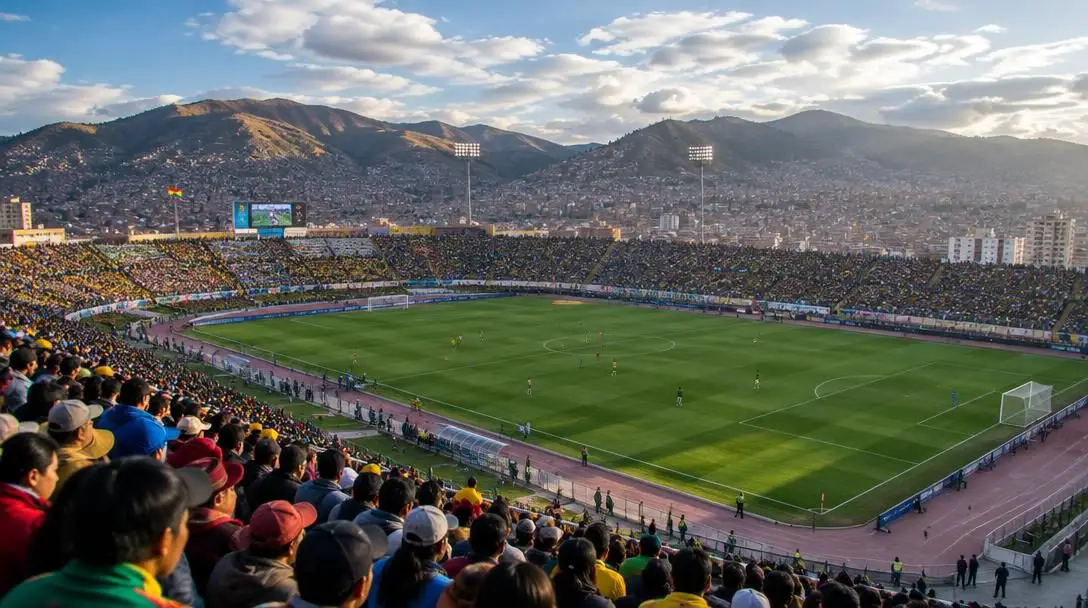
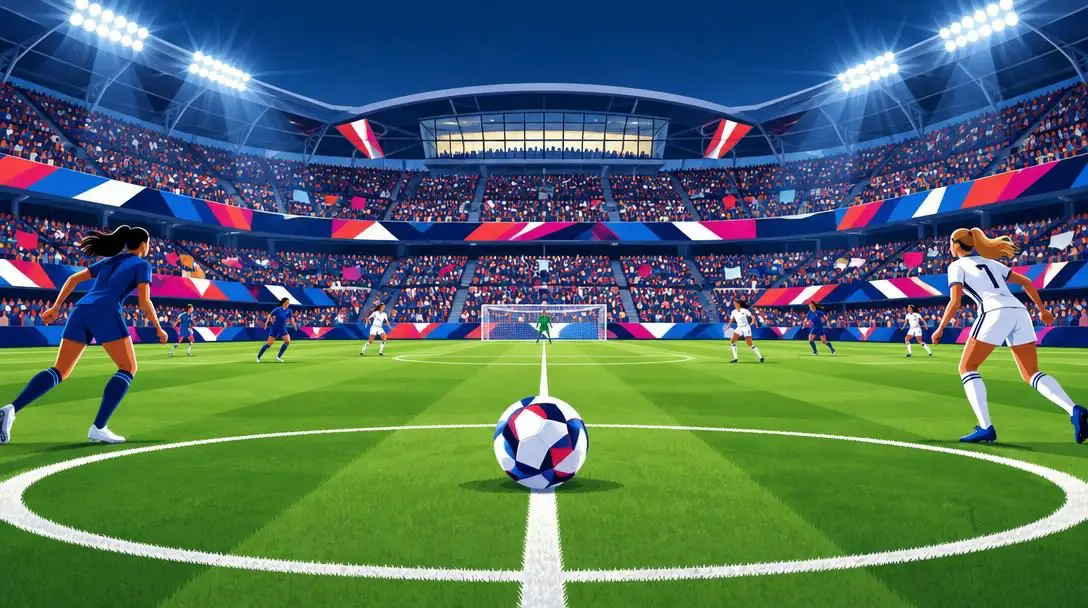
Across the international sporting landscape, few team sports rival the cultural prominence, passionate fanbases, and media footprint enjoyed by American football and association football, universally known in the United States as soccer. While both games share a historical lineage as turf-based field sports centered on moving a ball into an opponent's territory, their tactical philosophies, bodily demands, pacing, and core rules could hardly be more distinct.
American football is a game of planned, episodic aggression, defined by stop-and-start collisions, set-piece playbooks, and specialized units competing for measured yards of territory. In contrast, soccer is a continuous, fluid contest of cardiovascular endurance, dynamic open-field spatial awareness, and quick-thinking footwork where a single goal can decide the entire match. Understanding the fundamental differences in how both sports govern time, rosters, boundaries, and contact offers a richer appreciation of two of the modern world's most captivating athletic spectacles.
Key takeaways
- American football and soccer both place 11 players per side on the field, but football divides its roster into specialized single-platoon units while soccer demands continuous two-way play from outfielders.
- Soccer operates on an unbroken, referee-managed running clock over two 45-minute halves, whereas American football divides 60 minutes of playing time across four quarters that routinely span over three hours.
- Scoring in American football is multi-tiered and frequent, awarding six points for touchdowns, three for field goals, and extra conversion points, while soccer assigns a uniform value of one point to every goal.
- Full-force bodily collisions are an essential legal element of American football, requiring heavy protective armor, while soccer strictly regulates physical challenges and relies on minimal protection.
- Substitutions in American football are unlimited between downs, whereas soccer tightly restricts in-match substitutions and prevents replaced players from re-entering the match.
Historical lineage and modern evolution
Although modern broadcasts present two completely different athletic spectacles, both sports trace their genealogical roots to traditional kicking and ball-carrying pastimes played across centuries. The divergence of these games demonstrates how regional tastes, university institutions, and changing competitive values molded distinct games from common ancestral pastimes.
American Football
- Origins: Late 19th-century United States
- Predecessor Sports: Rugby union and association football
- Governing Philosophy: Territorial conquest and down-based advancement
American football is a comparatively modern creation that coalesced on North American college campuses during the late 19th century. Early innovators blended the kicking elements of association football with the rough-and-tumble running and tackling structures of rugby. Over subsequent decades, a series of deliberate rule reforms transformed the game into an entirely independent discipline. Key innovations included the introduction of the line of scrimmage, the system of downs to mandate minimum yardage gains, the legalization of the forward pass, and the authorization of deliberate blocking ahead of the ball carrier. These structural changes transformed open, scrambling play into a coordinated tactical contest organized around scripted, stop-and-start collisions.
Soccer

- Earliest Recorded Predecessor: Cuju (China, 2nd century BCE)
- Standardization Era: 19th century in England
- Governing Philosophy: Fluid possession and movement of a spherical ball without hands
Soccer, known throughout the vast majority of the globe simply as football, carries an ancient ancestry that stretches back millennia. Ball-kicking competitions existed in classical antiquity across ancient Greece and Rome. Historical records document an early Chinese military training exercise known as Cuju dating as far back as the 2nd century BCE, which required participants to kick a leather ball through an opening into a net without using their hands. Over centuries, disparate folk football games played throughout villages, towns, and schools in Great Britain coalesced into standardized, codified rules in England during the 19th century. By establishing strict bans on handling the ball for outfield players, the sport retained an unbroken tradition of foot-based dexterity that grew into the planet's most widely practiced team game.
Playing environments: Field dimensions and surfaces
The playing boundaries of each sport establish the spatial constraints under which players operate, dictating the necessary running speeds, tactical spacing, and endurance profiles demanded of athletes in each sport.
The American Football Gridiron
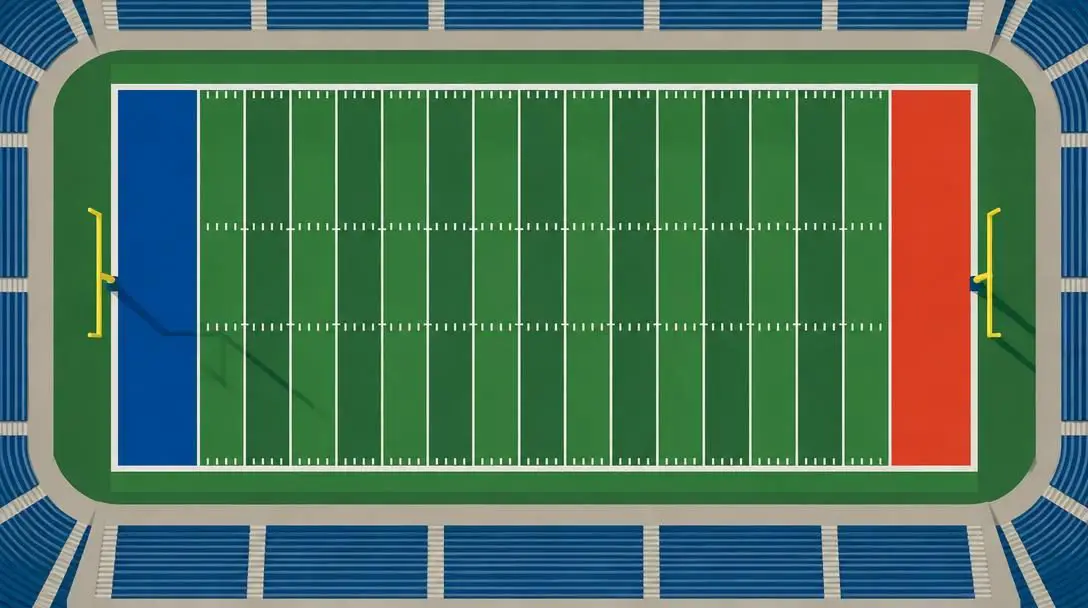
The American football playing field is universally known as the gridiron, so named for the prominent checkerboard pattern created by its yard markers. The gridiron features uniform dimensions across virtually all competitive levels. It measures exactly 120 yards in total length, which encompasses a 100-yard primary field of play flanked by two 10-yard scoring end zones at either end. The width is precisely calibrated to 53.3 yards (160 feet). The field is painted with crisp boundary lines, yard lines every five yards, visible yard numbers every ten yards, and two rows of hash marks running parallel down the interior of the turf. These exact markings give game officials, coaching staffs, and players instantaneous geographic references to spot the ball and assess down-and-distance situations.
The Soccer Pitch
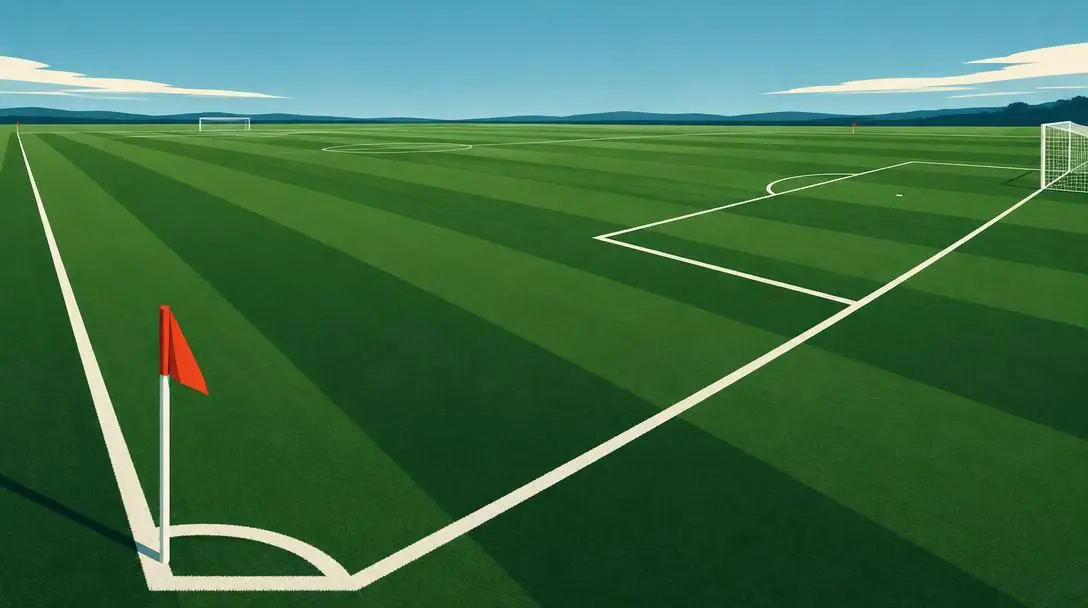
In contrast to the rigid standardization of the gridiron, the soccer pitch allows for variable boundary dimensions under international regulations. A regulation adult soccer pitch generally measures between 100 and 130 yards in total length, and between 50 and 100 yards in total width. For premier international fixtures, the dimensions are narrowed to more standardized bands, yet variations between stadiums remain standard. The pitch features a halfway line, a center circle, two penalty areas (often called the 18-yard box), two smaller goal areas (the 6-yard box), and corner arcs from which restarts are taken. This vastly larger, more open surface emphasizes prolonged cardiovascular stamina, fluid off-the-ball runs, and expansive passing networks.
Team composition, player roles, and specialization
Both games require exactly 11 active players per side on the field during live play, yet how those players are organized and deployed reflects diametrically opposed sporting mentalities.
In American football, the 11 players on the field represent an absolute division of labor. Teams maintain entirely separate units: an offensive unit, a defensive unit, and a special teams unit. When an offense takes the field, its primary leader is the quarterback, who receives tactical play calls from the coaching staff, calls signals at the line of scrimmage, handoffs to running backs, or throws passes to wide receivers and tight ends. These ball-handlers operate behind a stout offensive line of blockers whose sole duty is to shield the quarterback and push defenders backward. Conversely, when possession changes, the offensive unit exits the field entirely, replaced by defensive linemen, linebackers, and defensive backs trained specifically to stop ball carriers, rush the passer, and disrupt passing lanes. Players in the modern game rarely play on both sides of the ball.
Soccer, meanwhile, treats its 11 players as an interdependent, fluid collective. Ten outfield players—broadly categorized into defenders, midfielders, and forwards—must contribute across both attacking and defensive phases as possession shifts back and forth across the pitch. Fullbacks must sprint forward to support offensive attacks, while forwards are expected to apply defensive pressure and track back when the opponent controls the ball. The only specialized outlier is the goalkeeper. Stationed as the final line of defense, the goalkeeper is the only athlete on the pitch permitted to use their hands or arms to catch, block, or throw the ball, an allowance strictly restricted to their designated penalty area.
Scoring methods and points systems
The rules governing scoring determine how teams manage risk, structure game plans, and mount comebacks throughout a contest.
American football features a multi-tiered point distribution system that rewards teams for pushing deep into rival territory:
- Touchdown (6 Points): Achieved when an offensive player carries the ball across the opponent's goal line or secures possession of a catch within the end zone.
- Point After Touchdown (1 or 2 Points): Immediately following a touchdown, the scoring squad can kick the ball through the uprights for a 1-point conversion, or run a scrimmage play from close range to rush or pass into the end zone for a 2-point conversion.
- Field Goal (3 Points): Executed during open play by a specialized placekicker, who boots the ball off the ground between the opponent's uprights, often attempted when an offense stalls on third down within kicking distance.
Soccer employs an elemental, single-tier scoring mechanism where every successful shot is valued identically:
- The Goal (1 Point): Credited when the entire spherical ball crosses completely over the plane of the goal line, between the upright posts, and underneath the horizontal crossbar during live play, a direct free kick, or a penalty kick.
While American football commands attention through explosive collisions, intricate specialized plays, and deep tactical stoppages, soccer captures the world through relentless flow, continuous endurance, and the dramatic scarcity of the goal.
Because each soccer goal counts as a solitary point and defensive units cover massive territory, scoring events in soccer are comparatively scarce. This scarcity heightens the tension of every single shot on target, turning a lone 1–0 scoreline into an edge-of-the-seat defensive stand or an exhilarating upset. American football games feature much higher aggregate point totals, with combined scores regularly clearing 40 or 50 points in a high-scoring game.
Comparing the sports at a glance
To help illustrate how these two sports diverge, the table below highlights their fundamental parameters across governing regulations, timing, roster usage, and physical requirements.
| Attribute | American Football | Soccer (Association Football) |
|---|---|---|
| On-Field Players | 11 per team (separate offensive/defensive units) | 11 per team (10 outfielders, 1 goalkeeper) |
| Official Match Length | 60 minutes (four 15-minute quarters) | 90 minutes (two 45-minute halves) |
| Clock Operation | Stops frequently on incomplete passes, out of bounds, timeouts | Continuous running clock; referee adds stoppage time |
| Field Surface Dimensions | 120 yards long by 53.3 yards wide | 100–130 yards long by 50–100 yards wide |
| Primary Scoring Values | Touchdown (6), Field Goal (3), Conversions (1 or 2) | Goal (1 point) |
| Physical Contact Category | Collision sport (full-force tackling and blocking) | Contact-limited sport (incidental contact, shoulder charges) |
| Protective Equipment | Helmets, face masks, shoulder pads, leg pads | Lightweight shin guards beneath socks |
| Substitution Rules | Unlimited between downs | Strictly limited per match; no re-entry permitted |
Timing mechanics, game clocks, and television pacing
The management of time shapes how players conserve physical energy, how coaches devise late-game schemes, and how viewers experience the broadcast.
An American football game features 60 minutes of official game time divided into four distinct 15-minute quarters. However, the game clock is repeatedly stopped by rule: incomplete forward passes, ball carriers stepping out of bounds, official measurement reviews, team timeouts, penalty enforcement, and turnovers all pause the clock. When factoring in mandatory television advertising timeouts, tactical play-calling breaks, and a 15-minute halftime intermission, an American football game routinely lasts three hours or longer in real-world time. Fans and tacticians experience the game as an intense sequence of short, explosive five-to-seven-second bursts of maximum physical effort, followed by roughly thirty to forty seconds of tactical realignment and play-calling.
Soccer takes the opposite path, operating on an uninterrupted running clock divided into two 45-minute halves separated by a 15-minute halftime break. The stadium clock does not stop when the ball sails into the stands, when an offside whistle blows, or when players line up for a corner kick. Instead, the head match referee monitors time lost to injuries, substitutions, and protracted goal celebrations. That lost time is added directly to the end of each half as stoppage time (also known as injury time), which usually ranges between one and seven additional minutes depending on the half's flow. Because there are no commercial breaks during active halves, a standard soccer match finishes in a tidy window of roughly 90 to 110 minutes.
Physicality, safety, and protective equipment
The nature of contact in each sport fundamentally dictates the protective gear worn by competitors and how referees assess infractions during gameplay.
American football is categorized explicitly as a collision sport. Violent physical impact is not an incidental byproduct of the game; it is an essential structural element required to win downs. Defensive players use their full physical momentum to wrap up and drive ball carriers to the turf, while offensive linemen violently collide with defensive linemen at the snap of the ball to open running lanes or protect the quarterback. Because of the extreme forces involved, players must wear comprehensive protective equipment, including hard-shell helmets with polycarbonate face masks, substantial shoulder pads, and specialized padded girdles protecting the hips, tailbone, thighs, and knees.
Soccer is categorized as a contact-limited sport. While it is intensely physical, the nature of that physicality involves jostling for positional leverage, side-to-side shoulder charges, and shielding the ball with one's frame. Tackling is strictly regulated: a defending player must make contact with the ball, and any challenge made with excessive force, studs raised, from behind, or with reckless disregard for an opponent's safety results in a foul, with potential yellow or red card sanctions. Because high-impact collisions and body-checking are illegal, outfield players wear no heavy protective gear. Their protective equipment consists solely of lightweight shin guards worn inside long socks to guard against stray kicks to the lower leg.
Substitution policies and squad rotations
How players cycle onto and off the pitch significantly influences the level of endurance required of the starting athletes, as well as the depth of specialization coaches can utilize.
In American football, substitution rules are virtually unlimited. Coaches can swap any number of players in and out of the lineup between individual downs, provided that incoming players reach the huddle or field before the ball is snapped and the defense is given appropriate time to match up. This open-door policy has fostered hyper-specialized rosters. Coaching staffs regularly design specific sub-packages:
- Short-yardage offensive sets loaded with extra tight ends and fullbacks to push for a single yard.
- Third-and-long nickel or dime defensive packages that withdraw heavy defensive linemen in favor of agile defensive backs.
- Special teams squads composed of backup players whose primary skill is sprinting downfield at full speed on kickoff coverage.
Soccer takes a far more restrictive, conservative approach to player changes. Historically, international regulations permitted teams just three substitutions per 90-minute match, though many major competitions expanded that allotment to five substitutions across a maximum of three substitution windows in modern rules. Regardless of the exact number allowed by the competition, once a soccer player is substituted off the pitch, they cannot re-enter the game under any circumstances. If a team exhausts all of its allowable substitutions and subsequently suffers a player injury, that team must finish the match with ten men. As a consequence, soccer managers must be extraordinarily cautious, balancing the urge to replace a fatigued attacker with the need to hold back a replacement in case a defender or goalkeeper gets hurt late in the contest.
Frequently asked questions
Why do Americans call association football "soccer"?
The word "soccer" originated in late 19th-century England as an Oxford slang abbreviation for "Association Football" (shortened to "assoc" and eventually "soccer"), created to distinguish it from "Rugby Football." The term was widely used in Britain before being adopted primarily by countries like the United States, Canada, and Australia to distinguish the global game from their own domestic gridiron and Australian rules football codes.
Can a soccer player use their hands if the goalkeeper is out of position?
No outfield player may deliberately handle the ball, regardless of where the goalkeeper is located. Deliberately handling the ball results in a direct free kick or a penalty kick if committed inside the defender's own penalty area. Outfield players are only permitted to touch the ball with their hands during a throw-in restart from the touchline.
How many points is a field goal worth in American football?
A successful field goal is worth three points. It occurs when a team kicks the ball from the field of play through the opponent's upright goalposts and above the crossbar during open play, typically attempted on fourth down when an offense stalls inside the opponent's territory.
Why doesn't the clock stop for fouls or injuries in soccer?
Soccer utilizes a running clock system to preserve the natural rhythm and continuous flow of the game. Rather than pausing the official stadium clock for minor infractions, out-of-bounds balls, or injury treatment, the center referee tracks all lost time and adds it to the end of each 45-minute half as stoppage time.
Can an American football player re-enter the game after being substituted out?
Yes. American football allows unlimited free substitutions between downs. A player can leave the field for a single play, rest on the sideline, and return to action on the very next snap, provided the substitution occurs before the ball is legally snapped by the center.
The bottom line
When comparing American football and soccer, it becomes apparent that neither game is inherently superior; rather, they are distinct athletic masterclasses engineered to test different facets of human performance. American football elevates tactical choreography, raw collision power, and down-by-down strategy into a dramatic, high-scoring theater of inches. Soccer champions dynamic aerobic stamina, improvisational footwork, and continuous territorial geometry, uniting billions of fans worldwide around the rare and thrilling celebration of a goal. Both sports showcase the pinnacle of modern athletic teamwork, offering spectators two profoundly compelling ways to experience the drama of team competition.