Best Grand Slam Moments: Matches That Defined Tennis History
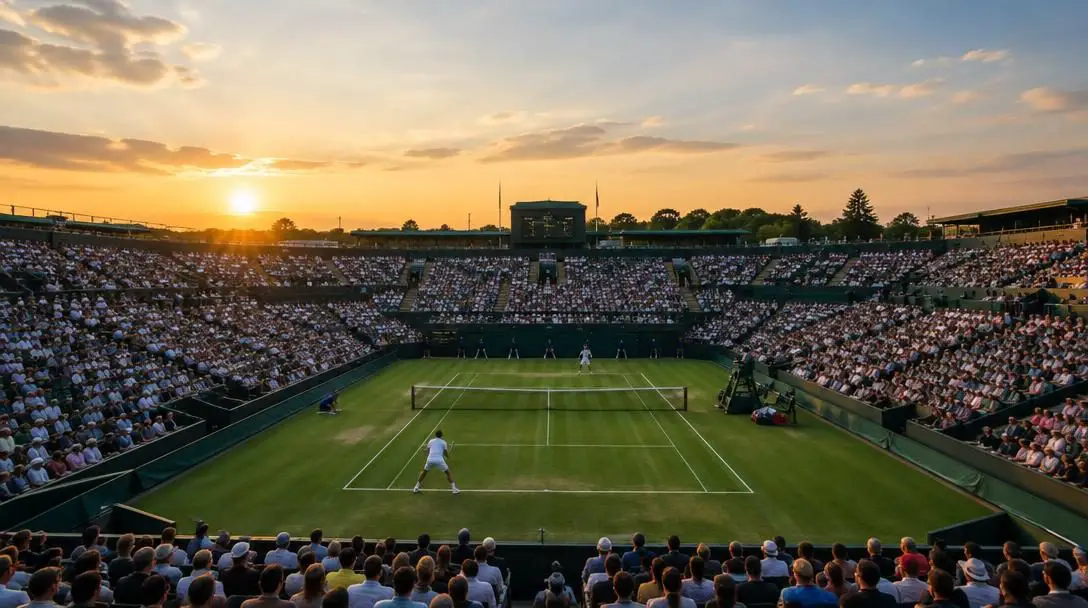
Every tennis player’s ultimate ambition is to reach a grand slam tournament and test their game against the best competitors in the world with millions in prize money on the line. The global tennis calendar is anchored by the four major championships, and earning a spot in the main draw of any of these four tournaments represents a career milestone. Reaching the final Sunday is an elite distinction reserved for a select few who can navigate seven rounds of high-stakes, best-of-five-set tennis.
Within those championship rounds, audiences have witnessed generational clashes that redefined the sport. From stunning comebacks on red clay to marathon fifth sets under fading grass-court light, these encounters test physical stamina and psychological fortitude. Below is an examination of five landmark matches that shaped men's grand slam history, along with structural breakdowns of major tournament play, scoring dynamics, and analytical frameworks for evaluating historic contests.
Key takeaways
- Grand slam tournaments represent the pinnacle of professional tennis, contested over best-of-five sets across four distinct venues and surfaces.
- Historic finals like Borg vs. McEnroe in 1980 and Federer vs. Nadal in 2008 showcased contrasting playing styles pushed to extra games in fifth-set marathons.
- Major championships demand unmatched endurance, exemplified by Novak Djokovic and Rafael Nadal battling for nearly six hours at the 2012 Australian Open.
- Comebacks from two sets down, such as Ivan Lendl's triumph over John McEnroe at Roland Garros in 1984, often mark generational shifts in tennis dominance.
At a glance: Five historic grand slam finals
The following table summarizes the five landmark championship matches that defined modern men's tennis, highlighting their venues, surfaces, seeds, and eventual champions.
| Match | Tournament | Surface | Winner | Deciding set score |
|---|---|---|---|---|
| John McEnroe vs. Ivan Lendl | 1984 French Open | Clay | Ivan Lendl | 7-5 |
| Andre Agassi vs. Goran Ivanisevic | 1992 Wimbledon | Grass | Andre Agassi | 6-4 |
| Novak Djokovic vs. Rafael Nadal | 2012 Australian Open | Hard court | Novak Djokovic | 7-5 |
| Roger Federer vs. Rafael Nadal | 2008 Wimbledon | Grass | Rafael Nadal | 9-7 |
| Bjorn Borg vs. John McEnroe | 1980 Wimbledon | Grass | Bjorn Borg | 8-6 |
Five matches that defined grand slam history
The men's singles game has traversed distinct eras, moving from wooden rackets and serve-and-volley tactics to modern baseline warfare powered by high-tech graphite frames. Across these eras, certain finals stand out as decisive crossroads where rivalries deepened and legacies were cast.
John McEnroe vs. Ivan Lendl (French Open 1984)
- Tournament: 1984 French Open (Roland Garros)
- Surface: Red clay
- Seeding: John McEnroe (No. 1), Ivan Lendl (No. 2)
- Final score: 3-6, 2-6, 6-4, 7-5, 7-5
By the time 1984 arrived, John McEnroe was playing at an untouchable level, entering the French Open final completely undefeated on the season. Ivan Lendl, meanwhile, was striving to shed the reputation of falling short in major finals. The clash brought together the two top seeds in a battle between McEnroe's aggressive serve-and-volley precision and Lendl's punishing baseline groundstrokes.
Early on, McEnroe looked poised for a routine coronation. Attacking the net and keeping Lendl off-balance, the American raced through the first two sets 6-3, 6-2. Rather than folding, Lendl recalibrated his returns, relying on heavy topspin passing shots to blunt McEnroe's net approaches. Lendl secured the third set 6-4 and edged out a tense fourth set 7-5. In the grueling decider, McEnroe's historic unbeaten run vanished as Lendl captured the fifth set 7-5 to claim his first grand slam title, signaling a major power shift at the top of men's tennis.
Andre Agassi vs. Goran Ivanisevic (Wimbledon 1992)
- Tournament: 1992 Wimbledon Championships
- Surface: Natural grass
- Seeding: Goran Ivanisevic (No. 8), Andre Agassi (No. 12)
- Outcome: Agassi's first career grand slam singles title
The 1992 Wimbledon final featured an improbable pairing. The All England Club was accustomed to grass-court purists, yet the title match pitted eighth-seeded Croatian server Goran Ivanisevic against twelfth-seeded American baseliner Andre Agassi. Both had eliminated tournament giants in the semifinals: Agassi dispatched John McEnroe in straight sets, while Ivanisevic defeated Pete Sampras in four sets.
The final developed into a quintessential clash of server versus returner. Ivanisevic jumped ahead early, but Agassi leaned on his lightning-fast hands to neutralize the Croatian's booming deliveries, claiming the second and third sets. Ivanisevic responded with a blistering 6-1 fourth set to level the match. In the tense final set, Agassi held his nerve, breaking through to win 6-4. The emotional victory secured Agassi’s first major title and proved that an aggressive baseline returner could conquer Wimbledon's slick lawns.
Novak Djokovic vs. Rafael Nadal (Australian Open 2012)
- Tournament: 2012 Australian Open
- Surface: Plexicushion hard court
- Seeding: Novak Djokovic (No. 1), Rafael Nadal (No. 2)
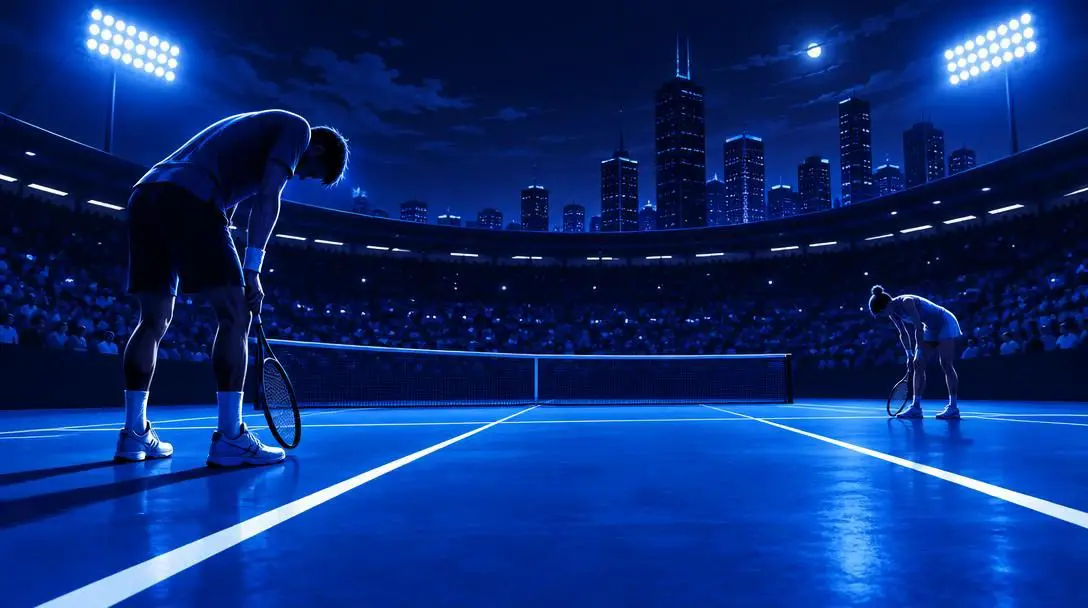
- Match duration: 5 hours and 53 minutes
The 2012 Australian Open final between world number one Novak Djokovic and number two Rafael Nadal is widely regarded as the most demanding physical battle in tennis history. Coming into the final, both athletes were operating at the absolute peak of athletic conditioning, setting the stage for a bruising baseline marathon that pushed human endurance to its absolute perimeter.
Nadal struck first, winning an intense opening set 7-5, but Djokovic raised his aggression, grinding through the next two sets 6-4 and 6-2. Nadal refused to capitulate, forcing a deciding set by claiming a fourth-set tiebreaker 7-6. Entering the sixth hour of play past midnight in Melbourne, both men traded brutal 20- and 30-shot rallies. Djokovic secured a decisive break in the closing stages to take the set 7-5, capturing his fifth grand slam title after 5 hours and 53 minutes of relentless competition.
Roger Federer vs. Rafael Nadal (Wimbledon 2008)
- Tournament: 2008 Wimbledon Championships
- Surface: Natural grass
- Seeding: Roger Federer (No. 1), Rafael Nadal (No. 2)
- Match duration: 4 hours and 48 minutes
Widely acclaimed by tennis historians as one of the greatest matches ever played, the 2008 Wimbledon final was the culmination of a multi-year rivalry on grass between five-time defending champion Roger Federer and Rafael Nadal. Having lost to Federer in the previous two Wimbledon finals, Nadal entered Centre Court determined to establish his supremacy beyond clay.
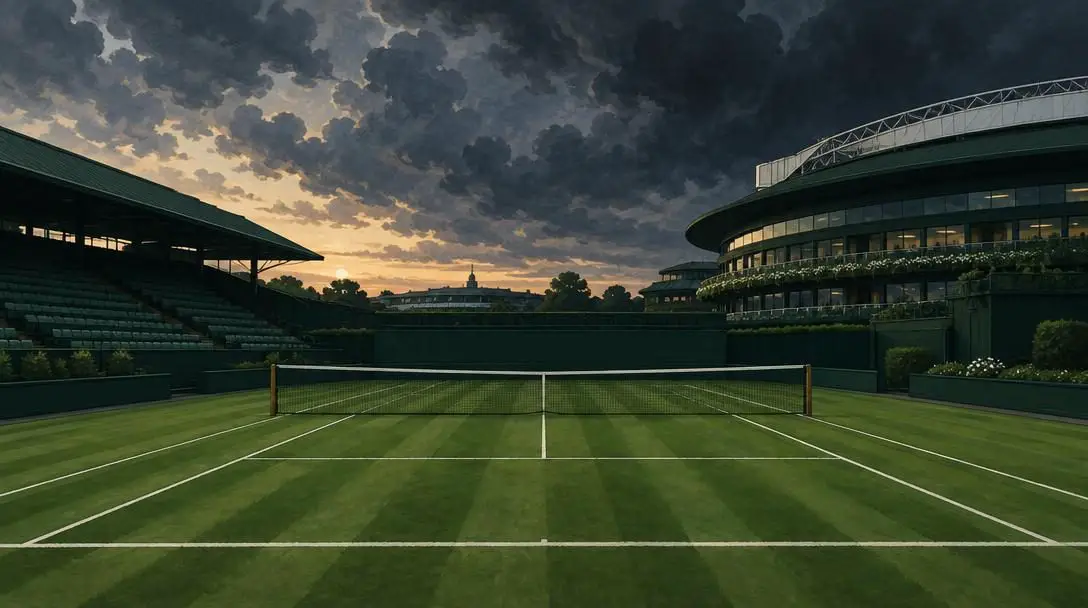
Nadal came out aggressively, shocking Federer by winning the first two sets 6-4, 6-4. Two separate rain delays and Federer's legendary competitive drive turned the contest into high drama. Federer survived championship points to take both the third and fourth sets via tense tiebreakers. As darkness descended on London, the fifth set became a war of nerves without a tiebreaker. Nadal finally broke Federer's serve to win the set 9-7, completing a 4-hour, 48-minute classic and ending Federer’s 65-match grass-court winning streak.
The 2008 Wimbledon final stood as a masterclass in psychological resilience, finishing in near darkness after five sets of uncompromising shot-making.
Bjorn Borg vs. John McEnroe (Wimbledon 1980)
- Tournament: 1980 Wimbledon Championships
- Surface: Natural grass
- Key moment: 18-16 fourth-set tiebreaker
- Final score: 1-6, 7-5, 6-3, 6-7, 8-6
Before modern baseline rivalries took root, the duel between Bjorn Borg and John McEnroe captured global attention as the ultimate contrast in sporting temperaments: Borg's ice-cold stoicism against McEnroe's fiery intensity. Borg entered the 1980 Wimbledon final seeking an unprecedented fifth consecutive singles crown, while McEnroe sought his maiden title at the All England Club.
McEnroe blitzed Borg in the opening set 6-1, but the Swedish champion recovered his composure, taking the next two sets 7-5 and 6-3. The fourth set produced one of the most famous sequences in sports history: an epic 22-minute tiebreaker. McEnroe saved five championship points, while Borg fended off six set points before McEnroe prevailed 18-16. Rather than crumbling after letting five match points slip away, Borg rallied in the fifth set, leaning on his serve to capture an 8-6 victory and seal his fifth straight Wimbledon championship.
Tournament architecture: The four grand slams and their surfaces
A grand slam tournament differs sharply from ordinary tour events in scale, points, and structural demands. Contested over a fortnight with 128-player singles draws, winning a major requires seven consecutive victories. In men's competition, the best-of-five format demands continuous tactical problem-solving and aerobic capability.
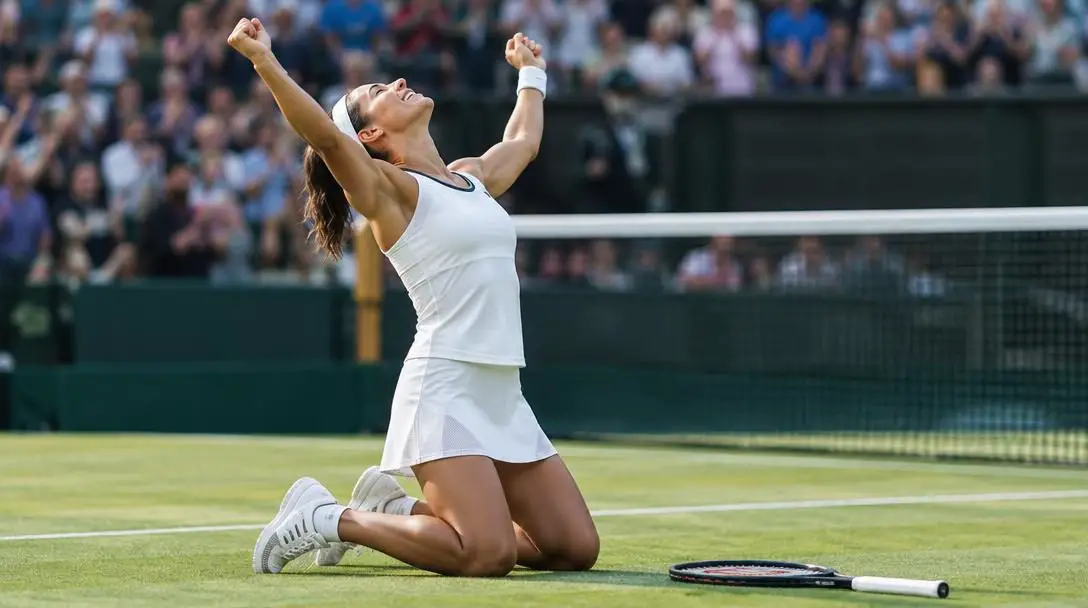
The character of each grand slam is fundamentally defined by its court surface, which influences ball speed, bounce height, and the effectiveness of specific tactical strategies:
- Australian Open (Melbourne, hard court): Provides a true, consistent bounce that balances power baseliners and counterpunchers. Its medium-fast pace tests pure physical conditioning under high temperatures.
- French Open (Paris, red clay): Produces a high, slow bounce where balls grip the clay, blunting big serves and favoring patient baseliners who slide into their shots and utilize heavy topspin.
- Wimbledon (London, grass): The fastest natural surface, characterized by low, skidding bounces that reward aggressive net play, slice serves, and rapid point construction.
- US Open (New York, hard court): Played on fast hard courts, this venue rewards explosive baseline hitting, aggressive return positioning, and powerful first deliveries.
Scoring mechanics and deciding-set rules
Tennis scoring operates on a hierarchical system of points, games, and sets designed to test sustained focus under pressure. Understanding how these mechanics interact explains why grand slam momentum swings can take hours to unfold.
A game begins at love (zero) and advances through 15, 30, and 40. When both players reach 40, the score is termed deuce. From deuce, a competitor must win two consecutive points—advantage followed by game point—to secure the game. Winning six games by a margin of at least two claims a set (such as 6-4 or 6-2). If the game score reaches 6-6, a tiebreaker is played, where the first player to reach seven points with a two-point margin takes the set 7-6.
Historically, deciding fifth sets at Wimbledon, the French Open, and the Australian Open had no final-set tiebreaker. Competitors were required to play an advantage set, continuing indefinitely until one player held a two-game advantage. This rule produced legendary scorelines such as Borg's 8-6 win over McEnroe in 1980 and Nadal's 9-7 triumph over Federer in 2008.
How to study and analyze historic tennis matches
Reviewing full match footage or extended highlights of historic grand slam encounters provides actionable insight into elite decision-making and pressure management. To analyze classic matches effectively, follow this structured process:
- Identify the tactical matchup: Determine whether the encounter represents contrasting styles (such as Agassi's baseline return game against Ivanisevic's serve) or symmetric styles (such as the baseline slugfest between Djokovic and Nadal).
- Locate momentum inflection points: Pinpoint the exact moments when a trailing player alters their court positioning, return depth, or rally tempo to turn the match around.
- Evaluate break point efficiency: Monitor how players handle high-pressure moments on break points, noting whether servers target high-percentage deliveries or receivers attack second serves.
- Observe movement and mechanical degradation: Watch for footwork breakdowns, shortened follow-throughs, or fatigue late in four- or five-hour encounters.
- Examine championship point execution: Study how winners navigate the final service game, analyzing whether they play conservatively to avoid unforced errors or aggressively take the title.
Common analytical mistakes to avoid
When comparing matches across different eras of tennis history, observers frequently apply modern assumptions that distort their evaluation. Keep these common oversights in mind:
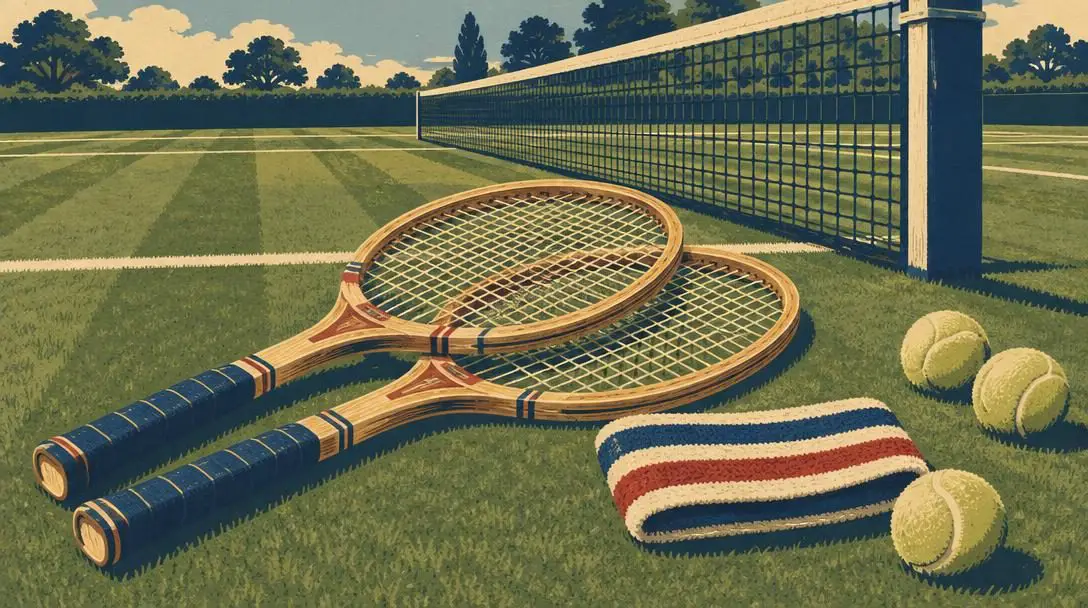
- Ignoring equipment evolution: Assessing 1980s contests using modern standards ignores that Borg and McEnroe played with smaller wooden and early graphite frames, which demanded distinct stroke mechanics and rewarded serve-and-volley tactics over baseline defense.
- Relying exclusively on the scoreline: A 6-4 set can look straightforward in a box score, yet it frequently disguises multiple deuce games and missed break points that took an immense physical toll on both players.
- Disregarding historical surface changes: Grass courts during the 1980s and 1990s skidded lower and played considerably faster than modern lawns, dictating aggressive net approaches rather than long baseline rallies.
- Evaluating matches strictly through highlight reels: Highlights showcase spectacular passing shots and diving volleys but omit the patient, disciplined rally balls that forced opponents out of position.
Frequently asked questions
Why do men play best-of-five sets only at grand slam tournaments?
Grand slam tournaments reserve best-of-five sets for men's singles to preserve the historical tradition, prestige, and endurance challenge unique to the four major championships. Standard tour events use best-of-three sets to reduce physical strain and accommodate tighter weekly tournament schedules.
Which grand slam final was the longest in history?
The 2012 Australian Open final between Novak Djokovic and Rafael Nadal holds the record as the longest grand slam final in history, lasting 5 hours and 53 minutes before Djokovic won 5-7, 6-4, 6-2, 6-7, 7-5.
What made the 1980 Wimbledon fourth-set tiebreaker so famous?
The fourth-set tiebreaker between Bjorn Borg and John McEnroe in 1980 lasted 34 points and 22 minutes, with McEnroe saving five championship points before finally winning the tiebreaker 18-16 to force a fifth set.
How did Ivan Lendl's 1984 French Open win impact John McEnroe?
Lendl's comeback from two sets down handed McEnroe his first defeat of the 1984 season, preventing the American from claiming the French Open title and establishing Lendl as a dominant major champion throughout the mid-to-late 1980s.
Why did fifth sets in older grand slam finals continue past 6-6 without a tiebreaker?
Historically, major championships required players to win deciding sets by a clear two-game margin (an advantage set) to ensure that the tournament winner decisively broke their opponent's serve under championship pressure.
The bottom line
Historic grand slam finals stand out because they test the limits of human athletic performance under unmatched pressure. Matches like Borg versus McEnroe in 1980, Lendl's comeback against McEnroe in 1984, Agassi's breakthrough over Ivanisevic in 1992, and the modern epics between Federer, Nadal, and Djokovic demonstrate that winning a major requires far more than physical talent. It demands unwavering mental resolve, tactical versatility across different surfaces, and the stamina to prevail across five grueling sets.