Blade’s Best Team-Ups: From Spider-Man to Deadpool and More
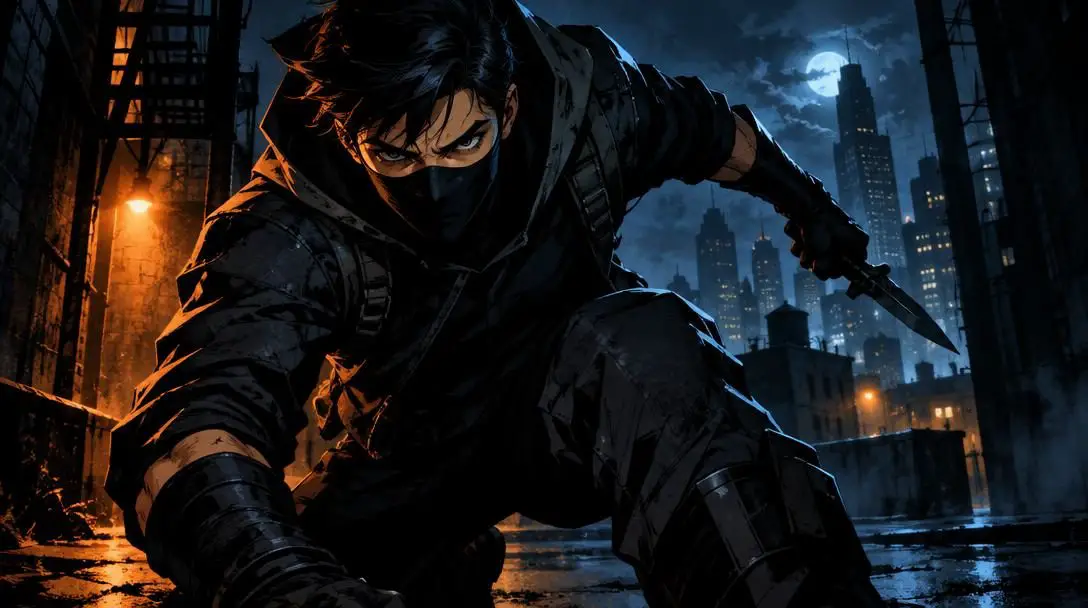
Marvel Comics has never shied away from weaving dark, occult mythology into its expansive four-color universe. While cosmic titans, intergalactic empires, and laboratory-spawned champions dominate mainstream continuity, vampires occupy their own shadowy, blood-soaked corner within the Marvel mythos. This supernatural frontier has long been anchored by Eric Brooks, better known to comic fans worldwide as Blade. Armed with peerless martial arts prowess, lethal edged weaponry, and high-tech ordnance tailored specifically to eradicate the undead, the Daywalker stands as the premier supernatural stalker in comic book history.
Blade also holds a foundational place in the modern landscape of comic book cinema. Long before the Marvel Cinematic Universe reshaped the global box office, the character anchored a groundbreaking film trilogy starring Wesley Snipes, proving that Marvel properties could achieve critical and commercial triumph with mature, dark, action-driven narratives. While Eric Brooks is traditionally characterized as an isolated loner who stalks the night in solitary silence, his extensive Marvel comic history reveals a surprising number of legendary partnerships. When supernatural outbreaks threaten civilization, Blade has consistently stepped out of the shadows to fight shoulder-to-shoulder with Earth's mightiest champions.
Key takeaways
- Blade spearheaded Marvel's supernatural horror subgenre and laid early cinematic foundations through the original Wesley Snipes film trilogy.
- Eric Brooks frequently collaborates with top-tier heroes, including Spider-Man, Deadpool, Black Panther, the X-Men, and the global espionage agency S.H.I.E.L.D.
- Profound ideological friction regularly defines Blade's partnerships, most notably when his ruthless philosophy clashed with the X-Men over the infected mutant Jubilee.
- Scientific alliances have expanded Blade's lore, yielding crucial developments like the curative Day-Walker formula synthesized alongside Spider-Man.
- A black-ops mission for S.H.I.E.L.D. during the Civil War era directly preserved Wolverine's life, helping set the stage for The New Avengers.
Pivotal alliances from Blade’s comic history
Throughout comic history, readers have grown accustomed to organic, symbiotic pairings like Captain America and the Winter Soldier, Daredevil and Spider-Man, or Batman and Superman. By comparison, Blade's alliances carry a markedly more volatile edge. Because Eric Brooks views the world through a lens of total war against bloodthirsty monsters, his inclusion in mainstream superhero storylines invariably creates immediate dramatic tension. The following table breaks down five of the most consequential collaborations in Blade's long-running war against the creatures of the night.
| Ally | Key Storyline | Primary Adversary | Core Conflict or Outcome |
|---|---|---|---|
| The X-Men | "Curse of the Mutants" (2010) | Xarus | Bitter fallout over Jubilee's transformation and survival |
| Spider-Man | Marvel Team-Up (1998) | Henry Sage | Synthesized the curative Day-Walker formula |
| Deadpool | Dracula’s Gauntlet | Dracula | Initial duel over Shiklah transformed into a unified front |
| Black Panther | Black Panther (2006 arc) | New Orleans Vampire Clan | Cleared post-Hurricane Katrina bayous alongside street heroes |
| S.H.I.E.L.D. | Civil War Tie-In | Morbius / Ambush Setup | Guaranteed Wolverine's survival, feeding into The New Avengers |
The X-Men
- Key Storyline: "Curse of the Mutants" (2010)
- Central Antagonist: Xarus, son of Dracula
- Catalyst for Division: The vampiric infection of Jubilee
One of the most consequential partnerships in modern Marvel horror unfolded when Blade joined forces with mutantkind during the 2010 crossover event Curse of the Mutants. The crisis erupted when Xarus, the power-hungry son of Dracula, united various splintered vampire factions to launch an aggressive offensive against San Francisco's mutant population. Xarus intended to turn mutants into an unstoppable, superpowered undead legion under his direct command. Recognizing the acute supernatural danger, Cyclops welcomed Blade's specialized tactical knowledge to fortify the X-Men's defenses.
While the initial military collaboration produced immediate field victories, the mission fell apart following the tragic infection of Jubilee. Once transformed into a blood-craving creature, Jubilee became the focal point of a ferocious philosophical divide. Upholding their core moral tenets, the X-Men insisted on protecting their teammate and pursuing a cure. Blade, steadfast in his lethal operational dogma, argued that any newly turned vampire represented an intolerable liability that required immediate termination. This irreconcilable divide shattered the coalition, prompting Blade to part ways with the mutant team on deeply bitter terms.
Spider-Man
- Key Storyline: Marvel Team-Up Starring: Spider-Man and Blade (1998)
- Central Antagonist: Henry Sage
- Major Breakthrough: Discovery of the Day-Walker formula
Spider-Man has faced an extraordinary assortment of costumed menaces throughout his crime-fighting career, battling mechanical aerialists, robotic-limbed madmen, and genetic reptile hybrids. However, the friendly neighborhood hero routinely finds himself completely out of his element when confronting supernatural predators. This dangerous operational blind spot made Blade an indispensable partner, sparking a dynamic that has recurred across multiple comic series and animated television appearances.
Their most memorable team-up occurred in the 1998 series Marvel Team-Up Starring: Spider-Man and Blade. The partnership opened with considerable hostility, as Peter Parker's non-lethal, quip-heavy approach clashed directly with Blade's grim executioner mentality. When the villainous Henry Sage emerged as a shared threat, both vigilantes were forced to reconcile their contrasting operational styles. The collaboration led to a major breakthrough in vampire lore: the development of the Day-Walker formula, an innovative serum that granted Blade the unprecedented ability to heal vampires rather than simply destroying them.
Deadpool
- Key Storyline: Dracula’s Gauntlet
- Central Antagonist: Dracula
- Key Figure: Shiklah
Deadpool, the irreverent mercenary who constantly breaks the fourth wall, has shared the page with nearly every corner of the Marvel Universe. While Wade Wilson and Eric Brooks seem like a tonal mismatch, their shared history contains some of the publisher's most entertaining horror-comedy crossovers. Beyond fighting adjacent battles during Curse of the Mutants, their relationship was fully explored in the action-packed storyline Dracula’s Gauntlet.
Predictably, their first interaction began with explosive violence over Shiklah, an ancient monster monarch who would eventually become Blade's wife. Blade originally marked Shiklah as a dangerous demonic entity that had to be eliminated, while Dracula sought her hand in marriage to consolidate control over the monster underworld. Deadpool intervened to defend Shiklah, battling Blade directly across several locales. Once Dracula's treacherous motives became clear, the trio formed a pragmatic alliance to crush Dracula's ambitions—a reconciliation so thorough that Deadpool was ultimately invited to their wedding ceremony.
Black Panther
- Key Storyline: Black Panther two-issue arc (Early 2006)
- Setting: Post-Hurricane Katrina New Orleans, Louisiana
- Allied Reinforcements: Luke Cage and Monica Rambeau
Years before the Marvel Cinematic Universe transformed King T'Challa into a global household icon, Blade was one of Marvel's few established movie superstars. In early 2006, writer Reginald Hudlin brought the two titans together for a hard-hitting two-issue arc in the ongoing Black Panther series. Rooted deeply in the real-world climate of its time, the narrative followed T'Challa as he traveled to New Orleans, Louisiana, in the catastrophic aftermath of Hurricane Katrina.
Taking advantage of the destruction, flooding, and widespread municipal breakdown, a powerful vampire syndicate descended upon the city to feed on displaced citizens. T’Challa teamed with Blade to mount an aggressive counter-assault against the supernatural invaders. The mission quickly expanded into a high-octane joint operation, drawing in heavy-hitting allies Luke Cage and Monica Rambeau. Together, this diverse coalition systematically cleared the flooded streets and bayous, delivering justice to the predators who preyed on vulnerable survivors.
Blade proved that Marvel could conquer Hollywood with dark, supernatural action long before the Marvel Cinematic Universe took flight.
S.H.I.E.L.D.

- Key Era: Civil War crossover tie-in
- Initial Target: Morbius the Living Vampire
- Primary Objective: Protective detail for Wolverine
The landmark Civil War crossover rearranged the geopolitical hierarchy of the Marvel Universe, pulling nearly every independent operative and costumed hero into regulatory chaos. Blade found himself entangled in this sprawling conflict through a bizarre series of covert operations. Originally dispatched on a mission to track Wolverine, his directive abruptly shifted toward hunting Morbius the Living Vampire. The entire ordeal proved to be an elaborate ambush engineered by S.H.I.E.L.D., ending with the Daywalker in custody.
Recognizing Blade's unparalleled lethal skill set, the espionage agency made him an offer: complete immunity from pending international criminal charges in exchange for high-stakes black-ops services. S.H.I.E.L.D. assigned Blade the crucial task of serving as Wolverine's protective detail during a volatile combat engagement. Blade neutralized incoming threats and successfully preserved Logan's life. This covert victory had profound ripple effects across the Marvel line: with Wolverine surviving the conflict, the Canadian mutant was able to join the freshly minted roster of The New Avengers, alongside Luke Cage, Spider-Man, Carol Danvers, and The Thing.
The mechanics of a successful supernatural team-up
Superhero team-ups operate as far more than simple fan-service spectacles; they are carefully constructed storytelling instruments designed to expose underlying character flaws, broaden world-building lore, and heighten dramatic stakes. Examining the structural formula of Blade's crossover appearances reveals why the vampire hunter functions so effectively when paired with characters outside his genre.
- The clash of philosophies: Storylines flourish when heroes possess incompatible moral codes. Blade's ruthless, lethal pragmatism generates immediate tension when paired with heroes who operate under strict non-lethal boundaries, such as Spider-Man or the core X-Men roster.
- The specialized threat: Crossovers typically occur when standard threats mutate into occult crises. When science-based characters or street-level vigilantes face bloodlines possessing supernatural immunities, Blade's arcane combat expertise becomes an indispensable narrative asset.
- Uneasy temporary alliances: Most horror team-ups begin with adversarial suspicion. Characters who initially clash over mission parameters—such as Blade and Deadpool dueling over Shiklah—are compelled to build mutual trust to defeat an overwhelming shared enemy like Dracula.
- Lasting status quo shifts: The strongest crossover narratives generate permanent reverberations. Blade's classified mission for S.H.I.E.L.D. kept Wolverine alive, directly enabling the birth of The New Avengers lineup that dominated Marvel storytelling for years.
How to read Blade’s team-up history in order
Navigating decades of comic books can be intimidating for newcomers wanting to explore Eric Brooks's rich collaborative history. To experience the evolution of Blade's role within the wider Marvel Universe without becoming mired in continuity baggage, follow this chronological reading sequence:
- Start with classic episodic team-ups: Read the 1998 Marvel Team-Up Starring: Spider-Man and Blade. This self-contained adventure highlights the stark contrasts between Spider-Man's restraint and Blade's ruthlessness, culminating in the critical development of the Day-Walker formula.
- Witness post-disaster heroics: Pick up the early 2006 two-issue Black Panther arc. This storyline demonstrates Blade's ability to coordinate with national rulers like T'Challa alongside urban powerhouses Luke Cage and Monica Rambeau in post-Katrina New Orleans.
- Follow major event tie-ins: Track down Blade's covert appearances within the Civil War era. Here, you will see how his black-ops cooperation with S.H.I.E.L.D. directly influenced Wolverine's survival and shaped the future roster of The New Avengers.
- Dive into mutant horror wars: Read the 2010 crossover event Curse of the Mutants. This run showcases Blade fighting directly alongside Cyclops and the X-Men against Xarus, showing how Jubilee's tragic transformation destroyed their coalition.
- Enjoy supernatural comedy hybrids: Conclude your reading journey with Dracula’s Gauntlet. This series balances Wade Wilson's chaotic wit with Blade's lethal intensity, chronicling the rise of Shiklah and the humbling of Dracula.
Common misconceptions about Blade’s role in Marvel
Because Blade operates largely within the horror genre, casual fans frequently misunderstand his broader significance within Marvel Comics. Correcting these common misinterpretations offers a clearer picture of his true standing across comic canon:
- Assuming Blade only associates with horror characters: It is easy to view Blade as an isolated vigilante who exclusively battles Dracula or pursues Morbius the Living Vampire. In reality, he has shared long arcs alongside mainstream icons including T'Challa, Luke Cage, Peter Parker, and Wolverine.
- Overlooking his pre-MCU cinematic legacy: Modern filmgoers often attribute Marvel's cinematic dominance exclusively to the post-2008 era. Overlooking the original Blade trilogy starring Wesley Snipes ignores the crucial commercial trail he blazed long before Iron Man, Thor, or the Avengers hit theaters.
- Assuming team-ups always end harmoniously: In traditional superhero fare, guest heroes inevitably resolve their misunderstandings and part as lifelong friends. With Blade, ideological conflict is genuine and lingering; his refusal to spare infected individuals like Jubilee caused permanent rifts with the X-Men.
- Discounting Blade's reliance on science: While Blade is celebrated for his silver stakes and heavy-duty swords, his comic history contains major scientific milestones, including his work with Spider-Man that yielded the medical Day-Walker formula.
Frequently asked questions
Why did Blade and the X-Men end up fighting each other?
During the "Curse of the Mutants" crossover, Xarus infected the mutant Jubilee with vampirism. The X-Men wanted to keep Jubilee alive and find a cure, but Blade's strict hunter code dictated that any newly turned vampire must be executed immediately, creating an unbridgeable moral rift.
What was the Day-Walker formula developed with Spider-Man?
Synthesized in the 1998 run of Marvel Team-Up during their battle against Henry Sage, the Day-Walker formula was a medical cure that gave Blade the rare capability to heal infected vampires rather than simply destroying them with lethal force.
How did Blade and Deadpool resolve their conflict in Dracula’s Gauntlet?
The two antiheroes originally fought each other over Shiklah, whom Blade wanted to eradicate and Deadpool wanted to protect. After discovering Dracula's deceitful scheme to control the monster underworld, they joined forces against Dracula, ultimately reconciling so well that Wade was invited to Blade and Shiklah's wedding.
What brought Blade and Black Panther together in New Orleans?
In a 2006 story arc set in the aftermath of Hurricane Katrina, vampiric clans took advantage of the city's flooded, chaotic conditions to hunt displaced survivors. T'Challa recruited Blade, Luke Cage, and Monica Rambeau to eradicate the nocturnal infestation from the bayous.
How did Blade's S.H.I.E.L.D. mission impact The New Avengers?
After being detained by S.H.I.E.L.D. during the Civil War era, Blade agreed to undertake a covert assignment protecting Wolverine in exchange for full immunity. By keeping Wolverine alive, Blade enabled Logan to join the core lineup of The New Avengers alongside Spider-Man, Luke Cage, and Carol Danvers.
The bottom line
Eric Brooks may carry a well-earned reputation as an uncompromising solitary hunter, but his decades-long journey through Marvel Comics proves he is also one of the publisher's most versatile team players. Whether trading tactical philosophies with royal monarchs like Black Panther, clashing over moral boundaries with the X-Men, developing medical treatments with Spider-Man, or engaging in chaotic swordplay alongside Deadpool, Blade elevates every story he enters. By anchoring Marvel's supernatural horrors while seamlessly stepping into mainstream superhero conflicts, the Daywalker remains an indispensable pillar of the Marvel mythos.