Enhancing Your Spiritual Journey Through Daily Readings With Tarot Cards
For centuries, tarot cards have served as profound tools for divination, self-examination, and spiritual inquiry. While popular culture often reduces the cards to mystical fortune-telling or parlor superstitions, their true value lies in their ability to act as an open mirror for the human psyche. By drawing on timeless archetypes, universal life experiences, and rich allegories, tarot communicates directly with our subconscious mind, translating abstract inner tensions into tangible visual forms.
Bringing this ancient tradition into contemporary life does not require hours of spare time, intricate altar setups, or exhaustive rituals. Engaging with a single card each day creates a simple, accessible sanctuary in the midst of a demanding routine. This deliberate morning or evening pause allows you to step back from the sensory overload of modern living, cultivate grounded awareness, and navigate your day with enhanced intentionality.
Key takeaways
- Daily single-card readings transform tarot into a practical framework for mindfulness and self-reflection rather than rigid fortune-telling.
- A card functions as a focal lens that brings subconscious emotions, attitudes, and behavioral patterns into conscious awareness.
- Choosing an evocative deck—such as the narrative Rider-Waite-Smith, the esoteric Thoth, or the nature-centered Wild Unknown—deepens your intuitive connection.
- Pairing your daily card pull with a reflective journal helps you identify long-term emotional themes and personal growth trends over time.
How a Daily Tarot Reading Works
A daily tarot draw operates primarily through symbolic association, mindful inquiry, and intuitive observation. Rather than forecasting a fixed, preordained future, a single card acts as a focused lens through which to examine your internal landscape and external circumstances. When you draw a card, your mind instinctively begins processing its visual composition, colour theory, figures, and archetypal interactions.
Your current emotional state, recent memories, and immediate challenges directly influence how you perceive those artistic elements. A card depicting sudden upheaval might evoke anxiety if you are already experiencing workplace conflict, or it might evoke relief if you have been hoping for an overdue break from an exhausting obligation. In this manner, tarot draws hidden dynamics and overlooked perspectives to the surface of conscious thought.
By engaging with this visual prompt, abstract concerns solidify into concrete themes. The daily card prompts constructive contemplation: How am I reacting to stress today? What underlying energies are shaping my communication with loved ones? What blind spots might be interfering with my focus? The reading provides an anchoring theme, allowing you to walk through the day as an observant participant rather than a purely reactive one.
Selecting the Right Deck for Your Practice
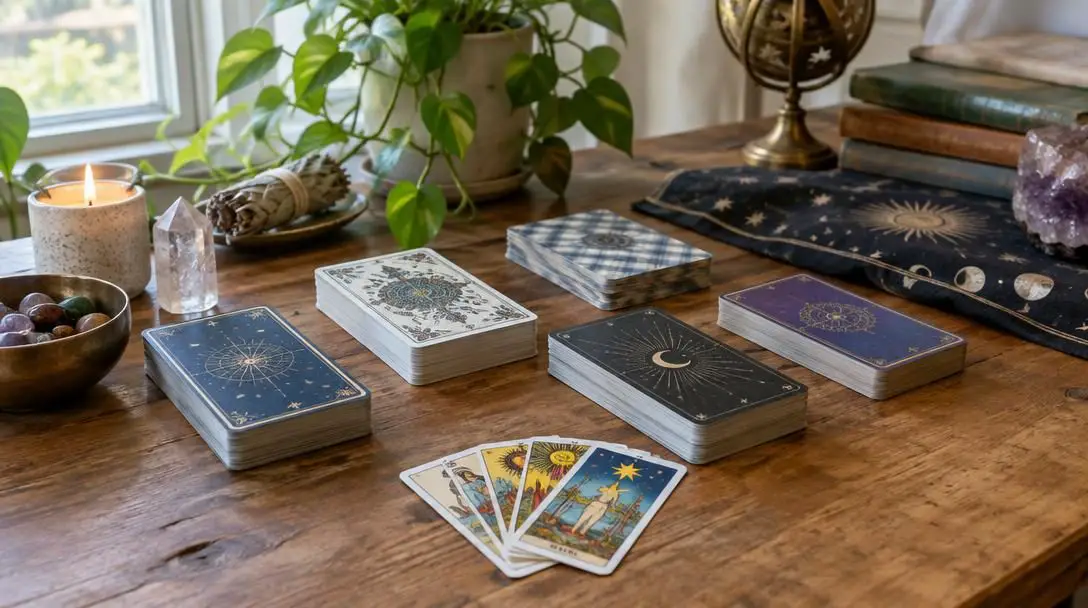
Because tarot relies so heavily on intuitive visual resonance, selecting the right deck is a critical step in establishing a sustainable daily practice. Different decks carry distinct artistic languages, emotional resonances, and symbolic lineages. Exploring popular traditions helps you identify the visual medium that best aligns with your worldview and aesthetic sensibilities.
| Deck | Visual Style | Symbolic Foundation | Primary Appeal |
|---|---|---|---|
| Rider-Waite-Smith | Illustrated narrative scenes | Traditional allegorical archetypes | Accessible visual cues for beginners |
| Thoth | Abstract, dynamic, multi-layered art | Astrological and philosophical systems | Deep esoteric and metaphysical study |
| The Wild Unknown | Naturalistic, hand-drawn animal portraits | Primal nature and elemental archetypes | Organic, nature-inspired self-reflection |
Rider-Waite-Smith Deck

- Imagery: Narrative scenes and allegorical figures
- Symbolic basis: Traditional Western mystery archetypes
- Ideal audience: Beginners seeking accessible visual cues
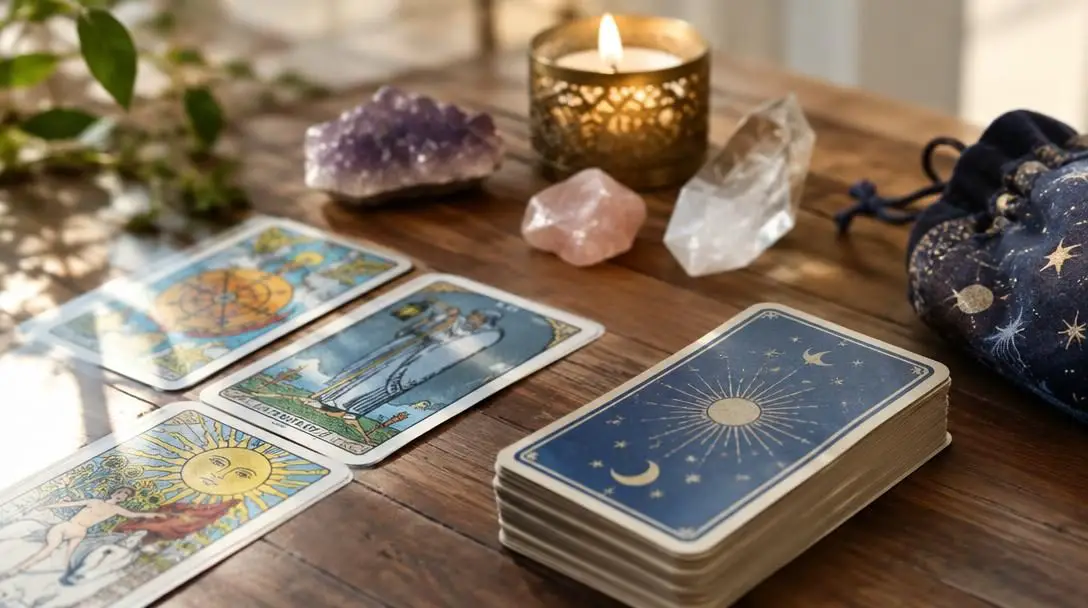
The Rider-Waite-Smith deck remains the most widely recognized tarot deck in the modern world. Illustrated by Pamela Colman Smith, its enduring strength comes from its narrative scenes, which decorate both the Major Arcana and the Minor Arcana suit cards. Because every card portrays a distinct story complete with human characters, landscapes, and contextual symbols, interpreting its themes intuitively feels approachable, making it an excellent starting point for those new to daily card pulls.
Thoth Deck

- Imagery: Dynamic, geometric, and abstract artwork
- Symbolic basis: Astrological, Kabbalistic, and philosophical systems
- Ideal audience: Readers drawn to intricate esoteric study
Painted by Lady Frieda Harris, the Thoth deck presents a complex, multi-layered visual universe. It is deeply steeped in astrological correspondences, sacred geometry, and esoteric philosophy. Rather than using conventional narrative scenes, the Thoth deck captures raw psychological and metaphysical forces through shifting colors, energetic linework, and dense symbolism. Readers who appreciate philosophical depth and intricate esoteric systems often turn to this deck for complex, multidimensional contemplation.
The Wild Unknown Deck

- Imagery: Minimalist pen-and-ink illustrations with vivid watercolor washes
- Symbolic basis: Animals, natural elements, and organic forms
- Ideal audience: Practitioners seeking nature-inspired reflection
Created by Kim Krans, The Wild Unknown deck replaces standard human figures with evocative portraits of animals, trees, and natural elements. Its stark black-and-white ink drawings, accented by prismatic bursts of watercolor, tap into an earthy, intuitive energy. This deck appeals strongly to practitioners who prefer nature-based spirituality, clean modern design, and primal metaphors over classical renaissance or medieval allegories.
A Step-by-Step Method for Your Daily Tarot Routine
Creating an enduring habit requires a predictable, unhurried workflow. You do not need an elaborate ceremony; carving out five to ten quiet minutes each morning or evening is more than enough to cultivate a rich contemplative practice.
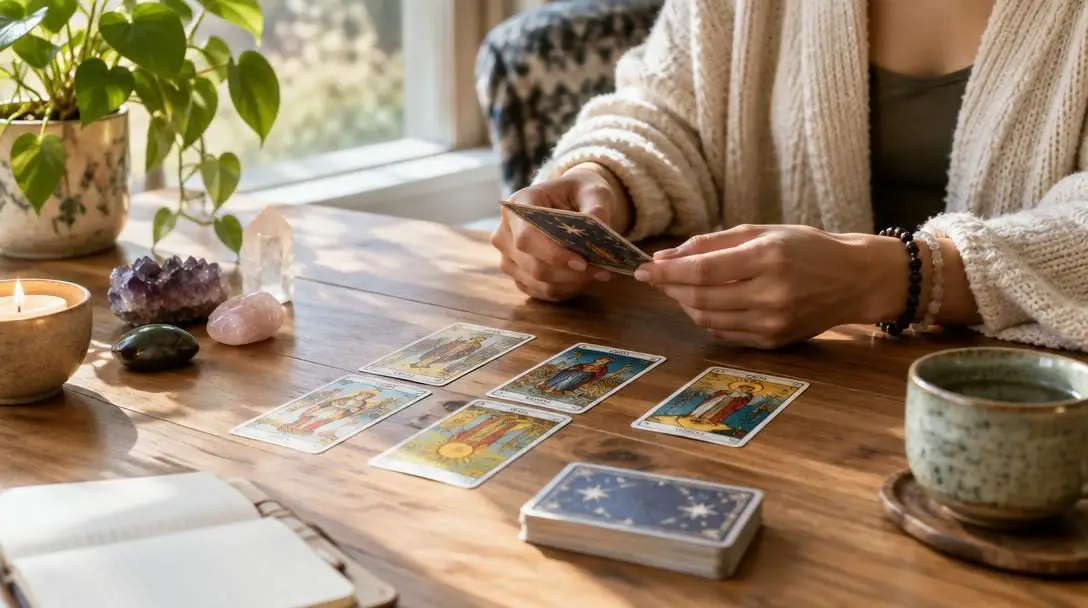
- Set Your Intention: Before handling the cards, take a few deep breaths to center your attention. Decide on the scope of your reading. You might ask a targeted question regarding a specific creative project, or simply open yourself to general insights regarding the prevailing energy of the day. A clear intention anchors your awareness and focuses your interpretation.
- Select and Handle Your Deck: Bring out your chosen deck, holding the cards comfortably in your hands. Acknowledge this moment as a deliberate boundary separating daily tasks from inward reflection.
- Shuffle and Draw Your Card: Shuffle the deck smoothly, using the rhythmic motion to quiet mental chatter while reflecting on your chosen intention. When your intuition indicates the deck is ready, draw a single card from the top, middle, or anywhere that feels right. Turn it face up.
- Study the Visuals Before Checking the Guidebook: Before looking up official definitions, examine the card with fresh eyes. Notice the figures, the color palette, the emotional tone, and any unexpected symbols that catch your attention. Consider how these visual markers mirror your immediate circumstances.
- Record Your Reflections in a Journal: Write down the date, the card pulled, your immediate impressions, and any practical action steps that arise from the reading. Capturing these observations anchors the lesson in your conscious memory.
- Carry the Card's Wisdom Mindfully: Keep the card's visual energy in mind as you move through your routine. When unexpected friction or difficult decisions emerge later in the day, recall your morning draw and use its themes as a compass for calm, deliberate action.
The true value of a daily draw lies not in predicting tomorrow, but in bringing conscious attention, honesty, and clarity to today.
Common Mistakes to Avoid in Daily Readings
When starting out with tarot, subtle misconceptions can hinder your progress and turn an empowering practice into a source of anxiety or confusion. Being aware of these missteps ensures your daily routine remains a supportive ally.
- Treating the cards as unchangeable predictions: Viewing the cards through the lens of absolute fatalism breeds anxiety and strips you of personal agency. Tarot highlights prevailing currents, psychological habits, and possibilities; it never strips away your power to choose how you respond.
- Rushing through the process: Pulling a card hurriedly while checking notifications or preparing to leave the house bypasses the reflective benefits of the practice. Setting aside even five undistracted minutes yields significantly better clarity.
- Relying exclusively on guidebooks: Guidebooks are wonderful study aids, but treating them as rigid rulebooks distances you from your own intuitive wisdom. Prioritize what the imagery evokes in you personally before checking the author's summary.
- Redrawing cards when you dislike the message: When a difficult or jarring card appears, the temptation to reshuffle and draw another is strong. Resist this urge. Uncomfortable cards often point directly to internal resistance, unexplored blind spots, and areas ripe for personal growth.
- Neglecting to write down your pulls: Relying on memory alone makes it nearly impossible to spot recurring patterns across weeks and months. Without a journal, the broader arc of your spiritual journey remains fragmented.
Deepening Your Daily Tarot Journey
Once you are comfortable with drawing and journaling a single card each morning, you can seamlessly expand your practice without adding undue complexity. These simple additions allow the wisdom of the cards to integrate more deeply into your overall lifestyle.
Consider implementing an evening review. Before going to bed, open your journal and revisit the card you drew that morning. Reflecting on how the day actually unfolded allows you to assess how the card's themes manifested in your conversations, emotional reactions, and problem-solving. This evening retrospective closes the mental loop, transforming the card from an abstract symbol into an observed life lesson.
Daily tarot pulls also pair naturally with broader mindfulness habits. You can use the card's central artwork as a visual focal point during a silent five-minute meditation, or use its archetypal themes as a prompt for free-form therapeutic writing. As your familiarity grows, you may also enjoy exploring specific thematic questions—such as asking what mindset to embody when facing a difficult meeting, or where to direct your creative energy for the afternoon.
Frequently asked questions
Do daily tarot readings predict what will happen in my future?
No. Rather than providing absolute predictions of future events, daily tarot readings act as an introspective mirror. They illuminate your present emotional state, underlying psychological patterns, and potential ways to handle challenges with awareness and agency.
What should I do if I draw an uncomfortable or negative card?
Avoid putting the card back or drawing a replacement. Uncomfortable imagery usually highlights areas where you are feeling defensive, anxious, or resistant. Use the card as an opportunity to examine your blind spots and consider how you can respond constructively to challenges.
How much time does a daily single-card reading require?
A meaningful daily practice requires only five to ten minutes. Taking a few moments to center yourself, draw a card, observe its artwork, and write a couple of sentences in your journal is enough to establish a powerful habit.
Why is keeping a tarot journal so important?
Journaling helps you track personal growth over time. Reviewing past entries reveals recurring themes, persistent challenges, and shifts in your perspective that would otherwise be forgotten if you relied solely on your daily memory.
Can I combine tarot cards with meditation or breathwork?
Yes. Pairing tarot with breathwork helps quiet the mind before drawing a card, while the card's imagery can serve as a focal point during silent meditation or as a creative prompt for deeper contemplative journaling.
The bottom line
Integrating a daily tarot card reading into your spiritual life is one of the most practical and grounded ways to cultivate lasting self-awareness. By treating the cards not as superstitious prophecies, but as visual catalysts for honest introspection, you open up a dedicated space for mental clarity and emotional renewal every single day.
Whether you choose the narrative figures of the Rider-Waite-Smith deck, the philosophical depth of the Thoth deck, or the naturalistic poetry of The Wild Unknown, the essential magic remains the same. When approached with clear intention, patience, and mindful presence, each daily card draw serves as an unwavering personal compass, guiding you toward a deeper connection with your inner self.