Explaining the Lunar Calendar
Long before mechanical clocks, digital smartwatches, and standardized global time zones regulated civil schedules, human societies looked toward the evening sky to organize their lives. The moon offered humanity its most reliable and dynamic natural timekeeper, shifting night after night in an observable rhythm that ancient civilizations could effortlessly follow. While modern international business and civic institutions run predominantly on the solar-based Gregorian calendar, the lunar calendar remains an indispensable foundation for cultural heritage, spiritual observance, and communal celebrations across the globe.
A pure lunar reckoning operates on a vastly different mathematical logic than the civil calendar most people consult on their smartphones. While the Gregorian calendar tracks the Earth's 365.24-day journey around the sun, lunar timekeeping charts the changing illumination of the moon as seen from Earth. Because these celestial cycles do not align seamlessly, societies throughout history have devised distinct ways to balance the rhythm of the moon with the progression of the solar seasons, shaping traditions that continue to direct religious fasts, harvest festivals, and family reunions today.
Key takeaways
- A lunar month measures roughly 29.5 days, resulting in a 12-month lunar year of approximately 354 days that is 11 days shorter than a solar year.
- Pure lunar calendars allow dates to drift through all four solar seasons over time, whereas lunisolar calendars periodically add a 13th month to remain synchronized with agricultural seasons.
- New months in lunar timekeeping typically commence with the day or physical sighting of the new moon rather than a fixed civil calendar date.
- Major world traditions—including Islamic, Chinese, Jewish, and Hindu cultures—depend on lunar or lunisolar frameworks to schedule observances like Ramadan, Chinese New Year, Passover, and Diwali.
The astronomical mechanics of lunar timekeeping
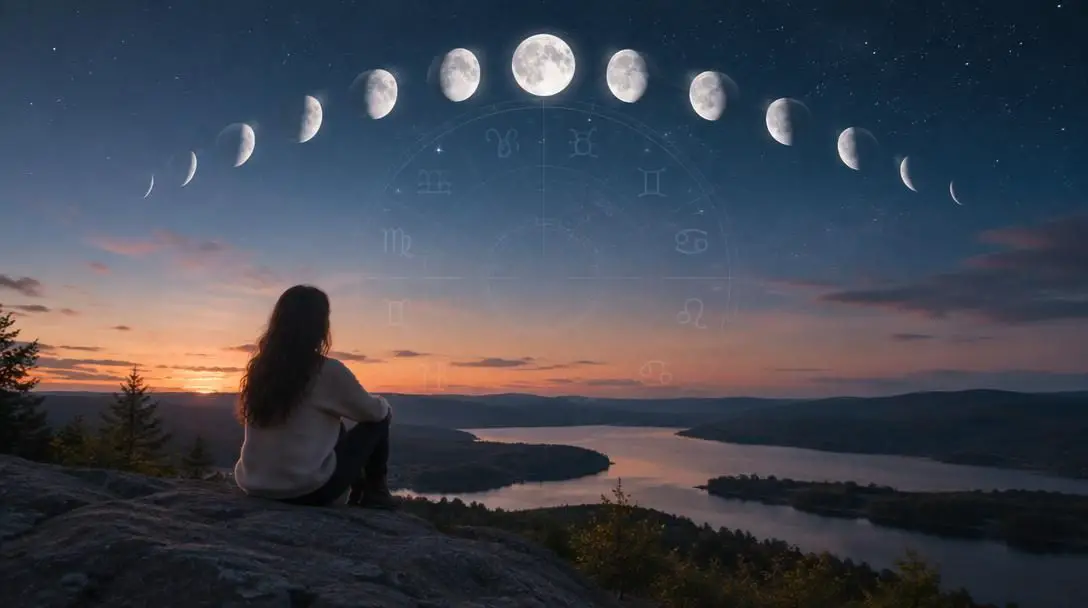
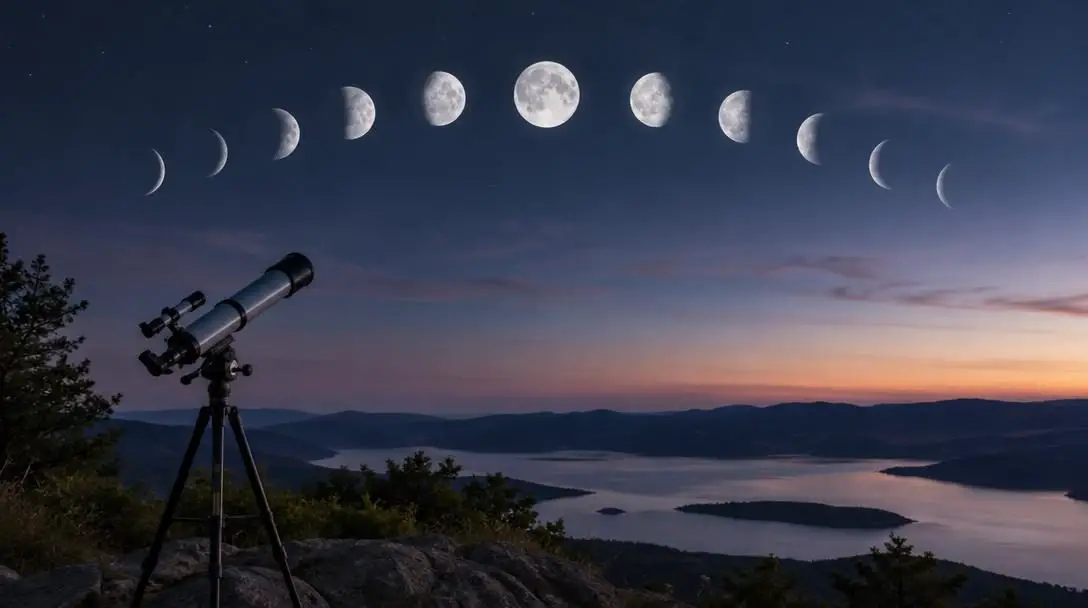
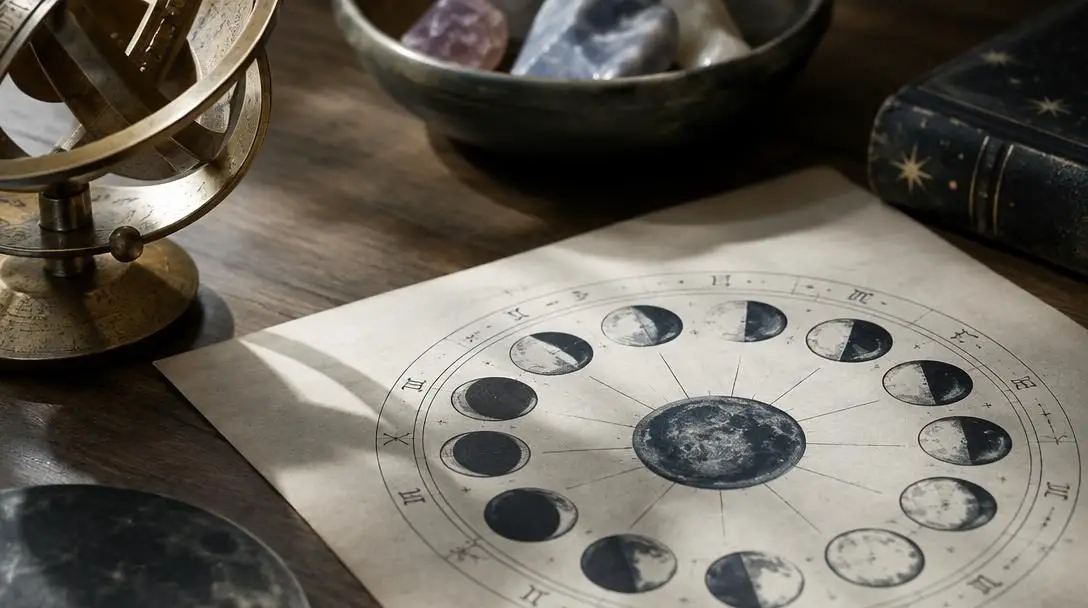
At the center of all lunar timekeeping is the lunar phase cycle. As the moon orbits our planet, the proportion of its sunlit surface visible from Earth continuously transforms. This progression follows an unbroken sequence: starting from an invisible new moon, expanding into a waxing crescent, arriving at the brilliance of a full moon, shrinking to a waning crescent, and returning once again to complete darkness at the next new moon.
Completing one entire progression through these phases takes approximately 29.5 days, a duration known scientifically as the synodic month. Because civil counting cannot accommodate a fractional half-day without chaos in daily planning, calendars centered on the moon typically alternate their months between 29 and 30 days. When you multiply this 29.5-day duration across twelve months, a standard lunar year comes out to roughly 354 days. Comparing this total to the 365.24-day solar year reveals an annual discrepancy of roughly eleven days.
Different societies developed two distinct philosophical solutions to manage this 11-day gap. The first approach is the pure lunar calendar, which preserves the twelve-month structure without any adjustments. In these systems, the months slowly migrate backward across the solar year, visiting every climatic season over a multigenerational cycle. The second approach is the lunisolar calendar, which regularly inserts an intercalary thirteenth month to keep lunar months tethered to solar solstices, equinoxes, and harvest cycles.
While solar calendars track Earth's position relative to the sun, lunar calendars capture the ever-changing face of our nearest celestial neighbor.
Five cultural calendar systems shaped by the moon
Throughout world history, diverse civilizations developed specialized methods for recording lunar passages. Some prioritized strict adherence to the moon's visual cues, while others engineered complex mathematical models to harmonize lunar and solar movements.
The Islamic calendar
- Calendar category: Pure lunar
- Year structure: 12 months (approximately 354 days)
- Month initiation: Physical sighting of the crescent new moon
- Primary observances: Ramadan, Eid al-Fitr, Eid al-Adha
The Islamic calendar operates as a strictly lunar system utilized by Muslims worldwide to govern sacred practices and religious festivals. The calendar consists of twelve months, each beginning with the formal sighting of the new crescent moon in the night sky. Because the system does not introduce an intercalary thirteenth month, its year is roughly eleven days shorter than the standard Gregorian year. Consequently, holy observances shift steadily through the solar calendar. The fasting month of Ramadan, which begins upon confirmed sighting of the new moon, traverses all four meteorological seasons over roughly three decades, alternating between long summer days and shorter winter daylight.
The Chinese calendar
- Calendar category: Lunisolar
- Year structure: 12 or 13 months
- Month initiation: Day of the astronomical new moon
- Primary observances: Chinese New Year, seasonal agricultural festivals
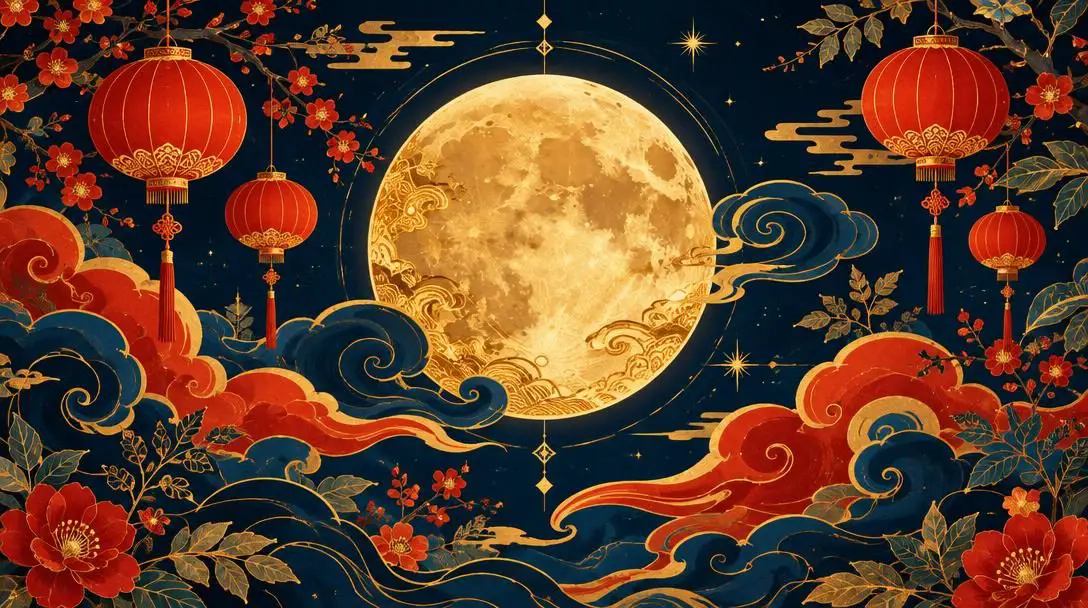
The traditional Chinese calendar balances both solar coordinates and the phases of the moon to guide cultural observances and agricultural rhythms. Each month begins precisely on the day of the new moon. To ensure that key agricultural markers and traditional holidays do not wander away from their historical seasons, the system alternates between twelve and thirteen months. This lunisolar framework determines the timing of significant cultural milestones, most notably the Chinese New Year, an occasion that prompts massive global travel, family reunions, and vibrant community celebrations across East Asia and the worldwide diaspora.
The Jewish calendar
- Calendar category: Lunisolar
- Year structure: 12 or 13 months
- Month initiation: Day of the new moon
- Primary observances: Rosh Hashanah, Yom Kippur, Passover
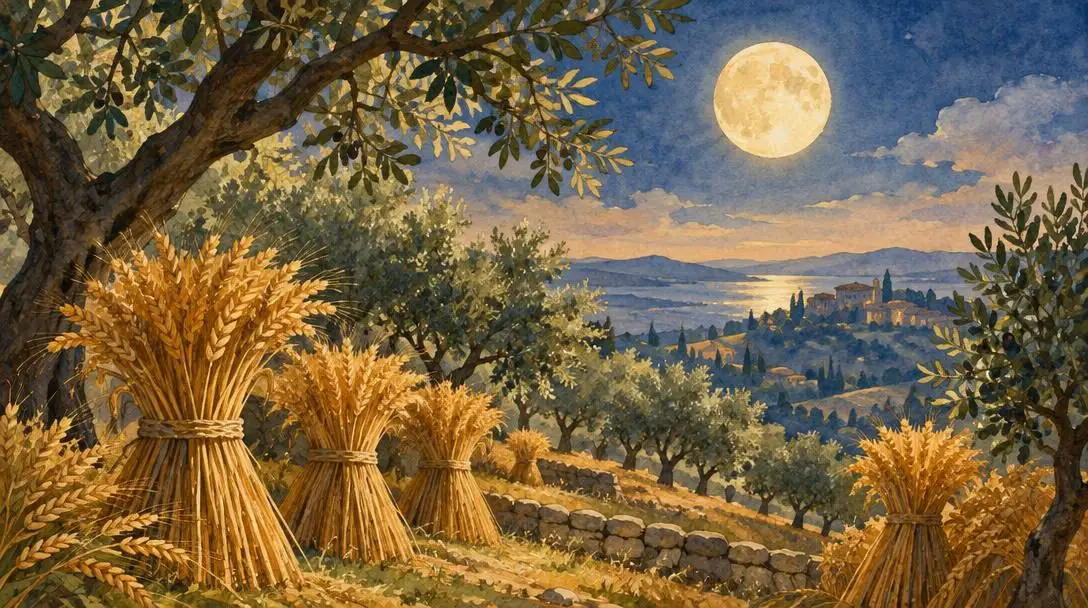
The Jewish calendar utilizes an intricate lunisolar structure designed to preserve the seasonal context of biblical traditions while honoring lunar cycles. Months commence on the day of the new moon. Because ancient traditions dictate that major festivals retain specific agricultural settings—such as Passover remaining tied strictly to the springtime barley harvest—the calendar periodically adds a thirteenth leap month. This mechanism prevents the calendar from drifting backward through winter and autumn, ensuring that solemn High Holy Days like Rosh Hashanah and Yom Kippur fall reliably during the autumn harvest season.
The Hindu calendar
- Calendar category: Lunisolar
- Year structure: 12 or 13 months
- Month initiation: Day of the new moon
- Primary observances: Diwali, Holi
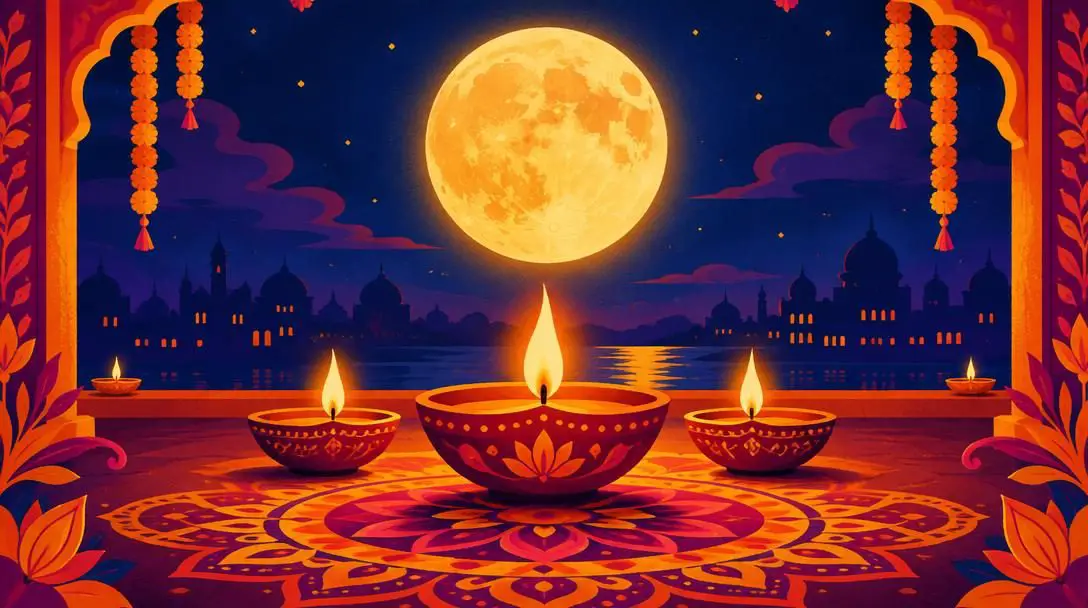
Across the Indian subcontinent and global Hindu communities, the Hindu calendar provides the structural timeline for temple rites, sacred fasts, and widespread celebrations. Operating as a lunisolar framework, each month is inaugurated on the day of the new moon. The alternating presence of twelve or thirteen months allows religious observances to reflect the moon's shifting presence while staying anchored to the sun's broader path. Major celebrations like Holi, the joyful festival of colors in early spring, and Diwali, the autumn festival of lights, are scheduled in precise alignment with these lunar markers.
The Mayan calendar
- Calendar category: Combined solar and lunar ritual system
- Year structure: 18 months of 20 days each (plus ritual cycles)
- Month initiation: Fixed cyclical counts
- Civilization origin: Mesoamerican Maya civilization
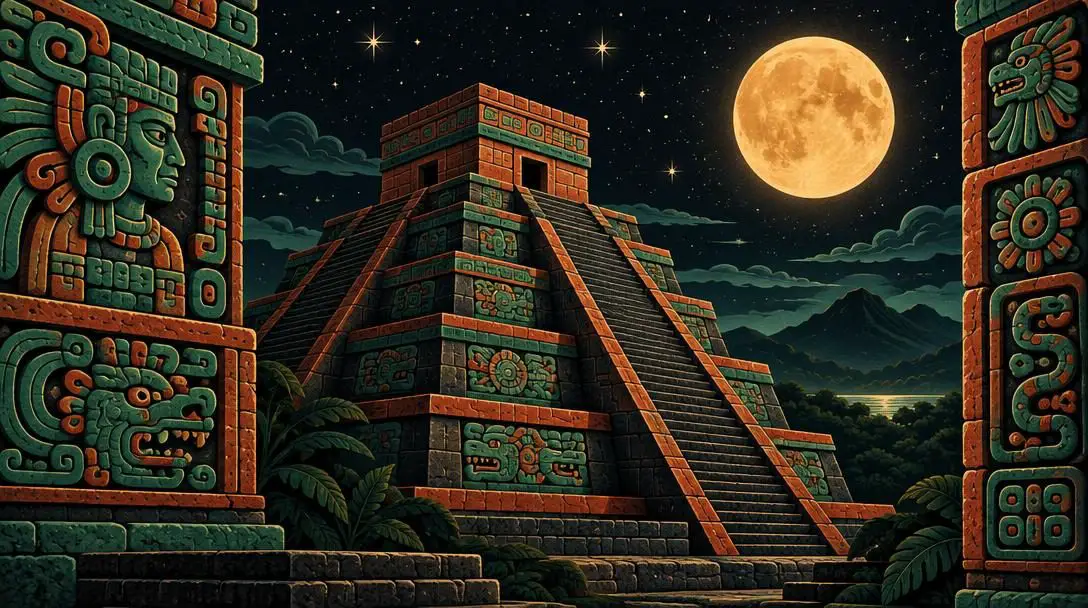
Developed by the ancient Maya civilization in Mesoamerica, the Mayan calendar represents one of the most sophisticated mathematical timekeeping systems in human history. Rather than relying solely on a simple twelve-month lunar progression, the Maya intertwined an eighteen-month solar calendar—where each standard month spanned twenty days—with a dedicated ritual calendar deeply informed by the recurring cycles of the moon. This multilayered design enabled Maya astronomers and religious leaders to coordinate civil management, crop planting, and spiritual ceremonies across harmonized celestial cycles.
At a glance: comparing lunar and lunisolar systems
Because different cultures engineered distinct approaches to the moon's cycle, their calendars handle the difference between lunar months and solar years in unique ways. The following table highlights the essential structural attributes of these prominent historical systems:
| Calendar System | System Category | Months per Year | Month Start Indicator | Key Observances |
|---|---|---|---|---|
| Islamic Calendar | Pure Lunar | 12 months | Sighting of the new moon | Ramadan, Eid al-Fitr, Eid al-Adha |
| Chinese Calendar | Lunisolar | 12 or 13 months | Day of the new moon | Chinese New Year |
| Jewish Calendar | Lunisolar | 12 or 13 months | Day of the new moon | Rosh Hashanah, Yom Kippur, Passover |
| Hindu Calendar | Lunisolar | 12 or 13 months | Day of the new moon | Diwali, Holi |
| Mayan Calendar | Solar & Lunar Ritual | 18 months (20 days each) | Cyclical mathematical count | Civil and ritual ceremonies |
Step-by-step: how to track the lunar cycle
Whether you are observing religious requirements, organizing cultural celebrations, or simply exploring the mechanics of naked-eye astronomy, following the lunar cycle provides a direct connection to natural rhythms. Follow these structured steps to monitor the monthly cycle effectively:

- Identify the current phase of the moon: Observe the night sky on clear evenings or check an astronomical table to determine where the moon currently sits. Check whether the illumination is expanding as a waxing crescent, glowing fully as a full moon, or receding through a waning crescent.
- Locate the day of the new moon: Determine the exact day when the moon is positioned between the Earth and the sun, rendering it dark to the naked eye. In systems like the Islamic calendar, prepare to watch the horizon for the first physical sighting of the thin crescent, which officially opens the new month.
- Track the 29.5-day progression: Mark the steady progression of days across the 29.5-day cycle. Because daily calendars cannot easily split days in half, look for months that alternate between 29 and 30 days to keep human counting aligned with celestial geometry.
- Determine your calendar's structure: Clarify whether you are monitoring a strictly lunar calendar or a lunisolar framework. If tracking lunisolar traditions like the Jewish, Chinese, or Hindu calendars, consult traditional tables to verify if the current calendar year incorporates twelve or thirteen months.
- Cross-reference dates with your civil planner: Translate upcoming lunar dates into your Gregorian calendar well ahead of time. Anticipating when holidays like Ramadan, Eid al-Fitr, Eid al-Adha, Chinese New Year, Rosh Hashanah, Yom Kippur, Passover, Diwali, or Holi take place allows you to coordinate professional commitments, school schedules, and family travel.
Common pitfalls when following lunar calendars
Because the Gregorian solar calendar is ubiquitous in modern daily life, newcomers often project solar assumptions onto lunar systems. Avoiding these common misconceptions will make reading and using lunar calendars far easier:
- Assuming lunar and solar years share identical lengths: Twelve lunar cycles of roughly 29.5 days total only around 354 days. Expecting a lunar year to match the 365.24-day solar year overlooks the 11-day deficit that shapes every lunar-based calendar.
- Confusing pure lunar calendars with lunisolar calendars: Assuming all moon-based systems operate identically creates confusion. The Islamic calendar is pure lunar and moves backward through the seasons every year, whereas the Chinese, Jewish, and Hindu calendars add an extra month periodically to stay anchored to seasonal markers.
- Expecting months to begin on fixed solar numbers: Unlike civil months that invariably reset on the first of each named month regardless of astronomy, lunar months reset only on the day of the new moon or its first visual sighting.
- Overlooking the distinction between astronomical calculation and visual sighting: In some traditions, months begin strictly through mathematical astronomical models of the new moon. In others—most notably the Islamic observation for Ramadan—a physical sighting by human observers is required. Assuming both methods yield the exact same calendar day can cause scheduling discrepancies.
- Imposing conventional 12-month templates onto ancient Mesoamerican calendars: The Mayan calendar does not conform to standard 12-month or 13-month structures. It incorporates an 18-month civil solar calendar of 20 days each, working in tandem with a distinct lunar ritual cycle.
Factors to consider when planning around lunar dates
Engaging with lunar traditions in the contemporary world requires navigating the boundary between ancient celestial rhythms and rigid modern schedules. When planning for holidays governed by the moon, keep these practical factors in mind:
First, local geography and atmospheric conditions exert a major influence on cultures that require physical crescent sightings. Clouds, heavy precipitation, and local topography can prevent observers from confirming the crescent moon. Consequently, different communities across the globe—or even within neighboring regions—may start festivals like Eid al-Fitr or Eid al-Adha on different days based on local visual confirmation.
Second, modern civic integration requires proactive coordination. International commerce, public schools, and government offices operate almost exclusively on the solar Gregorian calendar. Observers of shifting holidays such as Passover, Yom Kippur, Rosh Hashanah, Diwali, Holi, and Chinese New Year must anticipate these moving dates months in advance to secure religious accommodations, book transportation, and coordinate family festivities.
Finally, understanding the mathematical balance of lunisolar systems offers fascinating insight into historical science. Tracking how different cultures calculated intercalary leap months reveals how ancient scholars solved complex astronomical discrepancies without modern computers, aligning the moon's nightly dance with the solar journey that sustains agriculture and life on Earth.
Frequently asked questions
Why does a lunar year have fewer days than a solar year?
A lunar year has fewer days because it is based on twelve cycles of the moon's phases. Each lunar month lasts approximately 29.5 days, totaling roughly 354 days across twelve months. In contrast, a solar year tracks Earth's orbit around the sun, which takes approximately 365.24 days, leaving standard lunar years about 11 days shorter.
What is the difference between a pure lunar calendar and a lunisolar calendar?
A pure lunar calendar, such as the Islamic calendar, uses 12 lunar months every year and does not adjust for the solar cycle, causing its dates to shift through all four seasons over time. A lunisolar calendar, such as the Chinese, Jewish, or Hindu calendar, periodically adds a 13th month to keep lunar months aligned with the solar year and agricultural seasons.
Why does the month of Ramadan fall in different seasons over time?
Ramadan falls in different seasons because the Islamic calendar is a pure lunar calendar consisting of 12 months without leap months. Because its 354-day year is roughly 11 days shorter than the solar year, Ramadan shifts backward through the Gregorian calendar by about 11 days each year, completing a full cycle through spring, summer, autumn, and winter roughly every 33 years.
How do lunisolar calendars prevent holidays like Passover from moving into winter?
Lunisolar calendars like the Jewish calendar prevent seasonal drift by periodically adding an intercalary thirteenth month. This extra month offsets the roughly eleven-day annual difference between the lunar and solar years, guaranteeing that Passover remains anchored in its traditional springtime harvest window.
How did the Mayan calendar differ from other lunar calendars?
The Mayan calendar differed by combining an 18-month solar calendar—where every month had 20 days—with an overlapping ritual calendar tied to lunar cycles. Unlike traditional Eurasian systems that strictly utilized 12 or 13 months, the Maya created an integrated multi-calendar system to track civic duties, agricultural timings, and spiritual ceremonies simultaneously.
The bottom line
The lunar calendar is far more than an ancient curiosity; it is a vibrant, living method of timekeeping that anchors identity, religion, and cultural memory for billions of people across the globe. By tracking the recurring 29.5-day synodic journey from darkness to full illumination, early civilizations established a profound rhythm that linked earthly community life to the wider cosmos. Whether experiencing the solemn fasts of Ramadan, the joyous lights of Diwali, the festive family banquets of Chinese New Year, or the ancient rituals of Passover, following the moon enriches our appreciation of world heritage and reminds us of humanity's shared habit of looking upward to find meaning in time.