Football Position Basics Explained
American football is a game of calculated strategy, precise physical execution, and highly specialized athletic roles. Every snap initiates a collision of carefully orchestrated assignments, where eleven offensive players attempt to advance the ball against eleven defensive players determined to stop them. Understanding the foundational responsibilities, required skill sets, and spatial alignments of each unit transforms the viewing experience, allowing spectators to see the intricate chess match taking place beneath the pads and helmets.
Every position on the gridiron demands a specific blend of size, speed, leverage, and cognitive anticipation. From the tactical field commanders calling audibles at the line of scrimmage to the trenches where offensive and defensive lines battle for inches of grass, each player functions as an indispensable cog in a larger collective effort. Breaking down these core roles clarifies how each unit contributes to advancing toward the end zone or defending it.
Key takeaways
- Every snap features twenty-two players executing specialized tactical responsibilities across offensive and defensive units.
- Offenses rely on the quarterback's command, the offensive line's protection, and dynamic contributions from ball handlers and receivers to score points.
- Defenses deploy interior anchors, edge rushers, and versatile linebackers to stop rushing plays and disrupt the passing pocket.
- Position versatility—especially among tight ends, running backs, and linebackers—allows coordinators to disguise plays and gain schematic advantages.
At a glance: Core positions and primary responsibilities
| Position | Unit | Primary alignment | Core responsibility |
|---|---|---|---|
| Quarterback | Offense | Directly behind center | Distributing the ball, managing the clock, and directing play calls |
| Running Back | Offense | Offensive backfield | Rushing between or outside tackles, catching checkdowns, and pass blocking |
| Wide Receiver | Offense | Perimeter of formation | Stretching defenses downfield, running routes, and perimeter blocking |
| Offensive Line | Offense | Line of scrimmage (interior) | Forming the protective pocket and clearing run lanes |
| Tight End | Offense | Next to offensive tackle | Executing in-line run blocks and running intermediate routes |
| Defensive Line | Defense | Line of scrimmage (trenches) | Plugging interior gaps, penetrating backfields, and rushing the passer |
| Linebacker | Defense | Second level (behind D-line) | Filling run gaps, blitzing, and covering tight ends or backs |
The Offensive Unit: Architects of Yardage and Scoring
The offense bears the primary responsibility of advancing the football downfield through rushing and passing plays while aiming to put points on the scoreboard. Sustained offensive success depends entirely on cohesive timing, disciplined blocking, and precise execution between ball handlers and their protective front wall.
Quarterback
- Primary role: Directing the offense, taking snaps, passing, handing off, and scrambling
- Formation alignment: Directly behind the center in under-center or shotgun sets
- Essential skills: Arm strength, mechanical accuracy, pocket mobility, and pre-snap processing
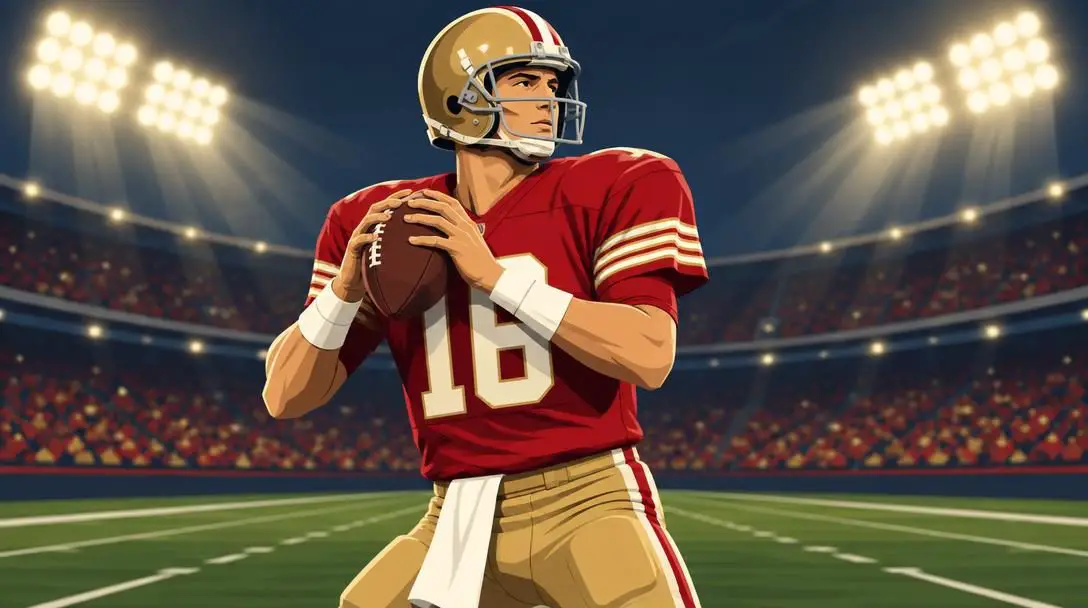
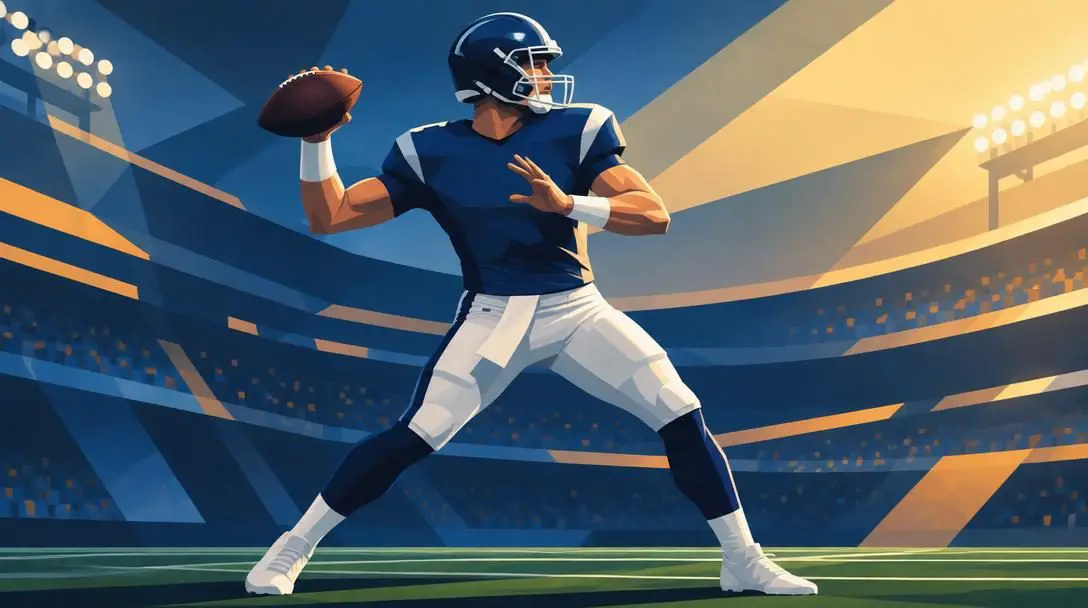
The quarterback stands as the primary decision-maker and tactical leader of the entire offensive unit. Positioned directly behind the offensive line, the quarterback receives the snap from the center to trigger every offensive play from scrimmage. Because every play passes through their hands, the quarterback's command of the playbook and situational awareness dictate the flow of the entire contest.
Upon taking the snap, the quarterback must swiftly execute designed plays through several potential pathways:
- Handing the ball off to an advancing running back on designed inside or outside rushing concepts.
- Dropping back into the pocket to deliver accurate passes to wide receivers, tight ends, or running backs.
- Tucking the ball away to scramble for yardage when receiving options are blanketed or defensive pressure breaks down the pocket.
Beyond physical abilities like arm strength, throw mechanics, and footwork, quarterbacks must master complex game management. This includes scanning defensive fronts before the snap, calculating clock management under pressure, and calling audibles at the line of scrimmage to change the play when the defense presents an unfavorable look.
Ultimately, the success of a football team’s offense often depends on the quality and performance of its quarterback.
Running Back
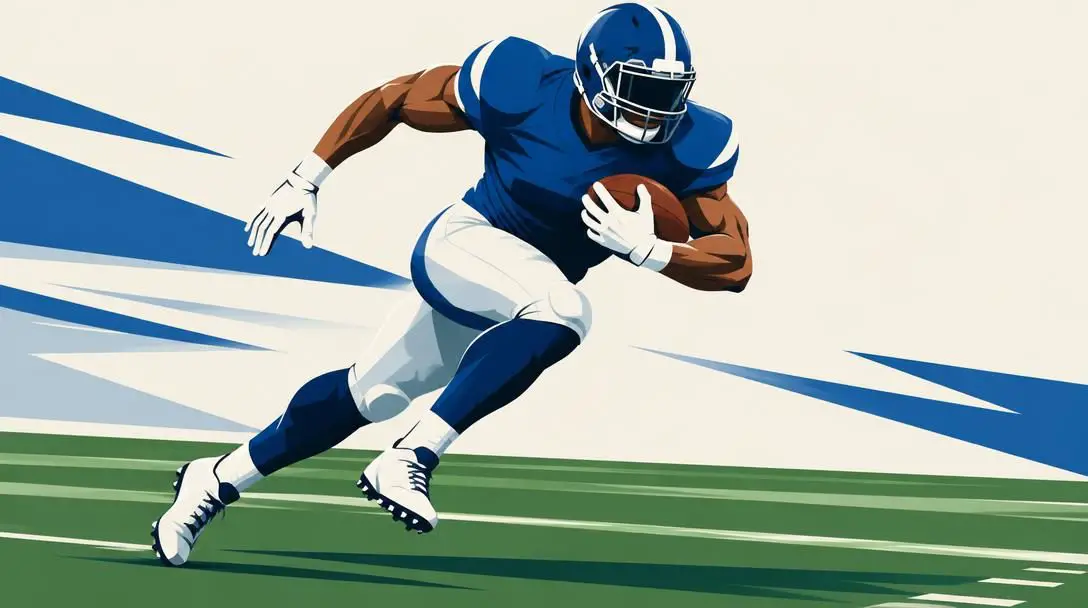
- Primary role: Rushing the football, catching passes out of the backfield, and pass protection
- Formation alignment: Offensive backfield, positioned beside or directly behind the quarterback
- Essential skills: Burst acceleration, physical power, field vision, and cutting agility
Operating out of the offensive backfield, the running back provides a balanced offensive attack through an athletic combination of speed, physical power, balance, and evasive agility. Their fundamental responsibility involves taking handoffs or pitches to run the ball into defensive lanes and navigate past prospective tacklers.
Modern running backs are multifaceted offensive weapons who contribute across several distinct phases:
- Rushing the football: Making decisive, rapid cuts to exploit gaps opened by the offensive line while breaking arm tackles to generate extra yardage after contact.
- Pass catching: Running routes out of the backfield to offer reliable short-yardage options or checkdowns whenever deep downfield targets are blanketed by coverage.
- Pass protection: Stepping up into passing lanes to block blitzing linebackers and defensive rushers, physically shielding the quarterback to allow sufficient throwing time.
By shifting dynamically between running between the tackles, leaking out on pass routes, and stepping up into pass protection, an elite running back keeps opposing defenses uncertain, preventing linebackers from committing exclusively to stopping the run.
Wide Receiver
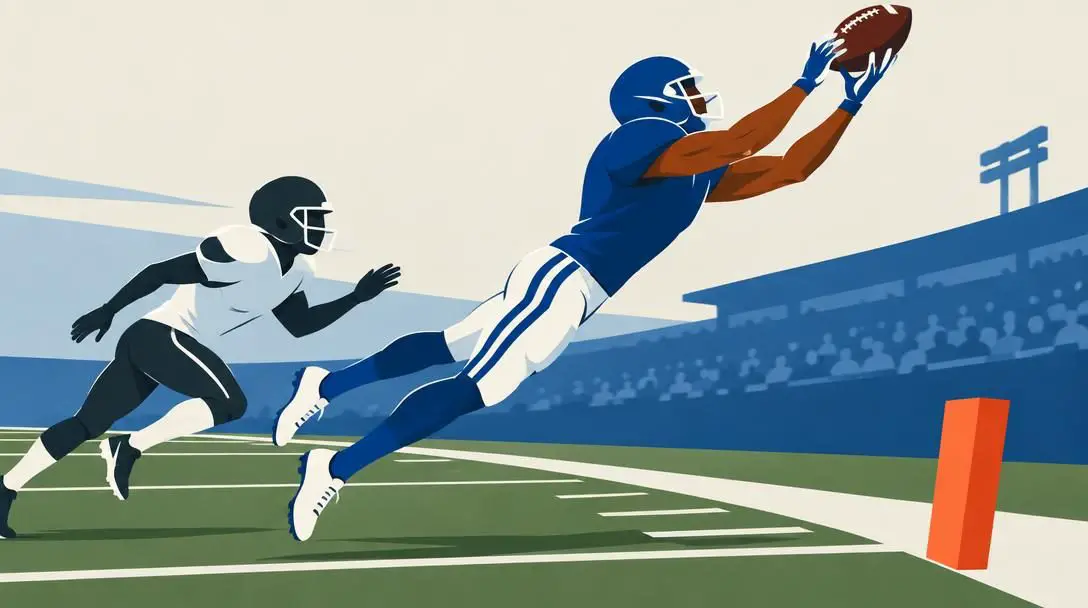
- Primary role: Catching passes downfield and blocking on perimeter runs
- Formation alignment: Outer edges of the offensive formation, split out wide or in the slot
- Structural variants: Split ends lined up on the line; flankers set back off the line
Positioned along the perimeter edges of the offensive formation, wide receivers spread the defense horizontally and vertically across the field. Their deployment stretches coverage boundaries, clearing out open space for interior plays while presenting explosive downfield scoring threats on passing downs.
Wide receivers generally divide into two structural designations on the line:
- Split ends: Receivers lined up directly on the line of scrimmage, requiring elite acceleration and release techniques to defeat immediate physical press coverage from opposing cornerbacks.
- Flankers: Receivers positioned slightly set back behind the line of scrimmage, allowing them a fractional timing cushion to build momentum as they begin their routes.
To produce consistently, wide receivers combine outright sprinting speed with sharp change-of-direction cuts and reliable hands to haul in throws under contact. They must thoroughly understand passing concepts to read defensive coverages on the fly, tailoring route angles to match the quarterback's timing. Additionally, wide receivers act as essential edge blockers on outside runs and screen passes, while occasionally carrying the football on designed reversals and trick plays.
Offensive Line
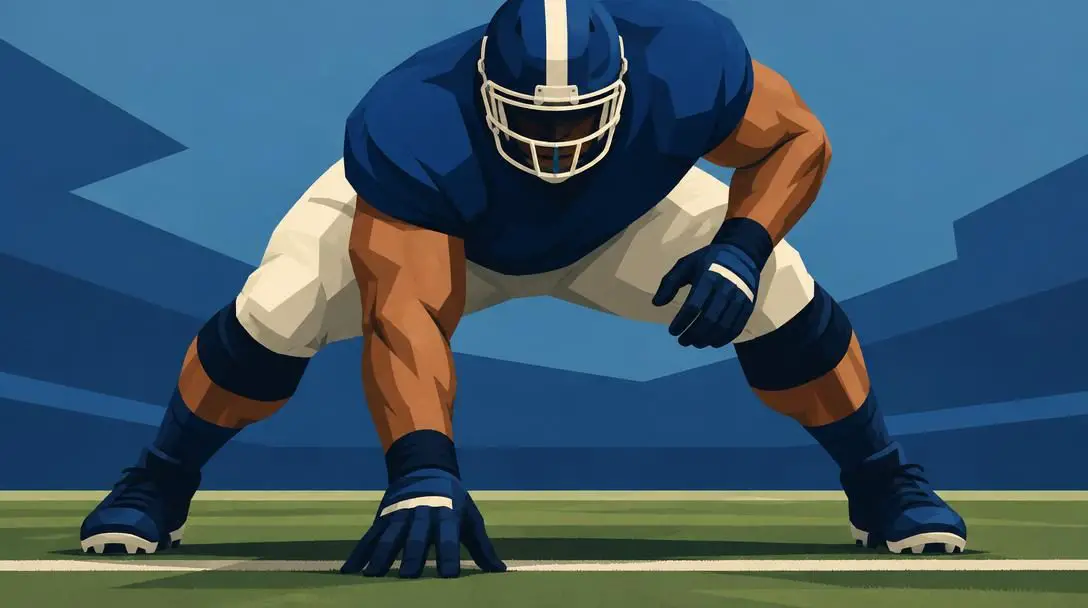
- Primary role: Protecting the passer and creating running lanes
- Formation alignment: Centered along the line of scrimmage directly in front of the quarterback
- Unit composition: Five linemen consisting of two tackles, two guards, and one center
The offensive line forms the foundational interior protective wall that allows all offensive plays to unfold. Typically consisting of five specialized linemen aligned side by side—two offensive tackles on the outside, two offensive guards on the inside, and one center in the middle—this unit operates without handling the football on designed plays, focusing strictly on physical battles of leverage.
The tactical priorities of the offensive line include:
- Run blocking: Firing forward off the snap to drive interior defenders backward and seal off lateral lanes, creating clear pathways for running backs to hit.
- Pass protection: Establishing a coordinated pass-blocking pocket to shield the drop-back quarterback against relentless defensive rushers.
- Execution of the snap: The center initiates every single down by delivering a clean snap backward to the quarterback while immediately anchoring against interior defensive linemen.
Linemen are typically the largest and strongest athletes on the roster, yet brute force alone does not guarantee success. Mastering the offensive line requires intricate hand placement, coordinated footwork, balance, and seamless communication to pass off blitzing defenders and defensive stunts without letting opponents leak into the backfield.
Tight End
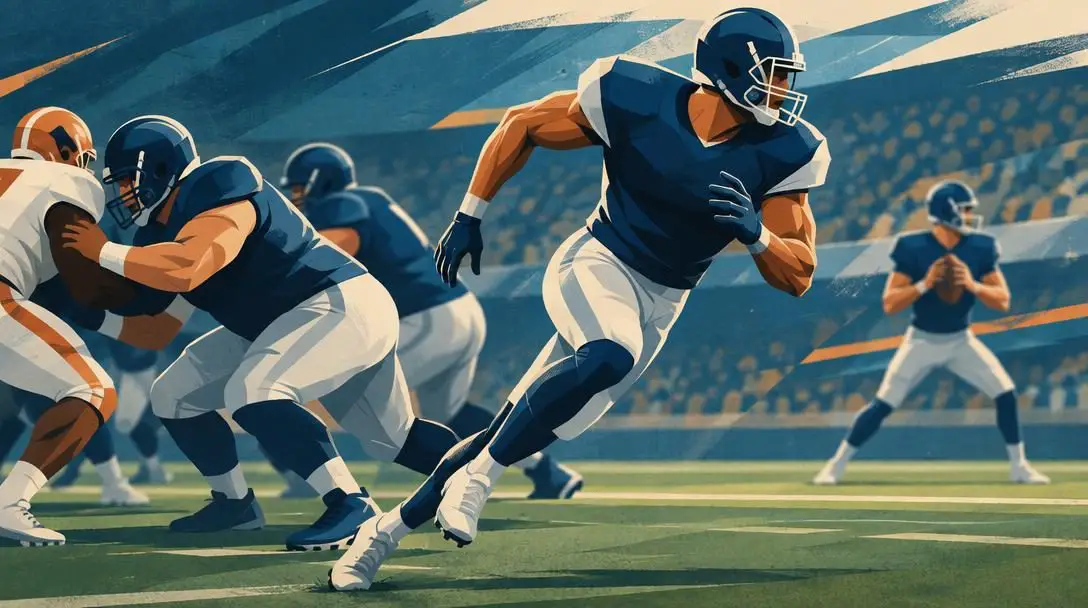
- Primary role: Hybrid asset serving as both an in-line blocker and a pass-catching receiver
- Formation alignment: Directly adjacent to the offensive tackles on the end of the line
- Tactical advantage: Poses difficult matchup problems against linebackers and defensive backs
The tight end stands as one of the most structurally versatile positions in modern football, lining up directly adjacent to the offensive tackles on the end of the line. The position represents an athletic hybrid, requiring the size and strength to execute physical blocking assignments alongside the speed, body control, and soft hands expected of a pass catcher.
Tight ends contribute across both facets of offensive play calling:
- In the running game: Serving as in-line blockers or pulling lead blockers to collapse the defensive edge and seal outside running paths for running backs.
- In the passing game: Running intermediate routes across the middle of the field, where their large physical frames create natural throwing windows against smaller defensive backs.
- Matchup problems: Posing difficult defensive dilemmas, as they are often too quick for traditional inside linebackers to cover cleanly yet too powerful for defensive backs to bring down easily.
Whether helping the offensive line secure the pocket or functioning as a primary red-zone receiver, a dual-threat tight end forces the defensive coordinator to account for multiple distinct play types out of a single offensive personnel grouping.
The Defensive Unit: Resistance and Disruption
While the offense schemes to advance the ball according to a scripted plan, the defense exists to disrupt that plan. Successful defensive units neutralize rushing attempts, force errant passes, generate turnovers, and keep the opposing offense from establishing rhythm.
Defensive Line
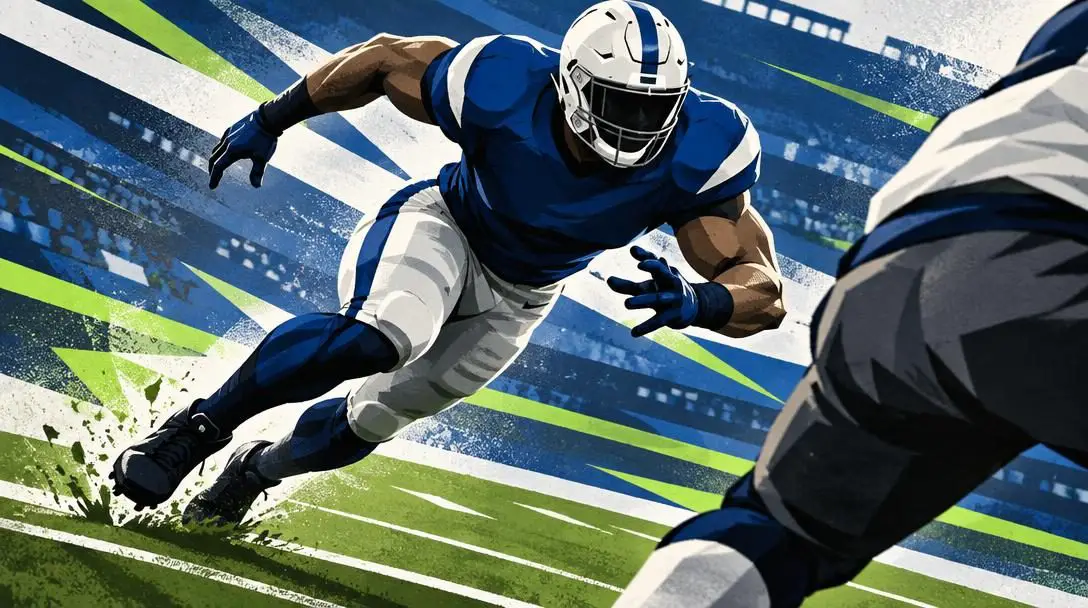
- Primary role: Penetrating the offensive front, stopping runs, and rushing the passer
- Formation alignment: Along the line of scrimmage directly opposite offensive linemen
- Core roles: Interior defensive tackles plugging gaps and exterior defensive ends rushing the edge
Lining up directly across from the offensive front at the line of scrimmage, the defensive line acts as the first line of defense. Composed primarily of interior defensive tackles and exterior defensive ends, this group aims to dictate the line of engagement, stop ball carriers at or behind the line, and collapse the pocket around the quarterback.
The defensive line operates through two distinct positional roles:
- Defensive tackles: Massive, powerful interior anchors who plug up central running gaps, occupy multiple offensive blockers, and push the pocket inward toward the quarterback.
- Defensive ends: Faster, explosive edge rushers stationed outside the offensive tackles who use speed, hand combat moves, and bend to beat pass protectors, strip the football, or string outside runs toward the sideline.
By consistently winning one-on-one matchups at the point of attack, defensive linemen derail designed plays before they develop, allowing the second and third levels of the defense to operate with freedom.
Linebacker
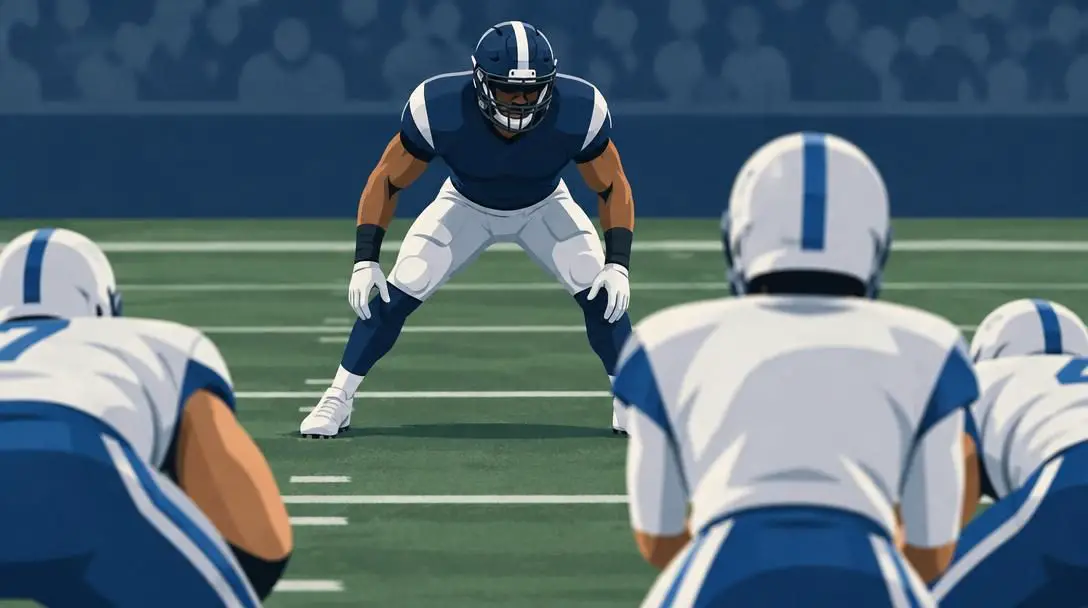
- Primary role: Defending the run, rushing the passer, and dropping into pass coverage
- Formation alignment: Second level of defense, positioned directly behind the defensive line
- Core divisions: Inside linebackers directing plays and outside linebackers setting edges
Stationed directly behind the defensive line, linebackers represent the core second level of the defense. They combine the physical strength needed to take on offensive linemen head-on with the lateral quickness necessary to track down running backs and cover tight ends or receivers in the passing game.
Defensive schemes generally deploy two principal types of linebackers:
- Inside linebackers: Often referred to as the quarterbacks of the defense, inside linebackers align between the tackles, direct pre-snap defensive adjustments, communicate checks, and fill interior running lanes with decisive tackling.
- Outside linebackers: Positioned nearer the edges, outside linebackers are tasked with setting the edge against outside rushing plays, rushing the passer as edge rushers, or dropping back into shallow-to-intermediate zone coverage.
In modern pass-heavy football leagues, linebackers face heightened demands. While maintaining the power to stop power-running games, they must display elite closing speed, lateral agility, and mental processing to stay competitive against intricate spread-passing concepts.
How Offensive Plays Unfold: From Huddle to Whistle
Executing an offensive snap requires synchronized actions from all eleven players under strict time constraints. The progression of an individual play demonstrates how these specialized roles coordinate in real time:
- Play call and huddle: The quarterback receives the play call, relays assignments to the offensive unit in the huddle, and directs players to their formation alignments.
- Pre-snap read and cadence: The quarterback inspects defensive positioning at the line of scrimmage, calls an audible or protection shift if needed, and begins the vocal cadence.
- Snap initiation: The center snaps the ball backward to the quarterback while immediately anchoring against interior defensive linemen.
- Pocket formation and run blocking: Offensive tackles and guards either drive forward to establish running lanes or set backward to form a protective pass pocket.
- Execution of the play: The quarterback hands off to a running back, scrambles for positive yardage, or throws to a receiver or tight end breaking free from defensive coverage.
Frequently asked questions
What is the main difference between a split end and a flanker?
A split end lines up directly on the line of scrimmage and must overcome immediate physical contact from cornerbacks at the snap. A flanker lines up slightly set back behind the line of scrimmage, which provides a fractional cushion of time and space to build acceleration when starting a route.
Why is the center's job considered so difficult on the offensive line?
The center must execute two critical tasks simultaneously: deliver an accurate snap backward to the quarterback and instantly absorb contact or establish leverage against powerful interior defensive linemen lined up directly opposite them.
Why are tight ends considered matchup nightmares for defenses?
Tight ends possess an athletic combination of size and speed. They are generally too large and physically powerful for defensive backs to tackle easily, yet too fast and agile for traditional linebackers to cover cleanly in open space.
What makes inside linebackers the defensive equivalent of quarterbacks?
Inside linebackers are positioned in the center of the second level of defense, where they read the opposing offensive formation before the snap, call out audible adjustments, communicate defensive checks, and direct teammates into correct positions.
How does a dual-threat running back help the passing game?
A running back who excels at catching passes out of the backfield forces linebackers to cover them in space, opening up room for other receivers. They also act as reliable safety-valve checkdowns when downfield options are covered, and provide pass protection by blocking blitzing defenders.
The bottom line
Every play in American football showcases a complex relationship between diverse positions. The offense cannot throw downfield without the pass protection of the offensive line, and the running back cannot find open lanes without disciplined interior blocking. Similarly, the defense cannot generate pressure or defend against the pass without front-line linemen penetrating the pocket and linebackers covering open field. Understanding each position's core requirements illuminates why specific personnel adjustments are made from down to down, turning every drive into an engaging battle of discipline, scheme, and physical athletic ability.