India On A Budget: 5 Essential Tips

India remains a destination celebrated across the globe for its expansive history, landmark sights, and remarkable hospitality. While it does not register the sheer visitor volumes seen in international hubs such as France, China, or the United States, it steadily welcomes approximately 18 million international tourists every single year. Travelers journey from every corner of the world to view monuments, experience regional traditions, and take in the country's diverse environments. Alongside its cultural and historical attractions, India has earned a widespread reputation as one of the most budget-friendly places on earth for international visitors, where everyday purchases, regional transport, and accommodations can cost a fraction of what tourists typically spend in Western nations.
However, assuming that a trip will automatically remain cheap can lead to unexpected spending. Many visitors find themselves overpaying due to an unfamiliarity with regional logistics, transportation networks, marketplace dynamics, and local booking norms. Learning how to properly plan a budget journey allows you to experience the full breadth of the country without spending more than you anticipated.
Key takeaways
- Flying into major flight gateways like New Delhi or Mumbai and timing your stay with regional monsoons provides the steepest savings.
- Open markets expect polite negotiation, meaning paying initial sticker prices quickly inflates your overall shopping expenses.
- Public rail lines let travelers cross hundreds of miles for as little as $2 to $3, though minor upgrades provide vital reserved seating on journeys over 100 miles.
- Bypassing Westernized tourist cafes in favor of neighborhood vegetarian restaurants reduces single meal expenses to under a single dollar.
- Lodging costs remain minimal when using shared hostel dorms under $10, private hostel rooms under $20, or verified OYO Rooms for roughly $30 per night.
Understanding How Budget Travel Works in India
Navigating India on a budget relies on understanding the local economy and utilizing the services that residents use on a daily basis. The financial mechanics of a low-cost trip center around a few key operational areas: air transit routes, seasonal climate shifts, open-market negotiation, public rail transport, local dining choices, and flexible lodging networks.
Air travel pricing in India is shaped primarily by hub capacity. The nation features more than two dozen international airports, but flight costs fluctuate considerably depending on where you touch down. Major metropolitan centers like Mumbai (BOM) and New Delhi (DEL) act as the primary gateways and handle the highest volumes, which keeps airfare relatively low. Secondary hubs like Bengaluru and Hyderabad feature slightly higher ticket prices, whereas hubs such as Chennai and Kolkata are somewhat more expensive, though they may serve as your only direct route depending on your travel path.
Seasonal patterns also impact prices across the country. Traveling during the monsoon season offers the most substantial cost savings. In the northern regions, the monsoon generally begins in June, with the lowest overall travel expenses appearing in September. In the southern regions, the monsoon cycle spans all the way from May through November. While India does not have an inherently wrong time to travel, planning your itinerary around these seasonal months significantly lowers your transit and lodging expenses.
On the ground, market shopping and public transit function on volume and everyday access. Open markets do not operate under the fixed-price standards found in Western supermarkets, meaning bargaining is an integral part of commerce. Similarly, the public transportation infrastructure—particularly the extensive train network—is subsidized and scaled for mass transit, allowing travelers to cross hundreds of miles for as little as $2 to $3. By aligning your spending with local habits rather than tourist-focused services, you keep daily costs to an absolute minimum.
By aligning your spending habits with everyday local services rather than tourist-focused infrastructure, you unlock the country's full breadth at a fraction of Western costs.
Five Essential Tips for Budget Travel in India
To keep expenses predictable and minimal across your journey, focus on five foundational strategies that address arrival logistics, retail purchasing, long-distance transit, daily nutrition, and overnight stays.
1. Pick the Right Airport and Timing
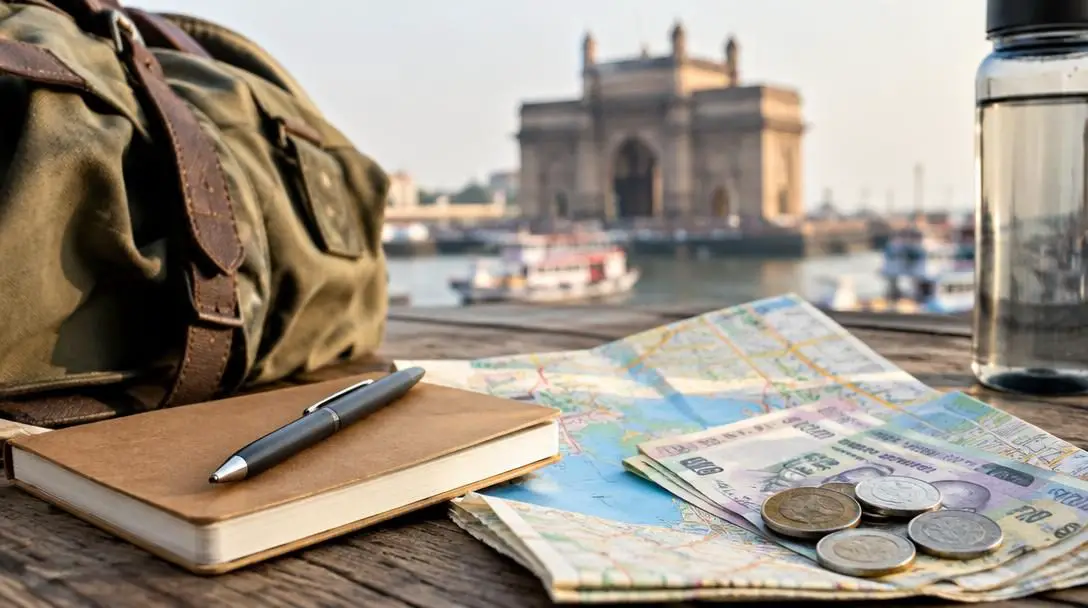
Airfare represents one of the largest single expenses of an international itinerary. Target large flight hubs like New Delhi or Mumbai to secure the lowest base airfare. Secondary hubs like Bengaluru or Hyderabad carry higher fares, and coastal gateways like Chennai or Kolkata tend to be more expensive. To capture the deepest discounts on transit and accommodations, time your journey to coincide with regional monsoon seasons—June through September in the north, or May through November in the south. September represents the absolute lowest pricing window across northern destinations.
2. Master the Art of Haggling
Recognize that vendors at open markets do not expect you to pay the full asking price. Unlike shopping at a chain store in the West, market pricing in India is deliberately designed around customer interaction and negotiation. Approach discussions with patience, avoid aggressive lowballing, and politely state that an item costs more than you are willing to spend so the seller can talk themselves down to an acceptable rate.
3. Rely Heavily on the Railway Network
Take advantage of public rail lines to move across vast distances for just a few dollars. While general admission tickets represent the ultimate low-cost entry, allowing you to ride for $2 to $3 across hundreds of miles, unreserved carriages do not guarantee seating. Consider paying slightly more for a modest class upgrade to secure a reserved seat over journeys that extend beyond 100 miles, ensuring comfort without significantly impacting your transit budget.
4. Avoid Tourist-Oriented Dining Spots
Sidestep Westernized eateries located in heavy tourist districts in favor of regional neighborhood spots. Establishments with signage exclusively in foreign languages or menus featuring Western imports mark up prices heavily for overseas visitors. Embrace vegetarian options, which are widely available throughout the country, nutritious, filling, and capable of reducing single meal costs to under one dollar.
5. Select Cost-Effective Accommodations
Choose budget lodging networks suited for multi-city travel. Hostels provide shared dormitory spaces for less than $10 a night and private rooms for under $20. If you require private, consistent lodging with established security standards, book a room through OYO Rooms. This chain was established in 2012, operates over 300 locations across the country, and generally prices rooms around $30 per night.
Comparing Budget Lodging Options in India
Evaluating your accommodation choices based on privacy, convenience, and base cost helps balance personal comfort against daily expenses. The table below outlines standard options across India's hospitality network.
| Lodging Category | Typical Nightly Cost | Privacy Level | Key Features |
|---|---|---|---|
| Shared Hostel Dormitory | Under $10 | Shared bunk space | Lowest nightly price point; ideal for solo travelers moving between major city centers. |
| Private Hostel Room | Under $20 | Fully private room | Inexpensive individual space; maintains access to social communal amenities and traveler support. |
| OYO Rooms Chain Hotel | Around $30 | Private hotel room | Established in 2012; network spanning over 300 locations nationwide with standardized security. |
Practical Steps for Implementing Budget Travel Strategies
Applying these budgeting strategies requires specific steps before departure and while moving between cities. Use the following structured sequence to implement each tip effectively.
- Compare primary flight routes: Start your flight search by comparing routes directly into New Delhi (DEL) or Mumbai (BOM). If your ultimate destination lies in southern or eastern India, calculate whether booking a long-haul flight into Delhi or Mumbai paired with an internal transfer is cheaper than flying directly into Bengaluru, Hyderabad, Chennai, or Kolkata.
- Align travel dates with regional rainfall: Schedule your itinerary around regional monsoon windows—planning northern travel around September or southern travel between May and November to secure the cheapest hotel and transit rates.
- Negotiate respectfully in open markets: When entering local goods markets, never accept the initial stated rate. Rather than telling a shopkeeper that their merchandise is overpriced, explain that the figure exceeds what you want to spend. Remain patient, smile, and let the merchant carry the conversation down to their lowest acceptable price.
- Book train passes with reserved seating: Visit local train stations or booking counters to secure railway passes across cities. For journeys extending past 100 miles, request a modest class upgrade above general admission to lock in an assigned seat.
- Identify local neighborhood eateries: Bypass restaurants advertising Western meals or displaying signage exclusively in foreign languages. Observe where local residents dine, ask neighborhood residents in English for their recommendations, or use basic conversational Hindi to locate authentic vegetarian dining spots.
- Secure lodging through trusted platforms: Search local hostel options for dorm beds under $10 or private rooms under $20. If standard hotel rooms are preferred, reserve a room through the OYO Rooms network across its 300-plus locations for approximately $30 per night.
Costly Mistakes to Avoid in India
Even travelers with good intentions can see their expenses escalate quickly if they fall into standard tourist traps. Being mindful of these frequent errors will protect your travel funds:
- Assuming Every Airport Costs the Same: Landing in regional centers like Kolkata or Chennai without checking rates at major transit hubs like Mumbai or New Delhi can instantly inflate your baseline flight expenses.
- Treating Indian Markets Like Fixed-Price Stores: Paying the initial sticker price out of habit or convenience will drain your shopping funds. Market pricing in India is deliberately designed around customer interaction and negotiation.
- Being Aggressive or Insulting While Haggling: Shouting, acting dismissive, or telling merchants their products are cheap junk leads to poor interactions. Bargaining must always be conducted politely, focusing on your own spending preferences rather than criticizing the merchant's original pricing.
- Underestimating General Admission Train Travel: Purchasing the absolute cheapest general admission rail ticket for long-distance travel to save a couple of dollars often results in having to stand for hours in crowded carriages. Skipping a tiny upgrade fee can make a 100-mile trip physically exhausting.
- Defaulting to Western-Style Tourist Cafes: Eating at establishments specifically designed for overseas travelers can cost several times what authentic local food costs. Sticking exclusively to these venues eliminates one of the biggest budget benefits of visiting India.
- Ignoring Pure Vegetarian Options: Consistently searching for meat dishes keeps your meal budget elevated. Vegetarian options form the core of the local culinary landscape and offer the greatest financial savings.
Broader Itinerary and Logistical Considerations
Once you understand the basic mechanics of cheap transit, haggling, and accommodation, there are several broader itinerary considerations to think through before finalizing your departure.
First, evaluate your tolerance for crowded environments. Indian mass transit can become packed in a hurry. If you experience claustrophobia, relying solely on crowded public railways or buses might prove challenging, meaning you may need to allocate extra funds for reserved seating classes or private regional alternatives.
Second, balance your geographic scope against your available timeline. India is a geographically massive country. While the rail system enables you to travel hundreds of miles for just $2 to $3, covering large expanses takes significant time. Attempting to see every corner of the country on a single, rapid itinerary can lead to travel fatigue. Selecting a specific region—such as focusing on the northern corridor via New Delhi or touring southern hubs through Bengaluru or Hyderabad—allows you to take full advantage of slow, inexpensive train journeys without spending your entire vacation in transit.
Finally, assess how you plan to manage daily currency and communication. Because budget-friendly eateries, neighborhood markets, and public train counters run largely on physical cash transactions, keeping small denominations on hand is essential for bargaining and daily purchases. Additionally, picking up basic Hindi phrases prior to arrival will serve you well beyond English interactions, helping you locate the best neighborhood eateries, interact smoothly with vendors, and navigate local spaces with ease.
Frequently asked questions
Which airports in India are the cheapest to fly into?
New Delhi (DEL) and Mumbai (BOM) are the primary flight hubs that process the highest passenger volumes, keeping international airfares at their lowest. Secondary airports like Bengaluru and Hyderabad have slightly higher ticket costs, while Chennai and Kolkata are generally somewhat more expensive.
When is the cheapest time of year to visit India?
Visiting during the regional monsoon seasons delivers the greatest discounts on transit and accommodations. In northern regions, monsoon travel runs from June to September, with September offering the lowest overall prices. In the south, the monsoon season runs from May through November.
How much does train travel cost across India?
Public rail transit is subsidized for mass travel, allowing passengers to ride general admission carriages across hundreds of miles for just $2 to $3. For trips longer than 100 miles, paying a small upgrade fee for a reserved seat class is recommended to guarantee a seat.
How can travelers eat for under a dollar per meal?
Travelers can dine for under a dollar by choosing neighborhood vegetarian restaurants and street-side eateries frequented by local residents instead of tourist-focused cafes serving Western meals.
What are the standard budget lodging options and rates?
Shared hostel dormitories typically cost under $10 per night, private hostel rooms stay under $20 per night, and standardized private rooms through the OYO Rooms chain cost approximately $30 per night across more than 300 locations.
The bottom line
Experiencing India on a budget does not require extreme sacrifice or missing out on the nation's world-class attractions. By understanding how local systems function—from selecting major flight hubs like Mumbai and New Delhi to taking advantage of subsidized rail lines—you can travel affordably while immersing yourself in everyday life. Focusing on neighborhood vegetarian dining, practicing respectful negotiation in local markets, and selecting cost-effective lodging like hostels and OYO Rooms will keep your expenses predictably low throughout your journey.