Revive Your Respiratory Health With These 5 Simple Exercises
Breathing is an automated bodily process that sustains human life without requiring deliberate thought, quietly functioning from the moment we take our very first breath. In contemporary society, however, maintaining vibrant pulmonary health has become increasingly difficult due to modern environmental conditions and daily habits. Sedentary jobs, extended screen time, and poor posture frequently reinforce shallow upper-chest breathing patterns that leave the lower portions of the lungs underutilized.
Compounding these physical habits, widespread exposure to airborne irritants, industrial emissions, fine particulate matter, and tobacco smoke continuously stresses sensitive pulmonary tissues. Over time, these challenges can exacerbate respiratory conditions such as asthma, chronic bronchitis, and chronic obstructive pulmonary disease (COPD). Fortunately, intentional breath training provides an accessible, non-pharmacological method to strengthen respiratory musculature, clear trapped air, and cultivate lasting systemic relaxation.
Key takeaways
- Modern sedentary desk routines and posture habits frequently lead to chronic, shallow upper-chest breathing.
- Intentional breath training strengthens the diaphragm and balances internal airway pressures without specialized equipment.
- Techniques such as pursed-lip exhalations create positive pressure that prevents fragile bronchial airways from collapsing early.
- Practicing structured exercises for five to ten minutes daily improves systemic oxygenation while lowering physiological stress markers.
The physiological impact of modern habits on breathing
Everyday lifestyle patterns place continuous, subtle strains on human pulmonary mechanics. Extended periods of sitting at computer desks encourage a forward-leaning posture, which physically compresses the thoracic cavity and restricts the natural excursion of the ribcage and abdomen. When breathing remains habitual and shallow, fresh air rarely reaches the deep bases of the lungs, permitting stale, residual air to linger and substantially reducing overall ventilation efficiency.
In addition to physical positioning, environmental exposures severely compromise respiratory performance. Ambient air pollution, fine particulate dust, industrial fumes, and direct or secondhand tobacco smoke irritate the mucosal lining of the bronchial network. When subjected to chronic irritation, the body struggles to maintain clean airway passages, leading to inflammation and complicating conditions like asthma, bronchitis, and COPD.
Structured breath training transforms respiration from an unmonitored reflex into a conscious discipline that revitalizes the pulmonary network.
Because shallow breathing underutilizes the lower lung fields, the body recruits accessory breathing muscles located in the neck, throat, and upper shoulders. Over time, overusing these secondary muscles creates chronic neck tension, elevates systemic fatigue, and diminishes physical stamina during routine daily tasks. Reconditioning the primary respiratory muscles through focused exercise directly counteracts these modern physical strains.
How targeted respiratory training reconditions the lungs
Targeted respiratory drills shift breathing from an automatic reflex into a deliberate practice that optimizes thoracic mechanics. At the center of efficient breathing is the diaphragm, a large, dome-shaped sheet of skeletal muscle that physically separates the thoracic cavity from the abdominal space. During a proper inhalation, the diaphragm contracts downward toward the belly, establishing a negative pressure gradient inside the chest that draws atmospheric air deep into pulmonary tissue.
During a relaxed exhalation, the diaphragm passively rebounds upward, allowing the lungs to gently recoil and expel carbon dioxide. Structured breath exercises re-educate this natural muscular coordination, relieving strain on the upper torso. Beyond muscular conditioning, deliberate control over airflow alters internal airway dynamics.
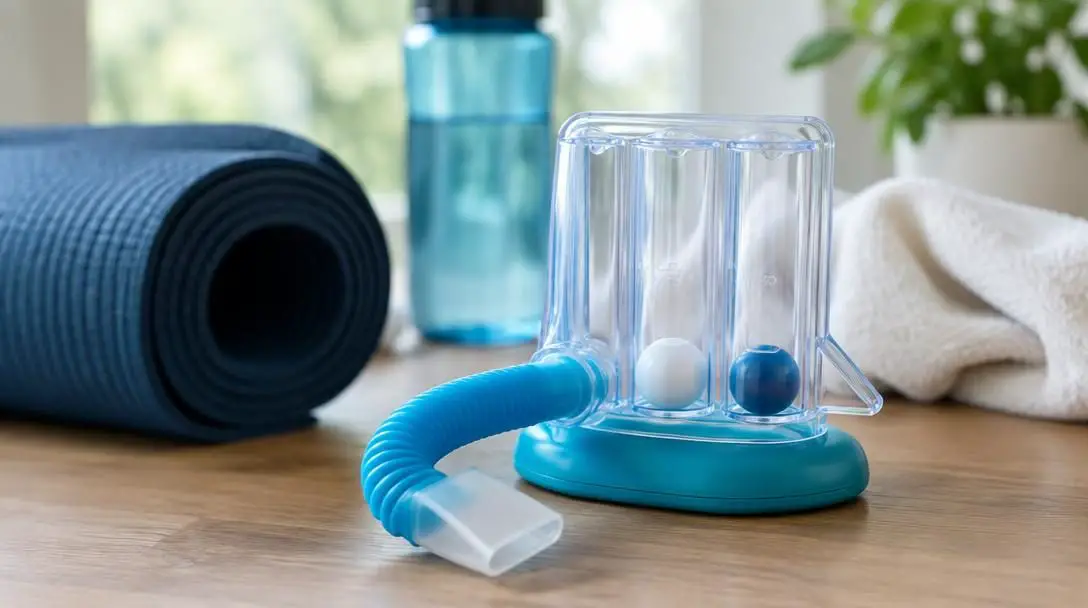
When you breathe out against gentle resistance, such as lightly pursed lips, you maintain positive backpressure throughout the bronchial passages. This mechanical pressure prevents fragile smaller airways from collapsing prematurely during exhalation, allowing trapped, carbon-dioxide-rich air to escape completely. At the neurological level, slow, metered breathing downregulates sympathetic fight-or-flight signaling, reducing arterial pressure and alleviating anxiety.
At a glance: five simple breathing exercises
| Exercise | Primary Focus | Recommended Duration | Key Benefit |
|---|---|---|---|
| Diaphragmatic Breathing | Diaphragm muscle re-education | 5 to 10 minutes | Maximizes basal lung expansion and reduces neck tension |
| Pursed-Lip Breathing | Airway pressure regulation | 5 to 10 minutes | Prevents bronchial collapse and eases shortness of breath |
| 4-7-8 Breathing Technique | Alveolar gas exchange and pacing | 4 breath cycles | Calms the nervous system and promotes restorative sleep |
| Alternate Nostril Breathing | Bilateral airflow balance | 5 to 10 minutes | Clears mental focus and equalizes nasal airway resistance |
| Rib Stretch | Thoracic and intercostal mobility | 5 to 10 minutes | Expands chest wall capacity and eases mid-back tightness |
Detailed walkthrough of the five simple exercises
These five exercises target distinct physiological components of the respiratory cycle, ranging from primary diaphragm recruitment and lateral ribcage mobility to positive pressure stabilization and parasympathetic activation. They require no specialized gear and can be performed in any quiet setting.
Diaphragmatic breathing
Often referred to as belly breathing, diaphragmatic breathing re-establishes the diaphragm as the primary engine of ventilation. Rather than letting the upper chest do the work, this exercise channels airflow deep into the lungs, improving oxygen intake while reducing physical and emotional tension.
- Lie flat on your back on a comfortable surface with your knees slightly bent, or sit upright in a sturdy chair with your spine aligned.
- Place one hand flat over your upper chest and place your other hand lightly on your abdomen, right over your navel.
- Inhale slowly and deeply through your nose, drawing the air deep enough that your lower hand rises outward while the hand on your chest remains still.
- Exhale slowly through pursed lips, observing your abdominal wall retract inward toward your spine as air empties out completely.
- Continue this rhythmic cycle for 5 to 10 minutes, focusing your attention on the smooth rise and fall of your abdomen.
Pursed-lip breathing
Pursed-lip breathing is a functional technique designed to pace your respiratory cycle and maintain open airways. It is particularly effective during physical exertion, stair climbing, sports, or sudden episodes of acute breathlessness.
- Sit upright in a supportive chair, keeping your neck relaxed and your shoulders resting downward away from your ears.
- Inhale steadily through your nose for an unhurried count of 2 to 3 seconds, filling your lungs without straining.
- Purse your lips together tightly, forming the same mouth shape you would use to whistle or blow out a candle flame.
- Exhale gently and smoothly through your pursed lips for a count of 4 to 6 seconds, making the exhalation roughly twice as long as the inhalation.
- Maintain this steady rhythm for 5 to 10 minutes, ensuring your breath feels controlled, peaceful, and fluid.
The 4-7-8 breathing technique
Developed around a strict counting cadence, the 4-7-8 breathing technique incorporates a brief period of breath retention. Pausing between inhalation and exhalation gives the tiny air sacs within the lungs, known as alveoli, more time to complete gaseous exchange, while the prolonged exhalation acts as a natural tranquilizer for the nervous system.
- Assume an upright, seated posture with your spine lengthened, shoulders soft, and both feet planted flat on the floor.
- Close your lips and inhale quietly and deeply through your nose for an uninterrupted count of 4 seconds.
- Hold your breath completely for a count of 7 seconds, keeping your throat relaxed and avoiding tension in your face or chest.
- Part your lips and exhale fully through your mouth for an unbroken count of 8 seconds, creating an audible whooshing sound as the air leaves your body.
- Repeat this sequential sequence for a total of four full breath cycles.
Alternate nostril breathing
Known in classical yoga as Nadi Shodhana, alternate nostril breathing utilizes deliberate hand positioning to channel airflow through one nasal passage at a time. This practice balances air distribution across both sides of the respiratory tract, calms the mind, and lowers systemic stress.
- Sit in a relaxed, upright position with your back straight, resting your left hand comfortably on your left knee with the palm turned upward.
- Raise your right hand to your face, positioning your right thumb gently against your right nostril and your right ring finger beside your left nostril.
- Use your thumb to gently occlude your right nostril, then inhale slowly and silently through your left nostril.
- Close the left nostril with your ring finger, release your thumb from the right nostril, and exhale smoothly through the right side.
- Inhale deeply through the open right nostril, then close it with your thumb, lift your ring finger, and exhale fully out through the left nostril.
- Continue alternating back and forth in this deliberate rhythm for 5 to 10 minutes.
Rib stretch
The rib stretch is an active mechanical exercise that mobilizes the intercostal muscles situated between each rib, along with the mid-back and chest wall. By expanding the ribcage laterally, this drill expands the physical space available for lung expansion and counteracts thoracic stiffness.

- Stand upright or sit tall with an elongated spine, placing both hands firmly on your lower ribs or hips with your fingers spread.
- Inhale deeply through your nose, actively directing the breath into your side and back ribs so you feel your hands push outward.
- Hold the air gently at the very top of your inhalation for 2 to 3 seconds while maintaining an open, relaxed neck.
- Exhale slowly through your mouth, feeling your ribcage contract inward as your hands return to their starting position.
- Repeat this dynamic stretch for 5 to 10 minutes, consciously letting your shoulder blades drop with each cycle.
Building an effective daily respiratory routine
Reconditioning the pulmonary network requires regular, consistent practice rather than occasional, strenuous effort. Practicing deliberate breathwork for just five to ten minutes each day yields far greater physiological adaptation than sporadic, marathon sessions. Establishing a sustainable habit involves several practical approaches:
- Select a dedicated time: Carving out a specific window each day ensures adherence. Morning practice cultivates mental focus and expands lung volume for the day ahead, while evening breathwork helps release residual muscle tension and fosters restful sleep.
- Choose a clean environment: Practice your exercises in a well-ventilated, clean room that is free from drafts, heavy chemical fragrances, dust, and airborne smoke to protect sensitive bronchial membranes.
- Start progressively: If you are new to breath training, begin with a single method like diaphragmatic breathing for five minutes. As your respiratory control and stamina improve, increase your practice time to ten minutes or incorporate additional techniques.
- Anchor to daily routines: Combine breathwork with existing habits to make practice automatic. For instance, perform the rib stretch immediately after returning from a walk, or use the 4-7-8 technique as a pre-sleep wind-down ritual.
- Maintain internal awareness: Breath training should always feel grounding and restorative. Never push yourself to the point of gasping, dizziness, or chest discomfort.
Common breathing mistakes and how to correct them
Because breathing is primarily an instinctual function, bringing conscious control to the breath can sometimes introduce counterproductive habits. Being mindful of these common missteps will help you maximize the benefits of your practice:
- Straining the breath: Drawing in air with aggressive force creates friction and tightness throughout the vocal cords and throat. Airflow should remain deep, steady, and unforced.
- Elevating the shoulders: Lifting your shoulders toward your ears on an inhale indicates that you are relying on secondary neck muscles rather than your diaphragm. Keep your shoulder girdle relaxed and neutral.
- Rushing the tempo: In paced drills such as the 4-7-8 method, speeding through the numerical counts undermines alveolar gas exchange and reduces parasympathetic stimulation. Keep your counts slow and measured.
- Clenching the abdominal wall: Gripping your core muscles tightly prevents the diaphragm from descending downward into the abdominal space. Allow your stomach to remain soft and receptive during inhalation.
- Slumping the upper spine: Collapsing your chest compresses the ribcage and restricts the physical movement of the lungs. Maintain a tall, open posture throughout every exercise.
Lifestyle adjustments to protect pulmonary health
While targeted breathing drills significantly strengthen respiratory function, pairing these routines with broader lifestyle choices creates an optimal environment for pulmonary health. Minimizing exposure to airborne toxins is paramount. Avoid indoor tobacco smoke, make use of high-efficiency particulate air filters during periods of high outdoor smog, and open windows to promote air circulation when ambient conditions are clear.
Integrating light cardiovascular activity, such as daily brisk walking, works synergistically with breath training. Walking stimulates natural ribcage movement, promotes gentle tidal volume expansion, and strengthens cardiac endurance. Together, physical movement and deliberate respiration build substantial physiological stamina.
It is important to remember that while breath exercises are effective tools for self-care, they are meant to complement, not replace, medical treatment. If you experience persistent shortness of breath, chronic coughs, wheezing, or are managing diagnosed pulmonary disorders such as asthma, bronchitis, or COPD, always consult with a qualified healthcare professional before altering your respiratory routine.
Frequently asked questions
How often should I practice these breathing exercises?
Practicing once or twice daily for 5 to 10 minutes per session produces the best results. Consistency allows your diaphragm and intercostal muscles to recondition over time without causing undue fatigue.
Can breathing exercises cure respiratory conditions like asthma or COPD?
Breathing exercises cannot cure chronic pulmonary conditions like asthma or COPD. However, they serve as valuable supportive practices that help open airways, clear trapped air, strengthen breathing muscles, and ease shortness of breath.
Why do I feel lightheaded when doing deep breathing drills?
Lightheadedness usually occurs when breathing is forced too aggressively or paced too quickly, which temporarily alters carbon dioxide levels in the bloodstream. If you feel dizzy, pause the exercise and breathe naturally until your balance returns.
What is the main difference between chest breathing and diaphragmatic breathing?
Chest breathing relies on accessory muscles in the neck and upper ribs, drawing air only into the upper lungs. Diaphragmatic breathing engages the large muscle beneath the lungs, drawing air deep into the pulmonary base and expanding the abdomen.
When is the best time of day to perform the 4-7-8 technique?
The 4-7-8 technique is particularly effective in the evening or right before sleep because its extended exhalation stimulates the parasympathetic nervous system, easing anxiety and encouraging restorative physical rest.
The bottom line
Healthy respiration is the cornerstone of vitality, mental focus, and sustained physical energy. Modern sedentary habits, desk posture, and airborne pollutants often lock the body into restrictive, shallow breathing patterns that leave the lower lungs underutilized and overwork secondary neck muscles. By dedicating just a few minutes each day to targeted techniques like diaphragmatic breathing, pursed-lip exhalations, and rib stretches, you can actively strengthen your diaphragm, optimize alveolar ventilation, and calm your nervous system. Combined with clean air habits and medical guidance when needed, deliberate breathwork offers a reliable, empowering path toward revitalized respiratory well-being.