The 5 Best AS Roma Managers of All Time
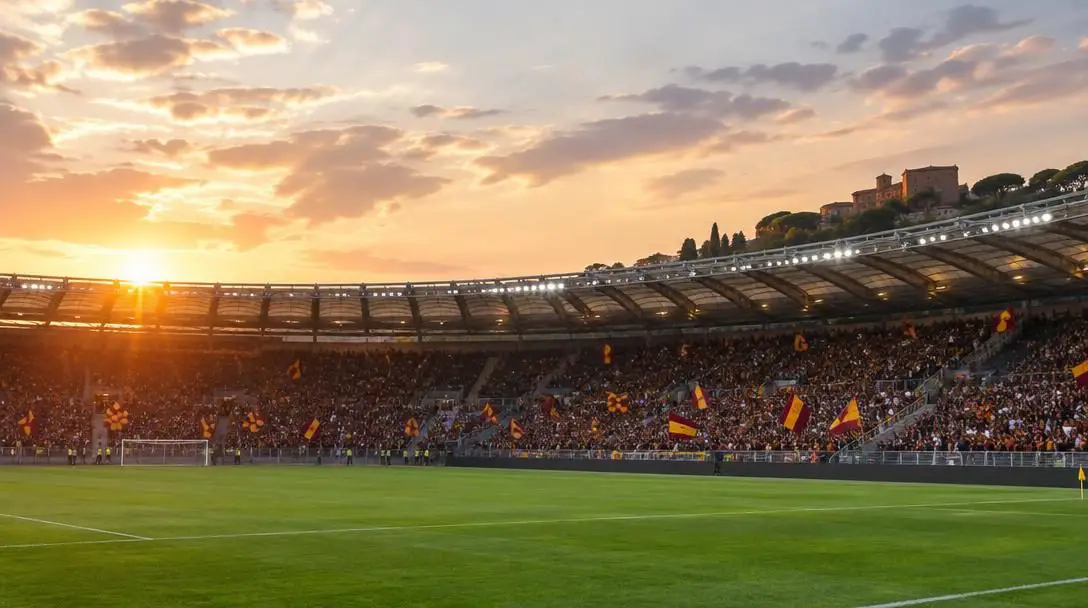
Associazione Sportiva Roma has stood as an iconic pillar of Italian football since its founding in 1927. Operating out of the nation's capital, the club carries a distinct identity woven from fierce civic pride, an intensely passionate fanbase, and relentless local media attention. Because the expectations at the Stadio Olimpico are perpetually sky-high, surviving—let alone thriving—on the Giallorossi touchline demands tactical brilliance, dressing-room authority, and supreme mental resilience.
Given the sheer volatility of Serie A and the demanding nature of the Roman sporting environment, managerial tenures are frequently brief. High coaching turnover is a defining feature of the club's history, which makes the accomplishments of its most successful leaders even more impressive. While many prominent names have guided the squad over the decades, a select group of master tacticians managed to cut through the chaos, deliver major silverware, and permanently reshape the club's heritage.
Key takeaways
- Nils Liedholm stands as Roma's greatest manager, securing the 1982–83 league championship, three Coppa Italia crowns, and a European Cup final appearance.
- Alfred Schaffer delivered the club's historic first-ever Serie A title during the 1941–42 campaign under wartime conditions.
- Fabio Capello brought championship swagger to the capital at the turn of the century, securing the 2000–01 Scudetto and the 2001 Supercoppa Italiana.
- Luciano Spalletti produced modern attacking masterclasses across two separate stints, setting the highest win percentage among the club's legendary coaches.
The Pressure Cooker of Rome and Honorable Mentions
Managing AS Roma is fundamentally different from managing almost any other club in European football. In Rome, football is not merely a weekend diversion; it is an all-consuming daily civic discussion powered by dedicated radio stations, daily sports newspapers, and an emotionally invested public. Tacticians must navigate this perpetual spotlight while competing against historically dominant northern powerhouses like Juventus, Inter Milan, and A.C. Milan.
Because the margin for error is razor-thin, several widely respected tacticians fell just short of reaching the club's all-time managerial summit. Figures like Luigi Barbesino, who laid early tactical foundations, and Alfredo Foni brought organization and prestige to the bench. In more modern times, Carlo Mazzone served as an emotional touchstone for local supporters, while Angelo Sormani provided steady guidance during transitional periods. High-profile modern serial winners like Jose Mourinho brought major continental glory and charisma to the Stadio Olimpico. Yet, when assessing enduring tactical influence, domestic dominance, and silverware, five distinct individuals elevated themselves above all others.
At a Glance: Roma's Elite Tacticians Compared
Evaluating managerial tenures across nearly a century requires balancing raw trophy hauls with tactical longevity, win rates, and points efficiency against rigorous Serie A defenses.
| Manager | Tenure(s) | Matches Managed | Points Per Game / Win Rate | Major Honors |
|---|---|---|---|---|
| Alfred Schaffer | 1940–1942 | 60+ | Runner-up (1941), 42 pts (1942) | Serie A (1941–42) |
| Sven-Goran Eriksson | 3-year stint (1980s) | 125 | 46.4% win rate | Coppa Italia (1985–86) |
| Fabio Capello | 1999–2004 | 241 | 1.78 PPG | Serie A (2000–01), Supercoppa (2001) |
| Luciano Spalletti | 2005–2009, 2016–2017 | 224 | 54.46% win rate | Coppa Italia (x2), Supercoppa (2007) |
| Nils Liedholm | 1973–77, 1979–84, 1987–89 | 212 | 1.85 PPG | Serie A (1982–83), Coppa Italia (x3) |
The 5 Best AS Roma Managers of All Time
From the breakthrough triumph of the early 1940s to the fluid, possession-based systems of the modern era, these five managers authored the most glorious chapters in Giallorossi history.
Alfred Schaffer
- Tenure: 1940–1942
- Key Milestone: First Serie A title in AS Roma history (1941–42)
- Previous Playing Milestone: MTK Budapest, New York Giants
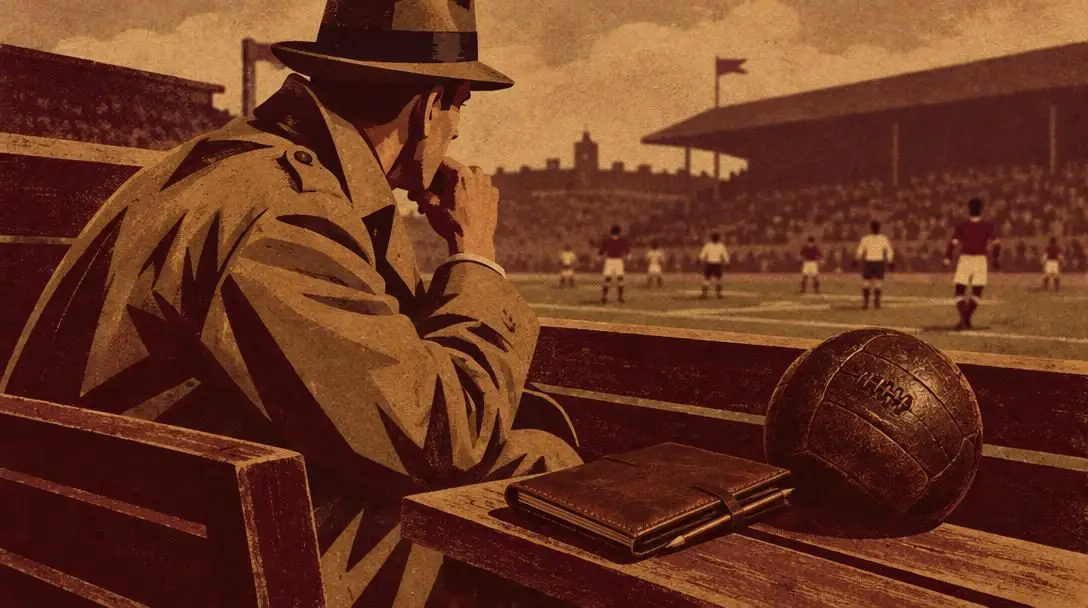
The story of Alfred Schaffer (often recorded as Schaffler) belongs to an era that established modern European football. Born in the former Austria-Hungary, Schaffer was an exceptionally gifted player who suited up for numerous professional sides during the 1910s, highlighted by an iconic spell with MTK before crossing the ocean to conclude his playing career with the New York Giants. Once he moved into the technical area, Schaffer applied his extensive international knowledge across various European top flights before being hired by Roma in 1940.
Taking over during an extraordinarily turbulent geopolitical period, Schaffer made an immediate impact. In his initial 1940–41 campaign, he organized a resilient team that finished as league runners-up. He elevated the group even further the following season, steering Roma to their first-ever Serie A championship in 1941–42. Finishing the season with 42 points, Schaffer's squad held off relentless challenges from Torino and Venezia to bring the Scudetto to the Italian capital for the very first time. Schaffer departed shortly thereafter for Ferencvaros, where he coached until his passing in 1945, leaving behind an eternal legacy as the man who proved Roma could conquer the nation.
Sven-Goran Eriksson
- Tenure: Three-year tenure (mid-1980s)
- Match Record: 125 matches, 58 wins, 31 defeats
- Win Rate: 46.4%
- Key Silverware: 1985–86 Coppa Italia
Swedish tactician Sven-Goran Eriksson brought an innovative, continental approach to the capital during the 1980s. Following a modest playing career that concluded in 1973, Eriksson quickly transitioned to coaching, earning his debut managerial post at Degerfors IF in 1977. Subsequent high-profile triumphs with IFK Goteborg and Portuguese side Benfica established him as one of the brightest young minds on the continent, leading directly to his appointment by Roma.
Across his three years in charge, Eriksson navigated 125 competitive matches, recording 58 wins against only 31 losses—a formidable 46.4% winning record during an era widely recognized for having the most impenetrable defensive schemes in world football. While league silverware narrowly eluded him, Eriksson secured major silverware by capturing the 1985–86 Coppa Italia. Later in his storied career, he would oversee several national teams alongside English clubs Manchester City and Leicester City, but his fondest memories remained tied to the Stadio Olimpico. Eriksson himself later observed that his time with the Giallorossi stood out as the absolute peak of his professional journey.
"It was the best period of my career."
Fabio Capello
- Tenure: 1999–2004
- Matches Managed: 241
- Points Efficiency: 1.78 points per game
- Major Silverware: 2000–01 Serie A, 2001 Supercoppa Italiana
Fabio Capello holds a unique place among Roma's elite tacticians, having also represented the club on the pitch. Between 1967 and 1970, Capello made 62 appearances in Roma's midfield before continuing his playing career with Italian heavyweights Juventus and A.C. Milan. After hanging up his boots, he honed his managerial craft at Milan, where he cemented his world-class credentials by securing four Serie A titles throughout an astonishing run in the 1990s.
When Capello arrived in Rome in 1999, he brought an iron will and championship expectations to a club eager to break a lengthy title drought. In the 2000–01 season, his disciplined, star-studded squad fulfilled that promise by winning Roma's third Serie A title, backing it up shortly after by claiming the 2001 Supercoppa Italiana. Over 241 fixtures, Capello sustained an exceptional average of 1.78 points per game. His five-year spell transformed Roma into an unrelenting domestic powerhouse and proved that his trophy-laden success in northern Italy could be replicated in the demanding southern capital.
Luciano Spalletti

- Tenures: 2005–2009, 2016–2017
- Total Matches: 224 fixtures (122 wins)
- Win Percentage: 54.46%
- Key Silverware: 2 Coppa Italia titles, 2007 Supercoppa Italiana
After a playing career spent in the lower divisions of Italian football during the 1980s and 1990s, Luciano Spalletti found his genuine calling on the touchline. He cut his managerial teeth with clubs like Empoli and Venezia before authoring an eye-catching chapter at Udinese between 2002 and 2005. That remarkable spell persuaded Roma's leadership to hand him the reins, initiating a relationship that would define the club's modern tactical identity.
Spalletti served two memorable stints at Roma: first from 2005 to 2009, and later returning for the 2016–2017 campaign. In total, he oversaw 224 matches—the highest tally he ever recorded at any club throughout his managerial career—amassing 122 victories for a remarkable 54.46% winning percentage. Although an elusive Serie A title remained just out of reach, Spalletti revolutionized the club's offensive structures with high-octane, possession-heavy tactical setups. Under his watch, Roma captured two Coppa Italia trophies and lifted the 2007 Supercoppa Italiana, playing a thrilling brand of football that consistently pushed Italy's traditional giants to their limits.
Nils Liedholm
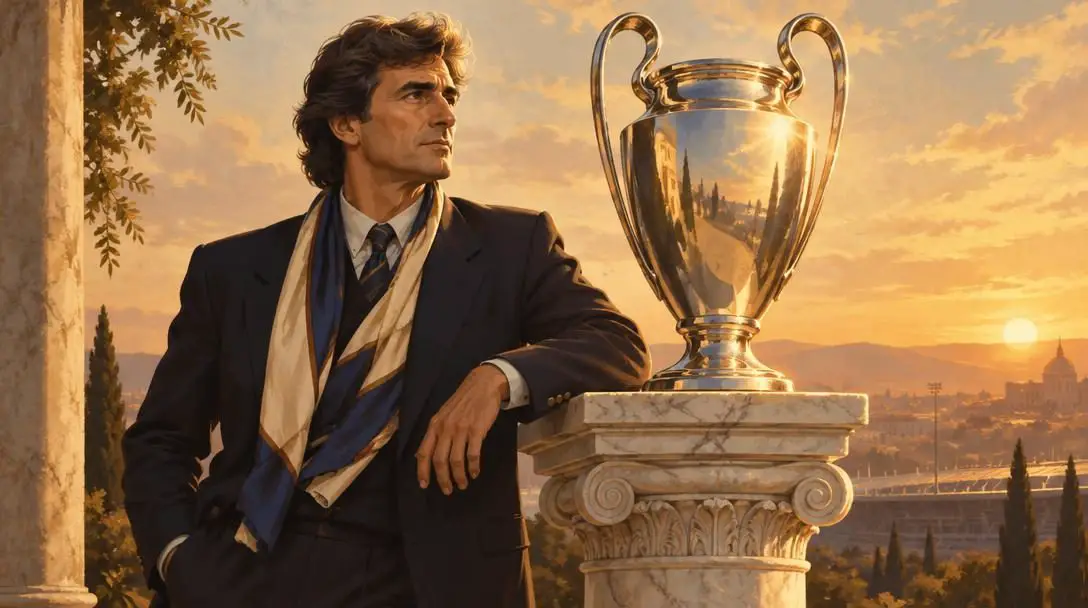
- Tenures: 1973–77, 1979–84, 1987–89
- Total Matches: 212 fixtures
- Points Efficiency: 1.85 points per game
- Major Silverware: 1982–83 Serie A, 3 Coppa Italia titles
Standing head and shoulders above all others in the club's storied history is Swedish visionary Nils Liedholm. Following an extraordinary playing career with A.C. Milan, Liedholm transitioned to management in 1963, eventually directing Milan across three separate stints and managing Verona twice. Yet, it was his enduring bond with Roma—spread over three distinct eras spanning the 1970s and 1980s—that forever redefined Italian tactical dogma.
Renowned for his serene touchline demeanor, elegant player management, and pioneer embrace of zonal marking and patient ball possession, Liedholm inaugurated Roma's true golden age. He delivered the 1982–83 Serie A championship, brought three separate Coppa Italia trophies back to the capital, and guided the Giallorossi to the 1984 European Cup final, falling just short of continental supremacy in a heartbreaking penalty shootout. Over 212 matches, Liedholm recorded an astonishing 1.85 points per game. His longevity, graceful authority, and historic trophy collection remain the undisputed benchmark for any coach who steps into the Stadio Olimpico dugout.
The Operational Realities of Managing in Rome
Achieving sustained managerial success in the Italian capital requires far more than designing clever tactical systems on a whiteboard. A Roma coach must act as a psychological anchor, a media diplomat, and an astute squad builder. The cultural ecosystem surrounding the club presents distinct operational challenges that frequently overwhelm even seasoned coaches:
- Handling the Media Frenzy: Tacticians must endure round-the-clock examination from dedicated Rome-based radio programs, daily newspapers, and digital forums that dissect every squad decision.
- Managing Dressing-Room Stature: Roma squads historically center around iconic, charismatic leaders and global superstars; maintaining absolute dressing-room cohesion requires immense emotional intelligence.
- Dismantling Serie A Defenses: Italian top-flight football is globally famous for tactical rigor, requiring managers to constantly alter attacking dynamics to break down stubborn low blocks.
- Balancing Multi-Front Campaigns: Successfully managing squad rotation across Serie A, the Coppa Italia, and European competitions without suffering domestic setbacks is a constant tightrope walk.
How to Evaluate a Football Manager's Legacy
When assessing where an elite coach ranks within a club's historical hierarchy, supporters and tactical analysts should rely on measurable sporting criteria rather than nostalgia or personal popularity.
- Categorize Major Silverware: Separate domestic league titles from cup triumphs and continental tournaments to measure peak achievement against the most demanding criteria.
- Analyze Efficiency Metrics: Calculate points per game (PPG) and total win percentages across all competitions to determine match-to-match consistency.
- Examine Longevity and Game Volume: Review total fixtures overseen to distinguish between brief, lightning-in-a-bottle campaigns and sustained, institutional success.
- Assess the Quality of Competition: Contextualize results by examining the strength of domestic rivals, such as navigating peak Serie A eras dominated by Juventus, Milan, and Inter.
- Evaluate Tactical Innovation and Cultural Impact: Determine whether the manager developed enduring structural philosophies that modernized the club's sporting identity long after their departure.
Common Analytical Traps When Comparing Eras
Comparing tactical masterminds across nearly a century of football presents significant analytical hurdles. Observers frequently stumble into common pitfalls when evaluating past and present coaches:
- Overlooking Structural Rule Changes: Comparing point totals directly without accounting for historical shifts—such as the transition from two points per win to three—leads to flawed conclusions.
- Ignoring League-Wide Defensive Eras: Scoring goals and accumulating wins was significantly more difficult during the defensively draconian Italian eras of the 1980s and 1990s than in open, high-scoring modern decades.
- Equating High Win Percentages with Superiority: A coach who managed 40 matches against mid-table opponents might hold a higher win percentage than a tactician who navigated 200 matches against Europe's elite.
- Dismissing Black-and-White History: Overlooking pre-television accomplishments—such as Alfred Schaffer's wartime triumph in 1942—simply because modern video archives are scarce erases foundational milestones.
Frequently asked questions
Who is the most successful AS Roma manager in history?
Nils Liedholm is widely considered Roma's greatest manager. Across three separate spells, he guided the squad to the 1982–83 Serie A title, three Coppa Italia trophies, and the 1984 European Cup final, earning 1.85 points per game over 212 fixtures.
Which manager delivered AS Roma's first-ever Serie A championship?
Alfred Schaffer guided Roma to their first-ever league championship in the 1941–42 season, finishing with 42 points to edge past strong challengers Torino and Venezia during a challenging era in world history.
How many Serie A titles did Fabio Capello win with Roma?
Fabio Capello captured one Serie A championship with Roma, securing the 2000–01 league title. He followed that achievement by winning the 2001 Supercoppa Italiana during his five-year spell on the bench.
What was Luciano Spalletti's winning record with AS Roma?
Across his two tenures (2005–2009 and 2016–2017), Luciano Spalletti achieved a 54.46% win percentage over 224 matches, claiming 122 victories, two Coppa Italia trophies, and the 2007 Supercoppa Italiana.
Did Sven-Goran Eriksson win any trophies while managing Roma?
Yes. Sven-Goran Eriksson led Roma to silverware by winning the 1985–86 Coppa Italia during his three-year tenure, which he later highlighted as the best period of his managerial career.
The Bottom Line
Leading AS Roma remains one of the most demanding yet prestigious challenges in world football. The passionate roar of the Curva Sud, combined with the civic weight of the capital city, creates an atmosphere where only tacticians of genuine vision and psychological resolve can prosper. While hundreds of managers have stepped into the technical area since the club's 1927 inception, Alfred Schaffer, Sven-Goran Eriksson, Fabio Capello, Luciano Spalletti, and Nils Liedholm set the standard for tactical mastery. Their silverware, points records, and indelible contributions ensure that their names remain permanently woven into the golden fabric of Giallorossi history.