The 5 Players To Achieve A Singles Calendar Grand Slam
In professional tennis, winning a single grand slam tournament is widely considered the supreme benchmark of athletic mastery. Every competitor brings peak conditioning, tactical discipline, and unrelenting focus to these four marquee events, which award the highest prize pools and the most rankings points on the global circuit. While a single major title can define an entire career, claiming all four in a single season represents an almost unimaginable level of perfection.
The calendar grand slam leaves no room for off days, nagging injuries, or tactical missteps over nine to ten months of elite competition. Because a single elimination match terminates the quest, only five singles competitors in the history of tennis have managed to sweep the Australian Open, the French Open, Wimbledon, and the US Open in the same calendar year. Here is how those five legends etched their names into sports history.
Key takeaways
- Only five singles players in tennis history—two men and three women—have accomplished a calendar grand slam.
- Don Budge was the pioneer of the feat in 1938, initiating an eight-tournament major winning streak.
- Rod Laver stands alone as the only competitor to win a singles calendar grand slam twice, first in 1962 and again in 1969.
- Steffi Graf is the only player to sweep all four majors in a calendar year since 1970, capturing her sweep in 1988.
The five calendar grand slam champions at a glance
| Player | Year(s) achieved | Tour | Final US Open opponent | Career grand slam titles |
|---|---|---|---|---|
| Don Budge | 1938 | Men's singles | Gene Mako | 8 consecutive majors won |
| Maureen Connolly | 1953 | Women's singles | Doris Hart | 6 consecutive majors won |
| Rod Laver | 1962, 1969 | Men's singles | Roy Emerson (1962), Tony Roche (1969) | 11 total titles |
| Margaret Court | 1970 | Women's singles | Rosie Casals | 1 singles calendar slam (2 in mixed) |
| Steffi Graf | 1988 | Women's singles | Gabriela Sabatini | 22 total titles |
The singles icons who swept the majors
To sweep the grand slam calendar, a player must survive twenty-eight consecutive main-draw matches across four continents and shifting court conditions. These five athletes conquered every obstacle to complete tennis's ultimate quest.
Don Budge
- Year achieved: 1938
- Major streak: 8 consecutive grand slam titles
- US Open final: Defeated Gene Mako in 4 sets
- Historic distinction: First player ever to win a calendar grand slam
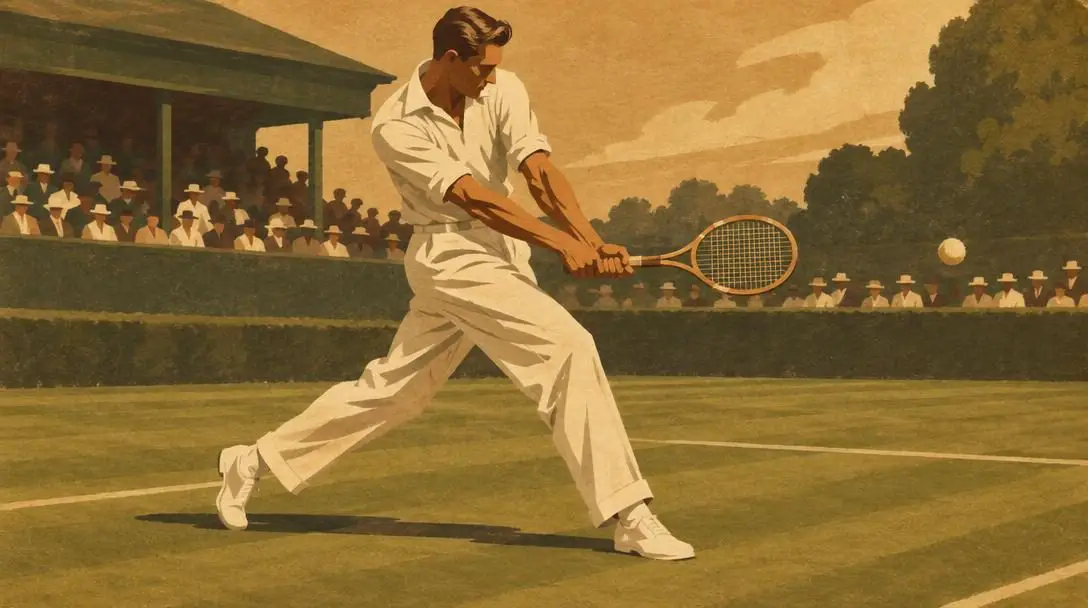
Before Don Budge dominated the circuit in 1938, the idea of sweeping all four major championships in one year was largely theoretical. Budge did not merely win all four tournaments; he established an era of total supremacy, with his four 1938 triumphs forming part of an extraordinary run of eight consecutive grand slam titles.
His historic campaign opened at the Australian Open, where he overcame John Bromwich in straight sets to establish early momentum. Moving to Europe, Budge adapted seamlessly to the red clay of Roland Garros, defeating Roderich Menzel to take the French Open. He then traveled to London and captured Wimbledon with a decisive victory over Bunny Austin. The crowning moment arrived at Forest Hills for the US Open, where Budge met Gene Mako. Facing his fourth different final opponent of the year, Budge was pushed hard before prevailing in four sets to become the world's first calendar grand slam champion.
Maureen Connolly

- Year achieved: 1953
- Major streak: 6 consecutive grand slam titles
- Finals opponents: Julia Sampson and Doris Hart
- Historic distinction: First woman to achieve the calendar grand slam
Fifteen years passed after Budge's milestone before another singles competitor matched his accomplishment. In 1953, Maureen Connolly broke barriers by becoming the first female player to capture the calendar grand slam. Connolly produced an era of remarkable authority, compiling a winning streak of six consecutive grand slam crowns that encompassed her historic 1953 season.
Unlike Budge, who had to outmaneuver four distinct opponents in his finals matches, Connolly needed to defeat only two rivals across her four championship showdowns. She opened the year at the Australian Open, subduing Julia Sampson in two sets. From there, her path ran directly through Doris Hart. Connolly met Hart in the finals of the French Open, Wimbledon, and the US Open, winning all three matches in straight sets. Her clinical precision under pressure kept her record immaculate and stood as an unmatched standard in women's tennis for nearly two decades.
Rod Laver

- Years achieved: 1962 and 1969
- Career titles: 200 professional tournament victories
- Hall of Fame induction: 1981
- Total grand slam titles: 11 major singles championships
Widely regarded as one of the most complete athletes in sports history, Rod Laver holds an achievement that has never been duplicated: winning the calendar grand slam twice in singles competition. Over a celebrated career that included 200 professional tournament titles and 11 grand slam singles crowns, Laver proved his game could withstand any playing surface and any challenger.
Laver earned his first sweep in 1962 as an amateur. During that dominant run, he defeated fellow Australian Roy Emerson in three separate major finals—the Australian Open, French Open, and US Open—while besting Martin Mulligan on the grass courts of Wimbledon. Seven years later, in 1969, Laver achieved the feat again during the Open Era against elite professional talent. Unlike his 1962 run, Laver's second calendar sweep required him to defeat four distinct opponents in the finals, culminating in a grueling US Open final victory over Tony Roche to seal his legendary status.
Winning four major tournaments in a single season requires an absolute absence of bad days across ten months of elite competition.
Margaret Court

- Year achieved: 1970
- Marathon Wimbledon final: 14-12, 11-9 against Billie Jean King
- US Open final: Defeated Rosie Casals in 3 sets
- Prior doubles sweeps: 2 calendar grand slams in mixed doubles
Entering the 1970 season, Margaret Court was already intimately familiar with sweeping the four majors. She had previously achieved the calendar grand slam twice in mixed doubles competition, once alongside Ken Fletcher and once with a rotation of three partners that included Fletcher. In 1970, however, Court turned her undivided focus to the singles draw to claim the achievement on her own.
Court started her sweep on home soil, cruising through the Australian Open final against Kerry Melville in straight sets. She carried her form to the clay courts of Paris, taking the French Open title against Helga Niessen. Her biggest challenge unfolded at Wimbledon, where she met Billie Jean King in an all-time classic final. Battling through extended deuce sets, Court emerged victorious by an astonishing score of 14-12, 11-9. She then withstood a fierce three-set battle against Rosie Casals in the US Open final to wrap up the fourth leg of her sweep.
Steffi Graf

- Year achieved: 1988
- Career grand slams: 22 major singles titles
- US Open final: Defeated Gabriela Sabatini in 3 sets
- Modern distinction: The only singles player to achieve the feat since 1970
The difficulty of the modern calendar slam is perfectly illustrated by the career of Steffi Graf. Although Graf collected 22 grand slam singles titles over her career, she managed to win all four in a single season only once. Her 1988 campaign remains the sole singles calendar grand slam achieved in the past half-century, standing out as a masterclass in athletic versatility.
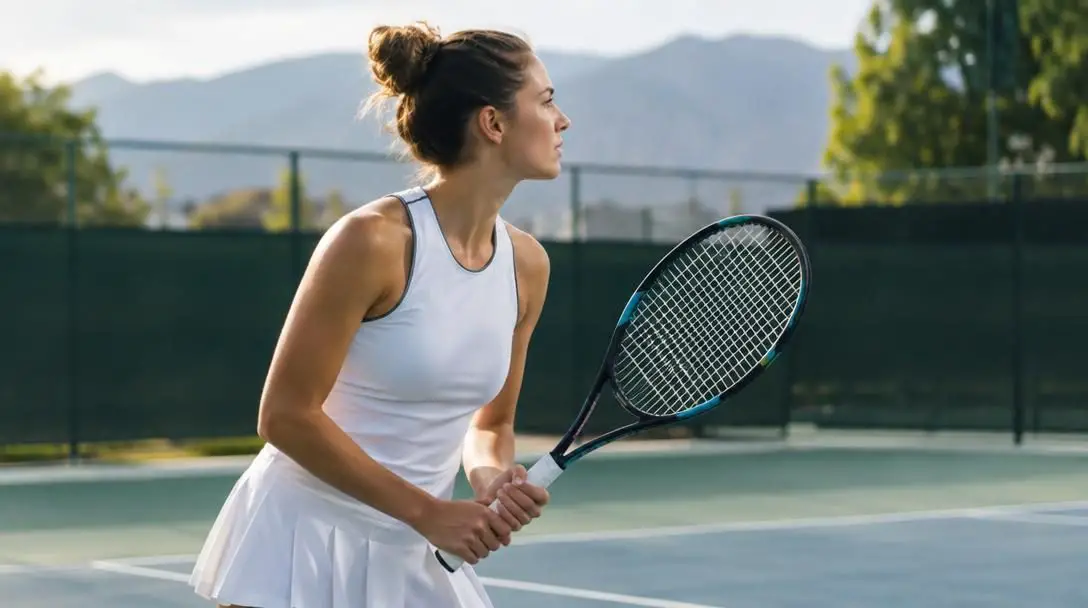
Graf began her historic 1988 run by defeating Chris Evert at the Australian Open. She then dismantled Natasha Zvereva at the French Open in one of the most lopsided finals in major history, before traveling to Wimbledon to unseat defending champion Martina Navratilova on grass. With the eyes of the sporting world watching Forest Hills, Graf faced Gabriela Sabatini in the US Open final. After three sets of intense baseline play, Graf closed out the match to secure her place as the modern era's only calendar grand slam champion.
How the calendar grand slam works
A calendar grand slam is simple in concept, but its execution is brutally unforgiving. A player must navigate four distinct geographic stops, multiple time zones, and different court textures over nine to ten months without suffering a single elimination loss.
- Australian Open: Staged in January, the tournament requires players to hit the ground running with elite conditioning right out of the off-season.
- French Open: Played on European red clay, this major demands unmatched physical endurance, sliding ability, and patience through long, exhausting baseline exchanges.
- Wimbledon: Contested on traditional grass courts in England, this tournament rewards explosive footwork, low-bouncing slice shots, and lightning-fast net reactions.
- US Open: Held in late summer, this final leg tests an athlete's physical durability and mental focus after a grueling international season.
The disciplined steps behind a grand slam sweep
While only five singles players have ever run the table, their preparation illustrates the rigorous athletic blueprint necessary to sustain peak performance across an entire year.
- Build a comprehensive fitness base: Long before traveling to Melbourne, players use the off-season to develop cardiovascular endurance, core stability, and injury-prevention protocols.
- Master surface-specific mechanics: Moving quickly from hard courts to slow clay, and then immediately onto fast grass, requires technical shifts in footwork, contact height, and swing paths.
- Manage seasonal energy expenditure: Competitors must protect their health by selectively entering warm-up events, prioritizing sleep, and maintaining nutritional standards to avoid mid-season burnout.
- Adapt in-match tactical plans: Facing diverse styles—from heavy baseline top-spinners to serve-and-volleyers—requires the ability to solve problems on court when an initial strategy falters.
- Compartmentalize high-stakes pressure: As the historical gravity builds during the US Open, an athlete must focus exclusively on point-by-point execution rather than the impending legacy.
Mistakes that derail grand slam bids
Dozens of all-time great players have won three majors in a single year, only to fall short of the complete calendar sweep. Looking at how these bids unravel highlights the delicate margins involved.
- Overcommitting to minor tournaments: Playing an overly crowded schedule between grand slams leads to soft-tissue strains, joint fatigue, and chronic overuse injuries.
- Inflexible tactical execution: Refusing to modify shot selection or positioning when moving across clay, grass, and hard courts leads to elevated unforced errors.
- Underestimating early-round opponents: Focusing too much on seeded rivals leaves players vulnerable to inspired performances by unseeded, free-swinging competitors in the opening rounds.
- Succumbing to media distraction: Letting press scrutiny and historical expectations penetrate player focus creates muscle tension and indecisive decision-making in late-round tiebreaks.
- Neglecting mental rejuvenation: Failing to reset emotionally after major victories at the French Open or Wimbledon drains the focus needed to survive seven rounds in New York.
Frequently asked questions
Has anyone ever won a calendar grand slam more than once?
Yes. Rod Laver is the only singles player in tennis history to achieve the calendar grand slam twice, sweeping all four major tournaments in 1962 and repeating the accomplishment in 1969.
Who was the first woman to win all four grand slams in one year?
Maureen Connolly became the first woman to achieve the calendar grand slam in 1953, dropping only two sets across the four finals and defeating Doris Hart in three of those championship matches.
How many consecutive matches must a player win for a calendar grand slam?
A player must win twenty-eight consecutive main-draw grand slam matches—seven rounds each at the Australian Open, French Open, Wimbledon, and US Open—without a single defeat.
Who is the most recent player to achieve a singles calendar grand slam?
Steffi Graf is the most recent singles competitor to accomplish the feat, completing her calendar grand slam in 1988 with a three-set victory over Gabriela Sabatini at the US Open.
Did Margaret Court win any other calendar grand slams besides singles?
Yes. Before winning her 1970 singles calendar grand slam, Margaret Court had already won two calendar grand slams in mixed doubles competition, one with Ken Fletcher and another with multiple partners.
The bottom line
The singles calendar grand slam stands as the pinnacle of professional tennis because it demands complete mastery over time, travel, surfaces, and opponents. With twenty-eight consecutive victories required across four unique environments, there is zero allowance for injury, fatigue, or lapse in concentration. Don Budge, Maureen Connolly, Rod Laver, Margaret Court, and Steffi Graf remain the only five competitors to scale this mountain, cementing their places as the most resilient champions the sport has ever produced.