The Details of the Chicago Bears Uniforms
Across professional sports, visual identities frequently fluctuate to match prevailing design fads, marketing rebrands, and retail apparel trends. Within the National Football League, clubs like the Atlanta Falcons and Jacksonville Jaguars regularly revamp their aesthetics, introducing updated typefaces, gradient patterns, and modern striping schemes. Conversely, legacy franchises like the Pittsburgh Steelers, New York Giants, and Chicago Bears anchor themselves in visual traditions that have persisted across generations of competition.
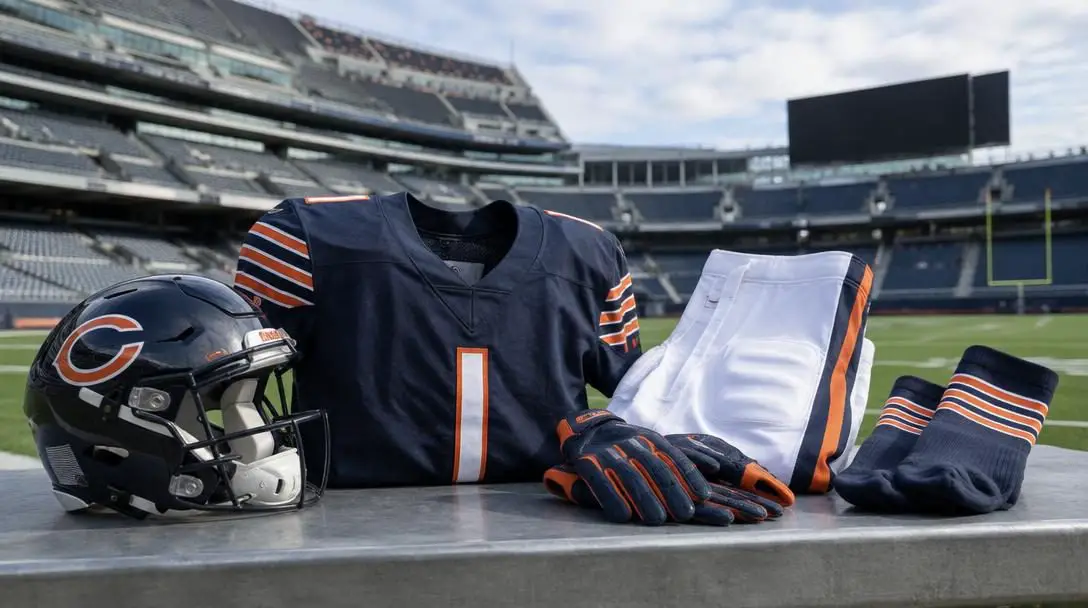
Among the traditional franchises of professional football, the Chicago Bears showcase what many consider to be the premier aesthetic on the gridiron. While subtle uniform details and textile cuts undergo minor adjustments every few seasons, the overarching identity remains rooted in the club's earliest years. A deep, grounded presentation dominated by midnight navy and burnt orange continues to define the organization, preserving an aesthetic heritage that bridges the birth of the league with modern athletic design.
Key takeaways
- The franchise began in Decatur, Illinois, wearing red and gold before transitioning to Chicago and cementing its signature navy blue and burnt orange palette.
- The Bears revolutionized on-field player tracking by becoming the very first football franchise to place numbers on player jerseys.
- The left sleeve features the permanent initials "GSH" to commemorate team founder, owner, and eight-time NFL champion George Halas.
- Chicago pioneered the winged football helmet on leather headgear during the 1930s, decades before adopting the wishbone "C" logo in the 1960s.
- While traditional dark navy helmets dominate team history, the organization expanded its alternate rotation in 2022 by introducing a vibrant orange helmet.
The Evolution from Decatur Staleys to Modern Classics
The early decades of organized professional football offered little visual variety from one sideline to the next. Heavy wool sweaters, basic leather padding, and muted colors ruled the gridiron. When the Chicago Bears took the field at their inception, they competed as the Decatur Staleys, operating as a company-sponsored team representing the A.E. Staley Manufacturing Company, a corn processing enterprise based in Decatur, Illinois. During this formative era, the players did not wear the recognizable blue and orange of modern Chicago football; instead, the team took the field in red jerseys highlighted by gold accents.
The Staleys' original wool tops featured three vertical stripes running down the front torso. While visually distinctive, these panels served an essential athletic function during the early twentieth century by providing friction to help running backs secure the smooth, bulky leather football. Soon after, the franchise ushered in one of the most transformative graphic developments in sports history: the club became the first football franchise to feature jersey numbers, forever changing how officials, sportswriters, and spectators identified individual athletes during play.
Following the move to Chicago and the official adoption of the Bears moniker, the organization abandoned its original red and gold scheme to establish its timeless midnight navy and burnt orange colorway. Over the ensuing century, uniform construction shifted from cumbersome, moisture-trapping wool to lightweight synthetic polyesters, durable nylon blends, and modern elastane performance fabrics. Yet through every structural transformation, the foundational visual identity established in the franchise's opening decades remained the guiding compass of Chicago's aesthetic presentation.
The Bears established an immortal visual identity by pairing early functional innovations like jersey numbers with a timeless palette of midnight navy and burnt orange.
Key Components of the Bears Visual Identity
Evaluating the Chicago Bears uniform requires an appreciation of the distinct parts that assemble the complete gameday kit. Rather than relying on generic template designs, each specific feature across the helmet, sleeves, and chest carries deep historical meaning tied to pivotal figures and eras in professional football history.
The GSH Sleeve Tribute
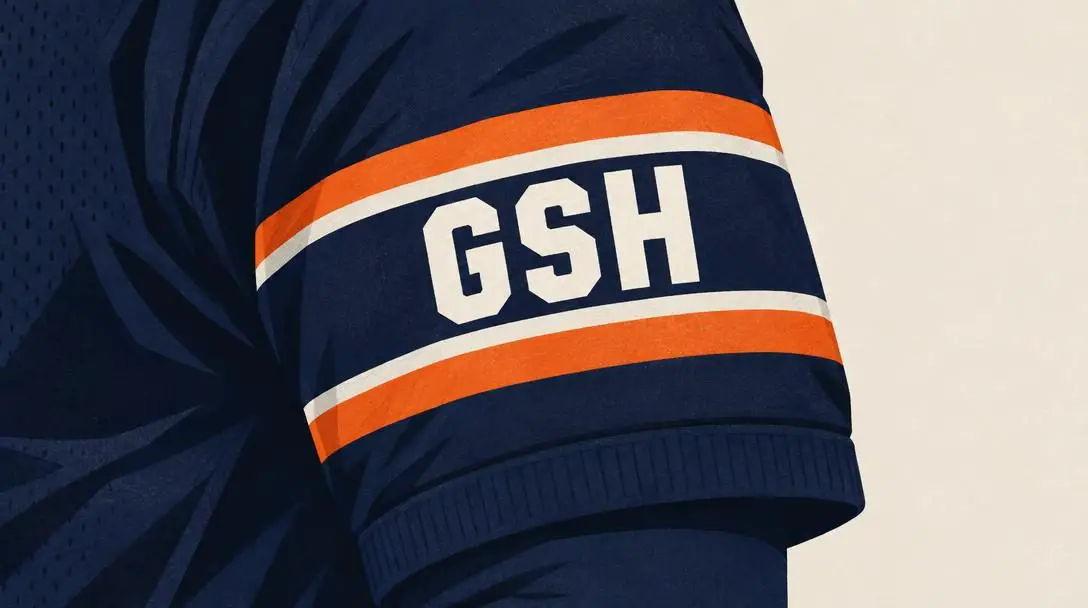
- Inception year: 1984
- Placement: Left jersey sleeve
- Honoree: George Stanley Halas
- Significance: Permanent franchise memorial
First-time viewers watching a Bears broadcast often wonder why the players display three bold block letters across their jersey sleeves. While many NFL franchises incorporate temporary memorial patches to honor deceased players, coaches, or executives for a single competitive season, the letters GSH are a permanent structural fixture of the Bears uniform. The tribute was introduced for the 1984 NFL campaign, following the passing of team patriarch George Stanley "Papa Bear" Halas in late 1983.
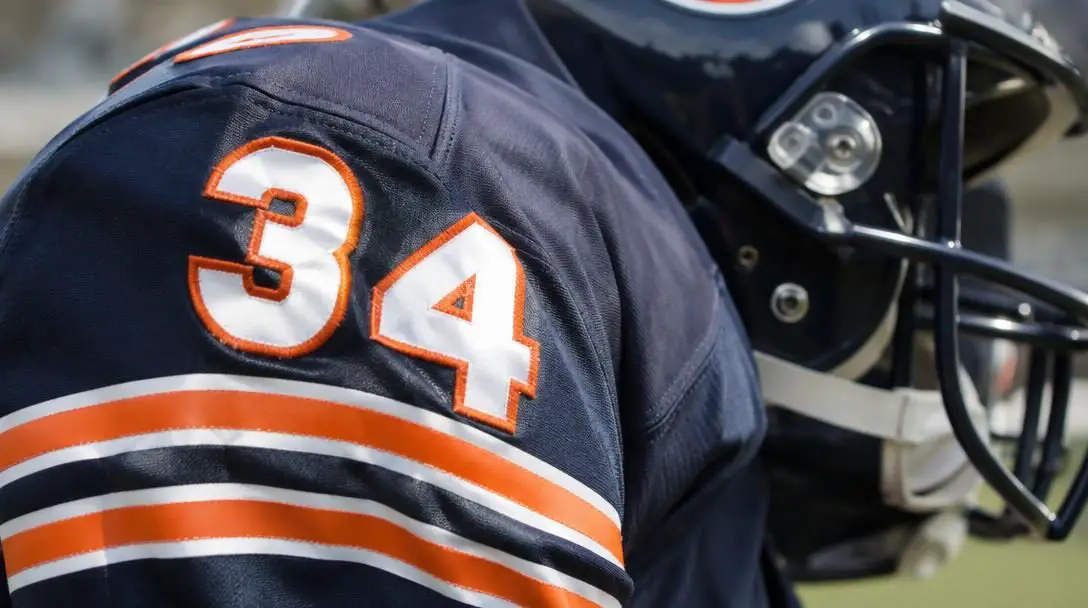
Halas served as the franchise's founder, long-term owner, and head coach, guiding the team from its origins in Decatur starting in 1920 through 1967, interrupted only by brief hiatuses including his military service during World War II. An eight-time NFL champion who was instrumental in organizing the league itself, Halas remains permanently commemorated on the left sleeve stripes, ensuring his foundational role in professional football is reflected on the field every Sunday.
The 1930s Winged Leather Helmet
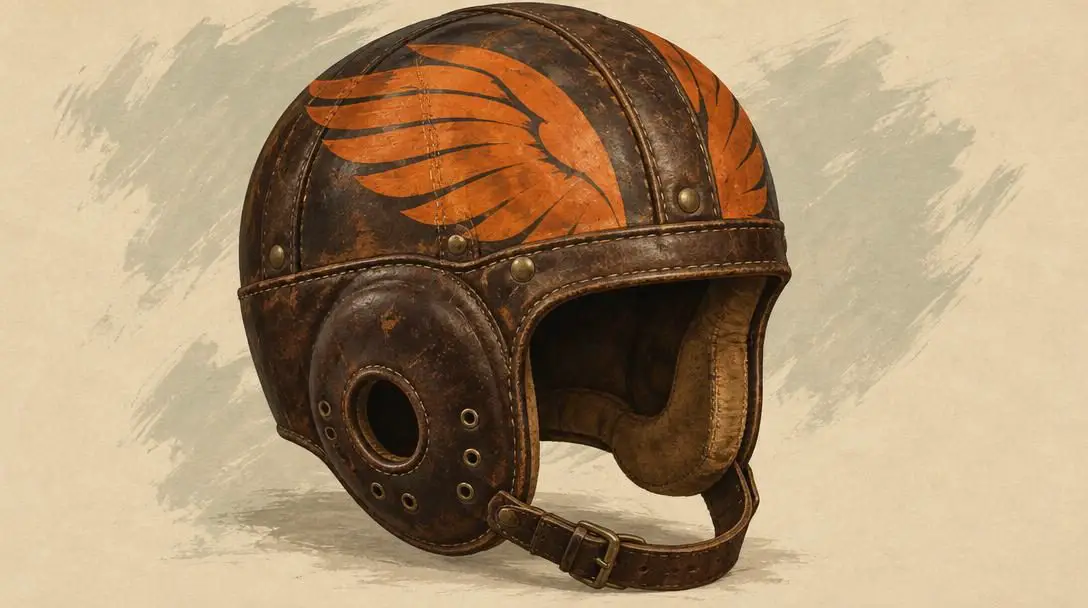
- Era of use: Early 1930s
- Original material: Painted leather
- Modern role: Throwback aesthetic
- Primary purpose: Ball-carrier visibility
In modern collegiate athletics, the winged helmet pattern is world-renowned as the primary mark of the University of Michigan Wolverines. However, decades before modern polycarbonate shells became standard, the Chicago Bears stood as pioneers of the winged headgear design on the professional gridiron. During the early 1930s, the Bears wore painted winged patterns across their leather headgear for two competitive seasons.
At the time, leather helmets lacked decals, face masks, and reflective coatings. The Bears introduced painted wing graphics on the front and crown to help players visually locate ball carriers and teammates through the chaotic, unorganized scrums characteristic of early football. While Chicago eventually moved away from the concept in favor of solid dark shells, the organization continues to revive the pioneering winged look whenever it selects leather-era throwback uniforms for special commemorative games.
The Wishbone 'C' Helmet Decal
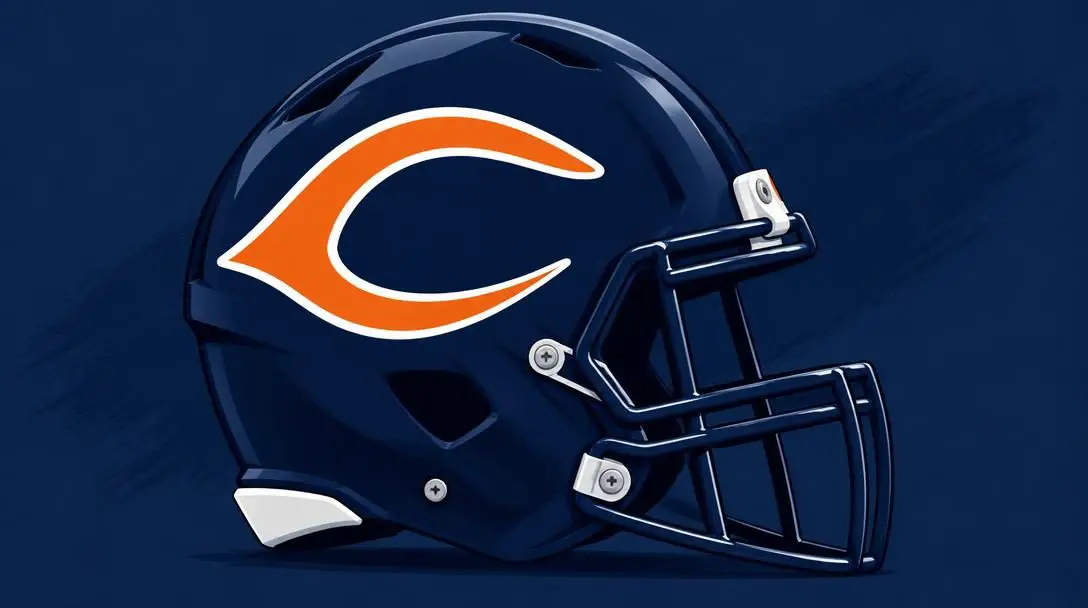
- Decal debut: Early 1960s
- Design style: Asymmetrical wishbone
- Primary colors: Burnt orange with white border
- Shell color: Midnight navy
The defining emblem of the Chicago franchise is the wishbone-style "C" displayed across the sides of their navy helmets. Originally adopted in the early 1960s, this logo replaced the completely solid dark shells that the team had utilized for decades following the discontinuation of the winged leather pattern. Over time, the Bears refined the logo by applying a burnt orange fill outlined in crisp white, setting a stark, clean contrast against the dark midnight navy shell.
Graphic designers and observant supporters often point out that the Bears' wishbone "C" features a distinct asymmetry: the lower curve extends further outward than the top, giving the letter a subtle graphic underbite. While the wishbone typography was used by various collegiate athletic programs and Major League Baseball's Cincinnati Reds before the Bears adopted it, the mark has become universally synonymous with football in the Windy City.
The Burnt Orange Alternate Kit and 2022 Helmet
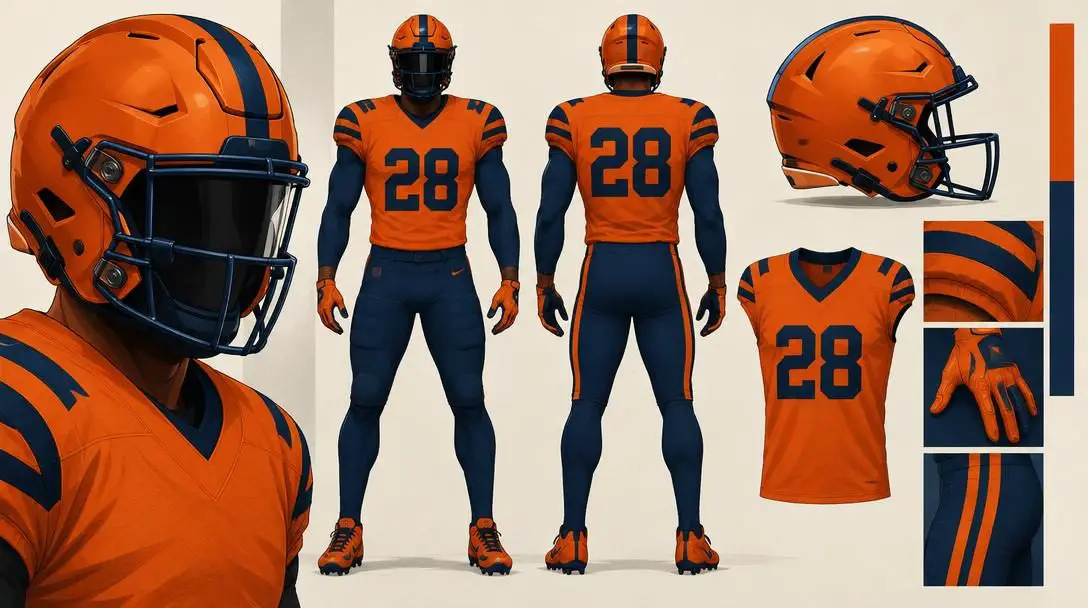
- Helmet debut: 2022 regular season
- Jersey color: Burnt orange
- Accents: Midnight navy and white
- Category: Alternate gameday presentation
Throughout most of franchise history, the Chicago Bears avoided drastic uniform overhauls, preferring to reserve changes for historic throwbacks honoring their Decatur roots or 1930s championships. However, the club has occasionally embraced burnt orange as a primary jersey option, swapping out the traditional navy home shirts for bright, high-visibility orange alternates paired with white numerals outlined in navy.
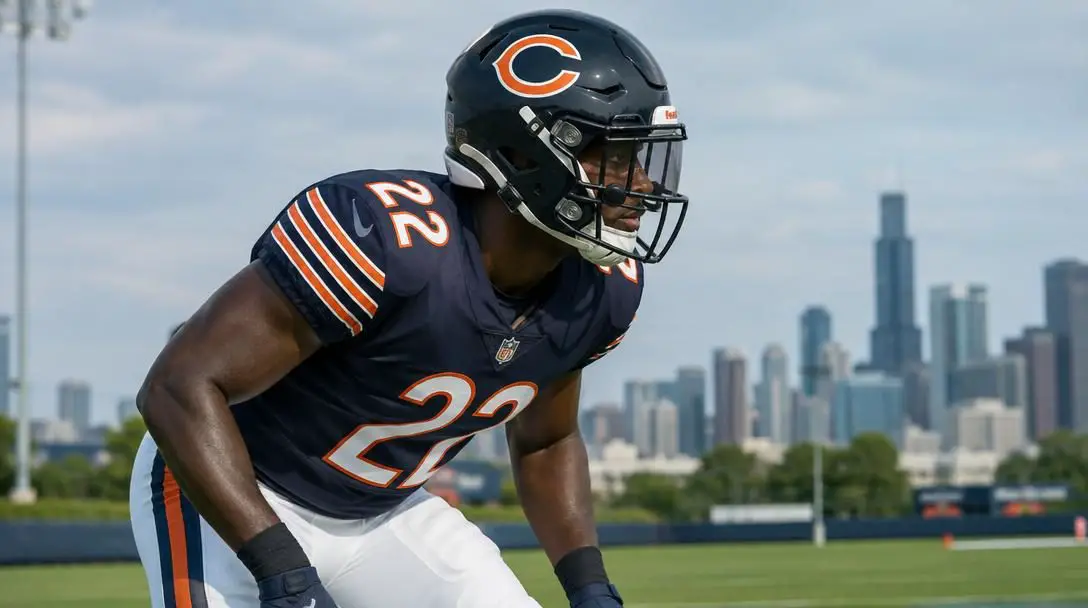
The most dramatic visual evolution in recent decades occurred during the 2022 NFL campaign. Taking advantage of modernized league policies permitting alternate helmet designs, the Bears introduced a bright orange helmet shell paired with their orange alternate jerseys. Featuring the classic navy wishbone "C" outlined in white, the helmet represented the first non-navy primary shell worn by the club since the leather-helmet era, drawing widespread discussion from uniform historians and sports enthusiasts alike.
Chicago Bears Uniform Eras at a Glance
The progression of the Bears uniform tracks the development of the sport, moving from rudimentary company workwear to advanced athletic equipment. The table below outlines how key design elements shifted across major eras of team history.
| Era | Primary Colors | Jersey Details | Helmet Design | Defining Feature |
|---|---|---|---|---|
| 1920 (Decatur Staleys) | Red and Gold | Vertical front friction stripes | Plain unpainted leather | Corporate manufacturer logo patch |
| 1930s (Early Chicago) | Navy and Orange | Pioneered front/back numerals | Painted winged leather pattern | Visual identification in scrums |
| 1960s–1983 | Midnight Navy, Orange, White | Rounded sleeve stripes | Navy shell with wishbone 'C' | Establishment of modern helmet decal |
| 1984–Present (Classic) | Midnight Navy, Orange, White | Left sleeve "GSH" tribute | Navy shell with wishbone 'C' | Permanent memorial to George Halas |
| 2022–Present (Alternate) | Burnt Orange, Navy, White | Alternate orange torso panels | Vibrant orange shell with navy 'C' | First modern non-navy helmet shell |
Steps for Authenticating and Evaluating a Bears Uniform
For memorabilia collectors, vintage clothing archivists, and football enthusiasts, differentiating authentic Chicago Bears gear from generic replicas requires an eye for exact historical specifications. Follow these steps to properly evaluate and date a Chicago Bears uniform:
- Examine the left sleeve for the memorial initials: Locate the horizontal tri-stripe pattern on the jersey's left arm. A genuine modern jersey manufactured for or representing any season from 1984 onward will display the letters "GSH" across the striping. Any standard home or road jersey lacking these letters corresponds to an era prior to 1984 or indicates a non-authentic reproduction.
- Assess the color accuracy of the navy and orange: Inspect the fabric under neutral lighting. Official Chicago Bears uniforms utilize midnight navy, a shade so deeply pigmented it frequently appears black under dim lighting. If the primary fabric displays royal blue, light navy, or fluorescent neon orange, the garment fails to match team specifications.
- Verify the specific typography of the jersey numbers: Inspect the digits on the chest and back. Unlike standard block collegiate lettering, the Bears utilize a customized rounded font with distinctive notched inner corners. On navy jerseys, the digits must be white with a burnt orange border; on road white jerseys, the numerals are navy with an inner orange line and thin white outer trim.
- Inspect the geometry of the helmet decal: When authenticating a helmet shell, analyze the wishbone "C." The decal must exhibit the classic asymmetrical underbite, where the bottom curvature extends slightly forward beyond the top curve. Symmetrical collegiate decals signify third-party reproduction.
- Check for period-accurate throwback attributes: If evaluating a throwback jersey, cross-reference its structural details against team history. A true 1920s Decatur replica will feature vertical chest stripes and no player numbers, while a 1930s throwback will pair numerical typography with winged helmet graphics.
Common Misconceptions Surrounding Bears Uniforms
Given that the Bears have operated for over a century, misconceptions regarding their visual identity are frequent among casual observers. Understanding the reality behind these elements clears up widespread myths:
- Assuming the "GSH" sleeve initials change annually: Casual viewers sometimes confuse the sleeve lettering with rotating captain patches or temporary memorial ribbons. The initials belong exclusively to founder George Halas and have occupied an unyielding place on the uniform since their introduction in 1984.
- Believing the wishbone 'C' originated in Chicago: While universally recognized today as the emblem of the Bears, the wishbone letter styling existed long before the team adopted it in the 1960s, having appeared on the caps of baseball's Cincinnati Reds and the uniforms of several major universities.
- Thinking Michigan was the sole creator of the winged helmet: Although the Michigan Wolverines popularized the winged pattern and turned it into an iconic collegiate symbol, the Bears were among the earliest football squads to wear painted wings during their 1930s leather-helmet campaigns.
- Assuming the franchise has always dressed in navy and orange: The club's signature color scheme was not present at its founding. The original Decatur Staleys competed in red sweaters with gold highlights before the organization relocated to Chicago and updated its identity.
- Believing the helmet shell never changed before 2022: While the navy helmet remained standard for decades, the franchise has worn blank leather headgear, painted wings, blank navy plastic shells, and the 2022 burnt orange alternate helmet across its comprehensive visual timeline.
Frequently asked questions
Why do the Chicago Bears have "GSH" on their jersey sleeves?
The letters "GSH" represent George Stanley Halas, the founder, long-time owner, and historic head coach of the Chicago Bears. Following his death in late 1983, the team added his initials permanently to the left sleeve of their jerseys starting in the 1984 season to honor his eight NFL championships and his role in establishing the National Football League.
What were the Chicago Bears' original team colors?
Before adopting their iconic midnight navy and burnt orange palette, the team competed as the Decatur Staleys in Decatur, Illinois, wearing red jerseys accented with gold trim. The team transitioned to blue and orange after relocating and adopting the Chicago Bears identity.
Did the Chicago Bears wear winged helmets before the University of Michigan?
The Bears were early pioneers of the winged helmet concept, wearing painted wings on their leather helmets for two seasons in the early 1930s to help identify ball carriers in scrums. While Michigan later made the winged aesthetic internationally famous, Chicago was among the first professional teams to utilize the graphic.
When did the Bears introduce their orange alternate helmets?
The Chicago Bears debuted their bright orange alternate helmet during the 2022 NFL regular season. Paired with their burnt orange alternate jerseys, the helmet marked the first time the club wore an alternate shell color other than traditional navy or leather-era throwbacks in modern team history.
What makes the Bears' wishbone 'C' helmet logo unique?
The Bears' wishbone "C" is distinguished by its subtle graphic asymmetry, commonly described as an underbite. The bottom curve of the letter extends further outward than the top terminal, creating an off-balance profile that differs from perfectly symmetrical corporate and collegiate lettermarks.
The Bottom Line
In an era where sports franchises frequently overhaul their aesthetics to drive merchandise cycles, the Chicago Bears uniform stands as an endurance test of classic design. Every primary component of the gameday kit—from the midnight navy base and burnt orange accents to the asymmetrical wishbone "C" and the permanent "GSH" sleeve tribute—reflects an authentic connection to the origins of the National Football League. By respecting their transition from the Decatur Staleys while cautiously testing creative alternate looks like the 2022 orange helmet, the Bears maintain what remains one of the most respected visual standards in American sports.