Top 5 Countries to Not Win the World Cup

The FIFA World Cup stands as the pinnacle of international athletic competition, drawing billions of viewers and testing the absolute limits of sporting endurance. Since the tournament launched in 1930, when host nation Uruguay triumphed in front of more than 68,000 spectators, lifting the iconic trophy has remained one of the most exclusive achievements in sports. Only a tiny fraternity of traditional superpowers—headlined by multiple-time champions Brazil, Germany, Italy, and Argentina—has dominated the podium across generations.
Because these juggernauts have maintained such a tight grip on international honors, several world-class national setups have repeatedly fielded generational rosters without ever hoisting the trophy. Running the gauntlet of seven consecutive matches against elite competition demands tactical precision, squad depth, physical fortitude, and immense focus under pressure. While historic setups such as Sweden, Hungary, Chile, and the Czech Republic have mounted storied campaigns in past eras, five specific nations stand out for their sustained excellence, high-profile heartbreak, and ongoing search for their first world title.
Key takeaways
- The Netherlands holds the most agonizing track record in World Cup history, having reached three finals without ever securing the championship.
- Mexico maintains an elite qualification pedigree with at least 16 tournament appearances, yet has never advanced past the quarterfinals.
- Croatia transitioned rapidly from its pre-1991 status within Yugoslavia to a modern heavyweight, securing both a runner-up and two third-place finishes.
- Portugal and Belgium have capitalized on golden generations to consistently reach the tournament's deepest knockout rounds without clearing the semifinal hurdle.
The Elusive Search for World Cup Immortality
Securing the World Cup requires traversing an unforgiving competitive landscape. Across more than nine decades of competition, dozens of footballing countries have built globally admired programs, developed world-class academies, and produced legendary players, only to run into the historical titans at the semifinal or final stage. The difference between lifting the trophy and departing in despair often comes down to a single missed chance, a defensive lapse, or extra-time fatigue.
The following comparison highlights the defining achievements and knockout benchmarks of the five strongest footballing nations that have never captured the sport's greatest prize.
| Nation | Best Finish | Total Finals Reached | Defining Tournament Run |
|---|---|---|---|
| Croatia | Runners-up (2018) | 1 | 2018 (Finalist), 2022 (Third Place) |
| Belgium | Third Place (Modern Era) | 0 | 1986 & Modern Era (Semifinals) |
| Portugal | Third Place (1966) | 0 | 1966 & 2006 (Semifinals) |
| Mexico | Quarterfinals (1970, 1986) | 0 | Seven consecutive Round of 16 exits (1994–2018) |
| Netherlands | Runners-up (1974, 1978, 2010) | 3 | 100% group stage progression across 11 tournaments |
The Top 5 Nations Still Chasing a Maiden Trophy
Each of these five football programs has made a profound mark on international competition, yet all five continue to navigate the tactical and psychological obstacles that separate contenders from champions.
Croatia

- Debut Tournament: 1998
- Best Result: Runners-up (2018)
- Key Milestone: Third-place finishes in 1998 and 2022
Prior to 1991, Croatian players competed as part of the Socialist Federative Republic of Yugoslavia. After gaining independence, the nation swiftly assembled one of the most respected, technically gifted football setups in the world. Their initial World Cup campaign in 1998 resulted in a stunning run to the semifinals, where their title pursuit ended in a narrow 2-1 defeat against host nation and eventual champion France.
Maintaining that initial momentum proved difficult over the following decades. Across the subsequent four World Cups, Croatia suffered three group-stage eliminations and missed qualification entirely during another cycle. However, their modern resurgence redefined the program's global standing. Croatia advanced to the championship match in 2018, falling 4-2 to France in an open decider. In the 2022 edition, they sustained another deep run to the final four, dropping a 3-0 semifinal to Argentina before rebounding to defeat Morocco and claim the bronze medal.
Belgium
- Debut Tournament: 1930
- Best Result: Third Place (Modern Era)
- Semifinal Appearances: 1986, Modern Era
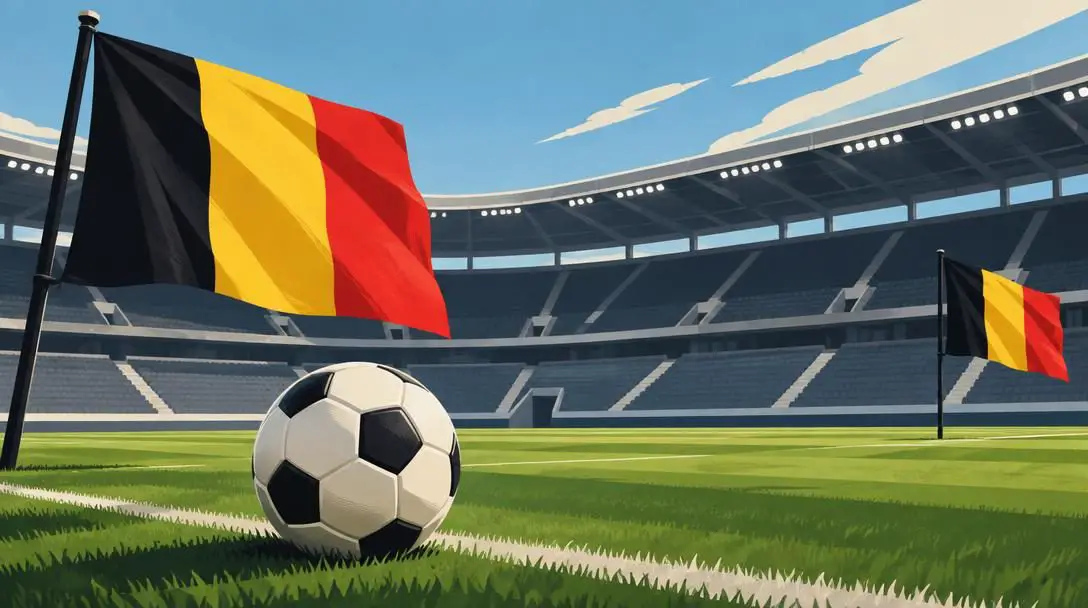
Belgium holds a foundational place in international football history, having participated in the inaugural 1930 competition in Uruguay, though that first showing ended quickly with defeats in both of their matches. Over the decades that followed, Belgian football moved in pronounced waves, alternating between prolonged qualification absences and stretches of knockout bracket success.

The program announced itself as a top-tier contender in 1982 by reaching the second group stage, setting the stage for a memorable 1986 campaign that carried them to the semifinals. That deep run was halted by Argentina, followed by a loss to France in the third-place fixture. Decades later, a formidable modern era produced Belgium's greatest tournament showing. During their deepest run, they suffered a tightly contested 2-1 defeat against France in the semifinals, but rebounded in the consolation match to defeat England 2-0 and claim third place.
Portugal

- Debut Tournament: 1966
- Best Result: Third Place (1966)
- Modern Era Highlight: Semifinals (2006), Quarterfinals (2022)
Long regarded as a relative newcomer among football's traditional elite, Portugal spent much of the tournament's first half-century struggling for relevance. The nation endured a 36-year qualification drought before making its tournament debut in 1966. That maiden appearance was remarkable, as Portugal advanced to the semifinals and won the third-place playoff. Even so, sustained continuity eluded them: between 1930 and 2002, Portugal qualified for only two World Cup tournaments, with an intermediate appearance in 1986.
The country's international stature transformed dramatically following the emergence of Cristiano Ronaldo. Across six tournament cycles featuring Ronaldo, Portugal cleared the group stage on four occasions. In 2006, the squad reached the final four, where their title hopes were dashed by a 1-0 semifinal defeat to France, followed by a 3-1 defeat to host nation Germany in the third-place fixture. Most recently, Portugal reached the quarterfinals in 2022, confirming their position as perennial contenders despite the elusive nature of a final appearance.
Mexico
- Total Appearances: 16 or more editions
- Best Result: Quarterfinals (1970, 1986)
- Round of 16 Streak: Seven consecutive exits (1994–2018)
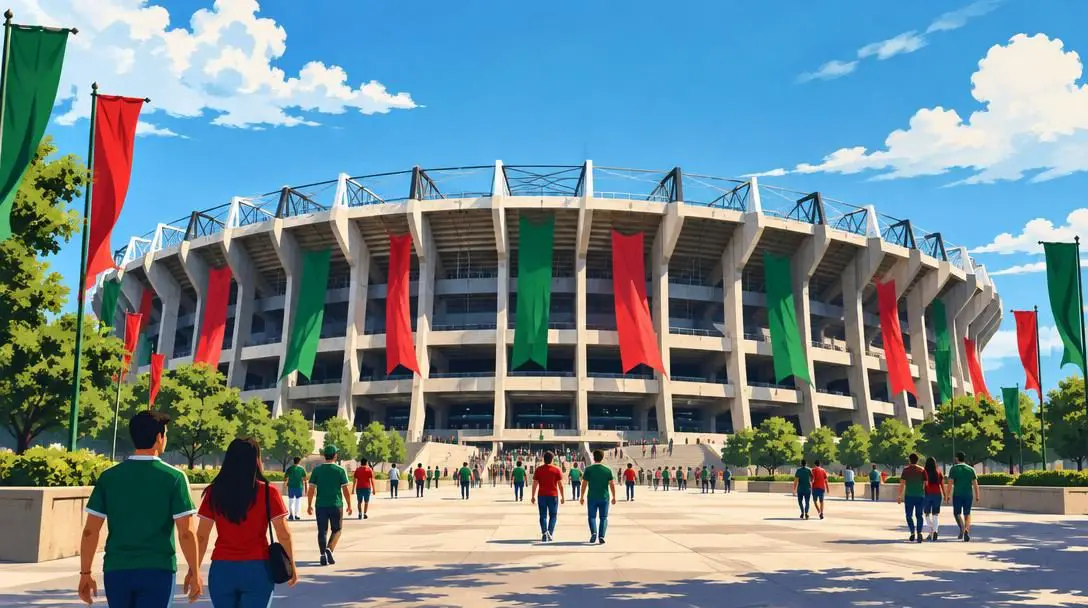
Following the 2022 tournament, Mexico stood in rare air: only eight countries in tournament history had accumulated at least 16 World Cup qualifications. However, Mexico's relationship with that statistic is entirely unique. Five of those eight countries have won multiple World Cup trophies, two hold a single title, and exactly one country has never reached a semifinal: Mexico. In the overall history of the event, only Brazil, Germany, Argentina, and Italy possess more total tournament appearances.
Despite this incredible durability, moving beyond the earliest knockout rounds has represented an intractable barrier. Mexico has reached the quarterfinal phase just twice, serving as tournament hosts on both occasions in 1970 and 1986. From 1994 through 2018, the national team delivered remarkable baseline stability by advancing out of the group stage at seven straight tournaments. In every single instance, however, their run ended abruptly in the round of 16.
Netherlands

- Total Appearances: 11 tournaments
- Best Result: Runners-up (1974, 1978, 2010)
- Group Stage Record: 100% advancement rate
When assessing which nation has come closest to lifting the trophy without ever completing the task, the Netherlands stands entirely alone. Across their 11 tournament appearances, the Dutch have established a flawless standard by advancing past the group stage every single time. They have advanced to at least the quarterfinals on seven occasions and finished as tournament runners-up three times.
The first Dutch heartbreak occurred in 1974, ending in a 2-1 defeat against host nation West Germany. Four years later, in 1978, history repeated itself as the Netherlands again faced the host nation in the decider, falling 3-1 to Argentina. In 2010, the Dutch reached their third final, this time facing Spain on neutral ground. The championship remained locked at 0-0 through regulation and deep into extra time, until an agonizing 116th-minute strike by Andres Iniesta sealed a 1-0 defeat and left the Netherlands empty-handed once again.

Across eleven World Cup appearances, the Netherlands has never failed to advance past the group stage, yet remains three-time runners-up without a title.
How the International Tournament Structure Functions
Understanding why elite nations can fall short of World Cup glory for generations requires analyzing the intense mechanics of the tournament itself. The final competition represents the climax of a multi-year qualification phase, followed by a month-long crucible that punishes the slightest dip in execution.
- Continental Qualification: Before booking a tournament ticket, teams must endure multi-year regional qualifying campaigns against domestic rivals. A brief slump during a qualifying window can prevent top-ranked sides from even reaching the tournament.
- Group Stage Management: Qualified nations are sorted into round-robin groups, earning points for victories and draws. Advancing requires balancing goal differential and head-to-head tiebreakers while preserving player fitness.
- Single-Elimination Knockouts: In the knockout stage, there is no margin for error. If scores remain level after 90 minutes of regulation, matches enter 30 minutes of extra time followed by a penalty shootout. A single miscue or questionable call can abruptly end four years of preparation.
- Physical and Mental Attrition: Reaching the final requires playing seven grueling matches in roughly four weeks. Teams must cope with accumulated fatigue, yellow card suspensions, and squad-altering injuries.
Practical Blueprint: How Aspiring Programs Can Break Through
Transforming a national team from a perpetual dark horse into a world champion requires structural, long-term investments in domestic football infrastructure. Contenders aiming to cross the ultimate finish line should prioritize five foundational areas:
- Modernize Grassroots Academies: Construct world-class youth development networks that instill modern positional discipline, high-tempo conditioning, and elite technical skills from an early age.
- Facilitate Top-Flight Club Exposure: Encourage emerging domestic talent to test themselves across the world's most competitive professional leagues, ensuring regular exposure to elite competition.
- Unify Tactical Philosophies: Appoint visionary technical directors and coaching staffs who establish a consistent, recognizable playing style across all national team age cohorts.
- Master High-Pressure Scenarios: Integrate dedicated sports psychology programs, extensive penalty shootout preparation, and situational endgame simulations into routine training camps.
- Invest in Sports Science and Recovery: Implement advanced biometric tracking, medical oversight, and nutritional regimens to mitigate muscular fatigue and keep key starters available throughout a seven-game tournament sprint.
Common Pitfalls and Roadblocks on the International Stage
Even historically dominant footballing countries repeatedly commit structural mistakes that undermine their title pursuits. Identifying these common errors explains why talented squads frequently falter during critical stages:
- Over-Reliance on a Solitary Superstar: Constructing an entire tactical system around one iconic player makes a squad predictable. Disciplined defensive units can easily double-mark a single focal point and stall the entire team's attack.
- Tactical Inflexibility: Refusing to adapt an open, possession-heavy style when confronting disciplined counter-attacking teams frequently produces unexpected upsets in early knockout rounds.
- Poor Squad Rotation and Attrition: Failing to utilize bench depth during the opening round leaves starting lineups physically and mentally spent by the time they reach the semifinals.
- Camp Instability and Cultural Friction: Spending weeks confined to isolated basecamps under intense public scrutiny can spark internal disputes that ruin tactical cohesion on the pitch.
- Psychological Barriers: Scurrying out of a tournament at the exact same round across multiple cycles fosters an institutional complex that clouds player decision-making during clutch moments.
Future Trajectories and Upcoming Challenges
As the international football calendar advances toward upcoming cycles, these uncrowned heavyweights must adapt to an evolving tournament environment. Upcoming expansions to tournament brackets introduce an additional knockout fixture, demanding greater roster depth, bench versatility, and resilience than ever before.
Roster evolution will heavily dictate the immediate futures of Croatia and Portugal as their veteran cores give way to emerging generations. For Mexico, the primary objective remains dismantling the psychological ceiling in the initial knockout matches. Meanwhile, Belgium and the Netherlands must ensure that their next waves of elite talent capitalize on narrow competitive windows before generational cycles close.
Frequently asked questions
Which country has reached the most World Cup finals without winning?
The Netherlands holds this record, having advanced to the championship match three times (1974, 1978, and 2010) and losing on all three occasions.
What is Mexico's best finish in World Cup history?
Mexico's highest tournament finishes came in 1970 and 1986, when they reached the quarterfinal phase while hosting the competition.
How many times has Croatia reached the World Cup podium?
Croatia has finished on the podium three times since making its tournament debut in 1998, earning third place in 1998 and 2022, and finishing as runners-up in 2018.
Did Belgium's modern era squad win a World Cup medal?
Yes. After falling 2-1 to France in the semifinals, Belgium defeated England 2-0 in the consolation match to capture third place.
How long did Portugal wait between its first and second World Cup appearances?
Portugal endured a 20-year wait after its 1966 debut, not qualifying again until 1986, and registering only two total appearances between 1930 and 2002.
The bottom line
Lifting the World Cup trophy remains one of the most demanding accomplishments in global athletics, governed by decades of tradition and the ruthless realities of single-elimination football. While powerhouse nations like Brazil, Germany, Italy, and Argentina have collected multiple crowns, the exploits of the Netherlands, Croatia, Belgium, Portugal, and Mexico prove that elite international pedigree does not guarantee a title. Overcoming knockout-stage attrition, tactical rigidity, and generational transitions will decide which of these perennial contenders finally captures sports immortality.