5 Celebrities Who Collect Classic Cars
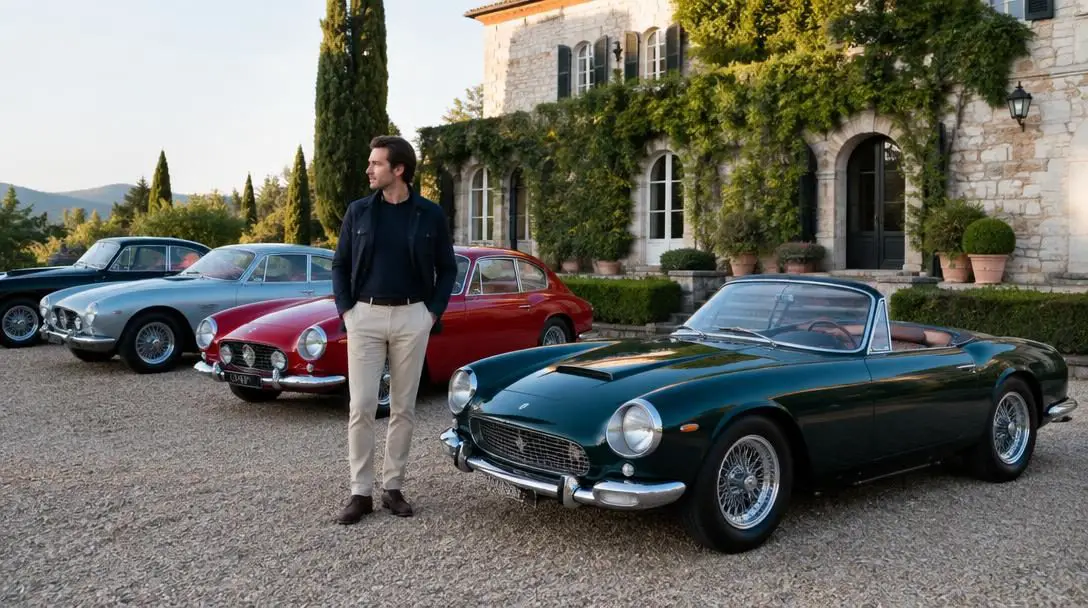
For dedicated automotive enthusiasts, collecting vintage vehicles represents far more than an extravagant hobby; it is the realization of a lifelong appreciation for engineering, history, and industrial craftsmanship. While popular culture often frames car collecting as an automatic indulgence for newly minted millionaires, the reality of the pursuit centers on personal memory, individual aesthetics, and the tactile joy of machinery built in bygone eras. Vintage automobiles deliver distinct mechanical personalities, analog driving dynamics, and evocative silhouettes that modern production lines rarely replicate.
Although classic cars generally do not function as guaranteed financial investments, they remain fiercely coveted by enthusiasts who cherish preserving automotive heritage. Across the globe, high-profile figures from comedy, rock music, fashion, and broadcasting have turned their private passions into celebrated garages. By sharing their machines through museum exhibits, television programs, and documentary films, these collectors provide the public with a front-row view of some of the most extraordinary automobiles ever manufactured.
Key takeaways
- Celebrity classic car collections reflect deeply personal motivations, ranging from historical race car preservation to rolling sculptural design.
- High-profile collectors often share their prized machines publicly through television programs, documentaries, and world-class museum exhibitions.
- Preserving vintage automobiles requires specialized climate control, regular mechanical exercise, and rigorous documentation of provenance.
- Treating classic vehicles purely as financial investments is a common pitfall, as ownership entails significant maintenance, storage, and insurance overhead.
Famous garages: five celebrities and their iconic collections
High-profile collectors have brought immense visibility to vintage automotive culture. Rather than assembling identical fleets of modern exotic supercars, these five prominent individuals have spent decades sourcing historically significant, rare, and customized vintage machines that mirror their unique creative backgrounds.
| Collector | Primary Claim to Fame | Key Focus or Style | Notable Vehicles in Collection |
|---|---|---|---|
| Jerry Seinfeld | Stand-up comedy and television | Curated European sports cars and American classics | 1963 Chevrolet Corvette Stingray, 1969 Jaguar XKE Series 2, 1970 Porsche 911S |
| Jay Leno | Late-night television host | Diverse mechanical history and drivable icons | 1955 Mercedes-Benz 300SL Gullwing, 1955 Buick Roadmaster, 1969 Lamborghini Miura |
| James Hetfield | Metallica frontman and guitarist | Custom hot rods and coachbuilt classics | 1932 Ford Roadster Blackjack, 1934 Packard Aquarius, 1948 Jaguar "Black Pearl" |
| Ralph Lauren | Fashion designer and business mogul | Rolling art, rare competition racers, and pre-war elegance | 1930 Mercedes-Benz SSK, 1957 Jaguar XKSS, 1958 Ferrari 250 Testa Rossa |
| Adam Carolla | Radio host, television host, and podcaster | Vintage competition models and historic racing livery | Dick Barbour Porsche 935, Datsun 510 |
Jerry Seinfeld
- Career Origin: Stand-up comedian and co-creator of the hit sitcom "Seinfeld"
- Signature Show: "Comedians in Cars Getting Coffee"
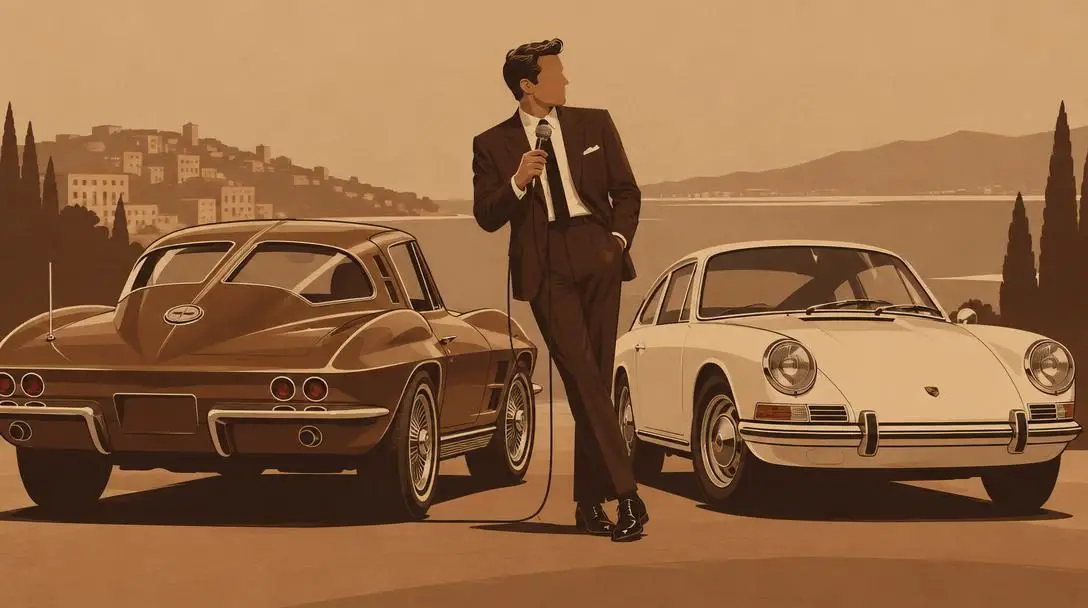
- Key Models: 1963 Chevrolet Corvette Stingray, 1969 Jaguar XKE Series 2 E-Type, 1970 Porsche 911S
Stand-up comedian Jerry Seinfeld developed one of the most widely admired automotive collections in the world after the staggering success of his eponymous television sitcom in the late 1980s generated hundreds of millions in residuals. Rather than keeping his fleet hidden behind closed doors, Seinfeld brought his passion directly to audiences through his popular series Comedians in Cars Getting Coffee, pairing celebrated guests with historically matched vintage automobiles.
Seinfeld has maintained an intense fascination with cars since he was nine years old, viewing automotive enthusiasm as a core pillar of his personality. His garage emphasizes precision engineering and legendary styling, highlighted by milestones such as the split-window 1963 Chevrolet Corvette Stingray, a refined 1969 Jaguar XKE Series 2 E-Type, and a purist-grade 1970 Porsche 911S.
Jay Leno
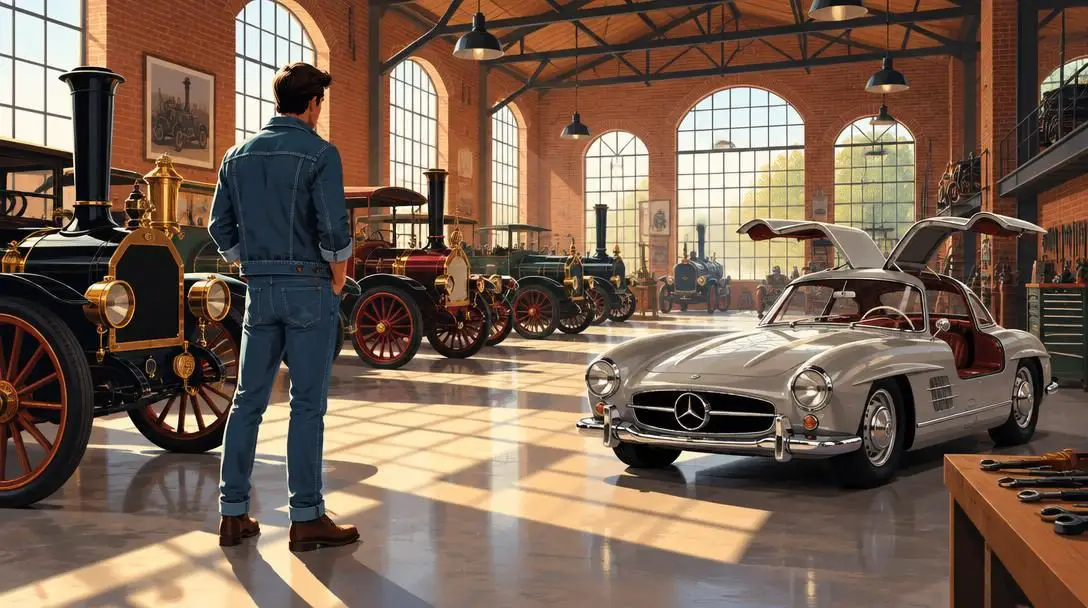
- Career Origin: Stand-up comedian and long-time host of "The Tonight Show"
- Estimated Net Worth: Approximately $350 million
- Key Models: 1955 Mercedes-Benz 300SL Gullwing, 1955 Buick Roadmaster, 1969 Lamborghini Miura
Former late-night host Jay Leno has translated his estimated $350 million net worth into one of the most encyclopedic vehicle collections ever assembled by a private citizen. Leno has never treated his acquisition process as a formal, clinical venture; instead, his guiding philosophy has always been to purchase machines that capture his curiosity, possess compelling historical significance, and offer authentic mechanical entertainment on the open road.
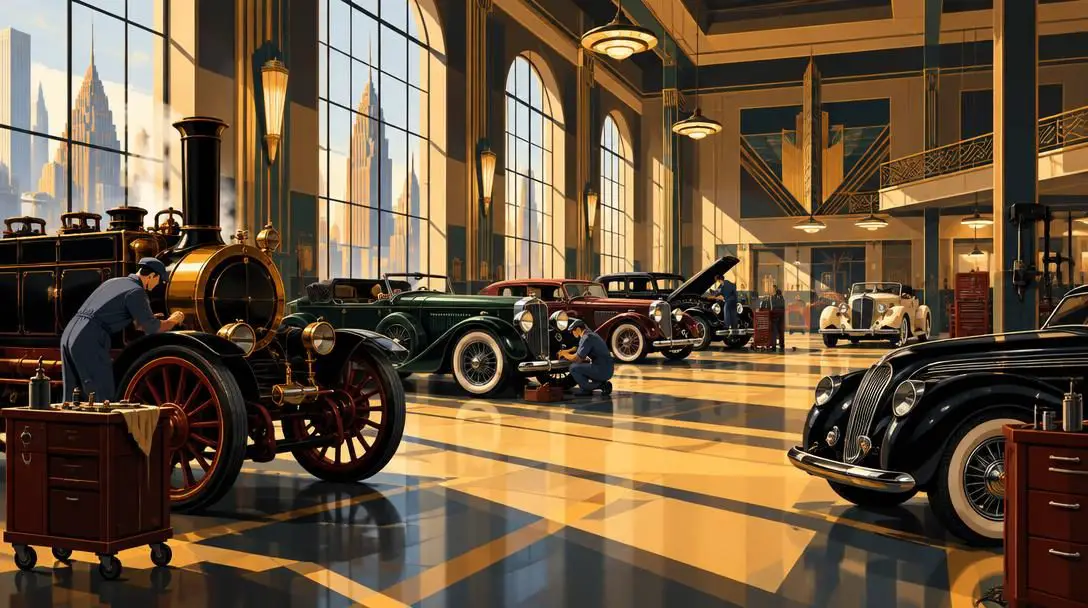
Leno's warehouse garage serves as an active workshop rather than a static showroom. His varied fleet spans early steam power up to mid-century masterpieces, featuring legendary machines such as the gull-winged 1955 Mercedes-Benz 300SL, an iconic V12-powered 1969 Lamborghini Miura, and a classic 1955 Buick Roadmaster that holds deep personal roots in his early comedy career.
James Hetfield
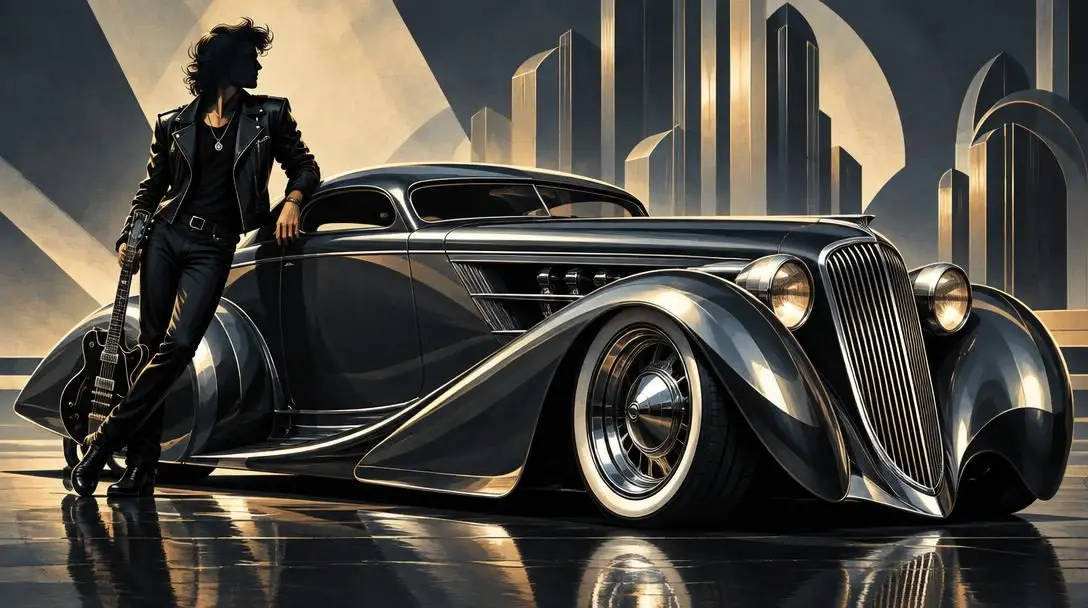
- Career Origin: Frontman, rhythm guitarist, and co-founder of Metallica
- Estimated Net Worth: Approximately $200 million
- Key Models: 1932 Ford Roadster Blackjack, 1934 Packard Aquarius, 1937 Lincoln Zephyr, 1948 Jaguar "Black Pearl"
As the driving musical force behind Metallica, James Hetfield accumulated an estimated net worth of $200 million while touring stadiums worldwide. Outside of music, Hetfield channeled his creative energy into collecting and co-designing bespoke, period-inspired hot rods and coachbuilt marvels. His cars are sculptural masterworks, characterized by dramatic teardrop lines, tailored coachwork, and immaculate metalcraft.
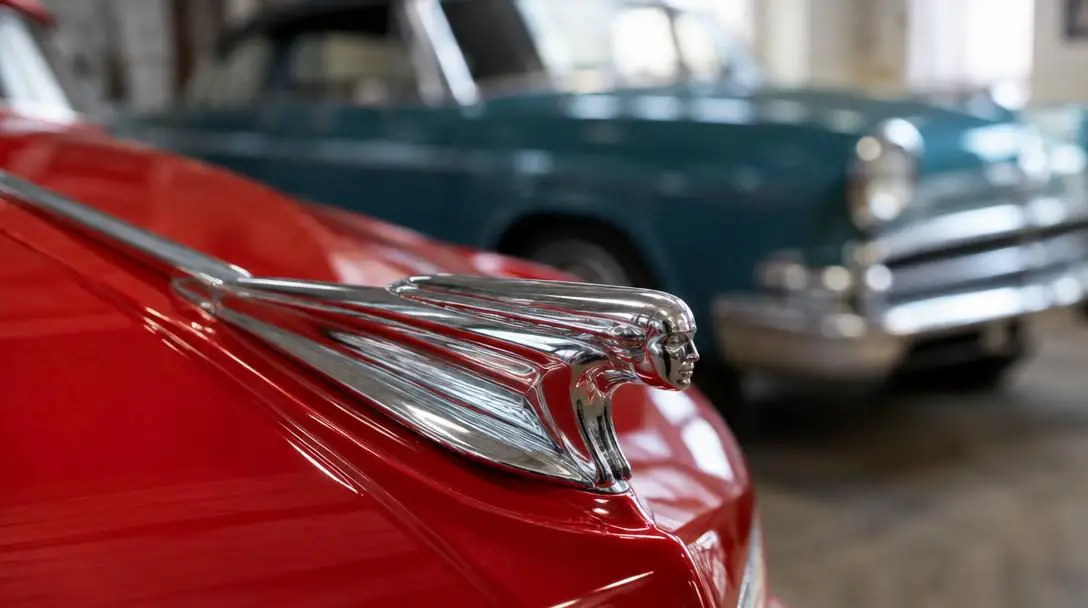
Rather than leaving vehicles like the 1934 Packard Aquarius, the sleek 1937 Lincoln Zephyr, or the custom 1948 Jaguar "Black Pearl" parked indefinitely inside private garages, Hetfield decided to display his collection publicly at the Petersen Automotive Museum in Los Angeles. Hetfield recognized that keeping the vehicles stored out of sight served little purpose, choosing instead to present them as a unified body of work representing key chapters of his personal life and artistic expression.
Ralph Lauren
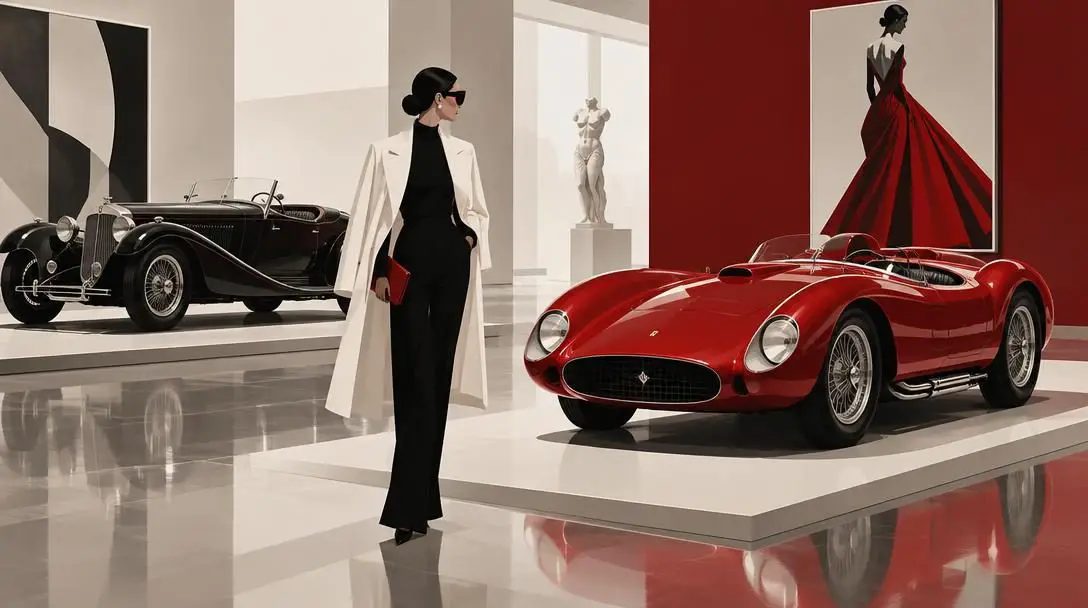
- Career Origin: Fashion designer; founded his empire with neckties in 1960s New York City
- Design Philosophy: Viewing automobiles as moving three-dimensional art
- Key Models: 1930 Mercedes-Benz SSK, 1957 Jaguar XKSS, 1958 Ferrari 250 Testa Rossa
Billionaire fashion mogul Ralph Lauren built a global luxury brand starting from a modest necktie business in New York City during the 1960s. Over the subsequent decades, Lauren directed his visual taste into curating one of the highest-caliber classic car collections in existence. He has famously compared his immaculate garage facility to Bruce Wayne's subterranean Batcave, organizing his vehicles against clean backdrops that accentuate their architectural curves.
Lauren views vintage automobiles as moving art, tracing his passion back to an instinctual appreciation for styling cues such as sculpted wheel arches, sweeping grilles, and hand-formed tailpipes. His fleet contains some of the rarest surviving examples in motorsport history, including the pre-war 1930 Mercedes-Benz SSK, the race-bred 1957 Jaguar XKSS, and the legendary pontoon-fender 1958 Ferrari 250 Testa Rossa.
Classic automobiles offer something that modern assembly-line vehicles struggle to reproduce: distinctive mechanical personalities, historical character, and tactile driving experiences.
Adam Carolla
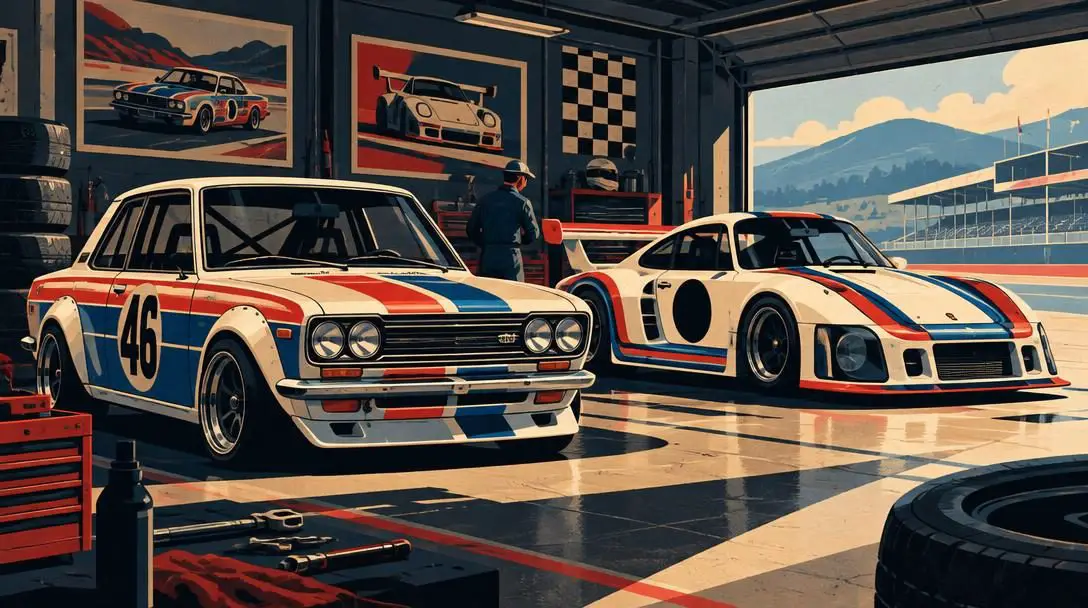
- Career Origin: Co-host of "Loveline", co-creator of "The Man Show", podcast pioneer
- Collection Focus: Competition race cars with documented motorsport history
- Key Models: Dick Barbour Porsche 935, Datsun 510
Radio personality, television host, and podcasting pioneer Adam Carolla established his national profile throughout the 1990s and 2000s on programs like Loveline and The Man Show. While Carolla's resources differ from multi-billionaire fashion magnates, he carved out a distinctive niche within vintage automotive collecting by targeting authentic, period-raced competition cars rather than static luxury grand tourers.
Carolla has focused intensely on historic machinery driven in competition by Hollywood icon Paul Newman. His stable includes vehicles such as the fire-breathing Dick Barbour Porsche 935 and Newman's championship-winning Datsun 510. Carolla was motivated by the realization that many modern fans were unaware of Newman's elite racing career, prompting him to acquire the driver's legendary cars and direct a documentary celebrating Newman's motorsport legacy.
The mechanics of acquiring and preserving classic vehicles
Behind the prestige of prominent private garages lies an intricate framework of acquisition channels, historical curation, and ongoing mechanical maintenance. Maintaining vintage vehicles is drastically different from servicing modern cars, requiring historical tradecraft, deep mechanical intuition, and access to obsolete components.
Acquiring genuine vintage automobiles typically relies on specialized channels outside typical consumer dealerships:
- Specialty automotive auctions: High-profile catalogue auctions coordinated around premier motorsport festivals and historic gatherings.
- Boutique brokerages: Confidential private-treaty transactions facilitated by collector-car agents matching buyers and sellers away from public scrutiny.
- Estate liquidations: Direct acquisitions resulting from long-term collectors whose multi-car holdings are settled by legal heirs or trustees.
- Unrestored barn discoveries: Direct purchases of long-dormant machinery preserved in private outbuildings, barns, and storage lockers.
Once a vehicle is secured, owners face a crucial fork in the preservation path: executing a ground-up aesthetic restoration or conserving original factory finishes. While complete restorations return sheet metal and interiors to pristine showroom standards, modern preservation philosophies place increasing value on unrestored survivor vehicles featuring original paint, weathered upholstery, and authentic factory stampings.
Step-by-step framework for managing a vintage collection
Successfully operating a collection of vintage machines requires disciplined operational routines. Whether curating a two-car garage or managing an extensive fleet, systematic habits prevent mechanical decay and safeguard historic value.
- Define an acquisition philosophy: Establish a clear thematic boundary, such as specific automotive marques, racing eras, chassis configurations, or design decades, to avoid unfocused purchases.
- Prepare climate-controlled housing: Secure dry, pest-sealed facilities with stable humidity, temperature regulation, and dedicated electrical hookups for continuous trickle charging.
- Establish mechanical partnerships: Build working relationships with specialized technicians experienced in vintage carburetors, points ignitions, and manual steering systems before closing on a vehicle.
- Perform forensic pre-purchase inspections: Authenticate serial tags, engine block stampings, transmission numbers, and chassis welds to verify original factory provenance and locate hidden rust.
- Implement an active exercise schedule: Rotate vehicles onto open roads under favorable weather conditions to keep mechanical seals pliable, circulate gearbox fluids, and flush fuel passages.
- Curate comprehensive historical archives: Keep meticulous physical binders containing original titles, racing logbooks, maintenance receipts, and period factory build sheets for every machine.
Mistakes that compromise vintage car collections
Novice collectors often enter the vintage vehicle realm without fully grasping the logistical challenges of keeping decades-old mechanical systems roadworthy. Sidestepping frequent collector missteps saves substantial financial and mechanical hardship over the life of a collection.
- Anticipating guaranteed investment profits: Treating vintage machinery strictly as financial assets ignores recurring expenses like climate control, mechanical maintenance, specialized insurance, and storage real estate.
- Allowing vehicles to sit static indefinitely: Prolonged inactivity causes fuel to decompose in fuel tanks, internal engine gaskets to dry out, brake calipers to freeze, and tire compounds to develop permanent flat spots.
- Fitting incorrect non-period components: Installing ill-fitting modern parts, incorrect fasteners, or inaccurate reproduction trim can permanently harm the historical integrity and market desirability of a classic.
- Misjudging restoration timetables and costs: Complete restorations almost inevitably run over initial financial projections and can take multiple years due to the scarcity of vintage donor parts and artisanal metalworking labor.
- Relying on standard automotive insurance: Using conventional modern auto insurance policies rather than specialized agreed-value coverage can leave an owner severely underinsured if a classic car suffers catastrophic damage.
Expanding a collection: infrastructure, labor, and public purpose
When an automotive garage grows beyond a few casual weekend drivers, the owner must reevaluate their physical footprint and support team. Managing half a dozen or more vintage automobiles transitions the hobby into fleet management, bringing distinct logistical hurdles to the forefront.
Physical space is often the first bottleneck. Large collections require industrial-grade vehicle lifts to maximize vertical clearance, industrial ventilation systems to safely exhaust starting fumes, and comprehensive fire suppression systems to safeguard irreplaceable historic sheet metal. As personal storage space fills, owners must decide between leasing off-site commercial warehouse facilities or consolidating their existing collection.
Time management also presents an unavoidable challenge. Because every vehicle requires frequent battery tending, mechanical starting, seasonal fluid flushes, and road testing, individual owners can quickly run out of personal time. At this stage, collectors like Jay Leno often employ dedicated full-time mechanics or partner with specialty restoration shops to oversee routine fleet maintenance.
Finally, expanding collectors must clarify the intended destination of their machines. Some enthusiasts build collections specifically to participate in grueling cross-country vintage rallies or competitive concourses. Others, echoing James Hetfield's approach with the Petersen Museum, view their vehicles as unified historical artifacts meant for public educational display rather than private isolation.
Frequently asked questions
Do classic cars appreciate in value over time?
Many classic cars do not automatically appreciate in value. While select ultra-rare models achieve high prices at auction, typical vintage vehicles demand ongoing expenditures for storage, maintenance, mechanical rebuilds, and insurance that often offset nominal market value gains.
Why did James Hetfield place his car collection in a museum?
James Hetfield showcased his customized vehicle collection at the Petersen Automotive Museum in Los Angeles because he felt having them sit idle in a private garage served little purpose, noting that the unified fleet represented his life and work best when shared with the public.
What is the difference between an agreed-value policy and regular car insurance?
Standard automotive insurance typically calculates claims based on actual cash value after depreciation, which fails to reflect vintage vehicle values. An agreed-value classic policy establishes a fixed, mutually agreed payout figure based on the car's documented historical and market value.
Why is Adam Carolla's collection distinct from other celebrities?
Unlike collectors who focus on pre-war luxury models or static show cars, Adam Carolla concentrates primarily on vintage competition race cars with documented motorsport heritage, particularly models raced competitively by actor Paul Newman.
Why is leaving a vintage car parked without driving it harmful?
Extended inactivity causes mechanical fluids to break down, carburetor gaskets and rubber seals to dry and crack, tires to develop flat spots, and brake hydraulics to seize. Regular driving cycles circulate fluids and keep moving components properly lubricated.
The bottom line
Classic car collecting remains one of the most vibrant expressions of personal passion, bridging industrial history, visual design, and hands-on mechanical operation. The distinct garages assembled by figures like Jerry Seinfeld, Jay Leno, James Hetfield, Ralph Lauren, and Adam Carolla highlight that there is no singular template for a world-class collection. Whether an owner's taste leans toward rolling pre-war sculpture, historical track machinery, or custom hot rods, the true measure of a collection lies in the dedication to preserving automotive heritage for future generations to appreciate.