Essential Maintenance Tips To Keep Your Car Running Smoothly

Owning a vehicle provides undeniable freedom, but it also comes with ongoing financial and mechanical responsibilities. Between initial purchase prices, state registrations, monthly insurance premiums, and daily fuel fill-ups, the recurring expenses of vehicle ownership accumulate quickly. Yet all of these regular line items pale in comparison to the sudden, staggering costs of an unexpected catastrophic failure on the road, where emergency towing fees, secondary mechanical destruction, and steep shop labor rates collide to ruin your budget and derail your schedule.
Whether you are navigating vehicle ownership for the first time or simply striving to become a more proactive caretaker of your vehicle, establishing a disciplined service routine is the single most effective way to protect your investment. Routine mechanical upkeep keeps critical systems responsive and dependable, preserving both everyday safety and long-term resale value across thousands of driving miles.
Key takeaways
- Adhering to scheduled fluid flushes and filter swaps prevents catastrophic mechanical damage that costs far more than routine upkeep.
- While traditional motor oil guidelines suggest service every 3,000 miles, modern engineering and synthetic lubricants often allow extended operating windows.
- Tires require balanced vigilance, including regular inflation checks, rotations every 6,000 miles, and replacement before six years or 80,000 miles.
- Overlooking specialized hydraulic and cooling fluids—such as transmission fluid, brake fluid, and coolant—can lead to severe powertrain failure.
- A vehicle operates as an interconnected machine, meaning neglect in one system accelerates strain and wear across surrounding components.
Engine Oil and Filter Upkeep
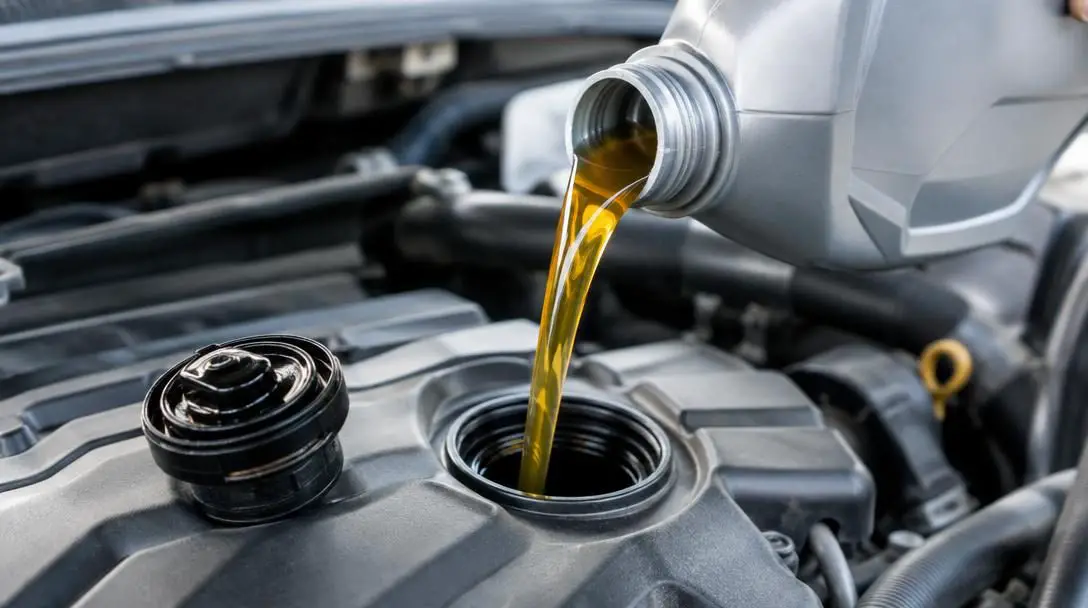
For most drivers, the standard oil change is the most familiar automotive task, reinforced by the small service reminder sticker affixed to the upper corner of the windshield. Engine oil functions as the circulatory lifeblood of the internal combustion engine. It creates a lubricating barrier between rapidly moving metal surfaces, absorbs excess thermal energy generated by combustion friction, and carries away suspended microscopic carbon particles and metal shavings to prevent them from grinding away precision surfaces.
The historical rule of thumb dictates changing motor oil and the accompanying oil filter every 3,000 miles or three months. While this guideline remains a safe baseline for older powertrains and harsh operating environments, it does not apply universally to every modern vehicle. Advances in automotive manufacturing, tighter engine tolerances, and high-performance synthetic oil formulations allow many newer cars to drive significantly farther between oil services. To avoid spending money on premature service or risking oil sludge buildup, consult your vehicle's factory owner's manual for the precise recommended mileage and time thresholds.
Air Filtration for Cabin and Engine
Replacing an air filter is one of the most budget-friendly maintenance tasks a driver can perform, yet it remains widely neglected. Internal combustion engines require massive volumes of oxygen to blend with fuel for proper combustion. Over thousands of miles of driving, atmospheric dust, pollen, organic debris, and road particulate matter accumulate across the filter media, slowly choking off the engine's intake flow.
At most service facilities, an air filter replacement costs around $80, but the component itself typically costs between $30 and $40. Service advisors at quick-lube shops often suggest swapping the air filter during every single oil appointment, but most vehicles only require a fresh engine air filter roughly every 15,000 miles. The optimal change frequency depends heavily on your daily driving conditions; motorists traversing rural gravel roads, arid desert climates, or stop-and-go construction traffic will require more frequent filter changes than highway commuters in moderate climates.
Windshield Wipers and Roadway Visibility
Wiper blades are classic out-of-sight, out-of-mind components until an unexpected downpour hits. Too many drivers discover that their wiper rubbers have cracked, torn, or dried out only after blinding highway spray obscures their vision. Operating an automobile with degraded wiper blades leaves dangerous water smears across the glass, creates severe light refraction from oncoming headlights at night, and risks scratching the windshield glass.
Automotive experts recommend installing fresh wiper blades every six months. If you live in an environment subjected to heavy winter snowfall, ice, intense summer sun, or frequent coastal storms, you may need to replace them even sooner. Freezing temperatures and abrasive road grit degrade the thin rubber squeegee edge rapidly, making proactive seasonal blade changes essential for clear visibility.
Comprehensive Tire Care and Replacement Guidelines
Tires represent the sole physical contact patch between your multi-ton vehicle and the asphalt. As a direct consequence, tire integrity governs emergency braking distances, directional stability, hydroplaning resistance, and fuel efficiency. Comprehensive tire upkeep requires a multi-pronged approach that extends far beyond occasionally inspecting the tread depth.
Air Pressure Checks
Maintaining proper pneumatic pressure is the most vital everyday tire responsibility. You should inspect the air pressure across all four tires whenever possible using a reliable handheld gauge. Underinflated tires generate excessive internal heat from sidewall flexing, accelerate shoulder tread wear, and hurt gas mileage. Conversely, overinflated tires create a harsh ride, reduce grip, cause rapid center-tread deterioration, and increase vulnerability to pothole impact damage.
Tire Rotation Schedules
Because the front and rear axles subject tires to distinctly different dynamic forces, tires must be systematically repositioned around the vehicle. Front tires handle turning stress and bear the brunt of front-engine weight distribution, leading to faster shoulder wear. Rotating your tires approximately every 6,000 miles—or according to the schedule outlined in your owner's manual—distributes friction evenly across all four tires, helping you extract maximum service life from the entire set.
Tread Wear and Complete Tire Replacement
Eventually, every set of tires reaches the end of its safe operational life due to physical tread wear or structural rubber oxidation. Environmental variables such as ambient temperature swings and roadway textures influence the rate of decay, but standard passenger tires generally provide reliable service for 50,000 to 60,000 miles. You should never operate tires beyond 80,000 miles, regardless of remaining tread. Furthermore, rubber naturally degrades and hardens over time, which is why tires should be replaced after six years of service regardless of how few miles they have traveled.
Routine upkeep not only preserves your budget over the long term, but it also ensures that the vehicle remains safe, responsive, and reliable in all driving conditions.
Exterior Lighting and Safety Inspections
Operational exterior illumination is crucial for navigating unlit roadways and communicating your driving intentions to surrounding motorists. Drivers who perform their own maintenance should conduct a thorough exterior lighting audit approximately twice per year. This semi-annual review must include testing low beams, high-intensity high beams, reversing lights, and dedicated fog lamps to ensure consistent illumination and clean lens housings.
Professional technicians generally inspect essential exterior lights—including rear brake lamps, hazard flashers, and side turn indicators—every time a car enters the bay for a routine inspection or oil service. Replacing burned-out incandescent bulbs or malfunctioning light-emitting diodes is generally inexpensive and mechanically straightforward. Correcting dead bulbs immediately eliminates dangerous blind spots and prevents unwanted traffic stops and citations from law enforcement.
Vital Automotive Fluids You Cannot Afford to Ignore
While motor oil receives the bulk of consumer attention, several other specialized chemical compounds circulate through modern automotive systems. These closed-loop fluids absorb extreme heat, facilitate smooth gear changes, transmit hydraulic pedal pressure, and protect internal metal alloys against rust and corrosion.
Transmission Fluid
Transmission fluid lubricates complex planetary gearsets, cools internal clutch packs, and enables hydraulic gear shifting. It should be flushed and replaced every three years or 30,000 miles. Rebuilding or replacing an automatic or manual transmission ranks among the most financially devastating repairs a car owner can face, making fresh fluid an indispensable insurance policy against catastrophic internal damage.
Power Steering Fluid
In vehicles equipped with hydraulic steering systems, power steering fluid enables effortless wheel turning by transferring pressure from the engine-driven pump to the steering rack. Over time, heat cycles break down the fluid and degrade steering response. Motorists should change their power steering fluid every three years or 30,000 miles to preserve pump longevity and avoid heavy, unassisted steering feel.
Brake Fluid
Brake fluid is the hydraulic medium that transfers the force of your foot on the pedal directly to the calipers clamping the brake rotors. Conventional glycol-based brake fluid is hygroscopic, meaning it continuously absorbs airborne moisture past rubber seals and reservoir caps. This accumulated water lowers the boiling point of the fluid, causing a spongy brake pedal and reduced stopping power during hard braking events. Brake fluid must be completely flushed every three years.
Engine Coolant
Engine coolant, commonly known as antifreeze, circulates through the engine block, cylinder head, and radiator to manage internal thermal expansion and prevent seasonal freezing. It contains chemical corrosion inhibitors that degrade over time. Drivers should replace conventional coolant roughly every three years, though modern extended-life factory coolant formulations can run up to 10 years before requiring a total cooling system flush.
Differential Oil
Differentials house heavy-duty ring and pinion gears that transfer engine torque out toward the drive wheels while allowing them to rotate at different speeds through turns. The heavy gear oil within the differential housing absorbs immense sheer pressure and heat. High-grade synthetic differential oil provides durable lubrication, typically lasting up to five years before requiring drainage and replacement.
Long-Term Mechanical Components and Replacement Intervals
Beyond fluids and consumable rubber parts, vehicles contain durable chassis and ignition hardware designed to last across multiple years of regular operation. Because these parts deteriorate gradually, drivers frequently fail to notice the subtle loss of handling precision, fuel economy, or engine smoothness until complete component failure occurs.

Shocks and Struts
Suspension dampers, including shocks and structural struts, absorb roadway impacts and keep the tire tread firmly planted against uneven pavement surfaces. Under standard driving conditions, shocks and struts require replacement between 50,000 and 100,000 miles. Frequent travel across unpaved washboard roads, deep city potholes, or constant heavy payload hauling can wear out hydraulic valving and fluid seals much earlier.
Spark Plugs
Spark plugs generate the high-voltage electrical arc needed to ignite the compressed fuel-and-air mixture inside the combustion chambers. Modern iridium and platinum spark plugs boast remarkable longevity, typically remaining in service until roughly 100,000 miles. Worn electrodes can cause engine misfires, rough idling, hesitation under heavy acceleration, and unburned fuel entering the exhaust stream.
Serpentine Belt
The serpentine belt is a continuous reinforced rubber belt that channels rotational energy from the spinning engine crankshaft to critical accessories, including the electrical alternator, engine water pump, power steering pump, and air conditioning compressor. Modern synthetic belts should be inspected for rib cracking and structural fraying, with full replacement planned between 50,000 and 100,000 miles to prevent sudden roadside stranding.
Recommended Maintenance Intervals at a Glance
Organizing routine car care across multiple overlapping mileage milestones can feel overwhelming. The reference table below gathers typical replacement windows for vital automotive components and fluids to help you budget and plan your service visits efficiently.
| Component or Service | Mileage Interval | Calendar Interval | Primary Function |
|---|---|---|---|
| Engine Oil & Filter | 3,000 miles (or per manual) | 3 months | Engine lubrication and heat absorption |
| Windshield Wipers | As needed | 6 months | Precipitation clearing and roadway visibility |
| Tire Rotation | 6,000 miles | 6 to 12 months | Even tread distribution across all four wheels |
| Cabin & Engine Air Filters | 15,000 miles | 1 to 2 years | Intake air filtration and combustion efficiency |
| Transmission Fluid | 30,000 miles | 3 years | Gear lubrication and internal hydraulic pressure |
| Power Steering Fluid | 30,000 miles | 3 years | Hydraulic steering assist and pump preservation |
| Brake Fluid | 30,000 miles | 3 years | Hydraulic brake actuation and moisture mitigation |
| Engine Coolant | 30,000 to 100,000 miles | 3 to 10 years | Thermal regulation and engine freeze protection |
| Differential Oil | 50,000 miles | 5 years | Drive axle gear lubrication and wear reduction |
| Tire Replacement | 50,000 to 60,000 miles (max 80,000) | Maximum 6 years | Traction, braking, and blow-out prevention |
| Shocks and Struts | 50,000 to 100,000 miles | 5 to 8 years | Suspension dampening and dynamic tire contact |
| Serpentine Belt | 50,000 to 100,000 miles | 5 to 8 years | Alternator, pump, and accessory drive operation |
| Spark Plugs | 100,000 miles | 7 to 10 years | Combustion chamber air-fuel ignition |
The Interconnected Mechanics of Your Vehicle
A passenger vehicle is not a loose assembly of isolated parts; it is an integrated mechanical and thermal ecosystem. When you neglect one system, the resulting inefficiencies transfer unwanted physical stress to adjoining assemblies, accelerating wear and increasing repair bills.
Consider the delicate relationship between the air-intake system and the powertrain. While fresh motor oil protects engine internals against heat and sliding friction, a restricted air filter starves the cylinders of incoming air. The vehicle's computer compensates by adjusting fuel trim, compromising combustion efficiency and potentially fouling the spark plugs with unburned fuel deposits.
Similarly, failing to maintain proper tire inflation directly undermines your suspension components. An underinflated or out-of-balance tire cannot absorb minor road vibrations correctly, transferring harsh shock waves into the wheel bearings, ball joints, and struts. Maintaining balance across all basic vehicle components prevents compound mechanical failures and keeps overall ownership costs low.
Step-by-Step Maintenance Workflow
Taking complete control of your vehicle maintenance requires an organized approach. Use this practical step-by-step workflow to establish an effortless upkeep regimen:
- Review the factory owner's manual to note the exact fluid specifications, capacities, and suggested service intervals for your specific model and trim.
- Create a dedicated vehicle service log—stored in the glove compartment or on a mobile app—to track the exact date, mileage, and parts used for every service.
- Perform a monthly vehicle walkaround to visually check tire pressures, inspect tread condition, and verify that headlights, turn signals, and brake lights operate properly.
- Anticipate mid-tier service milestones by planning fluid exchanges, tire rotations, and filter replacements whenever your odometer approaches 15,000 or 30,000 miles.
- Schedule comprehensive mechanical inspections between 50,000 and 100,000 miles to assess the condition of spark plugs, suspension struts, and the serpentine drive belt.
Costly Maintenance Pitfalls to Avoid
Even well-intentioned vehicle owners make missteps that waste money or inadvertently damage their cars. Watch out for these standard automotive maintenance traps:
- Assuming universal oil intervals: Believing that every vehicle requires service precisely at 3,000 miles can lead you to discard perfectly viable synthetic oil early, whereas ignoring your specific manufacturer guidelines can lead to voided warranties.
- Authorizing premature filter replacements: Service shops frequently present clean air filters to customers during basic oil changes; unless you drive in severe airborne dust, swapping them at 3,000-mile increments is unnecessary.
- Waiting for severe weather to evaluate wiper blades: Delaying wiper inspections until a torrential downpour strikes leaves you vulnerable to sudden visibility loss at highway speeds.
- Overlooking closed-system fluids: Limiting fluid maintenance exclusively to engine oil changes leaves the transmission, power steering, and brake lines susceptible to thermal degradation and internal moisture buildup.
- Evaluating tires solely by tread depth: Continuing to drive on tires older than six years simply because the tread appears deep is dangerous, as internal rubber compounds deteriorate with age regardless of mileage.
Frequently asked questions
How often should I really get an oil change?
While the standard recommendation has historically been every 3,000 miles or three months, many modern cars utilizing synthetic motor oil can safely operate for 5,000 to 10,000 miles between changes. Always refer to your vehicle manufacturer's manual for specific instructions.
Do I need to replace my air filter at every oil change?
No. Most vehicles only require an engine air filter replacement around every 15,000 miles. Unless you drive regularly in exceptionally dusty environments or heavy industrial traffic, agreeing to a new filter every 3,000 miles is an unnecessary expense.
Why must tires be replaced after six years even with good tread?
Tire rubber naturally oxidizes, hardens, and dries out over time when exposed to oxygen, ultraviolet light, and road heat. Even if a tire has plenty of tread remaining, internal structural degradation makes older tires significantly more prone to tread separation and dangerous blowouts.
How often does transmission fluid need to be changed?
Transmission fluid should generally be serviced every three years or 30,000 miles. Keeping clean fluid in your transmission prevents internal gear wear and overheating, helping you avoid catastrophic transmission failures that rank among the most expensive automotive repairs.
When should long-term wear parts like spark plugs and belts be checked?
Components such as shocks, struts, and serpentine belts should be inspected and typically replaced between 50,000 and 100,000 miles. Modern spark plugs feature durable precious-metal electrodes that generally last up to 100,000 miles before requiring replacement.
The Bottom Line
Automobile maintenance is fundamentally an exercise in risk management and financial preservation. By dedicating a modest amount of time and money toward scheduled fluid changes, regular filter replacements, consistent tire inspections, and timely wear-and-tear component swaps, you safeguard yourself against the immense financial shock of roadside breakdowns and engine failures. Taking a proactive approach to your vehicle's maintenance schedule ensures that your car remains safe, predictable, and economical for every journey ahead.