5 Cultural Centres In Florida You Have To Check Out
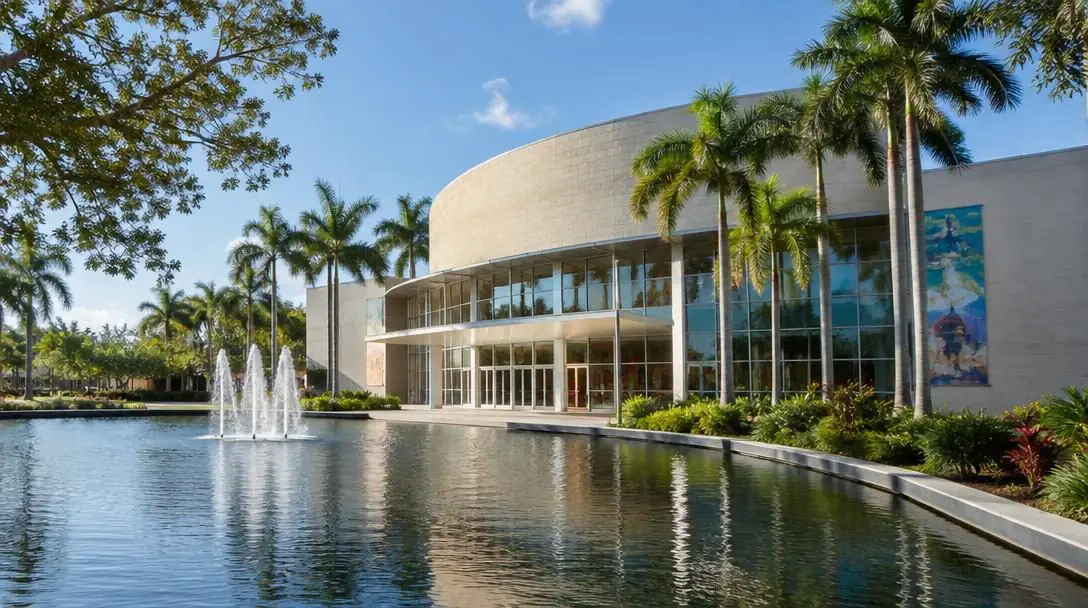
While Florida is frequently celebrated for its coastal recreation and dramatic metropolitan skylines, the state also maintains an expansive and diverse network of cultural centers. Across urban hubs like South Florida and the Tampa Bay region, these creative venues serve as anchor institutions that foster local identity, creative exploration, and community preservation.
From waterfront fine art galleries in St. Petersburg to specialized youth and contemporary spaces in Miami, Florida's major metropolitan areas have cultivated spaces that blend architectural ambition with public education. Exploring these institutions offers a window into decades of civic cultural investment along both the Atlantic and Gulf coasts.
Key takeaways
- Florida's cultural institutions range from single-artist collections and Italian-style historic estates to modern interactive youth centers.
- Long-term investments by cities, patron societies, and universities have helped these organizations expand their facilities and triple attendance over time.
- St. Petersburg and Miami serve as the primary geographical hubs for the state's most prominent creative venues.
- Comprehensive cultural visits require advance planning to account for travel distances across the state and substantial gallery footprints.
At a glance: Florida's premier cultural institutions
Each of the state's marquee cultural centers brings a distinct history, governance model, and artistic specialty to the region. The table below outlines how these five landmark facilities compare across core attributes.
| Cultural center | Location | Year established or opened | Collection scope or facility scale |
|---|---|---|---|
| Perez Art Museum Miami | Miami | 1984 (reopened 2013) | Around 2,000 works of art |
| Museum of Fine Arts | St. Petersburg | 1965 | Four-acre waterfront property with expanded studio wings |
| The John and Mable Ringling Museum of Art | Sarasota | 1932 | Over 10,000 pieces across 200,000 square feet |
| Miami Children’s Museum | Miami | 1983 (relocated 2003) | Over a dozen educational galleries on Watson Island |
| The Salvador Dali Museum | St. Petersburg | 1982 | Hundreds of Dali works in a $30 million structure |
Five standout cultural centers across Florida
Florida's cultural map features historic estates, specialized monographic showcases, and contemporary visual arts facilities. These five centers represent some of the most dynamic community and exhibition venues in the state.
Perez Art Museum Miami
- Location: Miami
- Opening year: 1984 (relocated 2013)
- Collection size: Around 2,000 works of art
- Annual attendance: Around 200,000 visitors
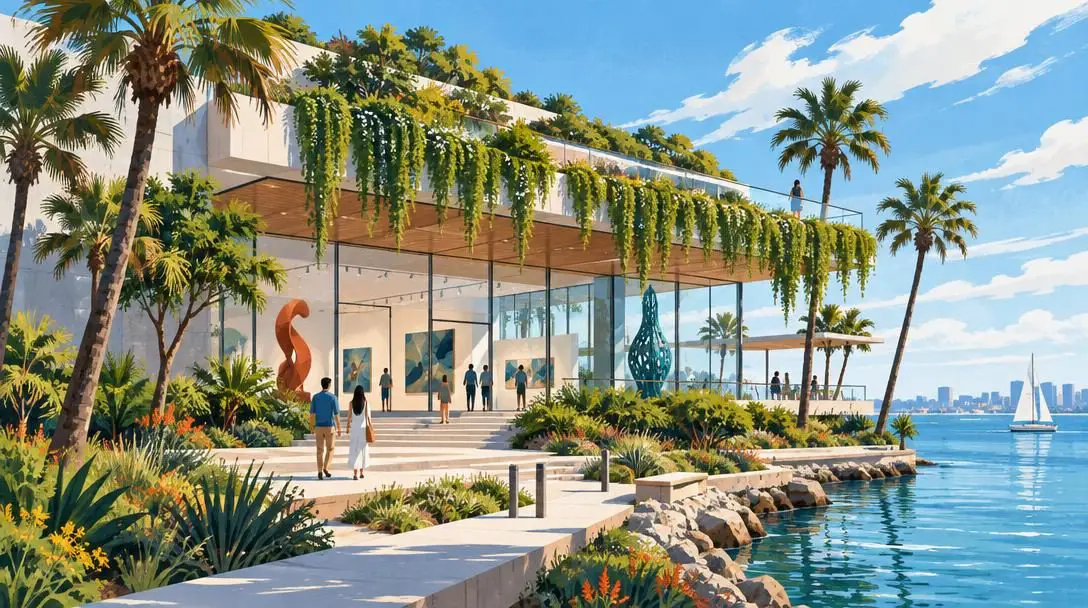
The origins of the Perez Art Museum Miami trace back to civic planning in the early 1970s, when the city of Miami launched an effort to fund and develop the arts over the subsequent decade. The resulting Miami-Dade Cultural Center project saw its first building, the Miami Center for the Fine Arts, officially open its doors in 1984. Although it began primarily as an exhibition hall without a permanent holding, the institution began collecting and accessioning fine art in 1996.
Recognizing the need for a modern, purpose-built facility, civic leaders and planners developed a new waterfront location in the early 2010s. The Perez Art Museum Miami officially opened at this upgraded site in 2013. The relocation proved to be a transformative success, tripling the institution's previous audience to welcome approximately 200,000 visitors annually who come to explore its holding of roughly 2,000 works.
Museum of Fine Arts
- Location: St. Petersburg
- Opening year: 1965
- Site footprint: Four acres of waterfront land
- Leadership: Director Kristen A. Shepherd
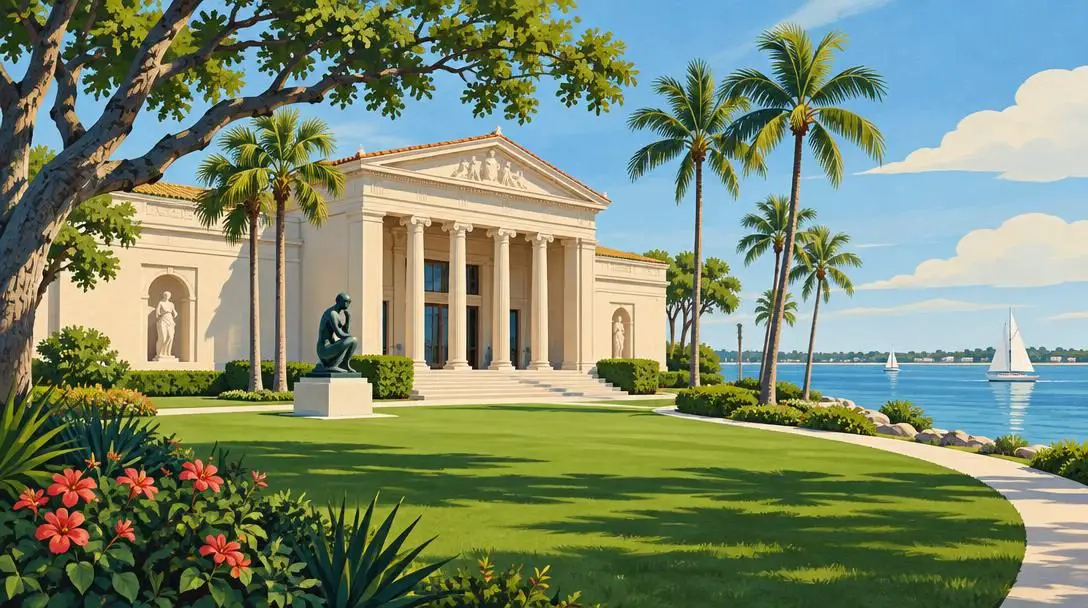
Positioned along the waterfront in downtown St. Petersburg, the Museum of Fine Arts owes its existence to art collector Margaret Acheson Stuart. Construction began in the early 1960s on a picturesque four-acre waterfront parcel, with builders and planners spending several years refining the galleries before opening the facility to the public in 1965. The site quickly became a cornerstone of cultural life in the Tampa Bay region.
Following Stuart's passing 15 years after the museum opened, the governing society bearing her name continued to advance her cultural mission. In the mid-2000s, the institution underwent a major physical expansion that transformed it into a broader community center, adding hands-on painting classes, educational workshops, and diverse public programs overseen today by director Kristen A. Shepherd.
The John and Mable Ringling Museum of Art
- Location: Sarasota
- Opening year: 1932
- Facility size: Around 200,000 square feet
- Collection size: Over 10,000 pieces
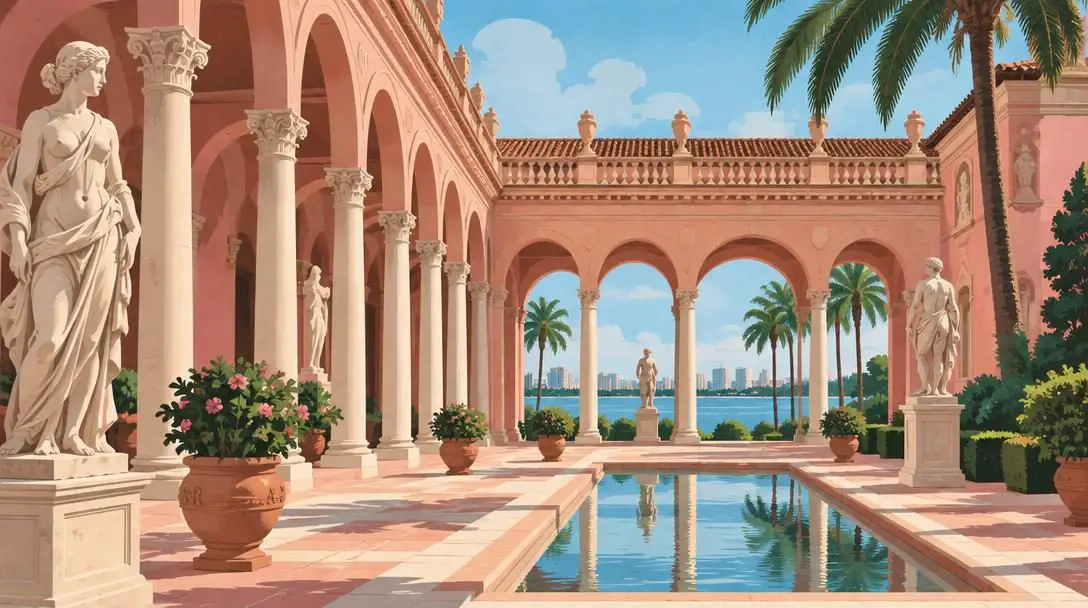
Situated south of Tampa Bay in Sarasota, the John and Mable Ringling Museum of Art represents one of the earliest large-scale cultural undertakings in the region. John Ringling paused his other commercial developments in the mid-1920s to finance and build the expansive, Italian-style museum. Despite various construction and financial delays, the monumental venue opened permanently in 1932. Although Ringling passed away four years later, contractual stipulations ensured the museum would permanently retain the founders' names.
In 2000, stewardship of the historic property was transferred to Florida State University. Under university management, the Ringling estate underwent substantial renovation and growth. Today, the facility encompasses roughly 200,000 square feet and preserves more than 10,000 diverse collection objects, ranging from ancient carved gems to historic trading cards.
Cultural centers serve as dynamic public spaces that combine historic preservation with active community participation.
Miami Children’s Museum
- Location: Miami (Watson Island)
- Opening year: 1983 (relocated 2003)
- Annual attendance: Nearly 500,000 visitors
- Audience reached: Serves nearly 1 million youngsters across the metro area
Founded in 1983 under the name Miami Youth Museum, this educational institution began as an ambitious cultural outreach initiative aimed at serving nearly one million children in the Miami metropolitan area. Its early operations were modest, occupying a 2,000-square-foot facility before quickly expanding into a space twice that size to accommodate community demand.
After securing grant funding to develop a permanent, customized home, the organization relocated in 2003 to Watson Island as the Miami Children's Museum. The current facility houses more than a dozen themed galleries, an expansive auditorium for performances, and dedicated classrooms for preschool education, attracting nearly half a million visitors each year.
The Salvador Dali Museum
- Location: St. Petersburg
- Opening year: 1982
- Building cost: $30 million
- Architect: Yann Weymouth
Spanish surrealist Salvador Dali is celebrated worldwide for his innovative 20th-century creations, and St. Petersburg is home to one of only two dedicated museums in the world showcasing his comprehensive output, alongside his birthplace museum in Figueres, Spain. The St. Petersburg institution opened in 1982 in a relatively modest structure before commissioning a custom architectural showpiece.
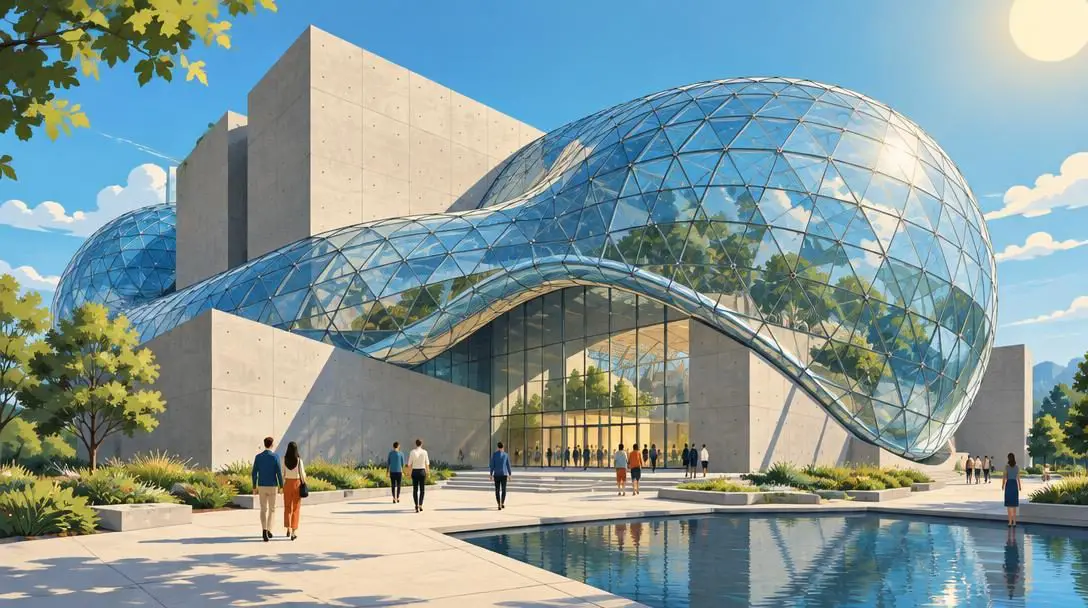
The collection is now housed within an iconic $30 million building defined by an intricate, free-form glass geodesic exterior that stands out along the city's waterfront. Designed by architect Yann Weymouth, the structure features a dramatic three-dimensional interior atrium that shifts in light and perspective throughout the day and night. Inside, visitors encounter hundreds of Dali's original works alongside interactive public programs and art courses.
How Florida's cultural venues operate and sustain themselves
Operating a major cultural facility involves balancing ongoing historic preservation, educational outreach, and institutional funding. Across Florida, several operational models keep these prominent facilities running smoothly:
- Municipal partnerships: Long-term civic arts investment, illustrated by the evolution of the Perez Art Museum Miami from a 1970s municipal vision into a modern waterfront campus, proves how municipal backing drives community participation.
- University stewardship: The integration of the Ringling Museum into Florida State University in 2000 highlights how academic oversight can support the expansion and maintenance of historic collections exceeding 10,000 objects.
- Patron societies: Independent support societies, such as the organization named for founder Margaret Acheson Stuart at the Museum of Fine Arts, provide ongoing continuity and professional leadership under experienced museum directors.
- Targeted youth engagement: The Miami Children's Museum demonstrates the sustainability of an audience-specific mission, utilizing grants and specialized educational programming to support hundreds of thousands of family visits annually.
- Monographic foundations: Venues like the Salvador Dali Museum rely on the international appeal of a single master artist, leveraging architecturally celebrated facilities to support educational classes, lectures, and gallery exhibitions.
Step-by-step guide to planning a cultural itinerary
Given the geographical spread between Florida's Gulf Coast and South Florida metropolitan areas, structuring your visits with a clear plan ensures an enriching experience.
- Group destinations geographically: Combine visits to the Salvador Dali Museum and the Museum of Fine Arts in St. Petersburg on the same regional itinerary, or pair the Perez Art Museum Miami with the Miami Children's Museum when touring South Florida.
- Allocate time based on gallery square footage: Set aside several hours or a half-day for massive facilities such as the 200,000-square-foot Ringling complex or the multi-gallery Perez Art Museum.
- Review scheduled classes and lectures: Check event calendars in advance to participate in public art classes and painting workshops offered by the Museum of Fine Arts or the Salvador Dali Museum.
- Evaluate family facilities: If traveling with young children, build your schedule around interactive locations like Watson Island, where the Miami Children's Museum offers specialized preschool rooms and an auditorium.
- Examine the site architecture: Dedicate time before or after gallery viewing to study the structural details of each center, including the waterfront acreage of the MFA, John Ringling's Italianate architecture, and Yann Weymouth's glass atrium at the Dali Museum.
Common mistakes to avoid when visiting cultural centers
Visitors frequently encounter minor hurdles when navigating these prominent creative institutions. Keeping these common missteps in mind will help maximize your visit:
- Underestimating walking distances: Assuming that historic estates like the Ringling Museum can be traversed in an hour often results in fatigue or missed galleries across its 200,000 square feet.
- Focusing exclusively on interior galleries: Bypassing the outdoor architecture means missing key design achievements, such as Yann Weymouth's multi-perspective atrium at the Dali Museum or the waterfront grounds in St. Petersburg.
- Treating centers purely as passive museums: Overlooking community programs, painting sessions, and public outreach causes visitors to miss the dynamic community events these centers are designed to host.
- Overbooking daily travel: Attempting to drive back and forth across central Florida to visit Gulf Coast and South Florida venues in a compressed weekend leads to rushed, superficial visits.
Frequently asked questions
Where is the Salvador Dali Museum located, and why is it unique?
The Salvador Dali Museum is located in St. Petersburg, Florida. It is unique because it is one of only two institutions in the world dedicated specifically to Salvador Dali's work—the other being in Figueres, Spain—and is housed in an architecturally distinctive $30 million building designed by Yann Weymouth.
Who manages the John and Mable Ringling Museum of Art today?
The Ringling Museum of Art was acquired by Florida State University in 2000. FSU manages the 200,000-square-foot property and its permanent collection of over 10,000 objects while honoring the contractual requirement that the site remain named for John Ringling.
How many visitors does the Perez Art Museum Miami welcome each year?
The Perez Art Museum Miami attracts around 200,000 visitors annually, which is more than triple the attendance figures recorded before the museum moved to its upgraded facility in 2013.
What types of programs does the Museum of Fine Arts in St. Petersburg offer?
Beyond traditional art exhibitions across its four-acre waterfront grounds, the Museum of Fine Arts expanded its offerings in the mid-2000s to function as a broader community center, providing painting classes, educational workshops, and regular public events.
Where is the Miami Children's Museum situated, and who does it serve?
The Miami Children's Museum is located on Watson Island in Miami, where it relocated in 2003. Originally established as a youth outreach initiative serving nearly 1 million children in the metro area, it now welcomes nearly half a million visitors per year to its auditorium, preschool classes, and numerous galleries.
The bottom line
Florida's cultural centers demonstrate that the Sunshine State's metropolitan appeal extends far beyond conventional tourism. Through decades of community vision, institutional stewardship by universities, and generous patron legacies, cities like Miami, St. Petersburg, and Sarasota have developed institutions of lasting artistic merit.
Whether you are interested in exploring hundreds of works by Salvador Dali, touring an expansive Italian-style estate housing over 10,000 historical objects, or introducing children to hands-on museum galleries, these five cultural centers represent the creative heartbeat of Florida's major urban centers.