5 Current Democrat Politicians: Analyzing Their Impact On Public Discourse
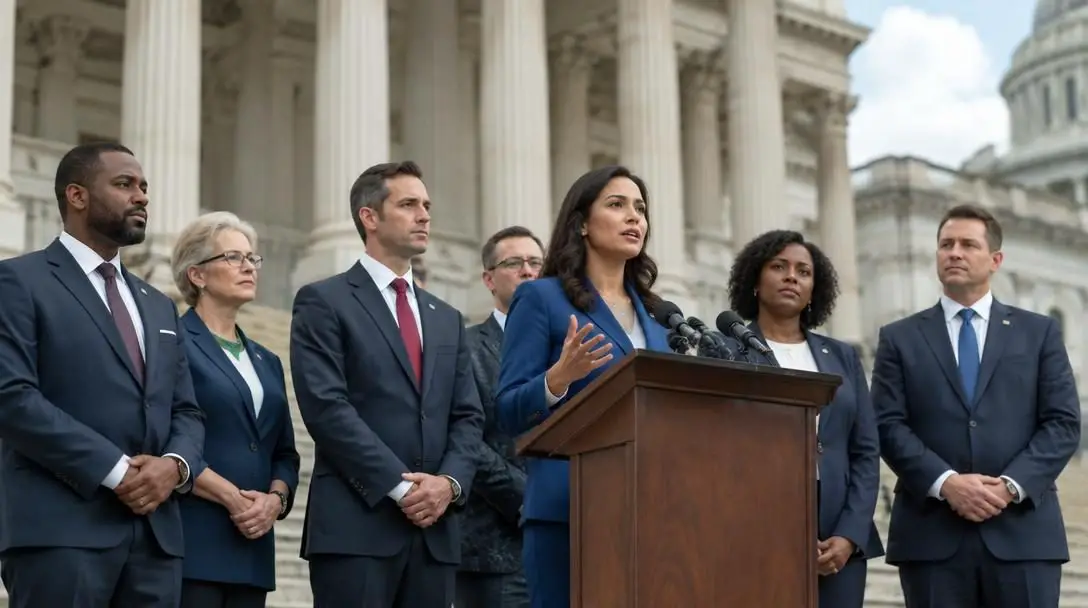
The Democratic Party occupies a pivotal position in modern American governance, operating across local, state, and federal arenas through a broad coalition of elected leaders. Because this political tent encompasses traditional institutional figures alongside energetic progressive reformers, the party consistently steers the direction of national debates on the economy, civil rights, institutional governance, and social policy. Following this diverse roster of officials can prove challenging for everyday citizens attempting to track individual priorities, emerging policy models, and internal ideological contests.
Public discourse represents the ongoing civic dialogue carried out through policy debates, legislative hearings, news coverage, public addresses, and digital media. Today, elected officials do not simply author legislation in committee rooms; their public messaging frames national priorities, brings neglected community concerns to light, and activates distinct voter constituencies. Examining five prominent figures within this landscape reveals how differing career trajectories, communication methods, and policy agendas continually reshape American political life.
Key takeaways
- The modern Democratic coalition relies on both veteran institutionalists seeking bipartisanship and progressive leaders advocating structural economic reforms.
- Public discourse is driven through coordinated channels including legislative agenda setting, direct digital outreach, and symbolic representation.
- Prominent figures like Alexandria Ocasio-Cortez, Joe Biden, Kamala Harris, Bernie Sanders, and Elizabeth Warren exert distinct forms of influence across the legislative and executive branches.
- Objective political evaluation requires examining original legislative records, funding mechanisms, and intended audiences rather than relying solely on rhetorical messaging.
At a glance: Five influential Democratic leaders
While each of these five leaders operates within or alongside the national party apparatus, their offices, core platforms, and discourse strategies reflect the broad ideological spectrum of contemporary American politics.
| Leader | Current office | Signature policy priorities | Discourse and communication focus |
|---|---|---|---|
| Alexandria Ocasio-Cortez | U.S. Representative (NY-14) | Climate change, healthcare access, income inequality | Digital engagement, direct messaging, highlighting marginalized groups |
| Joe Biden | President of the United States | National unity, institutional governance, global standing | Institutional collaboration, bipartisanship, cross-party negotiation |
| Kamala Harris | Vice President of the United States | Legal and legislative governance, civil rights | Symbolic representation, breaking historical barriers for underrepresented groups |
| Bernie Sanders | U.S. Senator (Vermont, Independent) | Medicare-for-all, free public college tuition, minimum wage | Economic justice, systemic reform, grassroots mobilization among youth |
| Elizabeth Warren | U.S. Senator (Massachusetts) | Consumer protection, Wall Street oversight, tech antitrust | Systemic regulatory reform, student loan forgiveness, corporate accountability |
Key figures driving the national conversation
The Democratic Party draws its public identity from officials occupying different levels of power, from freshmen and mid-career legislators in the House of Representatives to senior members of the Senate and executive leadership. Each brings distinct strategies to the ongoing battle over policy priorities.
Alexandria Ocasio-Cortez
- Current office: U.S. Representative (New York's 14th district)
- Historic milestone: Youngest woman ever elected to the United States Congress
- Core focus areas: Climate change, healthcare access, and income inequality
Widely recognized by the initials AOC, Alexandria Ocasio-Cortez has established herself as one of the most visible voices in the progressive wing of the Democratic Party. By securing a historic milestone as the youngest woman ever elected to the United States Congress, she demonstrated how grassroots campaigning can disrupt established political dynamics. Her public messaging centers aggressively on progressive priorities, particularly climate action, universal healthcare, and systemic income inequality.
Ocasio-Cortez's primary influence on public discourse stems from her modern communication strategy. Bypassing standard political public relations conduits, she uses active social media platforms to explain legislative mechanisms, debate economic priorities, and communicate directly with everyday constituents. This direct style has successfully elevated matters critical to marginalized communities that were previously sidelined in national legislative debates.
Joe Biden

- Current office: President of the United States
- Prior national office: Vice President of the United States (2009–2017)
- Core focus areas: National unity, bipartisan governance, and international standing
Representing decades of experience within the traditional political establishment, Joe Biden brings an institutional approach to national leadership. Before assuming the presidency in 2020, Biden completed an extensive career in public service that included eight years serving as Vice President under President Barack Obama from 2009 to 2017. His presidential campaign and subsequent governing agenda were anchored in promises to restore national unity, mend traditional democratic norms, and rebuild America's standing on the global stage.

In terms of public discourse, Biden's style emphasizes consensus-building over confrontation. His public remarks consistently stress institutional collaboration and the possibility of working across party lines to solve national issues. While his steadfast commitment to bipartisan negotiation has drawn both praise from moderates and skepticism from progressive factions seeking rapid structural shifts, his rhetoric reinforces faith in conventional governance processes.
Kamala Harris

- Current office: Vice President of the United States
- Prior offices: Attorney General of California; U.S. Senator representing California
- Historic milestone: First woman, first African-American, and first South Asian Vice President
As Vice President of the United States, Kamala Harris holds a distinct position characterized by multiple historic firsts. She is the first woman, the first African-American person, and the first South Asian person to serve in the nation's second-highest executive office. Prior to her national tenure, Harris built a career across legal and legislative governance, serving as the Attorney General of California before winning election as a United States Senator representing the state.
Harris's contribution to public discourse is fundamentally linked to her identity as a barrier-breaker within institutional power. Her visibility in executive decision-making serves as a powerful symbol of inclusion and representation, inspiring young women and communities of color across the nation. Through official addresses and policy initiatives, her presence continuously challenges historical norms regarding representation at the highest tiers of American leadership.
Bernie Sanders
- Current office: U.S. Senator representing Vermont (Independent)
- Party dynamic: Caucuses directly with Democrats in the Senate
- Core platforms: Universal healthcare (Medicare-for-all), free public college tuition, minimum wage hikes
Although he serves as an independent Senator representing Vermont, Bernie Sanders caucuses directly with Senate Democrats and has profoundly altered the modern party's ideological center. Through his competitive presidential primary campaigns in 2016 and 2020, Sanders transformed once-fringe policy concepts into standard benchmarks of Democratic platform debates. His messaging centers on structural economic injustice, universal healthcare through Medicare-for-all, tuition-free public higher education, and living wages for working-class citizens.
Sanders's enduring impact on public discourse is most evident among younger generations who respond to his critique of corporate power and wealth concentration. While moderate opponents and conservative commentators have frequently labeled his democratic socialist ideas as radical or impractical, supporters view his persistent advocacy as an essential moral and political compass that pushes the mainstream Democratic coalition toward meaningful economic redistribution.
Elizabeth Warren

- Current office: U.S. Senator representing Massachusetts
- Prior national campaign: Contender in the 2020 Democratic presidential primary
- Core focus areas: Wall Street regulation, consumer financial protection, and technology antitrust
A United States Senator from Massachusetts and a major contender during the 2020 presidential primary season, Elizabeth Warren has built a distinct national profile around consumer advocacy and financial oversight. Throughout her tenure in academia, public advocacy, and the Senate, Warren has focused on rewriting economic rules that favor corporate conglomerates at the expense of working families.
Warren's intervention in public discourse centers on structural regulatory solutions. She has taken a leading role in national discussions surrounding the cancellation of federal student loan debt, framing the burden as a drag on economic mobility. Furthermore, she remains one of the most prominent advocates of robust antitrust enforcement, routinely calling for regulators to scrutinize and dismantle dominant tech monopolies, explicitly identifying companies such as Facebook and Google as threats to fair competition and public welfare.
Mechanisms of narrative framing and public discourse
Public discourse is not a series of accidental headlines; it is constructed through systematic strategies employed by political actors to frame issues, influence voters, and dictate the legislative agenda.
- Agenda setting: Lawmakers introduce targeted bills, schedule committee hearings, and coordinate speeches to force public attention onto topics that might otherwise be ignored by legislative leadership.
- Direct-to-consumer digital channels: Unfiltered communication tools allow officials to articulate nuanced policy ideas, push back on media narratives, and rally grassroots support without relying on traditional editorial gatekeepers.
- Symbolic representation: Elevating leaders from underrepresented demographic backgrounds reshapes the public perception of who possesses governing authority and broadens the scope of national political debates.
- Ideological contestation: The continuous tension between moderate lawmakers favoring compromise and progressive champions seeking structural change serves as a creative catalyst, refining policy options before they reach legislative floors.
Modern political figures do not merely draft legislation behind closed doors; their public messaging sets national priorities and mobilizes voter bases.
How to analyze political information objectively
Because political statements and press campaigns are frequently crafted to provoke emotional reactions or secure strategic electoral advantages, voters must utilize structured techniques to assess claims accurately.
- Review primary legislative texts: Examine the actual wording of introduced legislation, executive orders, or committee transcripts instead of relying on third-party soundbites.
- Compare rhetoric with historical voting records: Check whether an official's current public platform aligns with their past sponsorship of bills, floor votes, and regulatory appointments.
- Inspect policy implementation and funding mechanisms: Look beyond aspirational titles to understand how a proposed program—such as student debt relief or clean energy investments—is designed to be financed and legally administered.
- Identify the intended audience of the message: Determine whether a speech or social media statement is intended to unify a general electorate, energize a passionate activist base, or negotiate leverage within a legislative committee.
- Cross-reference multiple information sources: Contrast reporting from local news outlets, national investigative desks, and nonpartisan research organizations to observe how different groups assess the same policy proposal.
Common mistakes when following national politics
Navigating the flow of national news requires vigilance against several frequent analytical errors that distort public understanding of governance.
- Treating the political party as a monolith: Assuming that all Democratic officials share the same priorities overlooks sharp internal divides between moderate institutionalists and progressive reformers.
- Confusing public rhetoric with statutory law: Believing that introducing an ambitious policy proposal or delivering an impassioned floor speech automatically translates into enforceable legal reality.
- Overvaluing social media virality: Mistaking high follower numbers, viral clips, or trending topics for genuine institutional authority or widespread support across the entire national voting population.
- Misinterpreting political independence: Overlooking how independent lawmakers such as Bernie Sanders coordinate within the party structure, using committee assignments and caucuses to shape mainstream platforms.
- Discounting structural governance limits: Ignoring constitutional checks and balances, judicial rulings, and narrow congressional majorities that constrain what presidents and lawmakers can realistically accomplish.
Frequently asked questions
How does Bernie Sanders influence the Democratic Party if he is an Independent?
Although Senator Bernie Sanders runs for office as an independent, he caucuses directly with Senate Democrats. This alignment allows him to participate in committee assignments, vote within party leadership structures, and use his prominent national platform to push the party's mainstream platform toward progressive economic policies such as Medicare-for-all and tuition-free public college.
What is Alexandria Ocasio-Cortez's primary focus in Congress?
Representative Alexandria Ocasio-Cortez concentrates her legislative and messaging efforts on climate change, universal healthcare access, and reducing income inequality. She also utilizes her significant social media presence to elevate marginalized perspectives and demystify the federal legislative process for younger audiences.
Why does Elizabeth Warren focus so heavily on big technology companies?
Senator Elizabeth Warren views dominant technology corporations, specifically citing firms like Facebook and Google, as corporate monopolies that stifle economic competition, exploit consumer data, and distort market fairness. She champions aggressive antitrust regulations designed to investigate and break up these massive conglomerates.
What distinguishes Joe Biden's communication style from progressive lawmakers?
President Joe Biden focuses heavily on institutional collaboration, bipartisan negotiation, and restoring traditional diplomatic norms. Unlike progressive lawmakers who often demand swift structural changes to economic systems, Biden's rhetoric centers on bringing opposing political factions together and preserving institutional governance.
How does symbolic representation impact public political discourse?
Symbolic representation, exemplified by Kamala Harris serving as the first female, African-American, and South Asian Vice President, reshapes societal expectations of executive leadership. It introduces diverse life experiences into executive policy discussions and inspires underrepresented communities to participate actively in democratic institutions.
The bottom line
The contemporary Democratic Party is not defined by a single voice or ideology, but rather by an ongoing negotiation among varied leaders navigating complex political realities. From the institutional bipartisanship championed by Joe Biden and the historic barriers broken by Kamala Harris to the progressive economic challenges presented by Bernie Sanders, Elizabeth Warren, and Alexandria Ocasio-Cortez, each figure contributes fundamentally to the national narrative. Understanding the interplay between these leaders allows observers to look beyond immediate political headlines, evaluate underlying legislative mechanisms, and appreciate how modern public discourse continually shapes the future of American governance.