5 Democratic Successes and 5 Democratic Failures – From State to Federal Policy

Alongside the Republican Party, the Democratic Party defines the core framework of the American two-party system. Founded in 1828, the party has navigated nearly two centuries of profound ideological evolutions, shifting regional coalitions, and monumental domestic crises. From combating the ravages of the Great Depression to spearheading pivotal civil rights protections, Democratic leaders in Congress and the executive branch have fundamentally shaped the modern social safety net and expanded federal civil rights guarantees.
Yet this extensive legislative and electoral record reflects dramatic historical contrasts. While Democratic administrations engineered some of the most enduring social programs in United States history, the party also bears responsibility for disastrous nineteenth-century compromises, costly electoral miscalculations, and controversial legislative concessions. Evaluating these major victories alongside their counterpart failures provides an essential lens for understanding both the mechanics of federal policymaking and the trajectory of modern American governance.
Key takeaways
- The Democratic Party established cornerstone social safety net programs, including the New Deal, Social Security, Medicare, and Medicaid.
- Passing transformative civil rights protections required overcoming intense procedural resistance, including a record 72-day Senate filibuster against the Civil Rights Act of 1964.
- In the nineteenth century, party policy backed pro-slavery measures like the Kansas-Nebraska Act, which ignited armed conflict and fractured the nation.
- Electoral timing and campaign missteps in 1980, 2000, and 2016 shifted national leadership, twice surrendering the White House despite popular vote pluralities.
- Landmark statutes routinely required deep statutory compromises, from unpaid leave in the Family and Medical Leave Act to preserving private insurers within the Affordable Care Act.
At a glance: Key party milestones
Examining signature policy shifts and critical election outcomes illustrates how ambitious domestic agendas encountered procedural roadblocks, political concessions, and intense campaign friction across different eras.
| Milestone | Historical Era | Key Figure or Administration | Primary Impact |
|---|---|---|---|
| Civil Rights Act | 1964 | Lyndon B. Johnson | Barred public discrimination and advanced national voting rights |
| Social Security Act | 1935 | Franklin D. Roosevelt | Instituted monthly federal safety net payments for older Americans |
| Medicare and Medicaid | 1965 | Lyndon B. Johnson | Created public health coverage for seniors, low-income citizens, and people with disabilities |
| Kansas-Nebraska Act | 1850s | 19th-Century Democrats | Permitted territorial settler votes on human bondage, triggering armed clashes |
| 2000 Election Recount Halt | 2000 | Al Gore | Conceded the presidency despite winning the national popular vote by over 500,000 ballots |
| Affordable Care Act Finalization | 2010 | Barack Obama | Retained private insurers alongside mandates, leading to price increases for millions |
Five transformative Democratic successes
Throughout the twentieth century, Democratic administrations enacted landmark legislative frameworks that redefined the relationship between American citizens and the federal government. These measures constructed broad protections for vulnerable workers, senior citizens, and historically marginalized communities.
Civil Rights Act
- Signed: July 2, 1964
- President: Lyndon B. Johnson
- Procedural obstacle: 72-day Senate filibuster
- Core protection: Prohibited discrimination in employment, schools, and public places
Following decades of sustained activism and gradual, piecemeal legal advances toward equality for African Americans, the Democratic Party marshaled the Civil Rights Act through a fractured Congress. Signed into law on July 2, 1964, by President Lyndon B. Johnson, the measure explicitly outlawed state-sanctioned segregation and discriminatory practices across public accommodations, educational institutions, and employment environments. It also established an unprecedented legal foundation for protecting national voting rights.
Securing the passage of this landmark statute required overcoming formidable institutional resistance from within the party's own conservative southern wing. Proponents spent months organizing votes and navigating complex floor rules, eventually breaking a grueling 72-day Senate filibuster to bring the legislation to a final vote. The law broke the back of legal Jim Crow segregation across the South, fundamentally reshaping federal authority in the enforcement of constitutional equality.
Family and Medical Leave Act (FMLA)

- Signed: 1993
- President: Bill Clinton
- Core benefit: Up to 12 weeks of job-guaranteed leave
- Statutory compromise: Leave time remains unpaid
For most of the twentieth century, American private-sector employees risked immediate termination if they needed time off to welcome a newborn child, recover from a severe personal illness, or tend to a dying parent. Just weeks after assuming the presidency in 1993, Bill Clinton signed the Family and Medical Leave Act, establishing a federal guarantee of job protection during life-altering personal crises.
Under the statute, eligible employees gained the legal right to take up to 12 weeks of job-protected leave each year. To overcome deep resistance from the business lobby and assemble the required bipartisan votes, congressional sponsors accepted a significant statutory compromise: the mandated leave period would remain entirely unpaid. Despite this limitation, the law provided millions of families with an essential baseline of federal workplace security and fundamentally established the principle of modern family-care rights in corporate America.
The New Deal

- Era: 1930s (pre-World War II)
- President: Franklin D. Roosevelt
- Primary objective: Relief and recovery from the Great Depression
- Key reforms: Wall Street oversight, unemployment aid, and public works
Confronting the catastrophic fallout of the Great Depression, President Franklin D. Roosevelt unveiled the New Deal, an unprecedented mobilization of federal power designed to bring immediate relief and long-term economic stability. Through an aggressive sequence of emergency programs enacted throughout the 1930s, the federal government moved from a passive regulator into an active driver of the national economy.
The New Deal constructed a robust regulatory architecture over Wall Street, established expansive federal unemployment aid programs, and authorized sweeping public works initiatives that modernised national infrastructure. These initiatives brought targeted relief to impoverished rural farmers, provided millions of destitute Americans with emergency employment, and laid an enduring industrial foundation that proved indispensable when the United States mobilized to win World War II.

Major legislative expansions fundamentally transformed retirement security and opened broad healthcare access to the nation's most vulnerable populations.
Social Security
- Signed: August 14, 1935
- Enacting legislation: Social Security Act of 1935
- Core design: Monthly safety-net stipends for elderly citizens
- Long-term reach: Extended to retirees, surviving dependents, and disabled workers
Although introduced as part of the broader New Deal legislative flurry, the establishment of Social Security stands as an autonomous pillar of domestic policy. Enacted on August 14, 1935, the Social Security Act inaugurated a permanent federal social insurance program providing guaranteed monthly stipends to older Americans who had exited the workforce.
Before 1935, age-related poverty was commonplace across the country, as aging workers who could no longer sustain physical labor routinely faced destitution. The federal program built an enduring bulwark against poverty, which was subsequently broadened to protect disabled workers and surviving dependents of deceased breadwinners. While ongoing demographic changes continue to fuel debates regarding the system's long-term financing, the program fundamentally altered the reality of aging in America by institutionalizing modern retirement security.
Medicare and Medicaid

- Established: 1965
- President: Lyndon B. Johnson
- Medicare coverage: Citizens aged 65 and older or disabled
- Medicaid coverage: Low-income individuals at or below 138 percent of poverty
The landscape of American public health underwent a profound revolution in 1965 when President Lyndon B. Johnson signed into law the legislation establishing Medicare and Medicaid. In the mid-twentieth century, private medical insurers routinely dropped or priced out elderly individuals, while low-income families had virtually no access to preventive clinical treatments or specialized hospital care.
The dual programs closed these gaping coverage voids. Medicare established a federal health insurance entitlement for senior citizens aged 65 and older along with individuals with qualifying permanent disabilities. Running parallel, Medicaid established a joint federal and state program extending crucial medical coverage to low-income Americans, including those earning at or below 138 percent of the federal poverty level. Together, these programs formed the modern baseline of public medical access across the United States.
Five major Democratic failures
Contrasting its historical achievements, the Democratic Party has also presided over profound institutional blunders, disastrous ideological alignments, and strategic missteps during pivotal campaigns. These moments altered the trajectory of national politics, frequently empowering rival movements or creating lingering policy crises.
The Kansas-Nebraska Act
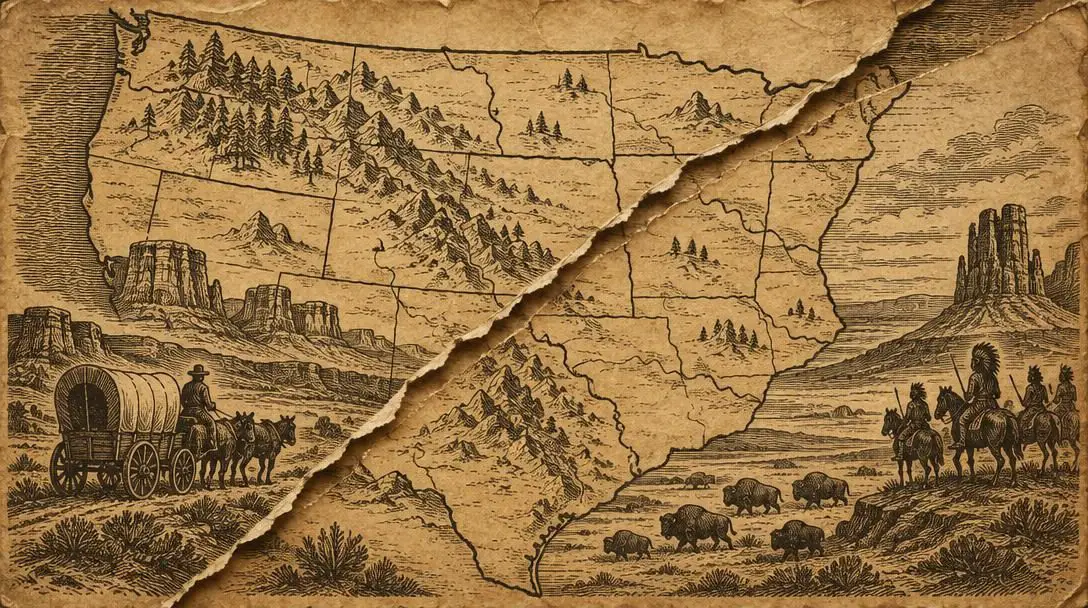
- Era: 1850s
- Mechanism: Local settler voting on the expansion of slavery
- Direct result: Armed conflict in new territories
- Political consequence: National destabilization and the emergence of Abraham Lincoln
During the decades preceding the Civil War, the nineteenth-century Democratic Party served as the primary political vehicle for pro-slavery interests. In the 1850s, party leadership championed the passage of the Kansas-Nebraska Act, which organized both territories around the concept of popular sovereignty—allowing territorial settlers to vote locally on whether to legalize human bondage rather than resolving the question through congressional statute.
This decision discarded decades of hard-won balance established by earlier compromises. Rather than defusing sectional tensions, the law attracted thousands of armed ideological partisans to the region, initiating brutal border warfare and widespread bloodshed. The resulting turmoil tore the Democratic Party apart into hostile regional factions, destabilized the Union, and set the nation on an irreversible course toward civil war. The solitary positive byproduct of this legislative calamity was the political rise of Abraham Lincoln and the newly founded Republican Party, which organized to halt the expansion of slavery.
Carter’s Re-election Campaign

- Election year: 1980
- Incumbent: Jimmy Carter
- Challenger: Ronald Reagan
- Strategic error: Postponed direct one-on-one debates until late in the race
The 1980 presidential race represented a transformative watershed in modern American governance, igniting decades of conservative dominance that challenged New Deal social protections. Despite navigating high inflation and foreign policy crises, incumbent President Jimmy Carter remained in a competitive polling position against his Republican opponent, former California Governor Ronald Reagan, through much of the general election cycle.
However, the Carter campaign committed a fatal strategic blunder by delaying a direct, one-on-one debate until the final days before the vote. By deferring the face-to-face clash until late in the autumn, the campaign allowed Reagan to establish a polished, reassuring national presence before tens of millions of undecided voters. Carter fumbled his numbers away as the late confrontation generated decisive momentum for Reagan, resulting in a sweeping Republican victory that reshaped national tax policy, military spending, and domestic priorities for generations.
Not Fighting The 2000 Election Results
- Election year: 2000
- Democratic candidate: Al Gore
- Key battleground: Florida
- Popular vote dynamic: Gore led by over 500,000 votes nationally
The 2000 presidential contest between Vice President Al Gore and Texas Governor George W. Bush yielded one of the most contentious constitutional crises in modern American history. For the first time since 1888, the candidate who secured the nationwide popular vote was denied the presidency. Gore outpaced Bush by more than 500,000 votes across the country, yet the entire national contest narrowed to a disputed margin of a few hundred ballots in the state of Florida.
Amid intense legal skirmishing over hand recounts and defective punch-card ballots, the United States Supreme Court halted the recount process. Rather than launching protracted institutional resistance, seeking alternative legal avenues, or disputing the electoral certification through procedural battles in Congress, Gore chose to officially concede the contest. This rapid stand-down handed the White House to the Bush administration, a transition that fundamentally altered long-term Supreme Court appointments, foreign policy interventions, and domestic budget allocations.
Accepting the Finalized Affordable Care Act

- Signed: 2010
- President: Barack Obama
- Original proposition: Universal-style care and a significantly diminished private insurance industry
- Finalized trade-off: Preserved private insurance and mandated individual participation
During the 2008 presidential campaign, Barack Obama and Democratic reformers laid out an ambitious healthcare vision designed to mirror universal health coverage systems seen in other developed countries. The original concept aimed to provide broad access to free healthcare without exposing families to crushing medical debt, largely by drastically curtailing the influence of commercial insurance carriers.
However, during grueling congressional deliberations in 2009 and 2010, Democratic leaders made massive concessions to secure the votes of conservative caucus members and industry lobbyists. The finalized Affordable Care Act preserved the dominance of private, for-profit insurance corporations while instituting a contentious legal mandate requiring citizens to purchase private coverage or pay a tax penalty. Instead of dramatically lowering out-of-pocket costs, the compromise resulted in increased health insurance prices for millions of middle-class Americans, alienating progressive reformers while triggering furious political backlash from conservatives.
Handling The 2016 Election
- Election year: 2016
- Nominee: Hillary Clinton
- Primary rival: Bernie Sanders
- General election outcome: Lost electoral college despite winning the national popular vote
The 2016 presidential election cycle laid bare deep internal fractures within the Democratic Party. An unexpectedly formidable primary challenge from Vermont Senator Bernie Sanders activated millions of young and grassroots activists, exposing stark ideological divisions regarding corporate financial ties, campaign finance, and institutional trade policies. Rather than unifying these competing wings, the party leadership struggled to mend internal distrust heading into the general election.
Operating under the assumption that Hillary Clinton maintained a commanding lead over Republican nominee Donald Trump, campaign planners misallocated resources and overlooked critical warning signs across working-class industrial strongholds. While Clinton ultimately won the national popular vote by nearly three million ballots, narrow defeats in historic party bastions like Wisconsin, Michigan, and Pennsylvania triggered an unexpected Electoral College defeat. The loss fundamentally transformed the federal judiciary and marked a profound political realignment across working-class communities.
Navigating legislative process and campaign strategy
Analyzing both the crowning achievements and costly missteps of the Democratic Party clarifies the dual mechanisms of federal lawmaking and nationwide electoral strategy. Turning political ambition into enduring public policy requires mastering procedural hurdles, while maintaining political power demands meticulous campaign execution.
On the legislative front, enacting transformative policy requires clearing three primary stages:
- Securing bicameral consensus: Proposed bills must navigate complex committee hearings and pass both the House of Representatives and the Senate in completely identical form before reaching the president's desk.
- Overcoming procedural filibusters: In the Senate, unified minorities can employ procedural delays to freeze legislation, requiring a supermajority of 60 votes to advance bills, as demonstrated during the 72-day battle over the Civil Rights Act.
- Accepting statutory compromises: To assemble a fragile majority, bill authors frequently surrender key elements of their original vision, such as removing paid leave from the FMLA or preserving private commercial health insurers in the Affordable Care Act.
Conversely, executing a successful national campaign demands strict operational discipline across several high-stakes fronts:
- Unifying divergent party factions following aggressive primaries to avoid suppressing general-election voter enthusiasm, as occurred in 2016.
- Carefully managing candidate debate timing to protect polling leads and prevent challengers from capturing late-stage momentum, an error that doomed Jimmy Carter in 1980.
- Preparing comprehensive post-election legal, recount, and operational battle plans for razor-thin margins in battleground states, as revealed by the Florida controversy in 2000.
Frequently asked questions
Why did the Democratic Party support slavery in the nineteenth century?
Prior to its twentieth-century ideological realignment, the nineteenth-century Democratic Party was anchored in the agrarian South and advocated for states' rights and territorial popular sovereignty, aligning itself with pro-slavery economic interests against the rising anti-slavery coalition that formed the Republican Party.
How did the 72-day Senate filibuster impact the Civil Rights Act of 1964?
The 72-day filibuster was mounted by conservative southern senators attempting to block the bill from coming to a final vote. Overcoming the filibuster required intense bipartisan coordination, public pressure from President Lyndon B. Johnson, and the mobilization of a cloture vote to end debate and ensure passage.
What was the primary compromise in the Family and Medical Leave Act?
To secure enough legislative support to pass both houses of Congress and overcome business lobby resistance, the statute guaranteed that workers could take up to 12 weeks of job-protected leave without fear of termination, but stipulated that the leave would be completely unpaid.
How did the 2000 presidential election end without a full recount in Florida?
Following weeks of legal disputes over contested punch-card ballots and manual recount deadlines, the United States Supreme Court halted the Florida recount. Vice President Al Gore then made the strategic decision to concede the election rather than pursuing additional legal or congressional challenges.
Why did the Affordable Care Act cause political division within the Democratic base?
While the legislation extended coverage to millions of Americans, it made deep concessions by abandoning universal-style free care, preserving commercial health insurers, and mandating individual insurance purchases. This led to higher insurance prices for millions and drew criticism from progressive reformers who favored a single-payer system.
The bottom line
The Democratic Party's two-century political trajectory is characterized by profound domestic triumphs balanced against consequential policy compromises and electoral defeats. Landmark achievements like Social Security, the Civil Rights Act, Medicare, and the New Deal fundamentally elevated the standard of living for millions of vulnerable Americans and expanded civil liberties across the nation. However, catastrophic historical choices like the Kansas-Nebraska Act, campaign timing blunders in 1980 and 2016, and contentious legislative trade-offs in modern healthcare demonstrate that federal governance is an ongoing negotiation between progressive ambition and structural political realities.