5 Memorable Canadian Political Moments of the Last Decade
Modern Canadian political history reflects a continuous negotiation among parliamentary institutions, the judiciary, and civic movements. Across recent decades, pivotal decisions rendered in the House of Commons and provincial courts have fundamentally reordered the legal privileges, social rights, and economic frameworks experienced by millions of Canadians. From landmark human rights rulings to sweeping economic legalizations, these turning points highlight the adaptability and resilience of the country's federal system.
Understanding these defining milestones reveals how statutory reforms emerge, how civic participation drives electoral realignments, and how national leaders confront historical state failures. The following overview details five transformative political moments, assessing the legal mechanisms behind their adoption, their nationwide impact, and the enduring institutional precedents they established.
Key takeaways
- The 2015 federal election saw voter participation surge to 68.3%, resulting in the first non-Conservative administration since 1993.
- With the implementation of Bill C-45 on October 17, 2018, Canada became the second country globally to establish a legal nationwide recreational cannabis framework.
- Targeted repeals of mandatory minimum sentences in 2012 restored judicial discretion to trial judges and sought to reduce correctional overcrowding.
- Nationwide recognition of same-sex marriage in June 2005 followed courageous 2003 court challenges initiated by couples in Ontario.
- The historic June 11, 2008 apology in the House of Commons formally acknowledged the intergenerational harm caused by the state-supported residential school system.
Five transformative milestones in modern Canadian politics
Canada's statutory architecture evolves through competitive general elections, legislative innovation, judicial precedent, and national reckonings. Below are five pivotal moments that redefined the political landscape and reshaped federal administration.
| Political Milestone | Key Date | Key Figures or Entities | Core Mechanism | Primary Impact |
|---|---|---|---|---|
| 2015 Federal Election | October 19, 2015 | Justin Trudeau, Stephen Harper | Democratic general election | Voter turnout hit 68.3%; ended nearly ten years of Conservative governance |
| The Cannabis Act | October 17, 2018 | Parliament of Canada | Federal statute (Bill C-45) | Created legal recreational market projected to yield $5 billion annually |
| Sentencing Reform | 2012 | Rob Nicholson, Stephen Harper | Ministerial legislative revision | Repealed select mandatory minimums to combat jail overcrowding |
| Same-Sex Marriage | June 2005 | Joe Varnell, Kevin Bourassa, Elaine and Anne Vautour | Judicial challenge & federal law | Recognized marriage equality nationwide under federal statute |
| Residential School Apology | June 11, 2008 | Stephen Harper, Indigenous survivors | Official parliamentary address | Formal state acknowledgment of systemic harm; spurred reconciliation process |
The 2015 Federal Election
- Date: October 19, 2015
- Key leaders: Justin Trudeau (Liberal), Stephen Harper (Conservative)
- Turnout rate: 68.3% of eligible voters
The general election of October 19, 2015, marked a major realignment in federal politics. Liberal leader Justin Trudeau won a decisive mandate, bringing to an end nearly a decade of Conservative governance directed by Prime Minister Stephen Harper between 2006 and 2015. The outcome represented the first time since 1993 that a political party other than the Conservatives held power in Ottawa, fundamentally resetting legislative priorities across both domestic governance and international relations.
Democratic engagement reached historic proportions during this campaign. Voter participation climbed to 68.3% of eligible voters, representing the highest participation level documented in Canada since 1993. This mobilization showed that civic engagement remained strong across diverse demographics, delivering an unmistakable endorsement for a shift in national leadership and structural policy reform.
Legalizing Recreational Cannabis Through the Cannabis Act
- Effective date: October 17, 2018
- Enabling statute: Bill C-45 (The Cannabis Act)
- Age threshold: 18 years and older
- Estimated economic scale: $5 billion annually
On October 17, 2018, Canada established a global precedent by becoming only the second country worldwide—following Uruguay in 2013—to legalize adult recreational cannabis on a national scale. Introduced as Bill C-45 and officially titled The Cannabis Act, the legislation ended nearly a century of criminal prohibition, replacing illicit networks with a strictly governed commercial supply chain.
The statute granted adults aged 18 and older the legal authority to purchase, possess, and consume regulated cannabis products. In addition to transforming the criminal code, the measure carried transformative fiscal consequences. Projections estimated that legal retail sales, commercial licensing, production facilities, and federal excise taxation would contribute an estimated $5 billion annually to the Canadian economy, creating an influential model for international jurisdictions reconsidering drug policy.
Repeal of Mandatory Minimum Sentences in Criminal Justice
- Implementation year: 2012
- Responsible minister: Rob Nicholson (Minister of Justice)
- Administrative goal: Relieve institutional overcrowding and restore judicial discretion
Between 2006 and 2015, the federal administration under Prime Minister Stephen Harper prioritized robust criminal justice measures, introducing structured mandatory minimum penalties across an array of offences. However, by 2012, practical challenges within the correctional system prompted a critical legislative course correction. Under the direction of Justice Minister Rob Nicholson, the federal government moved to repeal several statutory mandatory minimum sentences previously placed on non-violent infractions.
The core objective of these adjustments was to resolve severe jail overcrowding and enable legal professionals to target the nuanced social origins of unlawful conduct. By curtailing automatic, predetermined incarceration terms for specific non-violent charges, Parliament restored essential discretion to trial judges. This revision empowered the bench to assess the unique factual matrix and mitigating circumstances of every individual case rather than enforcing rigid, one-size-fits-all sentences.
The Landmark Legalization of Same-Sex Marriage
- Statutory enactment: June 2005
- Key legal precedents: 2003 Ontario court cases
- Pioneering litigants: Joe Varnell, Kevin Bourassa, Elaine Vautour, Anne Vautour
Prior to the mid-2000s, full nationwide legal recognition of same-sex marriage remained unrealized anywhere on the globe. That systemic exclusion changed permanently in June 2005, when Canada passed landmark federal legislation granting same-sex partners the unrestricted legal right to enter into civil marriages on equal footing with any other couple, irrespective of gender or sexual orientation.
This national statutory achievement was driven by determined legal advocacy within provincial courts. Crucial momentum emerged from two ground-breaking Ontario rulings in 2003, spearheaded by plaintiff couples Joe Varnell and Kevin Bourassa alongside Elaine Vautour and Anne Vautour. The judicial rulings established binding constitutional precedents that forced federal legislators to reconcile statutory definitions of marriage with constitutional equality guarantees, solidifying Canada's standing as an international vanguard for civil rights.
Judicial determinations in provincial courts forced federal legislators to align marriage laws with universal equality guarantees.
The Official Apology to Residential School Survivors
- Date delivered: June 11, 2008
- Venue: Floor of the House of Commons
- Delivered by: Prime Minister Stephen Harper
On June 11, 2008, Parliament witnessed one of the most solemn proceedings in the country's history. Standing on the floor of the House of Commons, Prime Minister Stephen Harper presented a formal apology on behalf of all Canadians for the extensive trauma, abuses, and lasting suffering inflicted upon Indigenous peoples by the Indian residential school system. These state-funded institutions, initially organized by European settlers and maintained over generations, caused lasting intergenerational damage across Indigenous communities.
The federal declaration openly stated that an official apology could not erase historical trauma or repair systemic harm on its own. Nonetheless, the delivery established an essential moral baseline, formally recognizing the unique, foundational role of Indigenous peoples while functioning as an indispensable catalyst for a continuous, nationwide process of truth and reconciliation.
How Canadian legislative and institutional mechanisms work
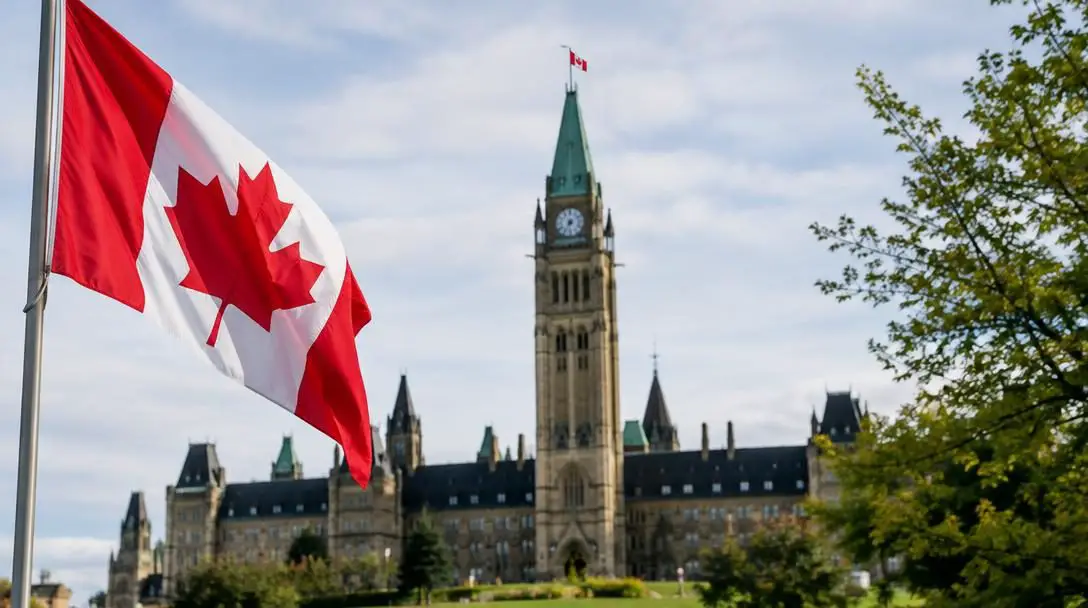
The realization of these landmark milestones was made possible by specific constitutional mechanics. Canada functions as a constitutional monarchy and parliamentary democracy where federal legislative powers reside in the Parliament of Canada, comprising the elected House of Commons, the appointed Senate, and the Crown. Each major policy shift relies on distinct constitutional pathways.
Statutory enactments, exemplified by Bill C-45 in 2018, require multiple rigorous stages before entering into force:
- First reading: The bill is formally introduced and printed in either the House of Commons or the Senate without formal debate.
- Second reading: Parliamentarians debate the overarching principles and public policy merits of the proposed statutory framework.
- Committee study: Specialized legislative committees review the text clause-by-clause, call expert witnesses, and hear public testimony.
- Report stage and third reading: The chamber reviews proposed amendments, engages in final floor debate, and votes on final adoption.
- Senate passage and Royal Assent: The complementary chamber completes an equivalent review process, after which the Crown grants Royal Assent to make the statute official law.
Parallel to the legislative process, the Canadian judicial system serves as a constitutional safeguard. When citizens challenge existing laws under constitutional protections—as demonstrated by litigants Joe Varnell, Kevin Bourassa, Elaine Vautour, and Anne Vautour in 2003—the courts possess the authority to declare statutory provisions unconstitutional. Such declarations compel Parliament to amend or replace outdated laws to reflect constitutional standards.
Practical pathways for citizen engagement in Canadian democracy
Public participation remains the ultimate engine of democratic governance. The policy shifts outlined above occurred because engaged citizens, civil society groups, and grassroots coalitions used lawful avenues to petition and shape government action. Observers and residents can actively engage with Canadian political mechanisms through several time-tested methods:
- Exercising the ballot: Regular electoral participation ensures direct accountability for executive leadership, as seen when 68.3% of the electorate transformed parliamentary representation in October 2015.
- Submitting committee briefs: Parliamentary committees routinely invite written briefs and witness testimony from the public during statutory evaluations of bills like The Cannabis Act.
- Direct constituency advocacy: Contacting locally elected Members of Parliament (MPs) enables constituents to express specific viewpoints on criminal justice revisions, budgetary measures, and social rights.
- Supporting strategic litigation: Strategic court challenges remain an effective mechanism for identifying statutory gaps and securing constitutional protections.
- Advancing community reconciliation: Supporting Indigenous-led initiatives, participating in ongoing educational programs, and honouring the calls to action following the 2008 apology help turn historical acknowledgments into sustained progress.
Common analytical traps to avoid when reviewing Canadian policy
Evaluating political milestones demands careful contextual awareness. Analysts, students, and citizens frequently encounter analytical misunderstandings that misrepresent how governance operates in Canada:
- Overlooking the judicial foundation of civil rights: Attributing progress entirely to legislative goodwill ignores the indispensable role of the courts. The June 2005 marriage equality statute resulted from years of courageous litigation across Ontario and other provinces.
- Viewing criminal justice revisions in isolation: The 2012 decision by Justice Minister Rob Nicholson to repeal specific mandatory minimum penalties addressed operational realities—specifically correctional overcrowding and systemic rehabilitation needs—rather than just abstract political ideology.
- Conflating administrative timelines: Canadian political eras must be evaluated within their proper chronological context. Prime Minister Stephen Harper's administration ran from 2006 to 2015, overseeing both the 2008 residential school apology and the 2012 sentencing adjustments, whereas the passage of Bill C-45 took effect in 2018 under Justin Trudeau.
- Assuming formal apologies conclude reconciliation: A state apology is not the conclusion of restorative justice. The 2008 address was explicitly framed as the beginning of an ongoing, multi-generational national dialogue.
- Disregarding economic factors in social policy: Modern regulatory shifts carry deep commercial consequences; The Cannabis Act represented not just social liberalization, but the creation of a tightly regulated domestic industry generating an estimated $5 billion annually.
Frequently asked questions
When did Canada legalize same-sex marriage nationwide?
Canada legalized same-sex marriage nationwide in June 2005, following landmark 2003 Ontario court decisions involving couples Joe Varnell, Kevin Bourassa, Elaine Vautour, and Anne Vautour.
What was the voter turnout rate during the 2015 Canadian federal election?
Voter turnout in the October 19, 2015 federal election reached 68.3%, representing the highest participation level recorded in Canada since 1993 and resulting in the election of Justin Trudeau's Liberals.
Why were certain mandatory minimum sentences repealed in 2012?
In 2012, Justice Minister Rob Nicholson repealed several mandatory minimum sentences for non-violent offences to alleviate correctional overcrowding and return discretionary sentencing authority to trial judges.
What was the projected economic impact of The Cannabis Act?
The nationwide legalization of recreational cannabis through Bill C-45 on October 17, 2018, was projected to contribute an estimated $5 billion annually to the Canadian economy.
What was the significance of the June 11, 2008 residential school apology?
Delivered by Prime Minister Stephen Harper in the House of Commons, the apology marked an official state acknowledgment of the deep harms inflicted on Indigenous peoples and initiated a national dialogue on reconciliation.
The bottom line
The landmark political milestones of recent history reflect a vibrant democracy characterized by evolving legal norms and active civic participation. Whether expanding individual civil liberties through the 2005 marriage equality legislation, resetting federal priorities through the high-turnout 2015 election, pioneering regulated consumer markets under Bill C-45, or confronting historical injustices through the 2008 apology, Canadian institutions have demonstrated a consistent capacity to evolve. By studying how judicial challenges, parliamentary procedures, and executive actions intersect, citizens can better navigate and influence the policies shaping the nation's future.