A Guide to Understanding Canadian Politics: 5 Key Concepts
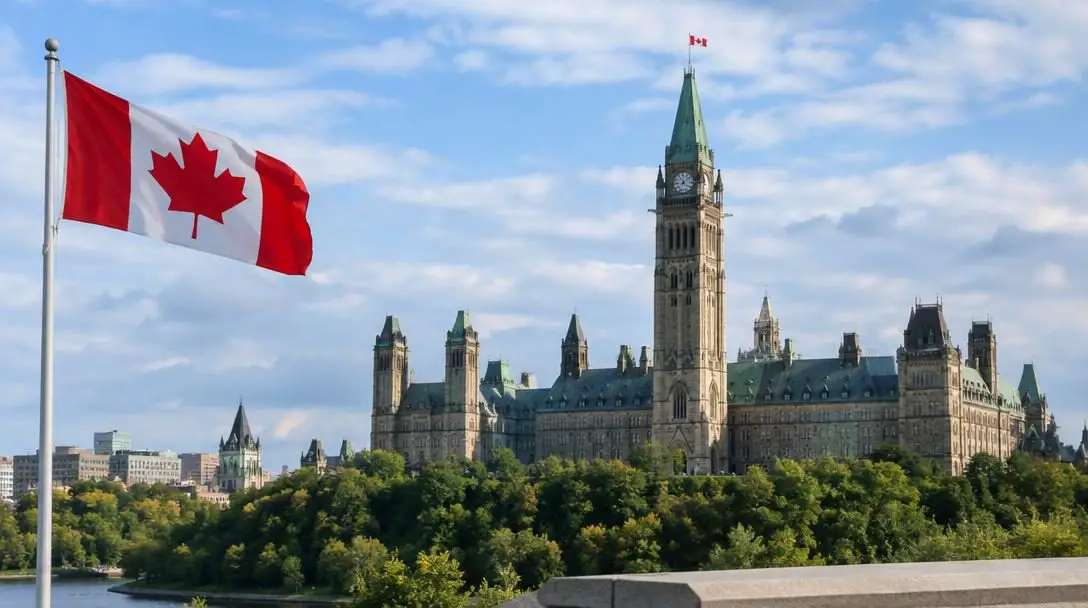
The political landscape in Canada is complex and nuanced, making it challenging for even the most attentive citizens to follow every procedural change, legal dispute, and parliamentary debate. Far from being created overnight, the Canadian system of governance evolved across centuries through historic treaties, deep-rooted constitutional conventions, and gradual institutional reforms. At its core, the system marries centuries of British parliamentary heritage with the distinct geographic and cultural realities of a sprawling North American federation.
To follow everyday political discourse—whether regarding interprovincial disputes, cabinet announcements, or federal election campaigns—one must understand the constitutional framework that shapes how power is granted, exercised, and restricted. Following the patriation of the Constitution in 1982, Canada solidified a system aimed at balancing centralized leadership with regional autonomy, multicultural representation, and the rule of law. Mastering five fundamental concepts helps demystify the institutions that govern domestic taxation, international diplomacy, civil liberties, and public administration.
Key takeaways
- Canada combines a British parliamentary tradition with a federal structure that divides authority between national and provincial governments.
- Executive power is held by the Prime Minister and Cabinet, who are sitting Members of Parliament accountable to the House of Commons.
- As a constitutional monarchy, the monarch—represented domestically by the Governor General—acts as a symbolic head of state separate from the head of government.
- Multiple political parties, anchored by the Liberals, Conservatives, and New Democratic Party, organize competing visions and debate policy.
- The 1982 Charter of Rights and Freedoms imposes constitutional boundaries that protect individual civil liberties from legislative overreach.
At a glance: Five pillars of Canadian governance
Each of the core components of the Canadian political apparatus addresses a distinct dimension of state authority, constitutional law, or civic representation.
| Concept | Primary function | Key institutions & actors | Constitutional focus |
|---|---|---|---|
| Parliamentary System | Executive accountability and lawmaking | House of Commons, Prime Minister, Cabinet, MPs | Responsible government and legislative confidence |
| Constitutional Monarchy | Symbolic head of state and continuity | The Sovereign (Queen Elizabeth II), Governor General | Separation of head of state from political rule |
| Federalism | Division of powers by geography | Federal government, Provincial legislatures | Balancing national coordination with local autonomy |
| Political Parties | Electoral organization and legislative debate | Liberals, Conservatives, New Democratic Party | Channeling public views into legislative platforms |
| Charter Rights & Freedoms | Judicial protection of civil liberties | Judiciary, Supreme Court, Canadian public | Constitutional limits on statutory authority |
The five foundational concepts of Canadian governance
To understand how legislation is drafted, contested, and enforced across Canada, one must look at the distinct operational principles that dictate daily governance.
Parliamentary System
Canada operates under a parliamentary system of government, an arrangement where the executive and legislative branches are fused rather than strictly separated. The executive branch is formed directly from the elected members of Parliament (MPs) who sit in the House of Commons. The Prime Minister serves as the head of government, selected traditionally as the leader of the political party that commands the most seats, and appoints Cabinet Ministers from among fellow MPs. Together, the Prime Minister and Cabinet establish public policy, introduce major budgetary measures, and direct executive agencies.
Because the executive emerges directly from the legislature, it is governed by the convention of responsible government. The Prime Minister and their Cabinet must maintain the confidence of the legislature to retain power. If the government loses an explicit vote of confidence or fails to pass a crucial budgetary bill, it must either resign or advise that a general election be called. This ongoing dynamic forces governing officials to sit in the House of Commons daily during legislative sessions, directly defending their policies and answering questions raised by representatives from ridings nationwide.
Constitutional Monarchy
In legal and constitutional terms, Canada is a constitutional monarchy. The nation’s legal authority is formally vested in the sovereign—historically exemplified by Queen Elizabeth II—who serves as the symbolic head of state. In everyday practice, the monarch holds no direct personal authority over Canadian public decision-making or legislative agendas. Instead, sovereign duties within Canada are delegated to the Governor General, who carries out constitutional and ceremonial functions on the monarch's behalf at the federal level.

This division establishes a crucial institutional line between the head of state and the head of government. The Prime Minister manages the political direction of the state, but the enduring constitutional power of the nation remains symbolically held above everyday partisan fights. One of the most critical roles filled by the Governor General is granting Royal Assent, which is the final formal step required for any bill passed by Parliament to gain the force of law. Because direct governance is reserved for democratically elected officials, the Crown provides institutional continuity without imposing arbitrary royal decrees.
Federalism
Canada’s vast geography, diverse regional economies, and varied demographic makeup make centralized administration impractical. To manage this diversity, Canada relies on federalism, a system that divides legislative jurisdiction between the national federal government seated in Ottawa and the individual provincial governments across the country. The Constitution details specific spheres of authority for each level of government, establishing legal boundaries that prevent any single governing body from concentrating total authority.
Federalism ensures that issues of nationwide significance—such as national defense, international relations, trade regulations, and national infrastructure—are handled by the federal Parliament. Meanwhile, provincial governments retain authority over community-focused matters, such as regional social services, local institutions, and property rights. This deliberate division gives individual provinces the political space to tailor domestic policies to the cultural, economic, and geographical preferences of their residents, balancing national cohesiveness with local self-determination.
Federalism establishes clear legal boundaries so that national concerns are coordinated centrally while local communities retain the freedom to govern their own affairs.
Political Parties
Representative democracy in Canada is channeled through political parties, which are formal organizations of citizens and politicians who share common ideologies and policy priorities. These parties craft platforms outlining specific visions for the country, ranging from taxation and social spending to defense commitments and international trade agreements. By grouping candidates under cohesive banners, political parties allow voters to evaluate competing ideological pathways for the country during federal and provincial elections.
Canadian federal politics has long featured three major political organizations: the Liberals, the Conservatives, and the New Democratic Party, operating alongside smaller parties that hold varying degrees of representation across Parliament and provincial legislatures. Inside the House of Commons, party discipline remains strong. Parties that do not hold executive power form the official opposition and minor opposition caucuses. These opposition groups carry out essential parliamentary work by scrutinizing cabinet decisions, interrogating ministers during daily proceedings, offering legislative amendments, and presenting alternative programs to the public.
Charter Rights & Freedoms
Every individual in Canada is protected by constitutional civil liberties set forth in the Charter of Rights and Freedoms, which has formed a foundational component of the Constitution since its patriation in 1982. The Charter limits the authority of both federal Parliament and provincial legislatures, establishing explicit personal and political rights that cannot be arbitrarily curtailed by ordinary statutory laws. It represents an institutional shield designed to preserve minority protections and basic democratic norms.
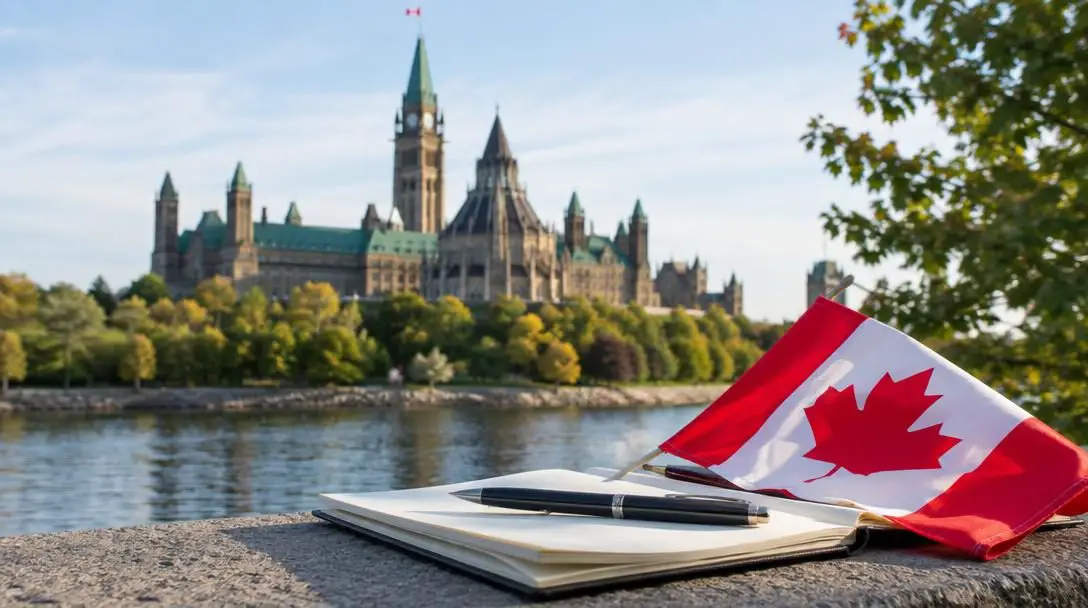
The Charter enumerates essential legal guarantees, including freedom of expression, freedom from arbitrary arrest or detention, and explicit protection from discrimination based on personal traits such as gender or race. Furthermore, it outlines linguistic protections specific to provinces and territories, and establishes civil liberty benchmarks related to public goods, including provisions affecting healthcare access and educational quality standards for Indigenous peoples. When an elected government enacts legislation that breaches these constitutionally entrenched rights, the independent judicial system holds the power to strike the statute down as unconstitutional.
How the constitutional machinery operates together
Although these five pillars can be analyzed individually, they function as an interconnected institutional network. A change in one area routinely triggers adjustments across the others, preserving a dynamic balance of power:
- Electoral mandate: Political parties contest general elections across nationwide ridings, resulting in elected Members of Parliament who fill the seats of the House of Commons.
- Executive formation: The leader of the party capable of securing the confidence of the House of Commons is invited to serve as Prime Minister and selects a Cabinet from sitting parliamentarians.
- Jurisdictional review: Before introducing major policy, the government assesses whether the issue falls under federal jurisdiction or whether it encroaches upon powers granted to provincial governments under federalism.
- Parliamentary debate: The governing party introduces legislation, which faces formal scrutiny, debate, and committee amendments from opposition parties such as the Conservatives, Liberals, or New Democratic Party.
- Royal Assent: Once a legislative bill passes both the House of Commons and the Senate, it is presented to the Governor General, who grants Royal Assent on behalf of the monarch, transforming the proposal into law.
- Judicial oversight: After enactment, the statute remains subject to judicial scrutiny under the Charter of Rights and Freedoms, ensuring that statutory provisions respect entrenched individual and civil protections.
Practical steps for tracking Canadian political developments
Following national affairs becomes substantially easier when approaching news, debates, and policy rollouts with a clear, systematic routine.
- Identify your local Member of Parliament and review their voting record, caucus affiliation, and committee assignments in the House of Commons.
- Consult the House of Commons calendar to observe live debates and see how ministers respond under direct scrutiny during routine Question Period sessions.
- Read the formal platform documents published by the major political parties during campaign seasons to identify distinct philosophies regarding fiscal policy, international trade, and defense.
- Determine whether a personal or community issue falls under federal or provincial jurisdiction before petitioning representatives or lodging formal policy requests.
- Study the text of the 1982 Charter of Rights and Freedoms to understand the exact constitutional scope of individual protections against state statutes.
- Monitor the official announcements and formal decrees of the Governor General regarding royal proclamations, diplomatic visits, and the formal granting of Royal Assent.
Common misconceptions in Canadian politics
Due to the heavy influence of international media and neighboring presidential systems, misconceptions regarding Canada’s political mechanics are common. Citizens should watch out for several frequent errors:
- Confusing the Prime Minister with a president: The Prime Minister is not elected via a direct, nationwide executive ballot. Instead, they are an elected MP who secures executive leadership by maintaining the confidence of the majority of legislators in the House of Commons.
- Assuming the monarch directs public administration: Although Queen Elizabeth II is recognized as head of state and represented by the Governor General, neither exercises unilateral political power; governance remains entirely within the purview of elected officials.
- Blaming Ottawa for provincial jurisdictions: Under Canadian federalism, authority is divided. The federal administration cannot simply override or dictate provincial policy decisions in areas reserved for provincial legislatures, such as regional healthcare administration and local education delivery.
- Assuming a strict two-party system: While certain nations lean toward two-party structures, Canada features multiple competitive organizations. The Liberals, Conservatives, and New Democratic Party—along with regional and smaller parties—regularly hold seats and influence national outcomes.
- Viewing the Charter as a centuries-old document: Unlike historic legal codes dating back to early colonial settlement, the Charter of Rights and Freedoms was enacted alongside the patriation of the Constitution in 1982, making it a modern framework for rights enforcement.
Frequently asked questions
What is the difference between the head of state and the head of government in Canada?
The head of state is the reigning monarch, represented domestically by the Governor General, who carries out formal, ceremonial, and constitutional duties such as granting Royal Assent. The head of government is the Prime Minister, an elected Member of Parliament who directs public policy, leads the Cabinet, and manages everyday executive operations.
How does responsible government work within the parliamentary system?
Responsible government means the Prime Minister and Cabinet must hold the confidence of the elected House of Commons to stay in power. If the government loses a confidence vote, such as a major budget measure, it must either step down or advise the Governor General to call an election.
Why is federalism necessary in a country like Canada?
Federalism divides lawmaking jurisdiction between the national government in Ottawa and individual provincial legislatures. This prevents the over-centralization of authority and permits provinces to pass statutes tailored to their unique geographic, social, and cultural needs while the federal government handles nationwide issues like trade and defense.
Which political parties hold representation in Canadian federal politics?
Canadian politics is anchored by three prominent national parties: the Liberal Party, the Conservative Party, and the New Democratic Party. In addition, several smaller political parties routinely win legislative seats and participate in parliamentary committee work and national debates.
When was the Charter of Rights and Freedoms added to the Constitution?
The Charter of Rights and Freedoms was enacted in 1982 during the patriation of the Canadian Constitution. It sets clear, entrenched limits on federal and provincial lawmaking by protecting civil liberties such as freedom of expression, equality rights, and protection against arbitrary arrest.
The bottom line
Understanding Canadian politics does not require memorizing every parliamentary procedural manual or provincial statute. Instead, it requires recognizing how foundational principles interact: a parliamentary executive answerable to an elected legislature, a constitutional monarchy providing symbolic continuity, a federal division preserving regional autonomy, political parties organizing public discourse, and the Charter protecting personal liberties. By leaning on these five core pillars, following national developments transforms from an overwhelming chore into an informed, engaging, and meaningful pursuit.