5 Famous Democratic Presidents In US History
The modern presidency looks markedly different from the executive office designed in the late eighteenth century. Early national politics featured an unstable assortment of rival factions, including Democratic-Republicans, Whigs, and Federalists, before the contemporary two-party framework solidified. Over the course of the twentieth and twenty-first centuries, the Democratic Party underwent a fundamental philosophical transition, moving away from historic small-government roots to champion national initiatives, social safety nets, and expansive public programs.
Among the leaders who shaped this ongoing institutional transformation, five Democratic executives stand out for their profound influence on American life, governance, and public culture. From the economic interventions of the Great Depression and World War II to the dawn of twenty-first-century media dynamics, their administrations define how executive authority is wielded in times of profound national change.
Key takeaways
- The American political landscape shifted over time from an early mix of parties to a persistent rivalry between Republicans and Democrats, with the parties swapping core ideologies in the twentieth century.
- Franklin D. Roosevelt fundamentally redefined the presidency by expanding the federal government through major domestic relief initiatives and serving more than two terms.
- John F. Kennedy achieved unprecedented average public approval ratings while introducing personal charisma and pop culture visibility to the modern White House.
- Lyndon B. Johnson translated legislative skill into historic civil rights advancements and economic growth, despite facing deep political polarization over foreign conflict.
- Generational shifts brought youthful executives like Bill Clinton and Barack Obama to power, reshaping voter engagement and guiding the nation through significant economic recoveries.
At a glance: Five influential Democratic administrations
Evaluating these executives side by side highlights how distinct historical crises, ages at inauguration, and tenure lengths altered the trajectory of the White House across generations.
| President | Presidency order | Key milestone or legacy | Notable domestic or foreign challenge |
|---|---|---|---|
| Franklin D. Roosevelt | 32nd President | Longest-serving president; led major ideological realignment | World War II and the Great Depression |
| John F. Kennedy | 35th President | Highest average public approval rating in presidential history | Intense public media scrutiny and Cold War tensions |
| Lyndon B. Johnson | 36th President | Sweeping expansion of civil rights and domestic growth | Escalation of the Vietnam War |
| Bill Clinton | 42nd President | Youth-driven coalition; completed two full modern terms | Economic competition and generational political change |
| Barack Obama | 44th President | First African-American president; first from the 50th state | Recovery following a massive economic recession |
The five famous Democratic presidents
The modern identity of the Democratic Party was forged largely through the personal decisions, legislative maneuvers, and public leadership of these five executives.
Franklin D. Roosevelt

- Presidency: 32nd President of the United States
- Tenure: March 1933 – April 12, 1945
- Key policies: Social Security, Civil Works Administration, Emergency Relief Appropriation Acts
Many historians recognize that the primary ideological swap between Democrats and Republicans began in earnest under Franklin D. Roosevelt. Before his election, the party historically aligned with smaller federal intervention, but under Roosevelt’s stewardship, Democrats embraced an expansive federal government that directly intervened to support citizens during periods of systemic breakdown.
Facing catastrophic economic distress upon taking office in March 1933, Roosevelt established foundational social safety programs that reshaped the American contract. His administration spearheaded landmark initiatives including Social Security, the Civil Works Administration, and the Emergency Relief Appropriation Acts, establishing federal relief as an ongoing governmental responsibility. Roosevelt later led the nation through the immense geopolitical strain of World War II until his death on April 12, 1945. He remains the only executive in national history to win more than two terms, prompting a constitutional change to ensure future presidents could not repeat an extended tenure.
John F. Kennedy

- Peak approval: 83 percent
- Lowest approval: 56 percent
- Age at death: 46 years old
Few leaders in world history have commanded the sheer celebrity and sustained public fascination that surrounded John F. Kennedy. His personal life, youthful demeanor, and charm turned the White House into a focal point of pop culture media coverage unlike anything observed in earlier administrations. Kennedy managed to build an extraordinarily broad coalition of public goodwill that crossed traditional partisan divides.
This cross-aisle appeal resulted in Kennedy maintaining the highest average approval rating of any president. His public standing reached an extraordinary high of 83 percent, and even his lowest registered approval sat comfortably at 56 percent, proving that a clear majority of the nation approved of his leadership at every point during his time in office. Kennedy's promising tenure was cut tragically short when he was shot dead just weeks before reaching his third anniversary in the White House, leaving a profound and enduring impression on the generation that witnessed his leadership.
Kennedy maintained an extraordinary baseline of public support, never seeing his national approval numbers dip below a majority at any point in his presidency.
Lyndon B. Johnson
- Presidency: 36th President of the United States
- Background: Former Texas Senator and Vice President
- Re-election victory: Defeated Barry Goldwater in 1964
Following the assassination of Kennedy, former Texas Senator and Vice President Lyndon B. Johnson stepped forward to assume the presidency during a moment of profound national grief. Facing the immense task of succeeding an icon, Johnson relied heavily on legislative mastery rather than public charm to enact monumental changes across the country.
Johnson built a complex but deeply consequential legacy by expanding civil rights protections and presiding over an era of significant domestic economic growth. His early legislative accomplishments secured him a dominant mandate in the 1964 presidential election, where he decisively defeated conservative challenger Barry Goldwater. However, Johnson’s domestic agenda became severely complicated by the protracted overseas conflict in the Vietnam War. Recognizing the deep national fractures and political toll caused by the war, Johnson chose not to seek re-election in 1968, which ultimately opened the path for Republican Richard Nixon to claim the White House.
Bill Clinton
- Background: Two-time Governor of Arkansas
- Inaugural age: 46 years old
- Tenure conclusion: January 2001
After Ronald Reagan completed two influential terms and George Bush served a single term, Democrats sought a fresh, charismatic candidate capable of recapturing Kennedy's magnetic cultural appeal. They discovered that candidate in Bill Clinton, the two-time Governor of Arkansas. Elected at just 46 years of age, Clinton was among the youngest presidents ever chosen to lead the country.
Clinton’s relative youth allowed him to establish an immediate, authentic connection with younger demographic cohorts who felt detached from older political leadership. By defeating incumbent George Bush, Clinton broke a twelve-year Republican hold on the executive branch. His tenure proved resilient enough to secure re-election, allowing him to complete two full terms before leaving office in January 2001, providing the Democratic Party with its first sustained two-term presidency since the mid-twentieth century.
Barack Obama
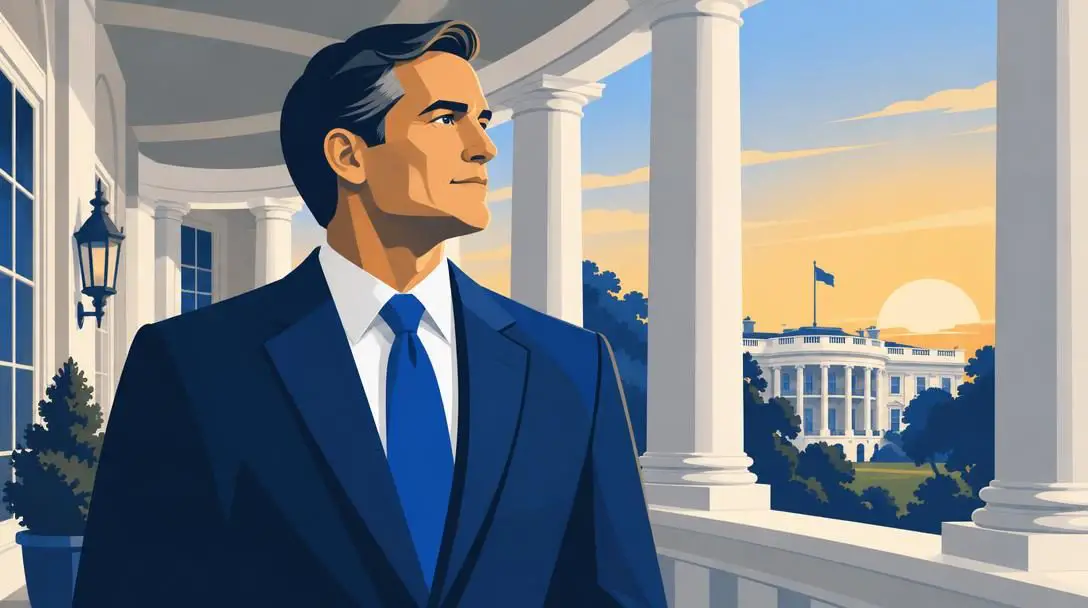
- Origin: Born in Honolulu, Hawaii
- Inaugural age: 47 years old
- Approval range: High 60s to high-30s
The election of Barack Obama marked several historic milestones in American governance. Born in Honolulu, Hawaii, Obama became the first executive to hail from the nation's 50th state. Entering the White House at 47 years old—just one year older than Clinton was at his swearing-in—Obama brought generational energy and historic representation as the nation’s first African-American president.
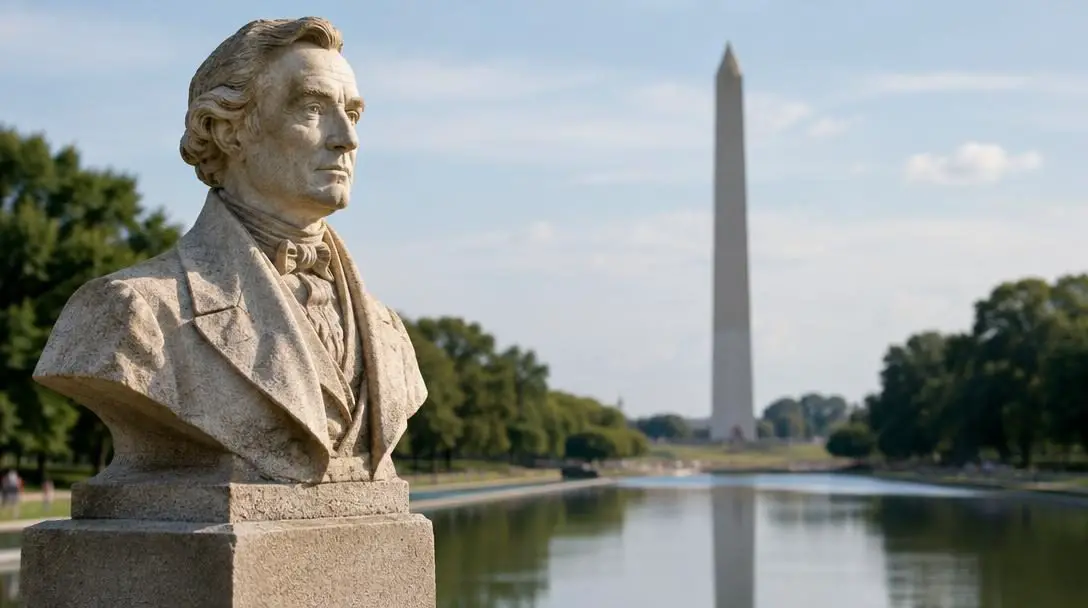
Obama took office during a period of acute national distress, inheriting a massive economic recession that threatened domestic stability. His administration concentrated on guiding the nation through a prolonged economic rebound. While Obama retained immense, steadfast enthusiasm among Democratic voters, his overall public approval ratings reflected an increasingly polarized country. His numbers reached the high 60s during moments of national pride and unity, but fell into the high-30s during contentious political and economic fights over the pace of recovery.
How presidential legacies and popularity work
The enduring fame of these five executives is not accidental. In the American constitutional system, several institutional and cultural mechanisms dictate how an administration is perceived while in office and remembered decades later.
- Dual constitutional responsibilities: The American president acts simultaneously as head of state and head of government. Because symbolic leadership and day-to-day administrative execution reside in one person, all major triumphs, economic crises, and wars are pinned directly to the occupant of the Oval Office.
- Sweeping domestic initiatives: Executives who launch expansive structural reforms leave permanent footprints on society. Whether through Roosevelt's Social Security safety nets or Johnson's civil rights laws, tangible policy transformations ensure long-term historical relevance.
- Public media and personal image: A leader’s communicative ability deeply impacts their standing. Kennedy used television and cultural style to become a global celebrity, a playbook echoed by Clinton and Obama to reach modern electorates.
- Approval rating trajectories: Polling data provides a real-time record of executive standing. Broad bipartisan goodwill produces sustained approval numbers like Kennedy's 56 to 83 percent range, whereas modern polarized environments generate wider spreads like Obama's high-60s to high-30s marks.
- Succession dynamics and limits: Unplanned successions following assassinations alter presidential authority, as seen when Johnson inherited Kennedy's agenda. Similarly, term limitations create distinct urgency for two-term presidents concluding their political careers.
Practical steps for studying presidential history
Analyzing presidential administrations requires looking beyond soundbites and campaign rhetoric. Applying a structured historical method allows readers to evaluate an administration's true record with clarity.
- Establish the foundational timeline: Anchor the administration firmly within its calendar years. Mark key beginning and end points, such as Roosevelt taking office in March 1933 and dying in April 1945, or Clinton finishing his tenure in January 2001, to understand the immediate domestic context.
- Review primary legislative programs: Examine the specific structural statutes passed by the administration. Look closely at concrete legislation such as the Civil Works Administration, Social Security, and Emergency Relief Appropriation Acts to measure how federal authority expanded.
- Examine electoral dynamics and transitions: Track how power was gained and transferred. Analyze crucial matchups like Johnson’s victory over Barry Goldwater in 1964, Clinton unseating George Bush, or Johnson choosing to exit the 1968 race, paving the way for Richard Nixon.
- Track long-term approval trends: Review public opinion fluctuations across an entire term rather than relying on isolated highs. Compare Kennedy’s remarkably stable baseline with Obama’s wider polling fluctuations amid the recovery from a severe recession.
- Compare demographic and regional backgrounds: Consider the executive’s personal roots and age. Note how youth influenced Clinton and Obama, entering office at 46 and 47 respectively, and observe historical representation, such as Obama representing the 50th state of Hawaii.
Common mistakes when evaluating presidents
Navigating presidential history can be challenging because popular narratives often oversimplify complex political realities. Avoiding these frequent misconceptions will keep your historical analysis accurate.
- Assuming party platforms never changed: Many assume that political parties held identical priorities throughout history. In reality, the two major parties underwent an ideological swap in the twentieth century, with the Democrats shifting from small-government positions to championing large-scale public programs under Roosevelt.
- Overlooking early party diversity: It is a mistake to think American history was always a simple Democrat-versus-Republican contest. Early politics featured four Democratic-Republican executives, four Whigs, and one Federalist, while James Buchanan served as the 15th president and the only executive without a party affiliation.
- Confusing personal charm with legislative output: Charismatic presence does not always correlate with legislative productivity. Johnson lacked the effortless public charm of Kennedy, yet his mastery of government enabled him to pass landmark civil rights legislation and shepherd economic expansion.
- Neglecting foreign wars in domestic evaluations: Appraising a leader strictly by domestic legislation misses critical geopolitical forces. Overseas conflicts can alter a presidency entirely, as demonstrated by the Vietnam War driving Johnson out of the 1968 race and World War II absorbing Roosevelt's final years.
- Equating public fame with universal approval: High visibility does not mean an executive enjoyed uniform support across the country. While Kennedy commanded broad bipartisan goodwill, leaders like Obama faced deeply polarized environments where popularity was concentrated heavily on the Democratic side of the aisle.
Themes for further presidential research
To deepen your understanding of executive governance, several specialized historical themes warrant closer examination:
- Generational dynamics and age: Investigate how younger executives, such as Clinton at 46 and Obama at 47, leveraged generational messaging to activate voting blocs that had historically been overlooked by older candidates.
- Constitutional mechanics of term limits: Analyze how the transition from unlimited re-elections during Roosevelt’s four terms to a strict two-term constitutional limit altered executive strategy and late-term political influence.
- Crisis management and economic rebounds: Contrast how different administrations wielded federal power to address severe financial downturns, comparing the creation of New Deal agencies under Roosevelt with Obama's guidance through the massive recession.
- The transformation of media coverage: Trace how White House communication evolved from Kennedy’s command of mid-century pop culture media into the modern, segmented digital landscapes navigated by later administrations.
Frequently asked questions
Which early political parties held the presidency before the modern era?
Before the consistent rivalry between Democrats and Republicans emerged in the late nineteenth century, the presidency was held by four Democratic-Republicans, four Whigs, and one Federalist. Additionally, James Buchanan, the 15th president, was the only executive in United States history not to have a party affiliation.
When did the Democratic Party shift toward supporting a larger federal government?
The ideological swap between the Democratic and Republican parties began in earnest under Franklin D. Roosevelt in the 1930s. Facing the Great Depression, Roosevelt shifted the Democratic platform from traditional small-government views toward expansive federal oversight, implementing programs like Social Security, the Civil Works Administration, and Emergency Relief Appropriation Acts.
What made John F. Kennedy's public approval ratings historically unique?
Kennedy held the highest average approval rating of any president in national history. His broad cross-aisle popularity kept his lowest recorded approval rating at 56 percent and pushed his peak to 83 percent, meaning a clear majority of the nation approved of his performance throughout his entire time in office.
Why did Lyndon B. Johnson decide not to seek re-election in 1968?
Despite passing historic civil rights legislation and securing an overwhelming victory over Barry Goldwater in 1964, Johnson decided against running in 1968 due to political fallout and national divisions caused by the Vietnam War, which subsequently opened the door for Richard Nixon's election.
How old were Bill Clinton and Barack Obama when they took office?
Both leaders were among the youngest executives elected to the White House. Bill Clinton was inaugurated at 46 years old after serving as Governor of Arkansas, while Barack Obama entered the presidency at 47 years old, just one year older than Clinton.
The bottom line
The legacies of Franklin D. Roosevelt, John F. Kennedy, Lyndon B. Johnson, Bill Clinton, and Barack Obama reflect the evolving nature of the modern American executive office. By steering the nation through historic financial collapses, international conflicts, and deep social transitions, each executive expanded the operational reach of the federal government. Examining their policy decisions, approval trends, and communication strategies provides valuable context for understanding the constitutional power and public expectations that define the White House today.