5 Longest Train Routes In The World
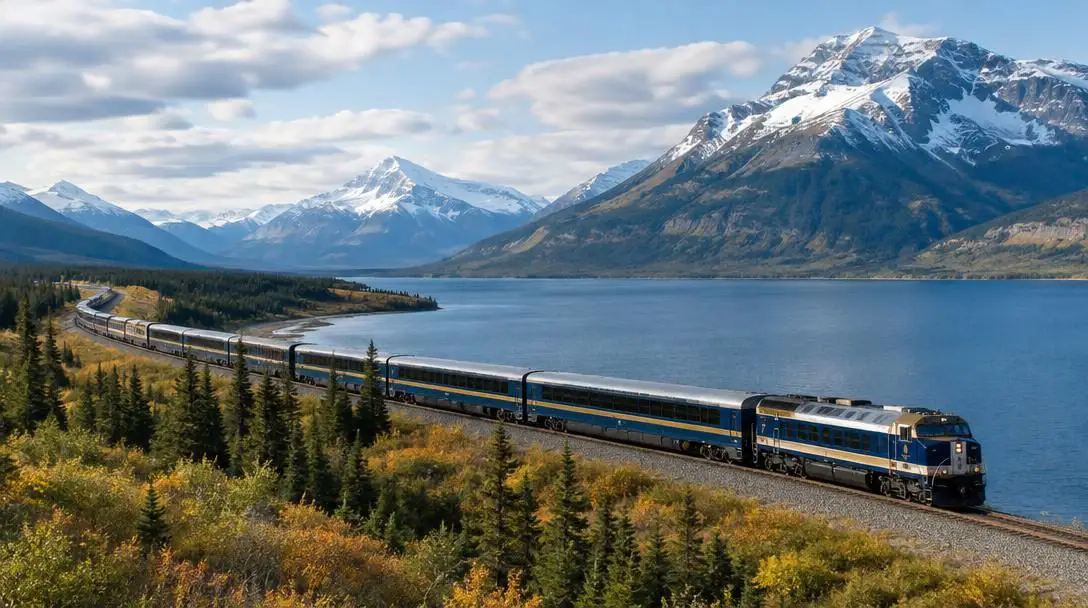
For travelers seeking a meaningful alternative to commercial aviation, long-distance rail travel offers an immersive way to experience the planet. While commercial flights prioritize transit speed, they frequently confine passengers to cramped seats for hours with little connection to the geography passing below. Transcontinental rail journeys, by contrast, invite travelers to settle into a moving community, watch shifting ecological zones unfold outside wide carriage windows, utilize specialized onboard facilities, and step out onto historic station platforms during scheduled stops.
Traversing vast continuous networks of steel track, the world's most extensive rail routes connect remote interior plains, rugged mountain passes, and sprawling coastal ports. Spanning thousands of miles, these journeys frequently trace international frontiers, cross multiple time zones, and challenge ordinary notions of travel time. Understanding how these historic railways operate, what each route demands of passengers, and how onboard services differ across operators is essential for anyone drawn to the romance of the rails.
Key takeaways
- The Trans-Siberian Railway remains the world's longest continuous train route, covering 9,289 kilometers across eight time zones.
- Long-distance train travel prioritizes scenic appreciation and personal comfort, featuring specialized sleeper coaches, dining cars, and onboard showers.
- Amenities vary dramatically by line and ticket class, ranging from luxury packages with hot meals and private beds to basic seating where food requires separate payment.
- Multiple global rail routes run alongside or cut across sovereign borders, requiring passengers to keep travel documents ready during transit.
- Careful preparation—including pacing expectations, packing light for tight berths, and tracking platform departure times—is vital for a smooth journey.
At a glance: The world's top five longest train routes
Each of the world's five longest rail journeys covers immense distances across distinct terrain. The table below outlines how these legendary routes compare in total distance, standard travel time, and transit networks.
| Route Name / Line | Endpoints | Distance | Transit Duration | Scheduled Stops |
|---|---|---|---|---|
| Trans-Siberian Railway | Moscow to Vladivostok (Russia) | 9,289 km (5,772 miles) | 6 to 7 days | 10 stops (over 30 cities passed) |
| The Canadian | Toronto to Vancouver (Canada) | 4,466 km (2,775 miles) | 4 days, 4 nights | Over 60 stops |
| Shanghai to Lhasa Route | Shanghai to Lhasa (China/Tibet) | 4,373 km (2,717 miles) | Approx. 47 hours | 13 stops |
| The Indian Pacific | Sydney to Perth (Australia) | 4,352 km (2,704 miles) | 3 nights | Varies (scheduled tourist stops) |
| The Vivek Express | Dibrugarh to Kanyakumari (India) | 3,770.6 km (2,343 miles) | Over 82 hours | All scheduled corridor stops (up to 58) |
Detailed profiles of the five longest rail journeys
From the boreal forests of Eurasia to the arid expanses of the Australian interior, these five transcontinental corridors represent the peak of long-haul railway engineering and endurance travel.
Moscow to Vladivostok (The Trans-Siberian Railway)
- Total Distance: 9,289 kilometers (5,772 miles)
- Travel Time: 6 to 7 days
- Construction Period: 13 years (opened 1904)
- Time Zones Crossed: 8 time zones
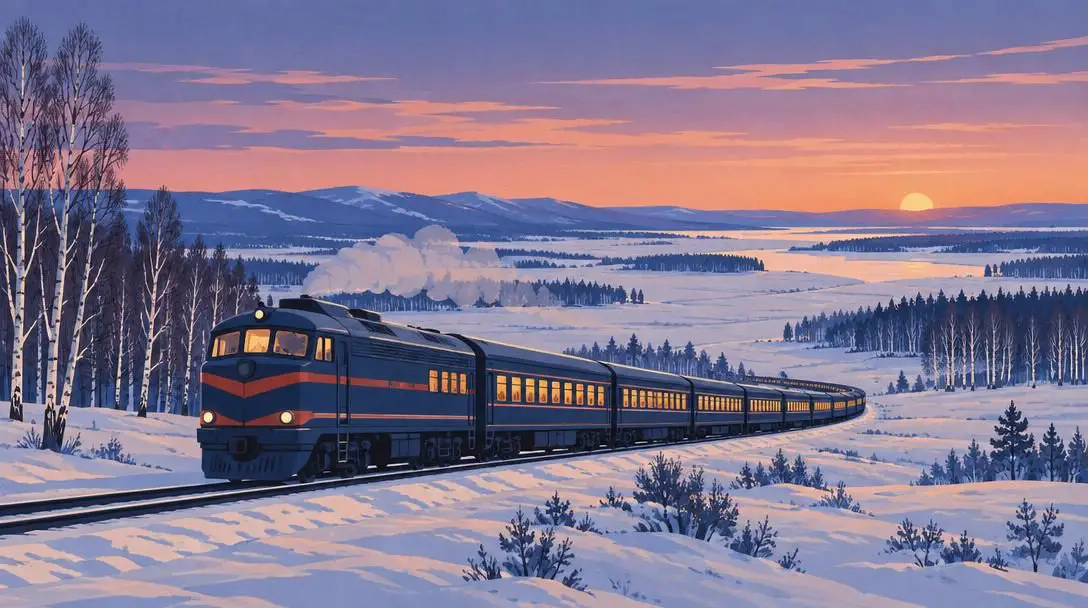
Holding the undisputed title as the longest continuous rail line on Earth, the Trans-Siberian Railway spans Russia's capital city of Moscow to the Pacific port of Vladivostok. Ground broke on this monumental engineering undertaking in the late nineteenth century, demanding thirteen years of continuous construction through harsh weather and challenging terrain before welcoming its first passengers in 1904.
Completing the continuous line requires six to seven full days of life on board. Despite spanning thousands of miles and cutting past more than thirty cities, the primary express service halts at only ten designated stations along its entire length. The corridor brings travelers past the edge of the Sea of Japan, while secondary branch systems run near or through parts of neighboring Mongolia and China, offering passengers an unrivaled survey of changing topographies, cultures, and climates.
Toronto to Vancouver (The Canadian)
- Total Distance: 4,466 kilometers (2,775 miles)
- Operator: Via Rail
- Journey Length: 4 days and 4 nights
- Annual Passenger Volume: Approximately 82,000 riders
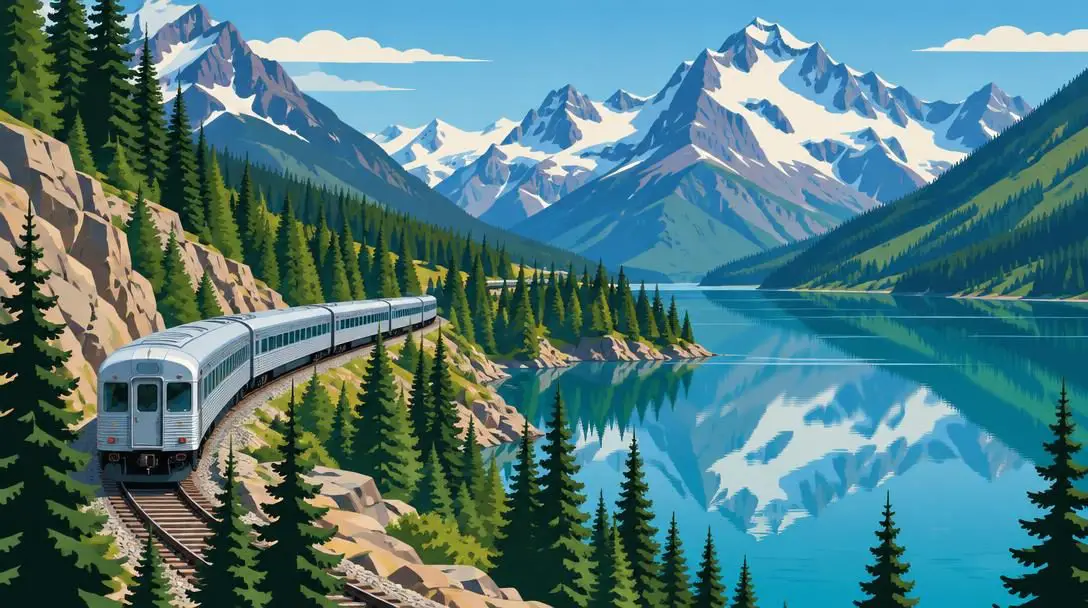
Spanning North America from east to west, The Canadian operates year-round under national carrier Via Rail to connect the metropolis of Toronto with the Pacific coastal hub of Vancouver. Spanning 4,466 kilometers through multiple Canadian provinces, this line has established itself as an essential domestic transit artery and one of the world's most sought-after sightseeing voyages, accommodating roughly 82,000 passengers each year.
Riders live on board for four continuous days and four nights while the train works through more than sixty scheduled stops across prairie grasslands, boreal wilderness, and rugged alpine ranges. The Canadian offers multiple ticket classes to suit different budgets. Depending on the tier selected, travelers have access to full-service dining cars serving freshly prepared hot meals, multi-person sleeper bedrooms for comfortable nighttime rest, dedicated shower facilities to freshen up along the route, and diverse lounge spaces designed for panoramic viewing.
Shanghai to Lhasa
- Total Distance: 4,373 kilometers (2,717 miles)
- Departure / Arrival: 8:02 pm departure, 6:46 pm arrival (+2 days)
- Scheduled Intermediate Stops: 13 stations
- Route Character: High-altitude transition to Tibet
Standing as the third longest rail route across the globe, the line connecting Shanghai to Lhasa links China's most populous metropolitan center with the capital of the Tibet Autonomous Region. Operating on a consistent daily schedule, the train pulls out of Shanghai at 8:02 pm and reaches its high-altitude terminus in Lhasa nearly two days later at 6:46 pm, pausing at thirteen scheduled stations during the crossing.
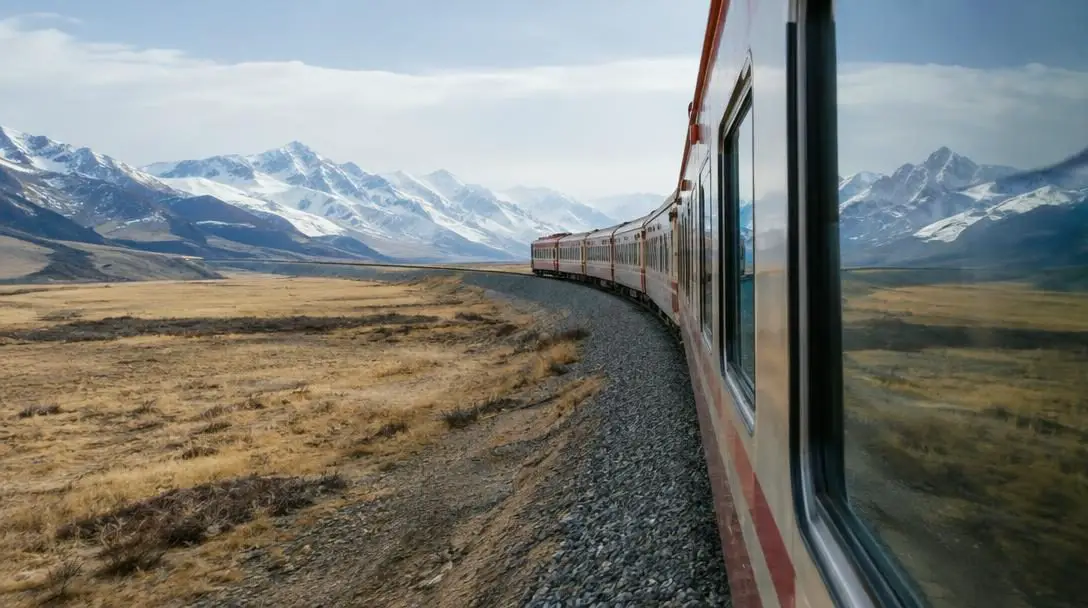
Unlike luxury tourist services, this route functions primarily as vital public infrastructure. Accommodations inside the cars are utilitarian, focusing on functionality over indulgence. While onboard meal and beverage services are available for an additional purchase price, the journey's primary reward lies beyond the glass: travelers watch bustling industrial plains give way to remote, elevated plateaus and dramatic mountain backdrops that make the modest interior surroundings well worth the trip.
Sydney to Perth (The Indian Pacific)
- Total Distance: 4,352 kilometers (2,704 miles)
- Operator: Australian Train
- Transit Duration: 3 nights
- Geographic Scope: Ocean-to-ocean transcontinental crossing
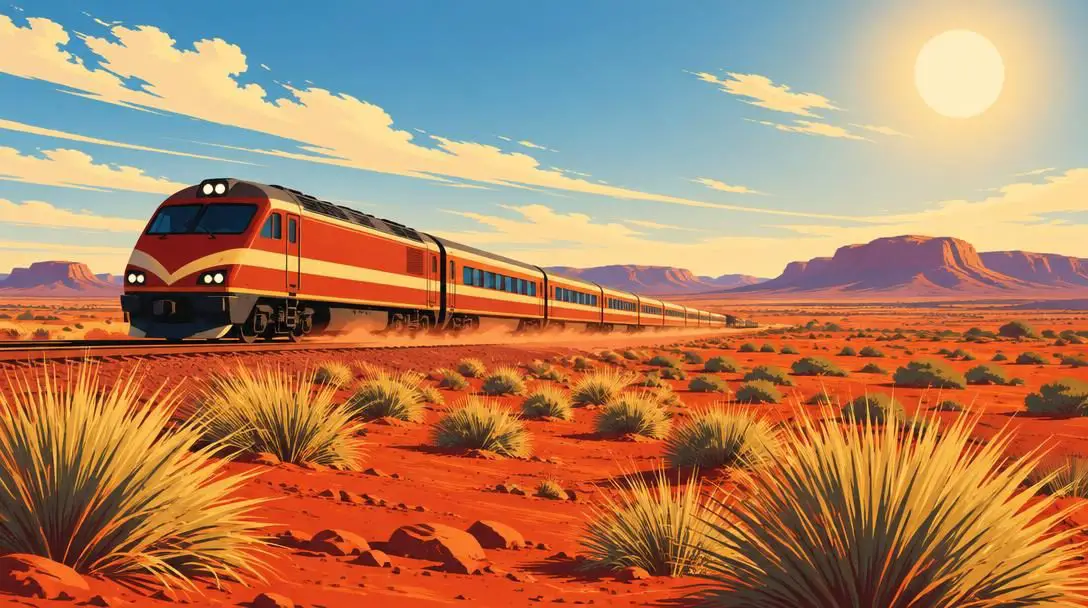
Australia's premier cross-continental rail journey, The Indian Pacific, earns its name by bridging the Indian Ocean on the west coast in Perth with the Pacific Ocean on the east coast in Sydney. The 4,352-kilometer crossing requires three nights on board, escorting passengers through remote outback stretches, native wildlife habitats, and arid interior scrublands that are otherwise inaccessible by standard road travel.
Run by Australian Train, the service incorporates several passenger packages designed around comfortable, hospitality-driven travel. Accommodations feature well-appointed sleeping berths, private bathrooms, complimentary toiletries, and comprehensive meal and drink programs served in upscale dining cars. Additionally, the train's coordinated itinerary incorporates dedicated pauses near renowned regional tourist attractions, granting travelers structured opportunities to step off the carriages and tour notable outback sights before continuing across the continent.
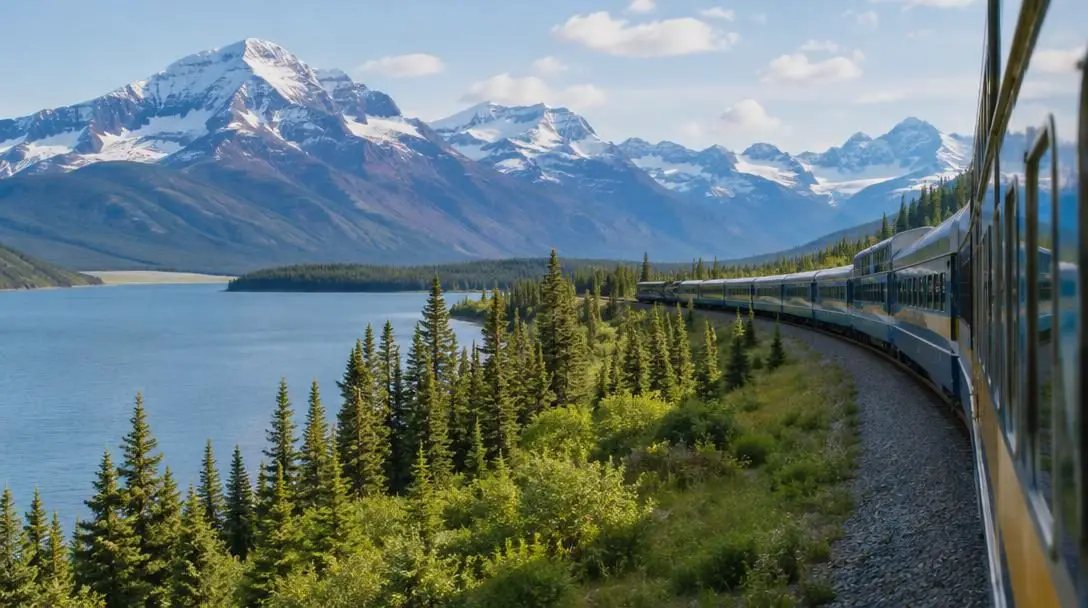
Transcontinental rail journeys invite travelers to settle into a moving community where shifting ecological zones unfold directly outside carriage windows.
Dibrugarh to Kanyakumari (The Vivek Express)
- Total Distance: 3,770.6 kilometers (2,343 miles)
- Inauguration Year: 2011
- Travel Time: Over 82 hours (Vivek Express service)
- Carriage Layout: 11 sleeper coaches and 3 general coaches
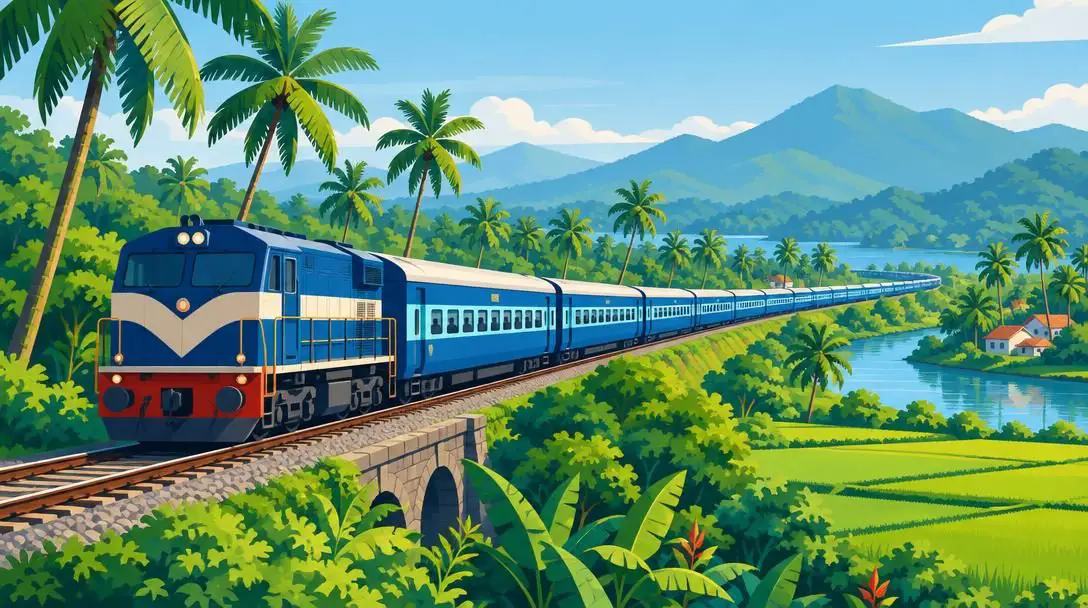
Binding India's far northeastern tea-growing town of Dibrugarh—situated near the border with Tibet—to Kanyakumari at the country's southernmost coastal tip, this rail corridor covers 3,770.6 kilometers. The standard transit route across this extensive network takes at least 28 hours, tracing the southern boundary of Bhutan and descending through Bangladesh, with specific line configurations serving up to 58 distinct destinations.
The definitive service running this corridor is the Vivek Express, which halts at every scheduled station on its path and requires more than 82 hours of continuous running time. The train operates with eleven dedicated sleeper coaches alongside three general seating cars. First launched in 2011 to commemorate the 150th birth anniversary of philosopher Swami Vivekananda—an event that stood among the largest historical commemorations in modern India—the service remains a lifeline for long-distance domestic passengers.
Behind the scenes: How long-distance rail travel works
Maintaining scheduled railway operations over several thousand kilometers requires intricate mechanical logistics, dedicated staff, and robust civil infrastructure. Long-distance transcontinental services operate as self-contained villages on wheels, designed to shelter, feed, and transport hundreds of people across remote geography.
Passenger railcars are divided into specialized operational zones. Sleeping carriages provide either shared berths or fully private multi-person rooms equipped with beds and secure luggage storage. Dining cars act as moving kitchens, where kitchen staff prepare warm meals and beverages under tight spatial and electrical constraints. Meanwhile, lounge and observation cars feature panoramic glass layouts, offering riders shared social settings and uninterrupted views of passing landscapes.
Mechanical maintenance is equally critical. Locomotives and carriages undergo technical inspections, refueling stops, and water tank refills at major junction yards along the way to supply onboard washrooms and showers. Station dispatchers meticulously coordinate movements across vast territories, adjusting train flows to ensure transcontinental trains clear busy commuter nodes and stay aligned with tight master timetables.
Step-by-step preparation for an epic rail journey
Embarking on a train ride that lasts several consecutive days requires a mindset and packing strategy distinct from air or road travel. Following an organized preparation routine will keep your extended rail trip comfortable and stress-free.
- Select the appropriate route and pace: Evaluate your travel style against the demands of the line. A four-day crossing aboard The Canadian provides comfortable scenic viewing, whereas an 82-hour marathon on India's Vivek Express demands high personal endurance and adaptability to basic amenities.
- Confirm all required travel paperwork: Because transcontinental trains often run parallel to or cross foreign borders—such as the Trans-Siberian skirting Mongolia and China, or the Vivek Express skirting Bhutan and Bangladesh—keep your valid passport, transit visas, and tickets secured in an accessible document pouch.
- Review ticket inclusions and cabin classes: Check precisely what your fare covers. Luxury tiers on The Indian Pacific include hot meals, drinks, and toiletries, whereas standard classes on routes like Shanghai to Lhasa require separate out-of-pocket payments for dining services.
- Plan for hydration and snacks: Even on trains with dedicated dining cars, carry non-perishable snacks and plenty of drinking water to handle sudden route delays or long gaps between scheduled meal seatings.
- Organize a compact cabin bag: Space within passenger compartments and sleeping berths is tightly constrained. Pack an easily reachable small daypack with daily essentials, device chargers, personal hygiene supplies, and layered clothing, leaving heavy suitcases stowed beneath berths or in luggage racks.
Common mistakes to avoid on long-distance trains
Navigating multi-day rail travel presents unique challenges that first-time transcontinental travelers frequently overlook. Avoiding these standard operational pitfalls will ensure a comfortable experience from origin to destination.
- Straying too far on platform stops: Stepping onto station platforms to stretch your legs is a welcome break, but some intermediate stops last only two or three minutes. Always remain within sight of your carriage doors and listen closely for departure whistles to avoid being left behind.
- Expecting airline-level velocity: Long-distance rail emphasizes steady endurance rather than rapid transit. Boarding a 4,000-kilometer route with an expectation of rapid arrival leads to frustration; embrace the deliberate pace of the tracks.
- Assuming meals are included with economy tickets: Many international operators restrict complimentary dining to premium sleeper cabins. Failing to verify your meal allowances can leave you reliant on station vendors or paying unexpected food fees on board.
- Dragging oversized, rigid luggage aboard: Narrow sleeper car hallways and compact under-bed storage slots cannot accommodate bulky, hard-shell suitcases. Bringing flexible, soft-sided duffel bags makes living in cramped train quarters far easier.
- Traveling without local physical currency: When crossing long rural corridors where electronic card terminals lose signal or are unsupported—such as on routes requiring extra fees for food and drinks—traveling without small cash denominations can leave you unable to purchase basic refreshments.
Key factors to evaluate before you book
Before purchasing tickets for an iconic transcontinental rail adventure, weigh several practical factors that influence comfort, cost, and overall satisfaction:
Seasonal weather extremes play a massive role in the passenger experience. Winter conditions on the Trans-Siberian corridor bring sub-zero temperatures and snowbound terrain, while summertime traverses on Australia's Indian Pacific expose travelers to desert heat. Research regional climate patterns across the entire path of travel, ensuring your wardrobe matches the conditions both inside the cars and during platform excursions.
Physical rest and sleeping preferences should dictate your ticket category. If you are a light sleeper sensitive to track vibration, wheel squeal, and corridor movement, booking a dedicated private sleeper cabin with a lie-flat bed is well worth the investment compared to multi-passenger general sleeper coaches.
Excursions and onward connections also require early planning. Routes like the Indian Pacific feature organized pauses for nearby sightseeing, whereas other express services stop strictly for operational needs. Furthermore, because these lines terminate in geographically distant cities such as Vladivostok, Lhasa, or Perth, arrange your return flights, hotel bookings, or connecting transit before departure.
Frequently asked questions
Which rail route holds the record as the longest in the world?
The Trans-Siberian Railway holds the record, spanning 9,289 kilometers (5,772 miles) from Moscow to Vladivostok in Russia, taking six to seven days to finish.
Are meals and drinks included in every long-distance train ticket?
No. Ticket inclusions depend on the operator and class of travel. The Indian Pacific includes full dining and beverage service in select packages, whereas routes like Shanghai to Lhasa charge extra for meals and drinks.
Can passengers take showers during multi-day rail journeys?
Dedicated shower facilities are available on select long-distance trains, such as Canada's The Canadian, though access frequently depends on the class of ticket purchased.
How many time zones does the Trans-Siberian Railway cross?
The continuous route between Moscow and Vladivostok traverses eight separate time zones over the course of its six-to-seven-day journey.
Why was the Vivek Express route established in India?
The Vivek Express was introduced in 2011 to commemorate the 150th birth anniversary of Swami Vivekananda, covering 3,770.6 kilometers from Dibrugarh to Kanyakumari.
The bottom line
Long-distance rail journeys remain among the most rewarding adventures in modern travel, offering a tangible connection to geography that air travel simply cannot replicate. Whether crossing the expansive wilderness of Canada aboard The Canadian, climbing toward the roof of the world on the Shanghai-to-Lhasa service, or spending nearly a week traversing Eurasia on the Trans-Siberian, these historic railways celebrate the journey itself. With thorough preparation, realistic expectations about amenities, and an appreciation for the steady rhythm of the tracks, traveling the world's longest rail routes delivers an unforgettable window into the vast scale of our planet.