5 Must-See Landmarks in Wise County, Texas
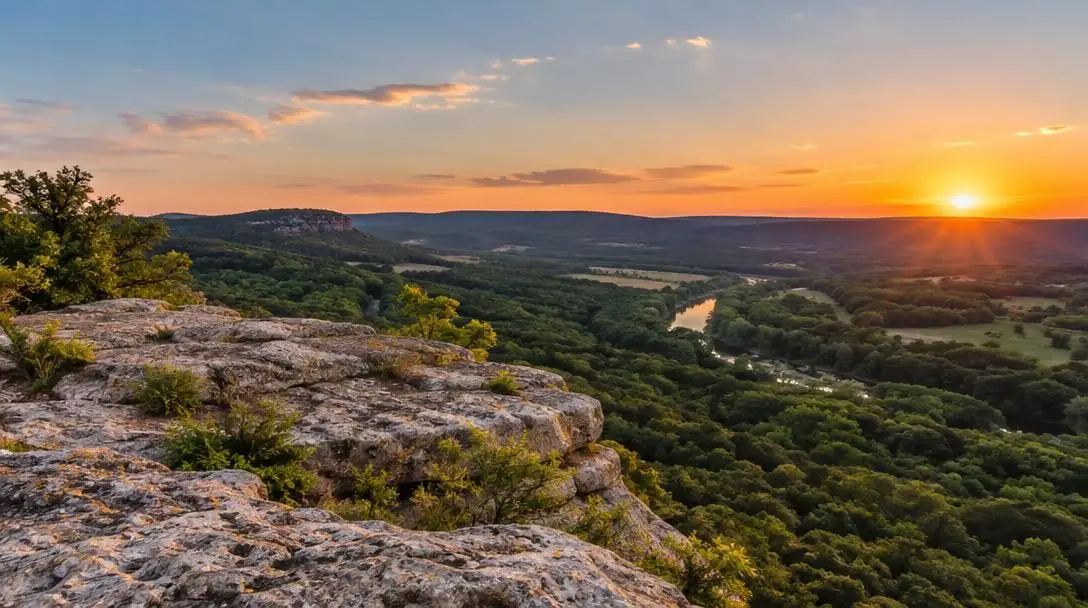
Located just northwest of the sprawling Dallas metropolitan area, Wise County, Texas, balances rapid regional expansion with a fierce commitment to preserving its frontier heritage. While the county maintains a modest footprint with a population under 70,000 residents, its rolling plains and historic town centers hold stories from every era of North Texas history. Rather than allowing modern commercial developments to erase its past, the communities across Wise County have safeguarded their distinct identity through civic stewardship, creative reuse, and private historic restoration.
From the cattle kingdoms and nineteenth-century academic halls to mid-century roadside stops and record-breaking public monuments, the county provides visitors with a tangible timeline of American life. Whether you are an architectural enthusiast, a Texas road-tripper, or a regional history buff, exploring Wise County reveals how small communities can protect their legacy through changing times.
Key takeaways
- Wise County preserves a wide array of historical landmarks ranging from Gilded Age estates to mid-century automobile service stops.
- The county is home to both architectural milestones, like the world's oldest junior college building, and modern commemorative records, including a 20-foot-tall Bowie knife.
- Preservation in the region relies on a balanced mix of civic stewardship, national historical register protections, and adaptive commercial investments.
- Travelers must plan ahead, as landmark visitor policies vary from fully accessible public museums to privately owned residential grounds.
Historic landmarks of Wise County at a glance
Each of the county's primary landmarks commemorates a different stage in local settlement, education, trade, or transportation. The table below outlines the core attributes of these celebrated sites.
| Landmark | Location | Year or Era Built | Original Role | Visitor Access |
|---|---|---|---|---|
| Wise County Heritage Museum | Decatur | 1892 | Decatur Baptist College campus hall | Open to the public ($5 fee) |
| World’s Largest Bowie Knife | Bowie area | 2016 | Civic tourism monument | Open outdoor roadside display |
| Texas Tourist Camp & Petrified Wood Gas Station | US 287 & US 380 | 1920s | Automobile lodging and fuel stop | Exterior roadside viewing |
| J.T. Brown Hotel | Chico | Late 1880s | Railroad-era community hotel | Restored historic commercial building |
| Waggoner’s Mansion (El Castile) | Decatur | 1883 | Ranching estate and private residence | Exterior viewing only (private property) |
The 5 must-see landmarks in Wise County
Each of these five sites illustrates how Wise County adapted across the decades, transitioning from a remote nineteenth-century frontier outpost to an industrious corridor shaped by educational institutions, cattle fortunes, and interstate highways.
Wise County Heritage Museum
- Location: Decatur, Texas
- Original Construction: 1892
- Initial Construction Cost: $20,000
- Admission: $5 per person
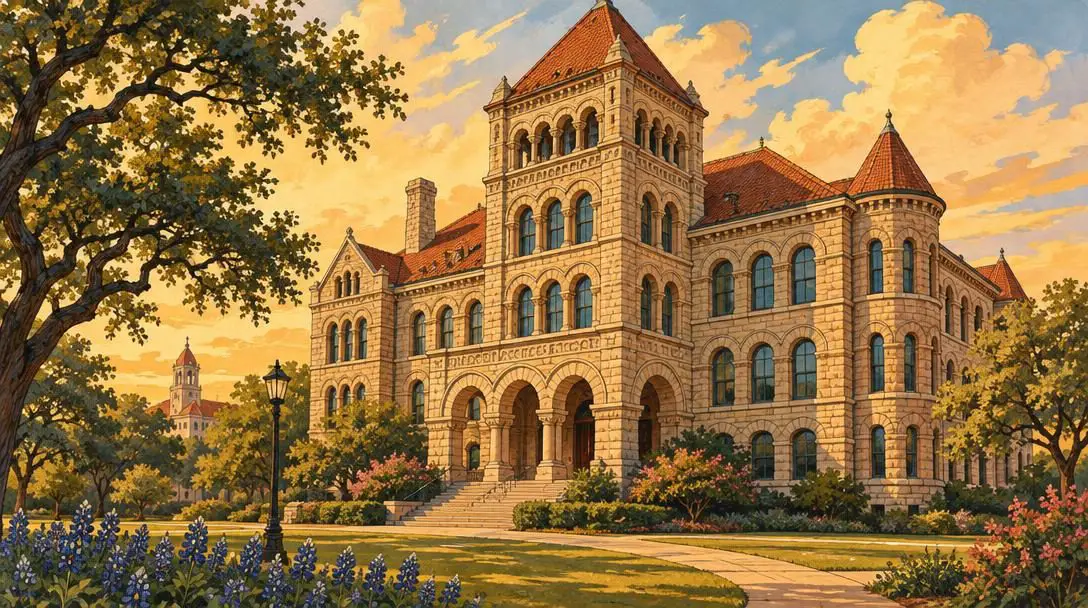
Dominating the Decatur landscape, the monumental stone building that houses the Wise County Heritage Museum was originally constructed in 1892 as Decatur Baptist College. Recognized as the oldest junior college in the world, the facility began its life as an academy preparing students for Baylor University. Erected for a sum of $20,000, the building anchored higher education in the county for more than seven decades. The college maintained operations on the campus until 1965, when the institution relocated its academic facilities to Dallas, leaving behind its historic hall.
Rather than letting the magnificent nineteenth-century structure sit neglected, county leadership and local historical advocates acted quickly to acquire and restore the property, transforming it into the official Wise County Heritage Museum. Over the ensuing decades, the museum expanded its archival collection to reflect every facet of county life. Visitors today can explore rare geological fossils unearthed in North Texas, an authentic 1890s horse-drawn funeral coach, and an expansive machinery room filled with early industrial and agricultural implements. The museum remains fully open to the public for a modest $5 entry fee.
World’s Largest Bowie Knife

- Location: Wise County / Bowie area
- Year Built: 2016
- Total Height: Over 20 feet tall
- Blade Length: Over 14 feet long
Although the original Bowie knife design was created in Arkansas back in 1830, Wise County claims the world's most monumental tribute to the blade. Conceived by Bob Hadley to draw highway travelers and promote the neighboring town of Bowie—named in honor of the Alamo defender associated with the weapon—the project turned an iconic symbol of the Texas frontier into an internationally recognized landmark.
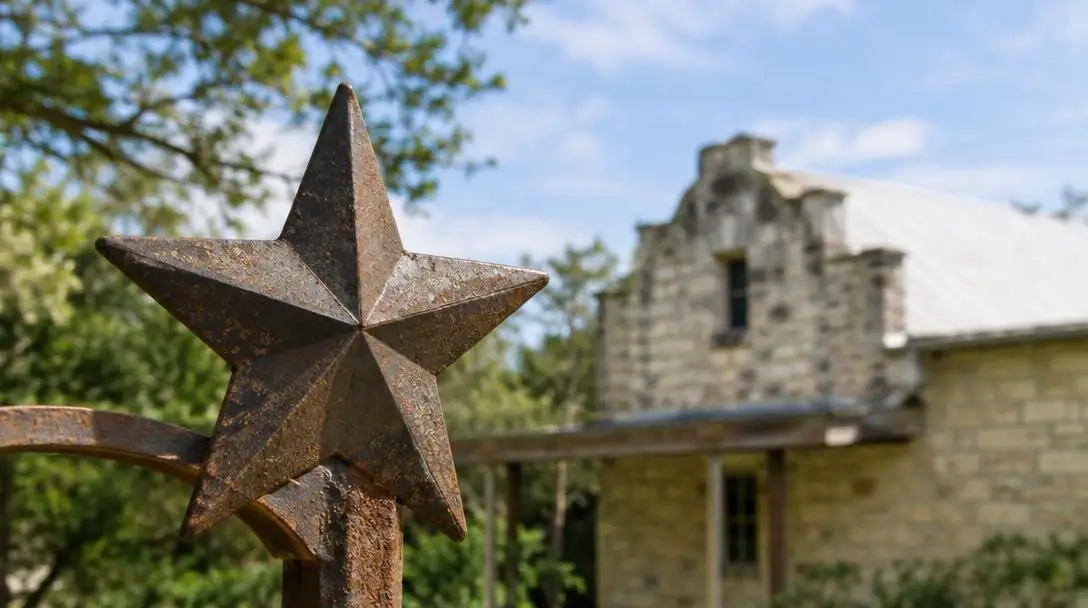
The original nineteenth-century knife measured a standard 9.5 inches in length and a quarter-inch in thickness. In contrast, the Wise County roadside installation stands over 20 feet tall, with a blade exceeding 14 feet in length and a total weight of more than 3,000 pounds. In 2016, the Guinness Book of World Records officially certified the sculpture as the largest Bowie knife on earth. A large storyboard installation surrounds the base, detailing the 1830 origins of the knife design alongside the engineering challenges required to fabricate and anchor the massive steel sculpture.
Texas Tourist Camp and Petrified Wood Gas Station
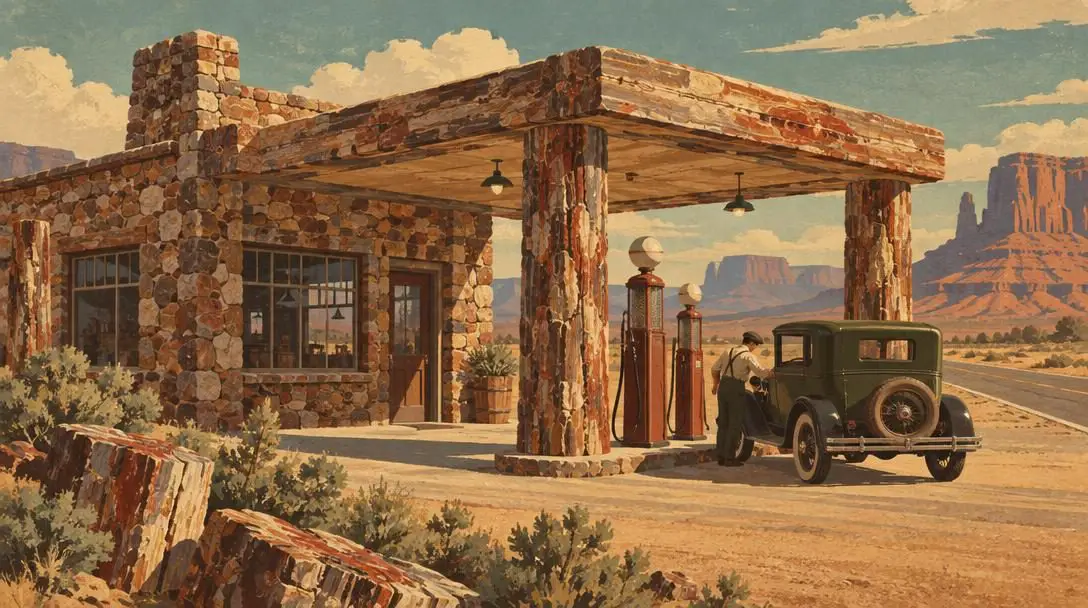
- Location: Intersection of US 287 and US 380
- Established: 1920s
- Founder: E.F. Boydston
- Final Pump Closure: Late 1980s
Positioned prominently at the crossroads of US 287 and US 380, the Texas Tourist Camp and Petrified Wood Gas Station stands as an enduring relic of early American automobile culture. Established in the 1920s by local entrepreneur E.F. Boydston, the roadside complex was designed to accommodate travelers crossing North Texas during an era before standardized interstate travel. The property reached the height of its commercial success in the post-World War II period, when personal vehicle ownership expanded and families took to regional highways in unprecedented numbers.
As transportation modern modern highways evolved, travel habits shifted. Portions of the tourist camp lodging and motor court facilities were retired in the 1960s, though the eye-catching Petrified Wood Gas Station continued to pump fuel for several more decades until closing its pumps at the end of the 1980s. A few years after its final shutdown, preservation-minded investors bought and thoroughly remodeled the building. Today, the distinctive exterior, decorated with petrified wood and indigenous stone, remains a striking historic visual stop along the highway corridor.
Through historic homes, educational halls, roadside travel stops, regional hotels, and commemorative public monuments, Wise County preserves physical touchstones from its founding days to the modern era.
J.T. Brown Hotel
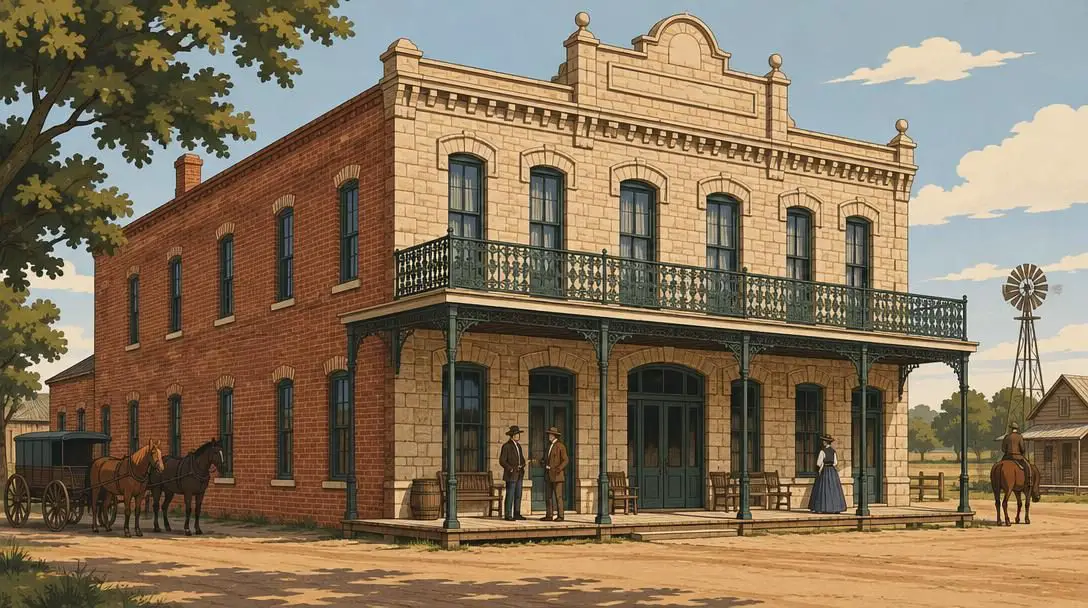
- Location: Chico, Texas
- Town Founded: 1876
- Longtime Operator: R. Lee Morris (owned 1900s to 1965)
- Status: Restored commercial landmark
The small municipality of Chico may not match the population of larger county hubs, but it boasts one of the most historically significant nineteenth-century buildings in the region: the J.T. Brown Hotel. The hotel honors the legacy of the colonel who established the settlement of Chico in 1876. Just over ten years after the town's initial platting, construction concluded on the multi-story hotel, giving visitors, cattlemen, and railroad travelers an upscale gathering place in the heart of town.
From the dawn of the twentieth century until 1965, the hotel operated under the continuous ownership and management of R. Lee Morris, serving as a social and commercial anchor for Chico. As the decades wore on, the physical structure began to show signs of severe aging. By the early 2000s, local investors stepped in to prevent demolition by carrying out substantial modern renovations. The restoration stabilized the foundational masonry and refreshed the building, ensuring that Chico's nineteenth-century architectural heritage continues to stand in the modern era.
Waggoner’s Mansion (El Castile)
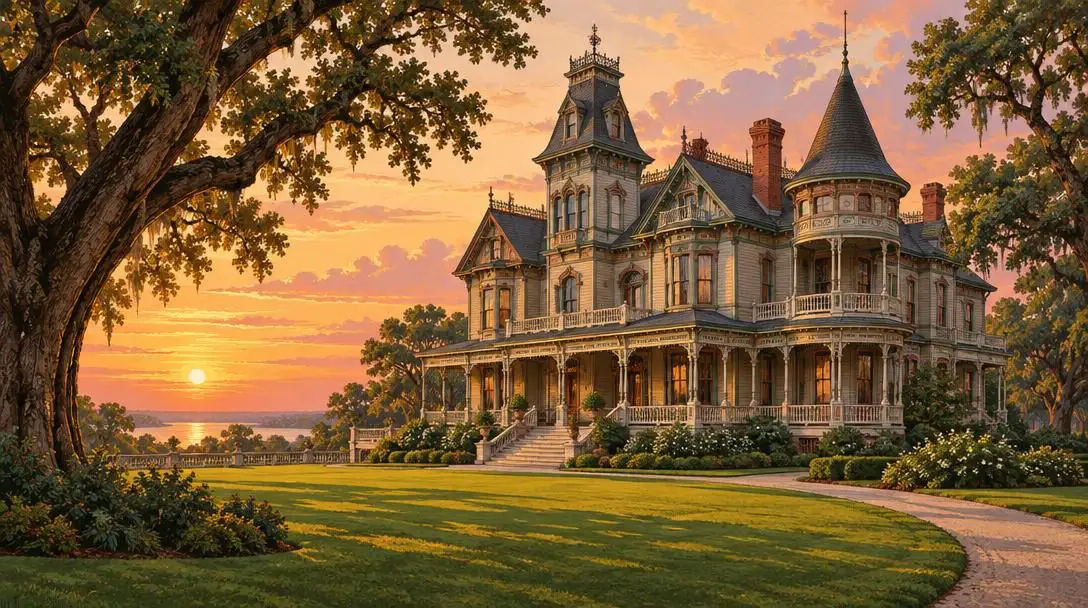
- Location: Decatur, Texas
- Construction Year: 1883
- Size: 16 rooms across 13+ acres
- NRHP Listing: 1874 (added 1974)
Mansions of grand proportions are a rare sight in rural North Texas, making the Waggoner Mansion, affectionately known as El Castile, an extraordinary focal point in the city of Decatur. Spanning more than 13 acres of grounds, the 16-room estate was constructed in 1883 by Daniel Waggoner, the legendary ranching patriarch whose holdings laid the foundation for one of the greatest cattle dynasties in American history. Waggoner was not merely a rancher; his commercial investments stretched across regional banking institutions, cotton oil mills, and coal enterprises, providing the vast financial resources needed to erect such a lavish residential compound.
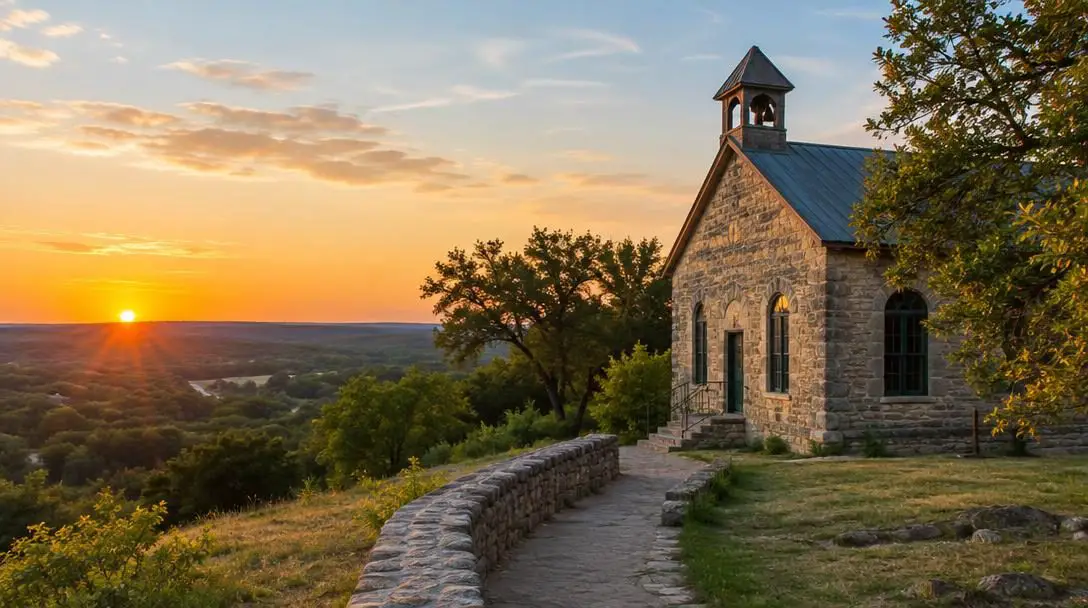
During the height of World War II, ownership of the sprawling Victorian mansion transferred to the Luker family, who maintained the estate's private residential legacy. In recognition of its singular architectural design and historic importance to the development of the Texas cattle industry, El Castile was formally added to the National Register of Historic Places in 1974. Although the grand home remains a beloved visual fixture in Decatur, visitors must appreciate it from afar, as the interior remains completely private and closed to the public.
How historic preservation works in Wise County
Preserving regional history in Wise County requires a varied approach involving civic leadership, non-profit stewardship, and private property ownership. Because these sites vary in their public access and daily functions, preservation follows several distinct operational models:
- Institutional adaptive reuse: When an educational or civic institution moves away, local governments and non-profits frequently step into the breach. Decatur Baptist College's departure for Dallas in 1965 prompted Wise County to intervene, undertaking a rapid restoration of the 1892 hall to transform it into the Wise County Heritage Museum rather than allowing it to face decay or demolition.
- Private investment and rehabilitation: Commercial landmarks often depend on private capital when their original utility fades. The J.T. Brown Hotel in Chico and the Texas Tourist Camp complex along US 287 were preserved because private owners committed personal funds to renovate the aging buildings, keeping them structurally sound and commercially viable in the modern era.
- National register designation: Securing federal historical protections elevates local structures to national prominence. The Waggoner Mansion earned listing on the National Register of Historic Places in 1974, providing formal recognition of Daniel Waggoner's frontier enterprise while remaining within private family stewardship.
- Civic tourism monuments: History can also be celebrated through modern monumental artwork. The installation of the World's Largest Bowie Knife, spearheaded by civic promoter Bob Hadley, demonstrates how historic themes can be leveraged to generate international interest and official Guinness recognition.
Practical steps for touring Wise County landmarks
Because these five landmarks span distinct towns, open highways, and differing access rules, taking time to coordinate your itinerary will ensure a seamless day of sightseeing across the county.
- Map your driving route: Organize your travel path to minimize backtracking along major regional arteries. Decatur holds both the Wise County Heritage Museum and El Castile, while Chico lies to the northwest, and the historic roadside stops sit along the US 287 and US 380 corridors.
- Prepare entrance funds: While outdoor sculptures and roadside facades are free to inspect from public property, remember to set aside $5 cash or payment per adult to tour the extensive exhibits inside the Wise County Heritage Museum.
- Respect private property lines: Keep a respectful distance when photographing residential structures like the Waggoner Mansion. Confine your sightseeing to public street viewpoints and do not attempt to access private driveways or interior quarters.
- Spend time reading outdoor storyboards: At self-guided sites like the World's Largest Bowie Knife, take several minutes to read the accompanying historical plaques, which describe both the 1830 weapon design and the technical fabrication of the outdoor sculpture.
- Examine the exterior masonry: Dedicate time to inspecting the physical construction materials of each historic site, such as the authentic petrified stone integrated into the E.F. Boydston service station and the intricate Victorian stone masonry of Decatur's historic halls.
Common travel mistakes to avoid
Travelers touring North Texas often encounter unexpected hurdles by making hasty assumptions about rural attractions. Keep these common missteps in mind before setting out:
- Assuming all landmarks feature indoor tours: Many visitors arrive in Decatur expecting to take an architectural tour inside El Castile. Remember that the mansion is entirely closed to interior public access, functioning strictly as a scenic exterior attraction.
- Speeding through highway junctions: The intersection of US 287 and US 380 accommodates high-speed commuter and regional freight traffic. Drivers often miss the turnoff for the Texas Tourist Camp and Petrified Wood Gas Station by failing to slow down ahead of the interchange.
- Confusing Bowie Texas with the blade's origins: It is easy to assume the Bowie knife was invented in the North Texas town that shares its name. However, historical records confirm the weapon originated in Arkansas in 1830, while the Texas community adopted the name to honor pioneer history.
- Skipping outlying rural communities: Some travelers confine their trip entirely to Decatur due to its central location, inadvertently missing out on the late-nineteenth-century architecture of Chico and the J.T. Brown Hotel.
Frequently asked questions
Can visitors go inside the Waggoner Mansion in Decatur?
No. While the Waggoner Mansion (El Castile) is listed on the National Register of Historic Places, it is a privately owned residence purchased by the Luker family during World War II, and its interior is strictly closed to the general public.
How much does it cost to visit the Wise County Heritage Museum?
Admission to the Wise County Heritage Museum costs $5 per visitor, which grants access to the building's exhibits, including geological fossils, nineteenth-century funeral coaches, and agricultural machinery.
Why is the World's Largest Bowie Knife located in Wise County?
The monument was initiated by Bob Hadley in 2016 to promote the nearby town of Bowie, which was named in honor of the iconic frontier blade, even though the original weapon was introduced in Arkansas in 1830.
Who built the Petrified Wood Gas Station at US 287 and US 380?
The Petrified Wood Gas Station and adjacent Texas Tourist Camp were established in the 1920s by entrepreneur E.F. Boydston to serve cross-country automotive travelers during the rise of automobile tourism.
What was the original function of the Wise County Heritage Museum building?
Constructed in 1892 for $20,000, the building originally served as the home of Decatur Baptist College, recognized as the world's oldest junior college, where it operated until relocating to Dallas in 1965.
The bottom line
Wise County offers a rare, accessible look into the layers of North Texas history. By thoughtfully preserving its nineteenth-century educational halls, grand ranching estates, roadside service stops, and community hotels, the county has safeguarded its frontier identity against rapid urban sprawl. Whether marveling at the sheer scale of the record-breaking Bowie knife or exploring the historic halls of Decatur, a self-guided journey through these five landmark sites provides an unforgettable window into Texas heritage.