5 Organizations That Offer Scholarships for International Students
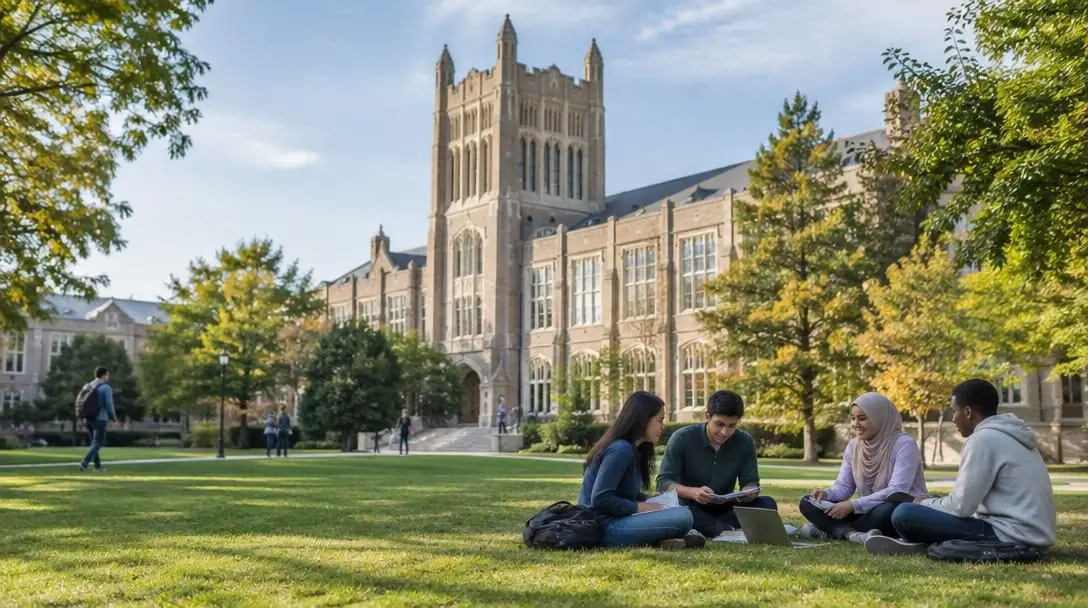
Pursuing higher education abroad is an ambition shared by students around the world. The chance to study in a foreign country introduces learners to distinct academic methodologies, diverse cultural environments, and international networks that can fundamentally shape their personal and professional futures. However, international students frequently encounter substantial financial roadblocks, as tuition rates, travel costs, and overseas living expenses can deter even the most qualified and driven candidates.
Fortunately, established philanthropic trusts, international cultural agencies, and governmental bodies offer targeted scholarships to bridge this funding gap. Recognizing that academic talent exists worldwide regardless of personal financial resources, these organizations grant students the means to pursue advanced degrees, cultivate international goodwill, and return home equipped to address critical community challenges.
Key takeaways
- Major international scholarships provide both full and partial funding models to offset overseas tuition and living expenses.
- Prominent funding organizations include government-backed initiatives like the Fulbright Program, global service networks like the Rotary Foundation, and regional trusts like AMIDEAST and the Charles Wallace India Trust.
- Selection committees prioritize candidates who demonstrate strong leadership potential, academic merit, and a commitment to serving their home communities upon graduation.
- Tailoring each application to the specific mission of the granting organization dramatically increases the likelihood of securing an award.
The evolution of global educational exchanges
The practice of sending scholars across borders to exchange knowledge and build diplomatic goodwill has deep historical roots, but the formal institutionalization of international scholarships accelerated dramatically during the twentieth century. In the aftermath of major global conflicts, world leaders and civil society organizations recognized that durable peace and international cooperation required meaningful, personal interactions between people from different societies. Educational exchange programs emerged as an effective tool for diplomacy, intercultural dialogue, and long-term community advancement.
Over the decades, international scholarship opportunities expanded far beyond bilateral government agreements. Independent non-profit organizations, charitable trusts, and global humanitarian networks established their own endowments to support students across an array of academic levels and disciplines. While some programs prioritize research immersion and international ambassadorship, others focus directly on technical training, economic advancement, or the preservation of cultural heritage. Understanding the specific origins and operational missions of these funding bodies gives prospective applicants vital insight into what selection committees value most.
Five prominent organizations funding international study
Securing an international scholarship begins with identifying which sponsoring body aligns best with your academic discipline, geographic eligibility, and career aspirations. Below are five leading organizations that provide structured financial backing for overseas study.
| Organization | Established | Target Recipients | Primary Study Destinations | Funding Scope |
|---|---|---|---|---|
| The Fulbright Program | 1946 | International graduate students in any discipline | United States | Tuition, living needs, cultural immersion |
| The Rotary International Foundation | 1905 (Rotary) | High-achieving prospective global leaders | International partner institutions | Global Scholarships for sustainable community impact |
| The British Council | 1934 | Postgraduate scholars across multiple disciplines | Europe, Canada, Australia, New Zealand (1,000+ universities) | Postgraduate degree scholarships |
| The Charles Wallace India Trust | 1967 (with British Council) | Indian nationals in specialized fields | Great Britain and Ireland | Partial funding for tuition and accommodation |
| AMIDEAST | Based in Washington D.C. | Exceptional students from Arab countries | International study destinations | Financial aid through Education Abroad Scholarships (EASP) |
The Fulbright Program

- Established: 1946
- Sponsor: United States government
- Eligible Fields: Graduate programs across any field of study
- Destination: United States
Established in 1946, the Fulbright Program is an educational exchange initiative sponsored by the U.S. government, designed to increase mutual understanding between the people of the United States and people from other countries. Conceived during a critical moment in modern post-war history, the program operates on the premise that direct academic and cultural engagement between citizens of different nations helps prevent conflict and fosters long-term collaboration.
The program provides grants for qualified international students who wish to pursue graduate degrees in the United States across virtually any discipline, spanning the sciences, humanities, public policy, fine arts, and professional studies. Beyond covering essential financial commitments such as tuition and general living needs, the Fulbright experience emphasizes cultural immersion. Grantees are expected to act as cultural ambassadors during their stay, sharing their home perspectives with their host universities and local American communities.
The Rotary International Foundation

- Parent Organization Founded: 1905
- Focus Areas: Peace, education, and local economic development
- Award Mechanism: Rotary Global Scholarships
Rotary International was founded in 1905 as a professional networking club and has since evolved into a worldwide humanitarian service organization. Its philanthropic arm, the Rotary International Foundation, channels this service-oriented philosophy into education funding with a mission to promote peace and understanding throughout the world through local community projects.
Through its Global Scholarships program, the Foundation offers financial support to high-achieving students who have ambitions to become global leaders and tackle pressing international challenges. Rather than focusing strictly on theoretical academic scholarship, the Foundation prioritizes individuals whose intended studies and long-term career aspirations directly align with solving community-level issues, such as conflict resolution, basic education, disease prevention, and local economic progress.

The British Council

- Established: 1934
- Headquarters: United Kingdom
- Institutional Reach: Network of over 1,000 universities
- Eligible Disciplines: Engineering, law, business, arts & humanities
Established in 1934, the British Council serves as the United Kingdom's international organization for cultural relations and educational opportunities. Operating as a cultural bridge between nations, it builds connections, understanding, and trust across borders through arts, culture, and educational programming.
As part of its educational mission, the British Council awards scholarships for postgraduate studies across diverse academic disciplines, including engineering, law, business, and the arts and humanities. The organization maintains an extensive educational network spanning over 1,000 universities throughout Europe as well as other English-speaking nations such as Canada, Australia, and New Zealand. By connecting students with top-tier higher education institutions across these regions, the British Council enables scholars to obtain advanced credentials that enhance their professional capabilities on a global scale.
The Charles Wallace India Trust Awards

- Funding Partner Since: 1967 (administered with British Council)
- Eligibility: Indian nationals
- Study Locations: Great Britain and Ireland
- Key Disciplines: Conservation science, art history, and related fields
Offered in partnership with the British Council since 1967, the Charles Wallace India Trust Awards provide funding for talented Indian nationals who wish to pursue postgraduate studies in Great Britain or Ireland. The trust was established using the bequest of Charles Wallace, an entrepreneur who accumulated wealth in India and left an endowment intended to benefit individuals from the country.
The CWIT awards recognize the importance of preserving cultural heritage, fostering artistic practice, and advancing specialized academic disciplines such as conservation science and art history. Recipients receive partial funding covering their tuition fees as well as accommodation costs during their stay abroad. This financial relief allows scholars to focus intensively on their research and technical training during their academic year abroad, preparing them to bring specialized expertise back to enrich their professional fields in India.
AMIDEAST Education Abroad Scholarships

- Headquarters: Washington D.C.
- Target Demographics: Students from Arab countries
- Program Name: Education Abroad Scholarships Program (EASP)
- Key Funding Partners: USAID and Kuwait's Supreme Council of Planning & Development (SCPD)
Headquartered in Washington D.C., AMIDEAST is a non-profit organization dedicated to expanding mutual understanding between Americans and the people of Middle Eastern countries. It achieves this through educational programming centered on language learning, professional training, and youth leadership development initiatives designed to help young people achieve academic and professional success both at home and abroad.
Through its Education Abroad Scholarships Program (EASP), AMIDEAST provides crucial financial aid for exceptional students from Arab countries who possess the drive to further their studies abroad but lack the financial resources to do so independently. The initiative is supported by various major sponsors, including the United States Agency for International Development (USAID) and Kuwait’s Supreme Council of Planning & Development (SCPD). By partnering with international development agencies and sovereign bodies, AMIDEAST ensures that promising students from diverse socioeconomic backgrounds receive the support necessary to access advanced academic programs and cultivate leadership skills that benefit their home region.
A well-designed scholarship framework acts as an investment in human capital, building bridges between societies and equipping future leaders with the skills needed to tackle shared concerns.
How international scholarship programs operate
Navigating the study-abroad funding landscape requires an understanding of how international scholarship bodies operate administratively. While individual application procedures vary, most major awards rely on a consistent set of operational structures.
Funding sources and governance: Scholarships are generally financed through public funds allocated by government departments (such as the U.S. government for Fulbright or USAID for AMIDEAST initiatives), private philanthropic endowments (such as the Charles Wallace India Trust), or member-supported non-profit organizations (such as Rotary International). Governance boards establish the overarching criteria, funding ceilings, and disciplinary focus areas based on their charter mandates.

Eligibility filtering: Programs enforce strict eligibility boundaries based on nationality, academic history, proposed degree level, and academic field. For example, some awards support graduate study across any field, while others restrict funding to specific geographic regions—such as Arab nations or India—or to narrow disciplines like art history and conservation science.
Merit and impact assessment: Applications are evaluated by specialized panels consisting of educators, program alumni, and organizational officers. Selection committees review academic transcripts alongside qualitative factors, evaluating an applicant's leadership capacity, alignment with the sponsor's mission, and potential to make a meaningful contribution upon returning home.
Disbursement mechanisms: Financial awards range from fully funded packages to partial grants. Some programs manage full tuition payments directly with host universities and provide regular living stipends to students, whereas others provide targeted partial funding intended solely for tuition fees or accommodation costs.
How to prepare a competitive application
Securing an international scholarship is a competitive endeavor that demands methodical preparation. Candidates who approach the application process systematically are far better positioned to stand out among thousands of applicants.
- Audit program criteria early: Review the precise eligibility requirements, geographic restrictions, and academic mandates of each organization. Determine whether the scholarship requires an independent university acceptance first or if the award process operates concurrently with institutional admissions.
- Draft a clear statement of purpose: Formulate an essay that directly connects your chosen field of study—whether in engineering, law, business, art history, or conservation science—with broader societal progress. Explain how the experience will help you address major challenges and contribute to your home community.
- Assemble comprehensive documentation: Gather certified academic transcripts, proof of nationality, language proficiency scores if required, and a detailed curriculum vitae outlining your educational achievements, professional work, and community service initiatives.
- Secure strong endorsements: Request letters of recommendation from professors, advisors, or supervisors who are intimately familiar with your academic capabilities, character, and potential to serve as an effective cultural ambassador.
- Review and refine submission materials: Proofread all application components thoroughly to ensure clarity, professional tone, and factual accuracy, verifying that all files adhere strictly to the formatting rules established by the awarding body.
Common mistakes applicants make
Many promising candidates are eliminated during preliminary selection rounds due to avoidable administrative and strategic missteps. Keeping these common pitfalls in mind will protect your application from early disqualification.
- Submitting generic statements: Using a single personal essay for multiple organizations weakens an application. A submission to the Fulbright Program should emphasize cultural exchange and mutual understanding, whereas an application to Rotary must highlight community service and resolving global challenges.
- Failing to demonstrate community value: Most international scholarships exist to empower scholars who will give back to their home communities. Applications that focus exclusively on personal career advancement without articulating broader societal benefits struggle to stand out.
- Overlooking specific eligibility constraints: Applying without verifying disciplinary or geographic eligibility results in automatic disqualification. For example, submitting a Charles Wallace India Trust application for a non-approved subject or without Indian nationality wastes valuable time.
- Procrastinating on logistics: Gathering certified transcripts, obtaining institutional endorsements, and coordinating recommendation letters requires months of lead time. Procrastination often results in rushed essays and missing documentation.
- Misunderstanding the financial scope: Applicants must be realistic about what an award covers. Programs offering partial grants require candidates to show how they will cover remaining living expenses, travel, and personal maintenance.
Frequently asked questions
Do all international scholarships cover complete tuition and living costs?
No. While programs like the Fulbright Program provide generous support for tuition and general living needs, others provide partial funding. For example, the Charles Wallace India Trust Awards specifically contribute partial funding toward tuition fees and accommodation costs, meaning students may need supplemental funds.
Can international students study any subject under these scholarship programs?
It depends on the organization. The Fulbright Program is open to graduate programs in virtually any field of study, and the British Council supports disciplines ranging from engineering and business to law and the arts. Conversely, programs like the Charles Wallace India Trust Awards target specific fields, such as conservation science and art history.
What role does community service play in international scholarship selection?
Community involvement is critical for many organizations. The Rotary International Foundation explicitly favors candidates whose academic pursuits align with resolving community-level and global challenges, such as disease prevention, basic education, and economic development.
Are international scholarships restricted to specific destination countries?
Yes. Each funding organization dictates where scholars may enroll. Fulbright grants fund study in the United States, the Charles Wallace India Trust funds study in Great Britain and Ireland, while the British Council facilitates placement across a network of over 1,000 universities in Europe, Canada, Australia, and New Zealand.
Who funds regional scholarships like those managed by AMIDEAST?
AMIDEAST's Education Abroad Scholarships Program is supported by external partner institutions and development agencies, including the United States Agency for International Development (USAID) and Kuwait's Supreme Council of Planning & Development (SCPD).
The bottom line
Studying abroad offers transformative academic, professional, and personal growth, yet the financial commitments can present steep barriers for prospective students. International scholarship programs established by governments, philanthropic trusts, and non-profit foundations exist precisely to ensure that academic merit and leadership potential are not constrained by personal financial circumstances.
Whether you are seeking graduate opportunities in the United States through the Fulbright Program, pursuing specialized heritage studies in the United Kingdom via the Charles Wallace India Trust, or seeking regional educational support through AMIDEAST, thorough research and early preparation are critical. By aligning your application with the specific mission of your chosen funding body, articulating a clear vision for community impact, and presenting meticulously organized materials, you can position yourself to secure the financial backing needed to achieve your international academic goals.