The Future of Computing in Education: Preparing Students for the Digital Age
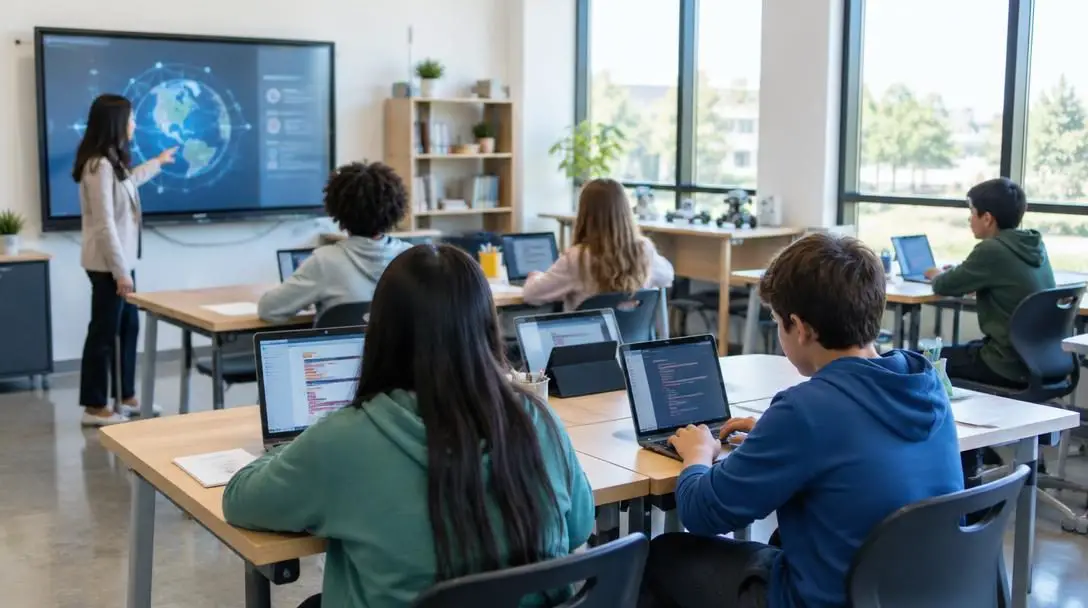
Technology has become an indispensable foundation of modern education, transforming standard classrooms into dynamic digital learning spaces. As schools transition away from static educational resources, digital tools such as interactive whiteboards, tablets, educational software, and online management systems are fundamentally reshaping how educational content is delivered, accessed, and retained. This transformation goes far beyond merely replacing paper worksheets and chalkboards; it actively alters cognitive engagement, instructional pacing, and classroom communication.
Preparing modern students for life and work in an increasingly digital world requires educators, administrators, and policymakers to align classroom instruction with the realities of 21st-century computing. Navigating this pedagogical shift requires a comprehensive understanding of evolving classroom infrastructure, emerging technological applications, modernized curriculum frameworks, and the systemic challenges that must be addressed to ensure equitable, sustainable learning for all students.
Key takeaways
- Computing education has shifted from isolated typing drills and computer labs to pervasive, curriculum-integrated digital tools.
- Emerging technologies like artificial intelligence, augmented reality, and virtual reality provide individualized instruction, interactive visualization, and administrative automation.
- Modern curricula emphasize foundational problem-solving through computational thinking, computer coding, and data science rather than passive digital consumption.
- Sustainable technological integration requires prioritizing ongoing professional development for educators while systematically working to close the digital divide.
The Evolution of Computing in the Modern Classroom
The role of computing within educational institutions has progressed through several distinct evolutionary phases over recent decades. In its early stages, computing education focused almost exclusively on basic computer literacy. Students were taught introductory keyboard typing, fundamental file management, and the operation of isolated, standalone software programs within dedicated computer labs. These labs separated technology from regular subject instruction, treating computing as an independent technical topic rather than a versatile educational medium.
As microcomputer hardware grew increasingly compact, powerful, and affordable, digital tools gradually migrated out of isolated computer labs and entered standard classrooms. The advent of local area networks and the rapid expansion of the internet completely transformed the research process. Students and teachers moved away from relying solely on static physical library resources toward accessing vast digital repositories of real-time information, fundamentally changing research methodology, group collaboration, and independent inquiry.
In current educational environments, interactive whiteboards have largely replaced chalkboards, and portable tablets or laptops have become routine fixtures in everyday learning. Modern classrooms depend heavily on cloud-based online platforms that host interactive course syllabi, assign and collect homework, track academic progress, and house comprehensive digital textbooks. Educational software provides dynamic formative assessment, giving students immediate feedback while helping teachers monitor specific conceptual milestones.
Despite these significant technological advances, the rapid integration of computing has brought persistent structural hurdles to the forefront. The most pressing of these obstacles is the digital divide, which represents the inequitable gap between students who have consistent access to modern digital hardware and high-speed internet connections and those who do not. When students lack digital devices or reliable broadband outside the school building, home-based learning opportunities become unequal, exacerbating existing academic disparities.
A second foundational challenge centers on educator support. Introducing sophisticated hardware and software into schools yields minimal educational benefit if teachers do not receive comprehensive, continuous professional development. Educators require targeted training that focuses on instructional integration, curricular alignment, and digital assessment strategies rather than basic software navigation. Without ongoing institutional support, modern technological investments frequently languish underutilized or fail to deliver measurable learning gains.
Emerging Technologies Reshaping Classroom Instruction
As computational technologies continue their rapid advancement, specialized digital tools are introducing unprecedented capabilities into instructional environments. By leveraging complex algorithms, spatial computing, and three-dimensional rendering, these systems reshape how complex ideas are conceptualized and understood.
Artificial Intelligence
Artificial intelligence operates through sophisticated algorithms and computational models that process extensive educational datasets to recognize learning patterns, user behavior, and individual performance trends. In the modern classroom, artificial intelligence facilitates personalized learning pathways by continuously assessing a student's mastery of specific concepts. The software can automatically adjust the difficulty, pacing, and delivery format of educational content to align with an individual learner's unique strengths and academic gaps.
Beyond direct student instruction, artificial intelligence delivers immense institutional value by automating routine clerical duties. AI systems can organize grading logs, sort standardized administrative paperwork, and manage baseline student records. By relieving teachers of time-consuming managerial burdens, artificial intelligence empowers educators to dedicate more direct instructional time to mentoring, small-group intervention, and relational classroom support.

Augmented Reality
Augmented reality functions by overlaying contextual digital assets—including three-dimensional computer models, animated simulations, and explanatory text—directly onto the physical environment. Viewed through tablets, mobile screens, or specialized optical displays, augmented reality bridges the gap between theoretical knowledge and sensory perception. Instead of viewing a static cross-section of a biological cell or architectural structure in a printed textbook, learners can manipulate a multi-dimensional digital model that appears to sit directly on their physical classroom desks, making imperceptible or abstract mechanisms concrete and engaging.
Virtual Reality
While augmented reality enhances the physical classroom, virtual reality completely supplants it by placing the learner inside a fully generated, immersive three-dimensional environment via a head-mounted display. Virtual reality enables students to interact directly with simulated environments that are otherwise inaccessible due to physical distance, temporal barriers, or safety hazards. Learners can navigate historical landmarks, conduct complex scientific experiments in simulated laboratories without chemical hazards, or explore planetary systems. This dynamic immersion facilitates deep conceptual retention through experiential inquiry.
| Technology | Core Operational Mechanism | Primary Classroom Application | Key Instructional Benefit |
|---|---|---|---|
| Artificial Intelligence | Algorithmic data analysis and pattern recognition models | Automated pacing, adaptive practice, and administrative streamlining | Personalizes curriculum difficulty and frees educators from routine tasks |
| Augmented Reality | Digital overlays onto the user's view of the physical environment | Interactive 3D model visualization and contextual annotations | Brings invisible or microscopic structures to life within the physical room |
| Virtual Reality | Fully enclosed head-mounted three-dimensional simulations | Experiential simulations, virtual field trips, and hazardous lab practice | Provides safe, immersive access to environments that cannot be visited physically |
Core Disciplines of the Modern Computing Curriculum
Updating educational frameworks requires more than just acquiring advanced hardware; it demands a thorough modernization of what is taught. Modern computing curricula move decisively away from passive software consumption, teaching learners the conceptual frameworks necessary to analyze, build, and critically evaluate the digital systems that govern contemporary society.
Computational Thinking
Computational thinking serves as a vital problem-solving framework that teaches students how to address multifaceted challenges systematically. This methodology comprises four critical pillars: decomposition, pattern recognition, abstraction, and algorithmic design. Through decomposition, learners break down complex, intimidating problems into smaller, manageable sub-components. Pattern recognition allows students to identify recurring trends and shared attributes across separate data points. Abstraction empowers students to filter out extraneous details and focus exclusively on core structural elements. Finally, algorithmic design guides learners in creating unambiguous, step-by-step procedural solutions that can be executed by either human actors or automated computing systems.
Coding
Computer coding allows learners to write the precise syntactical instructions that power software programs, mobile applications, and operating systems. Moving beyond user interfaces, coding education demystifies how software functions, empowering students to transform from passive consumers of technology into active digital creators. The iterative process of writing, compiling, testing, and debugging software cultivates critical thinking and intellectual resilience. When code fails to execute as intended, students must systematically trace logic errors, evaluate syntax, and isolate operational bugs, reinforcing analytical discipline and creative problem-solving skills that translate across all academic disciplines.
Data Science
As modern society generates unprecedented volumes of digital data, data science has emerged as an essential curricular subject. Data science instruction teaches students how digital information is systematically gathered, cleaned, visualized, and critically analyzed. Students learn to examine complex datasets, identify statistical correlations, spot underlying trends, and extract meaningful conclusions. Developing data literacy prevents students from falling prey to misleading representations of statistical information, enabling them to evaluate empirical claims, make well-informed decisions, and design evidence-based solutions for authentic real-world challenges.
By moving beyond basic digital consumption, modern computing education transforms students from passive consumers of software into resilient analytical problem solvers.
Systemic Impact Across the Educational Ecosystem
The intentional integration of emerging technologies and modern computing curricula produces far-reaching transformations across all tiers of the educational ecosystem, fundamentally altering the experiences of learners, teachers, and school administrators.
For students, modern computing replaces rote memorization with experiential discovery. By manipulating mathematical algorithms, coding original programs, interacting with spatial virtual reality environments, and analyzing scientific datasets, students cultivate high-order cognitive skills. This active participation fosters agency, self-directed exploration, and genuine technical competence, ensuring learners are well prepared for post-secondary education and a dynamic technical workforce.
For educators, technological tools serve as powerful instructional amplifiers. Real-time data analytics generated by AI platforms and interactive software provide continuous insights into student understanding, allowing teachers to identify conceptual misunderstandings immediately. Instead of waiting for summative term exams to discover learning gaps, educators can provide immediate, targeted interventions. Furthermore, automated assessment and streamlined administrative workflows save valuable time, letting educators focus on instructional design and direct relational mentorship.
For school administrators, integrated computing infrastructure provides institutional clarity. Data-informed management systems streamline operational logistics, resource allocation, and attendance tracking. Administrators can monitor broader curricular trends, assess schoolwide academic progress, and make strategic operational decisions based on comprehensive institutional data. This operational efficiency fosters more transparent, well-organized, and equitable educational communities.
Practical Steps for Classroom Integration
Successfully embedding computing concepts and digital technologies into an educational environment requires intentional planning, clear timelines, and disciplined execution. Educators and administrative teams should follow a structured sequence of steps to ensure sustainable, long-term technological implementation:
- Evaluate institutional needs and infrastructure. Conduct a thorough baseline audit of the school's existing electrical capabilities, local network bandwidth, device inventories, and classroom configurations before purchasing new hardware or software.
- Prioritize foundational digital literacy. Ensure students master basic device navigation, file storage protocols, and critical evaluation of online information before introducing advanced technical concepts or programming languages.
- Embed digital citizenship and responsibility. Provide comprehensive instruction regarding online ethics, personal data privacy, intellectual property rights, cybersecurity measures, and the severe social impacts of cyberbullying.
- Provide targeted professional development. Establish ongoing, hands-on training initiatives for instructional staff that emphasize curriculum design, pedagogical application, and data interpretation rather than just basic device handling.
- Introduce computational concepts incrementally. Begin instruction with unplugged, offline problem-solving exercises that introduce algorithmic logic before advancing students to block-based coding, text-based programming, and data analysis projects.
- Promote collaboration and open communication. Structure computing assignments around paired programming, group data investigations, and collaborative design projects that mirror authentic technological workplace environments.
- Review and adapt practices regularly. Establish a recurring evaluation cycle using constructive feedback from teachers, students, and technology coordinators to refine curricular integration and retire ineffective digital practices.
Common Pitfalls in Educational Technology Adoption
When institutions implement computing tools without adequate strategic foresight, they often encounter avoidable setbacks. School leadership should be mindful of these recurring missteps:
- Focusing on hardware over pedagogy: Procuring expensive hardware such as tablets or VR headsets without developing an aligned curriculum often leads to underutilized equipment and wasted school funding.
- Overlooking professional development: Expecting instructional staff to master complex computing platforms without continuous pedagogical training leads to frustration, software abandonment, and inconsistent implementation across classrooms.
- Ignoring the digital divide: Assigning obligatory cloud-based homework without ensuring that every student has adequate hardware and internet access at home broadens existing academic disparities.
- Treating technology as a passive consumption medium: Using digital devices simply to stream instructional videos or digitize standard multiple-choice worksheets fails to develop true computational thinking and higher-order reasoning.
- Neglecting data privacy and security: Integrating third-party educational software without thoroughly evaluating how student data is gathered, stored, and protected exposes sensitive academic records to privacy risks.
- Rushing implementation without clear metrics: Deploying sweeping educational computing initiatives across an entire school district simultaneously without phased testing prevents teams from discovering and correcting structural problems.
Future Considerations for Sustainable Digital Learning
Because computing technologies advance rapidly, tools that represent the cutting edge today will inevitably be superseded by newer architectures tomorrow. Consequently, long-term educational strategy must focus on cultivating adaptable, durable foundational skills rather than training students to navigate specific software packages. Fostering deep analytical capabilities, algorithmic reasoning, and self-directed problem-solving ensures that students can navigate technological shifts with ease throughout their adult lives.
Achieving educational equity must remain a foremost institutional priority. True educational progress cannot occur if modern computing tools are accessible only to affluent districts while underfunded communities are left behind. Policymakers, school boards, and civic leaders must collaborate to secure reliable broadband infrastructure, supply modern hardware, and ensure high-quality computational curricula for all schools regardless of socioeconomic barriers.
Furthermore, the growing integration of automated algorithms and generative AI tools requires sustained scrutiny regarding student data privacy, automated bias, and algorithmic accountability. Educational leaders must rigorously review how third-party platforms collect and utilize student information, ensuring strong data governance frameworks are continuously enforced.
Ultimately, technology must remain an instructional catalyst rather than a replacement for human educators. While artificial intelligence, augmented reality, and virtual environments offer extraordinary educational benefits, they are most effective when guided by empathetic, skilled teachers who can mentor, inspire, and challenge their students to reach their full potential.
Frequently asked questions
What is the digital divide and why does it matter in education?
The digital divide refers to the socioeconomic gap between students who have consistent access to modern digital hardware and reliable high-speed internet connections and those who do not. In an educational context, this disparity creates severe academic inequalities, as students without home connectivity struggle to complete web-based assignments, perform digital research, or cultivate modern technical skills.
How does computational thinking differ from computer coding?
Computational thinking is a broad problem-solving framework that involves breaking down complex issues, identifying recurring patterns, abstracting critical information, and designing step-by-step algorithms. Computer coding is the technical act of writing syntax in a specific programming language to instruct a computer to execute those algorithmic designs.
Why is ongoing teacher professional development essential for educational computing?
Devices and software change rapidly, and teachers need continuous training that focuses on pedagogical integration, classroom management, and data interpretation. Without dedicated professional development, educators cannot effectively weave modern technological tools into their instructional goals, leaving expensive equipment underutilized.
How can artificial intelligence help classroom teachers save time?
Artificial intelligence can automate routine clerical tasks such as organizing grading records, tracking basic attendance, and compiling administrative paperwork. Additionally, AI tools can help identify learning trends across the class, freeing teachers to spend more of their time providing direct instruction and individualized student mentorship.
What is the main difference between augmented reality and virtual reality in schools?
Augmented reality overlays interactive digital content—such as three-dimensional models and annotations—directly onto the physical classroom environment through a screen or lens. Virtual reality completely replaces the physical environment by placing the student inside a fully simulated, three-dimensional digital space using a head-mounted display.
The bottom line
The future of computing in education is not defined simply by the number of digital screens placed inside a classroom, but by the intentionality with which technology is integrated to enhance human intellect. When schools combine robust digital infrastructure and ongoing professional development with modern curricula in computational thinking, coding, and data science, they create an empowering learning environment. By confronting the digital divide directly and placing strong pedagogical fundamentals at the heart of digital adoption, educators can prepare every student to thrive as capable, creative, and ethical leaders in the digital age.