5 Surprising Facts About the History of Computers
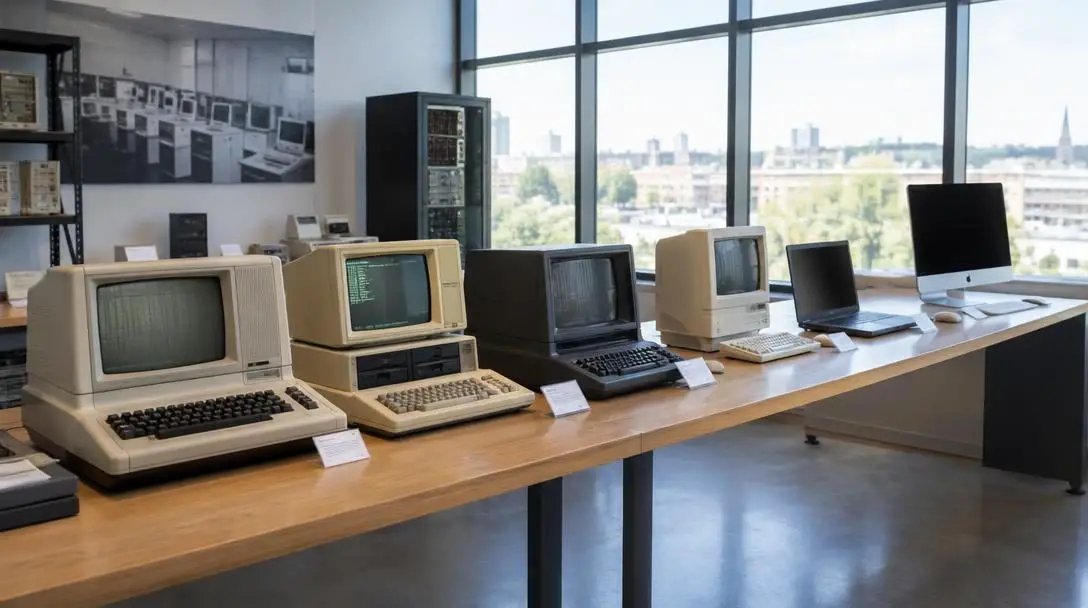
Computers stand at the very center of contemporary life, shaping how society communicates, conducts commerce, learns, and creates. Most people interact with digital systems continuously throughout the day without ever considering the centuries of scientific inquiry, mechanical experimentation, and human calculation that paved the way for modern devices. The modern assumption is that computers have always been electronic machines composed of silicon chips, plastic keyboards, and glowing screens, but the underlying essence of computing is far broader.
At its core, a computer is an instrument designed to receive inputs, execute logical or mathematical operations, and generate actionable results. Throughout history, people addressed computational challenges through intricate gear arrangements, hand-calculated mathematical tables, and massive vacuum-tube installations. Examining these historical turning points reveals that computing is not merely an invention of twentieth-century tech corporations, but an expansive human endeavor stretching from ancient Mediterranean navigation to the frontiers of quantum mechanics.
Key takeaways
- The earliest known computer was a geared mechanical instrument built in ancient Greece to model astronomical events.
- Women were foundational to computer programming, originating algorithmic design in the 1840s and performing critical wartime calculations.
- Electronic computing originated during World War II with room-sized machines built for military artillery firing tables.
- The modern personal computer industry was sparked by a hobbyist kit released in 1975, rather than modern titans like Apple or Microsoft.
- Quantum computing theory began in the 1980s as a solution to simulate complex physical systems that classical computers cannot handle.
Five Milestones That Transformed the History of Computing
The progression of computing technology is marked by groundbreaking discoveries that consistently overturned contemporary assumptions about what a calculating machine could be. By examining these five foundational developments, one can trace the evolution of data processing across millennia.
The Antikythera Mechanism
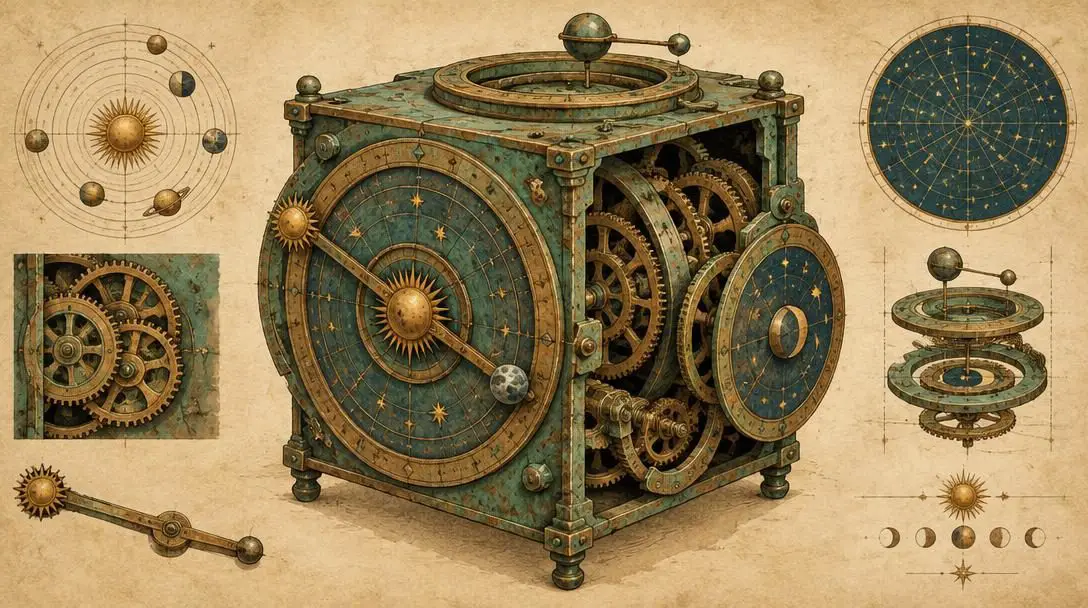
- Origin: Ancient Greece
- Discovery Date: 1901 in the Antikythera shipwreck
- Primary Function: Tracking astronomical positions and predicting eclipses
- Core Architecture: Bronze geared mechanism with dozens of dials and pointers
Long before digital circuits were conceived, ancient Greek engineers created what is now recognized as the world's first mechanical computer. Recovered in 1901 from an ancient shipwreck near the island of Antikythera, the Antikythera Mechanism represents an astonishing peak of classical engineering. The device utilized a complex network of dozens of interlocking bronze gears, dials, and pointers to calculate cycles of the cosmos with remarkable accuracy. Users could manipulate the gear trains to track the positions of celestial bodies and forecast solar and lunar eclipses, proving that computational logic could be embodied entirely within physical gear ratios.
Ada Lovelace and Human Computers
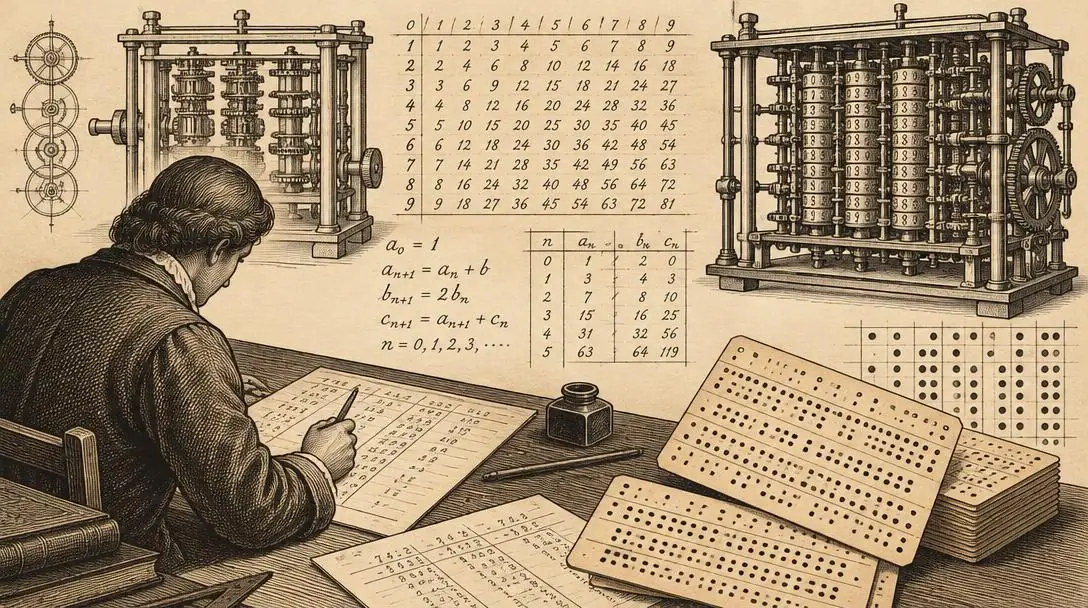
- First Program: Formulated in the 1840s by Ada Lovelace
- Wartime Era: World War II military calculations and research
- Key Projects: Artillery tables, the atomic bomb, and early NASA missions
Although modern technology fields have often been male-dominated, women played an indispensable role in establishing the intellectual foundations of computing. In the 1840s, mathematician and writer Ada Lovelace drafted what is widely considered the world's first computer program. Lovelace recognized that a calculating engine could follow a predetermined sequence of instructions to process abstract concepts beyond basic arithmetic. A century later, during World War II, teams of women known as "computers" performed the exhaustive manual calculations necessary for ballistics trajectories and the development of the atomic bomb. These skilled workers later transferred their mathematical rigor to early space research, proving instrumental to the foundational success of NASA.
The ENIAC
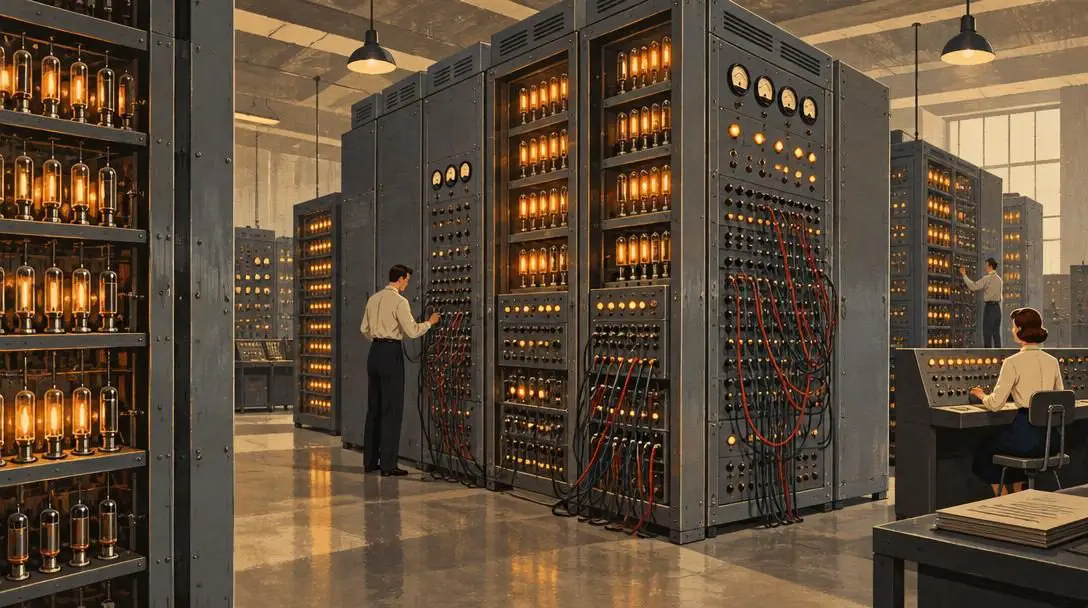
- Inventors: J. Presper Eckert and John Mauchly
- Operational Period: Developed during World War II
- Physical Footprint: Over 27 tons, occupying an entire room
- Initial Purpose: Calculating artillery firing tables for the US Army
The transition from mechanical calculation to high-speed electrical data processing arrived during World War II with the construction of the ENIAC (Electronic Numerical Integrator and Computer). Designed by J. Presper Eckert and John Mauchly, this landmark machine was commissioned by the US Army to produce complex artillery firing tables. The ENIAC was an industrial-scale marvel, weighing more than 27 tons and requiring a dedicated room to house its thousands of components. By utilizing electrical switches rather than moving gears, the ENIAC processed complex calculations at unprecedented speeds, establishing the practical blueprint for the modern electronic computer industry.
The MITS Altair 8800
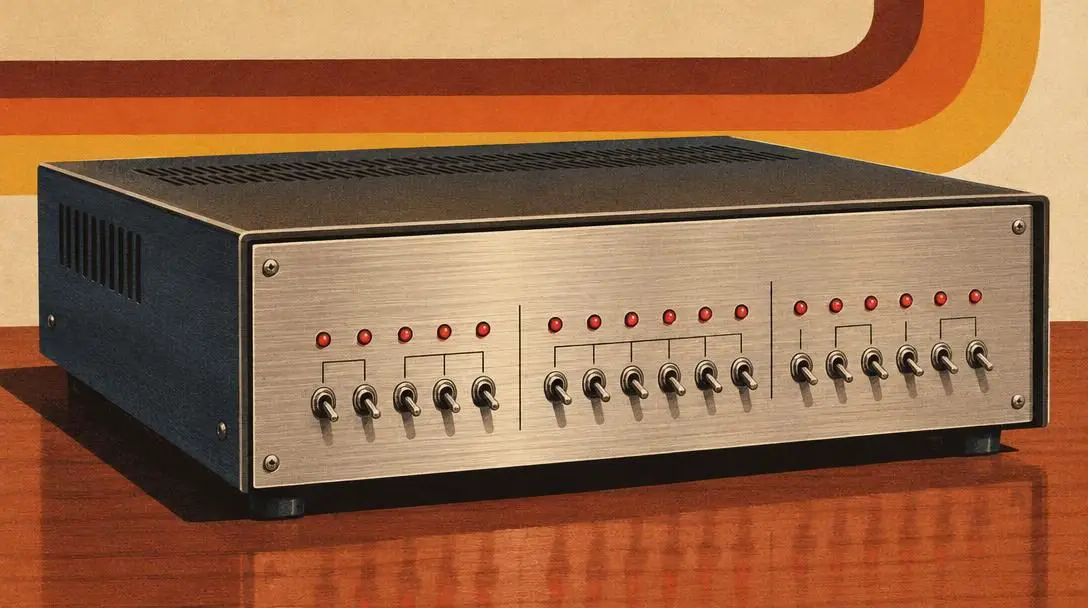
- Release Year: 1975
- Manufacturer: MITS
- Base Price: $397 as an unassembled kit
- Hardware Specs: Intel 8080 microprocessor and 256 bytes of memory
While public memory often attributes the birth of personal computing to Apple or Microsoft, the commercial microcomputer market was actually ignited by the Altair 8800. Manufactured in 1975 by MITS, the machine was sold for $397 as a kit that electronic hobbyists assembled on their own workbenches. Driven by an Intel 8080 microprocessor, the machine arrived with just 256 bytes of memory and had neither a keyboard nor a monitor. Despite these severe constraints, the Altair proved that computing power could belong to individual enthusiasts, directly inspiring the founding of Microsoft and kickstarting the personal computing revolution.
Richard Feynman’s Quantum Simulator
- Proposed Date: 1982
- Key Theorist: Physicist Richard Feynman
- Core Concept: Simulating quantum systems using quantum mechanics
- Target Applications: Cryptography, chemistry, and machine learning
Quantum computing is often treated as a brand-new phenomenon, but its theoretical framework was formulated in 1982 when physicist Richard Feynman proposed the concept of a quantum simulator. Feynman noted that classical binary machines struggle immensely to simulate the natural behavior of subatomic particles because classical computers operate on rigid binary states. By proposing a system that operated according to the principles of quantum mechanics, Feynman laid the foundation for an entirely new computational paradigm. Though still evolving, modern quantum development aims to revolutionize disciplines such as machine learning, cryptography, and molecular chemistry.
Computing is not a modern creation of corporate boardrooms, but a multi-century pursuit that stretches from ancient marine navigation to experimental physics.
At a Glance: How Historic Computing Milestones Compare
Every era of computing has resolved computational bottlenecks using the materials, manufacturing processes, and physical theories available at that time. The following table provides an overview of how these foundational milestones compare across eras.
| Milestone | Era | Primary Hardware Basis | Initial Purpose | Key Contributors |
|---|---|---|---|---|
| Antikythera Mechanism | Ancient Greece | Bronze gears and dials | Tracking astronomical positions and eclipses | Ancient Greek engineers |
| First Algorithmic Program | 1840s | Theoretical mechanical instructions | Sequential calculation steps for mechanical engines | Ada Lovelace |
| ENIAC | World War II | Room-sized electronic switches | Calculating artillery firing tables | J. Presper Eckert and John Mauchly |
| Altair 8800 | 1975 | Intel 8080 processor with 256 bytes memory | Affordable hobbyist microcomputing | MITS |
| Quantum Simulator Concept | 1982 | Quantum mechanical states | Simulating complex quantum physical systems | Richard Feynman |
How Computing Technologies Work Across Eras
To fully grasp the history of computers, one must understand how the underlying mechanism changed from one historical period to the next. The transition from physical mechanical components to intangible electrical signals and quantum states altered the fundamental nature of information processing.
Mechanical computing relied exclusively on physical motion. In devices like the Antikythera Mechanism, arithmetic and astronomical modeling were embedded directly into the physical structure of bronze gear trains. When a user turned a hand crank, the motion rotated specific gears at mathematically predetermined ratios. The resulting calculations were expressed visually through pointers moving across external dials. There were no abstract digital registers or electrical currents; logic was a consequence of physical gear teeth interacting in space.
Theoretical software design predated functional electronic hardware by nearly a century. Ada Lovelace realized in the 1840s that computational engines were not limited to simple number-crunching. By drafting step-by-step algorithms, Lovelace demonstrated that automated processes could manipulate any information governed by logical rules. This conceptual leap transformed computing from mere physical arithmetic into software-driven problem-solving.
Electronic computing substituted mechanical movement with the rapid flow of electricity. Machines like the ENIAC replaced spinning shafts and mechanical wheels with high-speed electrical circuits. While this switch allowed the ENIAC to perform thousands of operations per second, the physical hardware was colossal. Occupying an entire room and weighing more than 27 tons, the machine had to be reconfigured by engineers who plugged cables and adjusted physical switches to route electrical signals for specific artillery ballistics tasks.
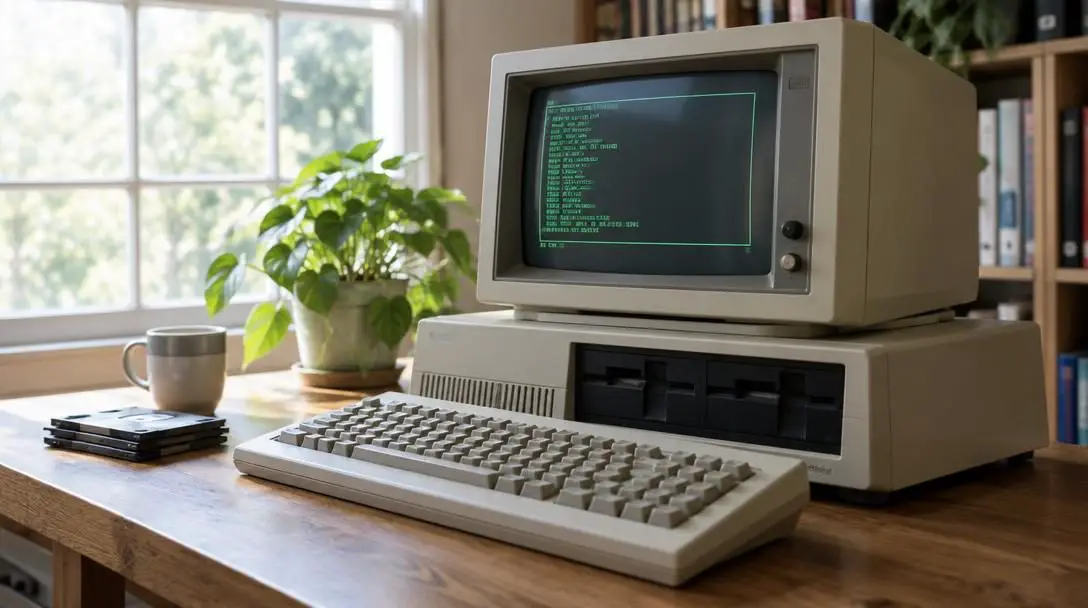
Personal microcomputing miniaturized these sprawling circuits down to tiny silicon chips. The Altair 8800 demonstrated that an integrated microprocessor, such as the Intel 8080, could handle processing locally on a single desk. Instead of relying on room-scale infrastructure and industrial cooling systems, users in 1975 could manage 256 bytes of memory through a compact unit that sat comfortably in a home workshop.
Quantum computing breaks away from classical binary mechanics altogether. As Richard Feynman observed in 1982, nature operates on quantum mechanical principles that classical digital bits cannot efficiently simulate. Rather than restricting information to discrete binary values, quantum devices exploit the subtle behavior of matter at atomic scales. This paradigm allows quantum computers to approach massive problems in chemistry, machine learning, and cryptography from an entirely novel perspective.
How to Study Computing History Firsthand
Understanding the history of computing allows developers, students, and enthusiasts to write better software and understand the architectural bottlenecks of modern systems. Follow these practical steps to investigate computing history systematically:
- Study physical and mechanical calculating devices: Examine how physical gear ratios and bronze pointers, such as those inside the Antikythera Mechanism, translate rotational movement into accurate mathematical outputs.
- Review early programming concepts: Read the theoretical algorithmic work created by Ada Lovelace in the 1840s to see how logical execution sequences were drafted before digital computers existed.
- Examine wartime human computation: Research the role of female "computers" during World War II to understand how manual workflows and human networks solved complex ballistics equations and supported early NASA space missions.
- Analyze early personal computer architecture: Review the hardware blueprints of the MITS Altair 8800 to see how an Intel 8080 processor functioned with only 256 bytes of memory.
- Follow quantum development milestones: Track modern laboratory experiments that implement Richard Feynman’s 1982 quantum simulator proposal to observe the ongoing transition beyond classical binary machines.
Common Misconceptions About Computing History
Because modern technology changes rapidly, retrospective history is often distorted by modern assumptions. When exploring the origins of computing, avoid these frequent historical mistakes:
- Believing computing began with digital microchips: Many assume that computing devices did not exist prior to the mid-twentieth century, ignoring early mechanical artifacts like the Antikythera Mechanism that solved complex problems thousands of years ago.
- Overlooking the contribution of human "computers": It is a mistake to assume the word "computer" always described a machine, which overlooks the teams of women who performed critical mathematical labor for wartime ballistics and space exploration.
- Attributing all personal computer breakthroughs to modern tech giants: Many believe Apple or Microsoft invented the personal computing market, forgetting that hobbyist kits like the MITS Altair 8800 launched the industry and inspired those later companies.
- Assuming early computers were instantly compact: Modern handheld devices make it easy to forget that early electronic systems like the ENIAC weighed over 27 tons and filled entire rooms.
- Thinking quantum computing is strictly a modern invention: While modern quantum hardware is currently making news, its foundational principles were established by Richard Feynman back in 1982.
Frequently asked questions
What was the first computer ever discovered?
The earliest known calculating machine is the Antikythera Mechanism, a mechanical Greek device discovered in a Mediterranean shipwreck in 1901 that used bronze gears to track astronomical positions and eclipses.
Who was the first computer programmer?
Ada Lovelace is widely recognized as the first computer programmer for developing an algorithm intended for execution on a calculating engine in the 1840s.
How heavy was the first electronic computer?
The ENIAC, built during World War II by J. Presper Eckert and John Mauchly to calculate artillery firing tables, weighed more than 27 tons and occupied an entire room.
What was the first commercially successful personal computer?
The Altair 8800, introduced in 1975 by MITS for $397, was the first commercial personal computer kit; it featured an Intel 8080 microprocessor and 256 bytes of memory.
When was the concept of quantum computing introduced?
The idea of a quantum computer was proposed in 1982 by physicist Richard Feynman, who suggested building a quantum simulator to model physical systems using the principles of quantum mechanics.
The bottom line
The history of computing reveals that data processing is not defined by any single machine, company, or technological era. What began as bronze gears tracking the night sky in ancient Greece transitioned into theoretical algorithms written by Ada Lovelace, room-scale electronic tubes inside the ENIAC, and hobbyist kits assembled by hand in 1975. As researchers now work toward building functional quantum systems grounded in Richard Feynman's 1982 theories, the overarching pattern remains clear: computing has always adapted to the physical media of the day, continually finding new ways to turn abstract mathematical logic into real-world solutions.