5 Tips for Creating a Relaxing Bathroom Retreat at Home
For generations, the home bathroom was treated strictly through the lens of utilitarian function. Tiled in stark white and furnished with basic fixtures, it served primarily as an efficient space for hygiene and morning routines rather than comfort or emotional rejuvenation. As modern living has accelerated—characterized by constant connectivity, demanding schedules, and screen fatigue—the domestic environment has been forced to adapt. Homeowners and apartment dwellers alike now look for dedicated spaces within their dwellings where they can physically slow down, quiet their minds, and transition away from the stresses of everyday life.
This cultural shift has transformed the bathroom from an austere utility room into an essential sanctuary. Borrowing design cues and sensory rituals from high-end wellness spas, a well-conceived bathroom retreat balances visual order, tactile comfort, and calming ambiance. Achieving this harmony does not require sacrificing everyday practicality or undertaking an overwhelming, costly renovation. Through thoughtful planning, sensory awareness, and five core design strategies, any standard bathroom can be turned into an oasis of genuine relaxation.
Key takeaways
- Shifting your bathroom palette to cool hues or balanced neutrals reduces visual fatigue and fosters tranquility.
- Introducing natural elements like organic stone, warm wood, and indoor plants bridges the gap between indoor spaces and nature.
- Upgrading daily comfort features, such as soft textiles, modern fixtures, and bathtub trays, elevates mundane routines into restorative rituals.
- Ruthlessly decluttering surfaces and using concealed storage preserves the visual quiet required for true mental decompression.
- Layering warm illumination, therapeutic scents, and soothing background sounds completes an authentic spa-like atmosphere.
How Sensory Design Shifts the Bathroom Experience
Creating a truly tranquil environment goes beyond surface styling; it directly engages the human nervous system through sensory cues. The brain constantly reads visual stimuli, textures, scents, and sounds to gauge whether an environment requires alertness or invites rest. In a typical bathroom, hard, reflective surfaces like porcelain, mirror glass, and polished chrome can feel cold and sterile. When you intentionally soften these elements, the body responds naturally by lowering physical tension.
Visual balance forms the foundation of this sensory transition. When eyes travel across cluttered countertops crowded with half-empty bottles, beauty jars, and tangled cords, the brain registers disorder and unfinished business. Clearing these surfaces creates instant visual quiet. Similarly, the color spectrum in the room deeply influences mood. Cool tones and muted neutrals soften the field of vision, helping the mind disengage from high-stress analytical thinking.
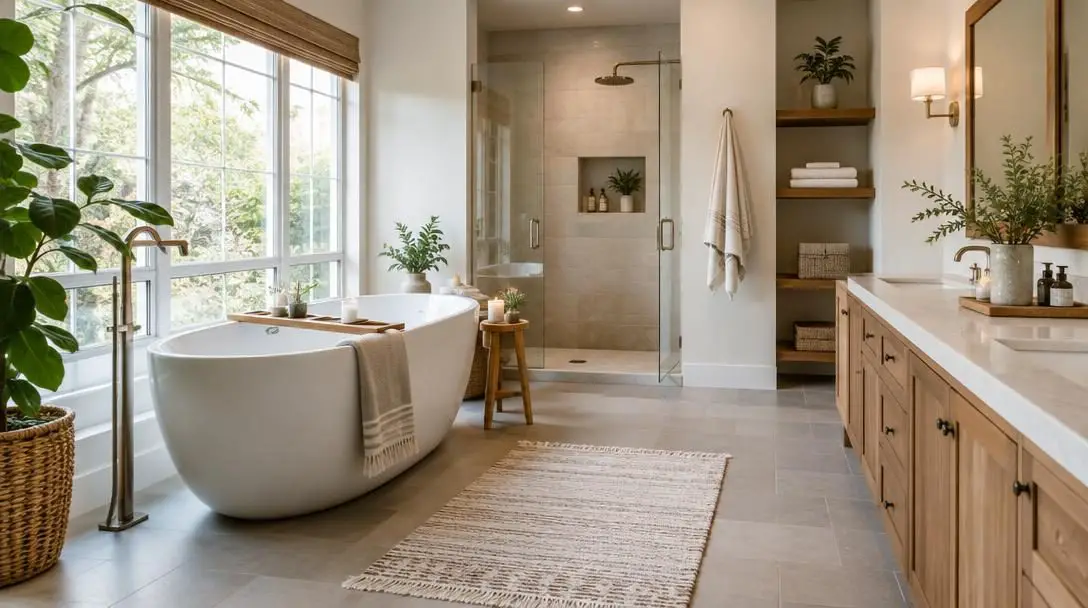
Creating a relaxing bathroom retreat can be the ultimate way to unwind after a long day or escape from the stresses of daily life.
Tactile interaction completes the physical feeling of being nurtured. Stepping out of a bath onto an abrasive mat or drying off with stiff towels quickly breaks the calming spell of warm water. Incorporating rich organic textures—such as hand-hewn wood accents, natural stone finishes, and plush, heavyweight cottons—delivers immediate physical comfort. When tactile luxury meets gentle aromas and warm, indirect lighting, the bathroom becomes an immersive escape that supports restful transitions between demanding work hours and peaceful evenings.
Five Core Strategies for a Bathroom Retreat
Transforming a conventional bathroom into a peaceful haven rests on five strategic adjustments. Each tackles a distinct dimension of the room, from aesthetic themes and raw materials to tactile comforts and organization.
| Strategy | Primary Sensory Target | Key Design Elements | Main Benefit |
|---|---|---|---|
| Calming Colors | Visual ease | Soft blues, greens, beige, gray, white | Lowers emotional tension and visually unifies the room |
| Natural Elements | Organic warmth and air quality | Wood shelving, stone tiles, ferns, bamboo, aloe vera | Balances cold porcelain surfaces with outdoor tranquility |
| Comfortable Features | Tactile pampering | Plush robes, soft towels, bathtub trays, updated showerheads | Upgrades basic hygiene into an indulgent personal ritual |
| Decluttering & Simplifying | Mental clarity | Storage baskets, concealed bins, open floating shelves | Eliminates visual noise and simplifies ongoing maintenance |
| Spa-Like Atmosphere | Aroma, sound, and lighting | Warm lighting, scented candles, diffusers, ambient audio | Engages deep relaxation pathways and sets a restful mood |
Incorporate Calming Colors
Color choices set the emotional foundation of any interior space. When redesigning your bathroom, focus your color scheme on tones scientifically recognized for their soothing properties. Cool colors such as soft blue, gentle green, and quiet purple tend to lower heart rates and calm overstimulated minds. If you prefer an understated aesthetic, balanced neutrals like warm beige, slate gray, and crisp white foster a serene, grounded atmosphere.
You can execute this strategy through structural updates or simple cosmetic refreshes. Consider painting walls in a muted seafoam or powdery sky blue, or keep walls neutral while layering colored linens, such as sage bath sheets and pale slate mats. Complementing these tones with living green plants further unifies the palette, keeping the aesthetic focused, intentional, and peaceful.
Bring In Natural Elements
Standard bathrooms are predominantly filled with manufactured, man-made surfaces. Introducing wood, natural stone, and vibrant greenery introduces necessary warmth, texture, and vitality. Natural materials break up the sterility of porcelain and fiberglass, grounding the room in organic textures that foster tranquility and reduce stress.
Practical ways to integrate natural materials include installing floating wooden shelving, hanging wood-framed vanity mirrors, or laying natural stone tiles in shower recesses or as vanity backsplashes. Living greenery is equally vital. Moisture-tolerant plants such as hanging ferns, bamboo shoots in simple vases, soothing lavender, and potted aloe vera thrive in humid air while subtly refreshing the atmosphere and reinforcing the indoor-outdoor connection.
Add Comfortable Features
True luxury is defined by physical ease. Even the most visually stunning bathroom fails as a retreat if the tactile experience is uncomfortable or awkward. Adding targeted comfort features elevates everyday hygiene into restorative self-care. Focus on items that touch your skin and accessories that prolong your leisure time in the room.
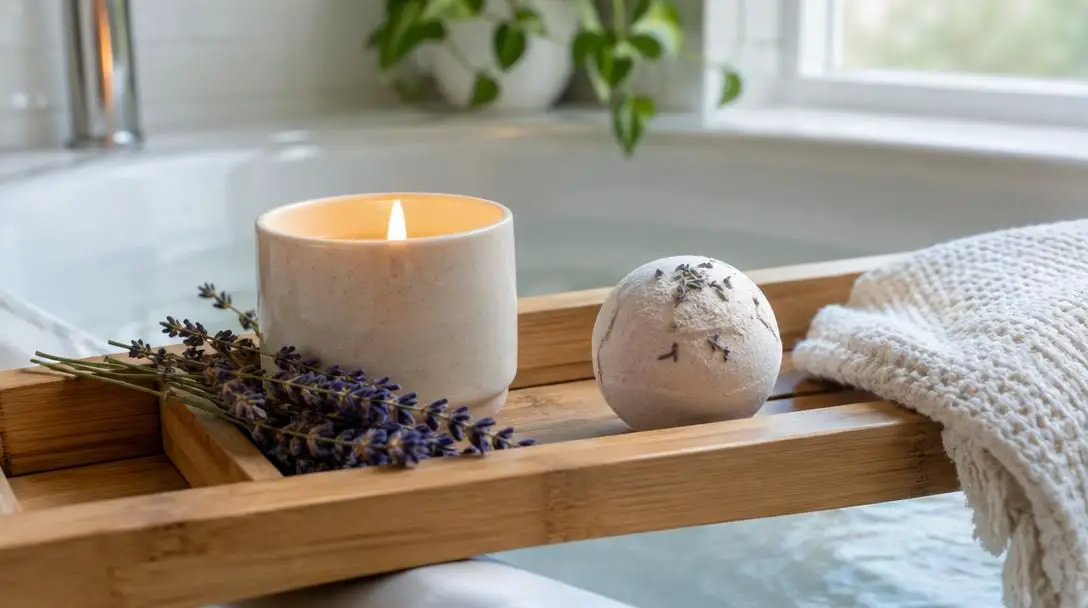
Invest in thick, high-absorbency towels and treat yourself to a plush bathrobe that offers spa-level comfort the moment you step out of the shower. If your hardware is outdated, replacing a standard showerhead with a rainfall or multi-spray unit instantly upgrades the shower experience. For those who enjoy extended soaking, a fitted bathtub tray is indispensable: it keeps your favorite book, tablet, or refreshing drink securely within arm's reach so you can immerse yourself without interruption.
Declutter and Simplify
Clutter is the enemy of calm. When bottles, tubes, and packaging crowd every horizontal surface, your mind stays subtly engaged with domestic chores. Simplifying the room involves a deliberate process of editing down your possessions and establishing concealed, organized homes for everything you truly need.
Begin by eliminating outdated toiletries, half-used cosmetics, and expired medical products. Once you have pared down your collection, organize daily essentials into lidded baskets, woven containers, or drawer organizers. Install hanging wall shelves to store neatly folded linens or decorative glass canisters. Clearing countertops signals to your brain that the room is ordered, manageable, and dedicated to rest.
Create a Spa-Like Atmosphere
The final touch in creating a domestic retreat is styling the overall ambiance. Commercial spas excel at crafting multi-sensory experiences through ambient illumination, tailored scents, and delicate acoustics. You can effortlessly replicate this restorative environment at home.
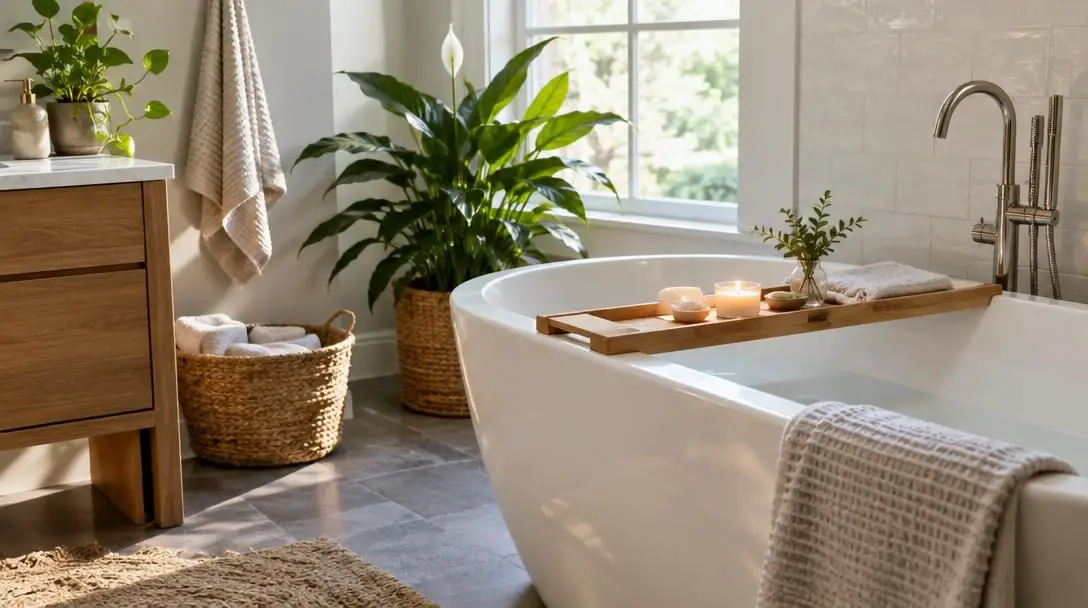
Start by rethinking your lighting. Swap harsh, cool-toned bulbs for soft, warm lighting fixtures that emit a flattering, golden glow. Introduce essential oil diffusers or scented candles featuring relaxing botanicals like lavender, eucalyptus, or sandalwood to gently scent the humid air. Finally, use a waterproof speaker to play quiet instrumental music, classical selections, or soothing nature recordings, washing away intrusive street noise and daytime stress.
Step-by-Step Guide to Transforming Your Space
You do not need to orchestrate a disruptive, expensive remodel overnight to achieve the benefits of a home sanctuary. Approaching your bathroom refresh in a logical sequence ensures steady progress without feeling overwhelmed.
- Conduct a thorough cleanout: Empty every drawer, under-sink cabinet, and vanity shelf. Sort through containers methodically, throwing away dried-up cosmetics, old toiletries, and expired medications to clear physical space.
- Organize and store daily essentials: Group remaining everyday items by frequency of use. Place daily necessities into coordinated bins or storage baskets, leaving sink countertops entirely bare and clean.
- Select your unified color palette: Choose whether cool hues like blue and green or grounded neutrals like beige and gray best match your fixtures. Apply fresh paint or swap out towels and bath mats to establish color cohesion.
- Incorporate wood, stone, and greenery: Mount wooden storage shelving or a wood-framed mirror. Introduce stone bath accessories, and arrange humidity-loving plants like aloe vera, bamboo, or hanging ferns.
- Upgrade physical touchpoints: Replace worn linens with soft, plush towels and a thick bathrobe. Consider installing an upgraded showerhead, modern faucet, or a sturdy bathtub tray for leisurely soaks.
- Dial in the atmospheric senses: Switch out bright light bulbs for warm-toned fixtures. Light scented candles, run an essential oil diffuser, and cue up a playlist of gentle classical or ambient nature sounds.
Common Pitfalls That Disrupt Bathroom Tranquility
While upgrading your space, well-intentioned choices can sometimes backfire and create fresh friction. Keeping several common pitfalls in mind will safeguard the serene environment you are building.
- Overcrowding surfaces with decor: While plants, trays, and stone jars add warmth, adding too many knick-knacks creates new visual clutter. Select a few impactful pieces rather than packing every surface.
- Underestimating functional storage: Purging clutter without creating reliable, closed storage ensures bottles will eventually migrate back onto countertops. Ensure every essential has a dedicated storage bin.
- Relying on clinical overhead lighting: High-kelvin, cool fluorescent bulbs make bathrooms look sterile and uninviting. Layer warm, indirect lighting sources to encourage deeper relaxation.
- Selecting poorly suited plants: Bathrooms experience drastic swings in heat and steam. Avoid desert plants that demand dry air; stick to resilient varieties like bamboo, ferns, and aloe vera.
- Settling for scratchy textiles: Visual beauty cannot compensate for poor physical textures. Stiff, threadbare towels compromise the pampering experience that defines a wellness retreat.
Long-Term Care and Seasonal Evolution
A personal retreat is not a static project; it is an ongoing experience that rewards thoughtful upkeep. Sustaining a calming environment requires small, consistent habits to stop everyday clutter from creeping back in. Set aside a few minutes each month to discard empty containers, rotate out unused samples, and wipe down your wooden and stone finishes.
You can also evolve the sensory qualities of your retreat in tune with the seasons. During warmer summer months, you might prefer lighter linen towels, crisp eucalyptus aromas, and open windows that let fresh breezes circulate. As autumn and winter arrive, transition to heavier, ultra-plush robes, warm vanilla or cedar essential oils, and the soft flicker of extra candlelight. By tuning into your physical needs throughout the year, your bathroom remains an adaptable, supportive sanctuary for your daily well-being.
Frequently asked questions
Which colors are most effective for making a small bathroom feel serene?
Cool colors such as soft blues, muted greens, and delicate purples are exceptionally effective because they visually recede, making walls feel less restrictive while calming the mind. Alternatively, light neutrals such as warm beige, soft gray, and clean white reflect light gently and create a balanced, orderly backdrop.
What types of indoor plants thrive best in high-humidity bathrooms?
Plants that naturally flourish in warm, humid settings are ideal. Hanging ferns, bamboo, and aloe vera are durable choices that tolerate fluctuating moisture levels. In well-lit bathrooms, potted lavender can also perform well while introducing a light, natural scent to the air.
How can I make my bathroom feel like a spa on a limited budget?
You can achieve a spa-like feel without major renovation expenses by focusing on sensory adjustments: declutter your countertops completely, replace worn towels with a plush set, introduce a few affordable plants like bamboo, switch to warm-toned light bulbs, and use scented candles or an essential oil diffuser during baths.
Why is warm lighting preferred over bright, cool lighting in a relaxing bathroom?
Cool, bright lighting mimics intense midday sun and stimulates alertness, which can make a bathroom feel clinical or commercial. In contrast, warm, amber-toned lighting signals the nervous system that it is time to unwind, softening facial reflections in mirrors and setting a cozy, restful mood.
What is the purpose of using a bathtub tray?
A bathtub tray rests securely across the edges of the tub, providing a dry, stable platform to hold a book, tablet, beverage, or bath accessories. This allows you to indulge in a long, peaceful soak without worrying about dropping items or needing to reach awkwardly out of the tub.
The bottom line
Reclaiming the bathroom as a restorative domestic refuge does not demand an extravagant budget or architectural restructuring. By understanding how the senses respond to color, raw organic textures, gentle lighting, and uncluttered surfaces, anyone can transform a cold utility space into a haven of rest. Incorporating soft hues, living plants, warm woods, indulgent textiles, and calming scents creates a private oasis that eases daily stress and nurtures everyday well-being.