5 Steps for Creating a Hygge-Inspired Cozy Home Environment

As outdoor temperatures drop and the colder months set in, the human instinct to seek warmth, shelter, and restorative quiet takes center stage. While cultures around the world have long recognized that physical comfort and coziness are essential for personal well-being, the Danish tradition has elevated this pursuit into an art form known as hygge. Pronounced "hoo-gah," this multifaceted concept represents far more than an aesthetic trend; it is an enduring lifestyle rooted in contentment, emotional balance, mindfulness, and the celebration of everyday moments.
Adopting hygge does not require an extensive home renovation or an extravagant budget. Instead, this Danish philosophy centers on cultivating a refuge from outside pressures by engaging our senses with warmth, tactile softness, gentle lighting, and visual clarity. By making thoughtful, intentional adjustments to your domestic environment, any living space—regardless of square footage or architectural style—can be transformed into a calming haven that nurtures mental and physical restoration.
Key takeaways
- Hygge is a Danish philosophy centered on warmth, comfort, and emotional contentment found in simple, everyday pleasures.
- Calming the nervous system requires addressing sensory touchpoints, particularly warm lighting, rich tactile fabrics, and thermal stability.
- A successful hygge home balances cozy indulgence with visual clarity, relying on thoughtful decluttering rather than bare austerity.
- Bringing nature indoors through resilient houseplants, natural timber, and organic daylight bridges the gap between indoor sanctuaries and the soothing natural world.
The Sensory Architecture of Hygge
Our physical surroundings exert a profound influence over our internal mental state. Modern environments frequently subject the senses to elevated friction: harsh blue-tinted fluorescent tubes, cold and hard synthetic flooring, chilly drafts, and an endless parade of visible household clutter. These stimuli subtly activate our biological stress responses, keeping the mind in a low-grade state of constant vigilance. The philosophy of hygge counters this sensory fatigue by carefully curating every point of physical and visual contact within the home.
In a hygge-informed space, the visual environment undergoes an immediate softening. Blinding overhead illumination is replaced by low, warm pools of light that evoke the embers of an open fire or the natural glow of a setting sun. Unnecessary objects and untamed paperwork are placed into concealed storage, eliminating the constant psychological reminders of chores and administrative burdens. This deliberate reduction in visual noise provides immediate room for mental decompression.
Simultaneously, the tactile and thermal qualities of the room are tuned for restorative comfort. When you rest on a sofa or slide into bed, your hands and body meet natural wool, plush velvet, dense fleece, and breathable cotton rather than abrasive, stiff, or cold surfaces. Unpleasant drafts and icy floorboards are actively mitigated, wrapping the body in an unbroken envelope of physical warmth. When warmth, gentle light, tactile softness, and visual order converge, the nervous system naturally disengages from everyday survival mode and settles into genuine rest.
True well-being is nurtured through physical warmth, sensory comfort, and intentional simplicity.
The 5 Practical Steps to a Hygge-Inspired Home
Transitioning your home into a soothing sanctuary does not demand formal interior design training. By addressing five fundamental elements—lighting, textiles, warmth, natural additions, and visual order—you can methodically curate an environment that promotes daily ease and relaxation.
Step 1: Lighting
Lighting serves as the cornerstone of hygge because it establishes the foundational mood of every interior room. High-intensity, cool overhead fixtures strain the eyes, amplify shadows, and cast a sterile, clinical pall over the home. To establish a restful atmosphere, transition away from sharp white bulbs in favor of softer, warm-yellow illumination that signals to the brain that the work of the day is done.
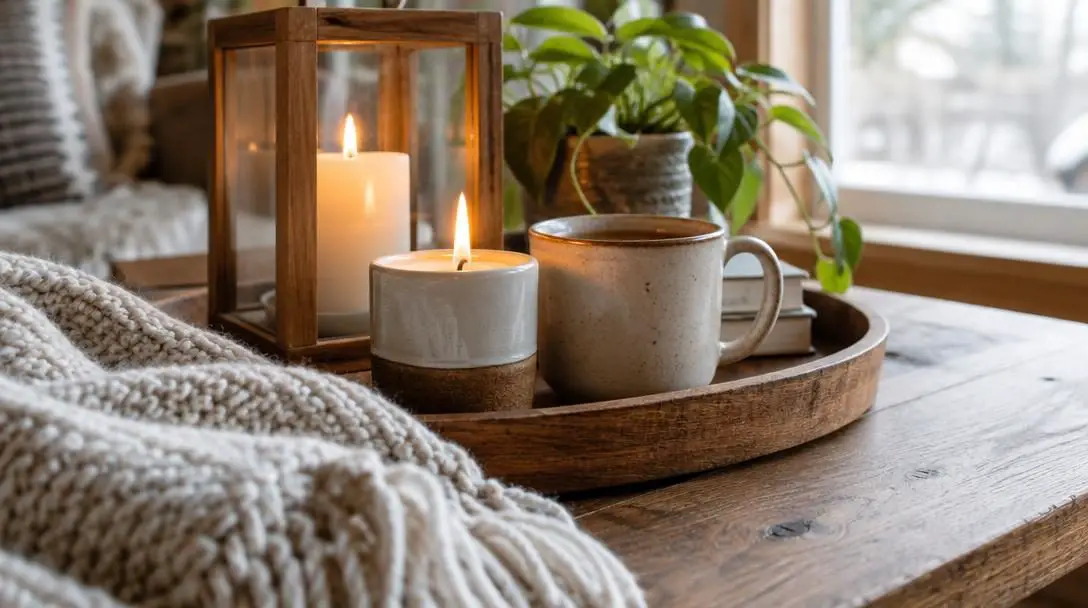
Distribute secondary lighting sources throughout your living spaces at varying heights. Place accent lamps on low side tables, tall floor lamps beside reading chairs, and modest table lamps on consoles to create overlapping, soft pools of radiance. Introduce wax candles across fireplace mantels, dining tables, and decorative shelving, as the gentle flicker of a living flame provides an immediate, grounding calm that artificial light cannot replicate. Where overhead fixtures remain necessary, install dimmer switches to allow continuous control over lumen levels as the afternoon fades into evening.
Step 2: Textures and Fabrics
Visual warmth must be mirrored by tactile softness. A room decorated exclusively with flat, smooth, or synthetic materials can feel unwelcoming, cold, and emotionally distant. By integrating varied, touchable textures, you give your living spaces sensory depth and an irresistible physical invitation to pause and unwind.
Focus on textiles celebrated for physical indulgence and timeless comfort. Incorporate authentic wools, soft cottons, plush velvets, and faux furs into your everyday seating areas. Layering is key: scatter an assortment of plush decorative pillows and supportive cushions across couches and daybeds, and drape substantial throw blankets over chair arms for effortless access. On chilly bare wood, tile, or laminate flooring, spread generous area rugs to provide soft footing underfoot. You can even consider textured wall coverings on accent surfaces to introduce sensory richness to the boundaries of the room.
Step 3: Warmth and Comfort
At its heart, hygge acts as a resilient buffer against cold, inclement weather. Even the most visually appealing room fails as a sanctuary if occupants are actively shivering or shielding themselves from ambient drafts. Maintaining consistent physical warmth is therefore non-negotiable when designing a restorative living space.
Furnish beds and loungers with insulating, heat-retaining fabrics like heavy fleece, flannel, and thick wool. Take time to audit your home's layout to ensure primary sitting spots and reading corners are positioned away from drafty window frames, uninsulated exterior doors, and chilly corners. Where architecture leaves gaps in warmth, introduce supplemental heating tools such as electric blankets to pre-warm cold sheets, quiet space heaters for localized climate management, or radiant heated floor elements beneath high-traffic pathways.
Step 4: Decorating with Natural Elements
Human beings possess an ingrained affinity for the living world. Integrating organic textures and living flora into the home brings fresh visual balance, softens rigid architectural lines, and introduces a peaceful, grounded quality to modern interiors.

Incorporate resilient, low-maintenance indoor house plants that thrive with minimal intervention. Species such as snake plants and hardy succulents introduce vibrant green accents while naturally purifying indoor air. Complement your greenery with organic wooden elements: display family memories inside natural wood picture frames, gather around a rustic wooden dining or coffee table, and incorporate sturdy wooden accent chairs. The natural grain and warm tones of untreated or lightly finished timber harmonize with daylight, breaking up synthetic surfaces and anchoring the home to the calming rhythms of nature.
Step 5: Decluttering
True coziness cannot exist amidst ongoing visual chaos. When surfaces are crowded with unorganized belongings, discarded mail, and scattered odds and ends, the brain continuously expends cognitive energy registering the mess. A minimalist, intentional mindset creates the visual breathing room necessary for quiet contemplation.
Dedicate time to sorting through your possessions, clearing away items that no longer serve a practical function or bring emotional value. Implement hidden storage solutions, such as woven lidded baskets, tailored storage ottomans, and closed cabinetry, to tuck everyday necessities out of sight. Give every common item a permanent home—for instance, keep personal grooming essentials and toiletries arranged in cupboards or concealed bins beneath bathroom sinks. By keeping tabletops, mantels, and kitchen counters largely clear, you establish an orderly environment that welcomes you to relax the moment you enter the room.
At a Glance: The 5 Pillars of Hygge Interior Design
| Pillar | Primary Sensory Target | Core Decor Elements | Atmospheric Problem Solved |
|---|---|---|---|
| Lighting | Vision | Dimmer switches, table lamps, candles, warm yellow bulbs | Harsh glare, sterile ambiance, eye strain |
| Textures and Fabrics | Touch | Wool throws, velvet pillows, faux fur, area rugs | Cold, flat, unwelcoming surfaces |
| Warmth and Comfort | Temperature | Fleece, flannel bedding, space heaters, draft prevention | Shivering, drafts, damp chill |
| Natural Elements | Living Connection | Snake plants, succulents, rustic wood furniture, frames | Synthetic sterility, disconnected interiors |
| Decluttering | Mental Clarity | Hidden storage baskets, closed cupboards, clear surfaces | Visual noise, cognitive fatigue, daily friction |
Common Decorating Traps to Avoid
While the principles of hygge are refreshingly accessible, homeowners often run into common decorating misconceptions that undermine their efforts. Navigating around these pitfalls ensures your home remains genuinely cozy rather than merely staged.
- Overspending on trendy decor: Hygge is an authentic emotional posture and a commitment to simple comfort, not a commercial retail contest. Purchasing expensive designer sets or overextending your budget contradicts the foundational pursuit of everyday contentment.
- Relying on cool, stark ceiling fixtures: Leaving crisp daylight bulbs or cool-white LED overheads running will instantly counteract the softest throws and warmest textiles in the room, making spaces feel institutional.
- Sacrificing comfort for pure aesthetics: Selecting an architectural chair or stiff sofa simply because it matches a contemporary catalog spread defeats the essence of hygge if no one wants to curl up in it for an afternoon of reading.
- Creating excess clutter under the guise of coziness: It is easy to go overboard by gathering piles of trinkets, knickknacks, and redundant accessories. When layering decor crosses into clutter, it stimulates anxiety rather than peace.
- Neglecting organized storage systems: Stuffing unsorted belongings out of sight without establishing intentional homes ensures that clutter will inevitably spill back out, disturbing your peace of mind.
Developing Everyday Hygge Rituals
Transforming your physical surroundings provides the stage; the final step is learning how to dwell comfortably within it. Hygge is ultimately realized through the small, restorative rituals that you practice inside your domestic space on a daily basis.
- Initiate an evening unwinding ritual: When twilight arrives, turn off stark overhead ceiling lights, switch on low accent lamps, and light a candle on your living room table to visually mark the end of the working day.
- Implement regular tech-free hours: Silence digital notifications, stow away laptops, and put smartphones in a drawer to shield your private refuge from outside demands and screen glare.
- Engage in tactile leisure: Settle into a deep armchair equipped with a warm fleece or wool blanket, holding a warm beverage such as herbal tea or hot cocoa, and immerse yourself in a physical book.
- Adapt with the seasons: Transition your home textiles as outdoor weather fluctuates. Introduce heavy wools, thick flannel, and supplemental heat sources during deep winter freezes, then swap in lighter natural cottons and fresh greenery when gentle weather returns.
Frequently asked questions
What does the word "hygge" mean and how is it pronounced?
Hygge is pronounced "hoo-gah." It is a Danish concept describing a feeling, moment, or atmosphere defined by warmth, deep comfort, coziness, and emotional contentment found in simple pleasures.
Do I need to buy expensive Scandinavian furniture to practice hygge?
No. Hygge is rooted in finding joy in ordinary, accessible comforts and does not require costly designer furnishings. In fact, overspending on trendy items runs counter to the grounded, unpretentious philosophy of hygge.
What is the most critical lighting change to make for a hygge environment?
The most important adjustment is eliminating cool, harsh overhead bulbs and replacing them with soft, warm-yellow light sources, multiple accent lamps at varying heights, dimmer switches, and the flickering glow of candles.
Which indoor plants work best for a hygge home?
Low-maintenance, resilient species like snake plants and succulents are ideal. They require minimal effort to keep healthy, introduce organic shapes and vibrant green tones, and assist in purifying indoor air quality.
How does decluttering support a cozy atmosphere?
Visual clutter on tables, desks, and countertops generates subtle cognitive stress and distracts the mind. By keeping surfaces clear and storing items in designated baskets or closed cupboards, you create the mental breathing room needed to truly relax.
The bottom line
At its core, a hygge-inspired home is not an aesthetic achievement meant for exhibition, but a living sanctuary tailored to genuine human rest, healing, and connection. By prioritizing warm lighting, soft and layered textiles, reliable thermal warmth, natural touches, and uncluttered surfaces, you create an environment that actively protects you from the chaotic pressures of modern life. When you shape your domestic environment around physical comfort and simplicity, your home becomes a welcoming retreat that supports your mental and emotional well-being across every season.