How To Build The Perfect Home Gym: Advice for Each Budget
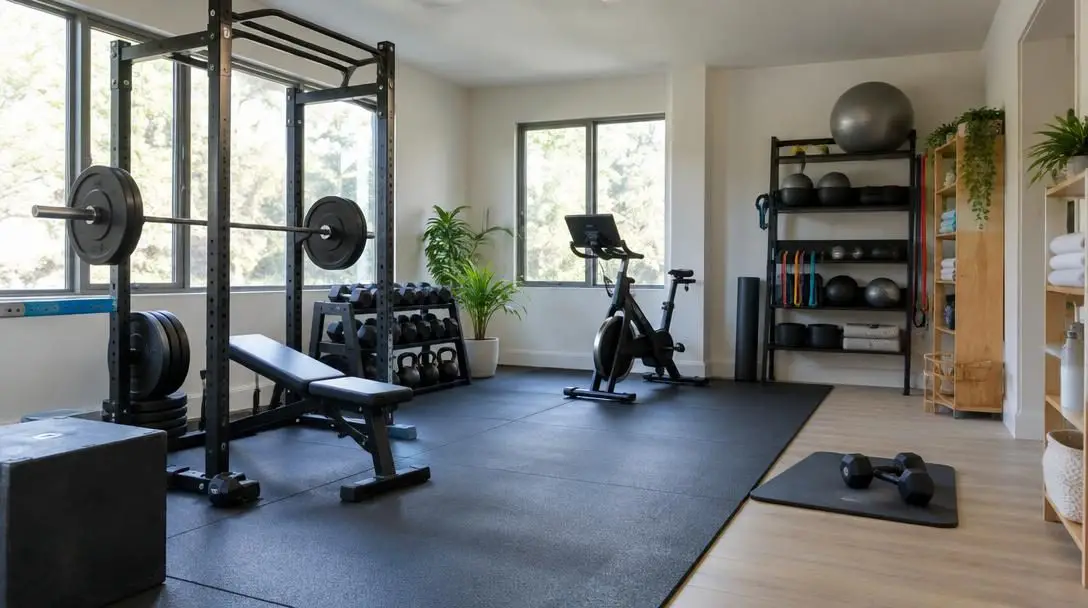
For decades, commercial fitness clubs stood as the default destination for anyone working toward better physical health and athletic conditioning. However, the routine logistics of visiting an off-site facility introduce daily friction that frequently derails long-term wellness goals. Commuting back and forth requires packing gym bags with apparel, towels, personal toiletries, and locker locks, while unpredictable weather or hazardous road conditions can make leaving the house undesirable or completely unsafe. Crowded weight rooms and wait times for popular equipment only compound these everyday frustrations.
Beyond simple scheduling and travel logistics, commercial memberships represent an ongoing financial drain. Annual maintenance charges, upfront initiation costs, and regular monthly fees routinely exceed $1,000 per year, yielding zero physical equity or asset ownership when an agreement ends. In contrast, establishing a private, designated home workout space eliminates transit time, bypasses bad weather, and preserves personal capital over time. With sensible planning, high-yield training environments can be adapted to virtually any budget level.
Key takeaways
- Building an independent training space bypasses recurring commercial membership fees that often exceed $1,000 every year.
- Frugal configurations deliver high conditioning returns through calisthenics, jump ropes, lightweight resistance tools, and pre-owned gear.
- Moderate spending introduces essential home staples, including foldable running decks, budget exercise bikes, adjustable benches, and barbells.
- High-tier investments provide commercial-grade power racks, guided Smith machines, advanced rowers, and dedicated audiovisual systems.
- Planning an effective setup requires assessing overhead ceiling clearance, mapping floor dimensions, and installing dense rubber flooring for substrate protection.
Matching Equipment to Your Training Budget
A successful home workout space balances available room dimensions, personal fitness goals, and financial constraints. Commercial gyms must purchase multiple duplicates of heavy machinery to serve hundreds of different visitors at once. In a residential environment, you only need to acquire the precise tools that support your own strength, cardiovascular, and mobility routines. Streamlining your selections keeps clutter down and saves meaningful funds.
Space and versatility govern how your workout area functions. At a foundational level, body weight and minimal accessories offer a broad variety of functional movements without requiring permanent structural changes to a room. As resources grow, mechanical components such as foldable motorized cardio machines, specialized resistance tools, and free-weight systems introduce heavier external resistance and measured conditioning.
| Budget Tier | Primary Strength Equipment | Cardio Options | Flooring & Accessories |
|---|---|---|---|
| Frugal | Bodyweight calisthenics, basic resistance bands, modest dumbbells | Jump rope, running in place, outdoor running | Open floor, basic protective mats |
| Moderate | Adjustable bench, barbell setup, advanced door-anchored resistance bands | Foldable treadmill (up to 10 mph), stationary bike ($100–$150) | Dedicated exercise mats, high-density foam pads |
| High | Heavy-gauge steel power rack, Smith machine, specialty cable towers | Commercial-grade treadmills, premium water or magnetic rowers | Interlocking rubber gym flooring, multi-speaker audio, smart displays |
Equipment Options for the Frugal Budget
A common misconception is that an effective training area requires massive financial investment. With an open patch of floor, an athlete can build impressive levels of stamina, mobility, and functional strength. Simple calisthenics like push-ups, sit-ups, air squats, and lunges cost nothing, while running in place or heading outside supplies immediate cardiovascular benefits. When you decide to add equipment, targeted, low-cost purchases offer exceptional value without straining finances.
Jump Ropes
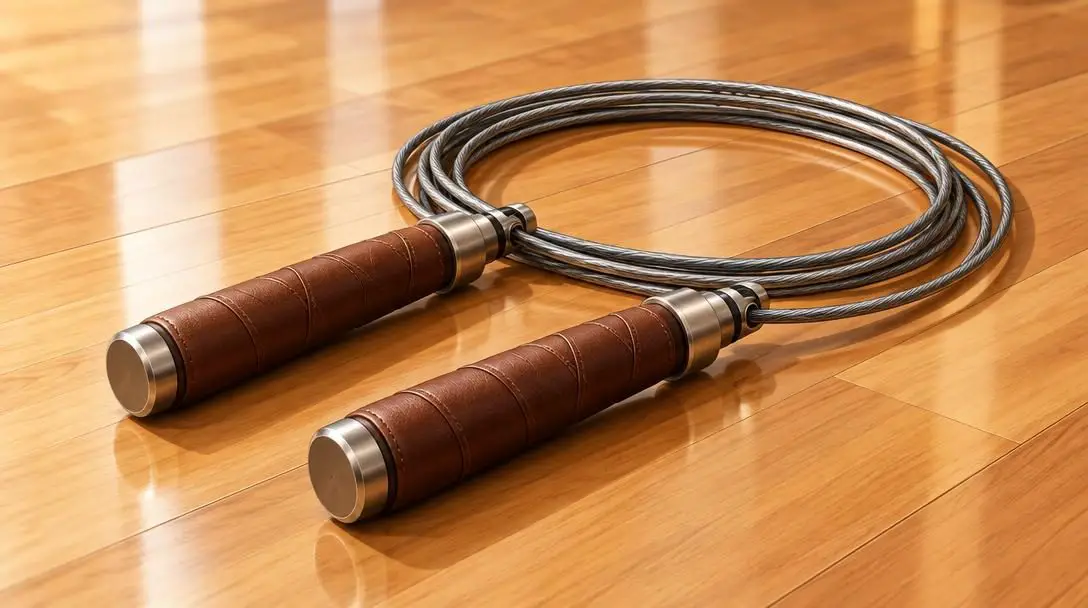
- Price Point: A few dollars
- Space Requirement: Minimal floor space, standard ceiling clearance
- Primary Benefit: Aerobic conditioning and footwork
Costing just a few dollars, jump ropes provide an intense aerobic challenge while sharpening coordination, footwork, and lower-leg endurance. They take up virtually no storage room, making them an ideal cardiovascular conditioning tool for small apartments or multipurpose living spaces. A short session of rope jumping warms up joints, elevates heart rates, and replicates the cardiovascular strain of high-end conditioning machines.
Basic Resistance Bands
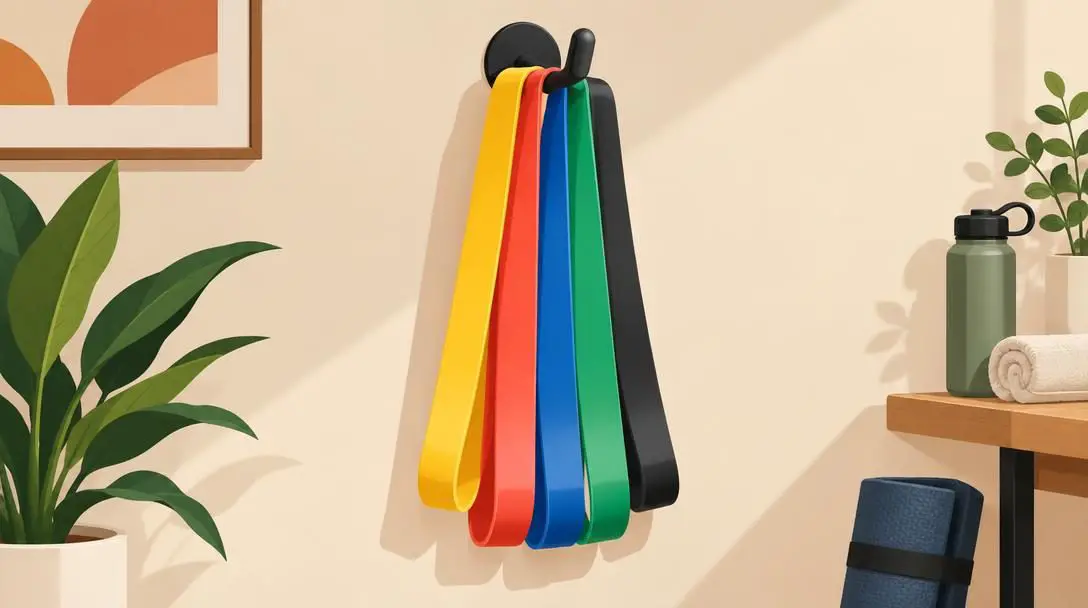
- Price Point: Low cost
- Tension Mechanism: Dynamic elastic resistance
- Storage: Fits inside standard drawers or wall hooks
Inexpensive bands introduce external load to both upper- and lower-body movements, aiding both general strength training and functional conditioning. Because they rely on elastic tension rather than heavy iron plates, they can be packed away in a drawer or hung on a hook immediately after a workout. They adapt easily to rows, bicep curls, lateral walks, and shoulder mobility exercises.
Free Weights
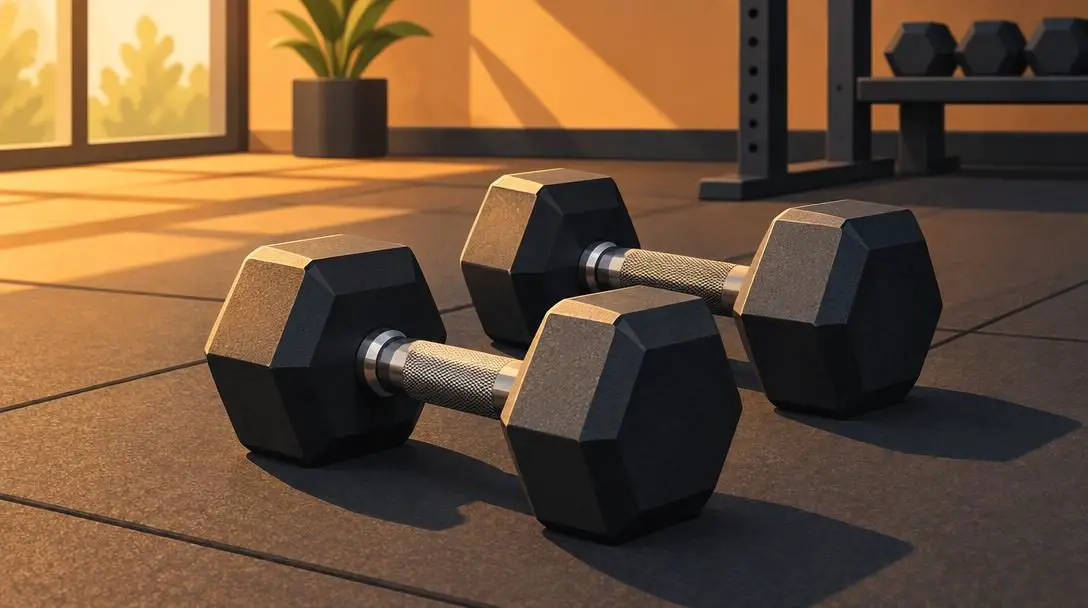
- Item Type: Modest hand weights or light dumbbell pairs
- Movement Selection: Curls, lateral raises, presses, lunges
- Upfront Investment: Modest entry-level pricing
Adding modest free weights gives you the external load needed for standard muscle-building movements without excessive investment. A modest set of hand weights or dumbbells allows you to perform curls, lateral raises, presses, and weighted lunges directly on your open floor. These compact weights provide tangible resistance that enhances standard bodyweight routines.
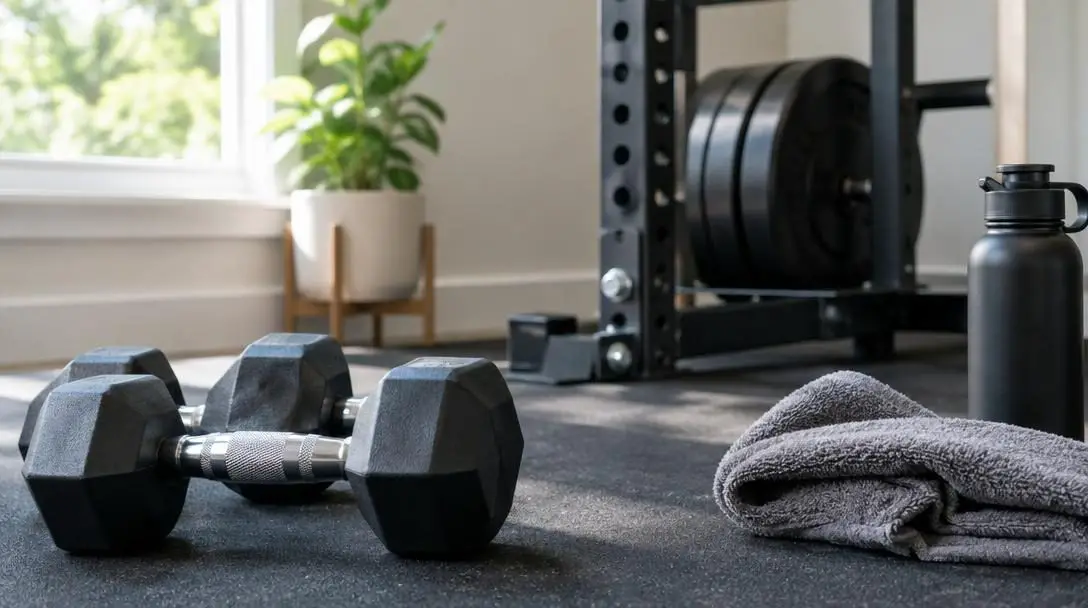
Pre-Owned Equipment
- Sourcing Channels: Craigslist, Facebook Marketplace, Play It Again Sports
- Retail Safeguard: Seven-day return policy at select resale shops
- Available Inventory: Benches, treadmills, ellipticals, weight plates
If you want more advanced items like weight benches, treadmills, or ellipticals on an entry-level budget, look to the pre-owned market. Online platforms such as Craigslist and Facebook Marketplace frequently feature sellers listing used cardio and weight-lifting equipment at low prices or even giving items away for free to clear up room. Resale retail outlets like Play It Again Sports provide access to used sporting and exercise goods at reasonable prices, offering quality assurances and a helpful seven-day return policy to protect your purchase.
Over a few years, recurring membership payments represent a significant sum of money that leaves a gym member with zero physical assets once the contract terminates.
Equipment Options for the Moderate Budget
For individuals with dedicated floor space and intermediate capital, stepping up to newly manufactured residential equipment unlocks higher durability, greater resistance, and enhanced comfort. Moderate spending bridges the gap between improvised living-room calisthenics and industrial training facilities, bringing balanced cardio and iron setups directly into bedrooms, basements, or garages.
Foldable Treadmills
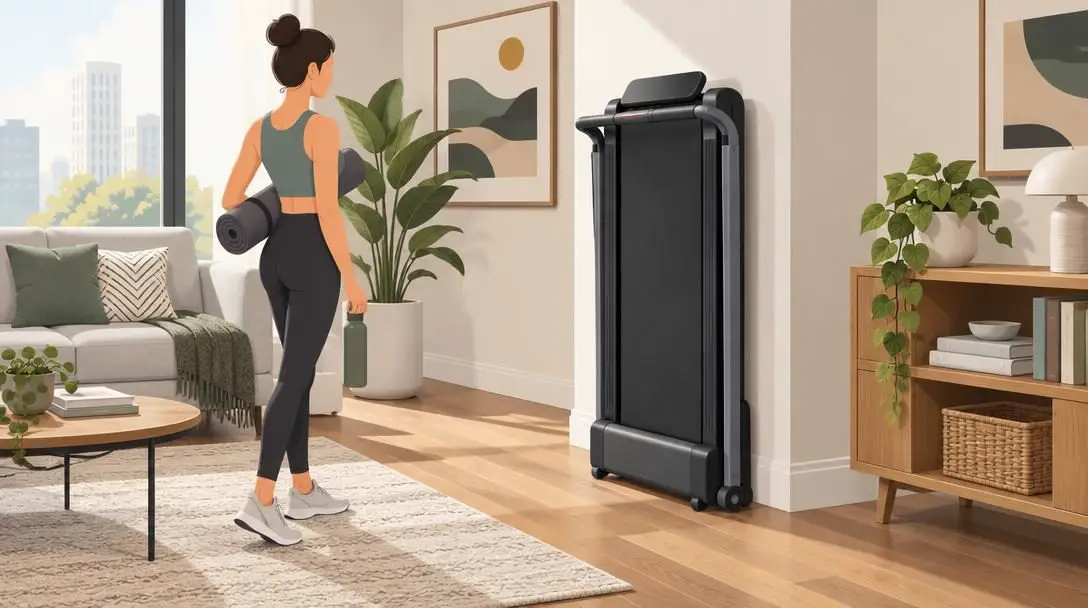
- Speed Threshold: Up to 10 miles per hour on select models
- User Capacity: Accommodates user weights up to 275 pounds
- Footprint Feature: Compact folding deck mechanism
Cardiovascular equipment in this category focuses on compact dimensions, smart engineering, and solid build quality. Modern entry-level treadmills fold up for storage. Options exist for brisk walking routines, while slightly sturdier models support weights up to 275 pounds and allow runners to reach speeds up to 10 miles per hour. These foldable machines provide weather-proof running workouts without consuming permanent floor space.
Stationary Bicycles
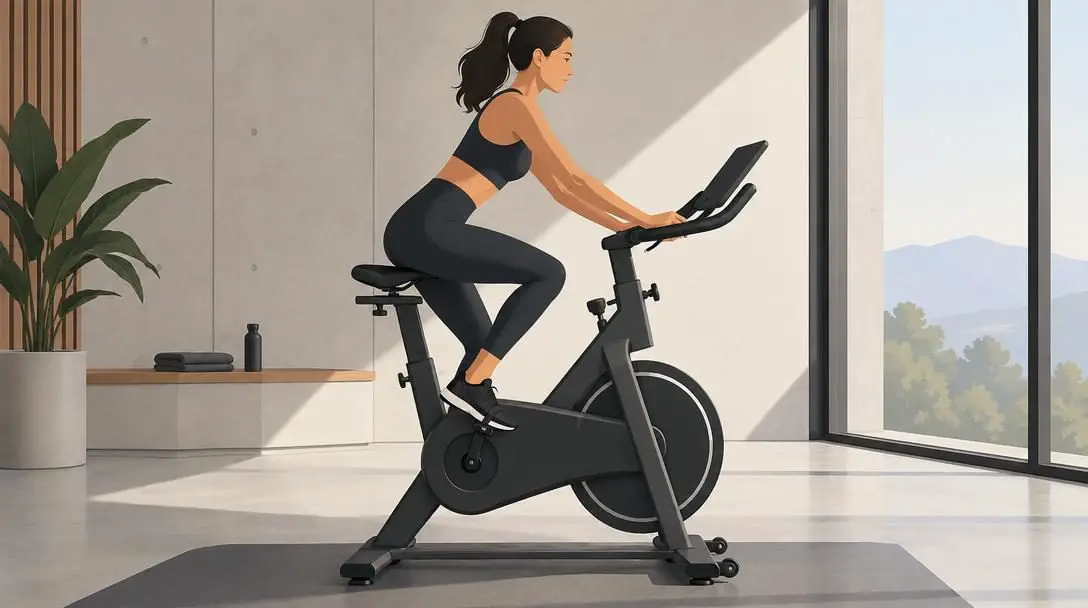
- Price Benchmark: Approximately $100 to $150 via online retailers
- Resistance System: Adjustable manual or magnetic tension
- Display Format: Streamlined metric tracking without bulky screens
Affordable stationary bikes can be acquired through online retailers like Amazon for roughly $100 to $150. While these accessible units lack massive spinning fans or high-end interactive entertainment displays, they deliver dependable, variable pedal resistance for high-quality conditioning without occupying excessive floor area. Their quiet operation makes them suitable for early-morning or late-night workouts in shared housing.
Advanced Resistance Band Systems
- Key Features: Ergonomic handles and reinforced door anchors
- Build Quality: Heavy-gauge anti-snap tubing
- Installation: Non-damaging wall and door mounts
Strength training can also be upgraded on a moderate budget. Instead of basic rubber loops, you can invest in advanced resistance band systems. Look for premium packages that feature ergonomic handles, thicker construction for high tension, and secure attachments designed to anchor directly to doors and walls without snapping or causing surface damage. These systems let you simulate cable crossovers, lat pulldowns, and chest presses from multiple angles.
Adjustable Benches and Barbell Setups
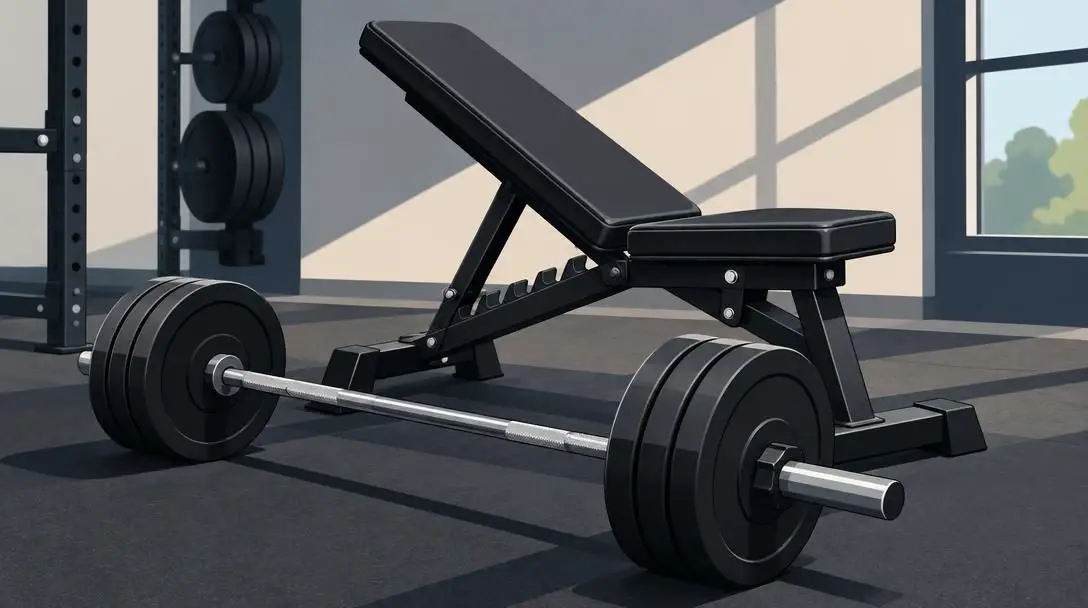
- Bench Configurations: Flat, incline, and decline angles
- Lifting Capabilities: Standard barbell presses, squats, and rows
- Utility: Replicates central commercial free-weight zones
For free-weight lifting, a brand-new adjustable bench opens up varied angles for chest and shoulder work, while a barbell setup allows you to execute traditional bench presses, chest presses, and foundational lifts right at home. These tools bring core commercial gym exercises into your private workout space. Adjustability ensures that you can hit target muscle groups from flat, incline, and decline orientations.
Dedicated Exercise Mats
- Applications: Yoga, Pilates, dynamic stretching, abdominal floor work
- Substrate Protection: Shields joints against concrete or hardwood flooring
- Portability: Rollable and lightweight
Wellness routines require proper floor padding. A moderate budget allows you to purchase dedicated exercise mats for yoga, Pilates, general stretching, and core routines. Exercising directly on hard concrete, rough carpet, or bare hardwood floors can cause unnecessary discomfort; a quality mat establishes a safe, comfortable, and dedicated workout surface anywhere in your home.
Equipment Options for the High Budget
When capital and square footage allow, a high-budget home gym can rival or outperform top commercial training facilities. High-end setups eliminate waiting for machinery, sanitize automatically through private ownership, and permit customization for exact biomechanical preferences. Built around heavy-duty steel and specialized mechanics, these configurations serve serious strength athletes and fitness enthusiasts who want commercial performance at home.
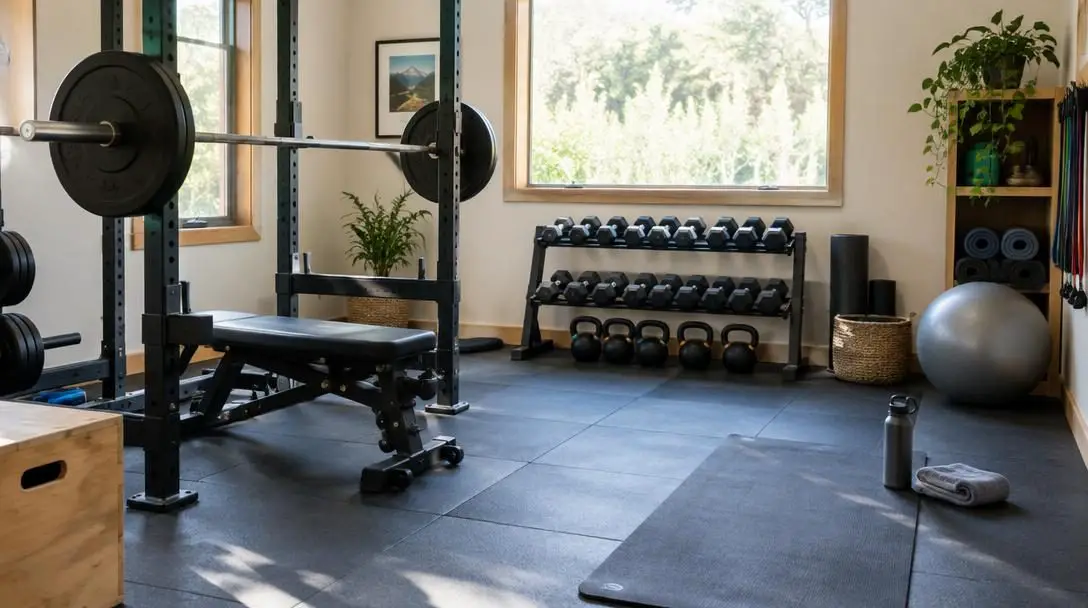
Power Racks
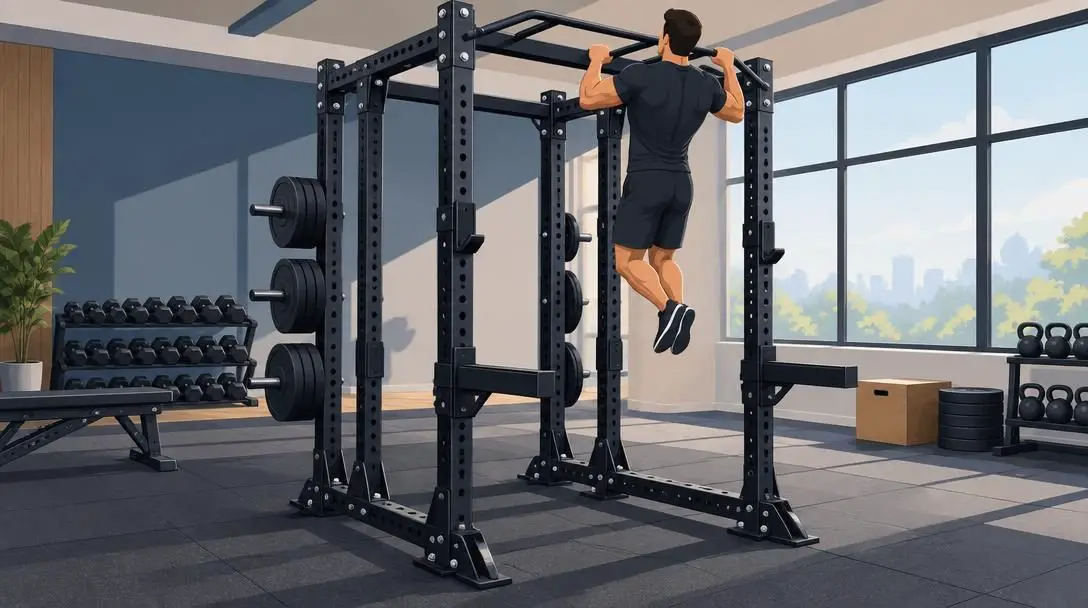
- Frame Construction: Heavy-gauge structural steel uprights
- Safety Features: Adjustable steel safety pins and spotter arms
- Supported Exercises: Unassisted squats, overhead presses, bench presses
Heavy-gauge steel racks provide an ultra-safe environment for heavy, unassisted barbell movements like squats, overhead presses, and bench presses. Featuring adjustable safety pins and rigid uprights, power racks let you push your absolute strength limits without relying on a training partner. They also serve as central anchors for pull-up bars, resistance bands, and suspension trainers.
Smith Machines
- Track System: Fixed vertical or slightly angled guide rods
- Lockout Safety: Integrated mechanical bar hooks
- Training Style: Isolated hyper-targeted resistance without a spotter
Fixed-track barbell systems allow for guided, controlled lifting without the need for an external spotter. Smith machines combine structural safety with smooth vertical or slightly angled travel paths, making them excellent for solo lifters targeting specific muscle groups under heavy loads. Integrated lockout pegs let athletes re-rack the barbell securely with a simple twist of the wrists at any point along the track.
Rowing Machines
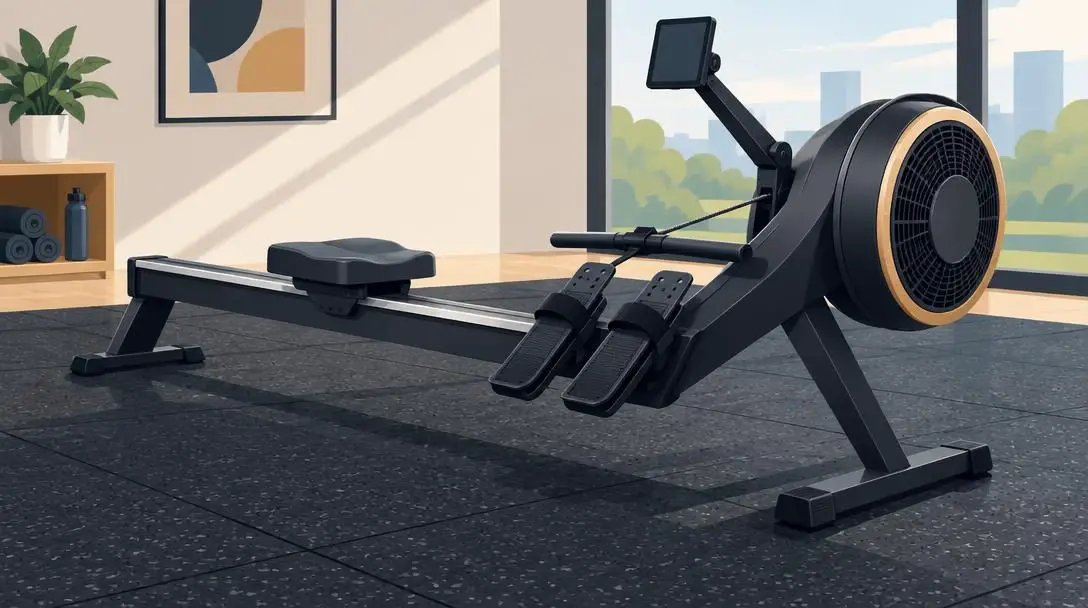
- Resistance Types: Air, magnetic, or dynamic water flywheels
- Telemetry: Real-time split times, stroke rates, wattage feedback
- Physical Demand: Simultaneous aerobic and total-body muscular output
High-end rowers deliver full-body conditioning that engages both the aerobic system and major muscle groups simultaneously. Premium models feature air, magnetic, or water resistance mechanisms alongside advanced telemetry monitors that track output wattage, stroke rate, and split times. The smooth gliding motion challenges the legs, core, and back without placing concussive impact on the knees or hips.
Specialty Accessories
- Machine Expansions: Dual cable crossover towers and glute-ham developers
- Barbell Tools: Specialty grip bars and calibrated bumper plates
- Focus Area: Advanced structural hypertrophy and isolation
With abundant room and capital, you can add specialty pieces over time to target specific muscle groups or fitness benchmarks. These additions might include dedicated cable crossover towers, specialized grip bars, glute-ham developers, or calibrated bumper plates to expand your training repertoire. Adding functional plate trees, kettlebell stations, and chalk stands keeps the environment organized and professional.
Integrated Entertainment Systems
- Media Gear: High-definition wall-mounted screens
- Audio Setup: Multi-speaker surround sound arrays
- Environment Goal: High-energy acoustic immersion
To finish off a premium gym, invest in environmental features. Mounting high-definition televisions and installing a multi-speaker audio system ensures you have top-tier entertainment and energetic music to keep you engaged throughout demanding training sessions. Wall-mounted screens also make it simple to stream guided classes, instructional form breakdowns, or sports events during longer cardiovascular workouts.
How to Plan and Build Your Workout Space
Organizing an empty garage, spare bedroom, or basement utility room into an ergonomic gym requires systematic planning. Ensuring adequate circulation space around heavy components prevents injuries and protects your residential flooring against damage from dropped weights and shifting frames.
- Measure your available area: Record the precise length, width, and ceiling height of the room, leaving ample clearance for dynamic overhead movements and jump ropes.
- Define core training priorities: Clarify whether your primary regimen focuses on strength lifting, high-intensity cardio, or flexibility and floor work before buying gear.
- Establish your spending baseline: Determine whether your purchases will be sourced from frugal secondhand sellers, intermediate direct retailers, or commercial equipment dealers.
- Inspect used machinery thoroughly: Check structural welds on weight benches, inspect cables on weight stacks for fraying, and run treadmills through all speed intervals prior to purchase.
- Install protective flooring: Lay down high-density rubber tiles or mats over concrete, hardwood, or tile to absorb impact and prevent surface cracks.
- Position gear for flow: Situate bulky racks, benches, and stationary bikes against exterior walls or corners, preserving the central floor for bodyweight drills and mobility routines.
Frequently asked questions
How much money can you save by working out at home?
Traditional fitness centers often cost more than $1,000 per year when factoring in monthly dues, enrollment fees, and recurring annual maintenance charges. Over several years, shifting to a personal setup eliminates these payments entirely while allowing you to retain the physical equipment as personal assets.
Is it safe to purchase pre-owned fitness equipment?
Yes, provided you inspect key components. Examine structural frame welds on benches and racks, verify that pulley cables are free from fraying, and test motorized equipment like treadmills through all operational speeds. Retailers like Play It Again Sports provide extra security through seven-day return policies.
What should you check before placing equipment in rooms with low ceilings?
Always calculate vertical clearance by accounting for your personal height plus the elevation of a jump rope or an extended barbell overhead. Rooms with low ceiling heights or exposed ductwork can restrict overhead presses, pull-ups, and box jumps.
What are the best initial investments for a moderate budget?
A balanced moderate setup typically prioritizes an adjustable workout bench, a versatile barbell setup, reinforced resistance bands, and a compact cardio unit, such as an affordable stationary bicycle or a foldable treadmill capable of reaching 10 mph.
Why is dedicated rubber flooring necessary for home training?
High-density rubber flooring cushions joints during high-impact calisthenics, dampens vibration, and protects underlying substrates like concrete slabs or hardwood planks from shattering or cracking when weights are lowered.
The Bottom Line
Constructing a personal training space removes the daily obstacles associated with commercial gyms, from inclement weather and crowded locker rooms to rigid commutes. By matching equipment choices directly to your budget and available square footage, you can create a sustainable fitness setup that builds genuine equity. Whether utilizing bodyweight calisthenics and affordable resistance bands, a mid-range foldable treadmill and adjustable bench, or a commercial-grade power rack complete with surround sound, an intentional home training space establishes a consistent foundation for lifelong health.