5 Uncanny Proofs Of Natural Selection
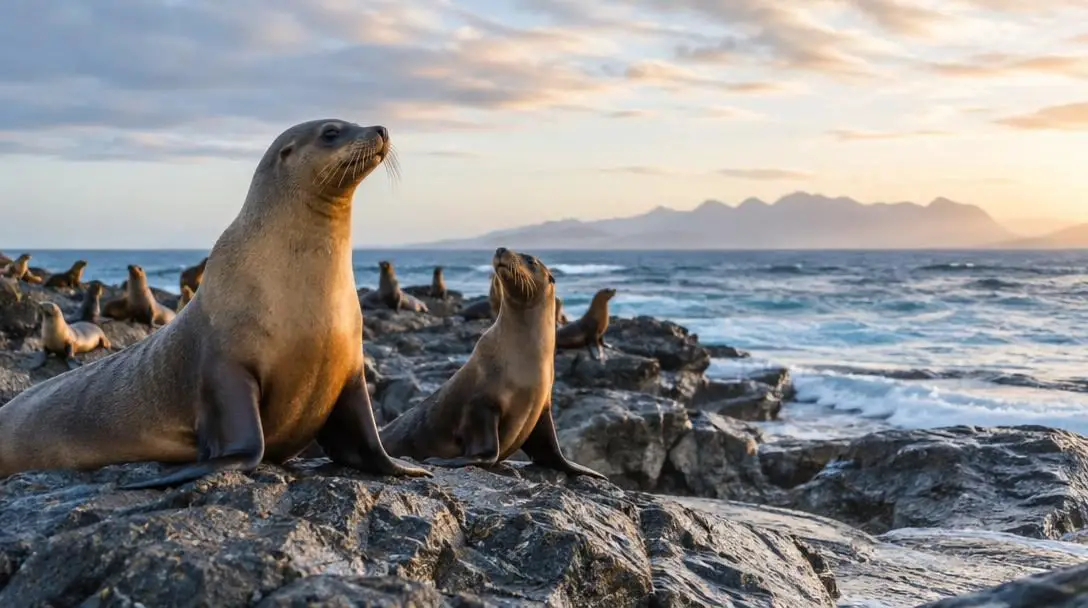
When a living species endures and flourishes against harsh environmental odds, it offers a real-time showcase of natural selection. In every ecosystem across the globe, populations face relentless physical challenges, shifting climates, predatory threats, and food scarcity; those unable to adapt are inevitably consumed by the natural world. While living organisms have operated under these unforgiving rules since life began, it was the English naturalist Charles Darwin who transformed natural selection from an unseen law into a foundational pillar of modern science. Through his detailed field writings and patient documentation, the principle entered scientific prominence and remains a vital lens for understanding life on Earth.
Far from being an abstract theory confined to textbooks or ancient geological layers, natural selection reveals itself through vivid physical modifications. From changes in the coloration of skin and fur to the rapid reconfiguration of foot structures and muscle groups, adaptations continuously filter through populations. Beneficial features are preserved across generations, while detrimental traits decline. By examining both fossil relics and living creatures, observers can witness the uncanny, precise ways that selective pressures shape survival across the animal kingdom.
Key takeaways
- Natural selection favors inherited variations that improve an organism's survival or reproductive odds within a specific habitat.
- Physical traits can evolve for extreme combat, food acquisition, or thermal concealment, as seen in giraffes and arctic foxes.
- Social dynamics and chemical mimicry among warrior ants prove that evolutionary pressures operate on complex biochemical systems.
- Reproductive preferences alone can drive physical traits, explaining why male peacocks maintain heavy, luminous plumage solely to attract mates.
- Evolutionary change does not always require millions of years, as competing green and brown anole lizards in Florida demonstrated adaptations within just a decade.
Five observable proofs of natural selection in action
While the footprint of natural selection is visible throughout global biodiversity, certain animal species display adaptations so clear and functional that they provide unmistakable proof of evolutionary forces at work. These five examples highlight how combat demands, foraging needs, reproductive competition, chemical warfare, and territorial displacement sculpt living forms.
The giraffe
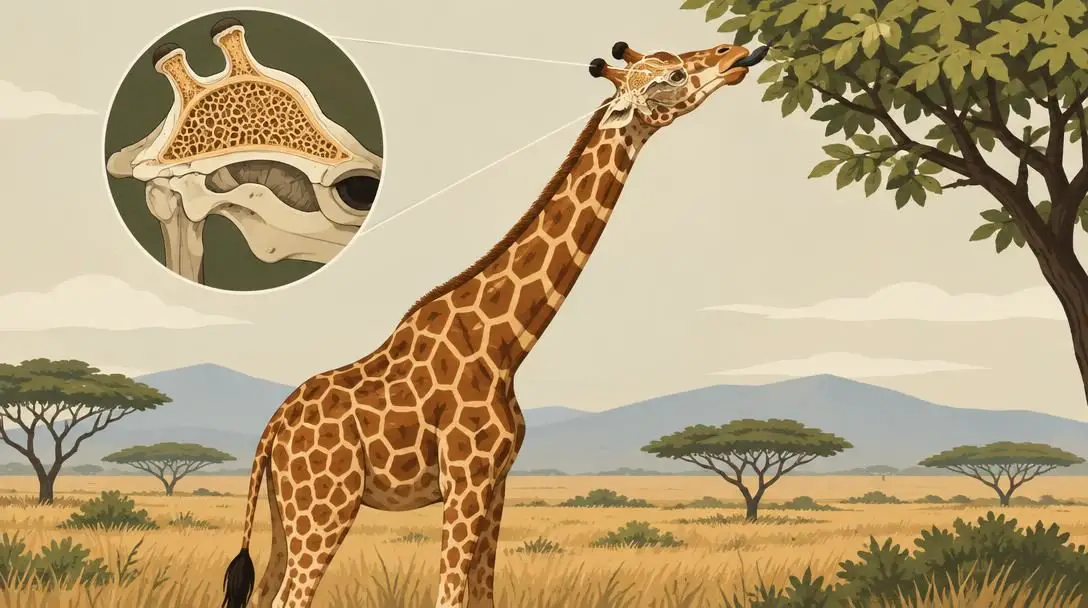
- Primary adaptation: Elongated neck and reinforced cranium
- Ancestral scale: Approximately the size of a large sheep
- Fossil milestone: Thick-skulled ancestral bones unearthed in the 1990s
- Primary function: High-canopy foraging and intraspecific combat
Charles Darwin was deeply fascinated by the towering silhouette of the giraffe, an animal whose lineage underwent massive physiological alterations. Fossil records reveal that the earliest ancestral precursors of modern giraffes were significantly smaller creatures. Within ancestral populations, individual animals that happened to possess slightly longer necks possessed an immediate, tangible survival edge. They could browse tender leaves at higher canopy levels entirely out of reach of competing herbivores on the savannah. Because these individuals secured reliable nutrition during periods of scarcity, they survived longer and successfully produced more offspring. Generation by generation, this selective edge compounded, leading to the long-necked herbivores known today.
Crucial context arrived during the 1990s, when paleontologists unearthed the fossilized skeletal remains of an ancestral creature roughly the size of a large sheep that possessed an unusually thick skull. This discovery confirmed that the modern giraffe evolved from a compact, heavy-headed ancestor. The durable skull structure was preserved through deep time, explaining why modern giraffes engage in violent, swinging headbutt collisions during mating and dominance disputes. When paired with their long necks, their preserved cranial reinforcement creates a formidable physical weapon.
The warrior ant
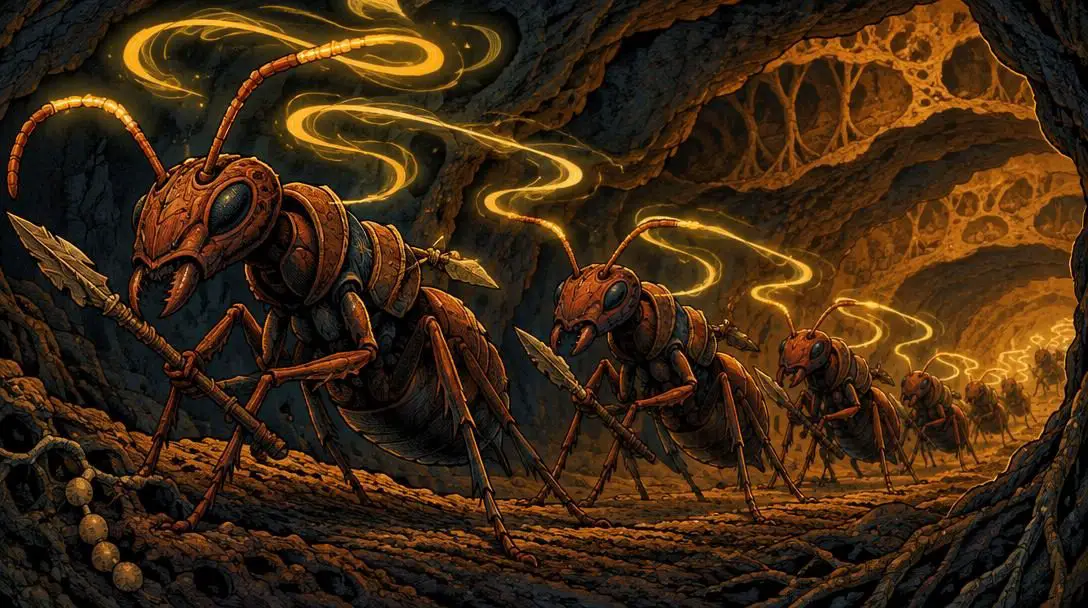
- Primary adaptation: Biochemical scent mimicry
- Crucial anatomy: Specialized chemical-producing organ
- Colony role: Defense, territory control, and nest infiltration
- Evolutionary pressure: Chemical recognition and colony survival
In the miniature world of the ant colony, individual identity is subordinated to the survival of the nest. To preserve stability among thousands of blind or visually impaired workers, ant colonies rely on sophisticated biochemical signaling. Warrior ants produce a specialized chemical marker that identifies them to nestmates, communicating an immediate signal that prevents internal panic and ensures they are not mistakenly attacked by their own soldiers. This mutual recognition system serves as the foundational security protocol of the colony.
However, natural selection favors organisms that can exploit existing biological vulnerabilities. Over many generations, specialized warrior ants in rival lineages evolved the ability to biochemically imitate the distinct scents of target nests. By copying the molecular signature of an alien colony, these infiltrators slip past perimeter guards completely undetected. Once inside, they undermine and dismantle the rival colony from the interior. When researchers initially examined the physical organ responsible for generating these complex secretions, they dismissed it as a useless anatomical oddity; further study proved that this unassuming organ is arguably the single most important physical structure governing their survival and tactical evolution.
The arctic fox
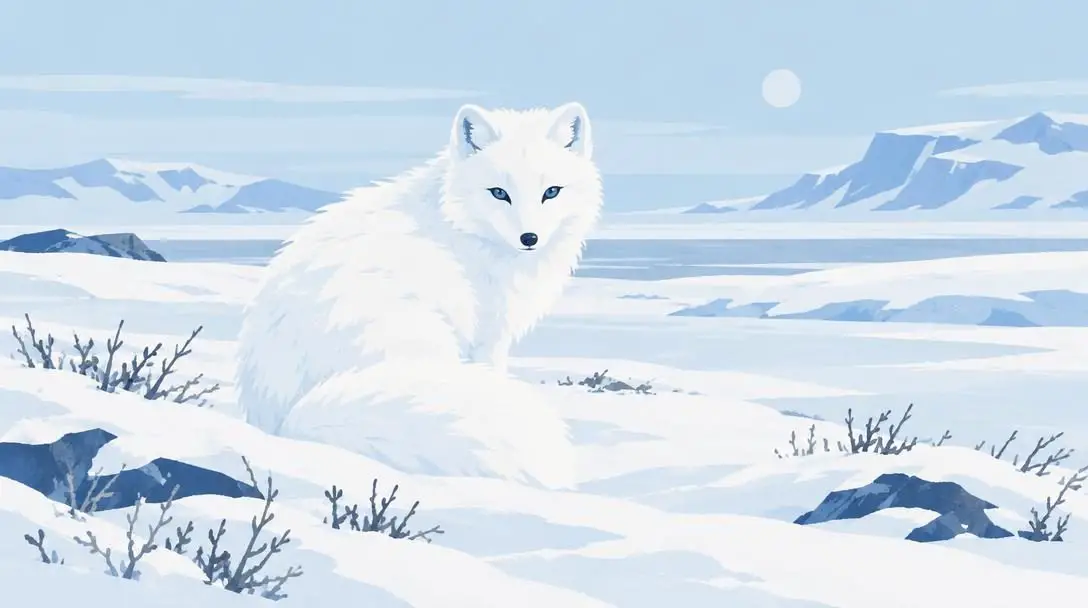
- Primary adaptation: Dense, stark white camouflage coat
- Habitat: Snowy tundra and polar expanses
- Selective advantage: Ambush hunting and predator avoidance
- Related camouflage taxa: Chameleons, praying mantises, birds, and fish
Camouflage stands as one of the most widespread and undeniable demonstrations of natural selection across global habitats. Whether observed in the rapid pigment-shifting abilities of the chameleon, the leaf-mimicking posture of the praying mantis, or the mottled patterns of benthic fish, concealment determines who eats and who is eaten. Across diverse biomes, blending seamlessly into surrounding tree bark, foliage, or desert sand provides animals with a vital buffer against predatory detection and allows hunters to close the distance on wary prey.
One of the purest expressions of this physical adaptation occurs in the arctic fox. Inhabiting an environment defined by glaring ice and barren snowfields, the arctic fox sports a dense, pure white coat of fur that mirrors the frozen terrain. This pristine coat erases the animal's physical silhouette against the snow, granting it dual advantages: it can stalk small rodents without giving away its approach, while simultaneously remaining invisible to larger predators that roam the tundra. Through centuries of environmental pressure, individuals with darker or irregular coats were easily spotted and weeded out, cementing bright white fur as an essential survival trait.
Concealment in nature is not merely a passive defense; it is an active evolutionary arms race where a single mismatched shade can mean starvation or death.
The peacock
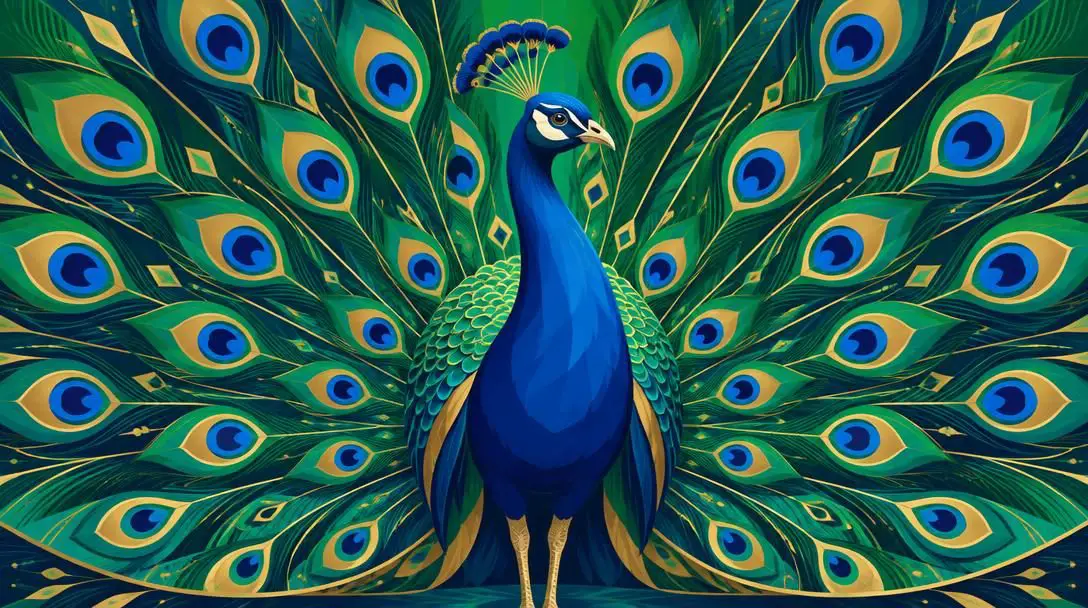
- Primary adaptation: Hyper-vibrant, oversized tail plumage
- Selective driver: Female mate choice (sexual selection)
- Generational trend: Progressively brighter and larger displays
- Biological tradeoff: Heavy, cumbersome feathers vs. reproductive success
Natural selection does not merely prioritize physical durability or predator defense; it is equally governed by reproductive success. This reality is nowhere more conspicuous than in the mating rituals of the peacock. To successfully pass along genetic material, a male peacock must command a spectacular fan of extraordinarily tall, colorful, and iridescent feathers. Female peahens systematically inspect available suitors, seeking out males with the largest, densest, and most radiant feather displays. As a consequence of this relentless female scrutiny, males carrying duller or smaller plumage are routinely passed over and denied mating opportunities.
This dynamic has created a measurable generational shift: peacocks have grown visibly more colorful and elaborate over successive eras. If peacocks appear more vibrant now than they did in the past, it is because breeding success belongs entirely to the most dazzling specimens. The massive plumage offers no survival utility; in fact, the heavy, cumbersome feathers drain metabolic energy and make quick escapes from ground predators far more difficult. However, because reproductive access hinges completely on display quality rather than physical agility, the evolutionary benefit of securing a mate outweighs the substantial physical liability of carrying the feathers.
The green anole lizard
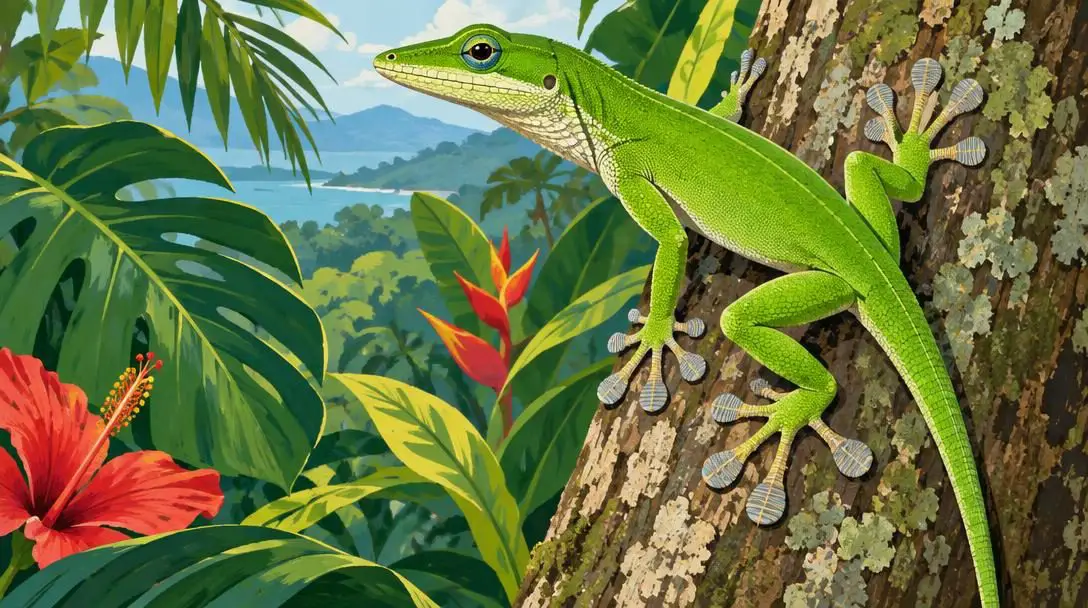
- Primary adaptation: Increased toepad surface area and extra scales
- Native origin: The Bahamas
- Disrupted habitat: Florida woodlands and urban spaces
- Adaptive timeline: Observable divergence within roughly ten to fifteen years
While evolution is frequently characterized as a process requiring millions of years, the territorial clash between the green anole lizard and the invasive brown anole lizard illustrates how rapidly natural selection can restructure a population. Both reptile species trace their origins to the Bahamas. The green anole arrived in the United States first, thriving across the sub-tropical landscape of Florida without encountering significant peer competition. However, when brown anoles subsequently invaded the same territory, the established green anole population faced an acute ecological crisis.
The newly arrived brown anoles were aggressive ground foragers that rapidly dominated the lower branches and forest floor. In response to this sudden competitive pressure, individual green anoles possessing larger toepads and a higher number of sticky scales were able to climb higher into the canopy, claiming an unoccupied vertical niche. These better-equipped climbers accessed food supplies beyond the physical reach of the heavier brown anoles. Surviving higher off the ground, the specialized green anoles mated successfully, and within just a single decade, the entire local population exhibited noticeable shifts in foot morphology and climbing capability.
At a glance: comparing evolutionary adaptations
The selective pressures that shape living organisms manifest across different biological systems. The table below outlines how each featured organism adapted to its specific environmental demands:
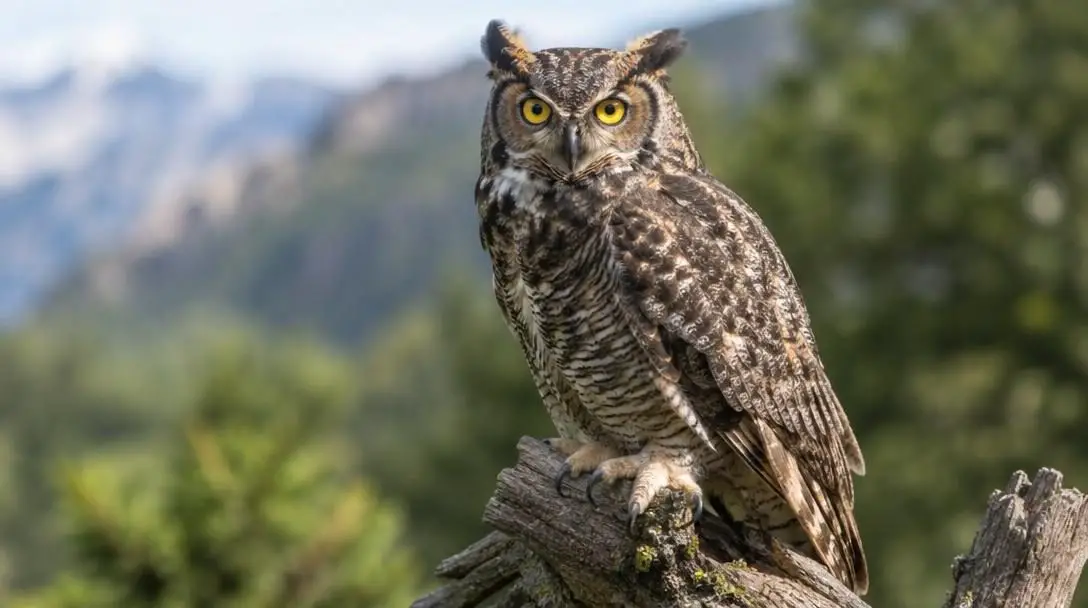
| Species | Primary Environmental Pressure | Physical or Behavioral Shift | Core Survival Advantage |
|---|---|---|---|
| Giraffe | Canopy food competition and combat | Elongated neck and thick, reinforced skull | Access to high vegetation and striking power |
| Warrior Ant | Colony defense and nest intrusion | Chemical scent mimicry via specialized organ | Undetected infiltration of foreign colonies |
| Arctic Fox | Exposed, snow-covered hunting terrain | Dense, bright white camouflage fur | Visual concealment from prey and predators |
| Peacock | Intense female mate selection | Massive, brilliantly colored tail plumage | Elevated reproductive success and genetic continuity |
| Green Anole | Resource competition from brown anoles | Enlarged toepads and increased scale counts | Ability to inhabit higher, safer arboreal niches |
The underlying mechanism: how natural selection operates
The progression of natural selection is neither random nor conscious. It operates through an orderly, multi-generational sequence driven by the strict biological realities of habitat competition. The mechanics of the process follow four fundamental stages:
- Environmental pressures arise: Habitats confront living creatures with strict limitations, including extreme thermal conditions, scarce water or food resources, predatory tactics, and the disruptive introduction of invasive competitors.
- Inherited variations surface: Within every natural population, individual organisms display subtle variations stemming from genetic inheritance. These include minor differences in bone density, toepad size, chemical secretions, pigment density, or muscle strength.
- Differential survival and reproduction occur: Organisms carrying traits that align well with local pressures survive longer and reproduce more reliably. Lizards with larger toepads escape competitors, and peacocks with brighter displays secure mates, while less-equipped peers perish or fail to breed.
- Generational frequencies shift: The beneficial traits of successful breeders appear with greater frequency in subsequent generations. Over time, these advantageous features become standard characteristics of the broader population, while disadvantageous traits fade.
Practical methods for observing natural selection in the wild
Although grand structural transformations require vast evolutionary eras, everyday naturalists, students, and curious observers can study the practical outputs of natural selection in local outdoor spaces. Field observation can be conducted using several straightforward approaches:
- Document local camouflage: Search local flora, leaf litter, and tree trunks for insects, reptiles, and birds that mirror their backdrops. Take detailed notes on how bark textures, soil colors, and leaf veining correspond to the outer markings of native species.
- Track seasonal variations: Follow wild populations through changing seasonal cycles. Observe how certain birds, hares, and small mammals alter coat color, plumage density, or foraging depths as weather and background scenery change.
- Compare competing species: Scout parks and nature reserves where native and non-native populations share resources. Document whether native birds or lizards alter their perch heights, nesting habits, or activity times to avoid direct conflict with newcomers.
- Examine anatomical structures: Visit natural history museums or examine field specimens to study structural adaptations up close. Inspect how skull thickness, beak curvature, and foot structures directly match the dietary and combat needs of the animal.
Common misconceptions regarding evolutionary theory
Despite being widely discussed, evolutionary mechanics are frequently misinterpreted in popular media. Correctly assessing natural selection requires discarding several common errors:
- Believing adaptation is conscious: Animals do not consciously decide to stretch their necks, brighten their feathers, or invent chemical secretions. Changes emerge strictly because individuals possessing those specific biological variants out-reproduce those without them.
- Overlooking non-survival drivers: Natural selection is not solely an engine of physical defense or predatory power. As demonstrated by the impractical plumage of peacocks, sexual selection and reproductive attraction exert pressures just as potent as hunting ability.
- Assuming evolution always requires millions of years: While major anatomical transitions span geological epochs, isolated populations facing sudden crises—such as the green anole in Florida—can demonstrate clear physical shifts in as little as a single decade.
- Viewing the process as an upward ladder: Evolution does not progress toward a pre-determined, perfect organism. It merely matches organisms to their immediate setting. A trait that provides immense advantages during one decade can quickly become a deadly liability if local climate conditions or competitors change.
Broader dimensions of natural selection
To grasp the broader implications of evolutionary biology, several interconnected fields and ecological realities warrant deeper exploration. The arrival of aggressive foreign species, such as the brown anole's colonization of Florida, demonstrates how quickly invasive dynamics destabilize established communities and accelerate evolutionary timetables. In severe ecosystems like the Arctic, climatic intensity leaves virtually no room for error, forcing animals like the arctic fox into highly specific physical traits.
Fossil discoveries remain indispensable in unlocking behavioral mysteries. The 1990s identification of the sheep-sized, thick-skulled ancestor of the giraffe illuminated why modern animals still employ violent headbutting combat despite having long, vulnerable necks. Furthermore, deciphering chemical communication in colonial insects proves that natural selection operates on invisible, microscopic dimensions just as vigorously as it shapes visible anatomical structures.
Frequently asked questions
How did giraffes evolve long necks if their ancestors were small?
Ancestral giraffes were compact creatures roughly the size of large sheep. Over successive generations, individuals that possessed slightly longer necks were able to reach higher foliage that competitors could not browse. Because these individuals secured reliable food during periods of scarcity, they survived longer and reproduced more frequently, causing long-necked traits to dominate the population.
Why do male peacocks have bright feathers if they attract predators?
Natural selection encompasses sexual selection, where reproductive success is the governing factor. Female peahens consistently select mates with the largest, brightest plumage. Even though heavy, brilliant feathers demand metabolic energy and make escaping predators harder, the reproductive payoff of attracting mates outweighs the physical liability.
Can natural selection produce observable changes within a human lifetime?
Yes. While complex anatomical overhauls often require vast timescales, strong environmental pressures can prompt noticeable adaptations quickly. The green anole lizards of Florida developed larger toepads and increased scale counts within approximately a decade after invasive brown anoles displaced them into higher tree branches.
How do warrior ants use natural selection to defeat rival colonies?
Ants use biochemical scents to identify nestmates and avoid internal fighting. Over generations, specialized warrior ants evolved the capacity to chemically imitate the scent signatures of competing colonies. This adaptation allows them to slip past sentries undetected and dismantle foreign nests from within.
What is the difference between natural selection and conscious adaptation?
Organisms cannot deliberately will themselves to change physical traits. Natural selection acts on random inherited variations that already exist within a population. Individuals carrying traits that happen to confer an advantage under local environmental pressures survive and reproduce at higher rates, passing those traits forward.
The bottom line
Natural selection remains the central engine driving biological diversity across the planet. From the towering canopy browsed by giraffes to the covert chemical warfare waged within subterranean ant colonies, the living world is shaped by an ongoing response to environmental challenge. Physical traits are continually refined, tested, and filtered across successive generations. By recognizing that natural selection encompasses sexual preferences, chemical signals, rapid structural shifts, and thermal camouflage, we gain a clear, evidence-based understanding of how life endures in an ever-shifting world.