What Do Scientific Studies Say About How Many Reps And Sets You Should Do?

Stepping into a gym or searching online for fitness guidance usually yields an overwhelming flood of contradictory advice. Enthusiasts and trainers often trade workout dogmas, asserting that high repetitions are strictly for fat loss while heavy, low-rep sets are the only vehicle for building size. Because individual physiology, mechanics, and recovery rates vary wildly, subjective anecdotes rarely provide a dependable roadmap for consistent physical development.
To cut through gym lore, exercise physiologists have spent decades analyzing how human muscle tissue adapts to mechanical tension, training volume, and metabolic fatigue. Grounding your training in peer-reviewed scientific studies removes the guesswork, allowing both novices and seasoned athletes to program their sets, repetitions, and recovery periods for maximum sustainable progress without risking premature burnout or structural injury.
Key takeaways
- Lifters with less than 12 months of experience thrive best using approximately 60 percent of their maximum capacity for 12 to 15 repetitions.
- Advanced lifters with over a year of consistent training require an intensity increase to roughly 80 percent of maximum capacity with six to eight repetitions per set.
- Beginners should cap their volume at three sets per muscle group, whereas advanced trainees can safely progress up to six sets once conditioned.
- Muscle groups require a minimum of 48 hours of recovery between training sessions, making an alternating upper- and lower-body split ideal.
- Regularly rotating exercise movements introduces variety that prevents plateaus, minimizes overuse injuries, and aids in fat loss.
The Core Mechanics: Repetitions, Sets, and Intensity
Every resistance training program is built upon three foundational variables: repetitions, sets, and training intensity. A repetition (or rep) describes a single complete performance of an exercise movement, such as one descent and ascent in a squat or a single press of a barbell. A set is a continuous sequence of these repetitions completed without an intervening break. When combined, sets and reps determine the total volume of work directed at a particular muscle group.
Intensity reflects the relative demand of the load, expressed as a percentage of your one-rep maximum (1RM)—the heaviest weight you can lift through a full range of motion for a single repetition. A landmark study conducted by Arizona State University demonstrated that training intensity must correspond directly to a lifter's developmental stage. According to the research, novice lifters produce optimal muscular adaptations at roughly 60 percent of their maximum capacity, whereas advanced lifters require approximately 80 percent intensity to stimulate further progress.
The inverse relationship between load and volume is a fundamental biological reality: as the percentage of your one-rep maximum increases, the number of repetitions you can execute with sound technique naturally diminishes. Lower intensities facilitate higher repetitions that reinforce motor patterns and muscular endurance, while higher intensities recruit high-threshold motor units necessary for continuing strength gains.
Matching Volume and Repetitions to Training Experience
Scientific literature establishes a definitive boundary between stages of physical conditioning: an individual is classified as a beginner if they have been lifting weights for less than 12 months. After 12 months of consistent resistance work, the trainee crosses into the advanced category, where their muscular and neurological systems require different parameters to continue adapting.
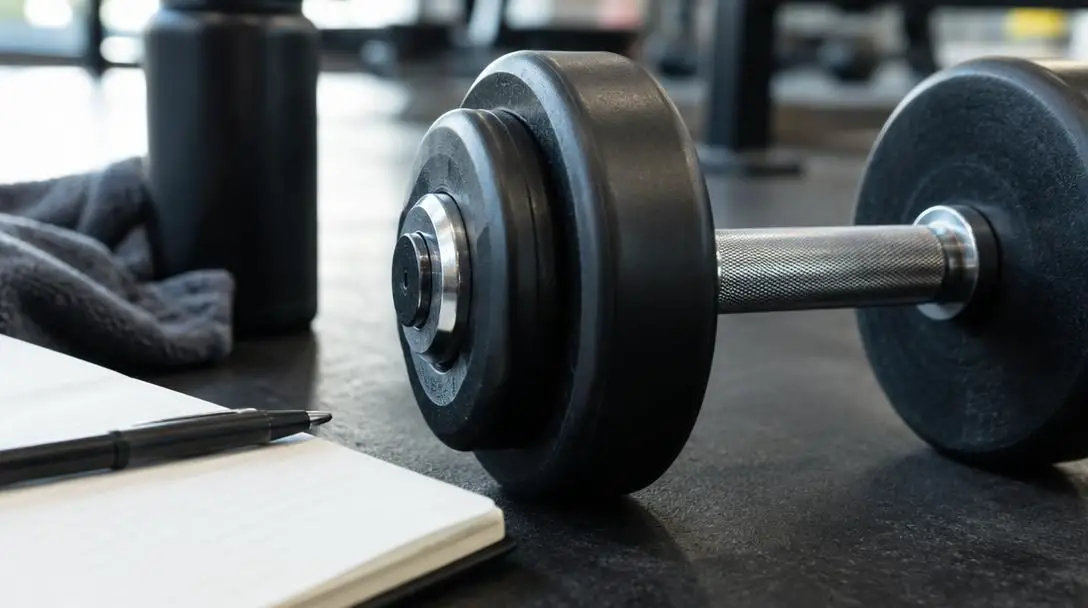
The Beginner Stage: Under 12 Months
During the first year of resistance training, tendons, ligaments, and skeletal muscle fibers undergo rapid mechanical adaptation. The research indicates that novices should resist the urge to test maximum lifts or push for heavy single repetitions. Attempting maximum loads prematurely exposes unconditioned muscle fibers to acute micro-tears and places excessive strain on joint capsules.
Instead, beginners should select a load at roughly 60 percent of their maximum capacity—a weight that allows the completion of approximately 15 comfortable repetitions without joint pain. The scientific blueprint for beginner progression includes:
- First-session baseline: Begin on day one with a single set of 12 repetitions per muscle group to introduce movement pathways without triggering severe delayed-onset soreness.
- Gradual progression: Over subsequent weeks, steadily build workload capacity toward three sets of 15 repetitions per muscle group.
- Volume ceiling: Strictly cap volume at three sets per muscle group per workout session to ensure the body can fully recover before the next stimulus.
The Advanced Stage: Over 12 Months
Once an athlete logs 12 consecutive months of structured resistance training, their baseline physical conditioning, tendon stiffness, and neuromuscular coordination are firmly established. At this point, staying indefinitely within high-repetition, lighter-weight ranges often leads to stagnation because the neuromuscular system has already adapted to that specific stimulus.
To break through plateaus, studies show that advanced trainees must elevate their load to roughly 80 percent of maximum capacity. Because this heavier load accelerates fatigue, the repetition target decreases to six to eight repetitions per set. Advanced set volume can be managed as follows:
- Maintenance and baseline: Performing one to three sets per muscle group remains highly effective at an 80 percent load for preserving and refining strength.
- Expanded volume: Lifters who have acclimated to higher workloads over time can comfortably handle four or five sets, reaching an upper ceiling of up to six sets per muscle group.
- Intensity management: Lowering repetition counts while lifting heavier loads provides the mechanical tension needed to recruit dense, stubborn muscle fibers without overtaxing systemic recovery.
| Training Parameter | Beginner Phase (< 12 Months) | Advanced Phase (> 12 Months) |
|---|---|---|
| Load Intensity (% 1RM) | Approximately 60% | Approximately 80% |
| Target Repetition Range | 12 to 15 reps | 6 to 8 reps |
| Starting Volume (Day 1) | 1 set of 12 reps | 1 to 3 sets of 6 to 8 reps |
| Upper Volume Limit | 3 sets per muscle group | Up to 6 sets per muscle group |
| Primary Physiological Focus | Motor learning and joint conditioning | Mechanical tension and fiber recruitment |
Lowering repetition targets while advancing to heavier loads allows seasoned lifters to continuously strengthen the foundational muscle built during their first year of training.
Structuring Weekly Splits and Recovery Windows
Selecting the right set and rep scheme accounts for only half of the physiological equation; organizing those sets across a weekly calendar dictates whether your muscles grow or succumb to overtraining. Research reveals that a worked muscle group requires at least 48 hours of recovery before undergoing direct resistance training again. Muscle tissue repairs and reinforces itself during rest intervals; forcing the same fibers to contract under heavy mechanical tension on consecutive days blunts growth and invites overuse injuries.
To satisfy the 48-hour recovery rule while sustaining the weekly training volume supported by research, sports scientists recommend an upper- and lower-body training split:

- Target frequency: Stimulate each muscle group two to three days per week to optimize adaptation.
- Upper and lower rotation: Dedicate one session to the upper body, followed by a lower-body session the next day, ensuring the upper musculature rests while the legs work.
- Strategic rest periods: After completing an upper- and lower-body cycle, schedule a full rest day or a light cardiovascular session before resuming the rotation.
Alongside rest timing, scientific studies emphasize the role of exercise variation within each muscle group. Commonly referred to as muscle confusion, systematically alternating exercises stimulates muscles from distinct angles, which assists in muscle development and fat burning. Repeating identical lifts—such as performing flat barbell bench presses or back squats every single session—causes the body to adapt completely to a narrow groove of motion, reducing metabolic efficiency and concentrating wear and tear on the exact same joint surfaces.
Step-by-Step Guide to Structuring Your Resistance Program
Translating academic literature into a workable, daily training regimen requires an orderly sequence. Whether you are stepping onto the gym floor for your first session or adjusting an existing routine, follow these progressive steps to organize your plan:
- Identify your experience bracket: Classify your current level honestly based on your uninterrupted history. If you have been training for less than 12 months, adopt beginner protocols; if you have surpassed 12 months of structured lifting, utilize advanced guidelines.
- Establish your target load: Beginners should select a weight around 60 percent of their maximum capacity that permits 12 to 15 continuous reps without strain or joint discomfort. Advanced trainees should select a load near 80 percent of their capacity that restricts them to six to eight clean reps.
- Dial in your set volume: Beginners should perform a single set of 12 reps on their first day, building gradually toward three sets of 15 reps per muscle group. Advanced lifters should begin with one to three sets, progressing toward four, five, or six sets only after sustained adaptation.
- Map out an alternating split: Schedule your training week so that every targeted muscle group receives at least 48 hours of rest before being worked again. Alternate between upper-body and lower-body workouts, leaving intermediate days for rest or low-impact cardio.
- Rotate your exercise variations: Rather than repeating the exact same lifts week after week, integrate varying movements for each body part. This incorporates muscle confusion, engages dormant fibers, boosts fat burning, and spares joints from repetitive movement patterns.
Five Common Resistance Training Mistakes to Avoid
Even when backed by scientific evidence, lifters often succumb to common workout errors that impede progress or cause preventable physical trauma. Keeping these frequent pitfalls in mind will keep your training trajectory pointed upward:
- Chasing maximum personal records too early: Novices frequently yield to the temptation of lifting maximum loads during their first few months. Attempting heavy singles before joint capsules and connective tissues have conditioned themselves risks acute muscle tears.
- Violating the 48-hour recovery window: Training the same muscle group two days in succession prevents tissue repair, impairs strength gains, and leads to accumulated systemic fatigue.
- Performing excessive set volumes: Operating under the false assumption that more sets always equal better results often leads beginners to perform five or six sets immediately. Research warns against exceeding three sets per muscle group during the first 12 months.
- Relying on identical exercises indefinitely: Sticking exclusively to one primary lift for a muscle group forces the body into total movement familiarity, stalling progress and increasing repetitive-motion strain on connective joints.
- Remaining at light loads past the one-year mark: Failing to advance to an 80 percent load and lower repetition targets (six to eight reps) after 12 months causes advanced trainees to plateau, as their muscles no longer receive an adaptive stimulus.
Frequently asked questions
How long does someone remain a beginner according to research?
Scientific studies classify anyone who has been lifting weights for less than 12 continuous months as a beginner. During this introductory year, the body requires lighter intensities of around 60 percent of maximum capacity and higher repetitions of 12 to 15 reps to safely adapt tendons, ligaments, and muscle fibers.
Why shouldn't beginners train at 80 percent of their maximum capacity?
Lifting at 80 percent intensity places heavy mechanical stress on connective tissues that have not yet developed the tensile strength to manage extreme loads. Attempting heavy weights too early sharply increases the likelihood of muscle fiber tears and joint strain before a foundational movement baseline is established.
Can I train the exact same muscle group two days in a row?
No. Research shows that muscle tissue requires at least 48 hours of rest between sessions to repair and rebuild effectively. Training the same muscle group on consecutive days interrupts the recovery cycle, blunts strength gains, and significantly elevates your risk of an overuse injury.
What is muscle confusion and why does it matter?
Muscle confusion refers to the practice of rotating different exercises for a targeted muscle group rather than repeating identical movements every session. Studies demonstrate that this variety stimulates muscle fibers from multiple angles, supports fat loss, avoids training plateaus, and protects joints from repetitive wear.
When can an advanced lifter perform up to six sets per muscle group?
Lifters who have passed the 12-month mark and have gradually built their tolerance through four or five sets can safely perform up to six sets per muscle group. It is essential to build up to this ceiling gradually rather than jumping directly to six sets upon reaching the advanced stage.
The Bottom Line
Structuring an effective resistance routine does not require following unverified fitness trends or guessing how much weight to load onto a barbell. Controlled research provides clear benchmarks: beginners under 12 months achieve superior results by performing one to three sets of 12 to 15 repetitions at roughly 60 percent intensity, while advanced lifters progress by lifting at 80 percent intensity for six to eight repetitions across up to six sets.
Pairing these volume and intensity guidelines with a mandatory 48-hour recovery window between sessions creates an environment where muscles can adapt, strengthen, and grow. By rotating exercises, honoring your body's recovery demands, and aligning your training volume with your actual experience level, you build a sustainable fitness routine that delivers reliable, long-term physical results.