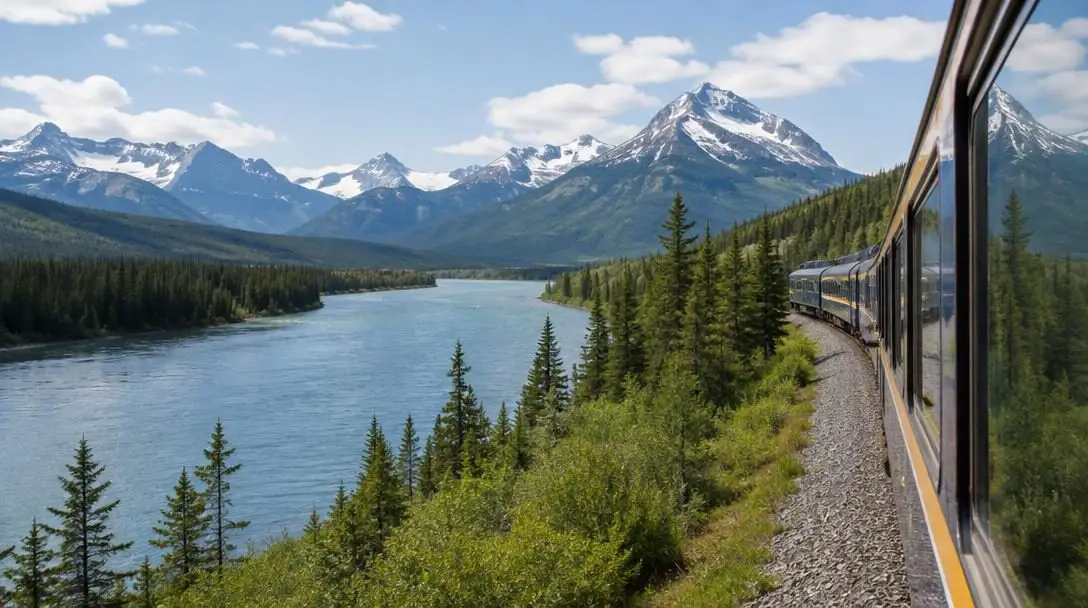
5 US Destinations to Visit By Rail
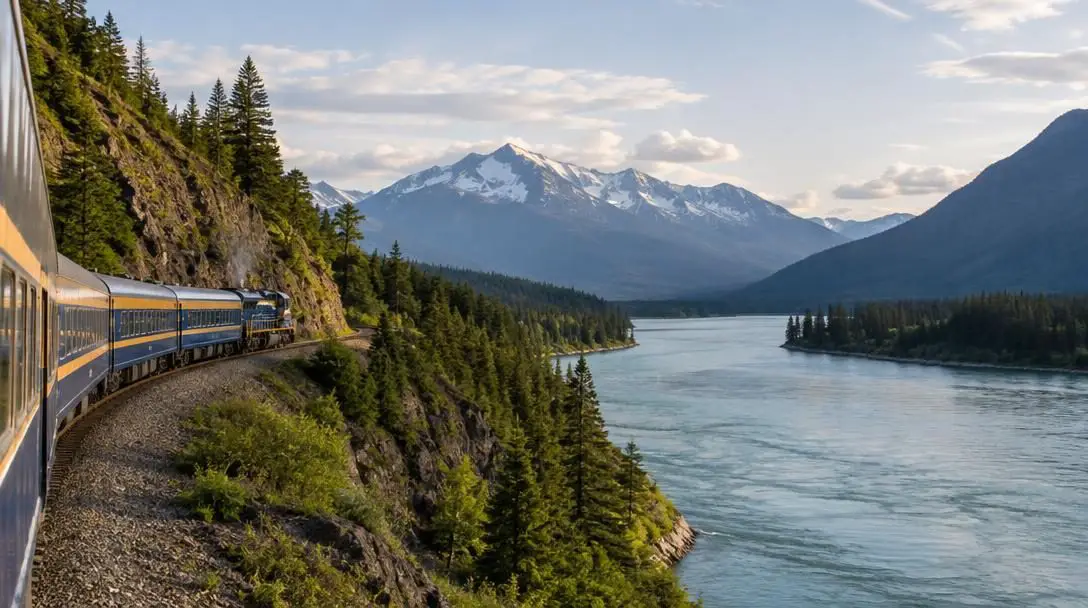
When travelers envision an expansive, scenic train vacation, their thoughts almost invariably drift across the Atlantic toward Europe. The European continent is globally celebrated for its remarkably accessible, budget-friendly rail infrastructure, where visitors can effortlessly cross through multiple international borders in a single afternoon without breaking the bank. In fact, European travelers can cross more than two dozen separate nations for approximately $300, turning passenger rail into one of the most practical bargains in modern tourism. Across North America, and specifically throughout the United States, travel culture developed down a vastly different track. American long-distance journeys and daily commutes are overwhelmingly dominated by personal motor vehicles and commercial airline flights. This discrepancy is largely structural: private commercial freight lines own the vast majority of railway tracks across the country, creating immense logistical hurdles for passenger train scheduling unless entirely new dedicated passenger tracks are constructed. Nevertheless, passenger rail across the United States remains an adventurous, viable, and scenic reality, anchored by key metropolitan hubs that link seamless interstate lines directly to extensive urban transit networks. <div class="takeaways"> <h2>Key takeaways</h2> <ul> <li>Private commercial freight companies own the majority of American rail lines, which limits passenger train scheduling flexibility compared to dedicated European systems.</li> <li>New York City and Chicago offer the country's most robust rail connectivity, enabling travelers to navigate both long-distance routes and local attractions entirely without an automobile.</li> <li>Major regional hubs like Seattle, Washington D.C., and Cleveland serve as critical rail corridors connecting distant points across the Atlantic seaboard, Midwest, and Pacific Northwest.</li> <li>Planning a successful American train vacation requires coordinating transfers between national intercity lines and municipal rapid transit networks.</li> </ul> </div> <h2>The structural reality of American passenger rail</h2> <p>To understand passenger train travel in the United States, one must look closely at how the nation's tracks are utilized. Unlike dense European transit networks where passenger mobility receives priority, American railroads are heavily oriented toward moving bulk industrial cargo. Because commercial freight operators own the right-of-way on most tracks outside of select corridors, passenger trains must carefully coordinate schedules around industrial freight traffic. This logistical reality can lead to timetable constraints that unfamiliar travelers do not encounter when riding passenger-only systems abroad.</p> <aside class="callout note"><strong>Good to know:</strong> Intercity passenger trains frequently share track space with commercial freight haulers, while municipal urban subways and elevated trains run on completely separate local public track networks.</aside> <p>Despite these infrastructural challenges, regional passenger corridors thrive. Once an interstate passenger train pulls into a central metropolitan station, local municipal transit takes over. Cities with mature public transit infrastructures allow arriving rail passengers to disembark directly into subway, light rail, or elevated train platforms. By understanding how intercity train routes intersect with local municipal transit, vacationers can experience major cultural landmarks, stadiums, and coastal scenery without spending hours behind the wheel or stuck in airport security lines.</p> <blockquote class="pull">Certain regions and cities maintain strong connectivity, allowing people to leave the highway behind entirely.</blockquote> <h2>Top American rail destinations at a glance</h2> <p>Each of the country's top rail destinations features a distinct balance between intercity accessibility and local transit options. The following overview details how these destinations compare across scale, regional connectivity, and transit features.</p> <table> <thead> <tr> <th>Destination</th> <th>Regional Role</th> <th>Local Transit Scale</th> <th>Key Feeder Cities</th> </tr> </thead> <tbody> <tr> <td>New York City</td> <td>Northeast megalopolis hub</td> <td>Largest in the U.S. (nearly 500 stations)</td> <td>Boston, Philadelphia, Washington D.C.</td> </tr> <tr> <td>Chicago</td> <td>Midwestern rail capital</td> <td>Third-largest in U.S. (100+ miles of track)</td> <td>Detroit, St. Louis, Milwaukee</td> </tr> <tr> <td>Seattle</td> <td>Pacific Northwest travel hub</td> <td>Regional light rail and commuter lines</td> <td>Sacramento, Portland, Minneapolis</td> </tr> <tr> <td>Washington D.C.</td> <td>Premier East Coast corridor hub</td> <td>Extensive regional metro system</td> <td>Atlanta, Cleveland, Cincinnati, Jacksonville</td> </tr> <tr> <td>Cleveland</td> <td>East-West connective corridor</td> <td>Top 15 nationwide transit system</td> <td>Chicago, Boston, Albany, Pittsburgh</td> </tr> </tbody> </table> <h2>The 5 best US destinations to visit by rail</h2> <p>Choosing to tour the United States by passenger train provides a completely different perspective on the nation's varied geography. These five cities stand out as the premier destinations where intercity rail links and robust local transit systems allow travelers to leave personal motor vehicles behind.</p> <h3>New York City</h3> <ul class="facts"> <li><strong>Annual local ridership:</strong> More than 2.7 billion passengers</li> <li><strong>Transit network footprint:</strong> Around 250 miles of track</li> <li><strong>Station count:</strong> Nearly 500 individual stations</li> <li><strong>Iconic landmarks served:</strong> Times Square, Yankee Stadium, Statue of Liberty</li> </ul> <p>As the largest and most densely populated city in the United States, <strong>New York City</strong> serves as the crowning jewel of American passenger rail transit. Accessing the city by train is exceptionally simple from almost anywhere along the American Northeast, with major routes funneling directly into the heart of Manhattan. The city's intercity terminals drop visitors straight into an urban center where personal automobiles are entirely unnecessary.</p> <p>Once you step onto the platform, the New York City Transit Authority offers an unrivaled urban rail footprint. With nearly 500 individual stations spanning roughly 250 miles of track, the local subway system carries more than 2.7 billion riders annually. This sprawling grid enables travelers to visit world-renowned landmarks like Times Square, take a train ride north to Yankee Stadium in the Bronx, and catch the ferry toward the Statue of Liberty all within the very same afternoon.</p> <h3>Chicago</h3> <ul class="facts"> <li><strong>Transit system size:</strong> Third-largest local rapid transit system in the U.S.</li> <li><strong>Annual local ridership:</strong> Over 218 million passengers</li> <li><strong>Track coverage:</strong> Over 100 miles of track</li> <li><strong>Direct regional feeder routes:</strong> Detroit, St. Louis, Milwaukee</li> </ul> <p>Outside of New York City, <strong>Chicago</strong> is perhaps the premier American metropolis where an individual could comfortably spend an entire lifetime without ever getting behind the wheel of a car. Operating as the undisputed train capital of the American Midwest, almost every major long-distance route crisscrossing the middle of the country converges directly into the Windy City. Regional journeys originating in cities like Detroit, St. Louis, and Milwaukee feed straight into Chicago's bustling passenger terminals.</p> <p>The city's internal transit network is equally formidable. Supporting over 218 million riders each year across more than 100 miles of track, Chicago's elevated and subway trains create seamless links across the urban core. The rail network connects municipal airports directly to downtown and allows sports fans to ride straightforwardly from baseball stadium to baseball stadium without ever touching the congested highway system.</p> <aside class="callout tip"><strong>Tip:</strong> Avoid the expense of downtown parking garages in Chicago or New York City by relying entirely on municipal transit lines that run direct from train terminals to major attractions.</aside> <h3>Seattle</h3> <ul class="facts"> <li><strong>Regional role:</strong> Sole primary passenger travel hub in the Pacific Northwest</li> <li><strong>Direct long-distance links:</strong> Southern California and Minneapolis</li> <li><strong>Primary transfer gateway:</strong> Sacramento</li> <li><strong>Scenic stopover:</strong> Portland, Oregon</li> </ul> <p>Tucked into the upper left corner of the country, <strong>Seattle</strong> occupies an essential role in Pacific Northwest transit. Because of the rugged geography of the region, the city functions as the single major travel hub for hundreds of miles. Despite this geographic isolation, direct long-distance railway corridors link Seattle with origin points as diverse as Southern California and Minneapolis.</p> <p>Reaching Seattle from the American Southwest requires a brief routing adjustment, as northbound passengers typically transfer in Sacramento before embarking on the final push toward the coast. That northern journey is celebrated among rail enthusiasts for its scenic character, carrying travelers directly through Portland, Oregon, along the way. This corridor turns long-distance travel into an immersive visual tour of the Pacific Northwest's mountains, forests, and river valleys.</p> <h3>Washington D.C.</h3> <ul class="facts"> <li><strong>National travel status:</strong> Premier East Coast passenger hub</li> <li><strong>Direct interstate connections:</strong> Philadelphia, Atlanta, Cleveland, Cincinnati, Jacksonville</li> <li><strong>Transit advantage:</strong> Bypasses severe regional vehicular gridlock</li> </ul> <p>The nation's capital holds an infamous reputation for punishing vehicular gridlock, with regional highways frequently ranking among the most congested in the nation. However, <strong>Washington D.C.</strong> compensates for its highway traffic by providing one of the cleanest, most reliable, and most comprehensive public transportation networks in North America. The local transit system allows tourists, government workers, and residents to cross the metropolitan area quickly and comfortably.</p> <p>As an interstate transit destination, the capital operates as the primary East Coast hub for national rail travel. Rather than navigating airports or congested expressways, visitors can board direct trains running into the District from major metropolitan areas such as Philadelphia, Atlanta, Cleveland, Cincinnati, and Jacksonville. Arriving at the city's historic central station places travelers within immediate walking or transit distance of national monuments, federal buildings, and world-class museums.</p> <h3>Cleveland</h3> <ul class="facts"> <li><strong>Transit system ranking:</strong> Top 15 local transit network in the United States</li> <li><strong>Corridor position:</strong> Primary connector between Atlantic coastal cities and Chicago</li> <li><strong>Direct eastern links:</strong> Boston, Albany, Washington D.C., Pittsburgh</li> <li><strong>Prominent transit destination:</strong> Rock and Roll Hall of Fame</li> </ul> <p>Positioned along the shores of Lake Erie, <strong>Cleveland</strong> serves as an indispensable bridge connecting Atlantic seaboard rail routes with the Midwestern rail nexus in Chicago. Long-distance tracks enter the city from eastern gateways such as Boston, Albany, Pittsburgh, and Washington D.C., while substantial passenger volume flows steadily in from Chicago to the west.</p> <p>Locally, Cleveland maintains a transit network that safely ranks among the top 15 systems in the nation. The municipal rail line offers direct service originating straight from the airport terminal and moving passengers through the city center toward popular destinations like the Rock and Roll Hall of Fame. This seamless connection makes the city an accessible weekend excursion for culture enthusiasts traveling by rail.</p> <aside class="callout warn"><strong>Watch out:</strong> Do not assume intercity passenger lines operate with the departure frequency of local commuter subways; always verify long-distance return timetables in advance.</aside> <h2>How to plan an American passenger rail journey</h2> <p>Navigating cross-country train travel in the United States requires deliberate route coordination and an awareness of regional rail geography. By following a structured approach, passengers can build an efficient itinerary that avoids unnecessary layovers.</p> <ol class="steps"> <li><strong>Identify your regional hub:</strong> Pinpoint the central rail gateway that anchors your starting area. Midwest travelers will almost certainly route through Chicago, while Atlantic coast journeys center around hubs like New York City or Washington D.C.</li> <li><strong>Map out necessary transfers:</strong> Verify whether your itinerary requires changing trains between different lines. For example, passengers traveling from the American Southwest toward Seattle must coordinate an essential transfer in Sacramento.</li> <li><strong>Confirm local station connections:</strong> Examine whether your final passenger terminal integrates with local municipal transit. In destinations like Cleveland, local rail lines run directly from transit centers to major attractions like the Rock and Roll Hall of Fame, while New York stations link directly into the subway grid.</li> <li><strong>Pack for station-to-city mobility:</strong> Because rail travel in pedestrian-heavy cities eliminates the need for rental cars, select luggage you can comfortably carry across elevated platforms, through turnstiles, and along city sidewalks.</li> </ol> <h2>Mistakes to avoid when riding American trains</h2> <p>Traveling by train offers freedom from driving stress, but visitors who are new to American rail infrastructure frequently make preventable errors. Keep these standard pitfalls in mind when organizing your trip:</p> <ul> <li><strong>Assuming passenger trains own the rails:</strong> Because freight carriers hold ownership over the vast majority of tracks, passenger schedules are coordinated around commercial cargo transport, meaning departures are not spaced every few minutes like urban subways.</li> <li><strong>Renting an unnecessary car in dense transit cities:</strong> Paying for an automobile rental in destinations like New York City—with nearly 500 stations and 2.7 billion transit rides—or Chicago, with over 100 miles of track, burdens your trip with expensive parking fees and stressful traffic.</li> <li><strong>Overlooking intermediate destinations:</strong> Long-distance rail travel offers unique stopover opportunities. Travelers booking a route toward Seattle, for example, travel directly through Portland, Oregon; skipping this stop misses an easy way to explore two major Pacific Northwest cities on a single ticket.</li> <li><strong>Fearing city traffic without checking rail options:</strong> Highway congestion reputations often discourage visitors from exploring cities like Washington D.C., yet the capital's robust rail alternatives allow travelers to bypass roadway traffic jams entirely.</li> </ul> <section class="faq"> <h2>Frequently asked questions</h2> <details> <summary>Why is passenger train travel less common in the United States than in Europe?</summary> <p>In Europe, passenger rail is heavily prioritized and publicly coordinated, allowing tourists to travel through more than two dozen countries for roughly $300. In the United States, commercial freight companies own the majority of railway tracks, which makes scheduling intercity passenger lines logistically challenging unless dedicated passenger tracks are constructed.</p> </details> <details> <summary>Can you really visit New York City without using a car or taxi?</summary> <p>Yes. New York City features the nation's largest municipal transit system, carrying more than 2.7 billion riders annually across roughly 250 miles of track and nearly 500 stations. Visitors can easily access major landmarks like Times Square, Yankee Stadium, and the Statue of Liberty entirely by train.</p> </details> <details> <summary>How does rail travel work between the Southwest and Seattle?</summary> <p>Travelers heading toward Seattle from the American Southwest must route through Sacramento to catch the direct northbound train. This scenic line runs up through the Pacific Northwest and stops in Portland, Oregon, before reaching its final destination in Seattle.</p> </details> <details> <summary>Which Midwestern city serves as the primary hub for passenger rail?</summary> <p>Chicago serves as the primary train capital of the American Midwest. Long-distance routes from regional cities such as Detroit, St. Louis, and Milwaukee connect straight through Chicago's transit hub.</p> </details> <details> <summary>Does Cleveland offer direct rail transit to cultural sites?</summary> <p>Yes. Cleveland's public transit system, which ranks among the top 15 in the nation, operates rail lines running directly from the airport to prominent city attractions, including the Rock and Roll Hall of Fame.</p> </details> </section> <h2>The bottom line</h2> <p>While the United States may rely more heavily on personal vehicles and airplanes than Europe does, passenger rail travel remains a rewarding way to discover the country. By utilizing foundational rail hubs like New York City, Chicago, Seattle, Washington D.C., and Cleveland, travelers can link expansive interstate journeys to comprehensive local transit systems. Leaving the interstate behind opens up a slower, scenic, and deeply practical way to experience America's premier cultural centers.</p>