5 Ways The Democrats Could Free Up More Money For Education
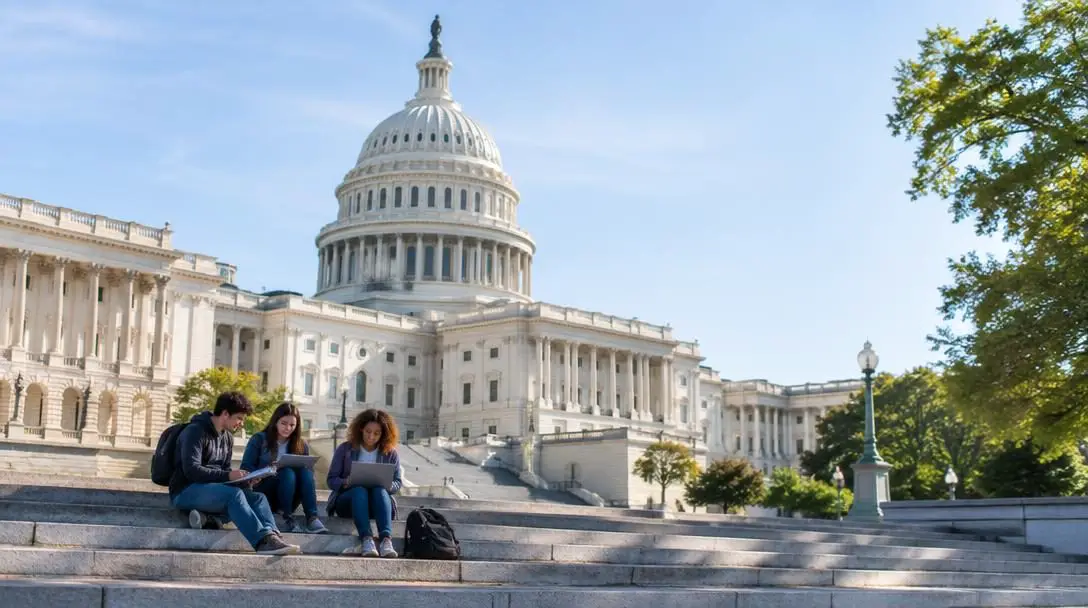
Education is widely recognized as a fundamental right that is essential for personal growth, community strength, and national economic vitality. Despite its vital role, chronic funding shortages have long compromised educational systems across the United States. From early childhood classrooms through post-secondary institutions, resource limitations restrict educational opportunities, stretch educator capacities, and undermine the overall quality of instruction. In elementary and secondary classrooms, funding limitations frequently lead to severe classroom overcrowding, deferrals of facility maintenance, and stark resource deficits for both students and teaching staff.
At the post-secondary level, soaring tuition rates and associated living expenses have turned higher education into an intimidating financial barrier. Millions of students are forced either to forgo advanced credentials or to shoulder crippling financial obligations. The total volume of student loan debt in America has surged beyond $1.7 trillion, climbing higher with each passing year. With Democrats holding political influence, national debates have resurfaced regarding how to adjust federal spending priorities, reform statutory tax policies, and allocate dedicated resources to build an equitable, properly funded educational system.
Key takeaways
- Total outstanding student loan debt in the United States has surpassed $1.7 trillion, creating long-term economic burdens for millions of households.
- The United States currently allocates more funding to national defense than the next ten countries combined, presenting significant room to reprioritize public dollars toward education.
- Closing tax loopholes and raising marginal tax rates on high earners generates dependable revenue while helping to mitigate nationwide income inequality.
- Expanding direct federal aid to local public schools reduces historic disparities created by localized, property-tax-dependent school funding models.
- Loan forgiveness and grant expansions tackle post-secondary access from both ends by lowering upfront costs and freeing graduates to participate fully in the broader economy.
Five Policy Proposals to Free Up Money for Education
Rethinking how education is funded requires a balanced combination of targeted revenue generation, disciplined budget adjustments, and direct programmatic investments. By rebalancing national priorities and using the federal tax code, lawmakers can direct funding toward early education, primary and secondary classrooms, and post-secondary opportunities.
| Proposal | Primary Mechanism | Main Beneficiary | Core Objective |
|---|---|---|---|
| Increasing taxes on the wealthy | Tax code reform and loophole elimination | Federal education programs | Generate stable public revenue and reduce inequality |
| Cutting military spending | Budget cap reductions and program reprioritization | Public school systems nationwide | Rebalance federal spending toward human capital |
| Expanding grants and scholarships | Increased direct student gift aid | Low- and middle-income college students | Eliminate financial barriers to degree completion |
| Increasing federal funding for public schools | Formula and direct grants to districts | K-12 educators and students | Mitigate classroom overcrowding and geographic inequities |
| Implementing student loan forgiveness | Statutory debt discharge and portfolio adjustment | Existing student loan borrowers | Provide immediate economic stimulus and household relief |
Increasing taxes on the wealthy
Under current statutory frameworks, top earners often pay lower effective tax rates than middle- and low-income workers. This disparity stems from an array of specialized tax shelters, deductions, preferential capital gains rates, and legal loopholes available to high-net-worth individuals. By raising statutory tax rates on top-tier earners and systematically closing specialized carve-outs, policymakers can raise substantial federal funds. Beyond addressing persistent income inequality across the country, this strategy supplies the Department of the Treasury with ongoing revenue that can be permanently channeled into public schooling systems.
Cutting military spending
The annual defense budget represents one of the largest single segments of federal discretionary spending. The United States currently expends more on military endeavors than the next ten nations combined. By reviewing defense priorities, scaling back redundant procurement initiatives, and reigning in expansive military outlays, federal lawmakers could free up tens of billions of dollars. Redirecting those resources into domestic education ensures that students of all backgrounds receive a high-quality educational foundation without being constrained by regional or personal economic limits.
Expanding access to grants and scholarships
Rising post-secondary tuition has turned higher education into an exclusionary gatekeeper rather than a shared avenue for social mobility. Expanding federal grants and scholarships provides need-based gift aid that does not require repayment, immediately cutting the net attendance costs for qualifying students. Broadening these programs helps ensure that low-income and working-class students are not locked out of degree programs due to insufficient household savings. Investing directly in these students yields long-term economic returns by fostering the next generation of researchers, educators, and community innovators.

Increasing federal funding for public schools
Public school districts in the United States have historically relied heavily on municipal and state revenues, especially local property taxes. As a direct consequence, school districts situated in wealthier zip codes regularly secure modern equipment, competitive compensation packages for educators, and updated facilities, while lower-income districts face deteriorating infrastructure and acute resource scarcity. Elevating direct federal funding to public primary and secondary schools counteracts this geographic lottery. Robust federal investments help reduce classroom overcrowding, supply teachers with modern instructional technologies, and ensure every child has access to a competitive, 21st-century learning environment.
Implementing a student loan forgiveness program
Carrying educational debt has transformed into a multi-decade financial impediment for tens of millions of working adults. Outstanding balances drag down household balance sheets, preventing graduates from saving for retirement, purchasing homes, or launching new businesses. Establishing a formal student loan forgiveness initiative delivers immediate financial breathing room to burdened households. Far from being merely an act of borrower relief, canceling or significantly reducing federal student debt functions as a broad economic stimulus that injects disposable income directly back into regional commerce.
How Educational Funding Mechanisms Work
Translating broad political ambitions into tangible classroom improvements requires an understanding of how money moves through the federal legislative and administrative machinery. When lawmakers enact tax reforms aimed at top earners, the Internal Revenue Service collects the additional revenue, which is deposited directly into the general fund of the United States Treasury.
From that point, Congress exercises its constitutional power of the purse. During the annual appropriations cycle, lawmakers allocate discretionary funds across federal agencies. If tax collections are increased or defense allocations are intentionally reined in, lawmakers can increase the line-item appropriations dedicated to the Department of Education. This non-defense discretionary funding can then be disbursed to state education agencies and local school boards through established formula and competitive grant mechanisms.
For post-secondary assistance, the federal government uses distinct channels. When grants and scholarships are expanded, funds are transferred through collegiate financial aid offices directly onto student ledger cards, reducing out-of-pocket attendance costs. In contrast, implementing loan forgiveness entails adjusting the federal government's credit balance sheets. The Department of Education directs contracted loan servicers to modify existing promissory notes, wiping away balances without requiring cash distributions to individual borrowers.

Step-by-Step: Turning Funding Proposals into Law
Converting federal funding proposals from conceptual outlines into enacted public policy requires a structured sequence of statutory, regulatory, and local administrative actions.
- Drafting and introducing targeted legislation: Lawmakers formulate statutory language that sets higher tax brackets for top earners, details reductions in defense contracts, establishes higher award ceilings for grant initiatives, and defines exact parameters for student loan cancellation.
- Navigating the congressional committee and budget process: Draft legislation must advance through key congressional panels, including the House Committee on Ways and Means, the Senate Committee on Finance, and the respective Education and Budget committees. Lawmakers must construct budget resolutions that reconcile domestic funding boosts with identified revenues.
- Building broad political coalitions: Enacting major budgetary reform demands assembling working majorities in both the House of Representatives and the Senate. Proponents must articulate how increased school funding helps both rural and urban communities to secure broad legislative support.
- Promulgating executive and administrative rules: Once bills are signed into law, federal departments must implement the policy. The Department of the Treasury updates collection standards, while the Department of Education creates transparent processing systems to disburse grants, route funds to school districts, and process debt relief claims.
- Local integration and community oversight: State education agencies and local school boards receive the designated federal resources. Local officials, educators, and community members oversee budget execution to verify that dollars go toward lowering class sizes, purchasing supplies, and maintaining facilities.
Common Mistakes in Educational Funding Policy
Efforts to reform public education finance can falter if programs are poorly constructed or lack continuous legislative safeguards. Policymakers frequently encounter several recurring policy errors:
- Treating short-term windfalls as permanent solutions: Channeling one-time budgetary surpluses or temporary revenues into ongoing operating expenses—such as recurring educator compensation—leaves districts exposed to severe budget shortfalls once the temporary revenue source expires.
- Allowing federal increases to replace local commitments: When the federal government increases its spending footprint, state and municipal authorities are often tempted to reduce their own education budgets. This cost-shifting neutralizes the federal investment, leaving classrooms with no net increase in funding.
- Overcomplicating access to aid through bureaucracy: Complicated application requirements, extensive paperwork, and restrictive eligibility rules can prevent lower-income students and underfunded districts from accessing grants, scholarships, and debt relief.
- Ignoring broader systemic causes of tuition inflation: Providing student loan forgiveness without addressing the structural cost drivers of higher education allows debt totals to quickly re-accumulate for future cohorts of incoming students.
- Failing to account for regional cost disparities: Using rigid, uniform federal distribution formulas without adjusting for variations in local living costs penalizes high-cost school districts and regions serving disproportionate shares of high-need learners.
Planning for Future Generations: Long-Term Fiscal Priorities
Securing reliable funding for the American education system is not a single legislative event; it is an ongoing economic investment in the nation's future. To ensure that incoming generations inherit a stable and competitive public educational structure, policymakers must balance revenue generation with disciplined program deployment.
Establishing permanent, well-structured revenue streams today builds an educational foundation capable of supporting sustainable growth, innovation, and national leadership for decades to come.
First, lawmakers must ensure that funds secured through tax reforms or defense cuts are legally ring-fenced for educational purposes, preventing those balances from being absorbed by other discretionary federal programs. Second, post-secondary education policy must support the complete financial lifecycle of students, combining upfront grant assistance with sensible debt relief to keep graduates from delaying home ownership, family planning, or entrepreneurial ventures. Finally, maintaining broad public trust requires complete transparency in how every dollar is allocated, demonstrating to taxpayers that investments directly reduce class sizes, support teachers, and prepare students for a rapidly changing economy.
Frequently asked questions
How does the current level of student loan debt affect the broader U.S. economy?
With national student loan balances exceeding $1.7 trillion, millions of borrowers must dedicate significant portions of their monthly income toward debt service. This sustained financial strain prevents young adults from purchasing homes, saving for retirement, accumulating emergency savings, and launching small businesses, acting as an economic drag on regional markets.
Why do local property taxes lead to educational inequities across school districts?
Because traditional public school funding relies heavily on local property taxes, communities with high real estate values generate substantial revenue for their schools with modest tax rates. Conversely, economically distressed areas with depressed property values struggle to generate adequate funds, leading to underfunded facilities, lower educator compensation, and classroom overcrowding.
What happens if federal education funds merely replace state and local funding?
When state or local governments respond to federal funding increases by cutting their own educational appropriations—a practice known as supplanting—the net amount of capital reaching classrooms remains unchanged. Federal legislation must include strict maintenance-of-effort mandates to ensure federal dollars supplement rather than replace local funds.
How does Congress shift federal dollars from defense to education?
Congress shifts discretionary spending priorities during the annual budget resolution and appropriations process. By lowering the discretionary spending caps allocated to the Department of Defense, lawmakers can raise the caps on non-defense discretionary accounts, allowing more public funds to be appropriated directly to the Department of Education.
Does forgiving student loan debt resolve the problem of rising college tuition costs?
Loan forgiveness provides immediate financial relief to existing borrowers, but it does not address the underlying drivers of rising tuition. Comprehensive reform requires pairing debt forgiveness with expanded grant programs, greater transparency around institutional costs, and systemic measures to curb tuition inflation for future cohorts.
The bottom line
Addressing the persistent funding shortfalls in American education requires targeted fiscal reforms and a reprioritization of national resources. By closing tax loopholes on the wealthiest households, trimming defense budgets, expanding direct grant assistance, bolstering federal funding for primary and secondary schools, and providing relief from the $1.7 trillion student debt burden, lawmakers have clear policy options to revitalize public education. Structuring these initiatives with clear administrative oversight, permanent revenue mechanisms, and safeguards against local cost-shifting will ensure that every student, regardless of background or zip code, has access to high-quality educational opportunities.