7 Tips For Mastering Word Waffle
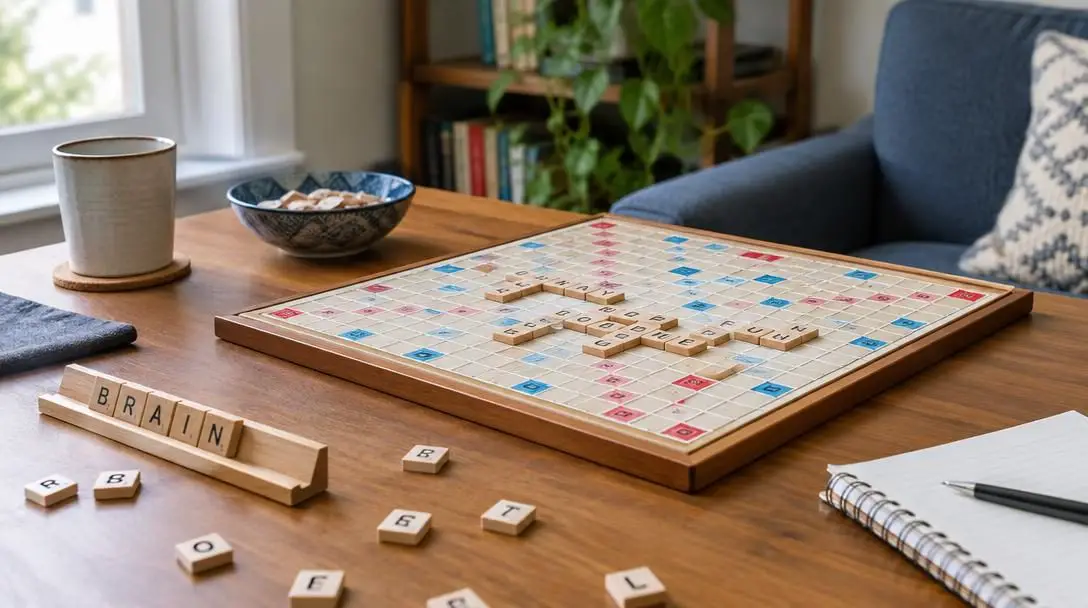
Word Waffle has earned a loyal following among casual puzzle lovers and word enthusiasts looking for a quick, rewarding mental workout. Combining spatial pattern recognition with lexical recall, the game challenges players to navigate an arrangement of letters to form coherent, intersecting vocabulary terms under structured constraints.
While newcomers can easily grasp the core mechanics, advancing from tentative guesses to decisive solving requires conscious strategy. Developing reliable scanning habits, recognizing morphological word patterns, and managing board space effectively will turn a chaotic grid into a predictable, satisfying daily victory.
Key takeaways
- Building an early foundation with basic, familiar words prevents cognitive overload and clears visual pathways across the grid.
- Identifying recurring structural affixes like prefixes and suffixes allows you to construct high-scoring, multi-letter words with minimal guesswork.
- Grouping your focus around duplicate consonants and linear letter pairings simplifies complex board layouts.
- Integrating reference tools, timed countdowns, and community challenges builds long-term vocabulary retention and solving speed.
Understanding the mechanics of Word Waffle
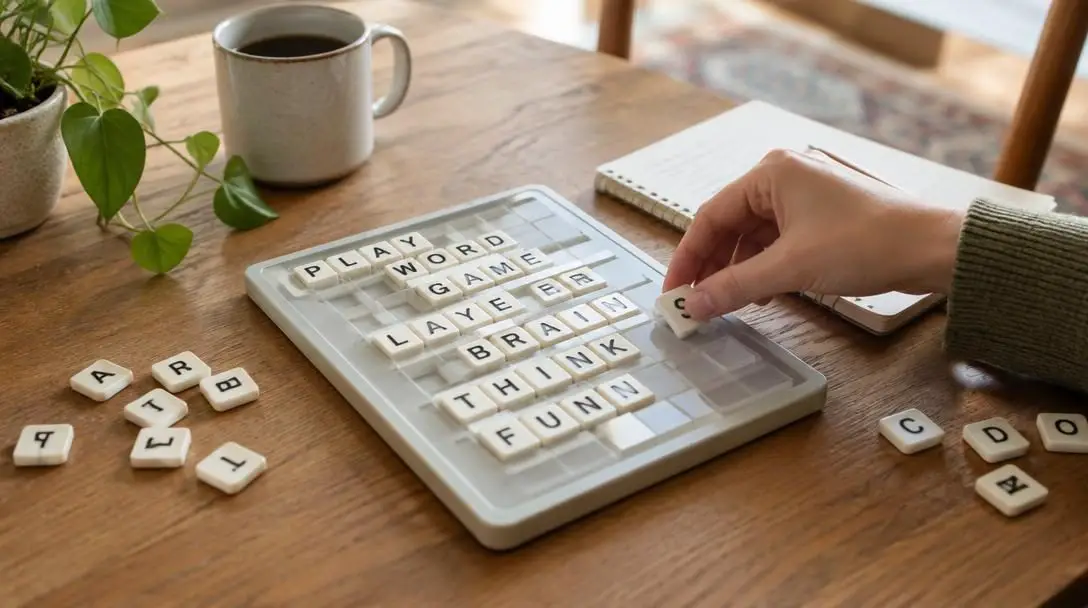
At its foundation, Word Waffle arranges a set of letters into an interconnected grid, asking players to identify valid vocabulary words by examining how characters relate to one another. The puzzle tests two distinct proficiencies simultaneously: visual scanning ability and lexical recall precision. Unlike open-ended anagram puzzles, the spatial layout of the board dictates how letters can be utilized, creating an environment where adjacent positions and shared letter tiles directly influence every subsequent move.
Because every completed word must adhere strictly to conventional spelling standards, haphazard tile movement quickly leads to dead ends. Players must routinely evaluate potential consonant clusters, look for supportive vowel placements, and monitor duplicate letters across the grid. As the board fills or shifts, the available letter pool contracts, demanding sharper concentration. Success relies on balancing quick, obvious plays with measured foresight, ensuring that early word formations do not block viable paths for more complex intersecting solutions.
7 essential strategies for mastering the grid
Consistently solving Word Waffle boards requires moving away from trial and error in favor of deliberate, repeatable habits. Applying these seven core strategies will elevate your visual analysis, expand your working vocabulary, and streamline your gameplay.
| Strategy | Primary focus | Main benefit |
|---|---|---|
| Start with Simple Words | Short, familiar entries | Clears visual clutter and builds early momentum |
| Look for Prefixes and Suffixes | Morphological word parts | Assembles longer words modularly from root terms |
| Use the Letter Grid to Your Advantage | Spatial adjacency and duplicates | Reveals immediate linear connections and letter clusters |
| Use a Dictionary or Word Finder | External reference resources | Breaks difficult deadlocks and expands vocabulary |
| Practice, Practice, Practice | Consistent session repetition | Internalizes letter frequencies and word shapes |
| Challenge Yourself with Timed Games | Strict countdown constraints | Sharpens decision-making speed under pressure |
| Play with Friends or Join Online Communities | Social play and shared challenges | Exposes you to alternative tactics and fresh words |
Start with simple words
When approaching a fresh board, many players instinctively hunt for expansive, eight-letter terms to make substantial progress in a single move. However, lunging immediately toward complicated solutions often complicates the grid unnecessarily. Complex words frequently involve unusual letter pairings that pull your focus away from the fundamental architecture of the puzzle.
Instead, prioritize straightforward, high-confidence words that you recognize instantly. Securing three- and four-letter entries provides an immediate psychological boost and establishes fixed reference points on the board. Locking down these elementary words eliminates visual distractions, making it substantially easier to spot remaining letter trajectories and unlock more challenging terms later in the session.
Look for prefixes and suffixes
Constructing longer words becomes straightforward when you stop viewing them as isolated strings of letters and start breaking them down into modular components. Prefixes and suffixes represent predictable linguistic building blocks that appear frequently across standard English vocabulary.
Scan the board deliberately for common word beginnings, such as re- or un-, alongside standard word endings like -ing or -ly. Once you locate these structural clusters on the grid, search the surrounding tiles for compatible base terms. Affixing a known prefix or suffix to a simple three-letter root allows you to construct expansive words efficiently without wasting turns testing unlikely letter sequences.

Recognizing structural affixes allows you to piece together expansive vocabulary terms efficiently without needing to guess random letter clusters.
Use the letter grid to your advantage
The spatial organization of the tiles provides critical clues if you know how to read the board systematically. Rather than scanning tiles arbitrarily, train your eyes to isolate linear spatial relationships. When you notice directly adjacent characters that form an immediate word—such as c, a, and t sitting side by side—commit to that connection immediately to establish traction.
Additionally, track letter frequency across the entire board. If you spot multiple instances of a specific consonant, such as several s tiles, orient your search toward words that incorporate that character. Grouping your analytical focus around recurring letters prevents your attention from scattering and makes it easier to solve multiple intersecting paths that depend on identical components.
Use a dictionary or word finder
Reaching an impasse during a challenging puzzle can be frustrating, but reaching for external reference tools is an effective way to turn a stalemate into a learning opportunity. Consulting a standard dictionary or a specialized word finder provides the exact clue needed to untangle a stubborn board arrangement.
Using reference aids serves a dual role: it keeps the session moving forward and functions as an active educational exercise. Regularly checking reference tools introduces you to unfamiliar word combinations, reinforces correct spelling habits, and expands your working vocabulary for future games.
Practice, practice, practice
Word recognition is a cognitive skill that responds directly to consistent repetition. Relying purely on passive vocabulary knowledge will only take you so far; frequent engagement is required to train your brain to spot subtle anagrams and letter combinations automatically.
Devoting regular time to solve puzzles accustoms your visual system to track recurring consonant-vowel frameworks across the grid. The more frequently you play, the faster you will process spatial relationships on the board, allowing you to identify viable solutions with reduced hesitation.
Challenge yourself with timed games
Once you develop steady accuracy on standard boards, introducing a time limit is the most effective way to push your abilities further. Adding a ticking clock shifts the game from a leisurely contemplation into an exercise in high-tempo cognitive processing.
Set an external timer for two or three minutes and attempt to uncover as many valid words as possible before the countdown concludes. Playing under temporal constraints forces you to trust your immediate vocabulary instincts, reduces overthinking, and dramatically increases both your scanning speed and your decision-making accuracy.
Play with friends or join online communities
Solving puzzles in isolation can eventually cause your strategic approach to stagnate. Connecting with friends or participating in dedicated online word puzzle communities introduces a valuable collaborative and competitive element to your routine.
Interacting with other players exposes you to diverse perspectives, novel vocabulary items, and alternate solving habits that you might not discover on your own. Many digital communities host daily or weekly challenges, providing continuous motivation, healthy accountability, and structured benchmarks to measure your ongoing improvement.
A step-by-step routine for each game session
Adopting a structured, step-by-step methodology when tackling every new puzzle eliminates early-game confusion and keeps your problem-solving efforts organized.
- Conduct an initial board scan: Spend the opening seconds surveying the entire grid rather than moving letters immediately. Catalog all available vowels and make note of duplicate consonants like repeated s tiles.
- Identify instant linear pairings: Locate characters that sit directly adjacent to one another and form basic, unambiguous words like cat to create an immediate foothold.
- Search for structural building blocks: Inspect the edges and clusters of the grid for standard prefixes such as re- and un-, as well as familiar suffixes like -ing and -ly.
- Secure simple words first: Input the clear, short words identified during your opening scan to reduce visual clutter and simplify the remaining board space.
- Assemble longer combinations: Attach your identified prefixes and suffixes to available root words to form higher-scoring, multi-tile solutions.
- Consult external aids if stalled: When all visual leads evaporate, use a dictionary or word finder to identify valid letter groupings and overcome the impasse.
- Review completed words post-game: Take thirty seconds after finishing the board to examine any words that caused difficulty, reinforcing their spelling for upcoming rounds.
Common mistakes to avoid on the board
Even dedicated puzzle solvers frequently fall into unhelpful habits that limit their efficiency and drain their turn counter. Being mindful of these recurring errors will protect your momentum:
- Fixating immediately on long words: Hunting solely for elaborate, lengthy terms causes mental fatigue and blinds you to simple, obvious words resting in plain view.
- Ignoring letter frequencies: Overlooking the presence of repeated characters on the grid prevents you from spotting shared components and straightforward plural endings.
- Disregarding affixes: Trying to construct long words entirely from scratch instead of snapping modular pieces like un- or -ly onto known roots wastes valuable time.
- Refusing to use reference tools: Viewing dictionaries as an admission of defeat rather than an educational aid limits your opportunities to learn unfamiliar terms.
- Playing entirely without pacing: Rushing turns haphazardly produces sloppy spelling mistakes, while solving exclusively at a sluggish pace prevents you from developing fast recall instincts.
Advancing your gameplay and setting goals
Once the basic strategies become second nature, establishing concrete performance benchmarks will maintain your engagement and accelerate your cognitive growth over the long run.
A natural progression involves instituting regular timed sprints. Allocating strict two- or three-minute windows forces you to eliminate second-guessing and sharpens your rapid-pattern scanning. As your comfort level rises, you can gradually trim the allotted time or set targets to increase the total number of valid words you uncover within that fixed duration.
Expanding your social engagement offers another productive path. Participating in organized community competitions or comparing daily boards with friends introduces varied solving philosophies and keeps your practice fresh. Analyzing how other enthusiasts navigate identical letter grids provides direct insight into alternative word choices and tile-management tactics.
Frequently asked questions
Why should I focus on short words first in Word Waffle?
Starting with short, simple words eliminates visual clutter on the board and builds early solving momentum. Chasing complex words immediately often distracts you from the basic layout and makes subsequent moves harder to identify.
How do prefixes and suffixes help solve grid puzzles?
Prefixes like re- or un- and suffixes like -ing or -ly serve as predictable modular units. Recognizing them on the grid lets you construct longer words by connecting these affixes to short root words rather than guessing individual letters.
Is using a dictionary or word finder considered cheating?
Consulting reference aids is an effective educational tool when you are stuck. Dictionaries help you break past difficult deadlocks, clarify ambiguous spellings, and expand your vocabulary for future puzzle sessions.
How long should a timed practice session last?
Setting an external timer for two to three minutes provides an ideal balance. This duration introduces enough pressure to train rapid visual recall and quick decision-making without causing undue stress or sloppy errors.
What should I do if the grid contains multiple identical letters?
When you notice duplicate letters, such as multiple instances of the letter s, focus your search around words that rely on that character. Grouping your attention around shared letters makes it easier to map out parallel or intersecting solutions.
The bottom line
Mastering Word Waffle is an achievable goal that blends vocabulary knowledge with structured analytical discipline. By establishing an early baseline with simple words, breaking complex terms into prefixes and suffixes, making conscious use of grid positioning, and leaning on dictionaries when necessary, you can solve difficult boards with consistent ease. Through focused practice, timed drills, and community involvement, every puzzle session becomes an enjoyable, stimulating exercise in language and logic.