Famous Chess Games: A Journey Through Time
Chess holds a storied legacy spanning more than a millennium, standing as one of humanity's most enduring tests of strategy, foresight, and tactical nerve. From its earliest origins in sixth-century India to today's engine-assisted international arenas, the royal game has undergone a profound evolution. Across sixty-four squares, generations of brilliant minds have contested duels that redefined intellectual conflict and captured the global imagination.
Studying famous chess games provides more than mere recreational enjoyment; it uncovers the shifting philosophical tides of human thought. By observing how players across centuries attacked the king, controlled territory, and handled positional compromises, we trace the emergence of modern competitive theory through an unbroken chain of revolutionary thinkers and historic rivalries.
Key takeaways
- Originating as chaturanga in sixth-century India, chess spread to Persia as shatranj before evolving into its modern form in fifteenth-century Europe.
- The nineteenth century transitioned elite play from the sacrificial drama of the Romantic Era to the structured, positional discipline of the Classical school.
- Post-World War II chess established modern competitive preparation, highlighted by intense rivalries and groundbreaking prodigies like Bobby Fischer, Garry Kasparov, and Judit Polgár.
- IBM's Deep Blue match victories in the late 1990s marked the dawn of the computational era, forever changing opening theory and analytical technique.
From Ancient Battlefield to Modern Board
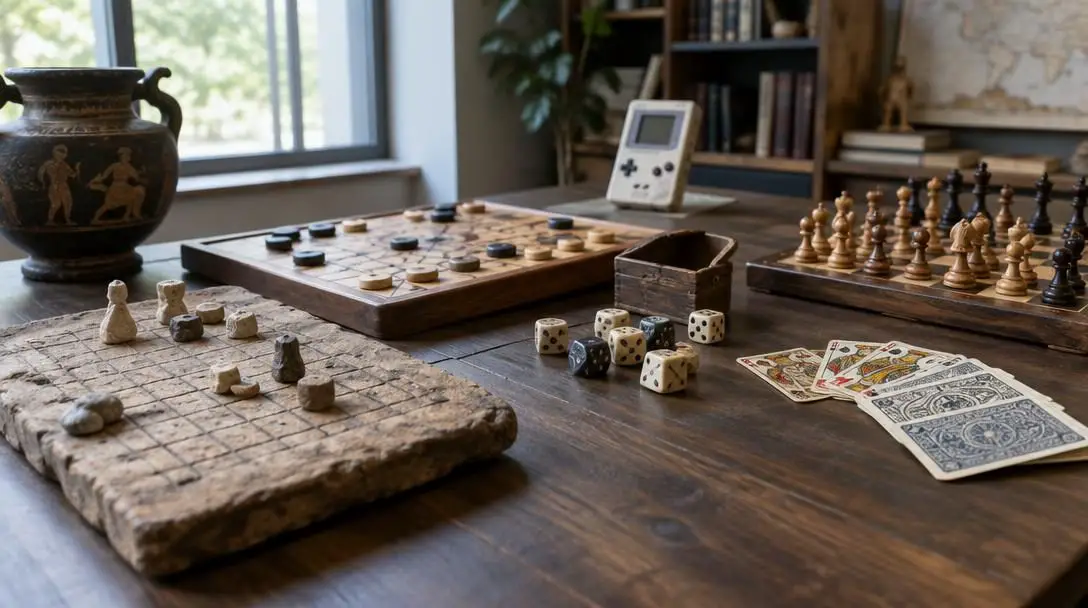
The earliest ancestor of chess originated during the sixth century in northern India under the Sanskrit name chaturanga, which translates directly to "four divisions of the military." Contested upon an uncheckered eight-by-eight board, the game served as a miniature reflection of ancient battle tactics. Its pieces embodied the four traditional military arms: infantry, cavalry, elephants, and war chariots. Through centuries of cultural transmission, these four original components matured into the pawns, knights, bishops, and rooks that populate contemporary chessboards.
Following commercial trading corridors and shifting political frontiers, the game migrated into the Sasanian Persian Empire, where it was renamed shatranj. Persian players formalized the rules while introducing subtle adjustments to piece movement. The chariots and elephants saw their striking ranges curtailed, while a new piece—the vizier or minister—was introduced as an advisor to the king, serving as the earliest predecessor to the modern queen. Shatranj flourished as an aristocratic pastime, praised for its deep positional calculations. Ninth-century records from the court of Abbasid Caliph al-Ma'mun describe celebrated clashes between masters al-Adli and an-Nadim, both of whom demonstrated advanced concepts of long-range maneuvering.
The expansion of the Islamic world carried the game across North Africa and into the Iberian Peninsula. Early scholars produced treatises detailing tactical motifs, opening formulas, and endgame compositions. A notable milestone from the eighth century, known as "The Ebony and Ivory Game," paired the Baghdadi master Tabari against an Indian opponent, representing a fascinating synthesis of Arabic, Persian, and Indian strategic schools.
During the late fifteenth century, European players instituted revolutionary rule alterations that accelerated the tempo of play. The queen and bishop were granted dramatic increases in mobility, transforming the queen from a modest adviser into the most lethal piece on the board. The codification of special moves, including castling and the en passant capture, eradicated early-game stagnation. These innovations established modern chess, turning it into a dynamic, tactically volatile spectacle ready for international tournament competition.
Masters of the Romantic Era
Spanning from the late eighteenth century through the mid-nineteenth century, the Romantic Era celebrated tactical audacity above all else. Practitioners routinely disregarded balance and pawn structure to launch direct, swashbuckling assaults against the enemy king. Speculative piece sacrifices, wide-open central files, and ferocious tactical skirmishes defined this artistic epoch.
Paul Morphy
- Origin: New Orleans, United States
- Signature game: "Morphy's Night Walk" (1858 vs. James Thompson)
- Playing hallmark: Rapid piece mobilization and rapid development
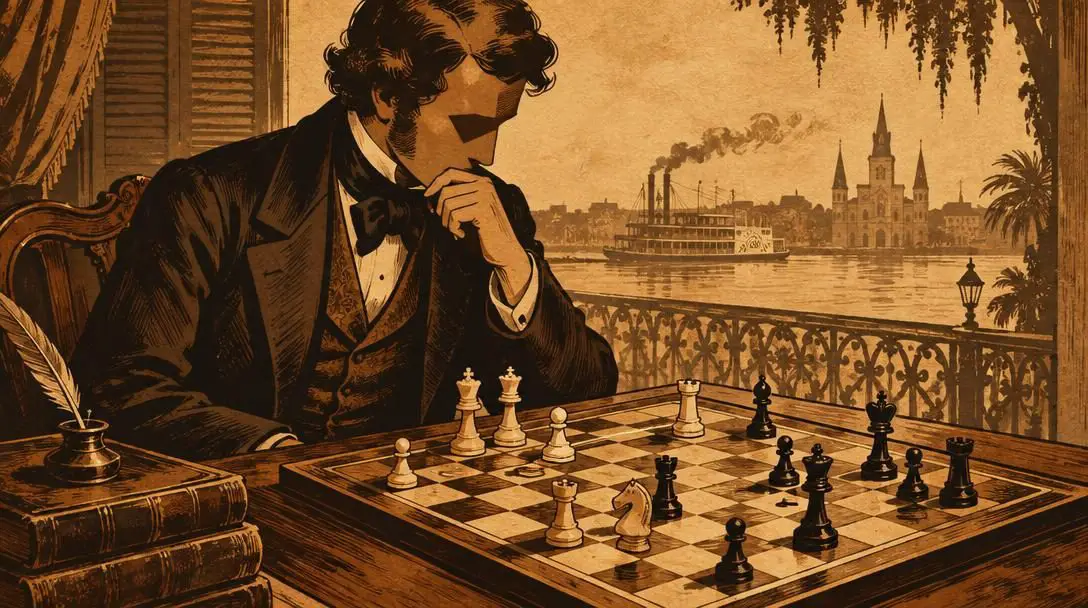
Hailing from New Orleans, Paul Morphy emerged as one of the most remarkable natural prodigies the game has ever seen. During his tour of Europe and North America in the late 1850s, Morphy dismantled the finest players of his day by adhering to an intuitive principle: mobilize forces as swiftly as possible toward open lines before the opponent can coordinate a defense. In his famous 1858 battle against James Thompson, known as "Morphy's Night Walk," Morphy concluded the game in a blistering seventeen moves, demonstrating the devastating power of active piece play and open lines.
Wilhelm Steinitz
- Origin: Austria (born 1836)
- Title: First official World Chess Champion (1886)
- Key achievement: Formulated the principles of modern positional theory
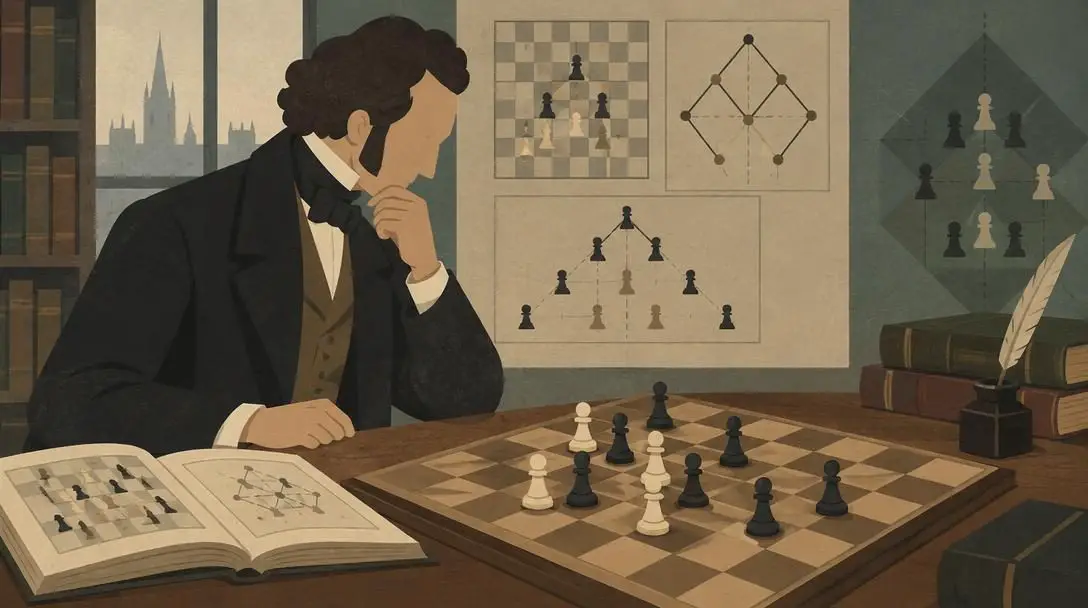
While Wilhelm Steinitz began his career as a daring attacking romantic, his analytical mindset prompted an intellectual revolution. Steinitz argued that king assaults could only succeed if the defender's position was already compromised by permanent structural weaknesses. By championing patient defense, pawn-structure integrity, and the gradual accumulation of microscopic positional advantages, Steinitz established scientific positional play. His theoretical ideas triumphed over Johannes Zukertort in the 1886 World Championship match, officially inaugurating the Classical school of chess.
Adolf Anderssen
- Origin: Breslau, Germany
- Signature game: The "Immortal Game" (1851 vs. Lionel Kieseritzky)
- Playing hallmark: Lavish piece sacrifices to force direct checkmates
A mathematics teacher from Germany, Adolf Anderssen represented the absolute zenith of the Romantic aesthetic. Anderssen treated material as a secondary consideration, cheerfully relinquishing rooks, minor pieces, and even his queen if the sacrifice stripped the protective pawn shield around the enemy monarch. His most renowned effort occurred in London during an informal skittles encounter with Lionel Kieseritzky.
In the legendary Immortal Game, Adolf Anderssen systematically shed his minor pieces, both rooks, and his queen, ultimately delivering checkmate with merely a bishop and two knights.
Anderssen's bold masterpiece remains one of the most widely reprinted games in chess literature, illustrating how overwhelming piece coordination can decisively shatter a material surplus.
The Classical Era and Positional Foundations
Between 1886 and the outbreak of World War II, elite chess moved decisively toward scientific rigor. Grandmasters established that sustained attacks must rest on the solid foundation of central territory, harmonious coordination, and resilient pawn formations. The world champions of this era refined positional technique into a fine art.
Emanuel Lasker
- Reign: World Champion from 1894 to 1921 (27 years)
- Strategic focus: Psychological battle and counterplay under pressure
- Memorable clash: 1914 St. Petersburg victory over José Raúl Capablanca
Emanuel Lasker maintained the world crown for an unprecedented twenty-seven consecutive years. A brilliant mathematician and philosopher, Lasker recognized that chess is contested between human beings rather than abstract intellects. He deliberately steered contests into positions that created intense psychological discomfort for his opponents, even when his chosen lines were not objectively the strongest on the board. In the landmark St. Petersburg tournament of 1914, Lasker outmaneuvered the rising phenomenon José Raúl Capablanca from an unpromising opening, proving that psychological resilience can unravel even flawless technical defense.
José Raúl Capablanca
- Reign: Third World Chess Champion (1921–1927)
- Moniker: "The Chess Machine"
- Signature match: "The Cuban Thunderbolt" (1918 vs. Frank Marshall)
Cuba's José Raúl Capablanca was celebrated for an effortless, intuitive mastery that bordered on clairvoyance. Capablanca rarely calculated sprawling tactical variations; instead, he simplified the board, neutralizing his opponent's counterplay and steering the contest into textbook endgames where his precision proved lethal. When American master Frank James Marshall unveiled a deeply analyzed opening gambit in 1918, Capablanca refuted the surprise assault over the board in an encounter known as the "Cuban Thunderbolt," showcasing immaculate defensive reflexes under immense clock pressure.
Alexander Alekhine
- Reign: World Champion (1927–1935 and 1937–1946)
- Strategic focus: Dynamic positional attacks and tactical complexity
- Signature game: "Immortal Zugzwang Game" (1930 vs. Aron Nimzowitsch)
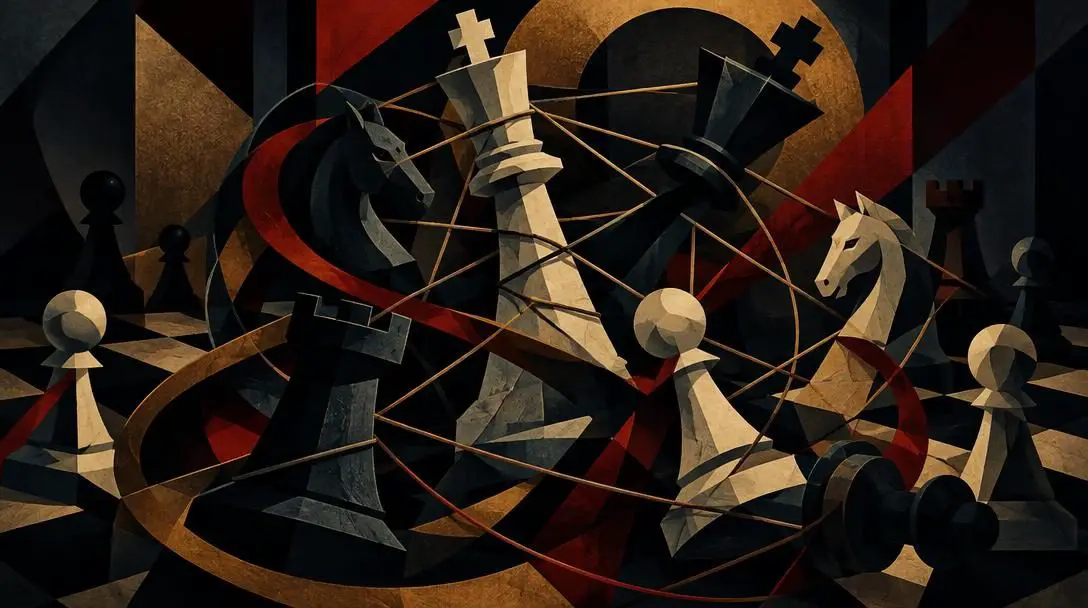
Russian-born master Alexander Alekhine welded Lasker's fierce competitive willpower to Capablanca's positional accuracy, adding a fiery tactical imagination. Alekhine excelled at weaving intricate, tension-laden positions that demanded extraordinary stamina from opponents. During his 1930 encounter with positional theorist Aron Nimzowitsch, Alekhine orchestrated the famed "Immortal Zugzwang Game." By slowly squeezing every available square, Alekhine reduced Nimzowitsch's pieces to total paralysis, leaving him in zugzwang—a dire state where any legal move fatally destabilizes the position.
Great Masters of Chess History
The game's greatest figures bridged distinct ideological movements, developing ideas that carried tournament play from early romantic attacks into deeply prepared theoretical clashes.
| Player | Era | Historical Significance | Signature Match / Feat |
|---|---|---|---|
| Adolf Anderssen | Romantic (1850s) | Pure attacking aggression and daring piece sacrifices | "Immortal Game" (1851) |
| Paul Morphy | Romantic (1850s) | Pioneered rapid development and open-file control | "Morphy's Night Walk" (1858) |
| Wilhelm Steinitz | Classical (1880s) | First official World Champion; founded modern positional theory | World Championship Match (1886) |
| Emanuel Lasker | Classical (1890s–1920s) | Longest-reigning champion; mastered psychological play | St. Petersburg Match (1914) |
| José Raúl Capablanca | Classical (1920s) | Legendary endgame clarity and near-flawless defense | "Cuban Thunderbolt" (1918) |
| Alexander Alekhine | Classical (1920s–1930s) | Complex maneuvering and fierce attacking calculations | "Immortal Zugzwang Game" (1930) |
| Bobby Fischer | Post-WWII (1950s–1970s) | Relentless theoretical precision; ended Soviet dominance | "Game of the Century" (1956) |
| Garry Kasparov | Modern (1980s–1990s) | Deep opening preparation and dynamic attacking initiative | World Championship Match (1985) |
Post-World War II Champions
Following World War II, international chess developed into an organized enterprise. Backed by government-funded sports academies, the Soviet chess school established near-total hegemony over the world title, producing generations of formidable grandmasters. However, independent prodigies consistently emerged to challenge this institutional dominance.
Bobby Fischer
- Origin: Brooklyn, New York, United States
- Signature game: "Game of the Century" (1956 vs. Donald Byrne)
- World title: Captured World Championship in 1972
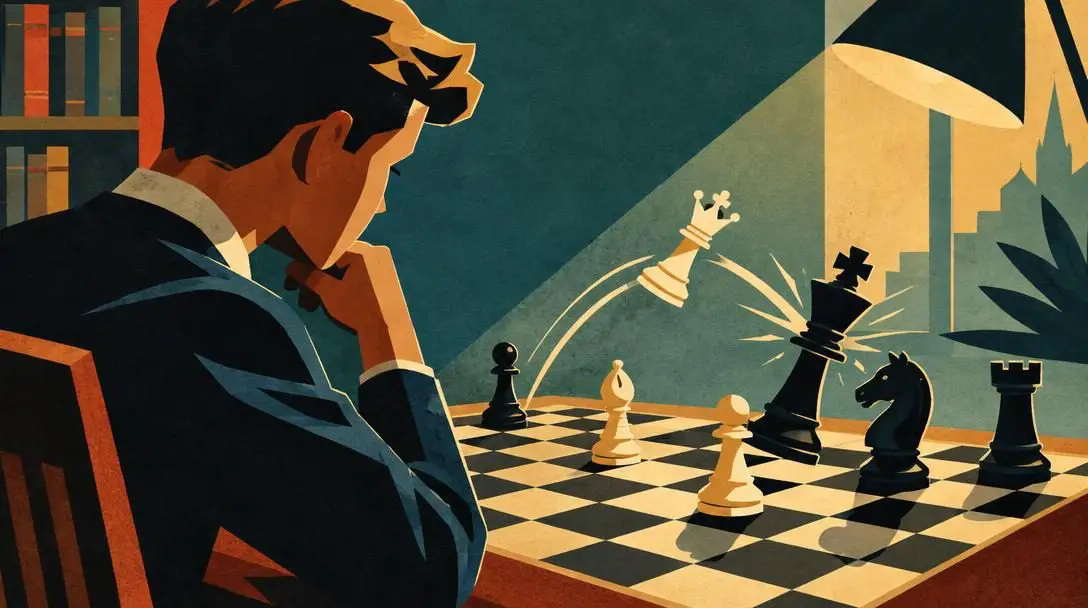
American phenomenon Bobby Fischer transformed tournament preparation through obsessive study, opening precision, and unrelenting competitive drive. In 1956, at just thirteen years old, Fischer stunned the chess world in his encounter against Donald Byrne in New York. In what was immediately christened the "Game of the Century," Fischer sacrificed his queen on move seventeen, unleashing a cascade of checks using his rooks, bishops, and advanced pawns to construct an inescapable mating web. Fischer's single-minded pursuit of board truth carried him all the way to the 1972 World Championship title.
Mikhail Tal
- Origin: Riga, Latvia
- Moniker: "The Magician of Riga"
- World title: Youngest world champion of his time in 1960
Mikhail Tal offered a dazzling alternative to strict positional orthodoxy. Dubbed the "Magician of Riga," Tal embraced chaos on the board, willingly sacrificing pawns and pieces to rip open defensive barricades and trigger tactical complications. In 1960, at twenty-three years of age, Tal dethroned the systematic Soviet champion Mikhail Botvinnik. Tal's high-risk intuition proved that even the most meticulously prepared defenses could buckle when subjected to severe clock pressure and tactical surprises.
Anatoly Karpov
- Reign: 12th World Chess Champion (1975–1985)
- Strategic style: Restrictive prophylaxis and boa-constrictor technique
- Hallmark: Suffocating opponent counterplay
When Bobby Fischer forfeited his title in 1975, Anatoly Karpov ascended the throne and restored classical positional restraint to the summit of competitive chess. Karpov's playing signature was prophylaxis: identifying and smothering his opponent's tactical counterplay long before it could manifest on the board. His suffocating, boa-constrictor style ground down rivals in elite tournament arenas throughout the 1970s and 1980s, setting up one of the fiercest rivalries in sports history against his fellow countryman Garry Kasparov.
Garry Kasparov

- Reign: World Champion from 1985 to 2000
- Milestone: Youngest champion in history at age 22 (1985)
- Hallmark: Exhaustive opening preparation and dynamic initiative
Garry Kasparov seized the crown from Karpov in 1985, bringing an explosive, highly energetic playing style to the global stage. Kasparov combined exhaustive home analysis with an aggressive determination to seize the initiative on every move. Over five grueling world championship matches against Karpov during the 1980s and 1990s, Kasparov expanded the analytical limits of opening theory, maintaining the world number one rating for nearly two decades.
Judit Polgár
- Origin: Budapest, Hungary
- Milestone: International Master at age twelve
- Notable triumphs: Scored match and tournament wins over Kasparov and Karpov
Hungarian superstar Judit Polgár shattered long-standing gender barriers, competing exclusively in open elite events and cementing her position among the finest grandmasters of her era. Polgár achieved the International Master title at twelve and developed an uncompromising, aggressive attacking identity. By defeating eleven reigning or former world champions throughout her career—including both Garry Kasparov and Anatoly Karpov—Polgár proved that top-tier tactical mastery is entirely universal.
The Computational Revolution: Kasparov vs. Deep Blue
While human rivalries electrified the twentieth century, computer scientists worked steadily to build an artificial intelligence capable of challenging the world champion. Early experiments begun in the 1950s gave way to increasingly sophisticated algorithms and dedicated silicon chips by the 1980s. This technological pursuit culminated in two historic clashes between Garry Kasparov and IBM's custom-built supercomputer, Deep Blue.
The confrontation unfolded over two high-stakes matches:
- 1996 Philadelphia Match: Deep Blue shocked observers worldwide by winning Game 1, marking the first time an active world champion was defeated by a computer under classical tournament time controls. Kasparov rallied with characteristic tenacity, adjusting his strategy to exploit positional blind spots in the machine's programming. Kasparov captured three victories and earned two draws to secure a 4-2 match triumph.
- 1997 New York Rematch: Armed with substantial hardware upgrades and specialized software capable of evaluating up to 200 million positions per second, Deep Blue mounted a formidable challenge. Faced with unyielding silicon calculations and intense psychological pressure, Kasparov suffered minor positional missteps. Deep Blue won the sixth and final game, securing a historic 3.5-2.5 match victory.
Deep Blue's victory signaled the dawn of the computational era. Today's grandmasters no longer rely solely on intuitive hunches and handwritten notebooks. Modern competitors utilize advanced chess engines to test speculative novelties, interrogate positional balances, and discover tactical resources that eluded human analysts for generations.
Frequently asked questions
What was the first version of chess called?
The earliest known ancestor of chess was chaturanga, an ancient Indian strategy game originating in the sixth century that represented four branches of the contemporary military: infantry, cavalry, elephants, and chariotry.
Which historic contest is considered the earliest played under modern chess rules?
The match between Francisco de Castellvi and Narcis Vinyoles, recorded around 1475 in the Catalan poem Scachs d'amor in Valencia, Spain, is widely recognized as the earliest documented game played using modern movement rules.
Why is Adolf Anderssen's 1851 match against Kieseritzky called the "Immortal Game"?
It earned this title due to its aesthetic brilliance: Anderssen sacrificed both rooks, a bishop, and his queen to deliver a picturesque checkmate using merely two knights and his remaining minor piece.
What was Bobby Fischer's "Game of the Century"?
Played in 1956 when Fischer was just thirteen years old, the game featured a stunning queen sacrifice against American master Donald Byrne, leading to an unstoppable coordinated mating net.
How did Deep Blue defeat Garry Kasparov in 1997?
Following hardware upgrades that enabled it to calculate up to 200 million positions per second, IBM's Deep Blue capitalized on small positional inaccuracies and psychological pressure to edge out Kasparov 3.5-2.5 in New York.
The bottom line
The journey of chess across the centuries mirrors the evolution of human strategic thought. From its origins as an Indian battlefield simulation to the swashbuckling sacrifices of the Romantic masters and the scientific systems of the Classical era, the game has continuously reinvented itself. Today, as machine intelligence collaborates with human intuition, the sixty-four squares remain an endless frontier for tactical discovery and competitive drama.