History of Solitaire: A Fascinating Look at this Classic Card Game
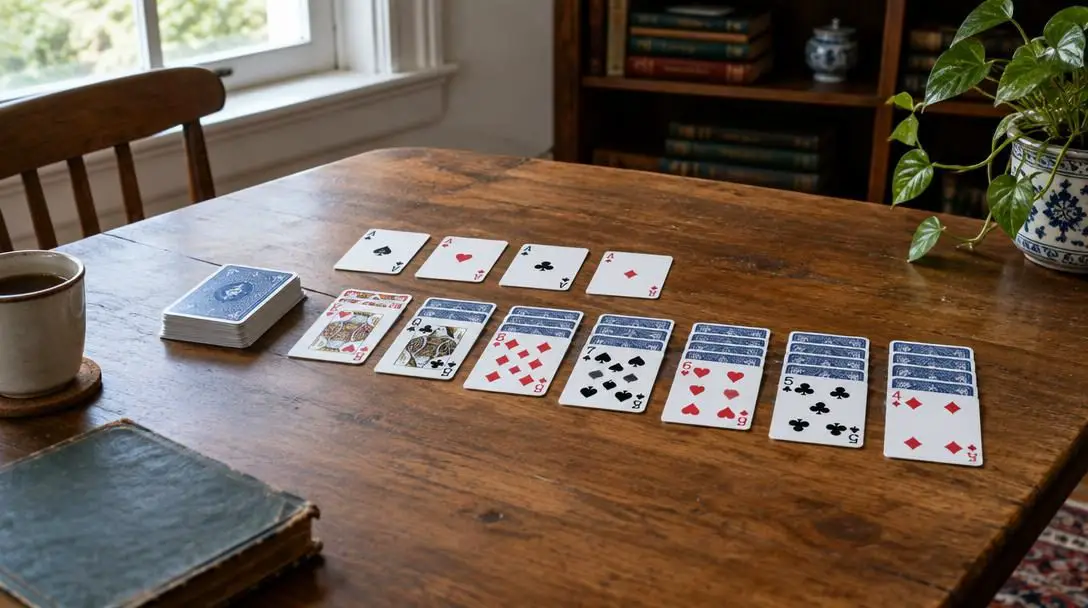
Solitaire stands unchallenged as one of the most recognizable and widely played pastimes in human history. Decades after the dawn of personal computing, the digital version packaged with the Microsoft Windows operating system alone continues to attract more than 35 million active users every single month. When evaluated alongside contemporary entertainment juggernauts, this humble card game maintains an audience comparable to massive blockbuster video game releases such as Overwatch, Sea of Thieves, and FIFA.
The enduring ubiquity of Solitaire stems largely from its unmatched accessibility. Having arrived pre-installed for free across generations of desktop computers, the card game has provided countless hours of engagement during brief moments of downtime or unexpected internet outages. Yet despite its universal presence on office computers and home workstations alike, relatively few players fully appreciate the centuries of cultural history, mathematical design, and tactical nuance that shaped modern digital iterations.
Key takeaways
- Solitaire originated in Europe during the late 18th century under the name "Patience" before crossing to North America in the late 19th century.
- Microsoft intern Wes Cherry developed the landmark digital edition included with Windows 3.0 on May 22, 1990, sparking a worldwide resurgence.
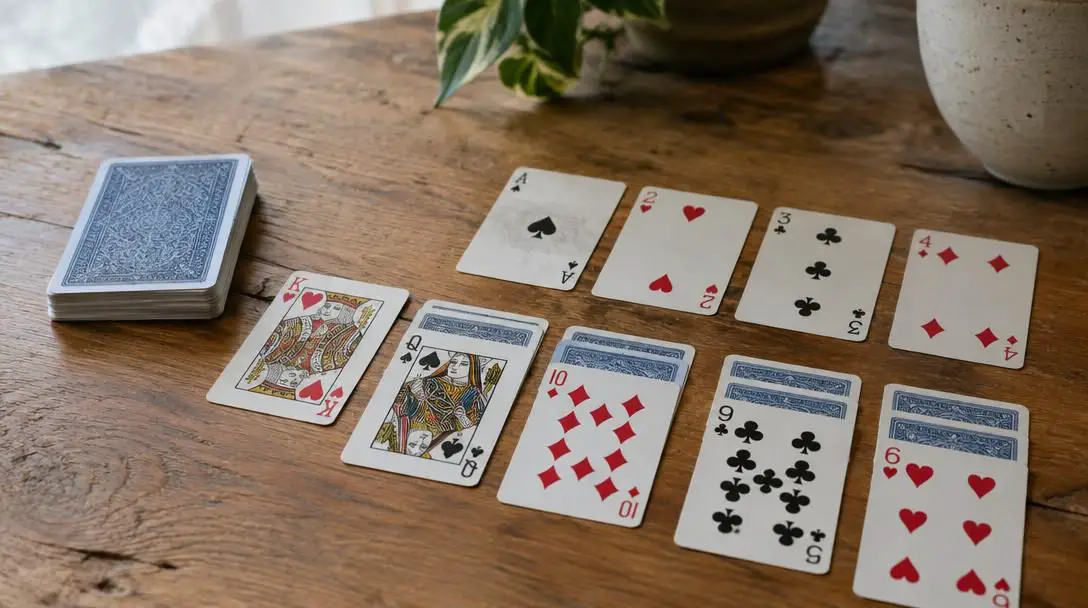
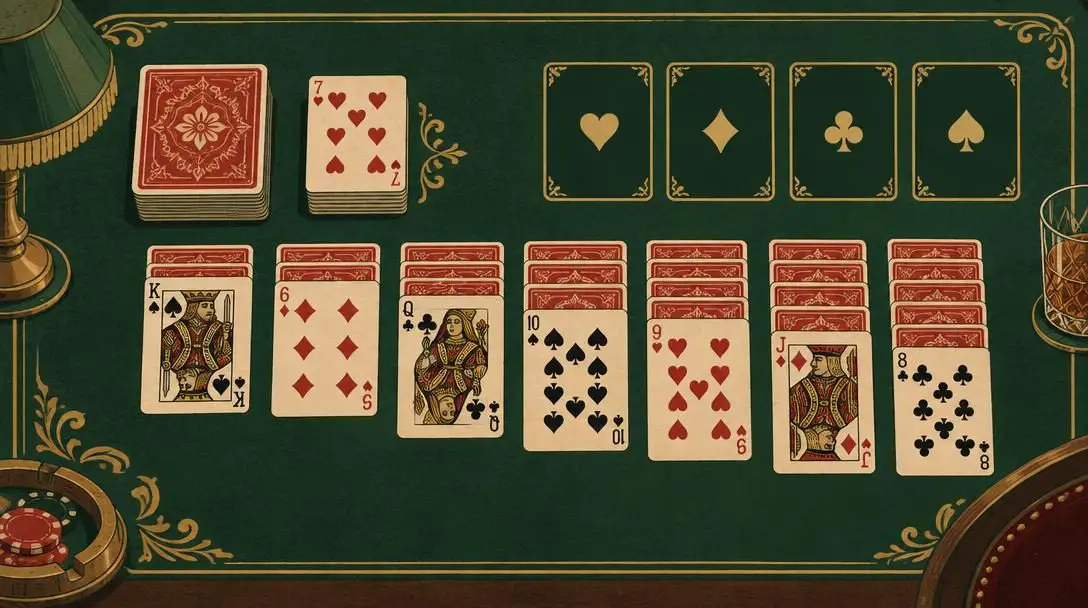
- The standard Klondike variant organizes play across four distinct zones: the tableau, the foundations, the stockpile, and the waste pile.
- Digital Solitaire continues to draw over 35 million monthly active players on Windows, with upwards of 100 million hands dealt daily across its various modes.
- Unique variations like FreeCell, Spider, Pyramid, and Golf transform the difficulty curve from chance-driven discovery to completely deterministic puzzle-solving.
The historical journey from European parlors to North America
The earliest origins of Solitaire remain somewhat mysterious, with historians widely acknowledging that the precise origins, creator, and original structure of the earliest variant cannot be confirmed. While researchers argue that early concepts may reach back hundreds of years into the past, documented popularity began rising noticeably during the late 18th century. Parts of Scandinavia saw the emergence of a card game similar to modern Canfield, establishing the structural groundwork for what would become modern single-player card arrangements.
By the close of the 1700s, card games incorporating multiple decks emerged, though these were frequently played in social contexts with more than one participant rather than in strict isolation. As the single-player variant solidified its footing across the European continent, books began appearing throughout the early 19th century to educate newcomers on rules and layouts. Solitaire flourished in regions such as France, Germany, Sweden, and Russia, where it was introduced under the name Patience. This title remains the dominant, colloquial name for the game throughout most of Europe today.
When the pastime traveled across the Atlantic Ocean to North America in the late 19th century, regional naming conventions shifted in a manner similar to how sports like association football became known as soccer in Canada and the United States. Although initial American manuals and instructional guides retained the title Patience, the moniker Solitaire ultimately took hold.
Etymologically, the term originates from the Latin word solitarius, denoting someone who is alone, isolated, or living in seclusion, often historically associated with a widow. While this linguistic root does not describe the mechanical sorting of suits across four foundations, it directly captures the state of the individual playing in solitary contemplation when alternative distractions are unavailable.
The digital revolution: The Microsoft Windows era
Entering the later stages of the 20th century, broad swaths of the public were fully acquainted with traditional card setups. By the dawn of the 1990s, however, physical card play was increasingly perceived as an activity enjoyed primarily by older generations. Members of Generation X, having come of age during the 1980s video game boom, frequently gravitated toward screen-based media, stepping away from tabletop boards and decks of cards.
The modern resurgence of Solitaire occurred almost overnight when Microsoft chose to incorporate the title directly into Windows 3.0. Developed by an intern named Wes Cherry, the digital card simulation officially launched on May 22, 1990. The project became an instantaneous cultural phenomenon. In addition to teaching computer owners the unfamiliar physical dexterity required to use a computer mouse—specifically the drag-and-drop gesture—it quickly broke through into daily office and domestic life.
Within months of its Windows debut, Solitaire rivaled and frequently surpassed foundational productivity software such as Word and Excel in daily screen time.
The specific variant bundled with that landmark release was Klondike, a variation that had established itself as the preeminent version in the United States. Over the following decades, the Microsoft software ecosystem expanded to integrate an assortment of distinct solitaire modes, including FreeCell, Spider, TriPeaks, and Pyramid. Today, more than thirty years following Cherry's original software build, upwards of 100 million hands of Solitaire are dealt on a daily basis across these digital variants and their modern operating program environments.
Core architectural elements of Klondike
To grasp the underlying design of Solitaire, one must understand how cards transition through designated staging areas on the table or screen. The classic iteration, Klondike, requires players to organize a disordered layout using standardized rules of hierarchy, suit, and position.
The Tableau
- Role: Main playing field and staging area
- Card arrangement: Seven columns built in descending rank and alternating colors
- Initial visibility: Only the top card of each column is dealt face-up
The tableau serves as the primary arena of maneuvering. In Klondike, seven columns are arranged from left to right, containing one card in the first column, two in the second, and continuing incrementally up to seven cards in the final column. Only the topmost card in each column is dealt face-up, leaving the underlying cards concealed until the covering card is moved away. Cards can be shifted between tableau columns provided they are built downward in descending numerical order and alternate between opposing suits, such as placing a black eight on top of a red nine.
The Foundations
- Role: Final destination for all cards
- Number of piles: Four distinct piles, one per suit
- Building direction: Ascending rank starting at Ace through King
The foundations represent the ultimate objective of the game. Situated typically in the upper-right corner of the layout, these four designated staging areas correspond directly to the four suits of a standard playing card deck: hearts, diamonds, clubs, and spades. Foundations are assembled strictly in ascending numerical order, beginning with the Ace as the base and building sequentially through numerical values up to the King.
The Stockpile and Waste
- Role: Reserve pool and active draw pile
- Draw mechanics: Turned into waste pile individually or in sets of three
- Card accessibility: Available for moves to tableau or foundations
The remaining 24 cards not placed into the starting tableau during the initial deal form the stockpile. Players cycle through this reserve pile, turning cards over into an adjacent waste pile either one at a time or in sets of three, depending on chosen difficulty rules. The uppermost exposed card of the waste pile is always active and available to be incorporated into an open tableau sequence or placed directly onto a matching foundation.
Comparing classic Solitaire formats
While the standard 52-card deck serves as the common denominator across most solitary pastimes, the structural rules governing card exposure, stacking limitations, and win triggers yield vastly divergent tactical experiences.
| Game Variant | Primary Board Structure | Reliance on Hidden Cards | Distinct Win Conditions |
|---|---|---|---|
| Klondike | Seven tableau columns with stockpile and waste | High; majority of tableau begins face-down | Build four complete foundations from Ace to King |
| FreeCell | Eight cascades with four open buffer cells | None; all cards are dealt face-up | Transfer all cards onto four suit foundations |
| Spider | Ten tableau columns using one, two, or four suits | Moderate; top cards exposed over hidden rows | Assemble full King-to-Ace runs inside the tableau |
| Pyramid | Overlapping 28-card triangular formation | Low; cards are visible but blocked by lower tiers | Remove all cards in pairs that total thirteen |
| Golf | Seven columns of four exposed cards each | None on columns; cards drawn from reserve deck | Clear all columns onto a single foundation stack |
Iconic game variations and their strategic mechanics
Beyond traditional Klondike, several distinct rule sets evolved throughout the 19th and 20th centuries, each offering a fundamentally different test of foresight and probability.
FreeCell
- Card exposure: Completely open tableau
- Distinct mechanic: Four dedicated single-card holding cells
- Strategic nature: Almost entirely deterministic puzzle-solving
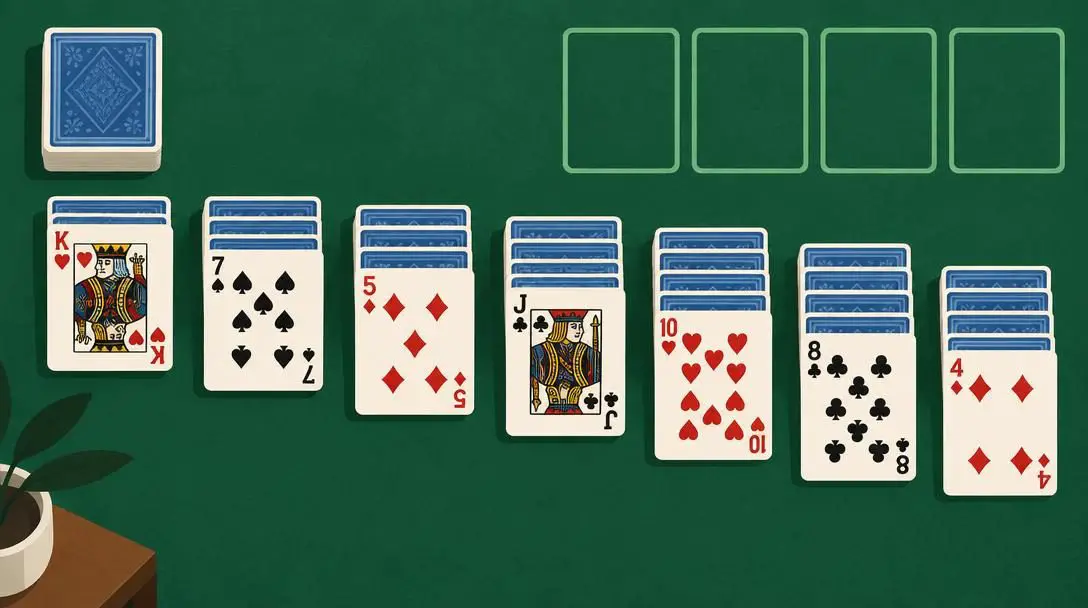
Widely celebrated for reducing the role of sheer luck, FreeCell exposes every single card across eight cascades right from the initial deal. To facilitate complex sequencing, the layout includes four open temporary holding spots known as free cells. Each cell can temporarily house a single card, allowing players to carefully untangle deep cascades and shift large stacks through calculated card movements without ever having to guess what lies face-down.
Spider
- Deck usage: Two full standard decks (104 cards)
- Layout: Ten tableau columns
- Foundation style: Assembled directly within columns before removal
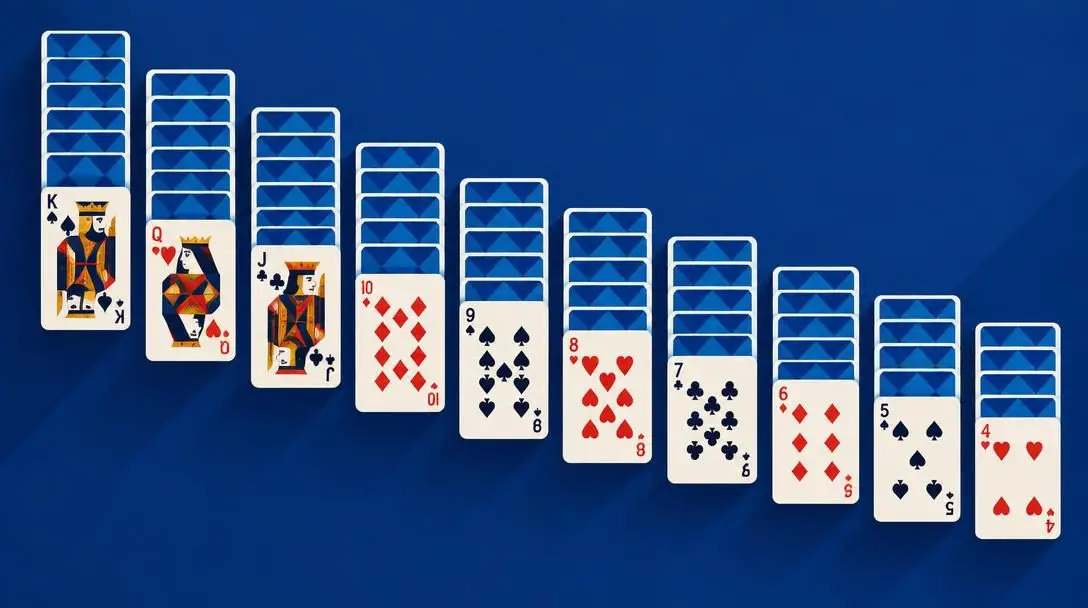
Spider is a demanding, multi-deck variation that challenges players to build complete descending runs from King down to Ace within the tableau columns themselves. Played with one, two, or all four suits, Spider requires meticulous column management. Once a complete thirteen-card sequence of a single suit is aligned, it clears from the board. Empty columns are vital, as drawing a new round of cards from the reserve deals an extra card onto every single column simultaneously.
Pyramid

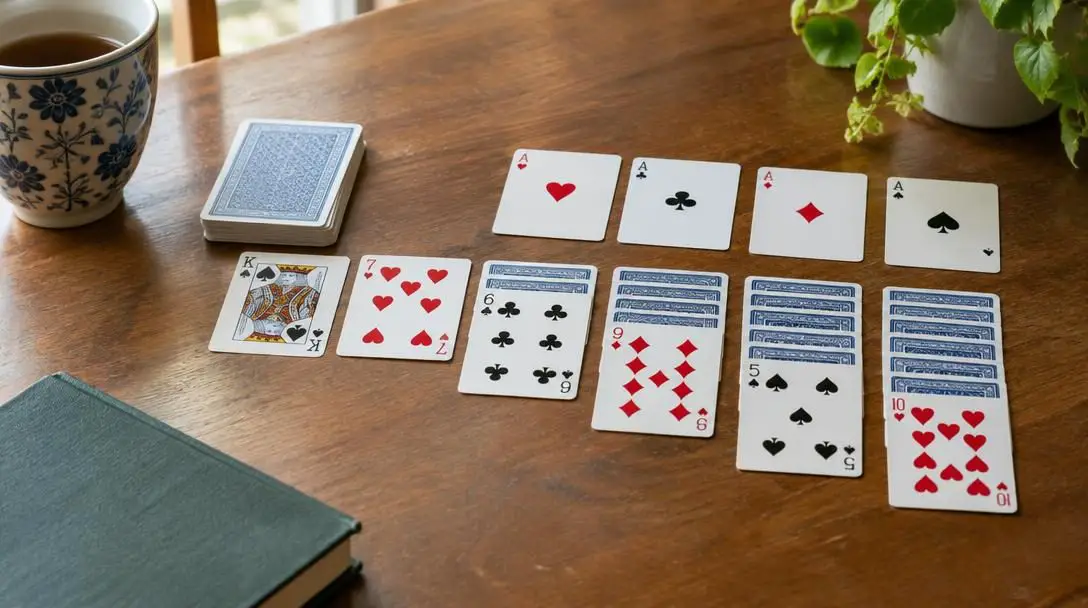
- Formation: Triangular 28-card pyramid layout
- Core mechanic: Pairing cards equal to 13
- Foundations: Discard pile for cleared pairs
In Pyramid, 28 cards are dealt face-up into an overlapping triangular structure of seven rows. The remaining cards form a draw pile. Players clear cards by matching unblocked pairs whose numerical values sum to exactly thirteen. Kings have a value of 13 and can be removed individually, Queens (12) pair with Aces (1), and Jacks (11) pair with Twos. Success requires evaluating which removals will unlock lower-tier cards to access the apex of the structure.
Golf
- Layout: Seven columns of four cards each
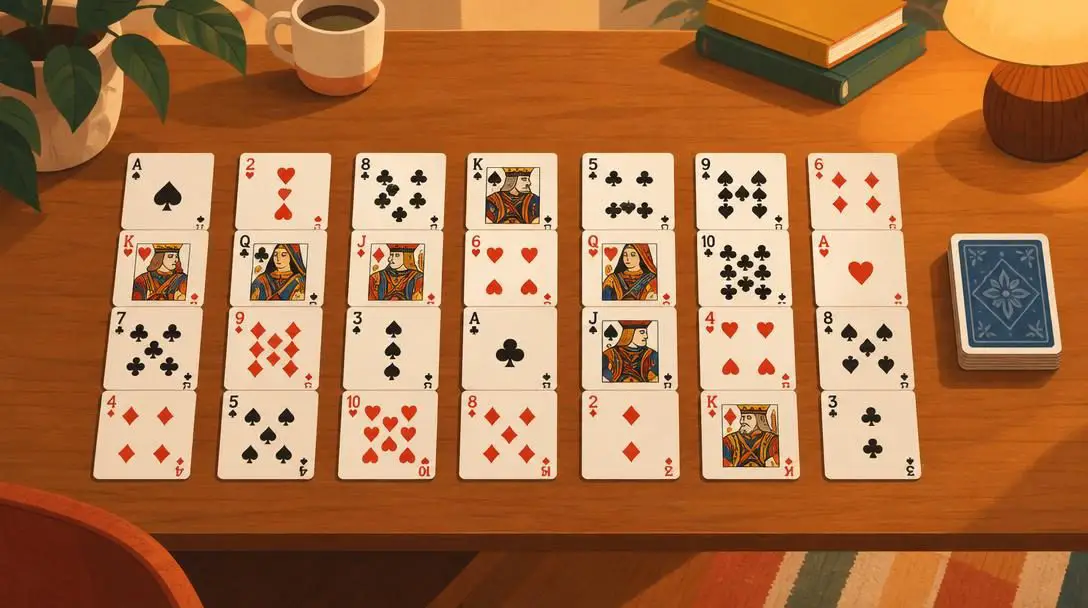
- Foundation: Single discard pile
- Movement rule: One rank higher or lower regardless of suit
Borrowing the scoring mindset of the golf course, Golf challenges players to finish the round with the lowest possible card count remaining in the tableau. Seven columns of four face-up cards are dealt, leaving the remaining cards in a draw deck. Cards are removed from the bottom of the columns by playing them onto a single foundation pile if they are exactly one rank higher or one rank lower than the current foundation card, irrespective of suit.
Yukon
- Tableau structure: Seven columns with partially exposed cards
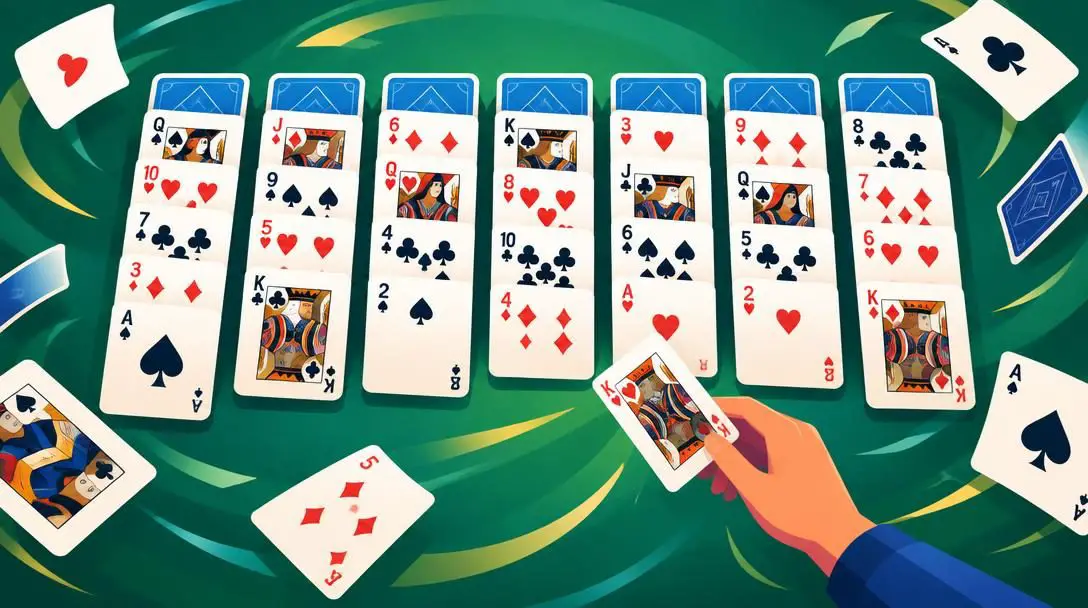
- Reserve deck: None; all cards are dealt at setup
- Group movements: Move card groups regardless of sequence order
Yukon shares visual similarities with Klondike's seven-column layout but omits the reserve stockpile entirely. Every card is dealt onto the board at the start. The defining mechanic of Yukon is that any group of face-up cards can be moved together, regardless of whether the cards stacked on top of the moving card form an orderly numerical sequence, provided the targeted card matches an alternating-color run on the receiving column.
Forty Thieves
- Deck usage: Two full 52-card decks
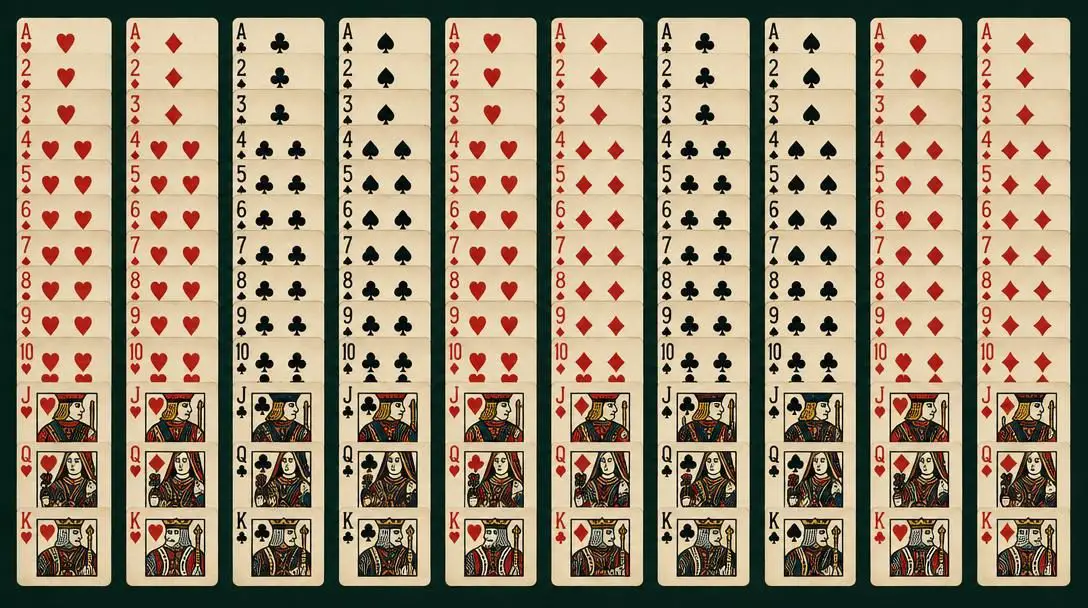
- Tableau: Ten columns of four cards each
- Movement restriction: Only single cards can be moved at once
Known among enthusiasts as one of the most punishing and unforgiving formats, Forty Thieves deals forty cards face-up into ten columns of four cards each. Tableau building is restricted to strict matching suits in descending order rather than alternating colors. Crucially, players can only move one card at a time, making space in empty columns precious and leaving very little room for miscalculations.
Canfield
- Reserve pool: Thirteen-card dedicated reserve stack
- Starting foundation: Randomly determined rank
- Origin: Historical casino card game
Named after the 19th-century gambling parlor operator Richard Canfield, this format originally served as a high-stakes wagering game where participants purchased a deck and received payouts for each card shifted into the foundations. Canfield features a thirteen-card reserve pile that feeds empty spaces in a four-column tableau. Foundations begin on a randomly drawn base rank and cycle seamlessly from King back around to Ace.
How to play Klondike Solitaire step by step
Approaching Klondike with a methodical sequence of decisions dramatically increases the likelihood of successfully building all four foundation suits without deadlocking the tableau.
- Survey the starting layout: Before drawing from the reserve stockpile, thoroughly review the exposed cards sitting atop the starting tableau. Identify available direct placements to move cards between columns.
- Prioritize exposing hidden cards: Always give precedence to moves that will uncover a face-down card within a tableau column. The primary objective is to unlock these hidden resources as early as possible to broaden your tactical choices.
- Establish Ace foundations promptly: As soon as Aces reveal themselves on the tableau, move them into the empty foundation zones. Follow them with Twos of the corresponding suit once available to steadily develop your foundation stacks.
- Clear columns to welcome Kings: Empty tableau columns can only be filled by a King (or a sequence headed by a King). Strive to empty spaces when you hold a King ready to occupy that newly cleared slot, opening up additional stacking paths.
- Cycle the stockpile deliberately: When no further productive plays can be made using the cards in the tableau, advance through the stockpile. Evaluate whether bringing a card into the tableau actively unblocks an underlying layer or safely builds toward your foundations.
- Construct complete foundations: Continue managing resources back and forth, keeping color-alternating columns organized until all four foundations are successfully assembled from Ace through King.
Common strategic mistakes to avoid
Because the basic rules of Solitaire are easy to grasp, many players fall into routine movement patterns that unnecessarily lower their overall win rate. Recognizing and steering clear of common pitfalls keeps columns flexible.
- Moving cards to foundations prematurely: Rushing low and mid-ranking cards (such as Threes, Fours, and Fives) directly up to the foundation piles can strip the tableau of necessary stepping stones. If you place a red Four into the foundation too early, you lose the ability to place a black Three on the tableau, potentially stranding other critical cards beneath it.
- Clearing tableau columns without an available King: Emptying a tableau column is a powerful milestone, but an empty column serves zero function if you do not have a King ready to fill it. Clearing a space without a King simply reduces your active maneuvering channels.
- Drawing from the stockpile before exhausting tableau options: Drawing cards introduces new variables to the waste pile, but premature draws can obscure previous useful waste cards and waste opportunities already present on the board.
- Selecting the wrong King for an empty slot: When you have multiple Kings available to fill an empty column, look at the cards trapped in the remaining columns. Place the King whose color will accommodate the specific face-down sequences you need to unlock next.
Frequently asked questions
Why did Microsoft include Solitaire with Windows 3.0?
Microsoft introduced Solitaire with Windows 3.0 in 1990 both to offer casual entertainment and to help computer users become fluent with the personal computer mouse. In particular, the card-moving mechanics naturally taught the drag-and-drop movement, which was a novel computing concept for mainstream users at the time.
Is every deal of Klondike Solitaire winnable?
No. Due to the random distribution of hidden cards and stockpile constraints, a significant portion of Klondike deals are mathematically unwinnable, even with perfect play. By contrast, variations such as FreeCell expose all cards upfront, making nearly 100 percent of its possible deals solvable.
What is the difference between Patience and Solitaire?
There is no mechanical difference; they are different regional terms for the same general family of card games. "Patience" is the historical and modern term favored throughout the United Kingdom and continental Europe, whereas "Solitaire" became the standard designation in the United States and Canada.
Can any card be placed into an empty tableau space in Klondike?
In standard Klondike rules, only a King (or a descending alternating run of cards headed by a King) can be moved into an empty tableau column. Other variants, such as FreeCell or Forty Thieves, have distinct regulations regarding how open columns or buffer cells are utilized.
Who originally programmed Microsoft Solitaire?
Microsoft intern Wes Cherry developed the digital edition of Solitaire during the late 1980s, which officially debuted with the release of Windows 3.0 on May 22, 1990.
The bottom line
From 18th-century Scandinavian drawing rooms to the screens of hundreds of millions of contemporary personal computers, Solitaire has proven itself to be one of the most resilient games in human history. Whether treated as an analytical exercise in FreeCell, an intricate endurance test in Spider, or a familiar casual game of Klondike, its blend of accessible mechanics and deep tactical planning ensures that its legacy remains secure for generations to come.